• KGS/USD = 0.01144 0%
  • KZT/USD = 0.00194 -0%
  • TJS/USD = 0.10844 -0.46%
  • UZS/USD = 0.00008 0%
  • TMT/USD = 0.28571 0.28%
  • KGS/USD = 0.01144 0%
  • KZT/USD = 0.00194 -0%
  • TJS/USD = 0.10844 -0.46%
  • UZS/USD = 0.00008 0%
  • TMT/USD = 0.28571 0.28%
  • KGS/USD = 0.01144 0%
  • KZT/USD = 0.00194 -0%
  • TJS/USD = 0.10844 -0.46%
  • UZS/USD = 0.00008 0%
  • TMT/USD = 0.28571 0.28%
  • KGS/USD = 0.01144 0%
  • KZT/USD = 0.00194 -0%
  • TJS/USD = 0.10844 -0.46%
  • UZS/USD = 0.00008 0%
  • TMT/USD = 0.28571 0.28%
  • KGS/USD = 0.01144 0%
  • KZT/USD = 0.00194 -0%
  • TJS/USD = 0.10844 -0.46%
  • UZS/USD = 0.00008 0%
  • TMT/USD = 0.28571 0.28%
  • KGS/USD = 0.01144 0%
  • KZT/USD = 0.00194 -0%
  • TJS/USD = 0.10844 -0.46%
  • UZS/USD = 0.00008 0%
  • TMT/USD = 0.28571 0.28%
  • KGS/USD = 0.01144 0%
  • KZT/USD = 0.00194 -0%
  • TJS/USD = 0.10844 -0.46%
  • UZS/USD = 0.00008 0%
  • TMT/USD = 0.28571 0.28%
  • KGS/USD = 0.01144 0%
  • KZT/USD = 0.00194 -0%
  • TJS/USD = 0.10844 -0.46%
  • UZS/USD = 0.00008 0%
  • TMT/USD = 0.28571 0.28%
09 December 2025

Building Bridges Across Eurasia: Kazakhstan’s Strategic Push for Transport Integration

The development of the economic systems of Europe and Asia is outpacing the level and pace of integration in the transportation systems of the countries located between them. This problem can be solved by creating an overland chain across the entire Eurasian space. As part of the development of its transit potential, Kazakhstan has started to form the backbone of such a terminal network.

All work on creating transport networks has been entrusted to the national company, Kazakhstan Temir Zholy (KTZ), which plans to integrate all modes of transport to offer a comprehensive range of client services under a ‘one-stop-shop’ principle and enhance international operations. Establishing a terminal network outside of the republic will improve freight logistics and help build efficient supply chains.

This decision is driven by market demands for cargo delivery, which go beyond mere transportation needs and require the provision of a comprehensive transportation product by a single logistics operator.

Where Cargo Flows Begin

Developing cooperation with China plays a crucial role in integrating Eurasian transport space. In 2023 alone, transit freight traffic between Kazakhstan and China reached a record 28.3 million tons. This success was partially due to the development of a terminal network in China – the Kazakhstan-China logistics terminal in the Pacific port of Lianyungang has been operating for ten years, and the largest dry port in Central Asia, Khorgos – Eastern Gate, operates on the border.

The transport system between these two ports facilitates the delivery of goods from China’s eastern coast to Europe via the Caspian Sea, ensuring the shortest delivery times. Adding the new Kazakh terminal in Xi’an to this transport chain has optimized logistics processes and boosted transportation performance. In the first eight months of 2024, container transit from China along the Trans-Caspian International Transport Route (TITR) increased 20-fold thanks to the freight terminal in Xi’an, a project was implemented in partnership with the Chinese company, Xi’an Free Trade Port Construction and Operation.

Focusing on EAEU Transport Potential

Significant steps have been taken to harness the transport potential of the Eurasian Economic Union (EAEU) countries. In April, construction began on a new terminal at the Selyatino station near Moscow. A trilateral Kazakhstan-Russia-China agreement on creating the CRK Terminal transport and logistics center has been signed by KTZ, SlavtransService, and Xi’an Free Trade Port Construction and Operation.

This logistics hub, based in one of the largest dry ports in Selyatino, will develop direct transport links between Xi’an, Russia, and other countries. Its launch is expected this year.

Additionally, in the fall of 2024, KTZ signed a Memorandum of Understanding with Chinese and Belarusian partners to build a new logistics terminal in the Belarusian city of Svisloch.

Caspian Priority

To further integrate Kazakhstan into the key Trans-Caspian International Transport Route (TITR) plans are underway to create an inter-modal freight terminal in Azerbaijan’s Alyat port. An agreement for the project’s implementation has been signed between SK-AIH Investment Fund Ltd, KTZ, Baku International Sea Trade Port CJSC, and Xi’an Free Trade Port Construction and Operation Co., Ltd.

The project aims to boost container train volumes along the China-Europe-China route via TITR, reduce delivery times, lower transportation costs, and improve transshipment efficiency. The Alyat terminal, with a capacity of ten million tons per year, will include a universal freight platform, a 5,000-square-meter covered warehouse complex, and space for over a thousand containers.

The First European Step

November 2024 marked significant developments in Kazakhstan’s transport sector, with the country poised to enter the European transport market for the first time. A Memorandum of Cooperation in transport and logistics was signed in Budapest during President Kassym-Jomart Tokayev’s state visit to Hungary.

The agreement between KTZ, L.A.C. Holding, and Xi’an Free Trade Port Construction and Operation Co., Ltd. involves the construction of a terminal with an annual capacity of 230,000 TEUs. This will increase the number of container trains to and from Europe, and shorten cargo delivery times, thus reducing the cost of transportation.

The Iranian Vector

The Iranian direction holds great interest and potential for Kazakhstan’s export and transit goods sector, offering wide access to southern Iranian ports and onwards to India, the UAE, and Africa. As part of the North-South International Transport Corridor development, 15 hectares of land in the Iranian port of Bandar Abbas were reserved in 2022 for a terminal.

The advantage of establishing a logistics terminal here, alongside developing overland routes through Turkmenistan and sea routes via the Caspian, is the high-speed movement of goods between EAEU countries and South Asia, East Africa, and the Middle East. The importance of the North-South route has grown amid geopolitical shifts in traditional logistics directions. In the first ten months of 2024 alone, cargo volumes along this corridor reached 1.8 million tons.


Uzbek Products to Reach Europe and Africa Through Turkish Port

Uzbek diplomats recently visited Turkey’s Kocaeli region to strengthen trade and economic ties, holding discussions with local officials and business leaders.

The meetings addressed opportunities for expanding cooperation in trade, economic, cultural, educational, and humanitarian sectors. Uzbek representatives highlighted ongoing reforms in Uzbekistan and the incentives available to foreign investors in its free economic zones.

Key figures in the talks included Kocaeli’s Mayor Tahir Büyükakın, Regional Governor Ilhami Aktash, Regional Industrial Chamber Head Ayhan Zeytinoğlu, and Gebze Güzeller Industrial Zone Director Adem Ceylan.

Mayor Büyükakın provided an overview of Kocaeli’s economic and social strengths, while Ayhan Zeytinoğlu expressed interest in boosting bilateral economic collaboration. Zeytinoğlu proposed facilitating exchanges between Uzbek and Turkish business delegations to foster stronger partnerships.

Adem Ceylan suggested establishing a dedicated logistics center for Uzbek investors within the Gebze Industrial Zone. The center would provide storage facilities for Uzbek-made goods and serve as a gateway for exporting products to Europe and Africa via the Gebze seaport.

The visit concluded with an agreement to organize a business forum in the Kocaeli region. The planned forum will feature a delegation of Uzbek entrepreneurs, aimed at enhancing bilateral and regional cooperation.

Uzbekistan Continues to Lead Central Asian Fertility Rates

Four out of the five Central Asian countries are experiencing fertility declines, with the exception being Uzbekistan, where the total fertility rate (TFR) – the average number of children born to one woman in her lifetime – continues to rise.

According to analytical data from Finprom.kz, in 2023, Uzbekistan’s TFR was 3.4, the highest in the region. Tajikistan followed with a ratio of 3.1, Kazakhstan at 3.0, and Kyrgyzstan and Turkmenistan at 2.7 each.

In a global context, Central Asia’s fertility rates are still higher than average. According to OurWorldinData, the world TFR in 2023 was 2.3. By comparison, countries like the U.S., India, and China had rates between 1.2 and 2.2, while in some African countries such as Somalia or Niger, TFR exceeded 6.

In absolute numbers, Uzbekistan led the region in births with 962,000 newborns in 2023 – a 14.3% increase from 2020. Kazakhstan ranked second with 388,400 births, although its birth rate continued to decline after a pandemic-era baby boom. The highest TFR per 1,000 people was also recorded in Uzbekistan (26.4), followed by Tajikistan (24.6) and Kazakhstan (19.5), where births have fallen for the second consecutive year.

Despite declining fertility rates, Central Asia’s population is growing steadily. The Eurasian Development Bank (EDB) projects the region’s population to reach 80 million in 2025, marking a 2.2 million increase since 2020. Uzbekistan remains the most populous nation, accounting for 45.2% of the region’s total population at 36.9 million, followed by Kazakhstan (20.3 million), Turkmenistan (8.1 million), and Kyrgyzstan (8.9 million).

Population growth in the region is driven by natural increases, with annual rates of 2.5% in Uzbekistan, 1.9% in Tajikistan, 1.5% in Kazakhstan and Turkmenistan, and 1.4% in Kyrgyzstan. These figures reflect stable demographic dynamics across Central Asia.

Marriage Trends in Kazakhstan: What Young People Value Most

The Research Center “Youth” has published a survey examining the perspectives of young Kazakhs on marriage and divorce. Ranking.kz analysts analyzed the main points of this research, shedding light on the preferences and values of the younger generation in Kazakhstan.

According to the survey, 78% of respondents view formal marriage registration as essential, while only 15% accept civil unions. When selecting a life partner, key considerations included age (53.9%), appearance (45.4%), and nationality (39.4%). Notably, factors such as mutual love and moral values were cited by fewer than 1% of participants.

Gender-Based Preferences

Women prioritized their partner’s age, financial stability (30.6%), career prospects (22.9%), and even gender (18.7%). Men, meanwhile, focused on their partner’s physical attractiveness and youth but also emphasized the social status of the future spouse’s family (17.1%) and lineage (24.6%).

Trends in Marriage and Divorce

Kazakhstan has seen a decline in its marriage rate, dropping from 9.9 marriages per 1,000 people in 2013 to 5.7 in the first half of 2024. Analysts attribute this to the smaller generation born between 1995 and 2000, which tends to marry later in life. The average age at first marriage has increased from 26.7 years in 2003 to 27.8 years for men in 2023, and from 23.9 years to 25.2 years for women.

Divorce rates have fluctuated over the past 20 years, correlating with marriage statistics. Between 2013 and 2018, over 51,000 divorces were registered annually. However, this number dropped to 40,200 in 2023, before rising again in the first half of 2024 – 2.3 times higher than during the same period in 2023.

Causes of Divorce

The survey identified adultery (61%), physical violence (51%), and substance abuse (48%) as the leading causes of divorce. Women were more likely to cite physical (62.1%) and psychological (37.7%) violence, as well as gambling addiction (37.1%). Men highlighted personality incompatibility (36%) and lack of love (30.2%).

The Kazakhstan Institute of Public Development (KIPD) corroborated these findings, adding a lack of mutual understanding (24%), interference from parents (10.4%), infertility (11%), and cohabitation with relatives (5.6%) as additional factors. Despite these challenges, 14% of respondents stated that divorce is unacceptable under any circumstances.

Celebrating Global Family Day: Honoring Uzbek and Kazakh Traditions That Unite Generations

Every year, January 1 marks Global Family Day, an idea first introduced in 1997, when the United Nations launched the International Decade for the Culture of Peace and Non-Violence for the Children of the World. By 1999, the had UN invited its members to dedicate the first day of the year to developing strategies for peace, and since then this day has been observed annually as a reminder of the role families play in fostering a peaceful and compassionate world.

This year, The Times of Central Asia takes a closer look at family customs in Uzbekistan and Kazakhstan, nations where family values are deeply woven into the fabric of life.

In Uzbekistan, family is at the heart of society. Respect for elders and care for the young are not just taught — they are lived and celebrated daily. Parents and children share close relationships, turning to one another for advice and support.

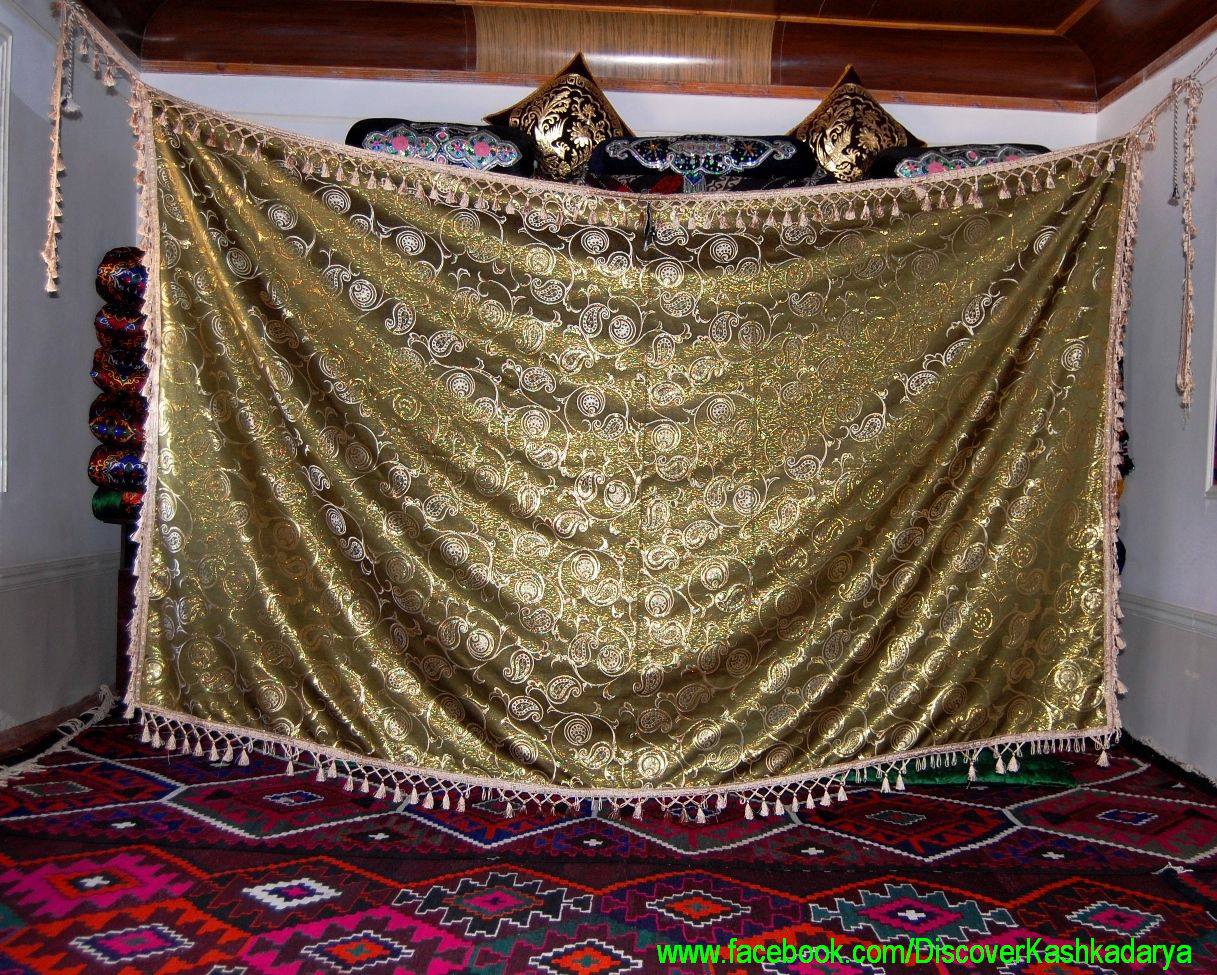
Chimildiq canopy; image: Facebook Discover Kashkadarya

Traditions add a rich layer to these connections, keeping families united. Weddings, for example, are deeply symbolic. One notable custom is the Chimildiq, a ceremonial canopy for newlyweds which marks the start of their life together and serves as a space for blessings and well-wishes for their future. Another beloved tradition is the Beshik tuyi, a joyous celebration of a baby’s first cradle wherein relatives and neighbors come together to share in the happiness of welcoming a new life, underscoring the communal nature of Uzbek culture.

“As an Uzbek woman, I’ve always been fascinated by the beauty and meaning behind our customs,” Rohila Mullayeva told TCA. The mother-in-law to three brides, for more than 20 years Mullayeva has been serving as a kayvoni, one appointed by women to preside over table work at weddings and other ceremonies. “They’re not just rituals but expressions of love, respect, and hope for the future,” she said. “Take Chimildiq, for instance – a special moment for young couples starting their journey together. One of the rituals in the ceremony is when the bride and groom give each other honey on their fingers. This is a sweet symbol of the joyful moments they hope to share in their life ahead. Another part of the ceremony is both meaningful and playful — when the groom attaches boiled eggs his bride’s dress. This gesture is a heartfelt wish for the couple to have many children.

“Then there’s the Beshik tuyi, the cradle ceremony, which is one of the most cherished traditions in our culture. When a bride gives birth to her first child, she is honored in a beautiful custom called Sallabandon, which is part of Beshik tuyi. An elderly grandmother, someone respected for having a big family, places a salla, a headdress wrapped in a special cloth, on the bride’s head,” Mullayeva explained. “During this ceremony, a kurpacha — a soft, colorful quilt — is placed under the bride’s feet, a gesture of respect and care. The meaning behind Sallabandon is deeply symbolic; it marks the bride’s transition from being a girl to a woman, a mother who has now joined the ranks of those who nurture and guide the next generation.”

According to Mullayeva, these traditions may seem simple, but they carry a huge depth of meaning, reminding us of the value we place on family, the importance of blessings, and the joy of welcoming new life.

Beshiq Tuyi; image: VK Viktoria Larina

In Kazakhstan, family holds a similarly sacred role. Despite transitioning from a nomadic to a settled lifestyle, the Kazakh people have held onto their age-old customs with great pride. Hospitality stands at the center of their way of life, with guests treated to warm welcomes and the finest offerings in the household. The tradition of Zheti ata, which requires the knowledge of seven generations of paternal ancestors, highlights the importance of lineage and family continuity. The ritual of Betashar, where a bride’s face is unveiled, symbolizes the union of two families. This significant custom has even earned a place on UNESCO’s list of Intangible Cultural Heritage.

Despite rapid modernization, Kazakhstan remains deeply connected to its rich familial traditions, which are considered the bedrock of national identity. Ethnographer and historian Aigerim Alimova shared her insights with TCA on these customs.

“Family, clan, and home are fundamental for Kazakhs,” Alimova explained, highlighting Asar, a tradition where relatives, neighbors, and friends come together to provide mutual assistance, be this in building a home or organizing a significant life event. Another tradition, Erulik, fosters community spirit by welcoming new neighbors with an invitation to dine, allowing newcomers to quickly adapt to their new location.

“Family values in Kazakhstan are also reflected in wedding traditions, which have been preserved in various forms,” noted Alimova. “For instance, during matchmaking, a ritual called Kudagi zhuzik involves the bride’s mother gifting the groom’s mother, symbolizing the unification of two families. The Kyz uzatu ceremony, marking the bride’s departure from her family, features special dishes prepared by the bride’s side to honor and strengthen the new family ties.”

There are a vast multitude of traditions in Kazakhstan and Uzbekistan which reflect deep-rooted family values. For instance, it’s customary for the head of the family to taste food first at a meal, and young people never sit higher than their elders at the table. These traditions serve to embody respect, unity, and the continuity of family heritage.

ESPN’s Laura Sanko Dives into Kazakh Culture, Inspired by UFC’s Shavkat Rakhmonov

American TV host and ESPN journalist Laura Sanko, known for her admiration of Kazakh UFC fighter Shavkat Rakhmonov, has shared her journey of learning the Kazakh language​.

Sanko acknowledged that the process has been challenging but expressed enthusiasm for mastering new words and phrases.

“It’s difficult. You would laugh if you saw me. I sit in my hotel room, watch YouTube videos, and try to repeat after them. When I think I’ve succeeded, I send an audio file to Sayat Abdrakhmanov, Shavkat Rakhmonov’s manager, asking him to check. Then he translates my phrases into Kazakh, and I listen to them slowly, over and over,” she revealed during an interview with Schrödinger’s Sport.

Despite her dedication, Sanko modestly assessed her progress, emphasizing the significant effort required to learn Kazakh.

“I learned that ‘sәlemetsiz be’ means ‘hello.’ I picked that up through YouTube. I wanted to prepare for a simple conversation, but I’m far from that. Kazakh is very difficult for Americans. It requires using deep throat muscles, while English relies on more frontal sounds. It’s hard for us to get it right,” she explained.

Sanko has long been a familiar name among martial arts fans in Kazakhstan. She began following Rakhmonov’s career even before his debut in the UFC​. Her admiration for the fighter has occasionally sparked rumors of romantic interest, but Sanko maintains that her fascination is purely professional.

Sanko’s admiration for Rakhmonov extends beyond his fighting skills to Kazakhstan’s culture. She has made public appearances in traditional Kazakh attire, such as during a UFC weigh-in​. Ahead of Rakhmonov’s most recent fight, she appeared in a traditional Kazakh outfit and, after his seventh consecutive UFC victory, delivered a speech in Kazakh – a gesture widely appreciated by Kazakhstani fans.

Shavkat Rakhmonov is one of Kazakhstan’s most celebrated MMA athletes. Currently ranked No. 2 in the welterweight division, Rakhmonov remains undefeated with a 19-0 record.