• KGS/USD = 0.01144 0%
  • KZT/USD = 0.00196 -0%
  • TJS/USD = 0.10896 -0%
  • UZS/USD = 0.00008 0%
  • TMT/USD = 0.28571 0.28%
  • KGS/USD = 0.01144 0%
  • KZT/USD = 0.00196 -0%
  • TJS/USD = 0.10896 -0%
  • UZS/USD = 0.00008 0%
  • TMT/USD = 0.28571 0.28%
  • KGS/USD = 0.01144 0%
  • KZT/USD = 0.00196 -0%
  • TJS/USD = 0.10896 -0%
  • UZS/USD = 0.00008 0%
  • TMT/USD = 0.28571 0.28%
  • KGS/USD = 0.01144 0%
  • KZT/USD = 0.00196 -0%
  • TJS/USD = 0.10896 -0%
  • UZS/USD = 0.00008 0%
  • TMT/USD = 0.28571 0.28%
  • KGS/USD = 0.01144 0%
  • KZT/USD = 0.00196 -0%
  • TJS/USD = 0.10896 -0%
  • UZS/USD = 0.00008 0%
  • TMT/USD = 0.28571 0.28%
  • KGS/USD = 0.01144 0%
  • KZT/USD = 0.00196 -0%
  • TJS/USD = 0.10896 -0%
  • UZS/USD = 0.00008 0%
  • TMT/USD = 0.28571 0.28%
  • KGS/USD = 0.01144 0%
  • KZT/USD = 0.00196 -0%
  • TJS/USD = 0.10896 -0%
  • UZS/USD = 0.00008 0%
  • TMT/USD = 0.28571 0.28%
  • KGS/USD = 0.01144 0%
  • KZT/USD = 0.00196 -0%
  • TJS/USD = 0.10896 -0%
  • UZS/USD = 0.00008 0%
  • TMT/USD = 0.28571 0.28%
09 December 2025

Rahmon Unveils Tajikistan’s Roadmap for Economic Growth and Diplomacy

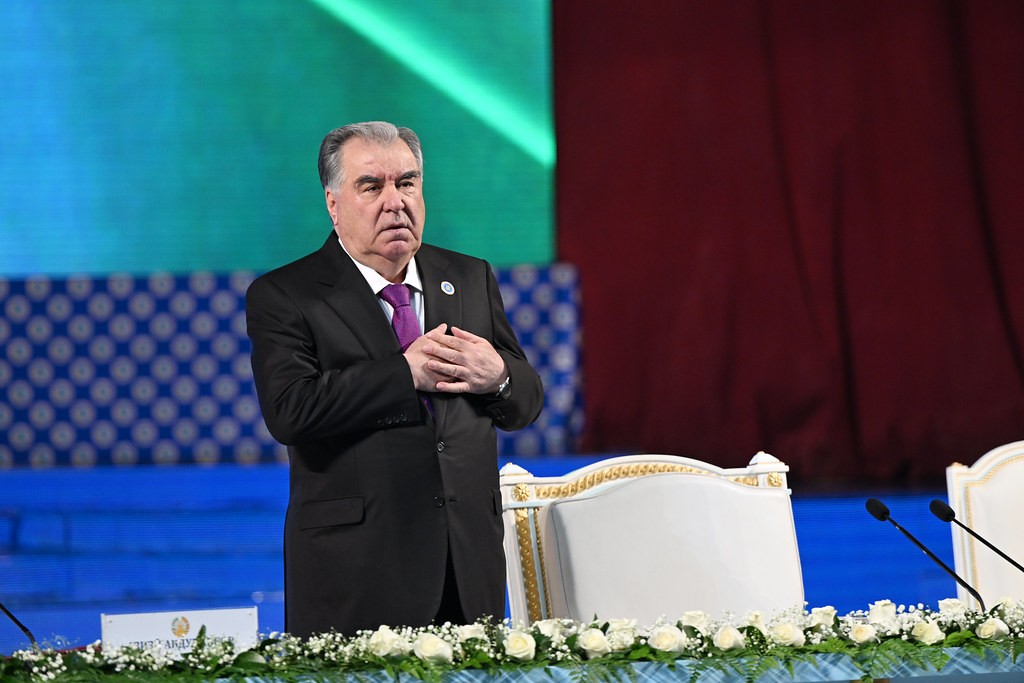
On December 28, Tajikistan’s President Emomali Rahmon delivered his annual address, titled “On Major Dimensions of Tajikistan’s Domestic and Foreign Policy,” during a joint session of both chambers of the Tajik Parliament​.

The president outlined key priorities for implementing domestic and foreign policy and advancing various sectors of Tajikistan’s economy, including industry, energy, agriculture, transport, investment, entrepreneurship, education, science, healthcare, and social protection.

Rahmon directed the government to draft a “Medium-Term Development Program for 2026-2030” by the end of 2025. Highlighting the need for innovation, he proposed declaring 2025-2030 the “Years of Development of the Digital Economy and Innovation.” Additionally, he announced plans to establish a University of Innovation and Digital Technologies in Kulob, building upon the existing Institute of Technology and Innovation Management.

Rahmon noted significant progress in industrialization, with Tajikistan’s industrial production nearly doubling in the past five years. This growth included the creation of more than 2,040 industrial enterprises and 74,000 jobs.

In the road and transport sector, Rahmon underscored the importance of transforming Tajikistan into a transit hub. Ongoing modernization and reconstruction efforts have already improved the country’s ranking in the World Economic Forum’s road quality index, rising from 50th to 44th among 165 countries.

Rahmon highlighted that 43% of Tajikistan’s 2024 state budget is allocated to the social sector. Over the past five years, public-sector wages have increased four times, doubling overall during this period. He instructed the government to further raise salaries for employees in education, healthcare, social protection, culture, sports, government agencies, law enforcement, and the military.

Employment remains a strategic priority. Rahmon noted that 4.1 million jobs have been created since independence, and he directed regional and local authorities to generate an additional 1.4 million jobs across all sectors of the economy in the next five years.

On foreign policy, Rahmon reiterated Tajikistan’s commitment to its “open doors” approach, expressing readiness to strengthen bilateral and multilateral relations. He emphasized the importance of constructive engagement with international and regional organizations, including the United Nations, international financial institutions, and development partners.

Rahmon’s address outlined a comprehensive roadmap for Tajikistan’s development, combining innovation, infrastructure, and social investment with an open and cooperative foreign policy. His directives reflect a vision aimed at fostering economic growth, improving living standards, and enhancing the country’s position on the global stage.
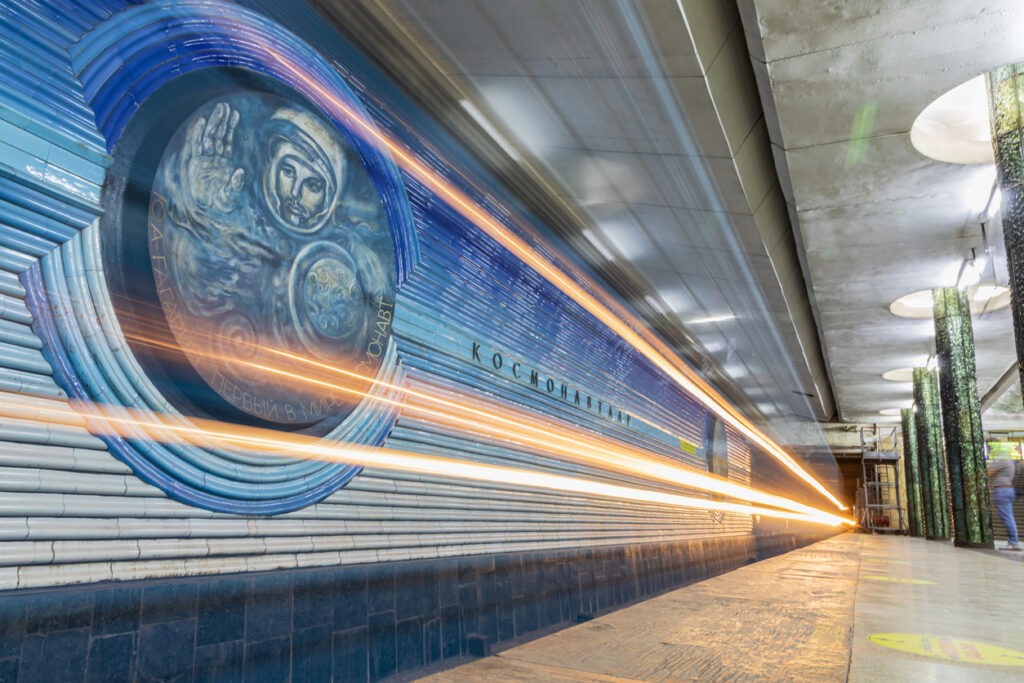

You Can Now Pay Your Fare on Tashkent’s Subway with the Palm of Your Hand

The Tashkent subway has introduced a pilot project for the “MyID Palm” fare payment system, which uses biometric technology to identify passengers by the unique vein pattern in their palms​.

This innovative system was developed by local scientists in collaboration with the Ministry of Transport, the payment service “ATTO,” and Octobank. It marks a significant advancement in biometric identification for public transportation.

The system relies on palm vein scanners to read each passenger’s unique vein pattern. According to the developers, this data is securely protected against unauthorized access and forgery. The goal of the technology is to enhance both security and convenience in fare payments.

Currently, “MyID Palm” devices have been installed at 12 stations along the Chilanzar line, where they are operating in test mode. Plans are underway to expand this system to all metro stations in Tashkent.

To use the service, passengers need an “ATTO” transportation card and the associated mobile application to create a biometric profile. The activation process involves scanning their palm at a designated info kiosk located at one of the stations equipped with the technology.

Testing of the palm payment system began in late October 2023, with Druzhba Narodov station becoming the first to enable this feature​. Earlier, in September 2023, the Tashkent subway began testing a Face ID payment system, which allows passengers to pay their fare using facial recognition technology​.

These advancements signal a move toward a more modernized and user-friendly public transportation system in Uzbekistan’s capital, with both residents and visitors benefiting from the improved efficiency and security of biometric payment solutions.

Tensions Rise as Uzbek Leaders Respond to Ramzan Kadyrov’s Remarks

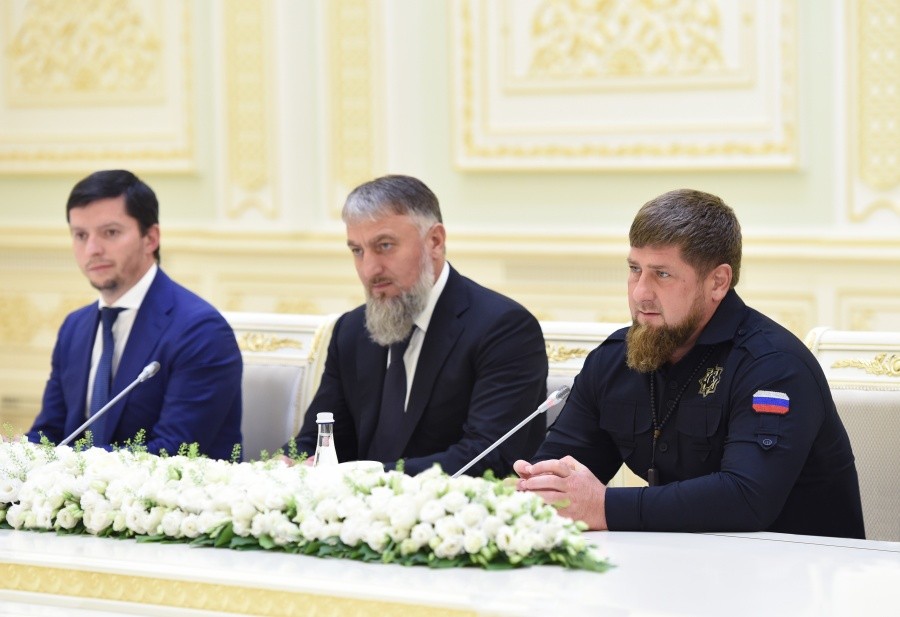
Uzbekistan has placed two residents of Chechnya, Bislan Rasayev and Shamil Temirkhanov, on Interpol’s wanted list. The Times of Central Asia has previously reported that the two men are accused of multiple crimes, including a plot to assassinate Komil Allamjonov, the former head of President Shavkat Mirziyoyev’s information policy department, and Dmitry Li, head of the National Agency for Prospective Projects (NAPP). Rasayev and Temirkhanov were reportedly offered $1.5 million for the assassinations.

Chechnya’s leader Ramzan Kadyrov has called the arrest warrants “fabrications”. Kadyrov claims that pro-Western media are spreading baseless rumors about divisions within Mirziyoyev’s family as part of a larger effort to destabilize the country’s leadership.

The attempt on Allamjonov’s life is said to have taken place on October 26 outside his home in Tashkent’s Kibray district. According to Uzbek media, two unidentified individuals fired multiple shots at Allamjonov’s car before fleeing the scene. No injuries were reported. Opposition outlets speculated about a “Chechen connection,” suggesting Kadyrov’s possible involvement in the attack.

In an earlier statement, Kadyrov said that “if I had really planned something, I would have completed it with a 100% result.” He also expressed skepticism about the investigation’s timeline, noting that Li was identified as a secondary target only months after the probe began. Kadyrov suggested that the case could be part of internal “behind-the-scenes games” orchestrated by certain groups.

In response, Uzbek officials and lawmakers condemned Kadyrov’s statements and threats.

Rasul Kusherbayev, a former deputy and adviser to the Minister of Ecology, described Kadyrov’s comments as terrorism. “Open threats to officials in Uzbekistan are terrorism. Those who make such statements or attempt such actions must be held accountable,” he said.

Kusherbayev also criticized the Uzbek government for remaining silent in the face of these threats. “Why should the government of Uzbekistan remain silent? How long will we tolerate those who openly threaten us with chauvinistic views? The response should go beyond mere statements – it should involve concrete measures. If necessary, flights to Grozny should be canceled, and every Chechen citizen entering Uzbekistan should be strictly vetted,” he added.

Odiljon Tojiyev, a deputy of Uzbekistan’s Legislative Chamber, similarly denounced Kadyrov’s interference in Uzbekistan’s internal affairs and his threats against Uzbek officials. He warned that such actions could harm relations between Uzbekistan and Chechnya.

“I call on the Prosecutor General’s Office of the Russian Federation to assess Ramzan Kadyrov’s threats against Uzbek officials. Moreover, Kadyrov should issue a public apology to the people of Uzbekistan. If he is truly a friend, he should assist Uzbekistan’s Prosecutor General’s Office in locating and extraditing Bislan Rasayev and Shamil Temirkhanov,” Tojiyev stated.

Kadyrov’s remarks and the allegations surrounding the assassination attempt have brought tensions between Uzbekistan and Chechnya into the spotlight. While Uzbekistan values its friendly relations with Russia and its regions, the controversy has prompted calls for firm action to protect the country’s sovereignty and ensure accountability.

Underground Smuggling Tunnel Uncovered on Uzbek-Kazakh Border

Under the coordination of Kazakhstan’s Turkestan Region Prosecutor’s Office and in cooperation with Uzbek law enforcement, authorities dismantled a criminal group and shut down a tunnel used for smuggling petroleum products.

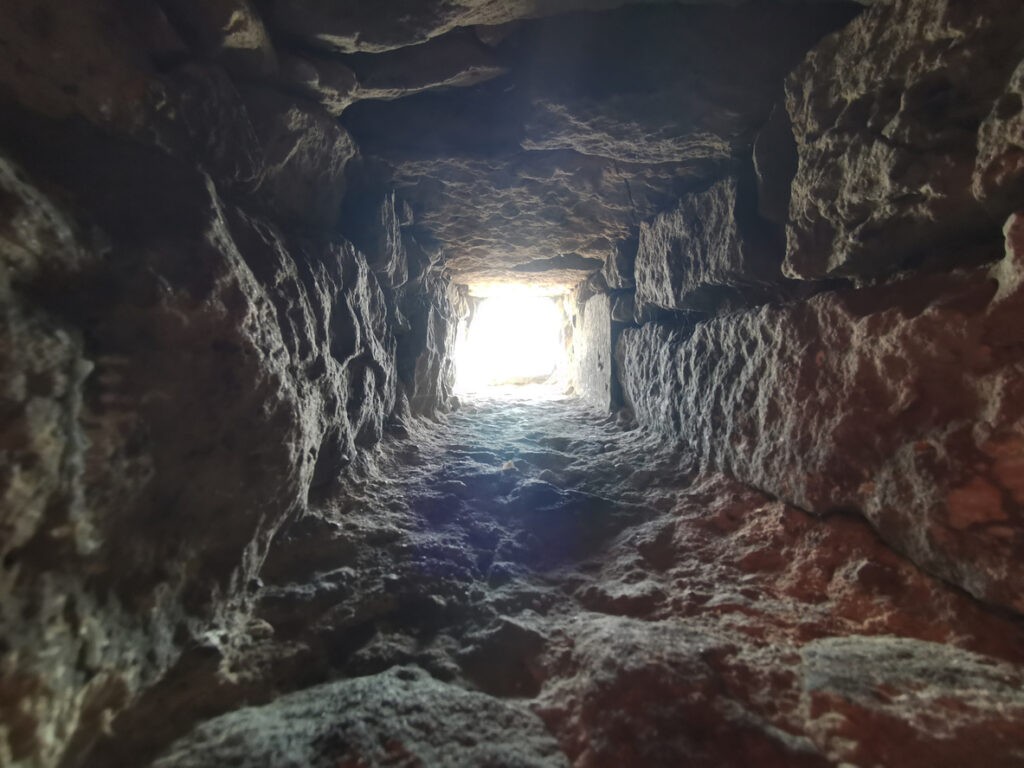
One tunnel, stretching 450 meters between the two countries, was used to smuggle 5–7 tons of fuel and lubricants daily. The smuggling operation had been active for two months before being brought to an end. Investigations revealed that a well-organized transnational criminal group was behind the tunnel, using it to facilitate the illicit transfer of goods and funds between Kazakhstan and Uzbekistan.

Meanwhile, Uzbekistan’s State Security Service (DXX) uncovered another illegal underground tunnel on the Tashkent-Kazakhstan border. Working in coordination with the Tashkent-Aero customs complex, border troops, and military personnel, the DXX exposed a cross-border smuggling operation involving large quantities of substandard drugs imported from India into Uzbekistan via Kazakhstan.

In a related case, a similar underground passage was discovered in April in Kyrgyzstan’s Jalal-Abad region. This tunnel was being used to smuggle people and contraband goods into Uzbekistan.

Long-Awaited Construction of China-Kyrgyzstan-Uzbekistan Railway Officially Launched

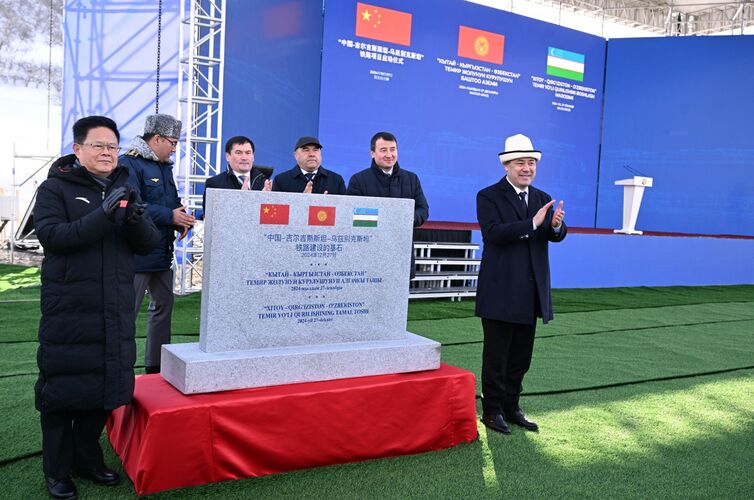
On December 27, Kyrgyzstan’s President Sadyr Japarov, the Chairman of the National Development and Reform Commission of the People’s Republic of China, Zheng Shanjie, and Uzbekistan’s Deputy Prime Minister Jamshid Khodjayev participated in a ceremony to mark the start of construction on the China-Kyrgyzstan-Uzbekistan railway. The event occurred in the village of Tosh-Kutchu in Kyrgyzstan’s Jalal-Abad region, where they laid the first stone for this significant regional transportation project.

Speaking at the ceremony, President Japarov highlighted the importance of the China-Kyrgyzstan-Uzbekistan railway as more than just a transportation route, describing it as a critical strategic bridge linking the East and West. “This route will ensure the delivery of goods from China to Kyrgyzstan, as well as to the countries of Central Asia and the Middle East, including Turkey, and on to the European Union. The project will strengthen interregional ties, help diversify transport routes and increase the competitiveness of the region as an international transport and transit hub, which is in line with the goals of the Central Asian countries,” Japarov said.

Zheng Shanjie delivered a message from Chinese President Xi Jinping, highlighting that the new land corridor connecting Asia and Europe will significantly increase the flow of people and trade among the three countries. According to the message, the project is expected to drive regional prosperity by fostering industrial and resource development, boosting trade, and attracting investment.

Uzbekistan’s President Shavkat Mirziyoyev, in an address read by Deputy Prime Minister Khodjayev, called the launch of railway construction a historic milestone that the three nations had been working toward for nearly 30 years. The Uzbek leader noted that the new transportation artery, which will establish the shortest land route connecting Central Asia and China, will strengthen the strategic partnership between the three nations.

The 523-kilometer railway will traverse Kashgar (China), Torugart, Makmal, Jalal-Abad (Kyrgyzstan), and Andijan (Uzbekistan). Once completed, the railway is expected to handle up to 15 million tons of cargo annually.

Currently, neither Kyrgyzstan nor Uzbekistan has a direct railway connection to China. Central Asia’s rail link to China is limited to a route through Kazakhstan, leaving Kyrgyzstan and Uzbekistan without a direct connection.

Ilham Aliyev: Azerbaijani Plane Crashed In Kazakhstan Due To Russian Ground Fire

Azerbaijan’s President Ilham Aliyev said on Sunday that the Azerbaijani airliner that crashed in Kazakhstan last week had been hit by Russian ground fire while flying over Russian territory. He also said that there had been efforts by Russia to cover up what had happened by spreading “absurd theories.”

After several days of international speculation and scrutiny, Aliyev spoke in detail with Azerbaijan Television in Baku about the crash of the Azerbaijan Airlines (AZAL) plane on Wednesday that killed 38 people. His remarks came one day after Russian President Vladimir Putin apologized for the crash but did not acknowledge that the aircraft had been accidentally hit by Russian fire.

Kazakhstan is leading the investigation of the crash, which occurred near the Caspian Sea city of Aktau after the plane diverted from its original destination of Grozny in the Russian republic of Chechnya. Officials said 29 people survived.  

“The facts indicate that the Azerbaijani civilian plane was damaged from the outside over Russian territory, near the city of Grozny, and almost lost control. We also know that means of electronic warfare put our plane out of control. This was the first impact on the plane. At the same time, as a result of fire from the ground, the tail of the plane was also severely damaged,” Aliyev said in the interview. 

Aliyev said that fact that “the fuselage is riddled with holes” indicates that initial speculation that birds hit the plane is false, and he criticized “some circles in Russia” for proposing that theory. 

“Another regrettable and surprising moment for us was that official Russian agencies put forward theories about the explosion of a gas cylinder on board the plane. In other words, this clearly showed that the Russian side wanted to cover up the issue, which, of course, is unbecoming of anyone. Of course, our plane was hit by accident. Of course, there can be no talk of a deliberate act of terror here,” the Azerbaijani president said. 

“Therefore, admitting guilt, apologizing in a timely manner to Azerbaijan, which is considered a friendly country, and informing the public about this – these were measures and steps that should have been taken. Unfortunately, for the first three days, we heard nothing from Russia except for some absurd theories.”

Azerbaijan refused Russian suggestions that the Russian-led Interstate Aviation Committee investigate the crash, saying there were concerns about the objectivity of the regional agency. Aliyev said he told Kazakh President Kassym-Jomart Tokayev that he didn’t want the agency involved and that his position was “met with understanding.”

In his apology in a phone conversation with Aliyev on Saturday, Putin said the Azerbaijani plane had been trying to land at a time when Russian air defenses were repelling attacks by Ukrainian drones. But he didn’t say that those air defenses hit the plane. 

Azerbaijan Airlines has suspended flights to 10 Russian cities since the crash.