• KGS/USD = 0.01144 0%
  • KZT/USD = 0.00194 -0%
  • TJS/USD = 0.10896 -0%
  • UZS/USD = 0.00008 0%
  • TMT/USD = 0.28571 0.28%
  • KGS/USD = 0.01144 0%
  • KZT/USD = 0.00194 -0%
  • TJS/USD = 0.10896 -0%
  • UZS/USD = 0.00008 0%
  • TMT/USD = 0.28571 0.28%
  • KGS/USD = 0.01144 0%
  • KZT/USD = 0.00194 -0%
  • TJS/USD = 0.10896 -0%
  • UZS/USD = 0.00008 0%
  • TMT/USD = 0.28571 0.28%
  • KGS/USD = 0.01144 0%
  • KZT/USD = 0.00194 -0%
  • TJS/USD = 0.10896 -0%
  • UZS/USD = 0.00008 0%
  • TMT/USD = 0.28571 0.28%
  • KGS/USD = 0.01144 0%
  • KZT/USD = 0.00194 -0%
  • TJS/USD = 0.10896 -0%
  • UZS/USD = 0.00008 0%
  • TMT/USD = 0.28571 0.28%
  • KGS/USD = 0.01144 0%
  • KZT/USD = 0.00194 -0%
  • TJS/USD = 0.10896 -0%
  • UZS/USD = 0.00008 0%
  • TMT/USD = 0.28571 0.28%
  • KGS/USD = 0.01144 0%
  • KZT/USD = 0.00194 -0%
  • TJS/USD = 0.10896 -0%
  • UZS/USD = 0.00008 0%
  • TMT/USD = 0.28571 0.28%
  • KGS/USD = 0.01144 0%
  • KZT/USD = 0.00194 -0%
  • TJS/USD = 0.10896 -0%
  • UZS/USD = 0.00008 0%
  • TMT/USD = 0.28571 0.28%
09 December 2025

From Washington to Samarkand: Mirziyoyev Proposes Hosting Next C5+1 Summit

Uzbekistan’s President Shavkat Mirziyoyev has been participating in the U.S.-Central Asia Summit in Washington, D.C., this week.

Mirziyoyev was received at Andrews Air Force Base by U.S. Deputy Secretary of State Christopher Landau, American-Uzbek Chamber of Commerce Chairperson Carolyn Lamm, and other officials. The visit included high-level bilateral meetings and participation in the C5+1 summit alongside Central Asian leaders.

On November 5, Mirziyoyev met with U.S. Representatives Bill Huizenga, Carol Miller, and Sydney Kamlager-Dove. The two sides discussed strengthening the strategic partnership and expanding interparliamentary cooperation. The Uzbek delegation highlighted the active role of the Congressional Caucus on Uzbekistan, which organizes annual “Uzbekistan Days” in the U.S. House of Representatives.

That same day, the Mirziyoyev also met Senator Steve Daines, co-chair of the Central Asia Caucus in the U.S. Senate. According to the Uzbek presidential press service, both sides noted the “unprecedented level” of bilateral cooperation, including a surge in trade and joint projects involving American companies. They emphasized the importance of congressional support in implementing recently signed agreements, many of which have reached record volumes. The two sides also agreed to organize a business delegation from Montana to Uzbekistan.
@president.uz

On November 6, Mirziyoyev held a series of business-focused meetings. He met with John Jovanovic, head of the U.S. Export-Import Bank (Eximbank), to discuss financing major projects in energy, critical minerals, transport, agriculture, IT, and other sectors. Special attention was given to Eximbank’s potential role in modernizing Uzbekistan’s aircraft fleet and supplying Boeing aircraft. Both parties agreed to develop a long-term cooperation plan.

Later that day, Mirziyoyev met with Ben Black, CEO of the U.S. International Development Finance Corporation (DFC), which mobilizes private capital for global development initiatives. According to the Uzbek side, discussions focused on energy, critical minerals, finance, transport, agriculture, and IT. The two sides agreed to accelerate the creation of a joint investment platform to support priority projects and small businesses. Uzbekistan also proposed opening a DFC regional office in Tashkent.

Mirziyoyev also held talks with Shilpan Amin, global executive director of General Motors International. The discussion centered on long-term cooperation in the automotive sector. Over the past five years, GM has produced 1.6 million vehicles in Uzbekistan, which has become Chevrolet’s second-largest market after the United States and now leads sales in Central Asia and the CIS.

Mirziyoyev then met with U.S. Secretary of Commerce Howard Lutnick. They discussed trade, investment, and joint economic projects. According to the Uzbek presidential press service, bilateral trade turnover has quadrupled in recent years, nearing $1 billion. Over 300 American companies are now operating in Uzbekistan. The sides noted expanding cooperation in agriculture, including contracts for soybean and cotton supplies and the introduction of U.S. drip irrigation technologies.

At the conclusion of his business program, Mirziyoyev met with representatives of leading American companies, investment funds, and financial institutions. He emphasized that trade turnover with the United States had increased fourfold in eight years and outlined priority cooperation areas, including energy, critical minerals, transport infrastructure, and digital technologies.

Uzbekistan aims to develop a next-generation energy system with 18-20 gigawatts of renewable capacity by 2030, with over half of electricity generated from solar and wind. The country also plans joint initiatives with the U.S. to extract and process uranium, copper, tungsten, molybdenum, and graphite. More than $12 billion will be invested in transport infrastructure by 2030, including the modernization of roads, railways, terminals, and airports. Partnerships with U.S. technology companies such as Google, Meta, and NVIDIA are growing, with plans for digital payment systems, a Digital Academy, and startup hubs.
@president.uz

Following a roundtable discussion, multiple agreements were signed in the presence of Mirziyoyev and Secretary Lutnick. According to the Uzbek side, these included deals on rare earth minerals, water-saving technologies, artificial intelligence, aircraft supply, and agricultural products. Notable signatories included the Ministry of Geology and Denali Exploration Group, the Fund for Reconstruction and Development and Re Element Technologies, Flowserve, Valmont Industries, Palo Alto Networks, Boeing, Louis Dreyfus Company, and Cargill.

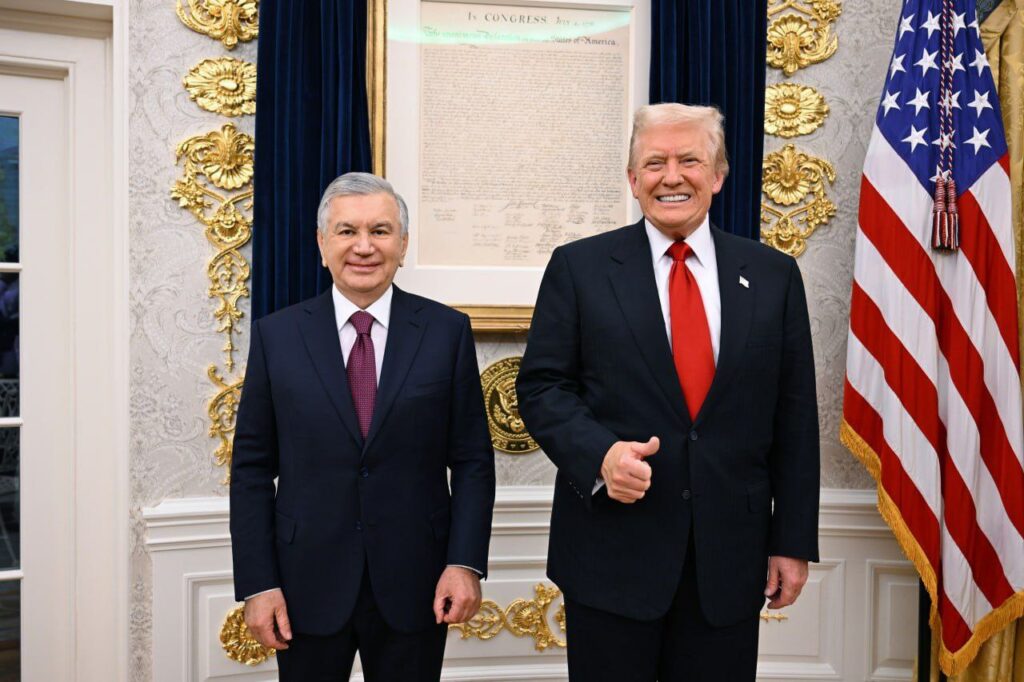
Later on November 6, Mirziyoyev met with Trump at the White House. The leaders discussed enhancing the strategic partnership, expanding political dialogue, and deepening cooperation in trade, investment, and culture. They also reviewed the implementation of agreements reached during their September meeting in New York and exchanged views on global and regional developments, including within the C5+1 framework.

Mirziyoyev congratulated Trump on what he described as significant domestic and foreign policy achievements. Trump welcomed the outcomes of Mirziyoyev’s meetings with U.S. officials and business leaders.

Shortly after, Trump posted on Truth Social, announcing an “incredible Trade and Economic Deal” between the two countries. He stated that Uzbekistan will invest and purchase nearly $35 billion in key U.S. sectors over the next three years, with total expected commitments surpassing $100 billion over the next decade. Highlighted sectors include critical minerals, aviation, automotive parts, infrastructure, agriculture, energy, chemicals, and information technology. Trump thanked Mirziyoyev and said the United States looks forward to a “long and productive relationship.”

Also on November 6, Mirziyoyev participated in the C5+1 summit at the White House, alongside the presidents of Kazakhstan, Kyrgyzstan, Tajikistan, and Turkmenistan. Chaired by Trump, the summit focused on regional cooperation. Mirziyoyev proposed creating a permanent C5+1 Secretariat on a rotational basis, a ministerial coordinating council on investment and trade, a Central Asian Investment Partnership Fund, and a special committee on critical minerals. He also called for joint programs in agricultural technology, enhanced cooperation on regional transport corridors connecting Central Asia with the South Caucasus and Europe and organizing a cultural heritage exhibition in the United States. Uzbekistan offered to host the next C5+1 summit in Samarkand.

Separately, Komil Allamjonov, adviser to the head of the Presidential Administration, proposed that the U.S. government introduce 10-year visas for Uzbek citizens. Writing on the platform X, he announced that Uzbekistan would lift visa requirements for U.S. citizens beginning in 2026. Deputy Secretary Landau welcomed the move as “wonderful news” that would open new opportunities for American travelers. Allamjonov added that both Landau and U.S. Special Representative for South and Central Asia Sergio Gor had raised this issue during recent meetings, and that extending B1/B2 visas for Uzbeks from one year to ten years would mark a major step in strengthening bilateral ties.
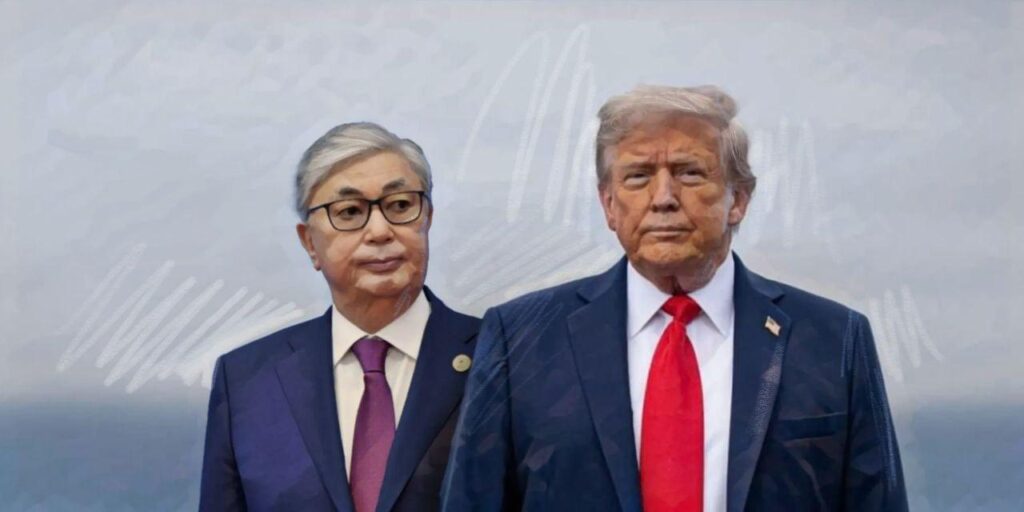
Kazakhstan to Join Abraham Accords

Washington D.C. – The Government of Kazakhstan announced its intention to join the Abraham Accords on Thursday, ahead of a scheduled meeting between President Kassym-Jomart Tokayev and U.S. President Donald Trump in Washington.

The move was confirmed by President Trump in a post on Truth Social, where he described Kazakhstan’s decision as “a major step forward in building bridges across the world.” He added that a formal signing ceremony would be held soon to make the accession official.

In doing so, Kazakhstan will join the United Arab Emirates, Bahrain, Morocco, Sudan, Israel, and the United States within the framework of the Abraham Accords. Its inclusion represents a significant diplomatic milestone, making it the first Central Asian nation — and the only non–Middle Eastern or North African member apart from the United States — to take part in the initiative. The expansion extends the Accords’ reach into Central Asia, highlighting their growing relevance beyond their original geographic and political context.

Kazakhstan’s accession represents a powerful statement from a Muslim-majority nation in favor of peaceful normalization with Israel. By joining, Astana reinforces the framework’s legitimacy across the Islamic world and demonstrates that constructive engagement with Israel can coexist with respect for Islamic values and regional cooperation.

As the first Central Asian signatory, Kazakhstan sets a precedent for its neighbors and broader Muslim communities, illustrating that pragmatic diplomacy and peace-building can transcend historical divisions. The move also strengthens U.S.-led efforts to expand the Accords’ vision of dialogue, stability, and coexistence beyond the Middle East — signaling a new chapter in regional diplomacy.

The Tokayev administration’s decision carries political risks. The move may draw criticism from some pro-Palestinian factions and Iran-aligned groups that view normalization with Israel skeptically. To manage this, Astana will need careful messaging, emphasizing that engagement with Israel complements its continued support for Palestinian statehood and regional peace. Ultimately, the government’s calculation is that the benefits — including closer alignment with the United States and enhanced international influence — outweigh the potential political costs.

Alignment with Washington

Joining the Abraham Accords underscores President Tokayev’s continued alignment with President Trump’s foreign policy priorities. By joining a U.S.-led initiative promoting normalization with Israel, he reinforces support for the White House’s approach to Middle East diplomacy.

The move builds on Tokayev’s earlier stance: on September 30, 2025, he publicly endorsed former U.S. President Donald Trump’s 20-point Gaza peace plan, calling it a “unique opportunity and a crucial step toward lasting peace in the Middle East.”

As a Muslim-majority nation pursuing a balanced foreign policy, Kazakhstan’s support highlights its strategic effort to deepen ties with Washington and Israel while maintaining credibility across the Arab and Islamic world. The decision reflects Tokayev’s broader vision of positioning Kazakhstan as a diplomatic bridge between East and West.

Expanding Regional Appeal and Continuity in Israel Ties

Kazakhstan’s decision to join the Abraham Accords represents both a continuation of its long-standing relationship with Israel and a forward-looking step to broaden the framework’s regional reach. Since establishing diplomatic ties in 1992, Kazakhstan has maintained consistent cooperation with Israel in technology, agriculture, and security — while preserving positive relations with the wider Muslim world.

Joining the Accords formalizes and expands this partnership within a multilateral framework that aligns with Kazakhstan’s tradition of balance, dialogue, and interfaith understanding.

At the same time, Kazakhstan’s participation may encourage other Central Asian states to consider joining the Accords in the future. As the region’s only middle power, its example carries considerable influence — demonstrating that pragmatic diplomacy and religious coexistence can advance national interests without compromising cultural identity.

This inclusion could also reignite debate in Washington over the relevance of the Jackson–Vanik Amendment as it applies to Kazakhstan and its neighbors. Enacted in 1974 to pressure the Soviet Union to allow Jewish emigration to Israel, the amendment technically remains in force despite Kazakhstan’s long record of openness and religious tolerance. By joining a framework centered on peace and normalization with Israel, Kazakhstan affirms the very principles that Jackson–Vanik sought to advance. This alignment strengthens the case for formally lifting its application, symbolizing both the maturation of U.S.–Central Asia relations and the region’s deeper integration into the global community of cooperation and coexistence.

The move also reinforces Kazakhstan’s self-image as a neutral, peace-promoting state — consistent with its tradition of hosting interfaith and global peace dialogues, including the Congress of Leaders of World and Traditional Religions. This continuity underscores Kazakhstan’s long-standing “multi-vector” foreign policy, which seeks constructive relations with diverse partners. By positioning itself as a bridge between the Muslim world and the West, Kazakhstan enhances its global visibility and soft power, strengthening its role as a moderate and constructive actor in international diplomacy.

Conclusion

Kazakhstan’s decision to join the Abraham Accords marks an important step in its foreign policy and the broader push for peace in the Middle East. As the first Central Asian nation to join, Kazakhstan shows that cooperation and dialogue with Israel can go hand in hand with support for regional stability and respect for Islamic values.

The move strengthens ties with the United States, builds on its long-standing relationship with Israel, and reflects President Tokayev’s effort to position Kazakhstan as a neutral, bridge-building country that values diplomacy, peace, and practical engagement with the wider world.


Kazakhstan Advances Digital Transformation with U.S. Partnerships

Kazakhstan, Central Asia’s largest economy, is rapidly positioning itself as a regional leader in digital transformation. Increasingly, United States partners no longer view Kazakhstan solely as a source of natural resources. Instead, future cooperation is expected to expand into digital technologies and artificial intelligence (AI).

Advances in Digitalization

In October, Kazakhstan reaffirmed its digital ambitions with a major technological breakthrough. Kaspi, the country’s leading fintech firm and a systemically important bank, launched Kaspi Alaqan, a palm-based payment system that requires no phone, card, or internet connection.

The service will debut in December 2025 through dedicated ATMs in Almaty before expanding nationwide. Analysts say the innovation puts Kaspi on par with Amazon One and China’s WeChat, highlighting Kazakhstan’s readiness to adopt cutting-edge global technologies.

Traditionally associated with oil, gas, and uranium, Kazakhstan is now investing heavily in becoming Central Asia’s digital hub, an evolution that presents strategic opportunities for the U.S. Partnerships in digital governance, AI, and innovation ecosystems align closely with Washington vision for expanded cooperation in Eurasia.

According to the United Nations, Kazakhstan ranked 24th globally in digital development as of June 2025, placing in the top 10 for online public services. Services such as school enrollment, vehicle registration, and passport issuance have been fully digitized, requiring minimal citizen effort. In some cases, the process is faster than in many Western countries.

Kazakhstan’s government aims to double its GDP to $450 billion by 2029, a target that will require more than a 2.5-fold increase in investment. Digital technologies are central to this strategy.

To manage this transformation, a new Investment Board was established in October 2025 to oversee large-scale projects and determine economic priorities.

In September, the Mazhilis (lower house of parliament) passed a landmark law on artificial intelligence. Deputies highlighted fairness, transparency, and the protection of personal data as key legal principles.

The newly launched National Artificial Intelligence Platform hosts over 100 AI agents that support e-government functions and expand access to technology. Additionally, in July, Kazakhstan introduced a supercomputer powered by NVIDIA H200 GPUs. With performance reaching 2 exaflops (FP8), it is the most powerful computing system in Central Asia.

Startups, universities, and research centers now have access to this infrastructure. The language models KazLLM and Alem LLM have also been introduced, capable of generating content in Kazakh, Russian, English, and Turkish.

For the U.S., Kazakhstan’s AI ecosystem offers a valuable partner for collaborative research, ethical framework development, and State Department–supported initiatives using AI for sustainable development.

Investing in the Future

U.S.–Kazakhstan cooperation in digital innovation is already accelerating. In September, Amazon announced a $200 million investment in Kazakhstan’s internet infrastructure. A distribution agreement with Kazakhtelecom will bring Amazon’s Kuiper satellite network to the republic, improving connectivity and driving economic growth.

Additionally, 24 startups from Central Eurasia have joined U.S. accelerator programs such as AlchemistX and Silicon Valley Residency. These initiatives, launched in September in Palo Alto, connect regional teams with U.S. venture capital and technology ecosystems.

Kazakhstan is also advancing blockchain infrastructure. Astana recently launched the Solana Economic Zone, the first in Central Asia based on a blockchain platform. In partnership with the Solana Foundation, the government plans to offer blockchain-focused education and attract global Web3 companies. Programs implemented with Forma will support international startups.

For U.S. firms seeking a regulated Web3 environment, the Solana Economic Zone could serve as a sandbox for innovation in emerging markets.

Fostering Education

Kazakhstan is investing in education to build a future-ready workforce. At the Alem.ai Center in Astana, teenagers learn animation, 3D design, and generative AI through the TUMO creative program. Older students participate in Tomorrow School, a programming initiative.

Launched this year, the AI-Sana program aims to train 650,000 students—undergraduate, master’s, and doctoral—in artificial intelligence skills. The initiative seeks to develop research and entrepreneurial teams to deploy AI across key economic sectors.

Benefits for Washington

Kazakhstan’s digital transformation aligns with U.S. strategic objectives: diversifying supply chains, promoting open data flows, and providing alternatives to authoritarian digital governance models.

The country’s AI and digital sectors offer Washington a springboard for joint research, secure satellite infrastructure investment, and venture collaboration with American accelerators. This shift requires not massive U.S. funding, but broader strategic recognition of Kazakhstan and Central Asia as more than resource suppliers. In the coming years, the region could emerge as a 21st-century model for digital modernization on a global scale.

Kyrgyzstan Launches Unified State Lottery Infrastructure

Kyrgyzstan is consolidating all private lottery operations into a single, state-controlled system as part of a national initiative to modernize the sector and align it with international standards. The project is being implemented by the Information Security Center in partnership with the state-owned enterprise Kyrgyzloto.

Under the new framework, all types of lottery draws in the country will be brought under state oversight. Authorities say the system will provide full transparency over financial flows, enable real-time monitoring of sales and payouts, and protect citizens from unscrupulous operators.

The Lottery Information Processing Center will manage real-time data collection on ticket sales, draw results, and prize pools. Financial and fiscal oversight will be conducted by the Ministry of Finance and the State Tax Service.

“Our task is to agree on the rules for conducting lotteries and to form a fund for targeted deductions. We intend to unify the draws and channel the proceeds into useful areas,” said Sherik Kasmaliev, director of Kyrgyzloto, during a press briefing.

Government projections estimate that over the next ten years, the national lottery could generate approximately $1 billion in tax revenues and licensing fees.

Officials also believe the launch of a unified state lottery system will provide a legal alternative to illegal gambling, help curb gambling addiction, and return billions of som previously lost to unlicensed foreign platforms back into the domestic economy.

All data processing and storage infrastructure will be located within Kyrgyzstan, which project developers say will enhance cybersecurity and reduce the risk of capital outflows.

Kazakh Food Exports to China Grow After CIIE 2025 Deal

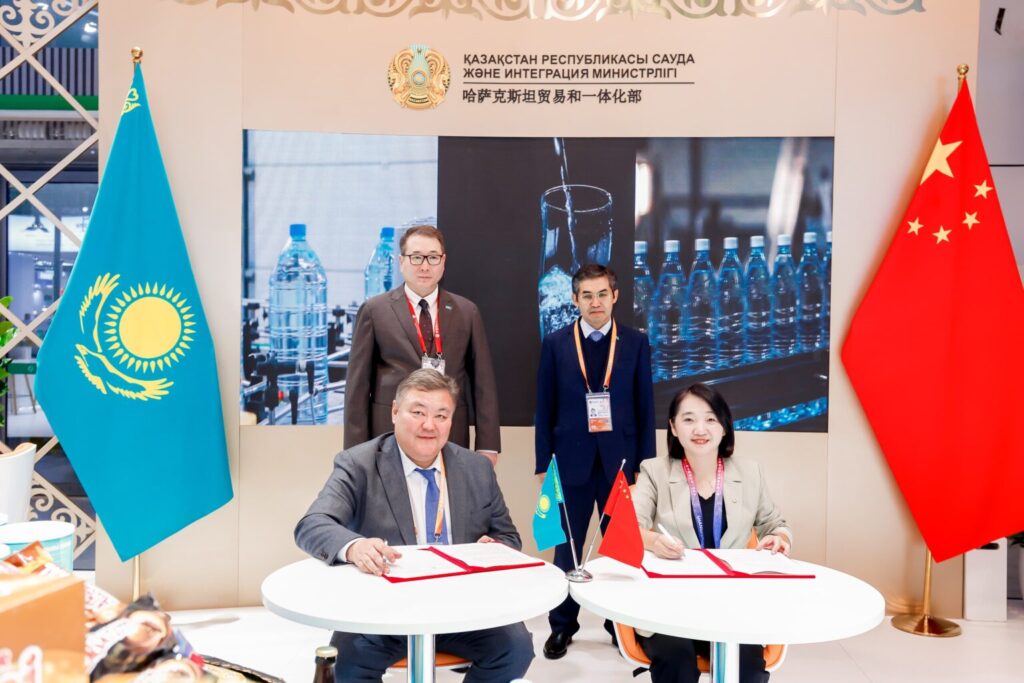
At the China International Import Expo (CIIE 2025) in Shanghai, Kazakhstan’s Trade Policy Development Center, QazTrade, signed a partnership agreement with Optimize Integration Group (OIG), one of China’s leading food importers responsible for 18% of all frozen meat imports into the country. The agreement aims to promote digital trade and create online platforms that will facilitate the entry of Kazakhstani food products into the Chinese market.

Under the terms of the agreement, both sides will jointly promote Kazakh agricultural and food products, improve logistics infrastructure, and develop digital trade technologies and payment systems.

“This partnership with OIG, one of the most technologically advanced and influential trading platforms in China, opens up significant opportunities,” said QazTrade CEO Aitmukhamed Aldazharov. “Kazakhstani producers will not only increase their exports to China but will also integrate into advanced digital supply chains. This is a major step forward for e-commerce and mutual trust between our countries.”

At CIIE 2025, QazTrade also showcased the growing potential of Kazakhstan’s agricultural cooperatives. In collaboration with the National Association of Cooperatives of Kazakhstan and China Coop, China’s largest cooperative retail network, Kazakh products such as honey, kumis, and confectionery are set to enter the Chinese retail market. China Coop encompasses over 340,000 retail outlets with annual turnover exceeding 7 trillion yuan.

Aldazharov expressed confidence in the cooperatives’ prospects, noting that joint market research has been conducted, trial shipments arranged, and priority export categories identified. These include vegetable oil, meat, honey, dairy beverages, and confectionery.

In parallel, QazTrade is launching an acceleration and training program aimed at Chinese companies seeking to expand their operations in Kazakhstan and across Central Asia.

Uzbekistan the Only Country to Report Net Gold Sales in September

Uzbekistan was the only country in the world to report net gold sales in September 2025, according to data from the World Gold Council. While most central banks increased their gold reserves, the Central Bank of Uzbekistan reduced its holdings, standing out among its global peers.

Based on International Monetary Fund and other publicly available data, global central banks collectively added approximately 39 tons of gold in September, marking a 79% increase over August and the highest monthly total in 2025 to date. Year-to-date, central banks have purchased around 200 tons, slightly below the 215 tons recorded during the same period in 2024.

The largest buyer in September was the Central Bank of Brazil, which acquired 15 tons. Other significant purchasers included the National Bank of Kazakhstan and the Bank of Guatemala, while acquisitions by other countries were relatively modest.

In the third quarter of 2025, global net purchases reached approximately 220 tons, up 28% from the previous quarter and 6% above the five-year quarterly average. This reflects a sustained interest in gold as a strategic reserve asset amid global economic uncertainty.

Year-to-date, Poland’s central bank has been the largest net buyer, accumulating 67 tons. Kazakhstan follows with 40 tons, while Azerbaijan’s State Oil Fund (SOFAZ) has added 38 tons. The World Gold Council emphasized that, in contrast to this trend, Uzbekistan was the only country to decrease its official gold holdings during September.