• KGS/USD = 0.01144 0%
  • KZT/USD = 0.00194 -0%
  • TJS/USD = 0.10844 -0.46%
  • UZS/USD = 0.00008 0%
  • TMT/USD = 0.28571 0.28%
  • KGS/USD = 0.01144 0%
  • KZT/USD = 0.00194 -0%
  • TJS/USD = 0.10844 -0.46%
  • UZS/USD = 0.00008 0%
  • TMT/USD = 0.28571 0.28%
  • KGS/USD = 0.01144 0%
  • KZT/USD = 0.00194 -0%
  • TJS/USD = 0.10844 -0.46%
  • UZS/USD = 0.00008 0%
  • TMT/USD = 0.28571 0.28%
  • KGS/USD = 0.01144 0%
  • KZT/USD = 0.00194 -0%
  • TJS/USD = 0.10844 -0.46%
  • UZS/USD = 0.00008 0%
  • TMT/USD = 0.28571 0.28%
  • KGS/USD = 0.01144 0%
  • KZT/USD = 0.00194 -0%
  • TJS/USD = 0.10844 -0.46%
  • UZS/USD = 0.00008 0%
  • TMT/USD = 0.28571 0.28%
  • KGS/USD = 0.01144 0%
  • KZT/USD = 0.00194 -0%
  • TJS/USD = 0.10844 -0.46%
  • UZS/USD = 0.00008 0%
  • TMT/USD = 0.28571 0.28%
  • KGS/USD = 0.01144 0%
  • KZT/USD = 0.00194 -0%
  • TJS/USD = 0.10844 -0.46%
  • UZS/USD = 0.00008 0%
  • TMT/USD = 0.28571 0.28%
  • KGS/USD = 0.01144 0%
  • KZT/USD = 0.00194 -0%
  • TJS/USD = 0.10844 -0.46%
  • UZS/USD = 0.00008 0%
  • TMT/USD = 0.28571 0.28%
09 December 2025

Interview: A Profile of Women’s Rights in Central Asia from Equality Now

Equality Now is an international human rights organization that uses the law to protect and promote the rights of all women and girls worldwideThe organization combines grassroots activism with legal advocacy at national, regional, and international levels, and collaborates closely with local partners to ensure governments enact and enforce laws protecting women’s and girls’ rights.

The Times of Central Asia spoke with Equality Now’s Eurasia consultant Janette Akhilgova about the issues that women and girls in Central Asia face, and how women’s rights are being addressed.

TCA: Equality Now works in all regions of the world. Which social issues and inequalities are most affecting women and girls in Central Asia at the present time? 

JA: One of Equality Now’s main focuses in Central Asia is ending sexual violence and improving access to justice for survivors, specifically women and girls. In 2019, we published  “Roadblocks to Justice: How the Law is Failing Survivors of Sexual Violence in Eurasia,” examining laws on rape and other forms of sexual violence in 15 former Soviet Union countries. This report formed the basis of our work in Eurasia, helping us identify the major legal gaps in the region. 

A critical legal gap is the absence of a consent-based definition of rape, which means the law does not recognize a broad range of coercive circumstances where consent cannot be genuine, willing, or voluntary. This omission leaves some forms of sexual violence unpunished, perpetuating a culture of impunity. Inadequate support systems for sexual violence survivors compound the problem, enabling miscarriages of justice and fostering a widespread lack of trust in legal systems.

Another obstacle to justice for survivors is the provision for conciliation between parties in rape cases. This practice involves sexual violence survivors being encouraged or pressured to reach an agreement with their assailant outside of the formal criminal justice system. The approach often involves mediating a settlement, whether financial or otherwise, between the survivor and the accused, typically facilitated by families, communities, or even legal authorities.

Conciliation is sometimes not voluntary as survivors are often subjected to societal pressure. The social stigma attached to rape, a strong culture of victim blaming, and a lack of awareness about legal procedures are also factors that contribute to sexual violence cases not being reported to authorities and instead being dealt with privately.

TCA: Is progress being made to eradicate these issues? Conversely, are there any parts of life where women and girls see their rights eroded?

JA: Central Asian countries have made varying progress in advancing women’s rights and welfare.  The 2022 Global Gender Gap Report highlighted significant strides by Kazakhstan, such as lifting restrictions on “banned professions” so that women are no longer legally prohibited from doing certain jobs previously deemed “too dangerous” or “unsuitable” for women. The country has also adopted new and comprehensive laws to protect women’s and children’s rights. 

Another progressive legal reform in Kyrgyzstan was the introduction in 2024 of a law on domestic, sexual, and gender-based violence that strengthened access to justice for women and girls, including those with disabilities. 

The World Bank’s 2024 report, “Women, Business, and the Law,” named Uzbekistan one of the top five improvers in gender equality globally. This recognition was due in part to the passing of a bill that criminalized domestic violence and strengthened penalties for sexual violence and stalking. 

The new law incorporated many of the recommendations made by Equality Now in its 2022  submission to the Committee on the Elimination of Discrimination Against Women (CEDAW). This submission contained a detailed analysis of Uzbekistan’s laws on sexual violence and provided guidance to improving protections in compliance with international human rights standards. In 2024, a new bill aimed at strengthening protections for children from all forms of violence was passed, and the president is expected to sign this into law soon. 

For Kazakhstan, the country’s ranking in the Global Gender Gap report dropped from 65th place in 2022 to 76th in 2024 due to a widening gender wage gap and persistent barriers to women’s political participation. 

TCA: Equality Now counts Europe and Central Asia as one region. How does equality for women in Central Asia compare with situations in Europe?

JA: Equality Now’s work to end sexual and gender-based violence in Eurasia focuses specifically on countries that were part of the former Soviet Union. All countries grapple with a mix of challenges to women’s rights that reflect unique cultural, legal, and social contexts, while also manifesting patterns of gender discrimination and harm found globally. This is why it is vital to combine localized and global efforts to advance equality.

Europe has the highest gender parity and has established advanced legal frameworks to protect women’s rights, no country anywhere has achieved full gender equality.  The Council of Europe’s Istanbul Convention, which provides a comprehensive framework for the protection of women and girls from gender-based violence, has not been universally ratified across Europe, and none of the Central Asian countries have adopted it. 

Intersecting forms of discrimination – based on race, immigration status, disability, sexuality, and gender identity – create additional barriers to justice for women and girls. In Central Asia, access to justice for women is further complicated by a strong culture of shame and deeply rooted patriarchal norms. 

TCA: How receptive are Central Asian governments to the work you do? Are there any current initiatives you would highlight as being beneficial? Conversely, what problems do you face with certain governments?

JA: Equality Now has established productive cooperation with governments and local partners in the countries we work in and it is important to acknowledge the positive efforts to improve protections for women and girls against violence and gender inequality. 

In 2021, Equality Now published the manual “Effectively Investigating, Prosecuting, and Adjudicating Sexual Violence Cases in Georgia” to support practitioners working on improving access to justice for sexual violence survivors in Georgia. A similar manual for Kyrgyzstan, aimed at training legal aid lawyers on sexual violence and disability, is currently being developed in collaboration with the Commissioner on the Rights of the Child and Bar Association of Kyrgyzstan. We have also proposed incorporating training on the manual into Kyrgyzstan’s National Action Plan for implementing the Convention on the Rights of the Child (CRC).

Uzbekistan’s National Agency of Social Protection invited our network of civil society organizations to provide a proposal on legal reforms related to sexual violence against children. These collaborations show the governments’ receptiveness and willingness to seek and incorporate our expertise. 

However, promoting gender equality and women’s rights is not always easy in the region. For instance, in Kazakhstan, the government controls the women’s rights agenda by supporting pro-government groups while targeting organizations like NeMolchi (Do Not be Silent) Foundation, whose head, Dina Smailova, was forced to flee the country for speaking up against sexual violence.

In 2024, Kyrgyzstan introduced a “foreign agents” law, giving the state tighter control over non-governmental organizations that receive foreign funding and engage in activities deemed political. Impacted nonprofit organizations are required to register as “foreign representatives,” and the government now has greater powers to monitor their activities and suspend or shutter them. Alongside creating a more challenging working environment for civil society and human rights defenders, Kyrgyzstan has also been cracking down on independent media, including raiding media outlets and arresting journalists.


Why Kazakhstan Wants to Change Subsoil User Taxation

Kazakhstan is considering a significant change in the taxation of subsoil users, with Minister of Industry and Construction Kanat Sharlapayev proposing the introduction of royalties to replace the current mineral extraction tax (MET) for licenses issued from January 1, 2026. According to Sharlapayev, this shift would attract more investors to Kazakhstan and encourage the domestic processing of raw materials.

Why Investors Are Dissatisfied with MET

The MET, introduced in 2008, is levied on subsoil users for every type of mineral, hydrocarbon, underground water, and therapeutic mud extracted in Kazakhstan. Each resource is taxed at a separate rate, calculated based on the volume of extracted raw materials rather than their actual sale or revenue. This has caused dissatisfaction among both local and foreign subsoil users.

Over the years, discussions have intensified about replacing MET with royalties, which would calculate taxes based on the volume of products sold or profits earned. Sharlapayev stated during a recent government meeting that experts from the World Bank have recommended this change to make Kazakhstan’s mining sector more attractive to investors.

“Globally, the most popular taxation model in the mining and metallurgical sector is based on the volume of products sold or profits earned. Kazakhstan, however, uses the mineral extraction tax. Introducing royalties tied to the sales value of minerals would be more transparent and familiar to international mining players,” Sharlapayev explained.

Sharlapayev also emphasized that replacing MET with royalties would incentivize domestic production by imposing lower taxes on minerals processed within Kazakhstan compared to those exported without processing. He urged Prime Minister Olzhas Bektenov to instruct the Ministry of Finance and the Ministry of National Economy to include royalty provisions in the new Tax Code, expected to take effect in 2026. However, these changes would only apply to licenses issued from January 1, 2026.

Concerns Over the Transition

The Ministry of Finance has expressed reservations about the proposed shift, citing potential revenue losses. In September, Zhanybek Nurzhanov, Deputy Chairman of the State Revenue Committee, warned that transitioning to royalties could cost the state budget hundreds of billions of tenge.

“We can switch to royalties only if there are no losses for the budget. If we simply introduce royalties and reduce business payments, it raises a serious question—how do we offset nearly half a trillion tenge in lost tax revenue?” Nurzhanov said.

Additionally, Nurzhanov pointed out that determining the true value of exported raw materials would require the establishment of specialized laboratories, imposing financial burdens on both businesses and the state. This, coupled with the complexities of administering royalties, could deter subsoil users.

Kazakh economist Galymzhan Aitkazin echoed these concerns, noting that MET’s fixed rates provide predictability for both businesses and the government, while royalties—tied to revenue or market prices—introduce variability.

“The simplicity of flat MET rates allows companies to plan effectively and helps the government forecast revenues. By contrast, royalties linked to revenue or market prices could lead to payment variability, complicating financial planning for both parties,” Aitkazin explained.
He also emphasized that MET’s straightforward mechanism for calculating the tax base—based on production volume or value—is easier to administer than royalties, which require more detailed assessments of income and redistribution levels. This could increase the risk of tax evasion or reporting manipulation.

“Stimulating domestic processing and attracting investment is vital for Kazakhstan’s extractive sector,” Aitkazin concluded. “However, we cannot overlook the state budget’s reliance on tax revenues from the extractive industries. Whether this sweeping measure in the new Tax Code will justify potential shortfalls in revenue, given the high risks of evasion and falsification, remains a significant concern.”

New Fighting in Syria Throws Astana Talks Off Track

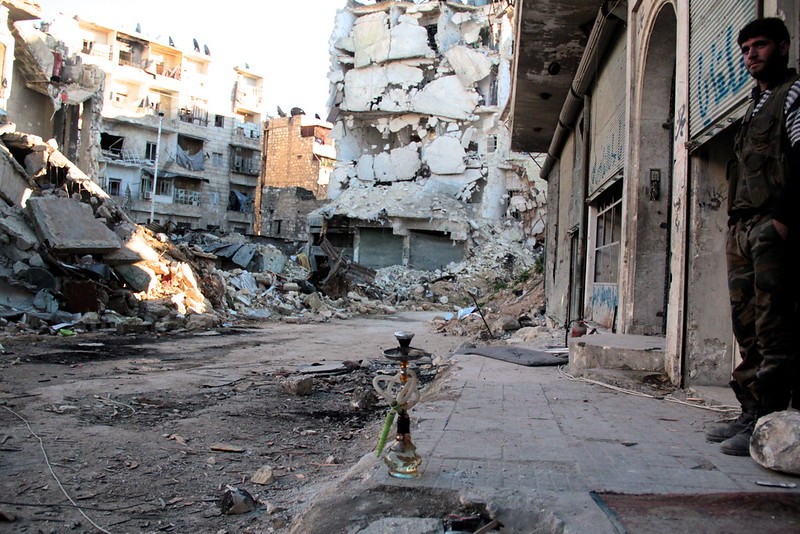
It’s called the Astana process: a long-running series of talks hosted by Kazakhstan whose stated aim is to deliver peace to conflict-torn Syria. Some Syrian opposition figures and other critics, however, have said the “guarantor” countries of the process – Iran, Russia and Türkiye – use it to promote their own political and military interests in the region.

The dialogue named after the Kazakh capital, which marked its 22nd round in Astana on Nov. 11-12, was undercut on Nov. 27 when Syrian rebels launched a surprise attack against government forces and seized most of Aleppo, Syria’s second largest city, within days. The stunning operation, which reignited the civil war that began in 2011, followed several years of relative quiet during which Syria was divided into areas of factional control and foreign influence.

Iran, Russia and Türkiye are talking about the Astana process as a way out of the current chaos. Visiting Türkiye on Monday, Iranian Foreign Minister Abbas Araghchi said the negotiations format must be “preserved” and that the foreign ministers of the guarantor countries would meet soon to discuss Syria, according to Iranian state media. Multiple media reports say the meeting could take place not in Astana, but on the sidelines of a forum in Doha, Qatar on Dec. 7-8.

“All agreed: NO ONE benefits from another war in Syria,” Araghchi said on the X platform.

Russia, which along with Iran supports Syrian President Bashar Assad and uses its military presence there to project power in the region and beyond, has also referred to the Astana framework as a way to stabilize the situation. At the same time, Russian jets have conducted bombing runs in response to the rebel offensive, and Iran says it would consider any Syrian government request to send troops.

Türkiye, on the other hand, has backed some Syrian rebel groups and blames the resurgence of fighting on Assad’s failure to engage with the opposition. Türkiye, which hosts several million Syrian refugees on its territory, has sent its own military into northern Syria and seeks to counter an autonomous Kurdish area in the northeast of the country.

The talks in Astana, which is perceived as a neutral venue, started in 2017 and have included the Syrian government and some Syrian opposition groups. There is also United Nations representation. Jordan, Lebanon, and Iraq have participated as observers. The United States initially took part as an observer, but dropped out several years ago, favoring a U.N.-backed peace process in Geneva.

The Astana track provided for so-called deescalation zones, though the Syrian government violated the agreement and seized some of those areas, squeezing rebels and civilians into a smaller area along the Turkish border.

While important to reconciliation efforts, the Astana dialogue “has been heavily influenced by the interests and positions” of the sponsoring countries – Iran, Russia and Türkiye, author Zenonas Tziarras wrote in an analysis published in 2022 by the Peace Research Institute Oslo, a non-profit group.

“As the scope of the process became wider, encompassing political and constitutional aspects, some of its shortcomings in the areas of representation and ownership became more salient,” Tziarras said. “It has thus been questionable the extent to which Astana contributes to peace in Syria or reinforces a status quo and legitimizes foreign involvement, against the country’s unity and political transition to a post-conflict future.”

A similar criticism came from Faysal Abbas Mohamad in a commentary published last year by the Carnegie Endowment for International Peace.

“This insistence on the Astana format reveals its true modus operandi: a mechanism for normalizing the military presence of its sponsors, while minimizing interstate friction,” Mohamad said.

Kazakhstan has raised its international profile over the years by hosting talks such as those on Syria, even if it is not actually participating in negotiations. The Kazakh government also provided a platform for Armenia and Azerbaijan to discuss an end to their long dispute.

At the end of the last round of Syria talks in Astana, the parties issued a 24-point statement of more than 2,000 words. Point No. 24? Meet again in Astana in the first half of 2025.

Trump’s Bid for Ukraine-Russia Peace: Could Kazakhstan Be the Key Mediator?

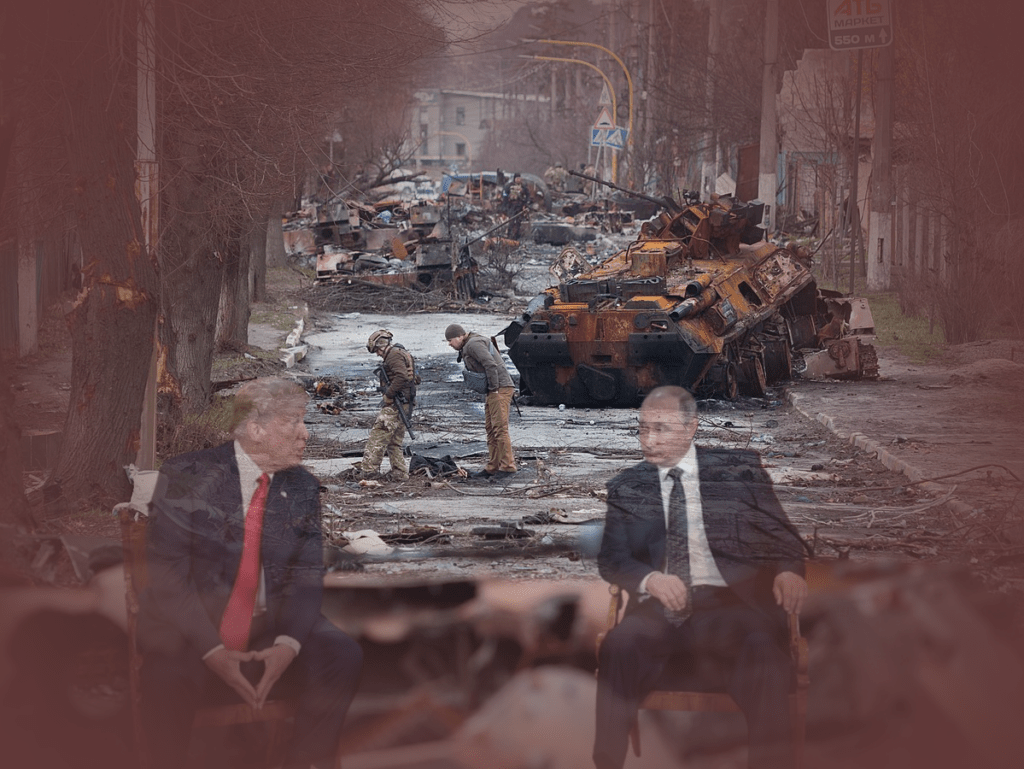
One of the anticipated top priorities of Donald Trump’s presidency is ending Russia’s war in Ukraine while normalizing relations with Moscow. Writing on his Truth Social channel, Trump stated that, “Together, we will secure PEACE THROUGH STRENGTH, and Make America, and the World, SAFE AGAIN!”

Trump’s nominee to serve as Special Envoy for Ukraine and Russia, 80-year-old former national security advisor, General Keith Kellogg, laid out his plan in writing for the America First policy institute, whilst focusing on characterizing the war “an avoidable crisis that, due to the Biden Administration’s incompetent policies [which] has entangled America in an endless war.” There are fears, however, that Kellogg’s proposal to reach a ceasefire by freezing the frontlines and forcing both sides the negotiating table will lead to a tumultuously violent period as Moscow seeks to swallow up territory. Meanwhile, NATO’s new secretary-general, Mark Rutte, has warned that compelling Ukraine into a “bad peace” would pose a “dire threat” to the U.S. itself.

Whilst the framework for bringing a pause to hostilities is becoming clearer, it appears that Trump (or his representative) will need to meet with Vladimir Putin, and Kazakhstan has emerged as a potential venue for this high-stakes meeting.

Kazakhstan’s Role as Mediator

Russian political analyst, Arkady Dubnov, has argued that Putin’s recent state visit to Astana may be an indication that Kazakhstan could play a pivotal role, and that given Putin’s limited travel options due to the International Criminal Court’s arrest warrant against him, Kazakhstan, with its reputation for diplomacy, would be a logical choice.

“Putin is essentially restricted from visiting most of the Western Hemisphere,” Dubnov explained. “This leaves the Eurasian East, and among its cities, Astana stands out. Kazakhstan has hosted OSCE and CICA summits, mediated in the Syrian conflict, and facilitated peace talks over the future of the South Caucasus.”

Dubnov sees Putin’s visit to Astana as indirectly tied to a possible meeting with Trump. “The Kremlin trusts Kazakhstan as an ally while respecting its constructive relations with the U.S. and the broader West,” he stated.

Kazakhstan has long been recognized as a neutral ground where East and West can find commonality. The Astana process on Syria, initiated in 2017, helped prevent the escalation of hostilities for years, whilst Kazakhstan has mediated in other long-standing disputes, such as the conflict between Armenian and Azerbaijan.

Given this history, it is conceivable that a reconciliation process between Russia and Ukraine could start in Astana. Neither the Minsk agreements of 2014, nor discussions in Istanbul in 2022 achieved lasting peace, but Kazakhstan’s diplomatic efforts could provide fresh impetus.

Early Peace Efforts

In March 2022, Kazakh President Kassym-Jomart Tokayev spoke with Ukrainian President Volodymyr Zelensky, emphasized the urgency of negotiations to bring a halt to hostilities, a stance that has since gained momentum as the war drags on. By 2024, the validity of Tokayev’s view — that negotiations are the only viable path to end the bloodshed — has become increasingly apparent.

Kazakhstan’s diplomatic corps has actively pushed for peace. In May 2024, Ambassador to Russia Dauren Abayev reiterated Kazakhstan’s readiness to host negotiations, stating that “Kazakhstan is always ready to help on all processes that concern the world. This is not only Russia and Ukraine, but also Armenia and Azerbaijan, on the Syrian issue, on the Iranian issue. It is probably [an overstatement] to say to be mediators, but to provide a platform, to create some conditions, we are certainly ready.”

Despite these efforts, some initiatives, such as Ukraine’s 2024 peace conference in Switzerland, excluded Russia, a critical misstep according to observers like Abayev. In September, Deputy Foreign Minister Roman Vassilenko reaffirmed Kazakhstan’s willingness to provide a neutral platform for talks.

A Vision for Peace

During talks with German Chancellor Olaf Scholz, Tokayev articulated Kazakhstan’s position. “Militarily, Russia is invincible… Further escalation will bring irreparable consequences for all humanity,” he stated, lamenting the lost opportunity for a truce under the Istanbul Agreement, but urging all parties to consider peace initiatives, including those put forward by China and Brazil.

Tokayev suggested a resolution akin to the Korean scenario — freezing the conflict along the line of contact with a demilitarized zone. While he did not explicitly propose that Astana should act as the venue for talks, Kazakhstan’s neutrality and commitment to peace make it a highly credible candidate.

“With Russia, Kazakhstan has the world’s longest delimited land border in the world, and cooperation between our countries is developing within the framework of strategic partnership and alliance,” Tokayev emphasized. “At the same time, Kazakhstan has genuine sympathy for the Ukrainian people and their distinctive culture. There have never been any disagreements between our states. The embassy of our country continues to function in Kyiv.”

A Realistic Possibility?

The prospect of peace talks between Moscow and Kyiv taking place on Kazakh soil is grounded in Kazakhstan’s history as a mediator and its neutral stance in the conflict. Whether this will materialize remains uncertain, but Astana’s reputation as a bridge between East and West keeps it at the center of diplomatic speculation.

Amid Sanctions, China’s Xinjiang Strengthens Ties with Central Asia

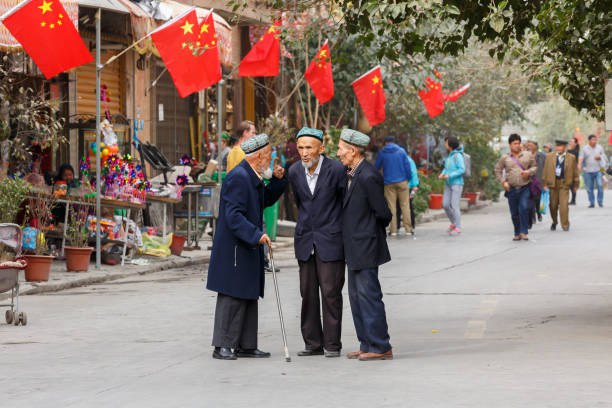
China’s Xinjiang region is deepening its engagement with Pakistan and Central Asia as part of efforts to counter Western sanctions and bolster its role in the Belt and Road Initiative (BRI).

On November 26, officials from Xinjiang met with their counterparts from Kazakhstan’s Zhetysu region for the first meeting under a new cross-border coordination mechanism. The discussions focused on cross-border tourism, infrastructure, market regulation, quarantine measures, and joint crime prevention. The meeting culminated in the signing of a memorandum on cross-border tourism.

The discussions took place near the port of Khorgos, a critical hub for the China Railway Express, which connects China with Europe. Khorgos is home to China’s first cross-border cooperation center, where residents of neighboring countries can engage in business and shop visa-free. The center allows duty-free purchases of up to 8,000 yuan ($1,104) per day.

Xinjiang Governor Erkin Tunyoz stressed the importance of strengthening ties with Zhetysu in areas such as trade, tourism, security, and agriculture. This cooperation is becoming increasingly crucial for Beijing as Xinjiang grapples with sanctions from the United States and other Western countries over alleged human rights abuses—a claim that China denies.

Sanctions include the U.S. Uyghur Forced Labor Prevention Act, which prohibits imports from Xinjiang suspected of being produced using forced labor. Similar measures have been implemented by Canada, the United Kingdom, and the European Union.

In addition to its collaboration with Kazakhstan, China has established a dialogue mechanism with the five Central Asian countries—Kazakhstan, Kyrgyzstan, Tajikistan, Turkmenistan, and Uzbekistan. Since 2020, foreign ministers from these nations have met annually to discuss logistics, trade, investment, agriculture, mining, and security.

Li Lifan, a Central Asia scholar at the Shanghai Academy of Social Sciences, described Xinjiang as a “bridgehead” for the BRI. He highlighted the region’s rich natural resources and its role as a base for major industries, including automobile manufacturing. In 2023, trade between Xinjiang and Central Asian countries surged by 50%, reaching 283 billion yuan ($39 billion).

Despite these successes, Li cautioned about future challenges. He noted uncertainties surrounding potential Western secondary sanctions, geopolitical tensions, and Russia’s ongoing war in Ukraine. Additionally, U.S.-China relations remain fraught, with further unpredictability anticipated under the leadership of Donald Trump. “Full economic development may only be achievable once global tensions ease,” he said.

Construction of TAPI Gas Pipeline Begins in Afghanistan

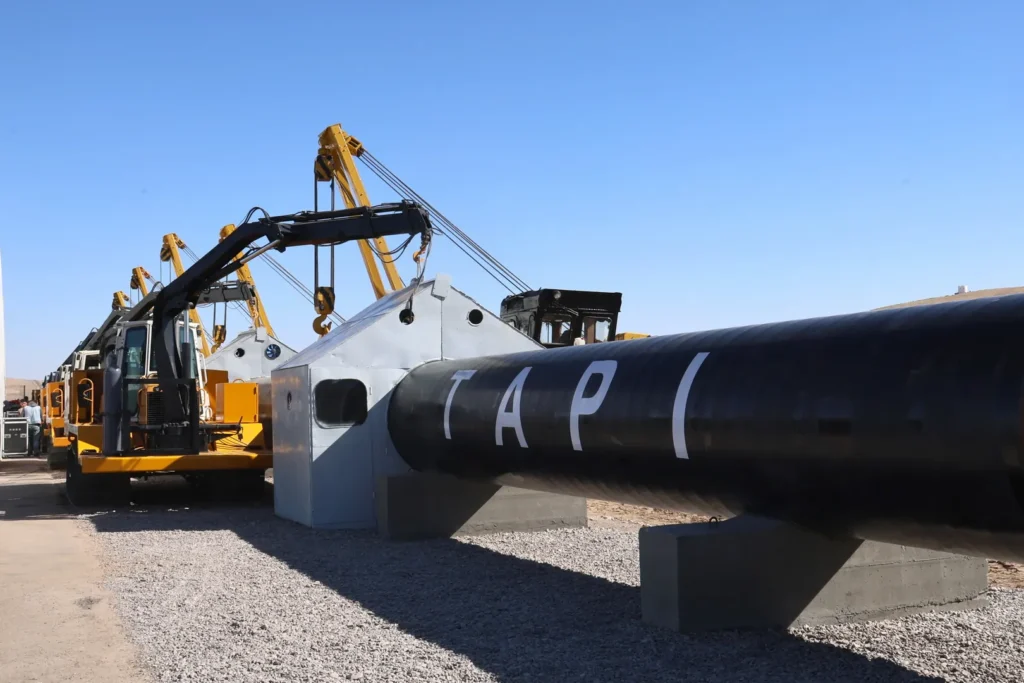
Afghanistan has commenced the practical phase of the Turkmenistan-Afghanistan-Pakistan-India (TAPI) gas pipeline project, one of the region’s most ambitious infrastructure initiatives. Local media report that essential materials and equipment have been delivered to the border areas between Afghanistan and Turkmenistan, enabling work to start on the Afghan section of the pipeline.

The TAPI gas pipeline will span 1,814 kilometers, with 774 kilometers crossing Afghanistan. Once operational, the pipeline will transport 33 billion cubic meters of natural gas annually, significantly boosting economic development across the region.

Afghanistan is set to receive 5 billion cubic meters of gas each year from the pipeline and create over 12,000 jobs for its citizens. Economists estimate that the project could generate approximately $1 billion annually in revenue for Afghanistan.

Discussions around the TAPI pipeline began in the early 2000s, and in 2013, an agreement was signed to form a consortium. The Turkmen state-owned company Turkmengaz holds an 85% stake, while Afghanistan, Pakistan, and India each hold 5% shares.

Construction on the Turkmenistan section of the pipeline began in 2015 and has since been completed. Afghanistan is the next country to advance the project, with work on the section from Serhetabat to Herat initiated in September this year.