• KGS/USD = 0.01144 0%
  • KZT/USD = 0.00194 -0%
  • TJS/USD = 0.10896 -0%
  • UZS/USD = 0.00008 0%
  • TMT/USD = 0.28571 0.28%
  • KGS/USD = 0.01144 0%
  • KZT/USD = 0.00194 -0%
  • TJS/USD = 0.10896 -0%
  • UZS/USD = 0.00008 0%
  • TMT/USD = 0.28571 0.28%
  • KGS/USD = 0.01144 0%
  • KZT/USD = 0.00194 -0%
  • TJS/USD = 0.10896 -0%
  • UZS/USD = 0.00008 0%
  • TMT/USD = 0.28571 0.28%
  • KGS/USD = 0.01144 0%
  • KZT/USD = 0.00194 -0%
  • TJS/USD = 0.10896 -0%
  • UZS/USD = 0.00008 0%
  • TMT/USD = 0.28571 0.28%
  • KGS/USD = 0.01144 0%
  • KZT/USD = 0.00194 -0%
  • TJS/USD = 0.10896 -0%
  • UZS/USD = 0.00008 0%
  • TMT/USD = 0.28571 0.28%
  • KGS/USD = 0.01144 0%
  • KZT/USD = 0.00194 -0%
  • TJS/USD = 0.10896 -0%
  • UZS/USD = 0.00008 0%
  • TMT/USD = 0.28571 0.28%
  • KGS/USD = 0.01144 0%
  • KZT/USD = 0.00194 -0%
  • TJS/USD = 0.10896 -0%
  • UZS/USD = 0.00008 0%
  • TMT/USD = 0.28571 0.28%
  • KGS/USD = 0.01144 0%
  • KZT/USD = 0.00194 -0%
  • TJS/USD = 0.10896 -0%
  • UZS/USD = 0.00008 0%
  • TMT/USD = 0.28571 0.28%
09 December 2025

Archaeologists Uncover Rare Silk Road Artifacts in Uzbekistan

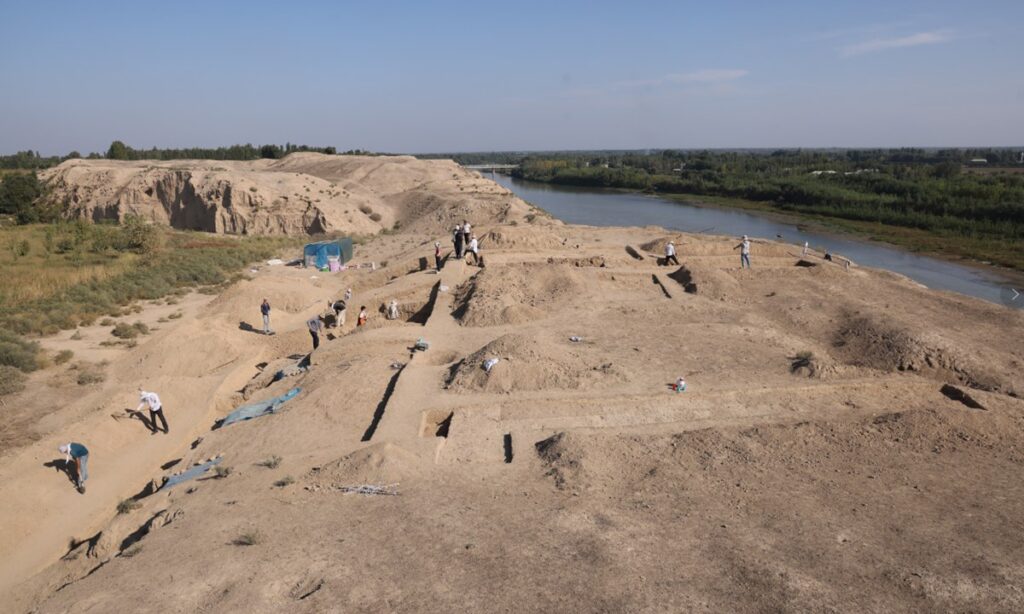
A joint archaeological expedition from China and Uzbekistan has made remarkable discoveries at Mengchaktepa, a key Silk Road site located on the northern bank of the Syr Darya River. Known as the “Living Fossil of the Silk Road,” the site has been under investigation by the Chinese Academy of Social Sciences (CASS) and Uzbekistan’s Institute of Archaeology since 2012.

The team, led by CASS archaeologist Liu Tao, unearthed seven tombs, two buildings, and numerous artifacts, including silk fabrics, leather goods, bronze mirrors, square-holed coins, and beads. Among the most significant finds are silk fragments, the first such discovery in the region since 1986, which bridges a 40-year gap in the study of ancient silk in the Ferghana Valley. According to Liu, these silk fragments highlight the advanced weaving techniques of antiquity.

Abdulhamidjon Anarbayev, a professor at Uzbekistan’s National Center for Archaeology, praised the Chinese team’s contributions to advancing Uzbekistan’s field archaeology through modern excavation and preservation methods. He noted that the research underscores the high standards of Chinese archaeology globally.

Mengchaktepa holds immense value for studying cultural connections along the Silk Road. Ancient Chinese chronicles from the Qin and Han dynasties (221 BC–220 AD) describe how Zhang Qian, an emissary of the Western Han dynasty, established trade links between China and Central Asia. Through Dayuan, the ancient region corresponding to the modern Ferghana Valley, silk, paper, and Chinese technology reached Europe, while grapes and alfalfa were introduced to China.

Excavations at Mengchaktepa have been ongoing since 1986. Early discoveries included nine cave tombs containing well-preserved remains, silk garments, and jewelry from the 5th to 8th centuries. This year, researchers are focusing on the necropolis’s scope, tomb structures, and their artifacts, with special attention to preserving organic materials like silk, leather, and reeds for laboratory analysis.
Liu explained that the findings provide new insights into the region’s early medieval funerary practices, belief systems, and architectural traditions. Artifacts such as Han-style objects and relics linked to Zoroastrianism affirm Mengchaktepa’s pivotal role in East-West cultural exchanges along the Silk Road.

Russian Journalist Pivovarov Detained After Filming Cotton Fields in Karakalpakstan

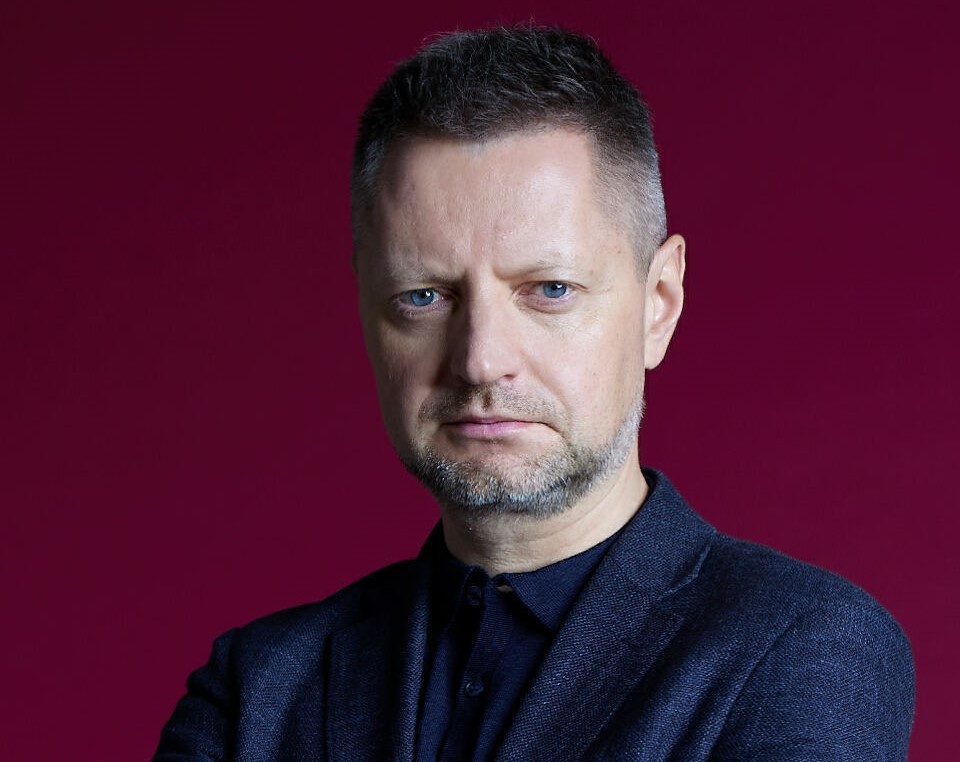
Alexey Pivovarov, a Russian journalist and YouTuber, was detained in Nukus, the capital of the autonomous Uzbek republic of Karakalpakstan. He was questioned by authorities along with the photography team for his project, Redaktsiya (Editorial), and Feride Makhsetova, a journalist from the local news portal Hook. Their arrest was initially reported by Hook.

The journalists were detained “for an interview”, supposedly following a complaint by an unidentified citizen. Authorities confiscated the visual material collected by the team, who, according to Pivovarov on his Telegram channel, had been filming in one of the region’s cotton fields.

The Karakalpakstan branch of the Agency for Information and Mass Communications claimed that the detentions occurred because the journalists were not accredited by the Ministry of Foreign Affairs.

Later, Pivovarov, Makhsetova, and their team were released by the Nukus Department of Internal Affairs. They subsequently traveled to Tashkent without the materials they had filmed in Karakalpakstan.

The Russian Embassy in Uzbekistan addressed the incident, stating that it had contacted Uzbekistan’s Ministry of Foreign Affairs and would provide support to the Russian citizens involved. In a message on his Telegram channel, Pivovarov described the officials in Nukus as “friendly and polite.”

Uzbekistan Joins Global Alliance Against Hunger and Poverty

The Republic of Uzbekistan has officially become a member of the Global Alliance to Combat Hunger and Poverty, marking a significant step toward achieving the Sustainable Development Goals and enhancing global efforts to improve food security.

This decision reflects Uzbekistan’s commitment to addressing pressing challenges related to hunger, poverty, and inequality on a global scale. By joining the alliance, the country gains access to valuable opportunities for knowledge exchange, international investment, and collaboration on joint programs with other nations and organizations.

To date, over 100 countries have joined this initiative.

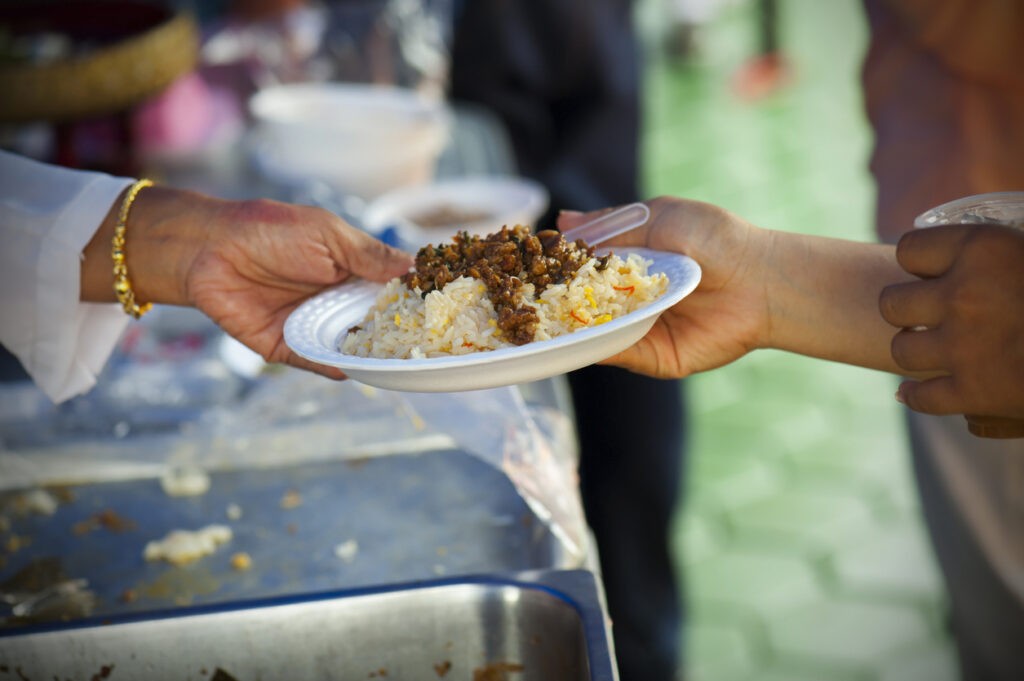
Earlier, on October 9, the United States announced the delivery of 131 tons of food aid to Uzbekistan through USAID. The package, valued at over $435,000, includes vegetables and legumes intended to support more than 33,000 people across 145 facilities, including tuberculosis centers, orphanages, and psychiatric institutions.

“At USAID, we collaborate with our partners to deliver life-saving food assistance to the most vulnerable communities in Uzbekistan. By addressing malnutrition and ensuring access to adequate, safe, and nutritious food, we empower individuals to lead healthy, productive lives and build a more stable and resilient world for everyone,” said Anjali Kaur, deputy assistant administrator of USAID’s Bureau for Asia.

Uzbekistan Completes Key Step in WTO Accession with China Agreement

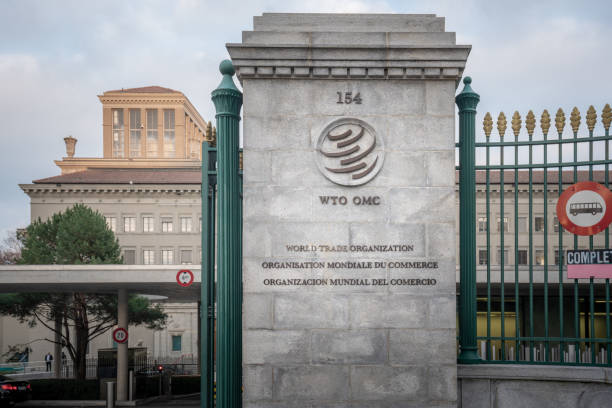
Uzbekistan has successfully concluded bilateral negotiations with China regarding its accession to the World Trade Organization (WTO). Azizbek Urunov, Special Representative of the President for the WTO, announced this milestone in a LinkedIn post.

“[It was a] very short but productive visit to Beijing! Yesterday, we completed bilateral negotiations on Uzbekistan’s accession to the WTO with the People’s Republic of China,” Urunov wrote. He expressed gratitude to China’s Ministry of Commerce, Deputy Minister Li Fei, Director Li Defeng, and their teams for their cooperation. “[It is] very important at [the] year-end to finish negotiations with the two biggest global trade players – the United States and China. Twenty-two countries are there, a few left!”

The Times of Central Asia reported that this achievement follows Uzbekistan’s recent finalization of WTO accession negotiations with the United States,

Uzbekistan’s WTO accession is a cornerstone of the country’s ongoing economic reforms, which aim to integrate its economy into the global trade system. Johanna Hill, WTO Deputy Director-General, praised Uzbekistan’s progress: “Uzbekistan has been one of the most active acceding governments of late. It has pushed ahead with economic reform in the strategic region of Central Asia, with WTO accession very high on the government’s agenda.”

Hill referenced a WTO report indicating that countries implementing market reforms during WTO accession experience growth rates 1.5% higher than those without such reforms.

With negotiations with major economies like the United States and China now complete, Uzbekistan is edging closer to its goal of WTO membership, a move poised to boost its global trade prospects and economic development.

Choking on Smog: Kazakhstan’s Ust-Kamenogorsk forced to suspend in-person schooling amid rising air pollution

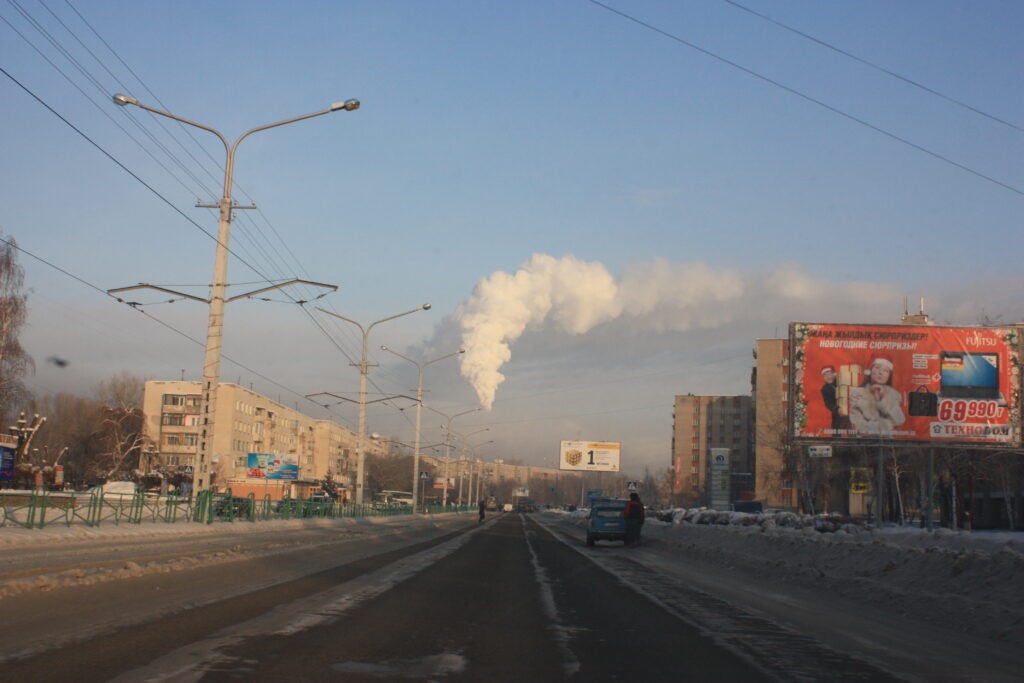
The city of Ust-Kamenogorsk in eastern Kazakhstan has once again found itself at the center of an environmental scandal, with polluted air and unfavorable weather conditions causing deteriorating health among its citizens and forcing schoolchildren to move to distance learning.

Smog in the city: complaints and consequences

In the last week of November, unfavorable weather conditions hit Ust-Kamenogorsk, aggravating the problem of air pollution. Citizens complained of worsening health: headaches, nausea, vomiting, coughing, and fever. Children, who have to breathe polluted air on their way to school, are particularly affected.

Parents have repeatedly expressed their outrage, demanding action. In response to the latest complaints, the authorities transitioned some 53,000 of the city’s schoolchildren to distance learning on November 28-29. This marked the first time in the city’s history that education was suspended due to the environmental situation.

Weather forecasters say that the unfavorable weather conditions will continue until at least the end of November. This means that Ust-Kamenogorsk residents will continue to suffer from smog, and children will probably remain in distance learning.

Environmentalists weigh in

Azamat Tauyrbekov, head of the Department of Ecology for the East Kazakh region, said that environmental agencies are working hard these days, conducting air measurements throughout the city. However, inspections of enterprises are complicated by bureaucratic procedures: access to production facilities requires an official application with evidence of violation.

On November 28, joint inspections took place at two large enterprises in the region: Kazzinc and an oil extraction plant. So far, the results of the inspections have not been published, but activists and citizens continue to insist on the need for more transparent controls over emissions.

Citizen frustration boils over

Residents of Ust-Kamenogorsk are discussing the air pollution situation on social networks, sharing their complaints and worries. In comments on the Instagram platform one can see messages such as:

– “It is impossible to breathe, even at home.”

– “My head hurts, I feel weak, feverish, have a sore throat, watery eyes, stuffy nose.”

– “How is it possible to poison almost 400,000 people? We pay taxes to be destroyed?”

– “There is a taste of metal and acid in my mouth.”

Despite the fact that the problem has become a reason for creating memes and jokes about smog, reactions such as these reveal the deep dissatisfaction and anxiety of the city’s residents. People are starting to openly demand that authorities strengthen control over emissions from enterprises and take real measures to improve the environmental situation in the city.

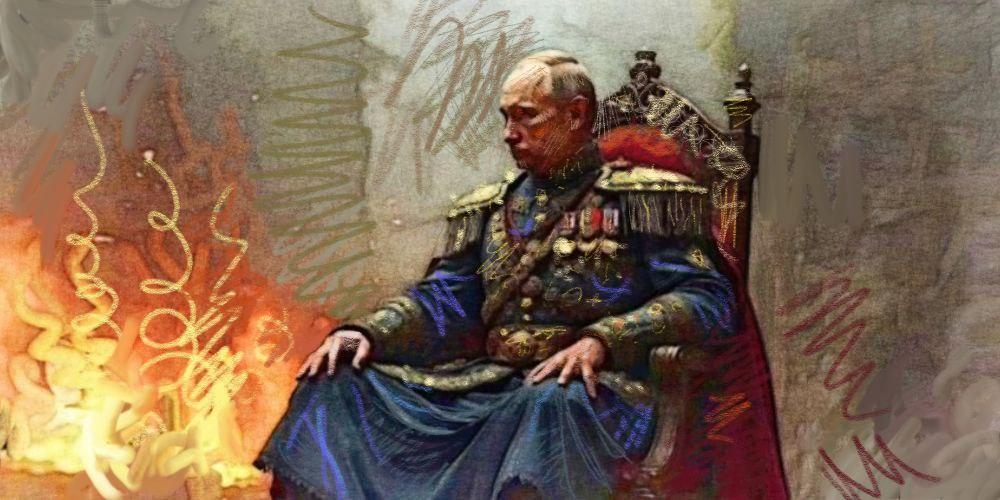
Putin in Kazakhstan: Language Diplomacy, Treaty Fine Print and a Hack

Geopolitical tensions, finding common ground on oil and gas transportation and deliveries and Russia’s hopes of beating out rivals to build Kazakhstan´s first nuclear power plant. These were some of the big ticket themes framing Russian President Vladimir Putin’s trip to the Central Asian nation last week. The Times of Central Asia looks at a few other things that happened on the sidelines:


A Tale of Two Languages

“Kazakhstan is practically a Russian-speaking country, which you have probably had a chance to see for yourself.”

Putin was extolling close ties between Russia and Kazakhstan when he made that remark to journalists in Astana last week. But the comment also drew attention to how Kazakhstan uses the Kazakh language to express national identity and independence from a past controlled by Moscow.

In November 2023, during an earlier visit by Putin to Astana, Kazakh President Kassym-Jomart Tokayev spoke in Kazakh rather than Russian, causing senior Russian officials to reach somewhat hurriedly for their earpieces to get the translation. While Russia and Kazakhstan share a long land border and are bound by deep economic and security ties, Tokayev’s semantic switch seemed to be a reminder that Kazakhstan, a former Soviet republic and Russian imperial territory, would follow its own path.

Last week, both leaders went out of their way to emphasize linguistic harmony, even if tensions sometimes emerge over Kazakhstan’s increasing promotion of the Kazakh language. There is a significant ethnic Russian minority living in Kazakhstan.

“One third of schoolchildren in our country are educated in Russian. We attach special importance to this issue. It is for this reason that I proposed the creation of the International Russian Language Organization,” Tokayev said.

Putin thanked Tokayev for backing the use of the Russian language, “widely and freely,” in Kazakhstan. He said there are plans to open three Russian language schools in Kazakhstan, with Russian government support.

Some social media posts claimed there was a diplomatic dustup between the two leaders, showing video of Putin´s “Russian-speaking country” remark followed by Tokayev speaking in Kazakh in an apparent pushback. However, the video appears to be spliced from different events. Putin is shown standing; Tokayev is seated. Furthermore, the Kremlin transcript shows that Putin made the remark at a solo news conference.


That’s What It Says, But…

The treaty of a regional security group that includes Russia, Kazakhstan, Kyrgyzstan, Tajikistan, Belarus and Armenia says members must provide military and other help to any member subjected to “aggression by any state or group of states.”

Does that mean members of the Collective Security Treaty Organization, or CSTO, should get behind Russia in its war against Western-backed Ukraine? After all, Putin says Russia is a target of Ukrainian and Western aggression, even if some dispute the assertion because he launched a full-scale invasion of Ukraine in 2022.

Putin was asked the question on Thursday after a state visit to Kazakhstan and a meeting of the regional security group in Astana.

Each security group member “stands ready to act in accordance with its obligations,” Putin replied. But he recommended a pragmatic approach.

“Considering that American weapons, such as the ATACMS, are targeting Russian territory, what realistically can the other countries of this organisation do to assist the Russian Federation? I mean, it is not a realistic expectation. Yet, even under these circumstances, we are likely capable of offering them as much support as we possibly can. We possess adequate resources and a safety margin to aid our allies if required,” Putin said.

Just for the record, Article 4 of the CSTO says:

“If one of the States Parties is subjected to aggression by any state or group of states, then this will be considered as aggression against all States Parties to this Treaty. In the event of an act of aggression against any of the participating States, all other participating States will provide him with the necessary assistance, including military, and will also provide support at their disposal in exercising the right to collective defense in accordance with Article 51 of the UN Charter.”

President Aleksandr Lukashenko of Belarus is a close ally of Putin, who has used Belarusian territory for some Russian military operations during the war in neighboring Ukraine. Central Asian countries have tried to remain publicly neutral during the conflict. Armenia has effectively frozen its membership in the CSTO, saying it couldn’t rely on Russian help following Azerbaijan’s seizure of the disputed territory of Nagorno-Karabakh last year.


Flag Swap

Pro-Ukrainian hackers had their moment during Putin’s visit to Kazakhstan last week.

For a while on Wednesday, an outdoor video display in Astana, the capital, stopped showing the red, blue and white Russian flag and instead treated passers-by to an image of the blue and yellow flag of Ukraine, Russia’s battlefield enemy.

Kazakh authorities described the switch as a cyberattack and are investigating.

Kazakhstan’s State Technical Service, said “a case of a temporary substitution of the displayed flag image was recorded on one of the LED screens. According to preliminary data, the attack was carried out from foreign IP addresses using proxy servers.”

It said a criminal case had been opened and that the state service, which oversees information security, was trying to determine the source and method of the hack.