• KGS/USD = 0.01144 0%
  • KZT/USD = 0.00194 -0%
  • TJS/USD = 0.10896 -0%
  • UZS/USD = 0.00008 0%
  • TMT/USD = 0.28571 0.28%
  • KGS/USD = 0.01144 0%
  • KZT/USD = 0.00194 -0%
  • TJS/USD = 0.10896 -0%
  • UZS/USD = 0.00008 0%
  • TMT/USD = 0.28571 0.28%
  • KGS/USD = 0.01144 0%
  • KZT/USD = 0.00194 -0%
  • TJS/USD = 0.10896 -0%
  • UZS/USD = 0.00008 0%
  • TMT/USD = 0.28571 0.28%
  • KGS/USD = 0.01144 0%
  • KZT/USD = 0.00194 -0%
  • TJS/USD = 0.10896 -0%
  • UZS/USD = 0.00008 0%
  • TMT/USD = 0.28571 0.28%
  • KGS/USD = 0.01144 0%
  • KZT/USD = 0.00194 -0%
  • TJS/USD = 0.10896 -0%
  • UZS/USD = 0.00008 0%
  • TMT/USD = 0.28571 0.28%
  • KGS/USD = 0.01144 0%
  • KZT/USD = 0.00194 -0%
  • TJS/USD = 0.10896 -0%
  • UZS/USD = 0.00008 0%
  • TMT/USD = 0.28571 0.28%
  • KGS/USD = 0.01144 0%
  • KZT/USD = 0.00194 -0%
  • TJS/USD = 0.10896 -0%
  • UZS/USD = 0.00008 0%
  • TMT/USD = 0.28571 0.28%
  • KGS/USD = 0.01144 0%
  • KZT/USD = 0.00194 -0%
  • TJS/USD = 0.10896 -0%
  • UZS/USD = 0.00008 0%
  • TMT/USD = 0.28571 0.28%
09 December 2025

Former Uzbek Diplomat, Jailed In Case Criticized by UN, Dies at 73

Kadyr Yusupov, a former Uzbek diplomat with a distinguished career who was convicted of treason and jailed in a case that the United Nations said had violated his rights, has died at the age of 73, an international human rights group said on Thursday.

Yusupov, who died on Nov. 14, was released from jail on June 10 after being imprisoned for five and a half years and suffering alleged torture and “deplorable” conditions during some of that time, according to the Norwegian Helsinki Committee.

While Uzbek officials denied the torture allegations, the U.N. Working Group on Arbitrary Detention concluded in a 2021 report that Yusupov had been arbitrarily detained, he should be released immediately and that the government should take action against those responsible for violating his rights. The group said that the violations included the denial of “medication and treatment for the very serious health conditions from which he suffers.”

Rights groups have said that Yusupov was suffering from a mental illness.

“In December 2018 he was arrested on charges of treason which appear to have been based on a statement he made during a psychotic episode, when he was undergoing medical treatment,” the Norwegian Helsinki Committee said. “Whilst in hospital, suffering from brain trauma and clearly confused, Yusupov reportedly said that he had been a spy for the West.”

It said there were “credible allegations” that state security officers coerced Yusupov into a confession. The former diplomat said he was treated better after being transferred from a prison in the city of Navoi to a jail in the Tashkent region.

Yusupov had worked in a series of high-profile jobs for Uzbekistan’s Ministry of Foreign Affairs. The posts included head of the ministry’s Asia and Africa department, head of the European department and, from 2006 to 2009, chargé d’affaires in Austria and permanent representative to the Organization for Security and Cooperation in Europe and United Nations organizations in Vienna.

Kyrgyzstan Offers Digital Nomad Status to Foreign Specialists

Kyrgyzstan’s President Sadyr Japarov has signed legislative amendments introducing the status of Digital Nomad for foreign citizens working in information and communication technologies (ICT), software development, creative industries, and related areas. Digital Nomads are exempt from mandatory registration at their place of domicile in Kyrgyzstan, can obtain a personal identification number (PIN), do not need to obtain permits for work, enjoy the right to engage in entrepreneurial activity as an individual entrepreneur or a legal entity, and are allowed to open bank accounts.

According to the Ministry of Economy and Commerce, which spearheaded the amendments, this initiative aims to create favorable conditions for attracting digital nomads to Kyrgyzstan. It is expected to contribute to the development of innovative projects, the growth of high-tech industries, increased tax revenues, job creation, and tourism development.

In neighboring Kazakhstan, the Ministry of Foreign Affairs announced that as of November 18, 2024, the country has enacted updated visa regulations to attract business immigrants, skilled professionals, and tourists. Kazakhstan is introducing a Digital Nomad Visa, a single-entry electronic or multiple-entry paper visa for IT specialists, allowing long-term residence. Additionally, the Neo Nomad Visa offers extended stays to “neo-nomads” who have a verified monthly income of at least $3,000. Applicants for the Neo Nomad Visa must provide health insurance and proof of a clean criminal record.

Central Asia-China Pipeline Delivers 500 Billion Cubic Meters of Gas

For over 14 years, the China-Central Asia Gas Pipeline has been a vital conduit for clean energy, delivering more than 500 billion cubic meters of natural gas to China, according to a report by Xinhua, citing the West Pipeline Company of the Chinese PipeChina Corporation.

The Khorgos gas compressor station, a critical component of the pipeline, serves as the primary entry point for Central Asian gas into China. Known as the “head station” and the “heart” of China’s second and third lines of the West-to-East Gas Pipeline, the station plays a pivotal role in the system’s operation.

Since its commissioning in 2009, the Khorgos Compressor Station has operated safely and reliably for over 5,000 days, transporting over 500 billion cubic meters of natural gas. It is recognized as having the highest operational performance in Asia. With an operating pressure of 12 megapascals, the pipeline pumps more than 2,000 cubic meters of gas every second and can transport a maximum of 160 million cubic meters of gas daily.

The 522.5 billion cubic meters of natural gas transported by the pipeline is equivalent to replacing 696 million tons of standard coal, reducing emissions by 764 million tons of carbon dioxide, 25 million tons of sulfur dioxide, 379 million tons of dust, and 6.27 million tons of nitrogen oxides.

The Khorgos compressor station also contributes to green and low-carbon development. It houses China’s first electricity generation project powered by waste heat from natural gas-fired compressors. This innovation has enabled the station to achieve zero direct emissions for large gas transmission stations powered by gas compressors, with annual power generation exceeding 65 million kilowatt-hours.

From the first compressor station, natural gas travels 1,833 kilometers eastward over 84 hours, passing through central Uzbekistan and southern Kazakhstan before entering China at the Khorgos border checkpoint. The gas then feeds into the second and third lines of the West-East Gas Pipeline. With a design capacity of 60 billion cubic meters per year, the pipeline has been operational since December 2009.

The pipeline supplies natural gas to more than 500 million people across 27 provincial-level regions and the Hong Kong Special Administrative Region.

Kyrgyz Security Chief Outlines Two Alleged Assassination Attempts on President

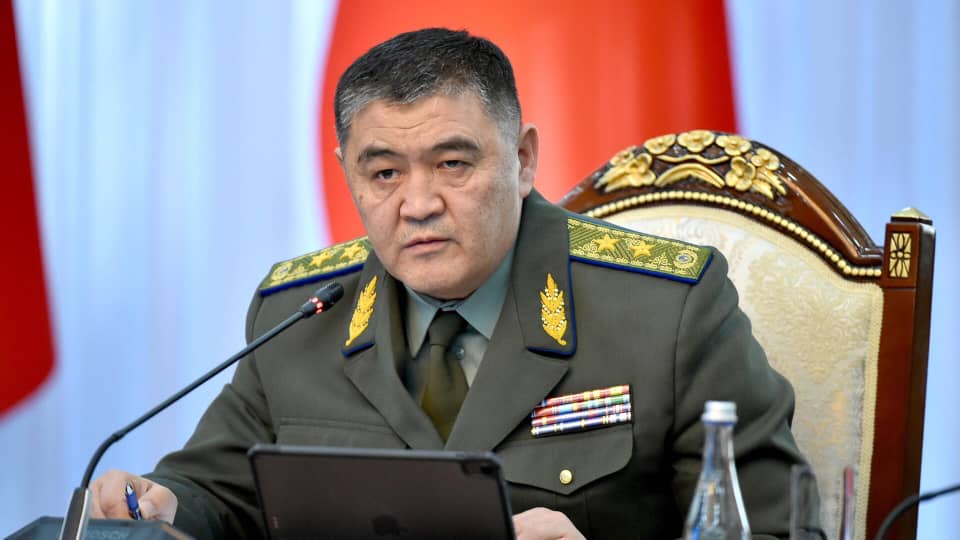
Kyrgyzstan’s State National Security Committee (GKNB) says it has prevented two assassination attempts on President Sadyr Japarov. This was reported by Kamchybek Tashiyev, Chairman of the GKNB, when speaking to journalists. Tashiyev also claimed that since taking up his post, five or six attempts on his life have been made. Tashiyev stressed that such attempts are regularly thwarted, and significant financial resources are allocated to this end.

According to Tashiyev, one of the attempts involved the planned bombing of a road he was supposed to travel on. In addition, Tashiyev described repeated threats against him and his family, in particular a threatening letter he received, which, in his opinion, bore the hallmark of foreign special services and certain oligarchs.

“The millions you offered, I did not take. You were angry that you would not be [able to operate] in our country, neither criminals nor oligarchs,” Tashiyev stated. “Maybe you’ll hurt me, but as long as I’m alive, I will not turn from the path I started.”

Born on September 27, 1968, in Barpy, a village in Jalal-Abad Oblast, Kamchybek Tashiyev is a Kyrgyz was appointed as chairman of the  GKNB in October 2020, having previously served as Minister of Emergency Situations (2007–2009) and as a deputy of the Jogorku Kenesh. In 2022, he was awarded the title of Hero of the Kyrgyz Republic, and in 2024, he was elected President of the Kyrgyz Football Federation. Tashiyev is also the vice-president of the National Boxing Federation of Kyrgyzstan.

Empowering Trade and Women Entrepreneurs: Kazakhstan’s Digital Leap for the Turkic States

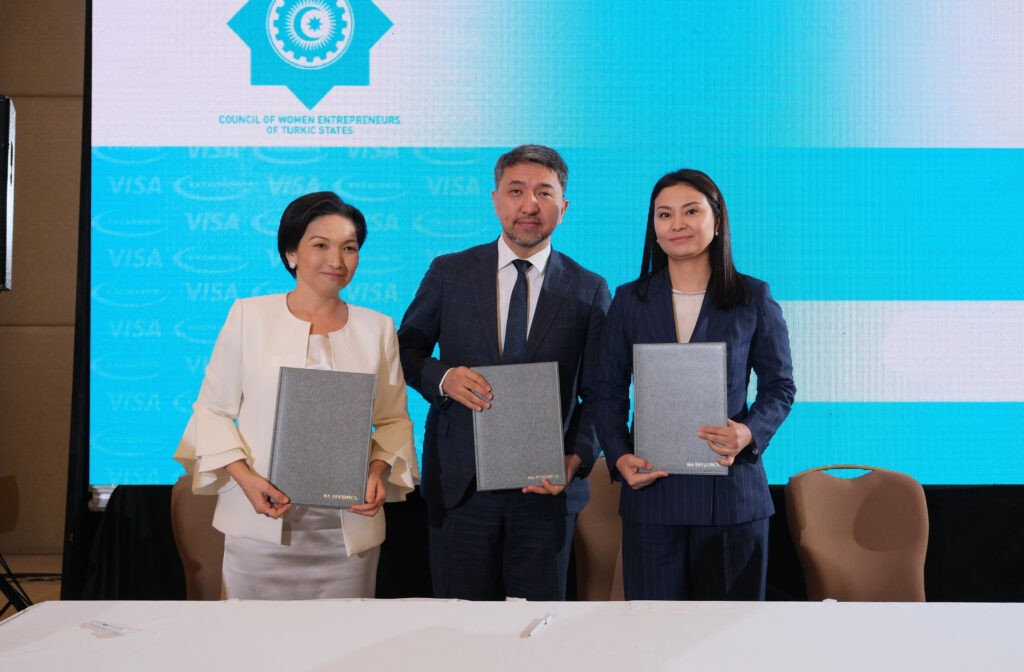
The head of the Presidium of the National Association of Women Entrepreneurs of Kazakhstan (ASMAR), Lazzat Ramazanova, who currently chairs the Council of Women Entrepreneurs of Turkic States, has reported on the development of a single digital ecosystem for business in the five countries which form the Organization of Turkic States (OTS). This platform is expected to expand international trade with countries outside of the Organization.

This year, Kazakhstan chairs the Council of Women Entrepreneurs of Turkic States, which operates under the OTS and includes five member countries: Kazakhstan, Kyrgyzstan, Azerbaijan, Turkey, and Uzbekistan. Three more countries – Hungary, Northern Cyprus, and Turkmenistan – are represented in the Organization with the status of observer states. One of the goals of Kazakhstan’s chairing of the OTS was to strengthen business ties between Turkic states. To this end, the Turkic Business Hub initiative was implemented, an online platform that will become an important element of integration and cooperation in the region.

Speaking at the close of the meeting in Astana, Lazzat Ramazanova told those in attendance: “Today, within the framework of the General Assembly of Women Entrepreneurs of the Turkic World, an ambitious initiative was put forward to create a unified digital platform for business. Kazakhstan was the initiator and implementer of this idea, as our country is now among the top 25 most digitized countries. The platform has already been developed, and in Kazakhstan, we are already working with our ministries on the integration of info-systems. Now, we will work with the governments of Turkic states so that the same integration takes place with their info-systems. In other words, the software has been created, and we are working to bring other countries into it.”

The main advantage of a Turkic Business Hub is it ensures business security when choosing a partner in a given country. This is because when a user of the platform registers as a potential participant in trade relations, all information about them as a business entity is collected. Artificial intelligence automatically scans the fiscal (tax and customs) authorities and runs the business’ credit history through the hub’s integration with the databases of banks. The banks have their own interest in this system, since using it they can find clients and borrowers who have passed strict compliance checks. AI can also monitor the presence or absence of lawsuits from former partners of the entity that is attempting to register.

“In the case of detection of negative information, the entity is denied registration, i.e., from there start, there will be no ‘scam’ companies or unscrupulous counter-parties on the platform,” Ramazanova explained. “They will immediately be ‘canceled’ by the artificial intelligence based on the data from tax, customs, and other state services. But the most important thing is that in case of rejection, AI will send such the rejectee a complete summary of the reasons why they were denied registration, so the business will know what they need to correct to join the system. Once business entities that have no problems with the tax authorities, a clean credit history, and no debts and lawsuits from partners, have successfully registered, they will be able to sign contracts with foreign partners on the platform with the help of an electronic digital signature”.

Security of transactions is not the only advantage of the Turkic Business Hub. The Kazakh IT companies that participated in the creation of this platform ensured it was also convenient for users. All marketplaces operating in the country are represented on the platform, and it has a dedicated payment system. The Hub allows businesses to conclude turnkey transactions, meaning there is no need to open additional windows when concluding transactions. Now, logistics companies are becoming involved in the platform, with the developers planning to introduce a ready-made transportation scheme for supplying goods between countries.

“We plan to bring in large logistics companies to the platform in order to organize transportation for our entrepreneurs, because logistics is a very serious challenge for the countries of Central Asia,” Ramazanova stated. “We have not ruled out working with the governments of the region’s countries to subsidize the transportation costs of certain sectors represented on the platform when they enter other markets. This product is created under the direction of women’s entrepreneurs because it is primarily designed for micro and small businesses, and in our countries, women’s entrepreneurship is concentrated in these areas. However, we offer this product not only to women – it is available to male entrepreneurs as well because business has no gender restrictions.”

The developers of the Turkic Business Hub are currently preparing to present a demonstration model to OTS member countries. Additionally, there are plans to create a “room” on the platform for online negotiations between businesses from different countries. It is planned for the platform to eventually include non-OTS members. Kazakhstan sees this platform as a basis for organizing global trade, but the first step is to unite Turkic businesses. According to the Organization of Turkic States, total trade turnover between countries in the Turkic world was approximately $42 billion by the end of 2023.

Kazakhstan’s initiative has already received support from entrepreneurs from other OTS countries.

“We need to have a platform that would unite the Turkic world in the age of digital technology,” said Aizhan Chynybaeva, a member of the Council of Women Entrepreneurs from Kyrgyzstan. ”I am inspired by the pace at which the platform was created – in just one year – and if we implement it in our countries at the same pace, we will see great economic growth and the development of women’s entrepreneurship. As a representative of the hotel and tourism sector, I believe it would be good to organize separate focused meetings of different business sectors in our countries on this platform.”

Secretary General of the Turkic Chamber of Commerce and Industry, Adem Kula stated that this year a forum of financial organizations of the Turkic world will be held. It will advocate for the allocation of 20% of all funds of the Turkic Investment Fund, which started its activity in May of this year, for the development of women’s entrepreneurship. The initial capital will amount to $500 million, and the main purpose of the fund is to develop economic and commercial relations between Turkic countries. Kula believes that the Turkic Business Hub project proposed by Kazakhstan can become the core of these initiatives and a platform for the formation of joint business projects from several countries which could be financed by the Investment Fund.

In March of this year, the Ministers of Agriculture of the Turkic Five agreed to create a similar information system between OTS states. Following the meeting in Taraz, a communique was signed which highlighted the need to create a common platform for real-time data transfers, the exchange of market information and data analysis, and reports on value chains in agriculture in the region of the Organization. It is feasible that given the emergence of the Turkic Business Hub for small and medium-sized businesses, work on creating a digital counterpart for counterparts in agriculture will be accelerated.

Charges Reclassified for Defendants in Crocus Terror Attack Case

The charges against the four defendants in the Crocus City Hall terrorist attack case have been reclassified, lawyer Alexander Yarin has told Russia’s state-owned TASS news agency. “Aminchon and Dilovar Islomov, their father Isroil Islomov, and Alisher Kasimov are now charged under Part 3 of Article 205.1 of the Russian Criminal Code,” Yarin stated.

Previously, the defendants were charged under paragraph “b” of Part 3 of Article 205 of the Criminal Code, which pertains to a terrorist act resulting in a fatality. The updated charges now reflect involvement in actions that facilitated the commission of a terrorist act.

As previously reported by TCA, the terrorist attack at Crocus City Hall, located on the outskirts of Moscow, resulted in 144 fatalities and 551 injuries. The incident has created a climate of fear among Central Asian migrants living in Russia.

In the aftermath of the attack, Tajik migrants have faced a surge of hostility and aggression, further exacerbating tensions within the migrant community.