• KGS/USD = 0.01144 0%
  • KZT/USD = 0.00194 -0%
  • TJS/USD = 0.10844 -0.46%
  • UZS/USD = 0.00008 0%
  • TMT/USD = 0.28571 0.28%
  • KGS/USD = 0.01144 0%
  • KZT/USD = 0.00194 -0%
  • TJS/USD = 0.10844 -0.46%
  • UZS/USD = 0.00008 0%
  • TMT/USD = 0.28571 0.28%
  • KGS/USD = 0.01144 0%
  • KZT/USD = 0.00194 -0%
  • TJS/USD = 0.10844 -0.46%
  • UZS/USD = 0.00008 0%
  • TMT/USD = 0.28571 0.28%
  • KGS/USD = 0.01144 0%
  • KZT/USD = 0.00194 -0%
  • TJS/USD = 0.10844 -0.46%
  • UZS/USD = 0.00008 0%
  • TMT/USD = 0.28571 0.28%
  • KGS/USD = 0.01144 0%
  • KZT/USD = 0.00194 -0%
  • TJS/USD = 0.10844 -0.46%
  • UZS/USD = 0.00008 0%
  • TMT/USD = 0.28571 0.28%
  • KGS/USD = 0.01144 0%
  • KZT/USD = 0.00194 -0%
  • TJS/USD = 0.10844 -0.46%
  • UZS/USD = 0.00008 0%
  • TMT/USD = 0.28571 0.28%
  • KGS/USD = 0.01144 0%
  • KZT/USD = 0.00194 -0%
  • TJS/USD = 0.10844 -0.46%
  • UZS/USD = 0.00008 0%
  • TMT/USD = 0.28571 0.28%
  • KGS/USD = 0.01144 0%
  • KZT/USD = 0.00194 -0%
  • TJS/USD = 0.10844 -0.46%
  • UZS/USD = 0.00008 0%
  • TMT/USD = 0.28571 0.28%
09 December 2025

Kyrgyz Security Chief Outlines Two Alleged Assassination Attempts on President

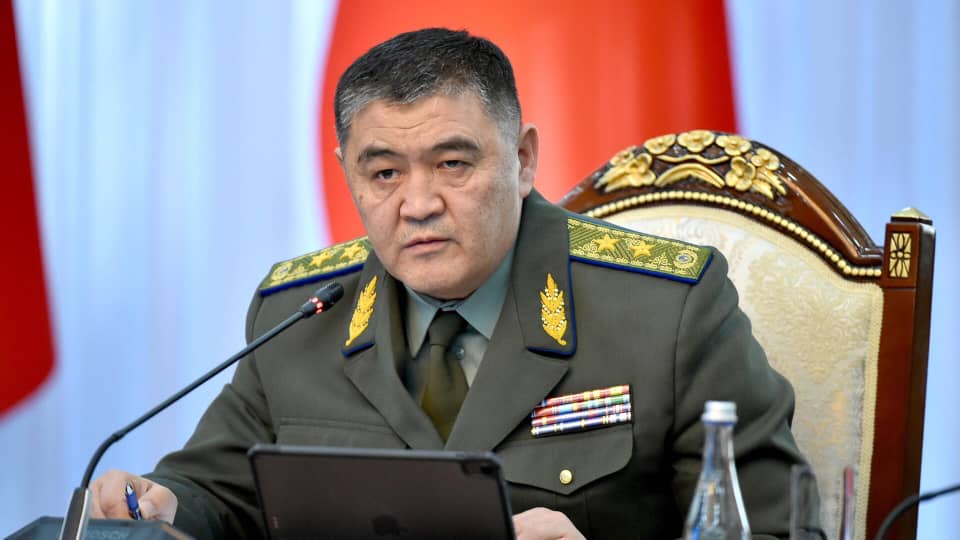
Kyrgyzstan’s State National Security Committee (GKNB) says it has prevented two assassination attempts on President Sadyr Japarov. This was reported by Kamchybek Tashiyev, Chairman of the GKNB, when speaking to journalists. Tashiyev also claimed that since taking up his post, five or six attempts on his life have been made. Tashiyev stressed that such attempts are regularly thwarted, and significant financial resources are allocated to this end.

According to Tashiyev, one of the attempts involved the planned bombing of a road he was supposed to travel on. In addition, Tashiyev described repeated threats against him and his family, in particular a threatening letter he received, which, in his opinion, bore the hallmark of foreign special services and certain oligarchs.

“The millions you offered, I did not take. You were angry that you would not be [able to operate] in our country, neither criminals nor oligarchs,” Tashiyev stated. “Maybe you’ll hurt me, but as long as I’m alive, I will not turn from the path I started.”

Born on September 27, 1968, in Barpy, a village in Jalal-Abad Oblast, Kamchybek Tashiyev is a Kyrgyz was appointed as chairman of the  GKNB in October 2020, having previously served as Minister of Emergency Situations (2007–2009) and as a deputy of the Jogorku Kenesh. In 2022, he was awarded the title of Hero of the Kyrgyz Republic, and in 2024, he was elected President of the Kyrgyz Football Federation. Tashiyev is also the vice-president of the National Boxing Federation of Kyrgyzstan.

Empowering Trade and Women Entrepreneurs: Kazakhstan’s Digital Leap for the Turkic States

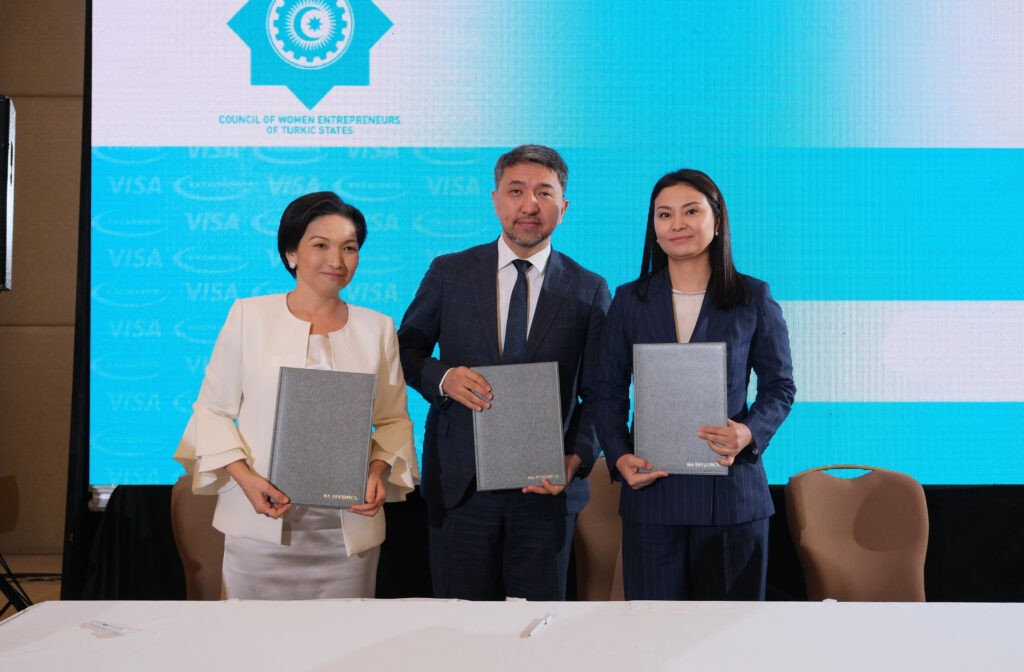
The head of the Presidium of the National Association of Women Entrepreneurs of Kazakhstan (ASMAR), Lazzat Ramazanova, who currently chairs the Council of Women Entrepreneurs of Turkic States, has reported on the development of a single digital ecosystem for business in the five countries which form the Organization of Turkic States (OTS). This platform is expected to expand international trade with countries outside of the Organization.

This year, Kazakhstan chairs the Council of Women Entrepreneurs of Turkic States, which operates under the OTS and includes five member countries: Kazakhstan, Kyrgyzstan, Azerbaijan, Turkey, and Uzbekistan. Three more countries – Hungary, Northern Cyprus, and Turkmenistan – are represented in the Organization with the status of observer states. One of the goals of Kazakhstan’s chairing of the OTS was to strengthen business ties between Turkic states. To this end, the Turkic Business Hub initiative was implemented, an online platform that will become an important element of integration and cooperation in the region.

Speaking at the close of the meeting in Astana, Lazzat Ramazanova told those in attendance: “Today, within the framework of the General Assembly of Women Entrepreneurs of the Turkic World, an ambitious initiative was put forward to create a unified digital platform for business. Kazakhstan was the initiator and implementer of this idea, as our country is now among the top 25 most digitized countries. The platform has already been developed, and in Kazakhstan, we are already working with our ministries on the integration of info-systems. Now, we will work with the governments of Turkic states so that the same integration takes place with their info-systems. In other words, the software has been created, and we are working to bring other countries into it.”

The main advantage of a Turkic Business Hub is it ensures business security when choosing a partner in a given country. This is because when a user of the platform registers as a potential participant in trade relations, all information about them as a business entity is collected. Artificial intelligence automatically scans the fiscal (tax and customs) authorities and runs the business’ credit history through the hub’s integration with the databases of banks. The banks have their own interest in this system, since using it they can find clients and borrowers who have passed strict compliance checks. AI can also monitor the presence or absence of lawsuits from former partners of the entity that is attempting to register.

“In the case of detection of negative information, the entity is denied registration, i.e., from there start, there will be no ‘scam’ companies or unscrupulous counter-parties on the platform,” Ramazanova explained. “They will immediately be ‘canceled’ by the artificial intelligence based on the data from tax, customs, and other state services. But the most important thing is that in case of rejection, AI will send such the rejectee a complete summary of the reasons why they were denied registration, so the business will know what they need to correct to join the system. Once business entities that have no problems with the tax authorities, a clean credit history, and no debts and lawsuits from partners, have successfully registered, they will be able to sign contracts with foreign partners on the platform with the help of an electronic digital signature”.

Security of transactions is not the only advantage of the Turkic Business Hub. The Kazakh IT companies that participated in the creation of this platform ensured it was also convenient for users. All marketplaces operating in the country are represented on the platform, and it has a dedicated payment system. The Hub allows businesses to conclude turnkey transactions, meaning there is no need to open additional windows when concluding transactions. Now, logistics companies are becoming involved in the platform, with the developers planning to introduce a ready-made transportation scheme for supplying goods between countries.

“We plan to bring in large logistics companies to the platform in order to organize transportation for our entrepreneurs, because logistics is a very serious challenge for the countries of Central Asia,” Ramazanova stated. “We have not ruled out working with the governments of the region’s countries to subsidize the transportation costs of certain sectors represented on the platform when they enter other markets. This product is created under the direction of women’s entrepreneurs because it is primarily designed for micro and small businesses, and in our countries, women’s entrepreneurship is concentrated in these areas. However, we offer this product not only to women – it is available to male entrepreneurs as well because business has no gender restrictions.”

The developers of the Turkic Business Hub are currently preparing to present a demonstration model to OTS member countries. Additionally, there are plans to create a “room” on the platform for online negotiations between businesses from different countries. It is planned for the platform to eventually include non-OTS members. Kazakhstan sees this platform as a basis for organizing global trade, but the first step is to unite Turkic businesses. According to the Organization of Turkic States, total trade turnover between countries in the Turkic world was approximately $42 billion by the end of 2023.

Kazakhstan’s initiative has already received support from entrepreneurs from other OTS countries.

“We need to have a platform that would unite the Turkic world in the age of digital technology,” said Aizhan Chynybaeva, a member of the Council of Women Entrepreneurs from Kyrgyzstan. ”I am inspired by the pace at which the platform was created – in just one year – and if we implement it in our countries at the same pace, we will see great economic growth and the development of women’s entrepreneurship. As a representative of the hotel and tourism sector, I believe it would be good to organize separate focused meetings of different business sectors in our countries on this platform.”

Secretary General of the Turkic Chamber of Commerce and Industry, Adem Kula stated that this year a forum of financial organizations of the Turkic world will be held. It will advocate for the allocation of 20% of all funds of the Turkic Investment Fund, which started its activity in May of this year, for the development of women’s entrepreneurship. The initial capital will amount to $500 million, and the main purpose of the fund is to develop economic and commercial relations between Turkic countries. Kula believes that the Turkic Business Hub project proposed by Kazakhstan can become the core of these initiatives and a platform for the formation of joint business projects from several countries which could be financed by the Investment Fund.

In March of this year, the Ministers of Agriculture of the Turkic Five agreed to create a similar information system between OTS states. Following the meeting in Taraz, a communique was signed which highlighted the need to create a common platform for real-time data transfers, the exchange of market information and data analysis, and reports on value chains in agriculture in the region of the Organization. It is feasible that given the emergence of the Turkic Business Hub for small and medium-sized businesses, work on creating a digital counterpart for counterparts in agriculture will be accelerated.

Charges Reclassified for Defendants in Crocus Terror Attack Case

The charges against the four defendants in the Crocus City Hall terrorist attack case have been reclassified, lawyer Alexander Yarin has told Russia’s state-owned TASS news agency. “Aminchon and Dilovar Islomov, their father Isroil Islomov, and Alisher Kasimov are now charged under Part 3 of Article 205.1 of the Russian Criminal Code,” Yarin stated.

Previously, the defendants were charged under paragraph “b” of Part 3 of Article 205 of the Criminal Code, which pertains to a terrorist act resulting in a fatality. The updated charges now reflect involvement in actions that facilitated the commission of a terrorist act.

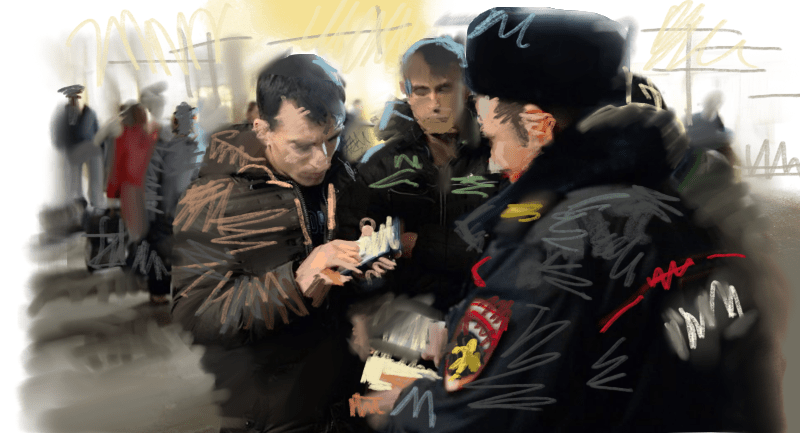
As previously reported by TCA, the terrorist attack at Crocus City Hall, located on the outskirts of Moscow, resulted in 144 fatalities and 551 injuries. The incident has created a climate of fear among Central Asian migrants living in Russia.

In the aftermath of the attack, Tajik migrants have faced a surge of hostility and aggression, further exacerbating tensions within the migrant community.

AI Facial Recognition System Being Tested in Two Cities in Kazakhstan

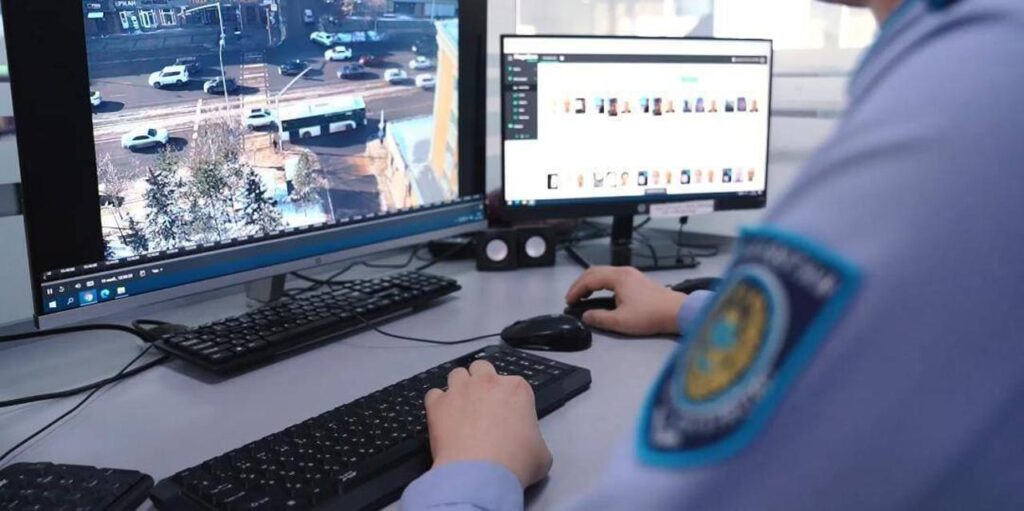
Kazakhstan has launched a national video monitoring system powered by artificial intelligence technologies. The project, developed by the Ministry of Internal Affairs, the National Security Committee, and the Ministry of Digital Development, Innovation, and Aerospace Industry, aims to enhance surveillance capabilities across key locations in the country.

The system is designed to recognize faces, detect abandoned objects, capture offenses, and identify vehicles by make, model, and color. Critical sites such as railway stations, airports, hotels, streets, intersections, and shopping malls are priority areas for implementation.

During the World Nomad Games in Astana, the technology was reportedly instrumental in locating lost children and missing persons. Authorities also noted that the system helped detain 46 wanted individuals in Astana and 30 in Almaty. Proponents argue that these technologies could contribute to improving public safety and reducing crime.

Kazakhstan’s initiative follows a broader global trend of integrating AI into “smart city” systems, similar to developments in China, Russia, and some European countries. Officials say the system will be expanded with additional cameras nationwide to increase monitoring coverage.

To date, more than 1.3 million video cameras have been installed in Kazakhstan, with 310,000 of them connected to operational control centers and police duty stations. Advocates of the system highlight its potential to deter crime and bolster public security, although concerns about privacy and misuse of surveillance technology have been raised internationally.

Worldwide, AI video surveillance systems are being adopted to improve law enforcement and public safety. In China, they are used for facial recognition to track criminals and prevent offenses. Russia has integrated AI into its video systems to detect potential threats, while in the UK, intelligent cameras are used for crowd management and event security.

While supporters emphasize the benefits of such systems in enabling faster responses to incidents and reducing crime, the deployment of AI in surveillance has sparked ongoing debates over privacy, civil liberties, and the potential for misuse.

Kazakhstan, Hungary, and China Establish Cargo Terminal in Budapest

Kazakhstan Temir Zholy (KTZ, Kazakhstan’s national railway company), L.A.C. Holding (Hungary), and Xi’an Free Trade Port Construction and Operation Co., Ltd (China) have signed a memorandum to establish a joint inter-modal cargo terminal in Budapest. The document was signed on November 20 as part of the state visit of Kazakhstan’s President Kassym-Jomart Tokayev to Hungary.

The planned terminal will leverage the strategic location of the Hungarian capital in the heart of Europe and its developed transport network for multimodal transportation across the continent.

The terminal will have a capacity of 230,000 TEU annually and will increase the number of container trains between China and Europe, including transit along the Trans-Caspian International Transport Route (TITR). The new terminal is expected to reduce delivery times and transportation costs.

KTZ continues to expand its terminal network along key transport corridors to strengthen Kazakhstan’s position as a key transit hub in Eurasia. On November 12, Kazakhstan, Azerbaijan, and China signed an agreement to establish an inter-modal cargo terminal in the Port of Alat in Baku, Azerbaijan.

Commenting on the signed Memorandum at a press briefing in Budapest, Tokayev said this initiative will strengthen trade and transport ties between the participating countries. “New opportunities are opening up for the development of infrastructure, logistics, and international trade. Eighty-five percent of land transit shipments between Asia and Europe pass through Kazakhstan. In the near future, the volume of cargo transportation along this route will reach 10 million tons,” Tokayev said.

Kazakhstan’s Ambassador: Kazakh Companies Do Not Want To Be Under Sanctions

Kazakh companies seek to avoid secondary sanctions, but the country will continue to cooperate closely with Russia. This was stated by Kazakhstan’s Ambassador to Russia, Dauren Abayev, at a press conference in TASS news agency.

According to him, about ten companies in the country have fallen under such sanctions, but these are isolated cases.

“Kazakh companies, naturally, do not want to be under sanctions, as any restrictions have a negative impact on their activities,” Abayev emphasized.

Nevertheless, he noted that strategic partnership and allied relations remain between Kazakhstan and Russia, and the growth of trade turnover confirms the continuation of cooperation.

Earlier in August, Kazakhstan’s Deputy Prime Minister Serik Zhumangarin said in an interview with Bloomberg that the republic would not blindly follow sanctions against Russia but would take into account international restrictions. He emphasized that Kazakhstan will not allow a ban on trade for its companies, but the country cannot completely ignore the sanctions because of the risk of economic isolation.

Kazakhstan’s Minister of National Economy Nurlan Baibazarov commented in early November on Kazakhstan companies being placed on the UK sanctions lists, saying that these violations are not systemic. He said the sanctions were mainly one-day firms, and the republic continues to comply with international restrictions.