• KGS/USD = 0.01144 0%
  • KZT/USD = 0.00194 -0%
  • TJS/USD = 0.10844 -0.46%
  • UZS/USD = 0.00008 0%
  • TMT/USD = 0.28571 0.28%
  • KGS/USD = 0.01144 0%
  • KZT/USD = 0.00194 -0%
  • TJS/USD = 0.10844 -0.46%
  • UZS/USD = 0.00008 0%
  • TMT/USD = 0.28571 0.28%
  • KGS/USD = 0.01144 0%
  • KZT/USD = 0.00194 -0%
  • TJS/USD = 0.10844 -0.46%
  • UZS/USD = 0.00008 0%
  • TMT/USD = 0.28571 0.28%
  • KGS/USD = 0.01144 0%
  • KZT/USD = 0.00194 -0%
  • TJS/USD = 0.10844 -0.46%
  • UZS/USD = 0.00008 0%
  • TMT/USD = 0.28571 0.28%
  • KGS/USD = 0.01144 0%
  • KZT/USD = 0.00194 -0%
  • TJS/USD = 0.10844 -0.46%
  • UZS/USD = 0.00008 0%
  • TMT/USD = 0.28571 0.28%
  • KGS/USD = 0.01144 0%
  • KZT/USD = 0.00194 -0%
  • TJS/USD = 0.10844 -0.46%
  • UZS/USD = 0.00008 0%
  • TMT/USD = 0.28571 0.28%
  • KGS/USD = 0.01144 0%
  • KZT/USD = 0.00194 -0%
  • TJS/USD = 0.10844 -0.46%
  • UZS/USD = 0.00008 0%
  • TMT/USD = 0.28571 0.28%
  • KGS/USD = 0.01144 0%
  • KZT/USD = 0.00194 -0%
  • TJS/USD = 0.10844 -0.46%
  • UZS/USD = 0.00008 0%
  • TMT/USD = 0.28571 0.28%
09 December 2025

Kazakh Boxing Legend Gennadiy Golovkin Nominated to Lead World Boxing

Gennadiy Golovkin, Kazakhstan’s former middleweight world champion, and current head of the National Olympic Committee, has been nominated for the presidency of World Boxing, the international boxing federation. He is also running concurrently for a vicepresidential post and a seat on the Board of Directors. 

World Boxing was created in April 2023 as an alternative to the International Boxing Association (IBA) after the International Olympic Committee (IOC) suspended it from hosting Olympic qualifying tournaments citing governance problems, corruption scandals and nontransparent refereeing. 

At its founding the association included only six countries, United States, Great Britain, Germany, the Netherlands, Sweden and the Philippines but by late 2025 it has grown considerably. In September 2024 Golovkin became Chair of World Boxing’s Olympic Commission, whose key task is to work with the IOC to keep boxing in the Olympic programme and gain official recognition for the new organisation. 

The next World Boxing leadership elections will take place on 23 November 2025 in Rome as part of the World Boxing Congress. The incumbent president, Dutchman Boris van der Vorst, has announced he will not seek reelection. 

According to the organisation’s press service, Golovkin has been nominated for three positions simultaneously, president, vicepresident and board member. Election to one position automatically excludes voting for the others. 

Two other candidates for the presidency have been announced: Mariolis Charilaos of Greece. A number of other candidates are also running for the vicepresidential and board seats.

As previously reported by The Times of Central Asia, in 2025 World Boxing held its first amateur world championship, with Kazakhstan’s team winning the overall team competition.

Opinion: A Trump Visit to Central Asia Would Deliver Results and Anchor a Corridor Strategy

On November 6, Washington will host the C5+1 leaders’ summit, marking the format’s 10th anniversary and signaling a rare alignment of political attention and regional appetite for concrete outcomes. The date is confirmed by regional and U.S.-focused reporting, with Kazakhstan’s presidency and multiple outlets noting heads-of-state attendance in the U.S. capital.

This timing is decisive. Russia’s bandwidth is constrained by the war in Ukraine, China’s trade weight in Central Asia has grown, and European demand for secure inputs and routes has intensified. All these developments together create a window where a visible United States presence can meaningfully alter the deal flow. A visit sequenced off the November C5+1 will attach U.S. political attention to minerals, corridors, and standards that regional governments already prioritize, confirming the conversion of the summit’s symbolism into leverage.

Washington already has the instruments but has lacked a synchronized presence. Development finance, export credit, and C5+1 working groups exist, yet announcements have too often outpaced commissioning. A targeted tour could unveil named offtakes, corridor slot guarantees, and training compacts. This would move from the dialogue to bankable packages if paired with financing envelopes, posted schedules, and third-party verification. Deals, dates, and delivery would make operational signals clear to partners and competitors alike.

Strategic Rationale and Operating Concept

The United States has three clear goals. These are to diversify critical minerals away from single-point dependency on China, de-risk trans-Eurasian routes that connect Asian manufacturing to European demand, and reinforce the sovereignty of the states in the region without pressuring them to choose sides in great-power competition over other issues.

These imperatives already guide the national-security strategies of Central Asian governments, which implement them according to multi-vector doctrines. A presidential visit that treats minerals, corridors, and standards as a single package would show that Washington is prepared to move forward on the same problem set that the region has defined for itself.

The ways to do that are through finance-first diplomacy and an end-to-end corridor approach, including the Caspian crossing. Finance-first diplomacy pairs every political announcement with insurance, offtake letters, and term sheets (short non-binding summaries of key commercial and legal terms for a proposed deal). These signal the intention to convert declarations into commissioning.

An end-to-end corridor approach accepts the physical reality that Central Asian outputs move west through Central Asia, across the Caspian Sea, and across the South Caucasus, with Azerbaijan functioning as the hinge that makes Europe reachable at scale. Each element of the “minerals–corridors–standards” triad reinforces the others when the whole is pursued as a single program. Reliable customs and traceability raise corridor credibility, which raises project bankability, which in turn attracts the private capital required for mineral processing.

The instrumentalities for this already exist. The C5+1 framework can be tasked to track deliverables; the Development Finance Corporation (DFC) and the Export-Import Bank (EXIM) can cover risk and long-term debt; aid and technical programs of the Department of State and Commerce can align standards, procurement integrity, and traceable supply chains; U.S. universities and labs can underwrite training and testing capacity for mine safety, metallurgy, and standards verification. None of this requires new rules or authority. What is required is prioritization, sequencing, and deadlines that bind announcements to engineering calendars and audited milestones.

Country Platforms

The origin, midstream, and offtake of commodities need to be planned as one system for the corridor to work. That means production and processing in Central Asia, reliable port–rail handoffs at the Caspian, and predictable westbound movement through the South Caucasus. When these elements are treated as a single integrated program, they reinforce one another rather than compete for attention.

Kazakhstan is the region’s capacity center. Its resource base includes copper, uranium, and promising rare-earth prospects. The Caspian ports at Aktau and Kuryk provide the sea link, while ongoing rail upgrades will move more freight more reliably and on time. Recent purchases of freight wagons and locomotives show new investment in hard infrastructure, while customs systems are being digitized and sailing times are becoming more predictable, lowering the risk of delay. A United States package that provides modular processing plants, financing for port equipment, and publicly posted operating schedules would give European buyers clearer delivery expectations and turn declared political intent into realized shipments.

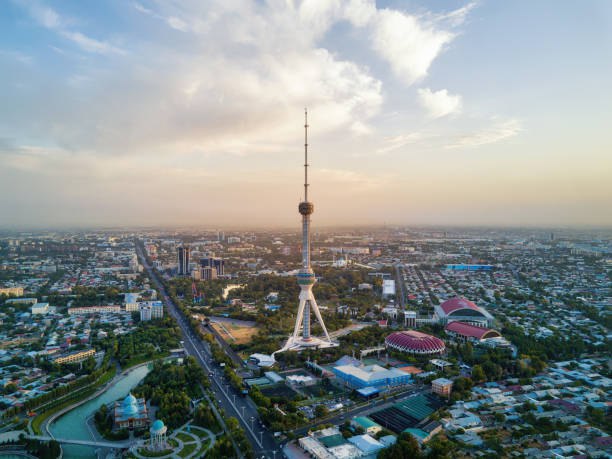
Uzbekistan’s national policy has focused on processing by adding value at home, from pilot concentrators to modernizing existing plants. Training pipelines in metallurgy, mine safety, and maintenance can be matched with investor terms that reward in-country processing rather than raw exports. Logistics nodes around Navoi and key east–west rail spurs can support higher volumes if yard operations and customs move to tighter timetables. A practical package would link processing modules, workforce training, and predictable train paths so that output can move on schedule.

Kyrgyzstan, Tajikistan, and Turkmenistan call for targeted steps rather than large all-at-once programs. In Kyrgyzstan, near-term reliability can improve through selective mine rehabilitation and basic logistics for small and medium-sized enterprises (SMEs). In Tajikistan, pairing hydropower with small minerals-processing pilots can lower operating costs if governance and offtake are transparent. In Turkmenistan, the focus should be on increasing the dependability of usable trans-Caspian crossings by securing practical operating rights and steady sailing schedules from Turkmenbashi. Each case should be scoped narrowly, measured against simple performance metrics, and financed on a proof-of-concept basis before scaling.

Thematic Tracks

There are three thematic tracks: critical minerals, corridors and logistics, and standards and compliance.

The critical minerals track should begin with refreshed geological mapping and environmental baselines, and size modular processing pilots to grid and water constraints. More value can be kept in the region by tying offtake agreements to local processing rather than unprocessed exports, and building verification in from the start through chain-of-custody records, site-level ESG monitoring, and independent assay capacity at accredited laboratories.

The corridors and logistics track will seek to increase ferry frequency across the Caspian and regularize schedules by funding port equipment and posting reliable rail–port timetables for shippers. Train paths and berths should be reservable and predictable, and published with enough lead time for commercial planning. Insurance and reinsurance should be organized around service-level agreements that reduce delay risks and lower the cost of moving goods.

The standards and compliance track should expand single-window customs and recognized operator programs. Basic traceability should be implemented so border agencies can clear compliant cargo faster. Procurement integrity and audit trails must align with widely used standards to reduce disputes and rework. These measures should be paired with training for customs, port operations, and mine-site safety so practice matches policy at the point of execution.

Practical Partners

Central Asia is no longer looking for declarations but for practical measures from practical partners. The United States can answer that ask with five integrated elements. These are: (1) a shortlist of deliverables that matter on the ground, (2) purchase agreements for key minerals, (3) reserved capacity on the trans-Caspian segment, (4) a simple standards plan, and (5) the financing and oversight that launch construction.

These are the clear operational signals for which Central Asian partners are looking, and their implementation would anchor the U.S. presence in the region. The November C5+1 window is an opportunity to move to execution. Delivery of a handful of concrete items with posted timelines and third-party checks will reset expectations of what U.S. engagement means. If delivered in the region by the president, the echo will resound for years to come.


The views expressed in this article are those of the author and do not necessarily reflect the official policy or position of the publication, its affiliates, or any other organizations mentioned.

New “Air Gates”: How Two Airports Will Transform Eastern Kazakhstan

The construction of new airports in the Katon-Karagai and Zaisan districts of eastern Kazakhstan is entering its final phase. For these remote region, once accessible only by winding mountain roads, the arrival of runways, terminals, and control towers marks a historic milestone.

But these projects are more than just transportation infrastructure. They are poised to become engines of regional development, restoring the area’s appeal to both tourists and investors.

An Airport in the Mountains

Katon-Karagai is the heart of Kazakhstan’s Altai region. Between the villages of Belkaragai and Ornek, a large-scale construction effort is underway to build a modern airport complex.

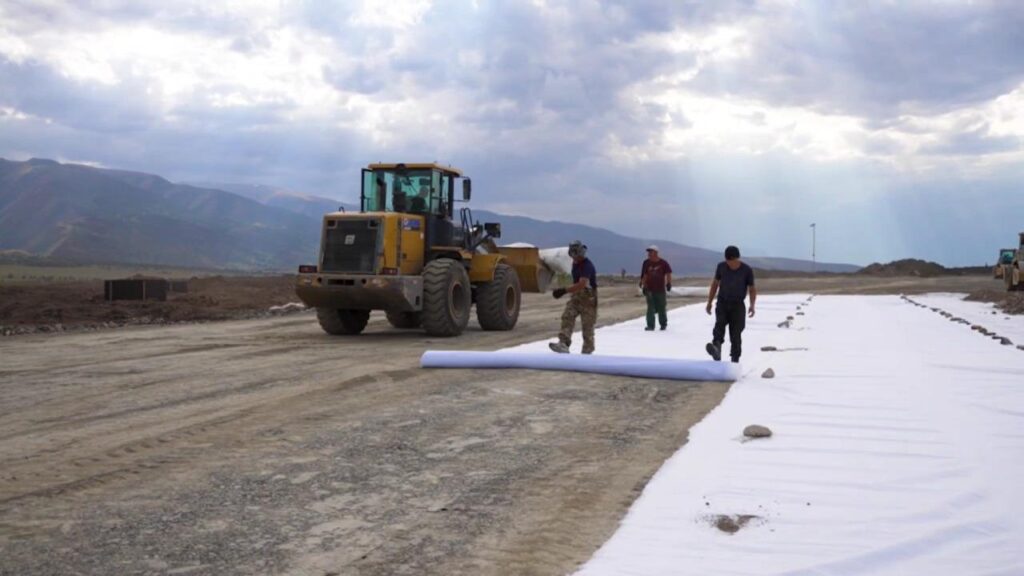
Spanning 266 hectares, the project includes a 2,260 meter runway, a terminal, a command-and-control center, and state-of-the-art navigation and meteorological equipment. According to project manager Nurzhan Eskendirov, 80% of the work is now complete. “Next summer, we will lay the final layer of asphalt. This airport is not just a construction project, it’s a new chapter in the region’s history,” he told TSA.

@gov.kz

For local residents, the construction has become the event of the decade. Workers from across the country have joined the effort.

“The nature here is simply amazing,” said one of the builders, Manash Baigonov. “I want people from all over the world to be able to see it.”

Katon-Karagai is renowned for its pristine lakes, snow-covered peaks, and protected nature reserves. The airport will drastically reduce travel time, making the region far more accessible to tourists who previously faced hours of rugged road travel.

Zaisan: The Eastern Gateway

In the Zaisan district, another major airport project is nearing completion near the village of Satpay. The runway and apron are fully finished, the drainage system is being finalized, and terminal and control tower construction is ongoing.

This airport is expected to play a vital role in expanding cross-border tourism and logistics. Currently, Zaisan receives about 20,000 tourists annually, a number that could increase four- to five-fold once the airport opens.

Regular flights are planned to Ust-Kamenogorsk, Almaty, and Astana, with future international routes to Urumqi in China and Lake Kanass. This would position Zaisan as Kazakhstan’s “eastern gateway,” linking the country to China not only by road, but also by air.

“The airport is creating new routes, but more importantly, it’s creating meaning,” said one of the project’s designers. “It’s not just a runway, it’s the take-off of a region.”

@gov.kz

From Roads to People

Airport development is also driving broader infrastructure upgrades. A new road to the village of Urunkhaika on Lake Markakol, planned in partnership with China’s Heilongjiang Province Bada Road, will connect even more of Altai’s secluded landscapes to the broader transport network. Until now, many of these areas were accessible only by footpaths.

These infrastructure projects are transforming not just the regional map, but daily life. In Katon-Karagai, which was once served only by narrow serpentine roads and sporadic buses, officials are now preparing for the arrival of investors, climbers, photographers, and nature lovers. In Zaisan, a revival is underway, with new hotels, cafes, artisan workshops, and jobs expected to follow the airport’s launch.

These developments are part of a wider strategy for Eastern Kazakhstan, where tourism, logistics, and environmental stewardship form a unified platform for growth.

The Katon-Karagai and Zaisan airports will serve as key links in this infrastructure, a kind of anchor, enabling tourists and entrepreneurs from across Kazakhstan and beyond to reach the heart of the Altai in just hours.

Ultimately, the Zaisan airport represents a gateway to international trade and cross-border cooperation, while Katon-Karagai’s airport is a bridge between nature and civilization, an opportunity to showcase the unique beauty that defines Kazakhstan.

Cost of Living in Uzbekistan Remains Moderate in Regional Context

Uzbekistan ranks third among Central Asian countries in terms of cost of living, according to the latest data from Numbeo. With an index score of 24.2 on a 100-point scale, Uzbekistan maintains relatively low living expenses by global standards, though costs remain lower than in Kyrgyzstan (25.4) and Kazakhstan (26.6).

The estimated monthly expenses for a family of four in Uzbekistan, excluding rent, are approximately 21 million UZS ($1,743.31), while the average per-person cost stands at 5.6 million UZS ($464.88).

Compared to the United States, Uzbekistan’s overall cost of living, including rent, is 65.2% lower. Rent alone is 71.1% cheaper.

Regional Comparisons

In a comparison of major cities, living in Almaty, Kazakhstan, is 6.8% more expensive than in Tashkent, excluding rent. Including rent, the cost difference narrows to 5.9%, with rent prices in Almaty 3.5% higher. Restaurant prices are 17.5% higher in Almaty, while grocery costs are 1.3% lower. Local purchasing power is 5.5% stronger than in Tashkent.

Bishkek, Kyrgyzstan’s capital, is marginally cheaper than Tashkent, with the overall cost of living 0.5% lower excluding rent and 4.8% lower when rent is included. Rent in Bishkek is 15.7% cheaper, restaurant prices are 1.9% lower, and groceries cost 7.4% less. However, Bishkek’s local purchasing power is 21.3% lower than in Tashkent.

In Dushanbe, the cost of living is 0.8% higher than in Tashkent without rent, but 7.7% lower when rent is included. Rent prices are 29% lower, restaurant prices are 13.4% cheaper, and groceries are 18.3% more expensive. Local purchasing power in Dushanbe is significantly lower, 50.9% below that of Tashkent.

Ashgabat, the capital of Turkmenistan, stands out as the region’s most expensive city. The cost of living there is 261.4% higher than in Tashkent without rent and 208.5% higher when rent is factored in. Rent prices in Ashgabat are 77.6% higher, restaurant prices are 242.4% more expensive, and groceries cost 291.3% more. Despite the elevated costs, local purchasing power in Ashgabat is 58.5% lower than in Tashkent.

Kazakhstan Boosts Animal Feed Exports to China

Kazakhstan has significantly increased its exports of compound animal feed to China, even as shipments of unprocessed grain have declined, according to Kazakhstan Temir Zholy (KTZ), the national railway operator.

The shift in export dynamics is attributed to China’s record 700-million-ton grain harvest in 2025. In response to domestic supply, the Chinese authorities have tightened grain import regulations and introduced customs restrictions. As a result, Kazakhstan’s grain export structure has shifted toward processed goods with higher added value, most notably, compound animal feed.

Animal feed is in high demand within China’s livestock sector and receives priority clearance at border checkpoints. This preferential treatment has contributed to a notable surge in Kazakh feed exports.

During the first two months of the current marketing year (September-October 2025), KTZ transported 873,000 tons of grain for export, including 672,000 tons of animal feed, a 3.5-fold increase compared to the same period last year.

Overall grain exports to China, however, rose 35% year-on-year to 3.5 million tons between January and October 2025, reflecting a shift toward higher-value processed goods rather than bulk grain.

According to the Ministry of Agriculture, Kazakhstan continues to export most of its grain to countries across Central Asia and the Caucasus, including Uzbekistan, Tajikistan, Kyrgyzstan, Afghanistan, Turkmenistan, and Azerbaijan.

Kazakhstan Launches First Carbon Agro-Climatic Testing Ground

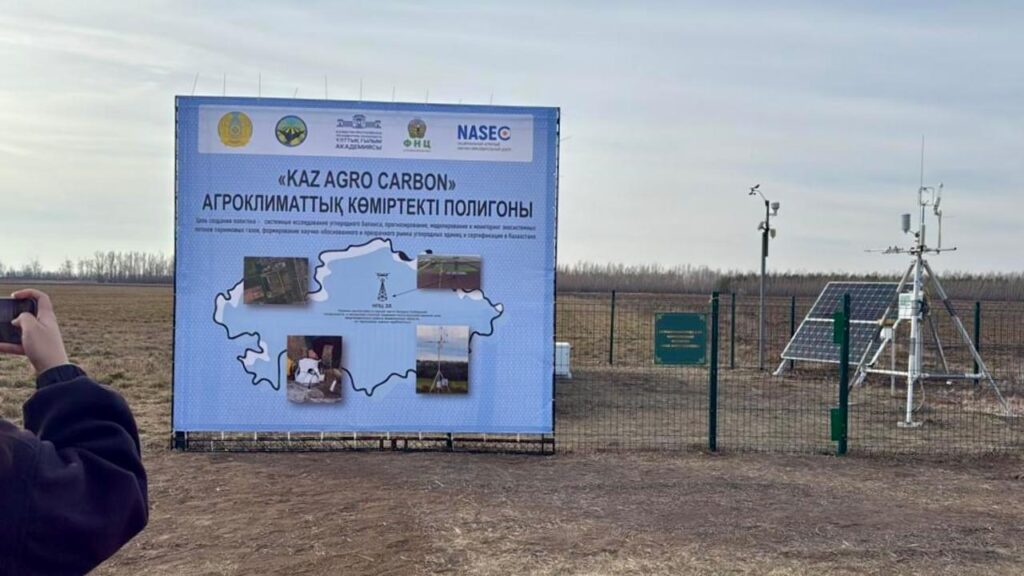
Kazakhstan has inaugurated its first carbon agro-climatic testing ground, Kaz Agro Carbon, at the A.I. Barayev Scientific and Production Center for Grain Farming, marking a significant step toward climate-resilient agriculture.

The project is a collaborative effort between the agriculture ministries of Kazakhstan and Russia, the National Academy of Sciences of Kazakhstan, and scientists from the University of Hannover in Germany.

According to the Kazakh Ministry of Agriculture, the new facility is designed to manage soil carbon, reduce greenhouse gas emissions, and enhance the climate resilience of the agricultural sector.

Kaz Agro Carbon will act as a pilot site for joint research focused on measuring, modeling, and managing the carbon balance in Northern Kazakhstan. Researchers aim to develop technologies that reduce emissions and boost carbon dioxide absorption in local ecosystems.

“Kaz Agro Carbon is a platform for integrating science, innovation, and real-world production. It will help preserve soil fertility, adapt agriculture to climate change, and develop a national carbon balance management system. This is an important step toward developing climate-smart agriculture in Kazakhstan,” said Timur Savin, Chairman of the Board at the Scientific and Production Center for Grain Farming, during the opening ceremony.

Amid global efforts to combat climate change, carbon farming is emerging as a strategic growth area for Kazakhstan’s agricultural sector.

According to the Ministry of Science and Higher Education, Kaz Agro Carbon is equipped for year-round monitoring of ecosystem conditions. The site will track soil carbon levels as well as key meteorological data such as temperature, humidity, and precipitation.

Kazakhstan’s carbon sequestration potential is estimated at up to 535 million tons annually. The development of carbon offset trading mechanisms could attract as much as $25 billion per year to the national economy. The new facility will provide farmers with the tools to certify accumulated carbon and participate in the emerging carbon quota market, positioning Kazakhstan to take an active role in international emissions trading.