• KGS/USD = 0.01144 0%
  • KZT/USD = 0.00194 -0%
  • TJS/USD = 0.10844 -0.46%
  • UZS/USD = 0.00008 0%
  • TMT/USD = 0.28571 0.28%
  • KGS/USD = 0.01144 0%
  • KZT/USD = 0.00194 -0%
  • TJS/USD = 0.10844 -0.46%
  • UZS/USD = 0.00008 0%
  • TMT/USD = 0.28571 0.28%
  • KGS/USD = 0.01144 0%
  • KZT/USD = 0.00194 -0%
  • TJS/USD = 0.10844 -0.46%
  • UZS/USD = 0.00008 0%
  • TMT/USD = 0.28571 0.28%
  • KGS/USD = 0.01144 0%
  • KZT/USD = 0.00194 -0%
  • TJS/USD = 0.10844 -0.46%
  • UZS/USD = 0.00008 0%
  • TMT/USD = 0.28571 0.28%
  • KGS/USD = 0.01144 0%
  • KZT/USD = 0.00194 -0%
  • TJS/USD = 0.10844 -0.46%
  • UZS/USD = 0.00008 0%
  • TMT/USD = 0.28571 0.28%
  • KGS/USD = 0.01144 0%
  • KZT/USD = 0.00194 -0%
  • TJS/USD = 0.10844 -0.46%
  • UZS/USD = 0.00008 0%
  • TMT/USD = 0.28571 0.28%
  • KGS/USD = 0.01144 0%
  • KZT/USD = 0.00194 -0%
  • TJS/USD = 0.10844 -0.46%
  • UZS/USD = 0.00008 0%
  • TMT/USD = 0.28571 0.28%
  • KGS/USD = 0.01144 0%
  • KZT/USD = 0.00194 -0%
  • TJS/USD = 0.10844 -0.46%
  • UZS/USD = 0.00008 0%
  • TMT/USD = 0.28571 0.28%
09 December 2025

Grain War: Has Kazakhstan Become Russia’s Victim?

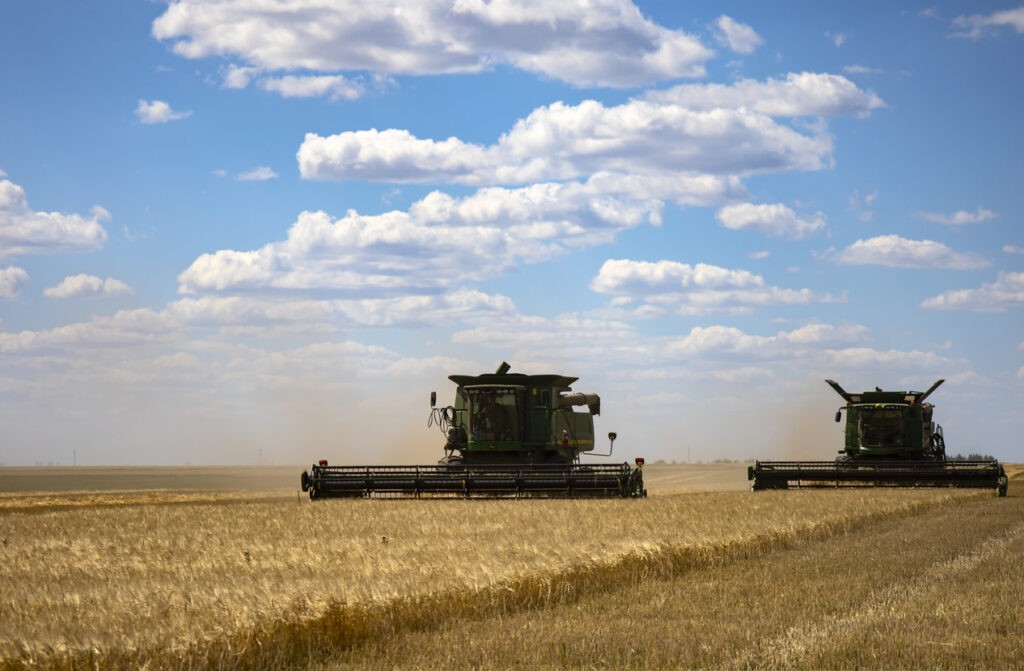
The fall brought two headaches for Kazakhstani farmers: a rich grain harvest that coincided with an oversupply of grain on world markets, and Russia’s ban on exporting Kazakh wheat to and transiting through Russia. Experts complain about the 40% failure of Kazakhstani grain exports, and representatives of farmer associations complain about low prices and high production costs and ask the government to buy their surplus products. The background is talk of a grain war between Moscow and Astana.


Phytosanitary ban

According to Kazakhstan’s Ministry of Agriculture, this year the harvested area of crops amounted to 23.3 million hectares, of which 16.7 million were sown with cereals. Fieldwork has been completed by 99.7%. 26.5 million tons of grain were threshed.

Proponents of the opinion that the agricultural authorities of Kazakhstan and Russia have entered into a hidden confrontation for external grain markets argue that Kazakhstan is a victim of this trade war. They cite the restrictions imposed by Rosselkhoznadzor in October as evidence. On October 1, the Russian agency asked Kazakhstan’s Ministry of Agriculture to suspend the issuance of phytosanitary certificates for grain and its products, tomatoes, peppers, and sunflower seeds exported to the Russian Federation.

On October 3, journalists asked Vice-Minister of Agriculture Ermek Kenzhekhanuly about the stage of fulfillment of this wish. He replied that the Russian side received a reply letter requesting evidence of phytosanitary control violations. According to him, Rosselkhoznadzor had not responded as of October 3.

On October 17, the Russian Federal Service for Veterinary and Phytosanitary Surveillance temporarily banned imports of several types of agricultural goods from Kazakhstan. Transit of wheat, lentils, and oilseed flax seeds through Russia’s territory is allowed. Still, a phytosanitary certificate for the country of final destination must be issued, and grain must be transshipped directly from railcars into the ship’s holds.

At the same time, deliveries of tomatoes, peppers, sunflower seeds, and melons from Kazakhstan are prohibited, even for transit.


Obstacles in response to the ban

However, let’s carefully review the Kazakhstani press. We will find that as early as September 3rd, Kazakhstani farmers sounded the alarm—Russia is pushing our grain out of traditional markets.

Representatives of the Grain Union of Kazakhstan discussed the problems Kazakh traders face with the transit of domestic grain through the territory of the Russian Federation at a session with journalists at the Agricom forum.

However, they cited only two cases of such restrictions but tried to convey another message—Russia has introduced hidden obstacles because of Kazakhstan’s ban on grain imports from the Russian Federation, which was imposed as early as August 1.

As reported by Kazakhstan’s Ministry of Agriculture, the restrictions imply a complete ban on wheat imports by all modes of transportation. Previously, the restrictive measures provided for a ban on imports of goods by road, water, and rail (except for imports to poultry and flour mills) since April. The decision was made because, despite the previous ban, grain imports from Russia exceeded 1.1 million tons in six months.

Experts considered it a rather clumsy way to close the loopholes through which Russian grain gets to the Kazakh market and, in principle, predicted that the Russian Federation would respond no less harshly.


Attempt to reach an agreement

On October 30, two weeks after the ban, the Rosselkhoznadzor leadership negotiated with a Kazakh Ministry of Agriculture representative regarding importing “sanctioned” goods. The talks were held via video link, with Kenzhekhanuly participating.

At the same time, Rosselkhoznadzor disavowed the words of the deputy minister about the expectation of a response letter with evidence of violations. According to the agency, they have yet to receive responses from the Kazakh side to 30 letters from Rosselkhoznadzor. Plus, the actions of the Ministry of Agriculture were called “fraudulent schemes of supply of regulated products to Russia from Kazakhstan.”

Following these talks, Kazakh Agriculture Minister Aidarbek Saparov said the ban on Kazakh grain imports to Russia will probably be lifted within a week. According to him, Kenzhekhanuly had to fly to Moscow for a meeting with the deputy head of Rosselkhoznadzor for this purpose.

Since there has been no news from Kenzhekhanuly, it is unclear whether they reached an agreement with the Russian side. But here is what is remarkable: the day before, on November 4, the government of Kazakhstan held a meeting of the operational headquarters for the harvesting campaign under the chairmanship of Serik Zhumangarin.

At this meeting, it was emphasized that grain transportation through Russia is going on without restrictions, with exports to Russia for two months amounting to 43,000 tons and 104,000 tons in transit.

At the same time, they discussed complaints of “individual farmers” that they cannot deliver grain to elevators. Plus, Zhumangarin was ordered to guarantee grain purchases for farmers.

Representatives of the Grain Union of Kazakhstan suggest buying surplus grain from farmers as a way to solve the problem of a rich harvest and Russian obstacles to its export.

“We should buy these 2 – 2.5 million tons (of grain), and the government should allocate money. This is quite short money on the scale of public finances. This money is 100% repayable; that is, half of this money will return in two or three months in the form of repayment of current obligations of farmers to state financial institutions (Agrarian Credit Corporation, KazAgroFinance, Prodkorporatsiya), the rest – after the sale of grain in the spring-summer of 2025”, said Yevgeny Karabanov, an official representative of the Grain Union of Kazakhstan and founder of the group of companies ‘Northern Grain.’

So, it turns out that if the government had decided to buy grain from Kazakh farmers, it would not have reached an agreement with the Russian side. Apparently, Moscow’s embargo will continue to operate despite Kazakhstan’s “requests.”

Germany Closes Money Laundering Case Against Uzbek-Russian Billionaire Usmanov

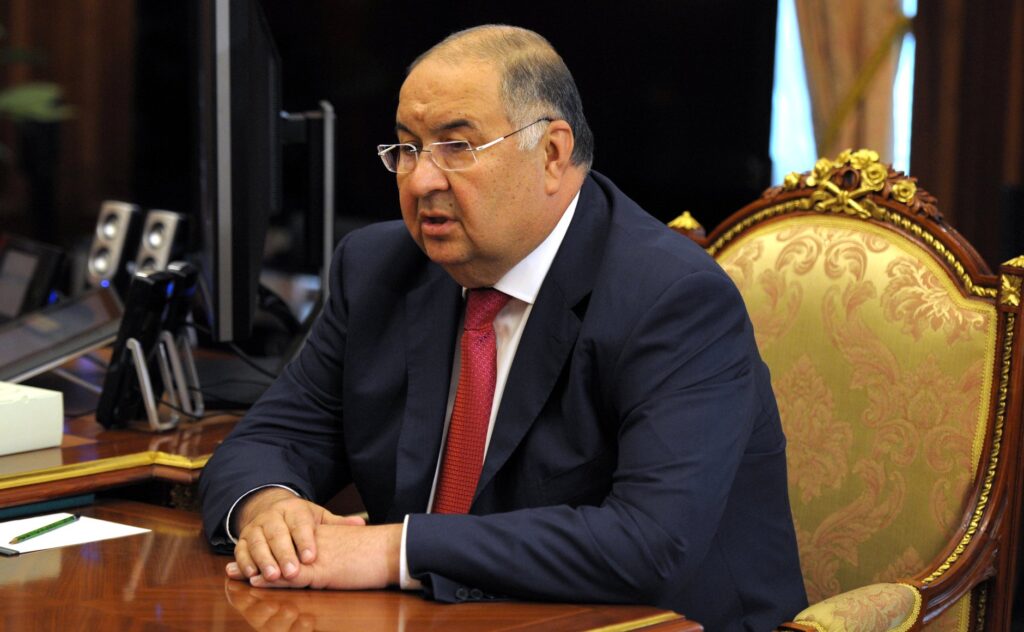
The Frankfurt Prosecutor’s Office has completed its money laundering investigation against Uzbek-Russian businessman Alisher Usmanov. The case was settled on October 11, 2024, when Usmanov agreed to pay 1.5 million euros to non-profit organizations and 2.5 million euros to the German treasury. When these payments are completed, the case will be completely closed.

Prosecutors say the alleged actions in question occurred long ago and did not cause financial damage in Germany. This decision was made under section 153a of the German Criminal Procedure Code, which allows cases to be dropped if the crime is minor and prosecution isn’t in the public interest.

Usmanov’s lawyers praised the result, calling it a step towards restoring his reputation. They noted that the investigation found no evidence to support money laundering charges. Usmanov has now decided not to file a counter lawsuit against prosecutors or demand damages.

In 2022, a Frankfurt court deemed the searches of properties linked to Usmanov in Germany illegal, and all seized items were ordered to be returned. However, in 2023, the German Constitutional Court declined Usmanov’s complaint over the searches, stating that he had not exhausted all legal options before filing the complaint.

Previously, The Times of Central Asia reported that the news from the Hamburg court about Usmanov as broadcast by the German TV channel ARD was found to be unreliable. ARD accused Usmanov of creating a system of bribing International Fencing Federation (FIE) judges.

According to the report, the court found the information published by the ARD channel unreliable and banned its distribution as “inappropriate news based on suspicion.” If the court order is violated, the party found to be in violation can be fined up to 250,000 euros per episode or face imprisonment.

Uzbekistan and China Strengthen Partnership in Nuclear Energy Development

On November 4 during Uzbekistan’s participation in EXPO 2024 in Shanghai, Uzbekistan’s Atomic Energy Agency officials met with Wei Fuqi, General Director of the China National Nuclear Corporation Overseas Ltd (CNOS). They discussed opportunities for collaboration in nuclear energy and other potential joint projects.

The Uzbek officials and CNOS reached agreements on cooperation in the peaceful use of nuclear energy, a detailed review of the possibilities of adopting China’s advanced experience in nuclear power plant construction, and studying the possibilities of using China’s small modular reactors. The parties also talked about cooperating to expand uranium ore mining capacity, processing, production and export of finished products with high added value, and subsequent fuel use in nuclear power plants.

Uzbekistan is consistently reforming its nuclear program. China has confirmed that it is interested in strengthening bilateral relations in all areas of nuclear technology.

Risk and Reward: Why Savvy Investors Should Dive into Central Asia-Caspian Region

Central Asia-Caspian basin has long been a geopolitical chessboard — fragmented by conflict but dependent on cooperation. In an era of shifting alliances, political instability, and economic uncertainty, multinational corporations (MNCs) must reassess their strategies. While the region’s challenges remain considerable, it also presents unique investment opportunities that should not be overlooked.

Since the 1990s, operating in post-Soviet Eurasia has been synonymous with political risks. The Central Asian states have sought foreign direct investment (FDI) but face significant obstacles, including weak rule-of-law, inconsistent regulatory frameworks, and entrenched corruption. Yet despite these barriers, the region continues to attract international capital, signaling its long-term potential.

Traditionally reliant on oil and gas exports, these countries are now pivoting toward diversification. Nations like Azerbaijan, Kazakhstan, and Turkmenistan are strengthening ties with the European Union (EU) to balance their historical reliance on Russia’s energy network. This shift is opening new frontiers for investment, particularly in green energy, infrastructure, and technology.

However, geopolitical instability remains a critical risk. The war in Ukraine has intensified uncertainties, with Russia, China, the EU, and the U.S. vying for influence. Energy security, once an afterthought, has become a central issue. The closure of the Novorossiysk terminal in early 2023, halting Kazakh oil exports, underscored how quickly geopolitical disruptions can affect supply chains, prompting companies like ExxonMobil to reassess their regional strategies.

Yet this volatility also creates opportunities. The region’s economic shift away from resource dependence toward a knowledge-based economy offers fertile ground for businesses willing to invest in infrastructure, technology, and renewable energy. The Caspian basin’s strategic location, as a transit hub for energy to Europe, only heightens its importance in the EU’s efforts to reduce dependency on Russian supplies. For international businesses, this means new markets, sectors, and investment channels are emerging.

The post-Covid landscape adds complexity, with digital transformation accelerating across industries. Countries in the Central Asia-Caspian basin are under pressure to adopt these technologies, which could drive long-term economic growth. Yet the gap between ambitious reform plans and their implementation remains wide. Regulatory inefficiencies and bureaucratic hurdles continue to hamper progress, presenting a challenge for foreign investors looking for stability.

For multinational corporations, the region presents both risks and significant upsides. On one hand, border disputes, political unpredictability, and regulatory uncertainty create barriers. On the other, the region’s growing role as an energy transit hub and its emerging sectors, from green energy to infrastructure, offer promising avenues for investment. Azerbaijan and Kazakhstan, in particular, have been proactive in bolstering energy exports to Europe, positioning themselves as critical players in the global energy transition.

If the conflict in Ukraine continues to escalate, the region’s geopolitical risks will undoubtedly increase. However, external actors — particularly the U.S., the EU, and China — are also likely to deepen their involvement, further reshaping the region’s economic and political landscape. The rise of Sino-American tensions only adds another layer of complexity to an already volatile environment. Yet, for companies that can navigate these complexities, the rewards are significant.

Central Asia-Caspian basin remains crucial to Europe’s energy future. Azerbaijan, Kazakhstan, and Turkmenistan are emerging as key partners in Europe’s strategy to diversify away from Russian energy. Beyond energy, the region’s growing importance as a gateway for infrastructure projects, technology, and renewable energy presents untapped opportunities for international businesses.

In the next decade, Central Asia-Caspian basin could become a critical hub for global energy and technological investment. Multinational corporations that act now — identifying key growth sectors, forming strategic partnerships, and navigating the region’s political intricacies — will stand to reap substantial rewards.

Tokayev Arrives on State Visit to France

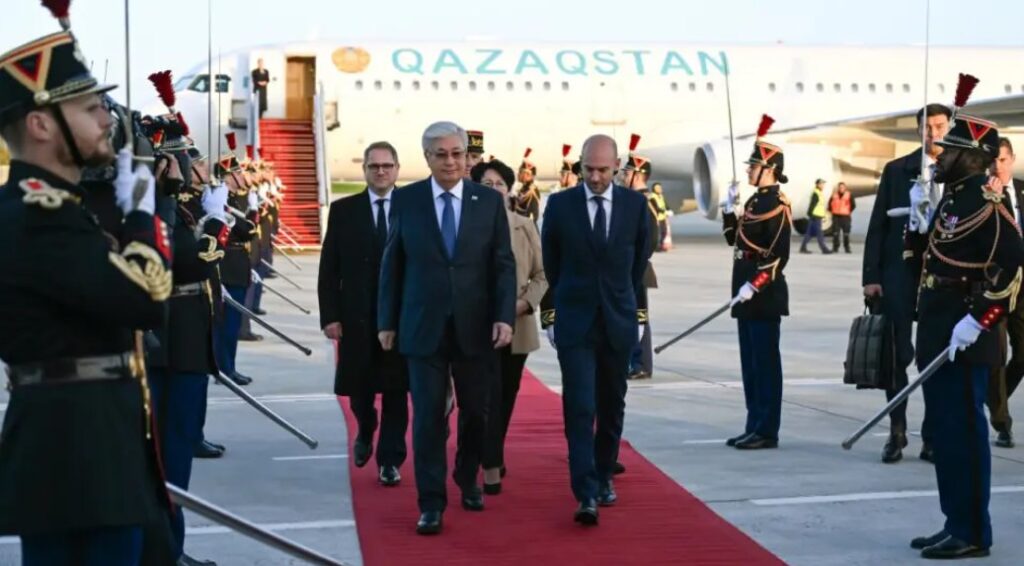
Kazakhstan’s President Kassym-Jomart Tokayev visited France on November 4-5, at the invitation of his French counterpart Emmanuel Macron.

During the visit, high-level talks were held to strengthen cooperation in trade, economic, investment, cultural, and humanitarian spheres. In addition, Tokayev met with representatives of French business circles.

French media also covered the visit. Le Monde noted that the talks between Tokayev and Macron focused on expanding economic ties and discussing joint projects in energy and infrastructure. Le Figaro emphasized the importance of cultural exchange between the two countries, mentioning plans to hold joint cultural events in the coming years. Kazakhstani officials said Tokayev’s visit to France strengthened bilateral relations and opened new prospects for cooperation in various fields.

On the eve of his visit, Tokayev published an article in the French newspaper Le Figaro titled “Kazakhstan is a strategic and reliable partner for France.”

In the article, he outlined the main areas of cooperation with France and emphasized Kazakhstan’s role in international diplomacy.

Tokayev noted that global challenges such as climate change and migration require updated approaches to international cooperation. He highlighted the role of “middle powers,” of which Kazakhstan is one, in promoting global stability, emphasizing the country’s commitment to a balanced foreign policy and support for peacekeeping efforts.

Tokayev also expressed Kazakhstan’s interest in cooperating with France in the fields of rare earth metals mining, development of “green” energy, and nuclear industry. He added that the upcoming referendum on the construction of a nuclear power plant in Kazakhstan will open up opportunities to strengthen Europe’s energy security. Last year, these areas were discussed during Macron’s visit to Astana.

In addition, he emphasized Kazakhstan’s role in ensuring Europe’s energy security through the Middle Corridor project, which links Asia and Europe. In conclusion, he expressed confidence in promising cooperation with France to achieve global stability and prosperity.

The leaders of Kazakhstan and France met in Astana precisely one year ago, in November 2023. Then Tokayev called the visit of Macron to Kazakhstan historic. At the enlarged meeting, Tokayev specified that, one-on-one, the leaders identified several priority areas for future cooperation, including energy, critical raw materials, renewable energy, transit, agriculture, and health care. At the same time, the French leader invited Tokayev to Paris in 2024.

After his visit to Paris, Tokayev will travel to Kyrgyzstan on November 6 to attend the XI Summit of the Organization of Turkic States. The central theme of the OTS summit will be “Strengthening the Turkic World: Economic Integration, Sustainable Development, Digital Future, and Security for All.”

Kazakhstan’s Return to Nuclear Power: TCA in Association with American Foreign Policy Council Hosts Inaugural Burgut Expert Talk

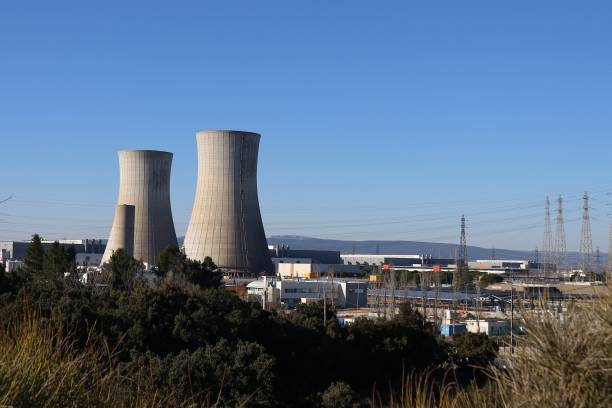
On October 6 of this year, the people of Kazakhstan participated in a referendum to decide whether nuclear power should become a part of their daily lives, or whether the haunting legacy of atomic testing would continue to limit the country’s progress in this area. The official preliminary results, released on October 7, showed that 71.12% of participants agreed to the construction of a nuclear power plant in Kazakhstan with a voter turnout of 63.66%.

President Tokayev’s goal in holding a referendum was to ensure that arguments in favor of nuclear energy were compelling, and that citizens, scientists, and government officials were involved in the decision-making process. Tokayev has since suggested that an “international consortium made up of global companies equipped with cutting-edge technologies” should be involved in the project.

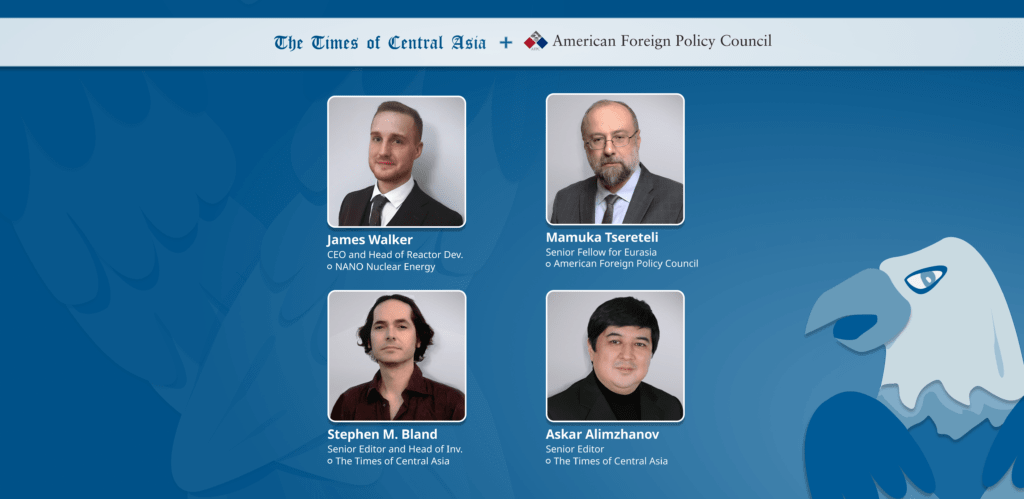
In partnership with the American Foreign Policy Council, on October 30, 2024, The Times of Central Asia convened a virtual event to discuss what the referendum result means for energy security, geopolitics, and new business opportunities for both regional and global actors. Moderating this event was Mamuka Tsereteli, Senior Fellow for Eurasia at the American Foreign Policy Council, whilst the panel comprised Askar Alimzhanov, Senior Editor at The Times of Central Asia, Stephen M. Bland, Senior Editor and Head of Investigations at The Times of Central Asia, and James Walker, CEO and Head of Reactor Development at NANO Nuclear Energy.

Focusing on a local perspective, Askar Alimzhanov told those in attendance that “Kazakhstan is in tough situation today regarding the issue of energy dependence. Because we have the largest nuclear test site in the world and during around 50 years there were just under 500 atomic tests, we all know about the possible consequence. As consumers, however, we’ve seen prices rise around 26% in one year. The population of the country is growing, so when we talk about the annual growth in energy consumption, this is a natural process.

“Since the majority of voters have already made their decision, the main question which remains is who will build it? However, serious concerns persist within society including the fear of corruption, which can result in poor quality structures. As an example, we can talk about the light rail transportation network in Astana, which started in 2009 and still isn’t finished. The officials who stole the money, they still have those funds abroad.”

Speaking about energy dependence and geopolitical considerations, Stephen M. Bland noted that “Kazakhstan’s energy landscape is characterized by a reliance on aging thermal power plants, which are increasingly unable to meet the demands of a growing population and economy, with electricity shortages projected to worsen, particularly in the rapidly developing southern regions. The construction of a nuclear power plant, therefore, is seen as a crucial step toward alleviating these shortages, reducing dependence on overpriced imports from Russia, and achieving carbon neutrality goals.

“The construction of Kazakhstan’s first nuclear power plant presents both challenges and opportunities for the country’s energy independence and regional influence. On one hand, developing a robust nuclear energy sector could ensure a stable, long-term electricity supply and enable Kazakhstan to export excess electricity to neighboring countries. This would solidify Kazakhstan’s position as a key energy player in the region and reduce its dependence on fossil fuels, which currently account for 70% of electricity generation. On the other hand, the complexities of choosing international partners pose a significant challenge which must be carefully managed… Much time and energy has gone into moving Kazakhstan away from Russia’s sphere of influence and turning the face of the nation towards the world as an even-handed potential partner, a ‘Middle Power,’ and even a broker of peace in times of conflict, work which could be undone if Rosatom is chosen for a key role in the project.”

Continuing the theme of energy dependence and potential partners, James Walker stated that “If you look at the challenges the U.S. has faced in launching some of their new reactor designs, there has been a reliance in the U.S. on Russian nuclear fuel. The U.S. is in a situation now where it has to build back a lot of infrastructure to support the building of these reactor systems… I think it would be fair to say that in the nuclear race, in terms of getting commercial plants out there, Russia and China are in the lead. So, when we’re discussing Kazakhstan trying to move away from Russia, the issue can become where they would get the fuel from. Russia has the capacity to supply it more immediately, so the question could become, do we wait for the U.S. to put all this infrastructure in place so we have a more independent supply, or do we still ally with Russia to source this fuel?

“The decision to go ahead with the nuclear power plant is, I think, demonstrably sensible, because it typically means sovereign power, meaning you have more control over your own foreign policy. Kazakhstan could put itself in a very precarious position by sourcing a plant from Russia, which then gives [Russia] influence over the energy that’s being used within the country. Effectively, if you are dependent on certain powers for fuel, for technology, for expertise, for supportive services, they have you over a barrel, in a sense. So there does need to be a geopolitical and political weighted assessment of how to proceed.”

The Burgut Expert Talk Series is a virtual forum where local and international experts discuss defining trends, challenges and opportunities shaping Central Asia.

Watch the discussion in full, here.