• KGS/USD = 0.01144 0%
  • KZT/USD = 0.00194 -0%
  • TJS/USD = 0.10844 -0.46%
  • UZS/USD = 0.00008 0%
  • TMT/USD = 0.28571 0.28%
  • KGS/USD = 0.01144 0%
  • KZT/USD = 0.00194 -0%
  • TJS/USD = 0.10844 -0.46%
  • UZS/USD = 0.00008 0%
  • TMT/USD = 0.28571 0.28%
  • KGS/USD = 0.01144 0%
  • KZT/USD = 0.00194 -0%
  • TJS/USD = 0.10844 -0.46%
  • UZS/USD = 0.00008 0%
  • TMT/USD = 0.28571 0.28%
  • KGS/USD = 0.01144 0%
  • KZT/USD = 0.00194 -0%
  • TJS/USD = 0.10844 -0.46%
  • UZS/USD = 0.00008 0%
  • TMT/USD = 0.28571 0.28%
  • KGS/USD = 0.01144 0%
  • KZT/USD = 0.00194 -0%
  • TJS/USD = 0.10844 -0.46%
  • UZS/USD = 0.00008 0%
  • TMT/USD = 0.28571 0.28%
  • KGS/USD = 0.01144 0%
  • KZT/USD = 0.00194 -0%
  • TJS/USD = 0.10844 -0.46%
  • UZS/USD = 0.00008 0%
  • TMT/USD = 0.28571 0.28%
  • KGS/USD = 0.01144 0%
  • KZT/USD = 0.00194 -0%
  • TJS/USD = 0.10844 -0.46%
  • UZS/USD = 0.00008 0%
  • TMT/USD = 0.28571 0.28%
  • KGS/USD = 0.01144 0%
  • KZT/USD = 0.00194 -0%
  • TJS/USD = 0.10844 -0.46%
  • UZS/USD = 0.00008 0%
  • TMT/USD = 0.28571 0.28%
09 December 2025

How Central Asia Is Shifting From Russia Towards Turkey

For Turkey, a NATO member and EU hopeful, the Organization of Turkic States (OTS) is an instrument that helps Ankara increase its presence in the strategically important region of Central Asia. For Kazakhstan, Kyrgyzstan, Uzbekistan, and Turkmenistan, the Turkish-dominated group seems to be a tool that allows them to achieve their economic goals, while also continuing to distance themselves from Russia.

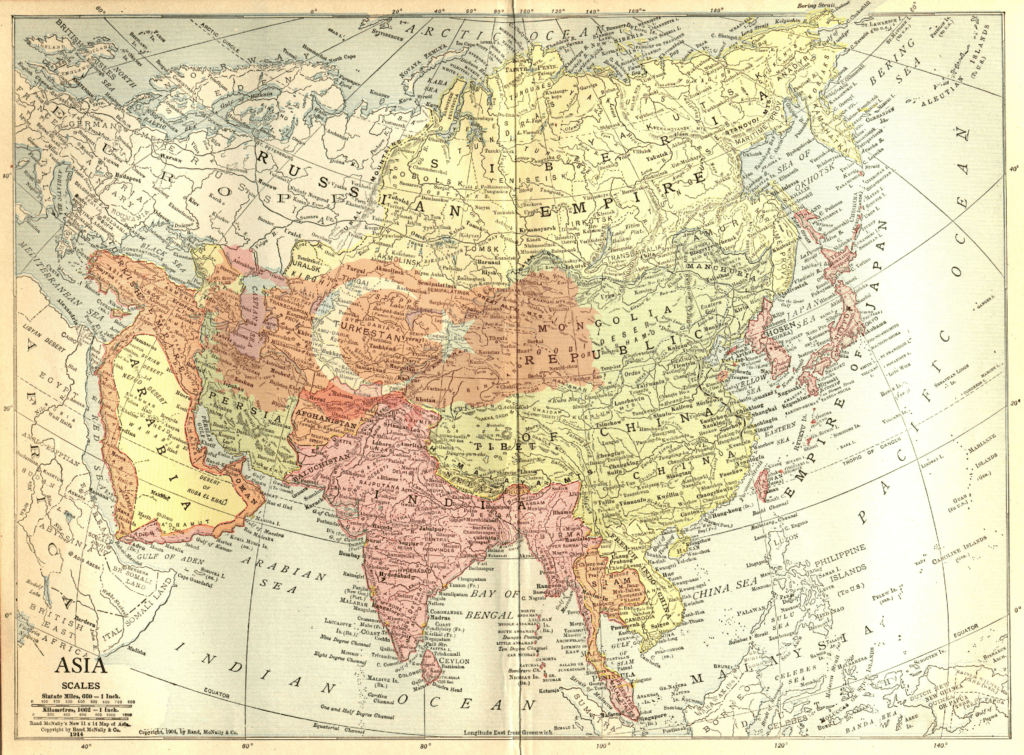
Although Moscow still has a relatively strong foothold in Central Asia, it does not seem able to prevent the growing role of the Organization of Turkic States in the post-Soviet space. This entity – whose members are Azerbaijan, Kazakhstan, Kyrgyzstan, Turkey, and Uzbekistan, while Turkmenistan, Hungary, and the self-proclaimed Turkish Republic of Northern Cyprus hold observer status – has the potential to eventually serve as a counterbalance not only to Russian, but also Chinese influence in the region.

Since its foundation in 2009, the OTS has held ten summits of its leaders. Over this period, the intergovernmental organization’s working bodies have also convened dozens of times. On November 5-6 in the Kyrgyz capital Bishkek, the OTS heads of states will meet for the eleventh time to discuss the future of the Turkic world.

Although the agenda has yet to be announced, it is believed that the OTS leaders will seek to strengthen economic cooperation between its members. Currently, their major trade partners are nations outside the bloc. For instance, Turkey’s largest trading partner is Germany, Azerbaijan’s is Italy, while China has recently become Kazakhstan’s biggest trade partner with bilateral trade hitting $31.5 billion. For neighboring Kyrgyzstan and Uzbekistan, China and Russia remain the most important economic partners.

One of the group’s major problems is the fact that its members, excluding Turkey, are landlocked countries heavily-dependent on Russia and China geographically. Turkmenistan and Kazakhstan, as major energy exporters, rely on oil and gas pipelines traversing Russian territory to reach their customers in Europe. It is, therefore, no surprise that the Organization of Turkic States governments’ agreed in September to create a simplified customs corridor, aiming at reducing the number of documents required for customs operations and customs procedures between OTS member states. In other words, they plan to increase trade among themselves.

According to Omer Kocaman, OTS Deputy Secretary-General, the Turkic nations are also looking to “continue cooperation to stimulate positive changes in their financial systems.” That is why the organization has recently launched the Turkic Investment Fund – the first joint financial institution for economic integration of the Turkic countries, with an initial capital of $500 million. Kyrgyzstan’s Chamber of Commerce and Industry announced on October 17 that, starting in January 2025, the Turkic Investment Fund will begin financing major joint projects in OTS nations.

However, in July, Azerbaijani President Ilham Aliyev said that the current structure of the Organization of Turkic States does not meet its established goals, and that its budget is insufficient for their implementation. In order to change that, on October 19, ministers of economy and trade of the OTS nations met in Bishkek to discuss how to strengthen cooperation and the economic development of member states.

The economy is undoubtedly an important aspect of the OTS members’ cooperation, but it is not the only one. Culture – including language as its essential part – and history also play crucial roles in the Turkey-dominated group’s ambitions to create a unified Turkic world. It is the Turkic language that connects Turkey with Azerbaijan, Kazakhstan, Kyrgyzstan, Turkmenistan, and Uzbekistan, which is why Ankara has reportedly been pressuring Astana and Bishkek to give up on using Cyrillic and switch to the Latin alphabet instead.

In January 2021, the Kazakh government announced its plans to transition to a Latin-based alphabet, although to this day Cyrillic remains widely used in the largest Central Asian country. Most recently, on September 11 the Organization of Turkic States agreed to adopt a common Latin alphabet consisting of 34 letters. But Kyrgyzstan, reportedly under pressure from Moscow, aims to maintain the use of Cyrillic – at least for now.

In the long-term, however, if Moscow continues to lose influence in Central Asia, Cyrillic is likely to become a thing of the past in the region that has traditionally been in Russia’s geopolitical orbit. Meanwhile, Turkey is expected to continue using the Organization of Turkic States as a mechanism that could help Ankara crowd Russia out not only of Central Asia, but also of the South Caucasus.

The OTS leading member does not hide its ambitions. In 2021, the leader of the Turkish Nationalist Movement Party (MHP), Devlet Bahceli, gifted a map of the Turkic World – which includes a significant portion of the Russian Federation – to Turkey’s President Recep Tayyip Erdogan. Such a move drew criticism in Moscow, where many analysts are now unhappy about Ankara’s plans to replace the phrase “Central Asia” with “Turkestan” in its history curriculum. What seems to worry them more is the tendency to present Russia’s historical role in Central Asia in a rather negative light through the education system in most, if not all regional countries.

But the Kremlin, preoccupied with the war in Ukraine, does not seem to be in a position to effectively compete for the hearts and minds of Central Asians. Fully aware of that, Turkey is seeking to achieve its geopolitical goals in the region by developing closer ties with regional actors through the Organization of Turkic States – a tool that Ankara is expected to continue using in various fields, from education and the economy to foreign policy and even military affairs.

Kazakhstan’s Energy Ministry Discusses Nuclear Plant Construction With South Korea

From October 22 to 25, a delegation from Kazakhstan led by Energy Minister Almasadam Satkaliev visited South Korea. As part of the visit, meetings were held with representatives of leading Korean energy companies and government agencies.

The key topics of the talks were cooperation issues in the nuclear power industry. In addition, at the meeting with the South Korean Minister of Trade, Industry, and Energy, they discussed opportunities to expand cooperation in the oil and gas sector and renewable energy.

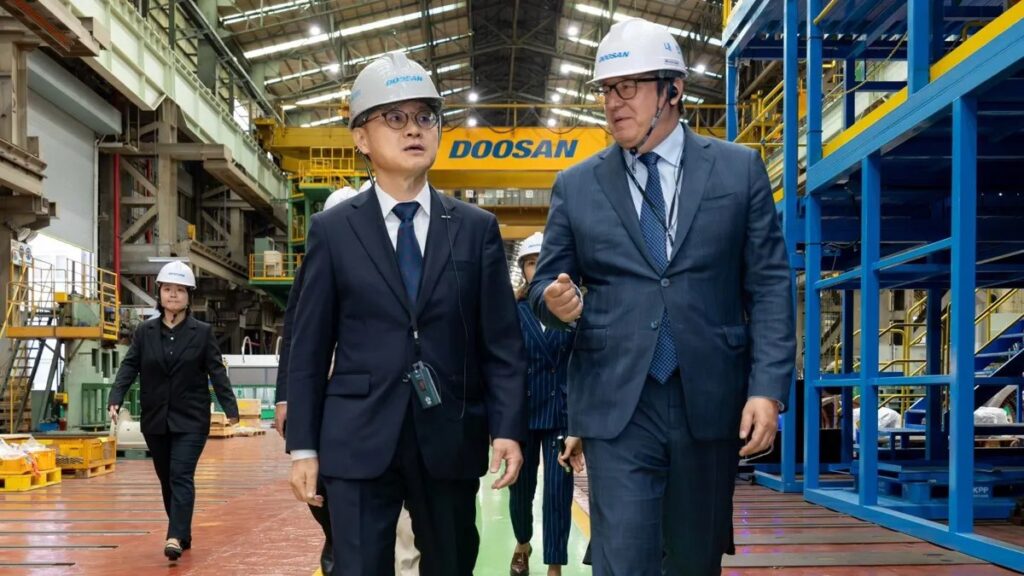
Satkaliev also met with the management of major Korean companies, including Doosan Enerbility, Korea Hydro & Nuclear Power (KHNP), Korea Electric Power Corporation (KEPCO), Korea National Oil Corporation (KNOC), and Samsung C&T.

During the talks, the parties considered the prospects of Korean companies participating in an international consortium, which Kazakhstan is studying as a model for implementing the project to build a nuclear power plant. As the minister specified, the final decision on this issue is expected in 2025.

Negotiations with Doosan Enerbility concluded with the signing of a memorandum of understanding. This document provides for studying opportunities to localize the Korean company’s operation in Kazakhstan and establish a representative office of the plant in Astana.

Now, Doosan Enerbility cooperates with Kazakhstan to construct a gas turbine power plant with a capacity of 1000 MW in the Turkestan region. In addition, the company, together with KEPCO KPS, is conducting a technical audit of Kazakhstan’s energy infrastructure to reduce emissions and extend the life of the equipment.

After the October 6 referendum, in which Kazakhstanis supported the construction of the first nuclear power plant, President Kasym-Jomart Tokayev proposed the creation of an international consortium to implement the project. He emphasized that this project requires the participation of the world’s leading companies with modern technology and experience to ensure the safety and efficiency of construction. Russia’s Rosatom, South Korea’s KHNP, France’s EDF, and China’s CNNC are considered potential participants.

These companies are expected to work together to transfer technology and attract investment, which is particularly important for Kazakhstan as it seeks to reduce energy dependence and strengthen the country’s energy security. Construction of the plant is planned to begin on the shores of Lake Balkhash and be completed by 2035. A final decision on the structure of the consortium is expected by 2025.

Uzbekistan Opens Strategic Highway Link to Europe

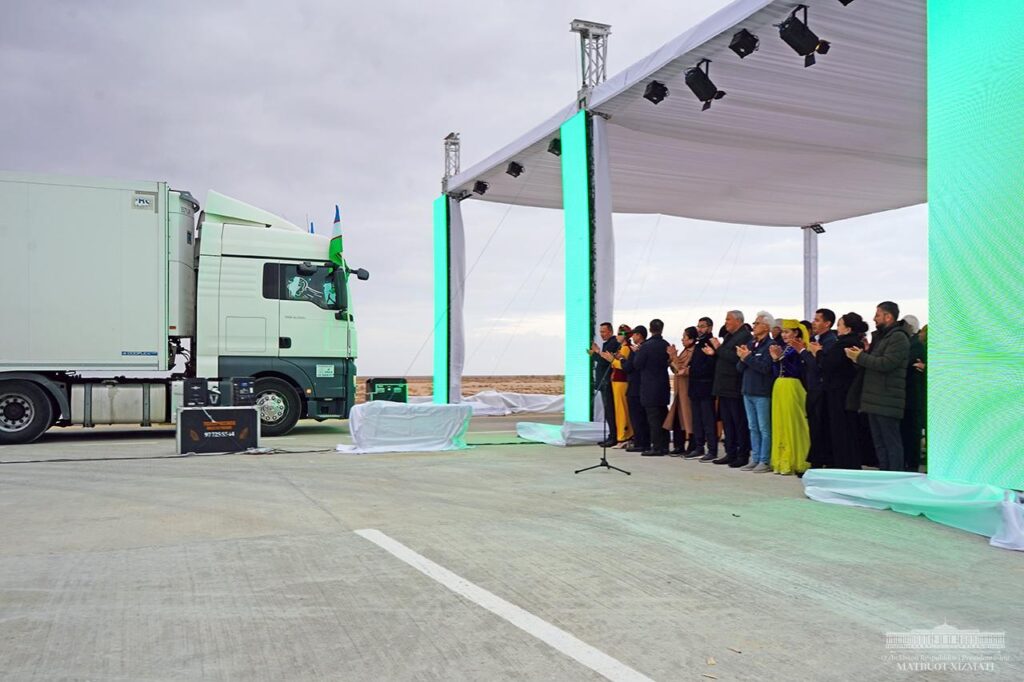
A 240km section of the Kungrad-Beineu highway in Uzbekistan has been reopened after reconstruction.

The road runs through Uzbekistan’s northwestern region of Karakalpakstan to the border with Kazakhstan. It is part of a strategic highway corridor connecting Uzbekistan with European countries.

Uzbekistan’s President Shavkat Mirziyoyev said that the distance of international transportation through Uzbekistan will now be reduced to 1,000 kilometers, and transportation costs will be lowered by 25 percent. “This road will become part of the logistics network reliably connecting our country with European markets through the Caspian and Black Sea ports. On this section of the international corridor “A-380” that passes through Uzbekistan, the daily traffic flow will increase threefold,” Mirziyoyev noted.

In recent years, double-landlocked Uzbekistan has been striving to become a key transit hub in trade turnover between the EU and Turkey and Kyrgyzstan, Tajikistan, and Afghanistan.

Chinese Investors to Build New Industrial Plants and Residential Compound in Kyrgyzstan’s Naryn

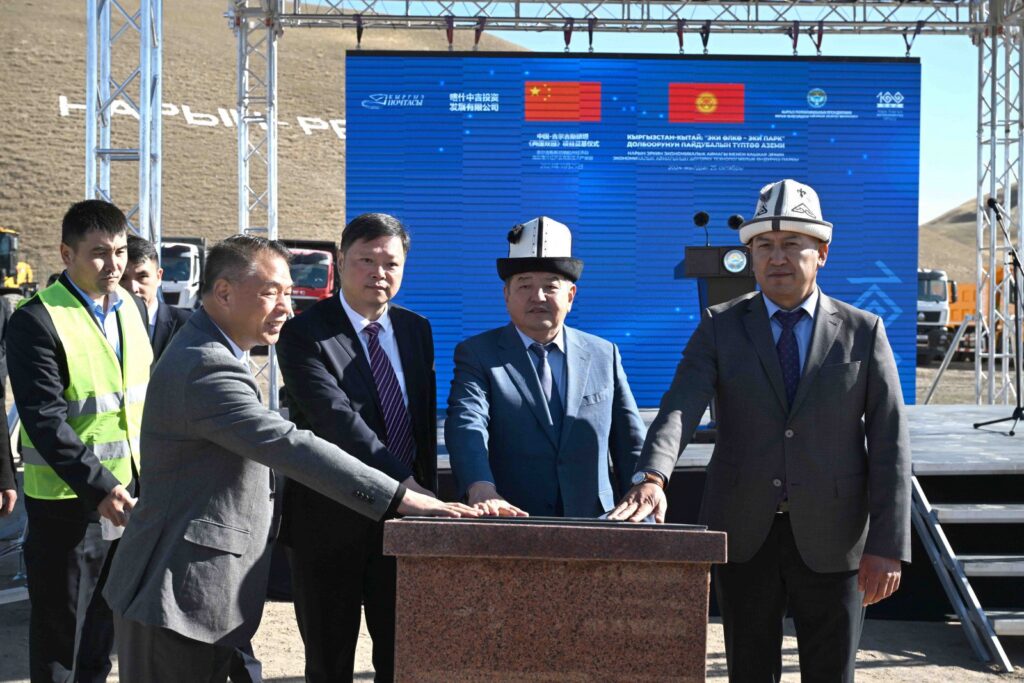
On October 25, Chinese investors launched the construction of four extensive production facilities in Kyrgyzstan’s Naryn region: a car assembly plant, an LED lamp manufacturing plant, a toilet paper and napkin plant, and an agricultural drone manufacturing plant.

At a capsule-laying ceremony, Akylbek Japarov, Chairman of the Cabinet of Ministers of Kyrgyzstan, emphasized that this event proves that Kyrgyzstan has reached “a new, higher level of relations” with its neighbor.

Chinese partners will invest $130 million in the Naryn-Shumkar car assembly plant, which will manufacture more than 20,000 cars annually and create 1,000 jobs.

$10 million will be invested in the LED lamp plant, which will produce 30 million lamps per year and create about 200 jobs.

Another $10 million will be invested in the toilet paper and napkin plant, which will produce 6,000 tons of paper annually and create more than 100 jobs.

On the same day, Japarov attended a ceremony to begin the construction of a new residential compound, Tien Shan City, in the town of Naryn.

The residential compound will consist of six 10-storey apartment blocks. The developer, a construction company from the Chinese city of Kashgar, plans to complete high-quality modern housing construction within a year. The company will also build an administration house for all government services for the local population.

Startups From Central Eurasia Set to Conquer Silicon Valley

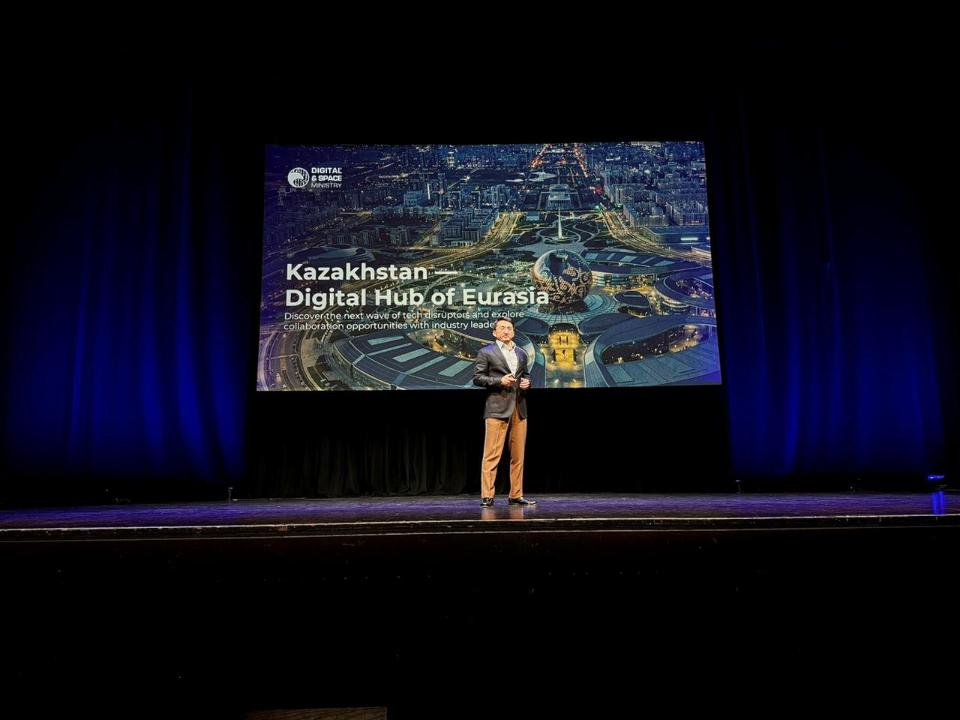
The following 10-15 years will see the birth of large tech companies originating from Central Eurasia, a vast region including Azerbaijan, Georgia, Kazakhstan, Kyrgyzstan, Mongolia, Tajikistan, Turkmenistan, Turkey, and Uzbekistan. This was stated at the first technology conference entitled Central Eurasia at Silicon Valley. The conference brought together the region’s top 100 startups, American venture investors, large company leaders, and tech giants from Silicon Valley.

According to the event organizers, Central Eurasia has enormous untapped potential. With a population of more than 100 million people and an average age of 27, about 200,000 young people in the region annually receive an education in the field of STEM (science, technology, education, mathematics). The area has everything necessary to develop the tech industry: universities, a startup ecosystem, venture funds, and its representative in Silicon Valley — Silkroad Innovation Hub, which, in the first year of its operation, attracted 80 resident startups and more than $30 million in investments.

At the conference, Zhaslan Madiyev, Minister of Digital Development, Innovation and Aerospace Industry of Kazakhstan, said that Kazakhstan accounts for 50% of GDP in Central Eurasia. Kazakhstan is in 10th place in the UN GLOBAL Online Services Index and 3rd place among Central and South Asian countries in the Global Innovation Index (after Iran and India).

“Recently, there has been a rapid development of new technologies, AI, blockchain, and all this stimulates the market and entrepreneurs to create startups,” Madiyev said.

The minister added that Kazakhstani investors are ready to invest $100,000-$200,000 in startups at an early stage. Still, finding $1 million or $2 million in investment can be challenging, even in a more mature stage. Therefore, he urged the promotion of Kazakhstani startups abroad, especially in Silicon Valley.

Kyrgyzstan Triples Ice Cream Exports

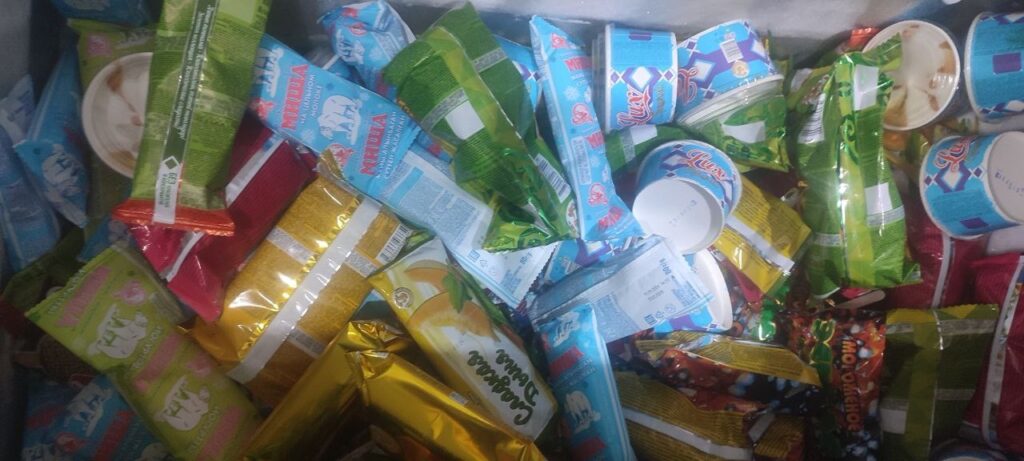
Kyrgyzstan has doubled its ice cream production in the last five years, and tripled its exports to other countries in the region.

Last year, the country produced 10,800 tons of ice cream, up from 5,200 tons five years earlier. This increase is due to growing demand for Kyrgyz ice cream in other Eurasian countries, primarily Kazakhstan, Uzbekistan, and Russia. Exports to these countries have increased from 2,800 tons per year to 6,100 tons since 2019.

“At the same time, imports of ice cream have shown good dynamics recently, and they have decreased from 2,788 tons (per year) to 1,969 tons. This indicates the substitution of imported products with domestic production,” said the Ministry of Agriculture of the Kyrgyz Republic.

According to official data, Kyrgyzstan imports ice cream from Turkey, Belarus, and Lithuania. While a kilogram of ice cream from Russia costs 240 KGS ($3), Lithuania and Turkey ask an average of 570 KGS ($7). The cost of one kilogram of ice cream from Kyrgyzstan is just over 200 KGS ($2.5).