• KGS/USD = 0.01144 0%
  • KZT/USD = 0.00196 -0%
  • TJS/USD = 0.10896 -0%
  • UZS/USD = 0.00008 0%
  • TMT/USD = 0.28571 0.28%
  • KGS/USD = 0.01144 0%
  • KZT/USD = 0.00196 -0%
  • TJS/USD = 0.10896 -0%
  • UZS/USD = 0.00008 0%
  • TMT/USD = 0.28571 0.28%
  • KGS/USD = 0.01144 0%
  • KZT/USD = 0.00196 -0%
  • TJS/USD = 0.10896 -0%
  • UZS/USD = 0.00008 0%
  • TMT/USD = 0.28571 0.28%
  • KGS/USD = 0.01144 0%
  • KZT/USD = 0.00196 -0%
  • TJS/USD = 0.10896 -0%
  • UZS/USD = 0.00008 0%
  • TMT/USD = 0.28571 0.28%
  • KGS/USD = 0.01144 0%
  • KZT/USD = 0.00196 -0%
  • TJS/USD = 0.10896 -0%
  • UZS/USD = 0.00008 0%
  • TMT/USD = 0.28571 0.28%
  • KGS/USD = 0.01144 0%
  • KZT/USD = 0.00196 -0%
  • TJS/USD = 0.10896 -0%
  • UZS/USD = 0.00008 0%
  • TMT/USD = 0.28571 0.28%
  • KGS/USD = 0.01144 0%
  • KZT/USD = 0.00196 -0%
  • TJS/USD = 0.10896 -0%
  • UZS/USD = 0.00008 0%
  • TMT/USD = 0.28571 0.28%
  • KGS/USD = 0.01144 0%
  • KZT/USD = 0.00196 -0%
  • TJS/USD = 0.10896 -0%
  • UZS/USD = 0.00008 0%
  • TMT/USD = 0.28571 0.28%
09 December 2025

Kyrgyzstan and Russia Set to Expand Cooperation

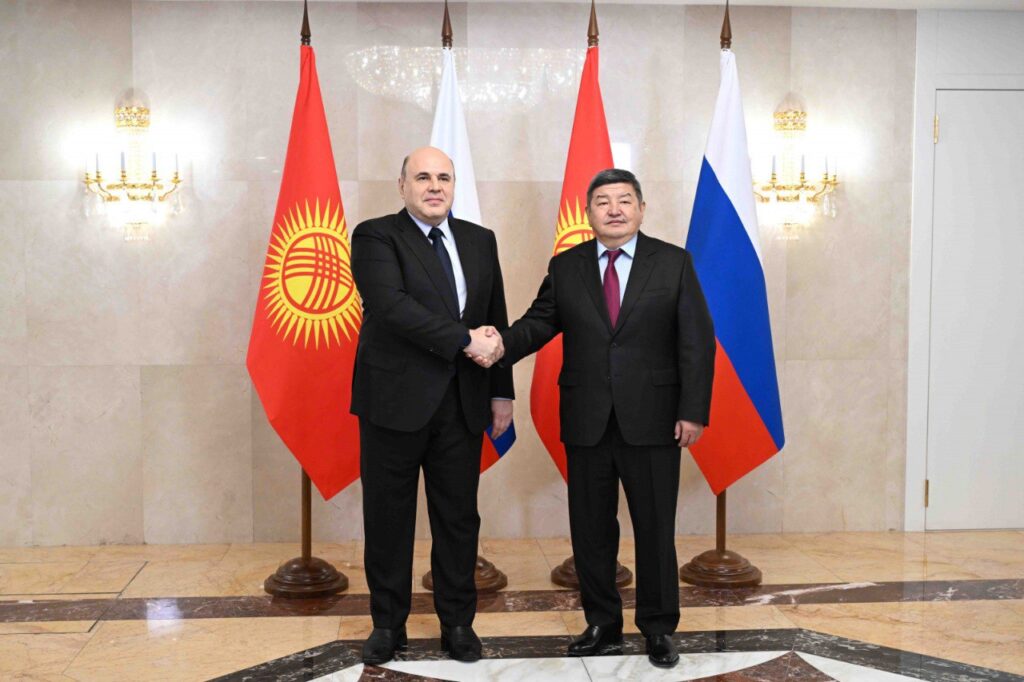
On October 21, in Moscow, Akylbek Japarov, the Chairman of Kyrgyzstan’s Cabinet of Ministers, and Mikhail Mishustin, the Chairman of the Russian Government, chaired a joint meeting of the governments of both countries.

Japarov’s visit was planned to coincide with the centenary of the formation of the Kara-Kyrgyz Autonomous Region, and also with the beginning of the Days of Culture of Kyrgyzstan in Russia.

“The establishment of the Kara-Kyrgyz Autonomous Region in 1924 as part of the Russian Soviet Federative Socialist Republic, followed by the formation of the Kyrgyz Autonomous Soviet Socialist Republic in 1926 and later the Kyrgyz Soviet Socialist Republic in 1936, was of colossal importance for our people, becoming the foundation of the sovereign Kyrgyz Republic. The friendship between the Kyrgyz and Russian peoples has been forged over the centuries, has gone through difficult times, but has given many examples of devotion and loyalty,” Japarov said.

Noting that Kyrgyz-Russian relations have elevated to the status of “deepened relations” of alliance and strategic partnership, Japarov stated: “We are very pleased that Russian private businesses and investors have paid attention to Kyrgyzstan’s possibilities and have intensified their work. We are always open to Russian investments and are ready to provide maximum assistance in implementing investment proposals.”

Mishustin in turn expressed Russia’s interest in further developing bilateral cooperation in all areas.

“During the first eight months of this year, [Kyrgyz-Russian] trade turnover has grown by 16 percent. The share of the ruble in mutual settlements has reached almost 90 percent. We want to maintain this trend to ensure stable and predictable conditions for doing business,” Mishustin said.

Warren Buffett’s Companies Expand Investment in Uzbekistan

Uz500, a wealth advisory and private sector development organization focused on Uzbekistan, Eurasia, and the wider Global South, is to analyse direct foreign investments in Uzbekistan, starting with billionaire Warren Buffett.

Since 1965, Buffett has transformed Berkshire Hathaway into a trillion-dollar company, primarily investing in American businesses. Currently, Berkshire owns stakes in eight non-US companies, including five major Japanese firms and China’s BYD. Notably, half of these companies have expanded their presence in Uzbekistan, launching major energy, infrastructure, and manufacturing projects.

Last month, the Sumitomo Corporation announced its agreement to acquire a 49% stake in several renewable energy assets in Uzbekistan from ACWA Power, a company listed in Saudi Arabia. Through this ACWA-Sumitomo partnership, they aim to develop 2.5 GW of renewable energy (solar and wind) and 968 MW of battery storage capacity in Uzbekistan, with a total investment of $4.2 billion.

In August 2024, an international consortium of TAQA Water Solutions, Marubeni, and SUEZ signed a $1 billion joint development agreement with the Government of Uzbekistan to build the CIS region’s largest wastewater treatment facility in Tashkent. Meanwhile, Mitsubishi’s advanced power equipment is responsible for 90% of Uzbekistan’s large-scale gas-fired generation, including Navoi 1, 2, and 3 and the $2.5 billion Sirdarya 1 and 2 combined-cycle gas turbine (CCGT) power projects.

The first EVs were produced at the BYD Uzbekistan JV plant in June 2024. While the world’s largest EV maker announced or started building its plants in Thailand, Brazil, Turkey, and Hungary, BYD Uzbekistan became BYD’s first operational overseas plant.

Uz500 predicts that Japanese companies Itochu and Mitsui, part of Berkshire Hathaway’s portfolio, will follow their peers and invest in Uzbekistan, the region’s fastest-growing economy. Their investments could include acquiring renewable energy or infrastructure assets from ACWA Power or Masdar or forming joint ventures to develop uranium and mineral resources. Mitsubishi, Sumitomo, and Marubeni are also expected to increase their investments through more projects and acquisitions. As a result, Berkshire’s indirect investment in Uzbekistan (already worth several hundred million dollars) is likely to grow significantly in the coming years.

Levies on Uzbek Drivers in Afghanistan Reduced

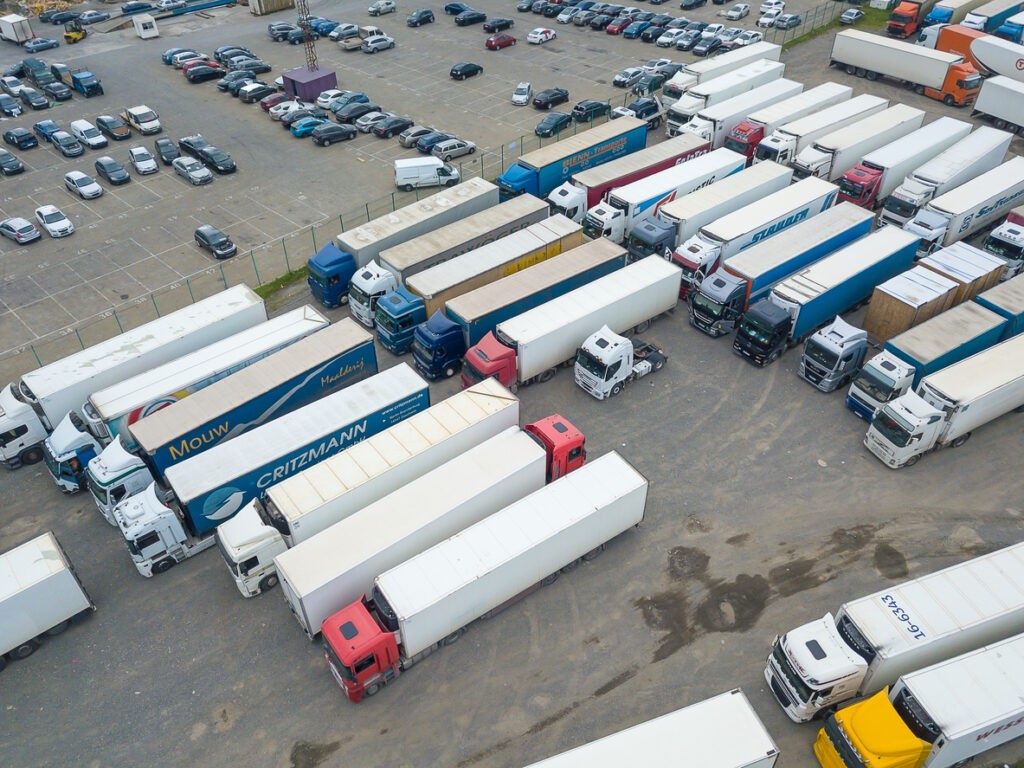
According to the Ministry of Transport in Uzbekistan, negotiations with Afghanistan have reduced the levies collected from Uzbek drivers in Afghanistan by 5,000 Afghanis (about $80).

A levy of 12,000 Afghanis (about $180) was previously charged to cross the Amudarya bridge. Since September 28, this amount has been set at 7,000 Afghani (about $100).

The fee for entering Afghanistan with a cargo vehicle, which was 5,000 Afghanis (about $75), has decreased to 3,500 Afghanis (about $55).

According to the announcement, the Ministry of Transport continues to create favorable conditions for cargo transportation through the Trans-Afghan multimodal transport corridor, and to optimize the number of levies.

This transport corridor accelerates and simplifies the increase and processing of transit cargo through Uzbekistan, Afghanistan, and Pakistan. In recent years, the volume of transit cargo through Afghanistan has increased by over 30%, reaching almost 1 million tons per year. Following a transit trade agreement between Uzbekistan and Pakistan in 2021, cargo volumes have increased significantly, and in 2022, cargo transportation between the two countries through Afghanistan increased 2.5-fold. This year, Uzbekistan plans to transport more than 1 million tons of cargo through Afghanistan to Pakistan.

Migrants in the Crossfire: Russia’s Recruitment for Ukraine War Sparks Tensions

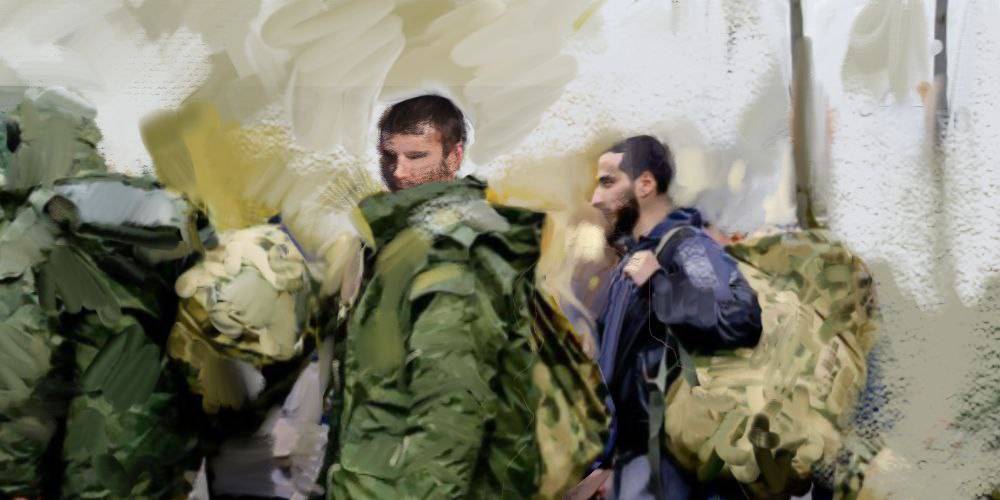
Russia’s ongoing “special military operation” in Ukraine has increased the demand for additional forces, and, in response, Russia is increasingly viewing the use of migrants as a good solution to the situation.

As of September 1, 2024, official figures state that 3,985,000 citizens of Central Asian countries lived in Russia. Uzbekistan leads the way with over 1,792,000 migrants, followed by Tajikistan with more than 1,231,000, Kazakhstan with 606,900, Kyrgyzstan with 262,800, and Turkmenistan with 92,000.

Some Central Asian migrants have signed contracts with the Russian Ministry of Defense to participate in the war, motivated mainly by financial incentives. However, economic reasons are not the only factor driving them to war. People from Central Asian countries who have received citizenship are also being threatened with imprisonment for failing to join the war effort. TCA has previously reported on efforts by officials to recruit young men detained at the Sakharovo immigration processing center to join the Russian army and fight in Ukraine. In addition, a decree issued by Vladimir Putin has simplified the process for foreigners who join the military to gain Russian citizenship.

In contrast, Central Asian governments have looked to discourage their citizens from engaging in the conflict. For example, Uzbekistan has warned that any citizen involved in the Russia-Ukraine war will face legal consequences. In October 2023, an Uzbek citizen who fought in Ukraine for financial reasons was sentenced to three years in prison by a Uzbek court. The defendant had returned to Uzbekistan after being wounded in the conflict, and authorities discovered military documents and proof of his Russian citizenship during their investigation.

By September 2024, a growing number of Central Asians had perished in the war, including 47 Uzbeks, 51 Tajiks, and 26 Kyrgyz nationals.

In Kazakhstan, since 2014, following the start of the war in the Donetsk and Luhansk regions, criminal liability was been introduced for citizens who participate in armed conflicts abroad. A person who commits such an offense can be punished with imprisonment for up to 12 years, face the confiscation of property, and be deprived of their citizenship. For example, in November of last year, a 34-year-old man from Kazakhstan was imprisoned for six years and eight months for participating in the war in Ukraine.

Kyrgyzstan and Tajikistan have also applied measures involving the deprivation of liberty their citizens who participate in the war.

Tajikistan’s economy significantly depends on remittances from labor migrants in Russia, which account for approximately one-third of its GDP. Despite the war in Ukraine, over 1.7 million Tajik citizens sought work in Russia in the first half of 2022. However, reports indicate that many Tajik migrants are being sent to Ukraine against their will, raising concerns.

The situation further deteriorated after a terrorist attack at Crocus City Hall in February 2024. Tajik nationals were among the primary suspects, leading to a shift in Russia’s attitude towards Central Asian migrants. Tajikistan’s Foreign Minister, Sirojiddin Muhriddin, expressed concerns over the violations of Tajik citizens’ rights in some CIS countries, calling for a balanced approach to migration issues. Emphasizing the need for a comprehensive approach to solving migration issues in the countries forming the Commonwealth of Nations, he called for consideration of all parties’ interests: host countries, emigre countries, foreign citizens, and the local population.

Following the Crocus City Hall attack, Russian police began rounding up and deporting Central Asian workers from Tajikistan, Kazakhstan, Kyrgyzstan, Turkmenistan, and Uzbekistan. The deportations caused a 10% drop in remittances from Russia, severely impacting the economies of remittance-dependent countries.

On his social pages, one Russia Deputy, Sergey Mironov, even proposed introducing a temporary moratorium on granting Russian citizenship to immigrants from Central Asia. Due to rising xenophobia, maltreatment, and enhanced security measures, meanwhile, the authorities in Kyrgyzstan and Tajikistan have called on their citizens to refrain from traveling to Russia until the situation stabilizes.

This comes amidst an increasing backlash from figures in Central Asia, such as Alisher Qodirov, the leader of Uzbekistan’s Milli Tiklanish (National Revival) party and deputy speaker of the lower house of parliament, who has repeatedly urged Russia not to interfere in Uzbekistan’s domestic affairs, commenting that “it would be better for [Russia] to deal with their own affairs [which are] full of problems.” Even in parts of Turkmenistan, a campaign has been launched to remove symbols of the former Soviet Union, whilst after a six year hiatus, in 2022 the Kyrgyz National History Museum in Bishkek reopened, with all of its displays pertaining to the years of the USSR – which formerly dominated displays – having been removed.

Tajik Opposition Calls for Global Action Against Rahmon Regime’s Human Rights Violations

According to Azda TV, the Tajik opposition movement “Reform and Development of Tajikistan” has appealed to the governments of the USA, Canada, the United Kingdom, Norway, and countries of the EU, to support efforts for peaceful and constructive dialogue between the Tajik opposition and President Emomali Rahmon’s government.

The movement called the global community to help resolve the crisis in Tajikistan, where Rahmon’s regime targets political opposition, civil society, and independent media. They highlighted human rights violations, including extrajudicial killings, arbitrary arrests, and the persecution of journalists, activists, and lawyers.

Sharofiddin Gadoev, the movement’s leader, called for key goals, such as freeing political prisoners, ending the repression of journalists and activists, ensuring free speech, and having an independent press. He also called for laws in Tajikistan to meet international human rights standards and for free, fair elections involving all political groups.

In this regard, the movement “Reform and Development of Tajikistan” called on the international community for “coordinated actions to protect human rights and support democratic processes in Tajikistan, as well as to strengthen political pressure on Emomali Rahmon.”

The movement has said: “Tajikistan is a country with a young population. For this generation, the absence of democratic alternatives and opportunities leads to the risk of radicalization. This vacuum of democratic choice can be used by extremist groups, which threatens not only Tajikistan but all of Central Asia. The country may be on the verge of destabilization in the ongoing crisis and the lack of effective reforms. This will create a stream of refugees and strengthen extremist movements, which will become a serious challenge in the field of security.”

The movement is calling on the International Criminal Court to investigate Rahmon’s regime of serious crimes like torture and disappearances. They have asked for help before, urging the release of political prisoners and an end to repression, but so far, the Tajik government has ignored these calls, and human rights abuses continue.

Kazakhstan Plans to Equate Nuclear Energy With “Green” Energy

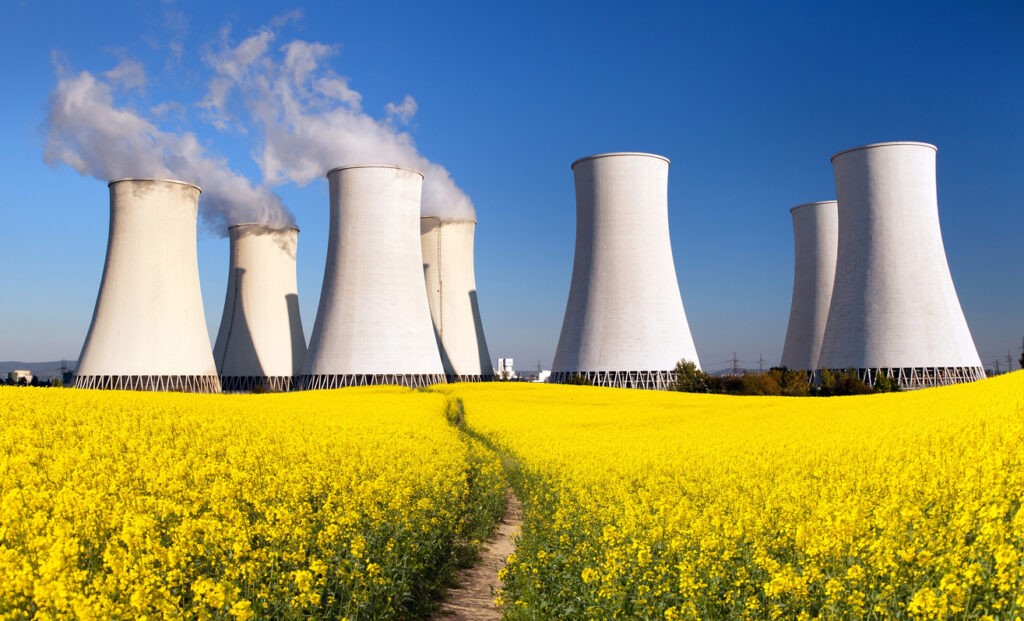
Kazakhstan plans to equate nuclear power with renewable energy sources (RES), such as solar and wind power, and extend to it the same benefits that already apply to them.

The Energy Ministry has drafted a bill to incentivize alternative energy sources as part of the transition to a green economy, including the development of hydrogen energy. According to a document published on October 18 on the Open Regulatory Legal Acts portal, the discussion will last until November 11.

One of the main problems identified in the draft is the need for legislative preferences for nuclear power despite its potential as an environmentally friendly source. In 2023, the share of RES in Kazakhstan was only about 6% of total electricity generation, emphasizing the need to develop alternative sources to reduce carbon emissions.

Kazakhstan intends to follow the EU’s example. In 2022, the EU recognized nuclear power as “green.” This recognition opens the way to receiving benefits and subsidies for future nuclear projects, including Kazakhstan’s first atomic power plant.

At the same time, the bill’s authors noted that the analysis of international experience points to the constant clarification and supplementation of legislation considering current realities (technology development, market structure, global experience, and the current situation in the country). In particular, in Germany, the law on renewable (alternative) energy sources has undergone six amendments, including an increase in the targets for using alternative energy sources, adjustment of support measures taking into account the achieved level, and so on. Since 2000, various programs have been developed in Poland to supplement and clarify the different incentives for developing alternative energy sources.