• KGS/USD = 0.01144 0%
  • KZT/USD = 0.00194 -0%
  • TJS/USD = 0.10896 -0%
  • UZS/USD = 0.00008 0%
  • TMT/USD = 0.28571 0.28%
  • KGS/USD = 0.01144 0%
  • KZT/USD = 0.00194 -0%
  • TJS/USD = 0.10896 -0%
  • UZS/USD = 0.00008 0%
  • TMT/USD = 0.28571 0.28%
  • KGS/USD = 0.01144 0%
  • KZT/USD = 0.00194 -0%
  • TJS/USD = 0.10896 -0%
  • UZS/USD = 0.00008 0%
  • TMT/USD = 0.28571 0.28%
  • KGS/USD = 0.01144 0%
  • KZT/USD = 0.00194 -0%
  • TJS/USD = 0.10896 -0%
  • UZS/USD = 0.00008 0%
  • TMT/USD = 0.28571 0.28%
  • KGS/USD = 0.01144 0%
  • KZT/USD = 0.00194 -0%
  • TJS/USD = 0.10896 -0%
  • UZS/USD = 0.00008 0%
  • TMT/USD = 0.28571 0.28%
  • KGS/USD = 0.01144 0%
  • KZT/USD = 0.00194 -0%
  • TJS/USD = 0.10896 -0%
  • UZS/USD = 0.00008 0%
  • TMT/USD = 0.28571 0.28%
  • KGS/USD = 0.01144 0%
  • KZT/USD = 0.00194 -0%
  • TJS/USD = 0.10896 -0%
  • UZS/USD = 0.00008 0%
  • TMT/USD = 0.28571 0.28%
  • KGS/USD = 0.01144 0%
  • KZT/USD = 0.00194 -0%
  • TJS/USD = 0.10896 -0%
  • UZS/USD = 0.00008 0%
  • TMT/USD = 0.28571 0.28%
09 December 2025

The Ferghana Valley: Navigating Complex Challenges in Central Asia’s Most Volatile Region

The Ferghana Valley is one of Central Asia’s most fertile and densely populated areas, but it is also among the most volatile. Spanning Uzbekistan, Kyrgyzstan, and Tajikistan, this landlocked region has long been a hotbed of ethnic tension, water disputes, and political instability. These challenges are deeply rooted in the geography, history, and sociopolitical landscape, making the valley a key focal point for understanding broader regional dynamics in Central Asia.


Geographical Importance and Ethnic Diversity

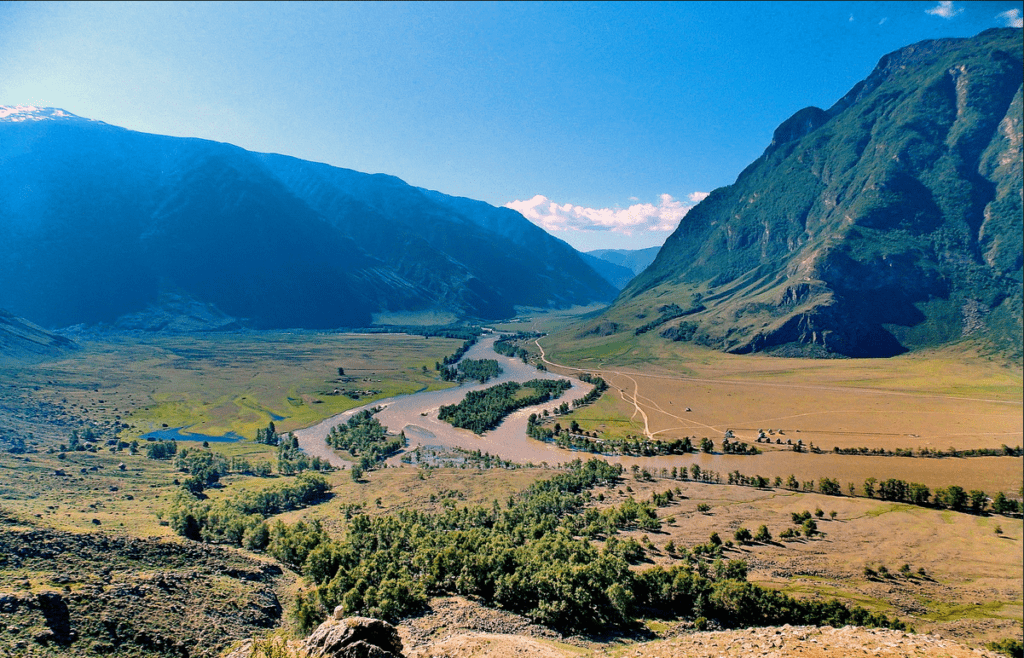
Nestled between the towering Tien Shan and Pamir Mountain ranges, the Ferghana Valley covers over 22,000 square kilometers. It is fertile land nourished by the Syr Darya River, making it a critical area for cultivating cotton, fruits, and vegetables. These natural resources have historically drawn diverse populations, creating a vibrant ethnic mosaic.

The valley is home to Uzbeks, Kyrgyz, and Tajiks, as well as smaller ethnic groups. While ethnic Uzbeks form the majority, significant Kyrgyz and Tajik minorities inhabit border regions. The ethnic diversity of the Ferghana Valley is both a strength and a source of tension. Soviet-era border policies exacerbated these divisions by creating artificial boundaries that crisscrossed the valley, leaving behind ethnic enclaves — pockets of one nationality surrounded by the territory of another. These enclaves have complicated governance and territorial integrity, making border management a persistent challenge.


The Soviet Legacy and Border Disputes

During Soviet rule, the Central Asian republics were organized under Stalin’s divide-and-rule strategy, which deliberately created complex borders to weaken local identities and prevent regional unity. The Ferghana Valley, divided among three Soviet republics, is a prime example of this approach. After the Soviet Union’s collapse in 1991, the administrative boundaries became international borders overnight between Uzbekistan, Kyrgyzstan, and Tajikistan.

The lack of clearly defined borders has sparked numerous conflicts over territory, water, and land. A notable clash between Kyrgyzstan and Tajikistan in 2021 resulted in over 40 deaths and the destruction of homes and infrastructure. Many disputes revolve around access to scarce resources like water and arable land. These issues have escalated into violent confrontations, leading to casualties and the displacement of local populations.


Water: A Scarce and Contested Resource

Water is the lifeblood of the Ferghana Valley, but disputes over its allocation are a major source of tension. The valley depends heavily on irrigation for its agricultural productivity, and the Syr Darya River, along with its tributaries, plays a crucial role in supplying water to the region. However, the division of the valley among the three countries complicates water management.

Uzbekistan, the most populous of the three, relies on the valley’s water resources for its cotton industry, a cornerstone of its economy. Meanwhile, Kyrgyzstan and Tajikistan, which control the headwaters of the Syr Darya, often use their upstream position to leverage water access. This dynamic has led to frequent disagreements over water usage. For instance, Kyrgyzstan has at times threatened to withhold water unless it receives compensation, either through payments or electricity.


Ethnic Tensions and Political Instability

Ethnic tensions further complicate the Ferghana Valley’s already volatile political landscape. Clashes between Uzbeks and Kyrgyz have occurred sporadically, with one of the most significant incidents happening in 2010. Ethnic riots in southern Kyrgyzstan’s Osh region resulted in hundreds of deaths and the displacement of thousands.

In Tajikistan, the Ferghana Valley has been affected by broader political instability, particularly during the Tajik Civil War (1992–1997), which pitted the government against Islamist and regional factions. This instability continues to affect the Tajik portion of the valley, contributing to its fragility.


Economic Challenges and Cross-Border Trade

Economically, the Ferghana Valley faces numerous challenges despite its agricultural productivity. Poverty, unemployment, and underdevelopment plague the region, particularly in the Kyrgyz and Tajik parts of the valley. Remittances from migrant workers in Russia have become a critical source of income for many families, but this dependence on external labor markets makes the region vulnerable to economic shocks.

Cross-border trade, a potential driver of economic growth, is hindered by frequent border closures and restrictions. Despite the valley’s geographic advantages, trade between Uzbekistan, Kyrgyzstan, and Tajikistan remains limited due to political mistrust and poor infrastructure.

The future of the Ferghana Valley depends on the ability of Uzbekistan, Kyrgyzstan, and Tajikistan to manage shared resources and resolve their border disputes. The region’s resources can benefit all three nations if they collaborate peacefully. While international actors can facilitate dialogue, lasting peace in the Ferghana Valley requires addressing the root causes of conflict: ethnic divisions, resource scarcity, and economic underdevelopment.


Tajikistan Raises Over a Billion Dollars More for Rogun Hydropower Plant

Tajik President Emomali Rahmon, speaking at a meeting with the constructors of the Rogun hydropower plant, said that negotiations with the World Bank for a $650 million grant — and with the Asian Infrastructure Investment Bank for a $500 million loan — are in their final stages.

Earlier, agreements on preferential lending were signed with the Islamic Development Bank for $150 million and the Saudi Fund for Development for $100 million. In addition, Arab development funds, such as the OPEC Fund, Kuwait Fund, and Abu Dhabi Fund, have already decided to allocate an additional $100 million. Negotiations are underway with the Asian Development Bank and the European Investment Bank to attract grants and preferential loans.

Rahmon noted that from 2008 to 2024, more than 42.5 billion somoni (about $3.8 billion) from the state budget and other sources were allocated to construct the hydropower plant. He emphasized that Rogun is a crucial facility that ensures the country’s energy independence and economic development.

According to him, 7.5 billion kilowatt-hours of electricity have been produced since the launch of the first two units in 2018. More than 17,000 workers and engineers are currently employed in the plant’s construction, and their number continues to grow.

Rahmon also noted the need for strict adherence to the work schedule. The installation of the next hydro unit is planned for the fall of 2026.

The Rogun hydropower plant is located 110 kilometers east of Dushanbe, and is one of Central Asia’s largest and most strategically important hydropower projects. Once completed, it will be the highest dam in the world, at 335 meters.

Construction of the project began in 1976 but was suspended after the collapse of the USSR. Work resumed in 2016, and two turbines are producing electricity. In the future, the hydropower plant will have six turbines with a total capacity of 3,600 MW. Once completed, it will generate 17.1 TWh of electricity per year.

The project also addresses water supply issues; the reservoir will irrigate 300,000 hectares of land and reduce sedimentation at the downstream Nurek HPP. Part of the energy is planned to be exported to neighboring countries.

Afghan Businesses to Hold Exhibition in Almaty

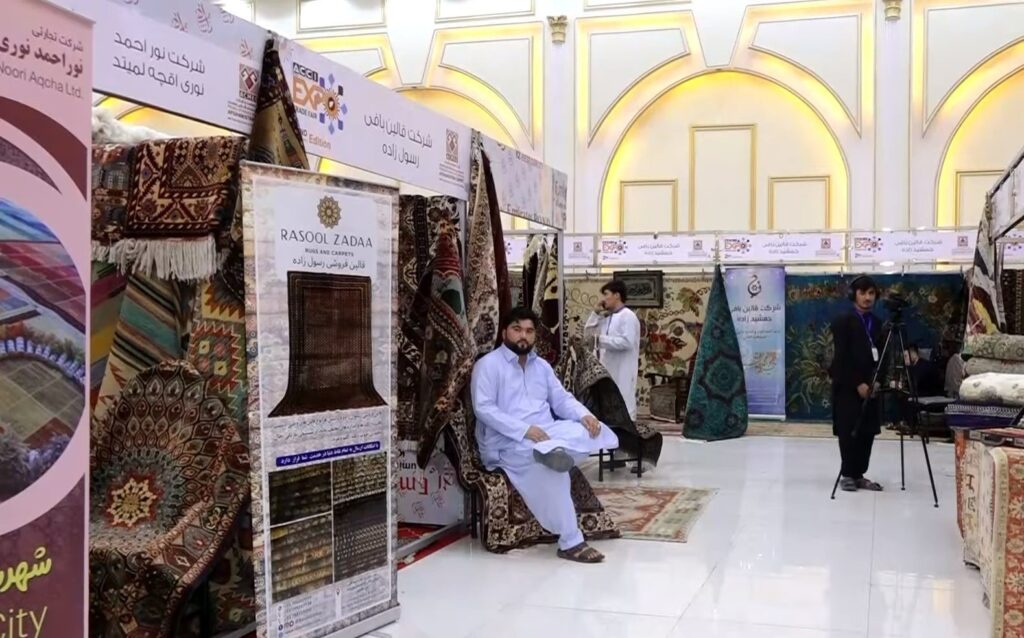
An exhibition of Afghan businesses is scheduled to open in Almaty as part of the Kazakhstan-Afghanistan Business Forum, Orda.kz reports.

Afghanistan’s Ministry of Industry and Trade originally planned to hold the event at the end of August, but the dates were pushed back by two months.

The forum, organized by Kazakhstan’s Ministry of Commerce, will now be held on October 22 and will be a meeting place for more than 250 Afghan entrepreneurs representing various sectors of the economy.

This event continues the regular tradition of Kazakh-Afghan business forums. The last forums were held in August 2023 in Astana, and in Afghanistan in April this year.

In December 2023, Kazakhstan removed the Taliban from the list of banned organizations, following UN Security Council resolutions. The decision was part of a broader strategy to strengthen economic and trade ties with Afghanistan, which has become an important partner for Central Asia since the Taliban came to power in 2021. Economic relations between Kazakhstan and Afghanistan continue to develop and are expected to grow to $3 billion through active participation in business forums and the signing of agricultural supply agreements.

Kyrgyzstan to Modernize Oil Refinery in Jalal-Abad

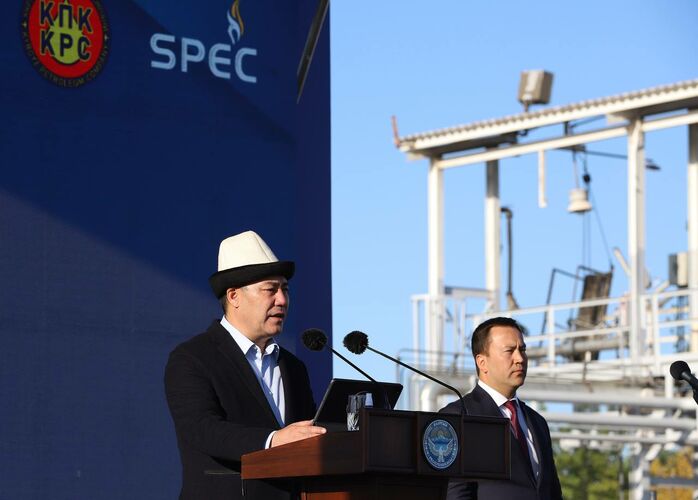
On September 28, Kyrgyzstan’s largest oil refinery, located in the southern city of Jalal-Abad, began a large-scale modernization.

Operated by Kyrgyz Petroleum Company, the refinery produces AI-80 gasoline, diesel fuel, and fuel oil.

Kyrgyzstan’s annual gasoline and diesel fuel demand is 1.4 million tons. The refinery in Jalal-Abad can meet only 6.5% of that demand. After the modernization project, the refinery will be able to meet 32% of the domestic demand.

After modernization, AI-92 and AI-95 gasoline production would increase more than 12-fold, and diesel fuel production would grow by 40%.

The total investment in modernizing the refinery will amount to $410 million, including $200 million in foreign investments and $110 million from the Kyrgyz government.

Today, almost all gasoline and diesel fuel used by Kyrgyzstan is imported from Russia.

The Times of Central Asia earlier reported that Kyrgyzstan proposed oil-rich Azerbaijan to sign a long-term contract to supply Azeri crude oil to Kyrgyzstan.

Azeri crude oil is needed for Kyrgyzstan’s Junda oil refinery.

Located in Kara-Balta, about 100 kilometers west of Bishkek, the refinery reopened late in August after a major overhaul. It now plans to reach its total annual capacity of processing 800,000 tons of crude oil by the end of this year.

Kazakh Zhuz and Rus: From History to the Modern Day

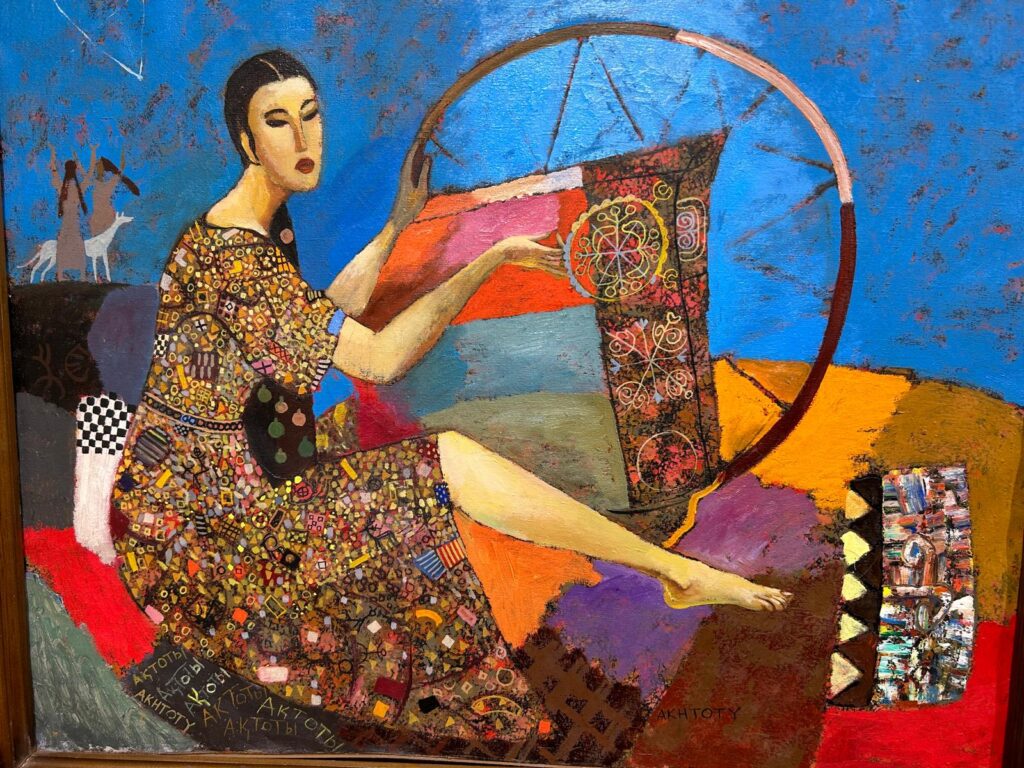
The zhuz are tribal unions that have played an important role in the history and culture of the Kazakh people. There are three main zhuzes in Kazakhstan: the Senior Zhuz, the Middle Zhuz, and the Younger Zhuz. Each includes several tribes which have their own unique traditions and customs.

In general, zhuz began to form in the XVI-XVII centuries, when Kazakhs united to protect their lands from external threats. The Senior Zhuz occupied the southern and southeastern regions, the Middle Zhuz occupied the central and northern regions, and the Younger Zhuz occupied the western and northwestern territories of Kazakhstan. Each zhuz had its own system of governance and societal norms.

In addition, each zhuz had its own ru, which in Kazakh means patriarchal clan, descended from one ancestor of the seventh tribe or more.

Some of the most common ru include:

Dulat: One of the largest clans of the Senior Zhuz, known for its historical significance and large numbers.

Naiman: An important clan of the Middle Zhuz, which has played a significant role in the history of the Kazakh people.

Argyn: Another major clan of the Middle Zhuz, known for its warriors and cultural traditions.

Adai: A clan of the Younger Zhuz which is famous for its traditions and history.

Today, zhuz continue to play an important role in the life of Kazakhstan. People remain proud to belong to a particular zhuz and ru, passing on its culture to their children. For example, Kamila, a 20-year-old student from Almaty says she is honored to belong to the Argyny ru, and she and her family try to preserve its traditions.

“Our tamga, which in Kazakh means ancestral family sign, is a sign of infinity, and everyone in our family has a sign of the clan hanging. We are very proud of it, and I feel a connection to this symbol.”

Yerzhan, a 27-year-old, programmer and student of photography from Taraz, is proud of his Naiman background.

“They often say about us that we’re brave, courageous and strong-willed, because our ancestors fought with the armies of Genghis Khan,” he told TCA.

Asel from Shymkent, a 21-year-old student at the Taraz State University, an aspiring musician who plays the dombra, feels a connection with her ancestors from the Younger Zhuz, namely the Adai ru, and tries to follow their example. “My grandfather told me that many batyrs, Sufis, biys and akyns came from Adai. Beket-ata is especially famous. Perhaps that’s why I began to study music. There is a story that it was Adai ru who developed a special technique of playing the dombra which is known as the Mangistau school.”

Kazakh zhuz and rus remain an important part of the history and culture of Kazakhstan, and continues to live in the hearts and minds of people, preserving their traditions for future generations.

Tajikistan’s Rahmon: No Military Solution to Palestinian Conflict

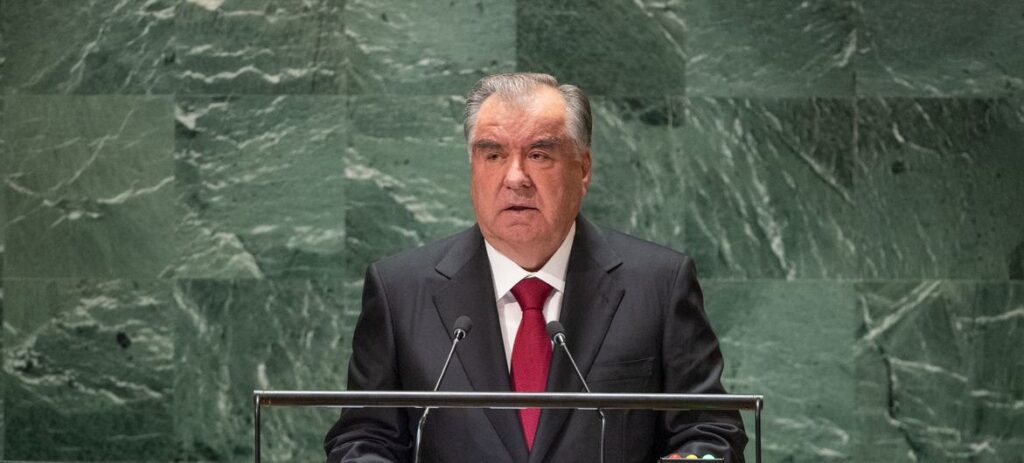
The President of Tajikistan, Emomali Rahmon, has said that the current situation in the Middle East proves that there is no military solution to the Palestinian conflict.

Speaking at the 79th session of the UN General Assembly in New York, Rahmon said that the Palestinian crisis is a deep concern among Tajikistan’s people.

“Tajikistan believes that the final and real solution of this issue is possible only by fulfilling the decisions of the United Nations on the creation of an independent Palestinian state based on the borders of 1967,” the Tajik leader said.

He hopes the parties will stop fighting, work on peace talks, and take adequate measures to restore stability in Palestine.

He added that Dushanbe supports global stability and socio-economic development in Afghanistan. “For this purpose, Tajikistan is always ready to contribute to restoring and developing various aspects of a peaceful life in Afghanistan,” Rahmon said.

Rahmon called on the international community to help the “long-suffering people of Afghanistan, including those affected by natural disasters,” to prevent a humanitarian crisis.

The Times of Central Asia has reported that Kyrgyz President Sadyr Japarov addressed the 79th session of the UN General Assembly and called on the world community to reduce weapons and international tension.