• KGS/USD = 0.01144 0%
  • KZT/USD = 0.00196 -0%
  • TJS/USD = 0.10899 0%
  • UZS/USD = 0.00008 0%
  • TMT/USD = 0.28490 0%
  • KGS/USD = 0.01144 0%
  • KZT/USD = 0.00196 -0%
  • TJS/USD = 0.10899 0%
  • UZS/USD = 0.00008 0%
  • TMT/USD = 0.28490 0%
  • KGS/USD = 0.01144 0%
  • KZT/USD = 0.00196 -0%
  • TJS/USD = 0.10899 0%
  • UZS/USD = 0.00008 0%
  • TMT/USD = 0.28490 0%
  • KGS/USD = 0.01144 0%
  • KZT/USD = 0.00196 -0%
  • TJS/USD = 0.10899 0%
  • UZS/USD = 0.00008 0%
  • TMT/USD = 0.28490 0%
  • KGS/USD = 0.01144 0%
  • KZT/USD = 0.00196 -0%
  • TJS/USD = 0.10899 0%
  • UZS/USD = 0.00008 0%
  • TMT/USD = 0.28490 0%
  • KGS/USD = 0.01144 0%
  • KZT/USD = 0.00196 -0%
  • TJS/USD = 0.10899 0%
  • UZS/USD = 0.00008 0%
  • TMT/USD = 0.28490 0%
  • KGS/USD = 0.01144 0%
  • KZT/USD = 0.00196 -0%
  • TJS/USD = 0.10899 0%
  • UZS/USD = 0.00008 0%
  • TMT/USD = 0.28490 0%
  • KGS/USD = 0.01144 0%
  • KZT/USD = 0.00196 -0%
  • TJS/USD = 0.10899 0%
  • UZS/USD = 0.00008 0%
  • TMT/USD = 0.28490 0%
09 December 2025

Uzbekistan and China to Increase Flights Between Their Cities

Uzbekistan’s Ministry of Transport has agreed with China Southern Airlines to increase the frequency of flights on the Beijing-Tashkent route from four to seven per week, and on the Urumqi (Xinjiang)-Tashkent route from three to four per week. They also agreed to launch three weekly flights on the Guangzhou-Urumqi-Tashkent route in 2025.

At the last C5+1 China-Central Asia Civil Aviation Conference, held in Xi’an in June, Uzbekistan and China agreed to increase the number of flights between the two countries and open new air corridors.

Four airlines from Uzbekistan were assigned 58 regular flights per week to transport passengers from the international airports of Tashkent and Samarkand to 12 Chinese cities.

Currently, the Uzbek airlines Qanot Sharq, Centrum Air, and Air Samarkand are working to meet the certification requirements of the Chinese aviation administration so that they can begin regular flights to China.

At the moment, nine Uzbek and Chinese airlines operate 63 regular flights per week to 16 destinations in both countries, including 21 flights for passengers and 42 for cargo.

American Educators to Teach English in Uzbekistan

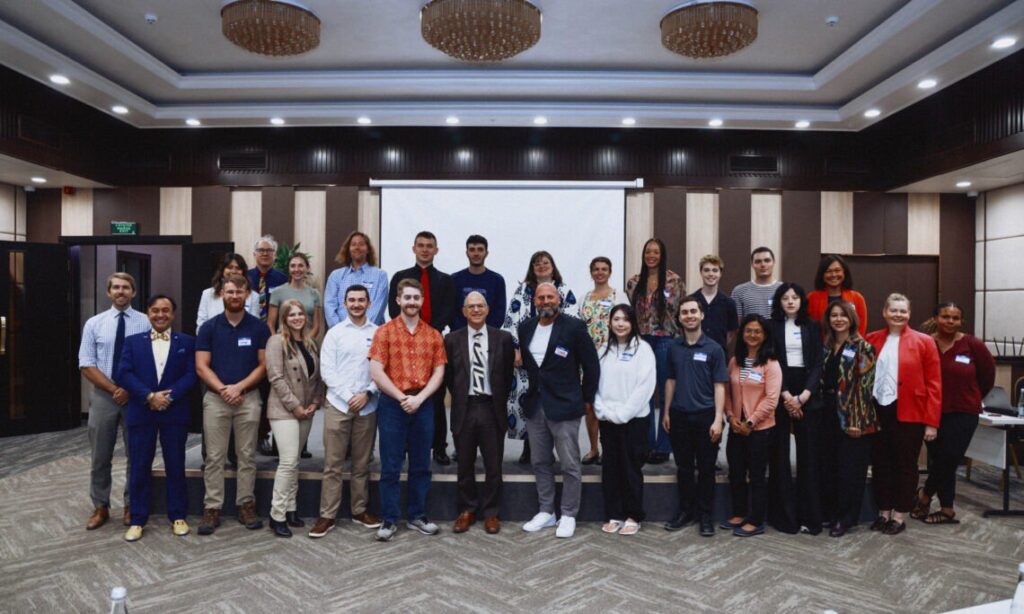
Twenty English language teachers from the United States have arrived in Uzbekistan to begin teaching and professional development programs across the country. The U.S. Embassy in Tashkent reported that they will join local teachers to provide direct classroom instruction to students.

The twenty American teachers will support English language teaching within ten different regions of Uzbekistan for the 2024-2025 academic year.

According to the Embassy, these teachers are just part of the U.S. Government’s vast commitment to strengthening English language education in Uzbekistan, which includes training more than 18,000 English teachers nationwide. Since 2018, the U.S. Government has invested over $31.2 million in English language teaching and learning in Uzbekistan.

The U.S. Embassy has partnered with the Ministry of Preschool and School Education and the Ministry of Higher Education, Science, and Innovations to support Uzbekistan’s education reforms and to ensure that graduates are equipped with the linguistic and professional skills needed to support Uzbekistan’s economy.

Since 2019, 98 American English teachers have worked at 21 public schools and more than 30 universities across Uzbekistan.

A Closer Look: Scholz Trip Shows Europe’s Interest in Central Asia

Energy, trade, climate change, geopolitical conflict. These are some of the big themes surrounding a trip by German Chancellor Olaf Scholz to Central Asia, whose countries seek to expand their range of international partners while securing their autonomy from outside, sometimes competing influences.

Joined by German business leaders, Scholz was scheduled to arrive in Uzbekistan on Sunday and also visit Kazakhstan prior to a Central Asia-Germany summit there on Tuesday, the last day of his tour. It is Scholz’s first trip to Central Asia, signaling how important the region has become for Europe as it seeks new energy alternatives to reduce dependence on supplies from Russia since Moscow’s full-scale invasion of Western-backed Ukraine in February 2022.

The relationship goes beyond the stopgap purchase of energy and minerals, even though Russian officials has accused Western countries of trying to use Central Asia as a tool in their conflict with Russia. At an inaugural summit last year in Berlin, Germany along with Kazakhstan, Kyr­gyzstan, Tajikistan, Turkmenistan and Uzbekistan agreed to a “strategic regional partnership.”

European countries recognize that the Central Asia is deeply bound to Russia and China, the regional powers, and that European and Central Asian goals and priorities won’t always align, according to Western analysts. However, Central Asian countries also recognize that engaging with Europe, the United States and other more distant partners is in their interests because it helps them to maintain strategic autonomy and leverage.

“If the Central Asian states want to gain weight and be heard in the emerging multipolar world order, they must strength­en their technological, industrial and geopolitical independence,” analysts said in a commentary posted by the German Institute for International and Security Affairs, which advises the German government and parliament. “This does not necessarily imply decoupling from Russia and China, but rather spreading risk through the addition (not substitution) of partners.”

The analysts said Germany should bolster Central Asian autonomy by helping to strengthen the region’s “crisis resilience” via support on issues such as transport routes, electricity infrastructure and water management. They also said European efforts to “win the support of regional states for Western sanctions against Russia must be measured against the realities on the ground” – an apparent reference to the trade with Russia that Central Asia considers vital to its economies.

Kazakhstan, which shares a long land border with Russia, has in particular faced a difficult balancing act on sanctions. At a press briefing with Scholz in Berlin in September 2023, Kazakh President Kassym-Jomart Tokayev said his country would comply with Western sanctions against Russia over the Ukraine war while still cooperating with its neighbor. However, Serik Zhumangarin, Kazakhstan’s deputy prime minister and trade minister, told the Bloomberg news agency last month that Kazakhstan won’t always “blindly follow the sanctions” and will be looking out for its own economic interests.

Human rights groups want Scholz to bring up freedoms and the rule of law during his trip to Central Asia. They argue that avoiding the topic will only hinder efforts to bring German investment and projects into the region.

“Serious human rights concerns across the region include suppression of the rights to protest and express opinions, including online, jailing of activists, torture in detention, crackdowns on civil society, violence against women, impunity for abusive security forces, and a lack of free and fair elections,” Hugh Williamson, director of the Europe and Central Asia division of Human Rights Watch, said in a statement.

At last year’s Berlin meeting, Scholz and the Central Asian leaders “reaffirmed their commitment to work together for peace, security, democracy, the rule of law and sustainable development in full respect of international law,” according to their joint statement.

In a regional step forward, Kazakhstan this year approved a law that strengthens protections for women and children against domestic violence. A country of particular concern for free expression advocates is Kyrgyzstan, where some media groups have faced prosecution and closure. At the far end of the spectrum is Turkmenistan, an isolated country where it is especially difficult to get independent information.

Scholz will absorb some of the region’s storied culture, meeting Uzbek President Shavkat Mirziyoyev in the historical city of Samarkand to talk about matters including labor migration, education, health and tourism, according to the Uzbek presidency.

The German chancellor may have a little downtime ahead of his heavy schedule in Central Asia. Asked on Instagram what goes through his mind on long flights, the German chancellor said such trips are a chance to work and talk to colleagues traveling with him.

“But because these are long flights, you also have to rest, sleep, eat something,” Scholz said. “That is a moment when I sometimes think about completely different things that have nothing to do with work.”

Video Highlights: World Nomad Games Day Six

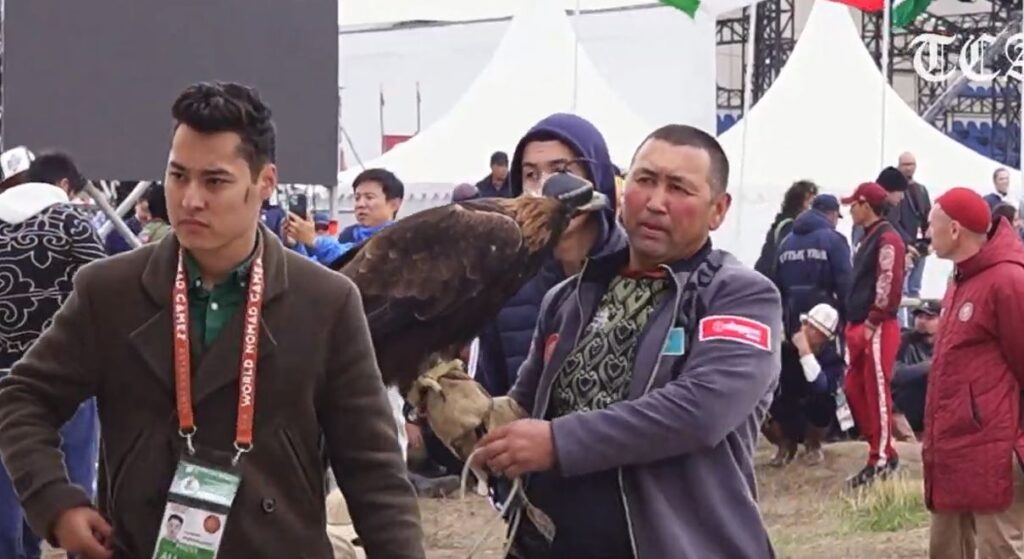
On the final day of the World Nomad Games, themed as the “Gathering of the Great Steppe,”  TCA took in the Tenge Ilu and the Baige, with a focus on the Kusbegilik (hunting with birds). It’s been a blast! Stick with us and let’s Go Nomad again in 2026.

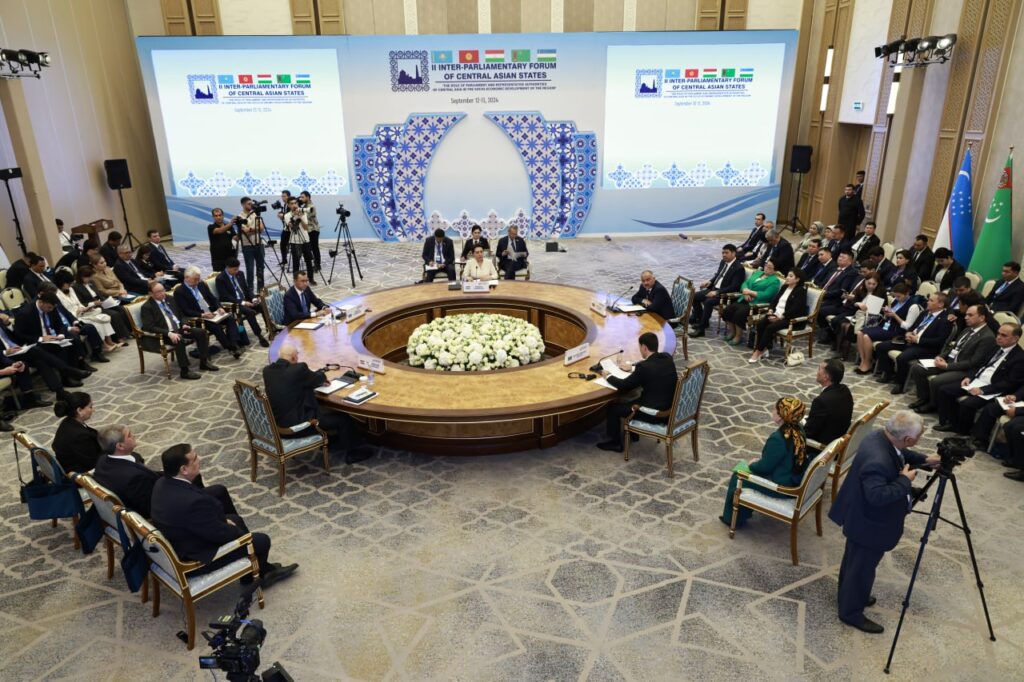
Central Asian Countries Hold Second Inter-Parliamentary Forum, Adopt Khiva Declaration

The second inter-parliamentary forum of Central Asian countries was held in Khiva, Uzbekistan on 12 September.

It was attended by political representatives from Kazakhstan, Kyrgyzstan, Tajikistan, Turkmenistan, and Uzbekistan, members of youth parliaments, and local and international mass media.

Topics addressed at the forum included new forms of interparliamentary cooperation between Central Asian countries, and recommendations for increasing the role of women and young people in the region’s socio-economic development.

The Special Representative of the United Nations Secretary-General for Central Asia, Kaha Imnadze, commented: “This forum once again confirms Uzbekistan’s important role in strengthening regional cooperation, as well as in ensuring peace and security.”

Imnadze added that the UN is ready to strengthen cooperation with Central Asia in areas such as the use of transboundary waters, the melting of glaciers, gender equality, and youth activism.

The forum’s results resulted in the adoption of the Khiva Declaration, which will serve as the basis for the future cooperation of Central Asian countries within the framework of inter-parliamentary initiatives.

The first inter-parliamentary forum of Central Asian countries was held last year in Turkestan, Kazakhstan. The event led to the adoption of the Turkestan Declaration.

Kyrgyzstan to Begin Manufacturing Helicopters

Daiyrbek Orunbekov, Head of the Information Policy Service of the Kyrgyz Presidential Administration, stated on his Facebook page that Kyrgyzstan has begun production on ultralight small-size two-seat helicopters.

Describing the helicopter, he wrote: “It is a two-seater, can hold 70 liters of fuel, and flies 600 kilometers in 3 hours; pricing starts at around 60 thousand dollars.” He also added that automobile, helicopter, and other manufacturing plants would soon be opening in the country.

The production of helicopters in Kyrgyzstan, assembled from components supplies by Poland, is the country’s first foray into the market.

The helicopters can be used for various tasks, from pilot training and aerial photography to police patrols, power line control, medical personnel transport, and aerial agricultural work, and according to Orunbekov, interest has already been expressed by UAE companies in the test models.

The Times of Central Asia previously reported that the German company “Linding Group” plans to invest some 10 million dollars in assembling aircraft in Almaty, Kazakhstan.