• KGS/USD = 0.01144 0%
  • KZT/USD = 0.00194 -0%
  • TJS/USD = 0.10844 -0.46%
  • UZS/USD = 0.00008 0%
  • TMT/USD = 0.28571 0.28%
  • KGS/USD = 0.01144 0%
  • KZT/USD = 0.00194 -0%
  • TJS/USD = 0.10844 -0.46%
  • UZS/USD = 0.00008 0%
  • TMT/USD = 0.28571 0.28%
  • KGS/USD = 0.01144 0%
  • KZT/USD = 0.00194 -0%
  • TJS/USD = 0.10844 -0.46%
  • UZS/USD = 0.00008 0%
  • TMT/USD = 0.28571 0.28%
  • KGS/USD = 0.01144 0%
  • KZT/USD = 0.00194 -0%
  • TJS/USD = 0.10844 -0.46%
  • UZS/USD = 0.00008 0%
  • TMT/USD = 0.28571 0.28%
  • KGS/USD = 0.01144 0%
  • KZT/USD = 0.00194 -0%
  • TJS/USD = 0.10844 -0.46%
  • UZS/USD = 0.00008 0%
  • TMT/USD = 0.28571 0.28%
  • KGS/USD = 0.01144 0%
  • KZT/USD = 0.00194 -0%
  • TJS/USD = 0.10844 -0.46%
  • UZS/USD = 0.00008 0%
  • TMT/USD = 0.28571 0.28%
  • KGS/USD = 0.01144 0%
  • KZT/USD = 0.00194 -0%
  • TJS/USD = 0.10844 -0.46%
  • UZS/USD = 0.00008 0%
  • TMT/USD = 0.28571 0.28%
  • KGS/USD = 0.01144 0%
  • KZT/USD = 0.00194 -0%
  • TJS/USD = 0.10844 -0.46%
  • UZS/USD = 0.00008 0%
  • TMT/USD = 0.28571 0.28%
09 December 2025

Work Begins on Afghan Section of the TAPI Gas Pipeline

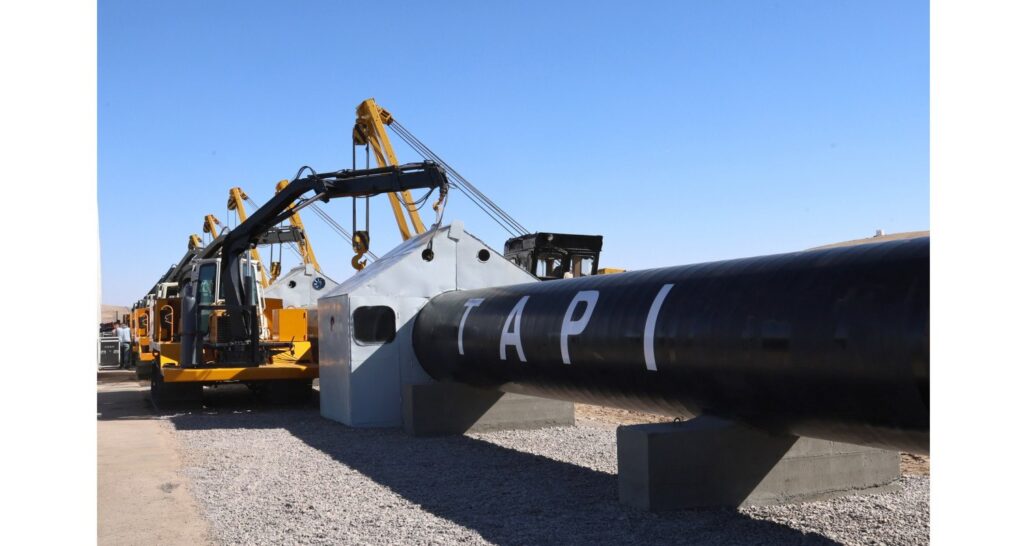
Turkmenistan and Afghanistan have now begun construction of the Afghan section of the Turkmenistan-Afghanistan-Pakistan-India (TAPI) natural gas pipeline.

To mark the launch of work on the pipeline’s Serhetabat-Herat section, Chairman of the Halk Maslahaty (People’s Council) of Turkmenistan, Gurbanguly Berdimuhamedov, and Mullah Mohammad Hassan Akhund, the Prime Minister of the Taliban-led Afghan government, attended a ceremony  at a checkpoint on the Turkmen-Afghan border on September 11.

The staged installation of the TAPI pipeline, already completed in Turkmenistan, will eventually transfer 33 billion cubic meters of Turkmen natural gas annually to Afghanistan, Pakistan, and India.

At an estimated cost of $10 billion, the TAPI pipeline will span 1,814 kilometers.  With 816 kilometers running through Afghanistan, the project will meet the country’s gas needs, generating around $450 million in annual transit fees, before continuing on to Quetta and Multan in Pakistan and Fazilka in India.

Gas-rich Turkmenistan currently exports natural gas to China and Russia but once completed, the TAPI project will enable the country to diversify its export routes and help realize far-reaching plans to transport its gas across the Caspian Sea to Azerbaijan, Turkey, and Europe.

Mullah Mohammad Hassan Akhund stated that the commencement of work on the TAPI project on Afghan soil would strengthen relations between Afghanistan and Turkmenistan, whilst speaking from Ashgabat via videoconferencing, Turkmenistan President Serdar Berdimuhamedov, announced, “The commencement of the TAPI project [on the Afghan territory] and other projects is beneficial not only for Afghanistan but also for the countries in the region.”

In addition to TAPI, the ceremony opened a 177-meter-long railway bridge at the Turkmen-Afghan border on Serhetabat-Turgundi railroad, launched the construction of the Serhetabat-Herat (Afghanistan) fiber-optic communication line, a warehouse complex in the dry port of the Turgundi railway station at the Turkmen-Afghan border, and the Turgundi-Sanabar section of the Turgundi-Herat railway. The event also marked the commission of the Nur-el-Jahad power plant in Afghanistan’s Herat province,  as part of the first phase of the Turkmenistan-Afghanistan-Pakistan (TAP) power transmission line project.


German Company to Assemble Airplanes in Almaty

The German company “Linding Group” is set to invest about $10 million in assembling airplanes in Almaty, pending necessary permits from the government.

Based in the economic zone “PIT ‘Alatau”, production will begin in 2026. During the first year, 20 airplanes will be assembled, rising to 50 units annually thereafter.

Kazakhstan is already engaged in several joint projects with foreign enterprises in aircraft production. One such project  involves the “Russian Helicopters” company. Within the framework of the agreement with Kazakhstan’s aircraft repair plant No. 405, a large-unit assembly of Mi-8AMT and Mi-171E helicopters was launched in Almaty, predominantly serving the Ministry of Emergency Situations and the National Guard of Kazakhstan.

A further example of international cooperation is the contract between the Ural Civil Aviation Plant and Kazakhstan Aviation Industry (KAI) to produce the Baikal multi-purpose airplane. When fully assembled by the end of this year, the airplanes will be delivered to markets in Europe and Africa.

The realization of all of these projects will both strengthen Kazakhstan’s aviation industry and increase its presence in international aviation markets.

Celebrating Female Pioneers at the 2024 World Nomad Games

Like most dominating worldwide sports, the World Nomad Games are top-heavy with male athletes. Yet while women don’t participate in all the categories, in the 2024 WNG, a noteworthy number of them have become the center of attention. Among the packed crowds of the Hippodrome and Ethnoaul venues, one competitor and two ticket holders had a few things to say on the matter of WNG women.

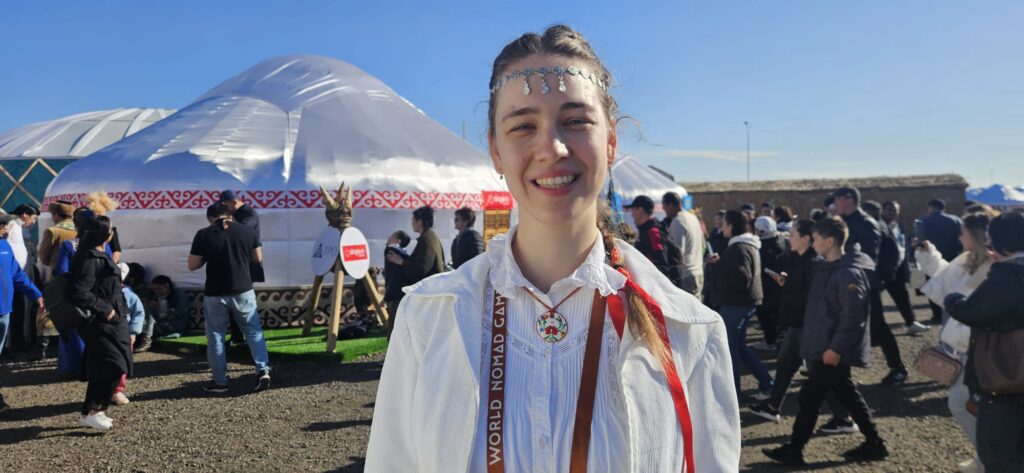
Timea Janurik, known as Timi, is a folk musician and a PhD student in folk teaching methods, from Budapest, Hungary. She is competing as a player of the citera, the national stringed instrument of Hungary, at the Ethnoaul. The Hungarian representation at the WNG includes three men and three women, but Timi, who specializes in Turkic folk songs, is the only musician among them. While rehearsing in Astana, Timi chanced upon a Kazakh girl singer and asked her, “Do you want to join me in the concert?” Hence, a female alliance and a makeshift band were formed because Timi only knew how to sing one song in the Kazakh language. According to Timi, her new partner “can sing beautifully.” In Timi’s native Hungary, folk musicianship is an art form split evenly among men and women, but citera playing is dominated by women (and violin playing by men).

Timi is also participating in the female Assyk games, a type of traditional Kazakh board game in which players use small animal bones — assyks — to knock out multiple lines of their opponent’s assyks. The game rules differ according to gender. The male version of the game “is more popular,” says Timi, “because it’s more visible and looks so fancy to play.”

Image: TCA, K. Krombie

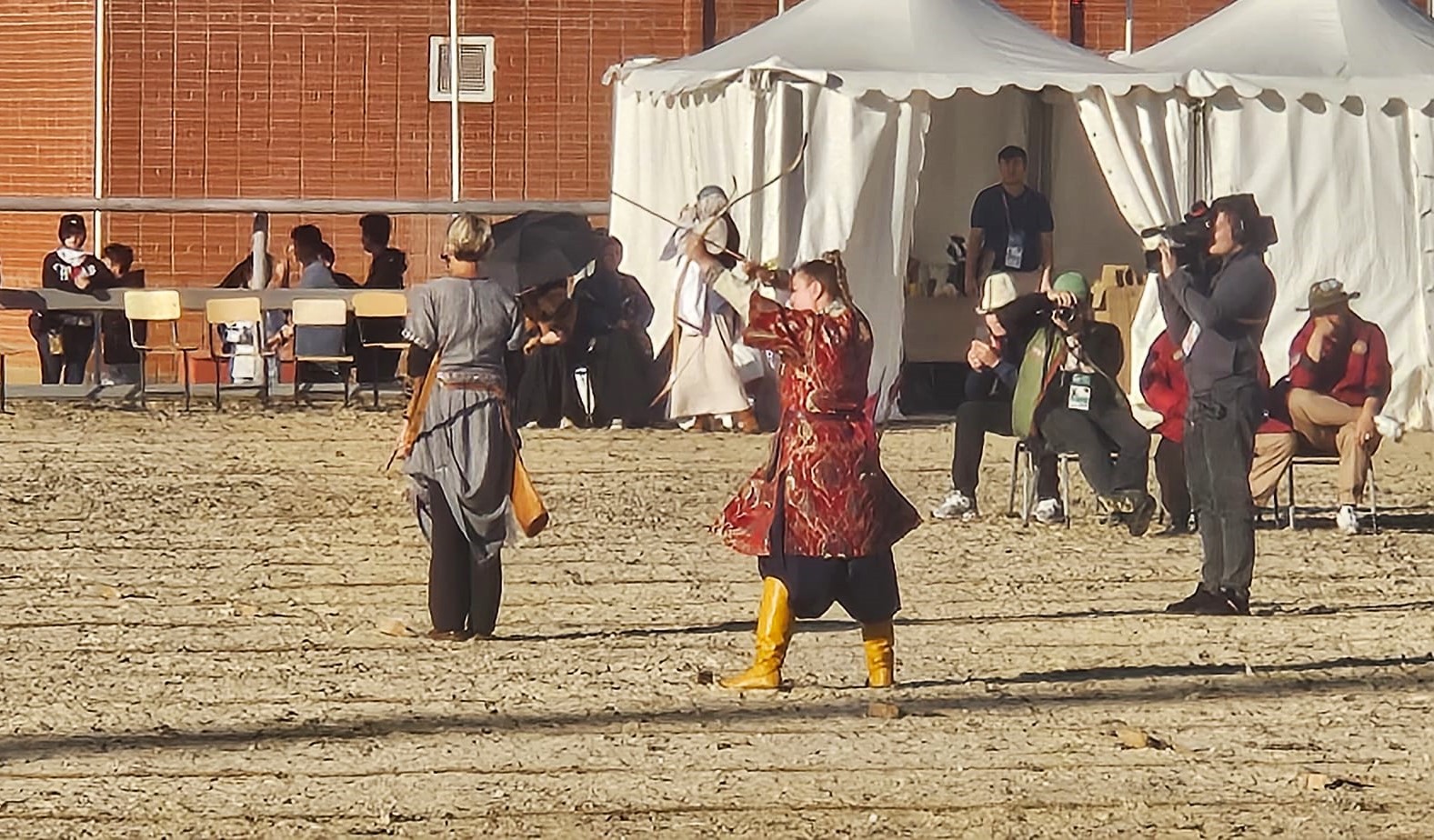
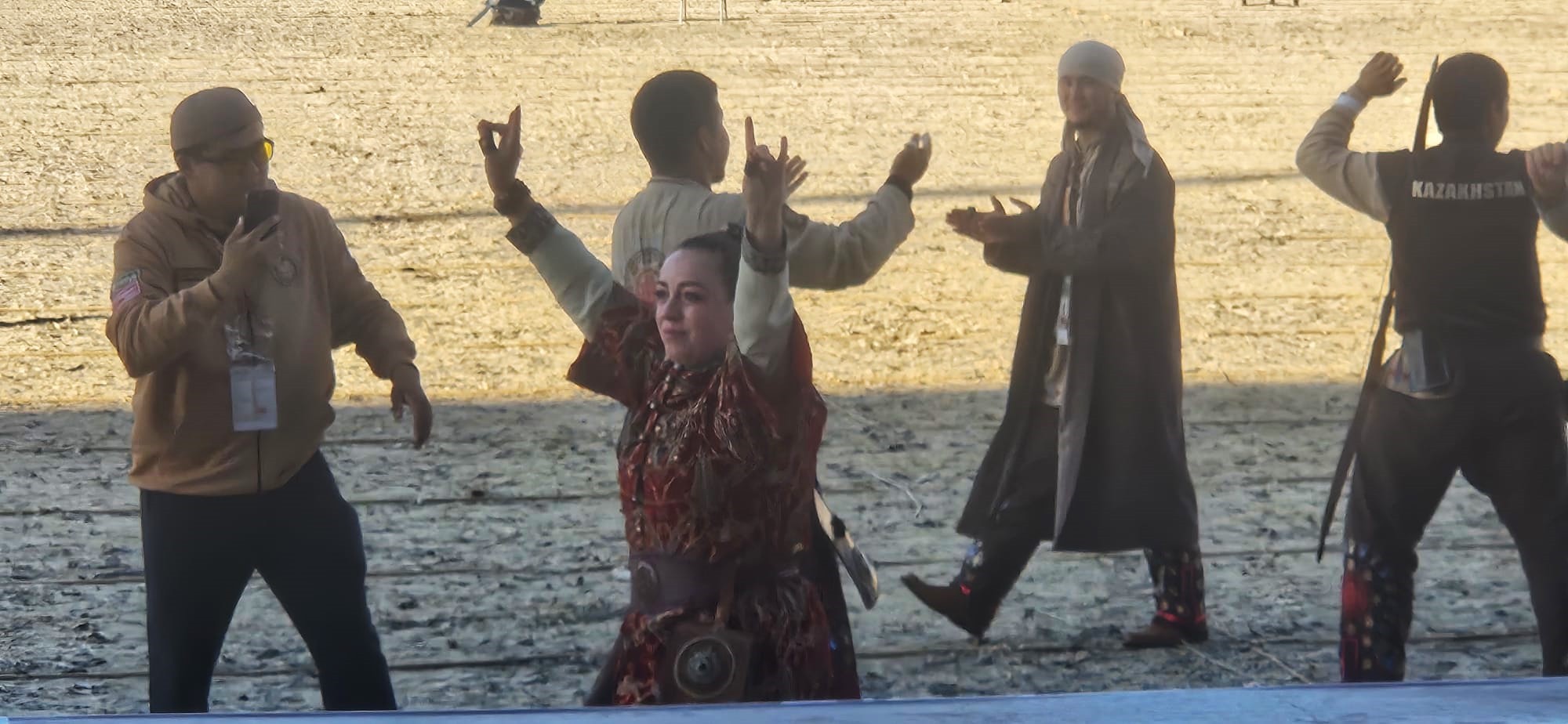
British visitors Naomi Ocean and Andy Myer (an archer), from Wales and Devon, respectively, came all the way from the UK to Astana to watch the horseback archery. Even though they are well-traveled in other regions of Central Asia, this is their first visit to Kazakhstan and the WNG. They remarked that they hadn’t noticed the UK team participating in anything they have witnessed thus far, but what they have seen has been “interesting and exciting.” Having just seen the Turkey team being “trashed in the kok boru,” they were happy to see Turkey’s subsequent victory in the Traditional Turkish Archery, in particular the female team member who performed victory laps before an exhilarated, mostly Kazakh crowd. “We were glad,” said Naomi, “and we loved seeing the female archers.” Naomi was equally, if not more impressed by the “mixed teams” in the horseback archery category. Having watched and enjoyed the 2016 Kazakh language documentary film, The Eagle Huntress, Naomi and Andy look forward to the Kusbegilik games. “We’re expecting to see women handling eagles, which should be good.”

Image: TCA, K. Krombie

A Turkish team victor, competing in Traditional Turkish Archery (mixed gender team), and an Uzbek athlete in horseback archery (with no specific male and female categories) drew huge support — arguably more than their fellow male competitors. Out of the 21 competitive sports, a handful, including some of the more rambunctious horseback and wrestling games, don’t include women. The very notion of incorporating women’s teams into the more rough-and-tumble divisions could draw further attention to these sports as well as a new vantage point for the ticket-purchasing general public.

“There was a lot of cheering for the women going on from the stands,” said Naomi, “a lot of support for the female riders.”

Day Four at the World Nomad Games: Mighty Deeds at a Global Gathering

On day four of the World Nomad Games, themed as the “Gathering of the Great Steppe,” TCA attended the finals of the Powerful Nomad competition, and spoke to visitors from the West about what had drawn them to Kazakhstan and the Games.

“I’m an American traveling around the world,” Andy from Houston, Texas, one of a group of friends who’d met on the road in Central Asia told TCA. “I’ve wanted to come to the World Nomad Games for quite a few years, now, but haven’t got the chance. I’m traveling full-time this year and figured I’d swing by Kazakhstan and check it out.”

“It’s so cool to be here and see all the sports and cultures together,” Liam from Vancouver, Canada, added.

Image: TCA, Stephen M. Bland

“We knew about the World Nomad Games from having lived in Kyrgyzstan,” Allison from Miami told TCA. “So, when we found out about this one, we decided to come because it’s been on the bucketlist. It’s been a blast!”

“We’re here because we’re doing the five Stans; When we arrived, we found out this event was going on, so we figured we had to come. We really want to see the hunting with birds. Everyone’s been very welcoming, and the food has been good,” Lauren from San Diego said.

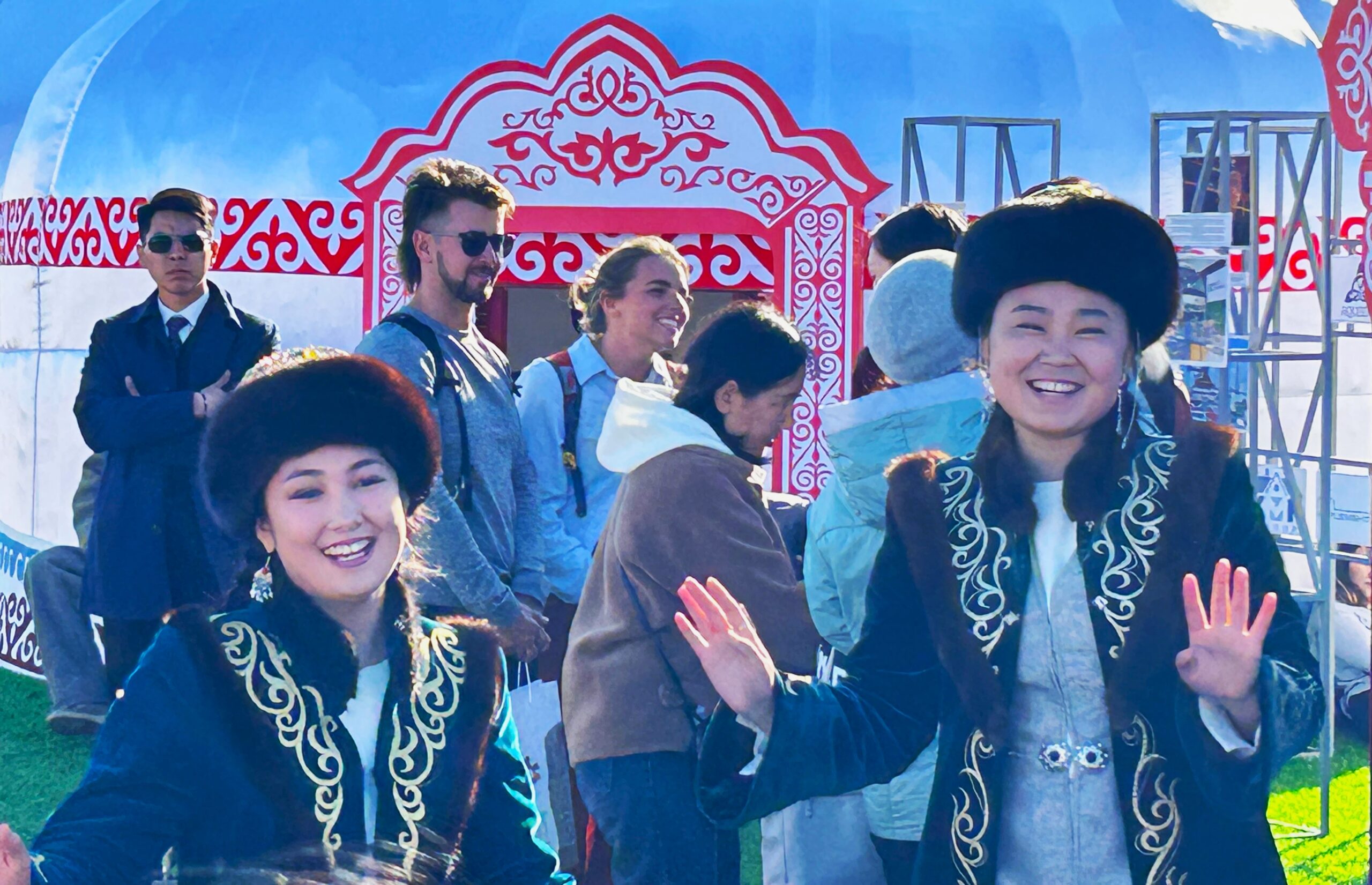
“I’m traveling in Kazakhstan because I wanted to do horseback stuff,” said Hellie from the UK. “I’ve never been to Kazakhstan before. I was curious about the Games, and it’s amazing how much I’m learning here. The tents from the regions are really cool.”

Reflecting the cosmopolitan crowd, on the field for the final of the powerful nomad strongman competition were athletes from around the globe: Cyprus, Armenia, Uzbekistan, Tajikistan, Romania, China, Nigeria, Iran, Belarus, Spain, Kuwait, Russia, India, and Kazakhstan. Given the response from the raucous, flag-waving home crowd, you didn’t need to be able to hear the announcer to know which was the Kazakh competitor, but warm and hospitable as ever, all of the competitors were well supported, particularly the ebullient Jerry from Nigeria.

Image: TCA, Stephen M. Bland

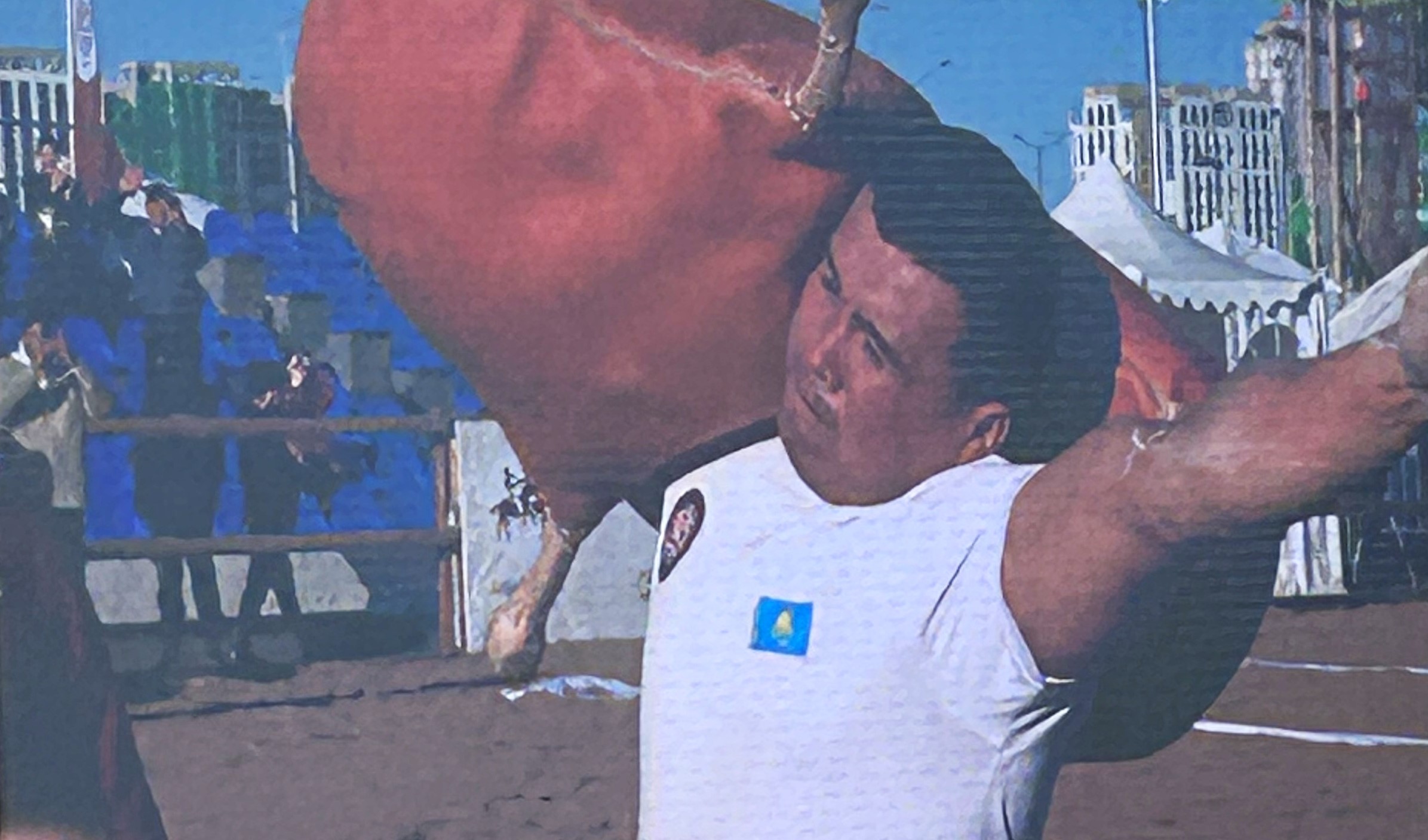
In the opening discipline of squats with a 100-kilogram bag – with four objects protruding which made it resemble a carcass – the hulking men strained every sinew, with some faring better than others, whilst one keeled over as if having suffered a hernia. It came as no surprise, as outside the arena a smaller, lighter weight set up to challenge spectators saw many fall afoul.

Next up was pulling a trolley weighing 200 kilos, which resembled a horse carriage.

“Bad luck; it was his first time trying,” the ever-comedic commentator chipped in after the participant from Kuwait managed three meters.

Others fared far worse.

The standout, however, was the tallest man in the competition, the entrant from Iran, who managed a staggering twenty-six meters.

“Wow!” the announcer chimed. “It will be very difficult to bring the cart back to the start.”

It took a team of four to do so.

“I love the yurts and the music performances and the dances,” the enthusiastic Lauren commented. “We just got here, and I already want to come back.”

Russia to Join Central Asia’s Unified Energy System

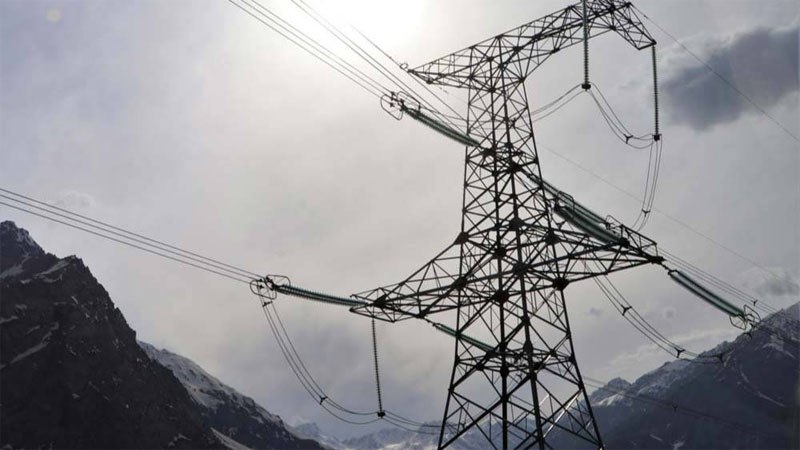
Russian Energy Minister Sergey Tsivilev has announced that the Russian and Uzbek energy ministries have agreed to connect the Russian “System Operator” to Central Asia’s Unified Energy System (UES).

The connection itself is expected to happen soon.

Uzbekistan’s Minister for Energy, Zhurabek Mirzamakhmudov, has commented that this move will ensure the security and stability of the energy system in the region. These measures are expected to allow prompt response to problems in energy supply and avoid interruptions.

In addition, Inter RAO has announced that it is preparing to export electricity to Uzbekistan, with the start of supplies scheduled for this fall.

Central Asia’s Unified Energy System was created in the 1970s. It is managed by the coordination and dispatch center in Tashkent, and allows the balancing of seasonal fluctuations in demand for electricity and water needs during the irrigation period. It currently includes Uzbekistan, Kyrgyzstan, Kazakhstan and Turkmenistan. In May it became official that Tajikistan would join the system.

Turkmenistan Forces Government Employees to Surrender Passports

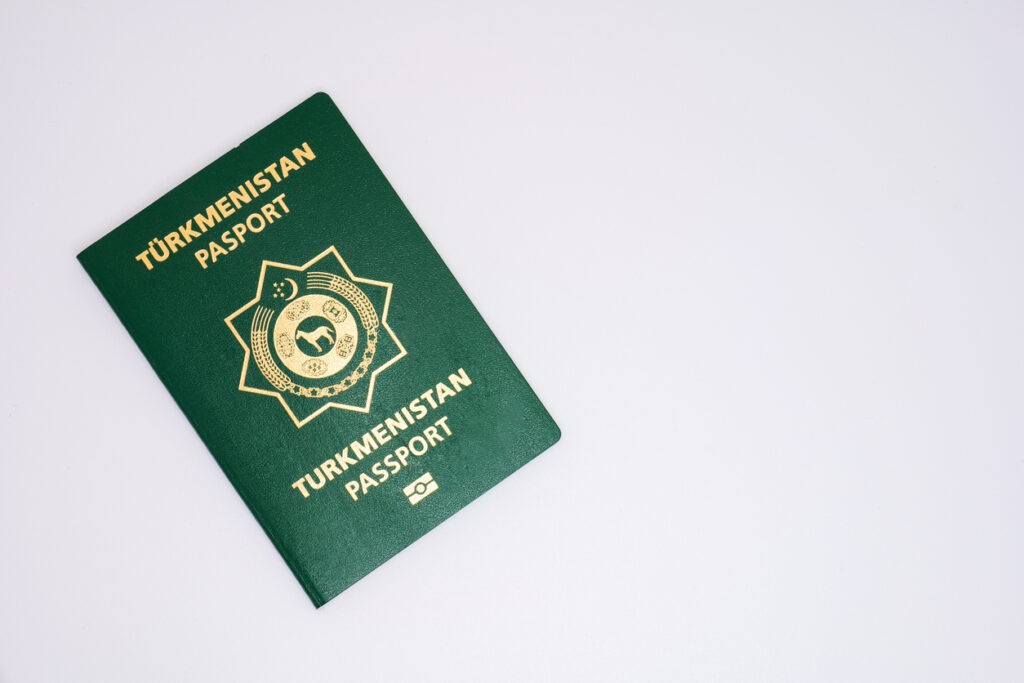
Employees of state institutions in Turkmenistan are being forced to surrender their biometric passports.

According to local sources, the migration service has been instructed to collect passports within a week and submit a report to the State Migration Service in Ashgabat.

Workers from the education, healthcare, transportation and other sectors must surrender their passports, or provide a certificate to prove that they do not possess one. The requirement was verbally sent to state agencies in the country’s Balkan region on September 9, and enforcement began immediately.

“The heads of local organizations have announced to their employees: ‘Either hand in your passports or don’t come to work from tomorrow afternoon.’ Even chief doctors at clinics and school directors must hand in their passports,” a state employee in the town of Turkmenbashi said.

Attempts to get comments from the authorities on the measure — which coincides with an increase in the number of citizens traveling abroad — were unsuccessful.

In addition, as the number of Turkmenistanis joining Russia’s army in its war in Ukraine increases, passports have also been taken away from university students. In late August, students of the Turkmen State Pedagogical Institute and the Turkmen State Medical University were forced to surrender their biometric documents.