• KGS/USD = 0.01144 0%
  • KZT/USD = 0.00195 -0%
  • TJS/USD = 0.10896 -0%
  • UZS/USD = 0.00008 0%
  • TMT/USD = 0.28571 0.28%
  • KGS/USD = 0.01144 0%
  • KZT/USD = 0.00195 -0%
  • TJS/USD = 0.10896 -0%
  • UZS/USD = 0.00008 0%
  • TMT/USD = 0.28571 0.28%
  • KGS/USD = 0.01144 0%
  • KZT/USD = 0.00195 -0%
  • TJS/USD = 0.10896 -0%
  • UZS/USD = 0.00008 0%
  • TMT/USD = 0.28571 0.28%
  • KGS/USD = 0.01144 0%
  • KZT/USD = 0.00195 -0%
  • TJS/USD = 0.10896 -0%
  • UZS/USD = 0.00008 0%
  • TMT/USD = 0.28571 0.28%
  • KGS/USD = 0.01144 0%
  • KZT/USD = 0.00195 -0%
  • TJS/USD = 0.10896 -0%
  • UZS/USD = 0.00008 0%
  • TMT/USD = 0.28571 0.28%
  • KGS/USD = 0.01144 0%
  • KZT/USD = 0.00195 -0%
  • TJS/USD = 0.10896 -0%
  • UZS/USD = 0.00008 0%
  • TMT/USD = 0.28571 0.28%
  • KGS/USD = 0.01144 0%
  • KZT/USD = 0.00195 -0%
  • TJS/USD = 0.10896 -0%
  • UZS/USD = 0.00008 0%
  • TMT/USD = 0.28571 0.28%
  • KGS/USD = 0.01144 0%
  • KZT/USD = 0.00195 -0%
  • TJS/USD = 0.10896 -0%
  • UZS/USD = 0.00008 0%
  • TMT/USD = 0.28571 0.28%
09 December 2025

Turkmenistan Forces Government Employees to Surrender Passports

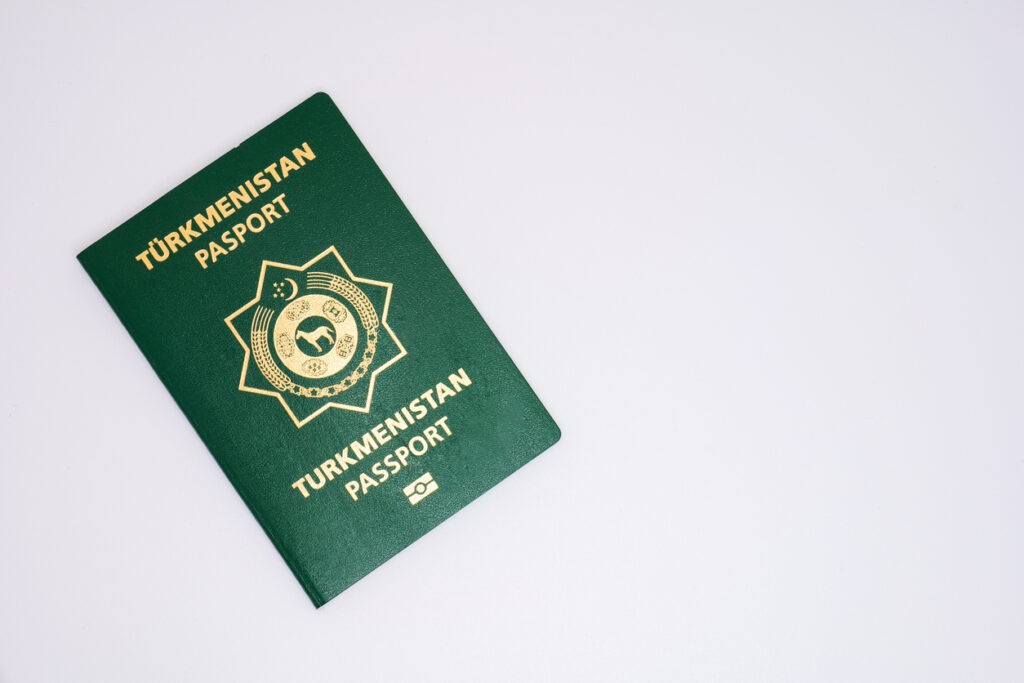
Employees of state institutions in Turkmenistan are being forced to surrender their biometric passports.

According to local sources, the migration service has been instructed to collect passports within a week and submit a report to the State Migration Service in Ashgabat.

Workers from the education, healthcare, transportation and other sectors must surrender their passports, or provide a certificate to prove that they do not possess one. The requirement was verbally sent to state agencies in the country’s Balkan region on September 9, and enforcement began immediately.

“The heads of local organizations have announced to their employees: ‘Either hand in your passports or don’t come to work from tomorrow afternoon.’ Even chief doctors at clinics and school directors must hand in their passports,” a state employee in the town of Turkmenbashi said.

Attempts to get comments from the authorities on the measure — which coincides with an increase in the number of citizens traveling abroad — were unsuccessful.

In addition, as the number of Turkmenistanis joining Russia’s army in its war in Ukraine increases, passports have also been taken away from university students. In late August, students of the Turkmen State Pedagogical Institute and the Turkmen State Medical University were forced to surrender their biometric documents.


Kyrgyzstan Reports Price Increases for Consumer Goods

According to the National Statistical Committee of Kyrgyzstan, prices for meat, alcoholic beverages, and tobacco products have risen significantly. The largest price increases were observed in Bishkek and the Issyk-Kul region.

“Prices for alcoholic beverages and tobacco products, food products, and tariffs for services rendered to the population have increased. At the same time, prices for food products and non-alcoholic beverages decreased,” Deputy Chairman of the Statistical Committee Baktybek Shokenov told a press conference in Bishkek.

He said prices fell for fresh fruits and vegetables, cereals, raw milk, eggs, and vegetable oil in the first eight months of 2024. On the contrary, prices for meat, fish, potatoes, salt, rice, cottage cheese, flour of the highest grade, pasteurized milk, sugar, and butter increased significantly.

Kyrgyz people have recently complained about a sharp rise in meat prices. Some reports say they have risen by 100 KGS ($1.2) per kilo in six months. The main reason for the sharp rise in meat prices is increased exports; because Kyrgyz meat prices abroad are higher than domestic prices, domestic prices are also rising. Most meat products are exported to neighboring Uzbekistan.

Today, a kilogram of beef costs about 650-680 KGS ($8) in the bazaar, although half a year ago, it cost 550-600 KGS ($6-6.5).

Kazakhstan Makes Strides in Agricultural Machinery Production

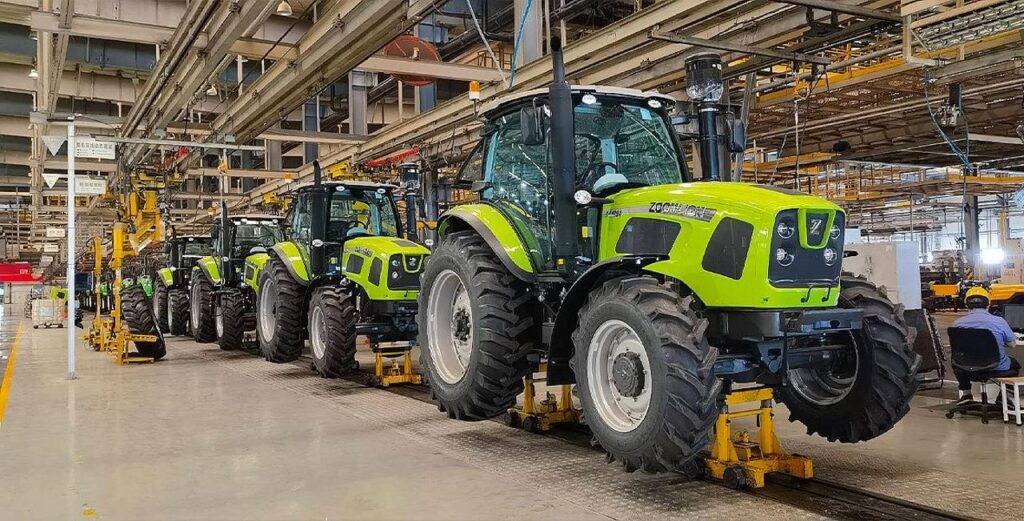
China’s Zoomlion Agriculture Machinery Co., Ltd., a leader in agricultural machinery production, is manufacturing tractors in Kazakhstan in cooperation with a local company, QazTehna.

The plan is to produce up to 700 tractors per year at a plant in Saran in the Karaganda region, the Kazakh Ministry of Industry and Construction announced.

Kazakhstan is one of the world’s largest producers of grain crops, with a total sown area of more than 24 million hectares. The country needs sufficient agricultural machinery to ensure agricultural production in such a vast area.

The renewal of outdated agricultural machinery remains a pressing challenge for Kazakhstan’s agro-industrial sector. According to the Ministry of Agriculture, there are 149,800 tractors in the country today, but the average wear of the machines is very high.

According to the Ministry of Industry, the production capacity of Kazakhstan’s manufacturing plants fully meets the domestic demand for tractors and combines, with more than 80% of all tractors and combines purchased in Kazakhstan in recent years being domestic production.

Kazakhstan has eight plants manufacturing more than ten brands and 120 models and modifications of tractors of different capacities, from 11 to 575 horsepower.

Protocol Signed to Begin Work on Uzbekistan Nuclear Plant

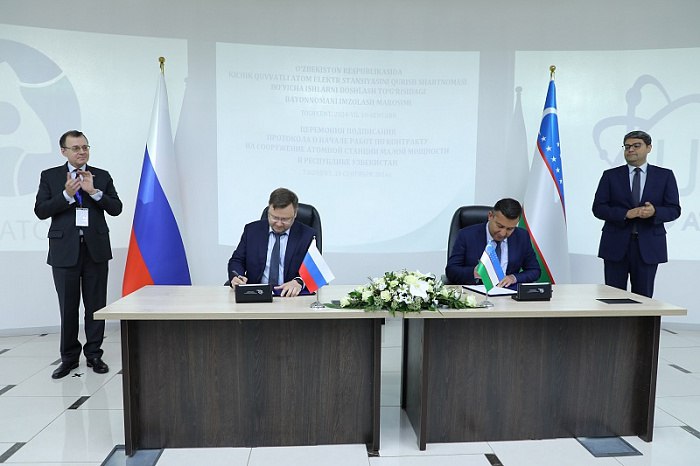
On September 10, Atomstroyexport, the engineering subdivision of Russia’s Rosatom State Corporation, and Uzbekistan’s Atomic Energy Agency signed a protocol on the commencement of works for the future low-power nuclear power plant (NPP) in Uzbekistan.

Pavel Bezrukov, Atomstroyexport’s Director for NPP Construction Projects in Central Asia, commented that according to the protocol, Atomstroyexport will begin the documentation process for obtaining the required licenses.

Otabek Amanov, Director of the NPP Construction Directorate at the Uzbek Atomic Energy Agency, added that the signing of the protocol “marks the transition to active work for implementation of the first low-power NPP project in Uzbekistan and will allow starting works at the construction site in the nearest future.”

Late in August, work began to construct a residential settlement for builders of the future NPP.

On May 27, Uzbekistan and Rosatom signed a contract to construct a 330 MW Russian-design low-power NPP in the Jizzakh region of Uzbekistan (6 reactors of 55 MW each). Atomstroyexport JSC is the project’s general contractor.

As natural gas reserves deplete and production decreases in Uzbekistan, the country strives to build new power-generating facilities, with a focus on renewable energy sources such as wind and solar power. The future nuclear plant, the first of its kind in Central Asia, is expected to help resolve the problem of Uzbekistan’s power shortages amid forecasts that the country’s demand for electricity will almost double by 2050.

Neighboring Kazakhstan will hold a nationwide referendum on October 6 on whether to build its first nuclear power plant. The Kazakh government insists that building a nuclear power plant will help solve the problem of electricity shortages by 2030.

Kazakhstan Launches National Board Game Into Space

The Kazakh pastime “Togyzkumalak” has become the first board game to travel into space. Its launch was organized to promote the 2024 edition of the World Nomad Games, which are currently being held in Astana.

Togyzkumalak is one of the oldest Kazakh board games, with a history dating back about 4,000 years. The game is played by two players, who start with 81 stones. Their goal is to “capture” their opponent’s stones, and place them into a “cauldron”.

On September 9 Togyzkumalak was played for the first time at the Nomad Games. The Togyzkumalak tournament has 114 competitors from 41 countries, including Colombia, Bangladesh, the UK, France, Germany, the USA, China, and others.

In 2020 Togyzkumalak was included in UNESCO’s list of intangible cultural heritage, emphasizing its cultural significance for Kazakhstan and other Turkic peoples.

After a successful launch, the board was eventually returned to Earth.

Vietnamese Company to Modernize Regional Airports in Kazakhstan

The Sovico Group, a leading investment conglomerate in Vietnam, is to modernize and further develop the infrastructure of Kazakhstan’s Turkestan and Kyzylorda airports.
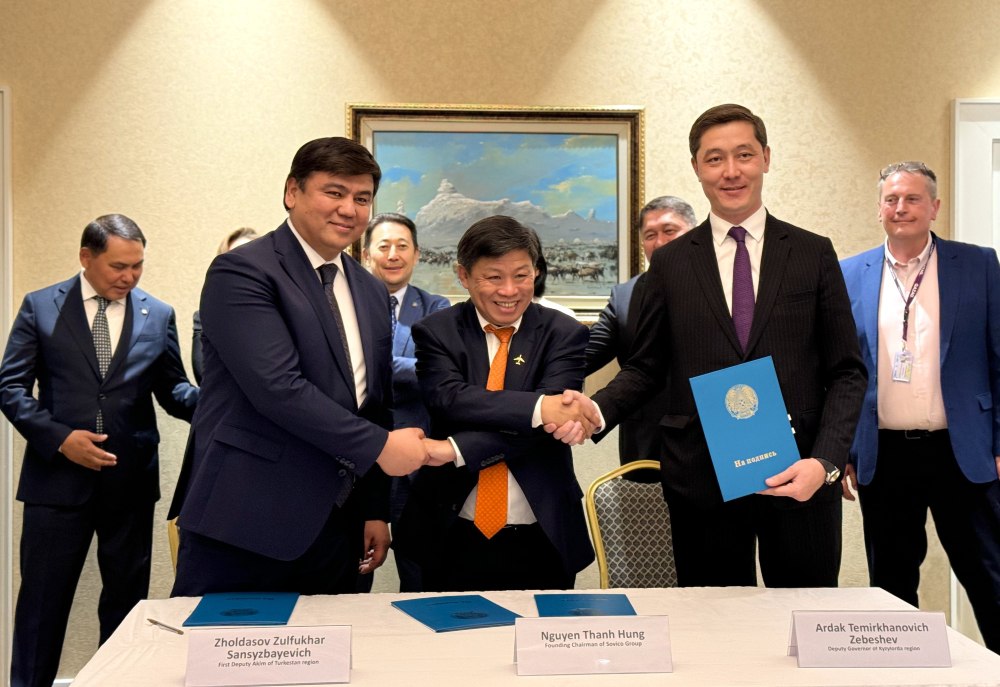
As reported by Kazakh Invest, the deal was confirmed in a Memorandum of Cooperation, signed in Astana between Sovico Group Chairman Dr. Nguyen Thanh Hung and Deputy Governors of Turkestan and Kyzylorda regions.

The Chairman of Sovico announced plans to increase the frequency of flights from Vietnam to Kazakhstan, as well as the group’s potential development of Kazakhstan’s trade and logistics potential, particularly at the Khorgos hub on the Kazakh-Chinese border.  The latter follows discussions with Kazakhstan President Kassym-Jomart Tokayev back in May, during which Nguyen Thanh Hung announced his company’s interest in taking control of several airports and investing in logistics warehouses for the storage of goods produced in Vietnam and ASEAN countries for subsequent sale in Kazakhstan, Central Asian countries, the EAEU, and Europe.

The Sovico Group has also announced plans to acquire Qazaq Air for the sum of approximately $4.2 million by the end of September 2024;  a move described by President Tokayev in July, as a demonstration of the Vietnamese conglomerate’s ambitious plans to develop civil aviation in Kazakhstan and the region.
In a country where rail is the main means of transport,  the development of regional airports and domestic flights will have a significant impact on the passage of both cargo and people.