• KGS/USD = 0.01144 0%
  • KZT/USD = 0.00196 -0%
  • TJS/USD = 0.10899 0%
  • UZS/USD = 0.00008 0%
  • TMT/USD = 0.28571 0.28%
  • KGS/USD = 0.01144 0%
  • KZT/USD = 0.00196 -0%
  • TJS/USD = 0.10899 0%
  • UZS/USD = 0.00008 0%
  • TMT/USD = 0.28571 0.28%
  • KGS/USD = 0.01144 0%
  • KZT/USD = 0.00196 -0%
  • TJS/USD = 0.10899 0%
  • UZS/USD = 0.00008 0%
  • TMT/USD = 0.28571 0.28%
  • KGS/USD = 0.01144 0%
  • KZT/USD = 0.00196 -0%
  • TJS/USD = 0.10899 0%
  • UZS/USD = 0.00008 0%
  • TMT/USD = 0.28571 0.28%
  • KGS/USD = 0.01144 0%
  • KZT/USD = 0.00196 -0%
  • TJS/USD = 0.10899 0%
  • UZS/USD = 0.00008 0%
  • TMT/USD = 0.28571 0.28%
  • KGS/USD = 0.01144 0%
  • KZT/USD = 0.00196 -0%
  • TJS/USD = 0.10899 0%
  • UZS/USD = 0.00008 0%
  • TMT/USD = 0.28571 0.28%
  • KGS/USD = 0.01144 0%
  • KZT/USD = 0.00196 -0%
  • TJS/USD = 0.10899 0%
  • UZS/USD = 0.00008 0%
  • TMT/USD = 0.28571 0.28%
  • KGS/USD = 0.01144 0%
  • KZT/USD = 0.00196 -0%
  • TJS/USD = 0.10899 0%
  • UZS/USD = 0.00008 0%
  • TMT/USD = 0.28571 0.28%
09 December 2025

Restoration of Kyrgyzstan’s Largest Hydropower Plant Nears Completion

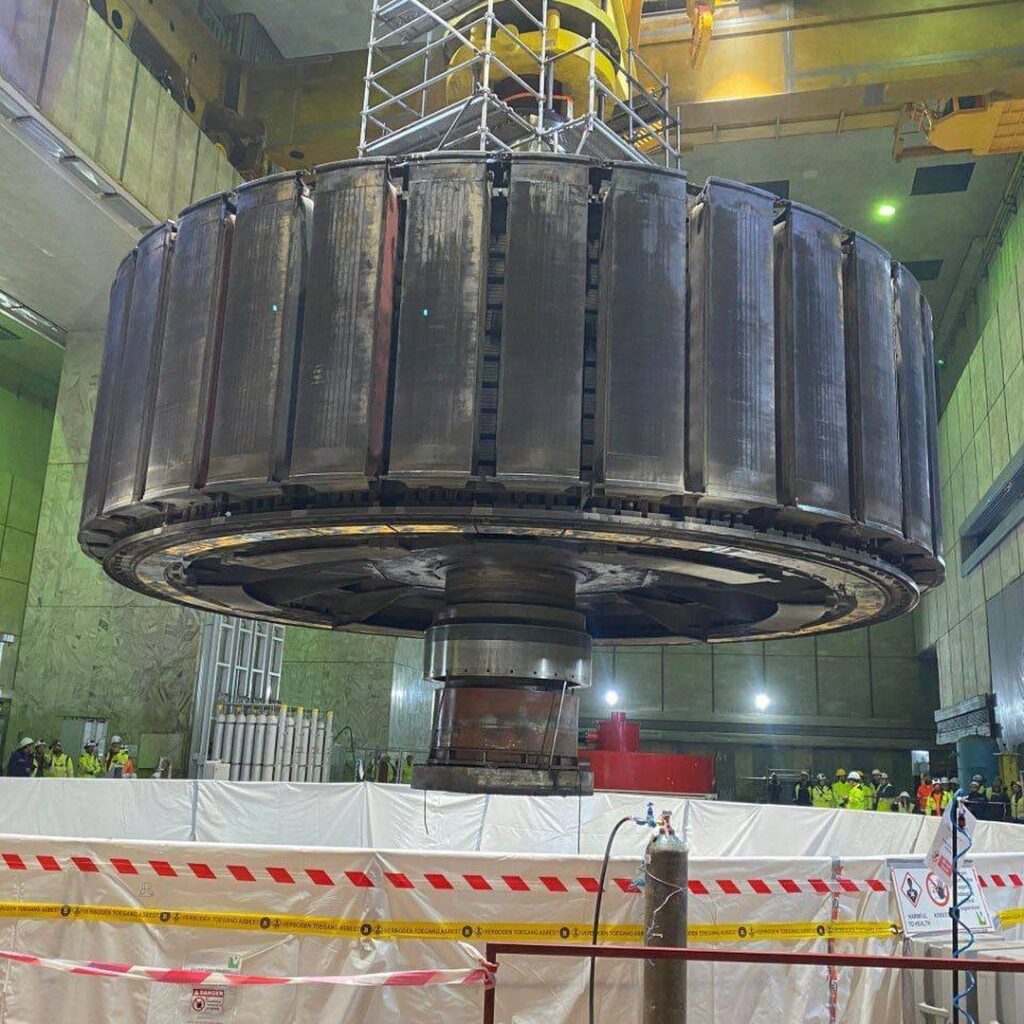
According to Kyrgyzstan’s Ministry of Energy, the modernization of the country’s largest hydropower plant, Toktogul HPP, which began in March, is now 80% complete.

Located on the Naryn River, the Toktogul HPP comprises four hydroelectric units and with a total generating capacity of 1320 MW, provides about 40% of the country’s electricity.

The rotor at the hydro unit No. 1 has been assembled and installed and when fully modernized later in 2024, the service life of the Toktogul HPP will increase by 25-30 years, ensuring a reliable and uninterrupted power supply in autumn-winter and increase the power plant’s generating capacity by 60 MW to 1380 MW.

In recent years, since Kyrgyzstan has been unable to produce enough electricity to meet the growing demand, electricity has been imported from neighboring countries. In 2023, the volume of imported electricity  amounted to 3.2 billion kWh. and  Kyrgyz Minister of Energy Taalaibek Ibrayev reported that in the first half of 2024, Kyrgyzstan imported 2.02 billion kWh of electricity, including 909.8 million kWh from Russia and Kazakhstan, 837.5 million kWh from Turkmenistan, and 275.3 million kWh from Uzbekistan.

During the first half of this year, Kyrgyzstan produced 7.07 billion kWh of electricity, including 6.2 billion kWh generated by hydroelectric power plants and 870 million kWh by thermal (coal-fired) power plants.

In addition to updating its current facilities, the Ministry of Energy has committed to the construction of the Kambarata-1 HPP which destined to become Central Asia’s largest hydroelectric power plant, aims to end Kyrgyzstan’s power shortages.

Confident in the success of such measures, Chairman of the Kyrgyz Cabinet of Ministers, Akylbek Japarov, has announced that Kyrgyzstan will become both energy-sufficient and in a position to begin exporting electricity by 2026.
Three Hydraulic Units at Tajikistan’s Kairakkum Hydropower Plant Launched After Modernization

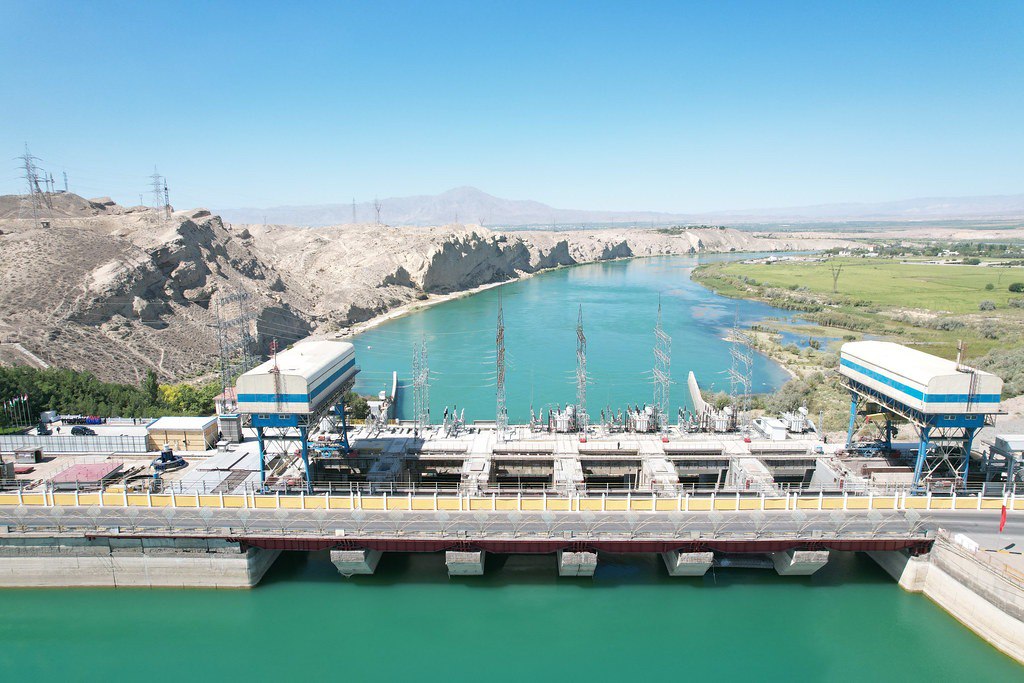
On September 7, three of the six power-generating units were put into operation after modernization at the Kairakkum hydropower plant (HPP) in the city of Guliston in Tajikistan’s northern Sughd region.

Located on the Syr-Darya River, the Kairakkum HPP consists of six hydropower units, the last of which was commissioned in 1957 and has a design capacity of 21 MW.

A project to modernize the aging plant was launched in August 2019. Over the past five years, hydro units Nos. 4, 5, and 6 have been completely renovated, and their capacity has increased from 19 to 29 MW.

The power plant’s dam has been reinforced as part of the project. Currently, work is ongoing on rehabilitating hydro units No. 2 and 3.

After the complete modernization planned for 2026, the average annual electricity production at the Kairakkum HPP will increase from 580 million kWh to 850 million kWh.

It was earlier reported that the Kairakkum HPP rehabilitation project received $196 million in financing from the European Bank for Reconstruction and Development (EBRD), Green Climate Fund (GCF), Climate Investment Funds, and European Investment Bank (EIB). The financing comprised a $88 million EBRD loan, a $37 million EIB loan, a $50 million GCF loan and grant, and a $21 million Climate Investment Funds loan.

In recent years, Tajikistan, which has abundant hydroenergy resources, has focused on hydropower generation projects — the largest of which is the construction of the giant Rogun dam — to solve the problem of chronic power shortages and begin electricity exports to neighbors in the region.

inDrive Poised to Open University in Kazakhstan and Environmental Project in Almaty

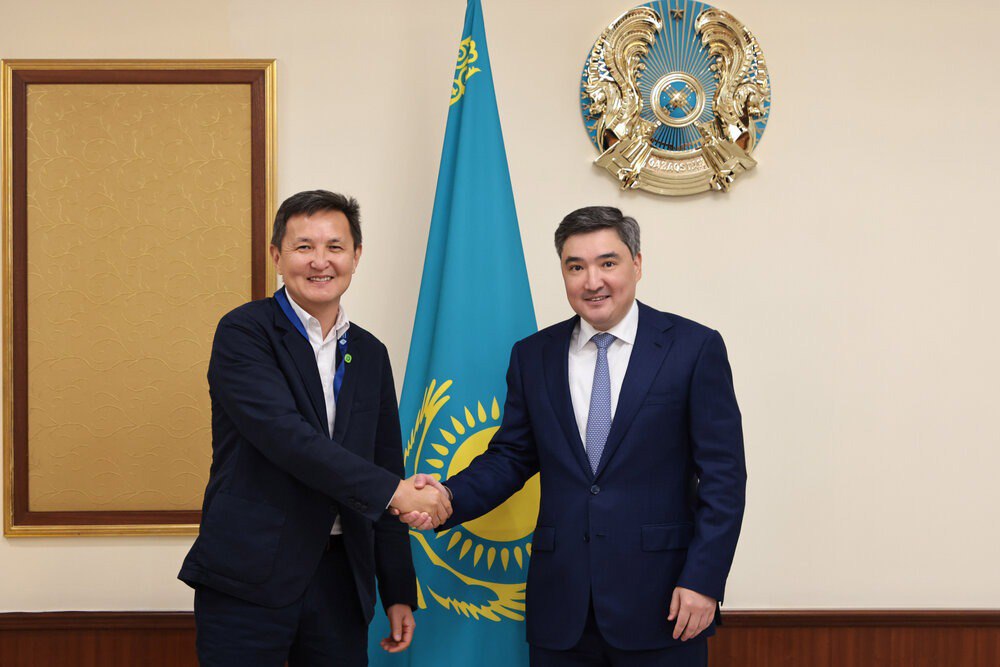
At a meeting on September 5 between Kazakhstan’s Prime Minister Olzhas Bektenov and Arsen Tomsky, Founder and CEO of inDrive, a California-based global transport and urban services platform, a proposal was mooted to open an “inVision U University” in Kazakhstan, providing training for 400 qualified specialists in IT, education, science, and art.

The Prime Minister also pledged support for the company’s plans to implement several environmental initiatives to improve air quality in megacities; the first of which will be implemented in Almaty.

Last year, in collaboration with Astana Hub and regional IT hubs, inDrive launched “Beginit”, a free international social leadership program across six regions in Kazakhstan to enable 10th-grade students to implement social projects from concept to realization.

Founded in 2013 in Yakutia, Russia, and incorporated in the U.S. in 2018, inDrive is now available in 749 cities in 46 countries. In 2021, its market value was estimated at $1.2 billion. In 2022, the company pulled out of Russia, and relocated to Almaty, Kazakhstan. In 2022 and again in 2023, inDrive was the second most downloaded ride-hailing app worldwide based on Google Play and App Store data. In addition to rides, inDrive offers a growing list of urban services, including intercity and freight transportation, handyman calls and courier delivery.

In December 2023, Kazakh media reported that Arsen Tomsky had obtained Kazakhstani citizenship.

Video Highlights: World Nomad Games Day One – Ethnoaul and Horseback Archery

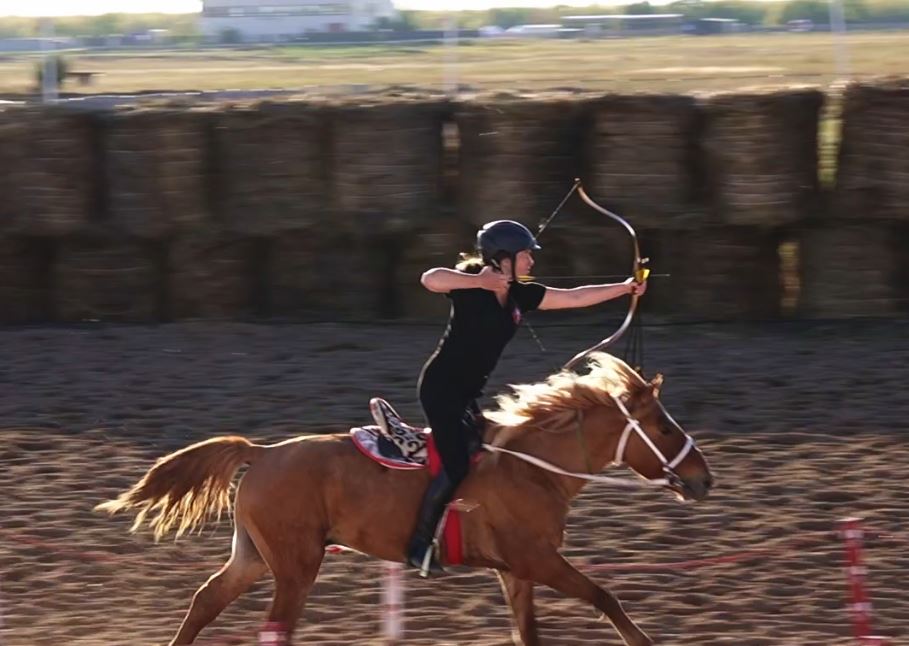
On September 8, TCA was across events at the 5th World Nomad Games in Astana, themed as the “Gathering of the Great Steppe.” Whilst with much pageantry, the Astana Arena hosted the opening ceremony, further south in the capital, the Ethnoaul saw the first competition of the Games take place, the Hungarian Style Horseback Archery. TCA was in attendance as France’s Raphael Malet. took gold, silver went to Mongolia’s Altankhuyag Nergui, and bronze to France’s Gaëtan Blot.

World Nomad Games Opening Ceremony: A Fusion of the Ancient and the Modern

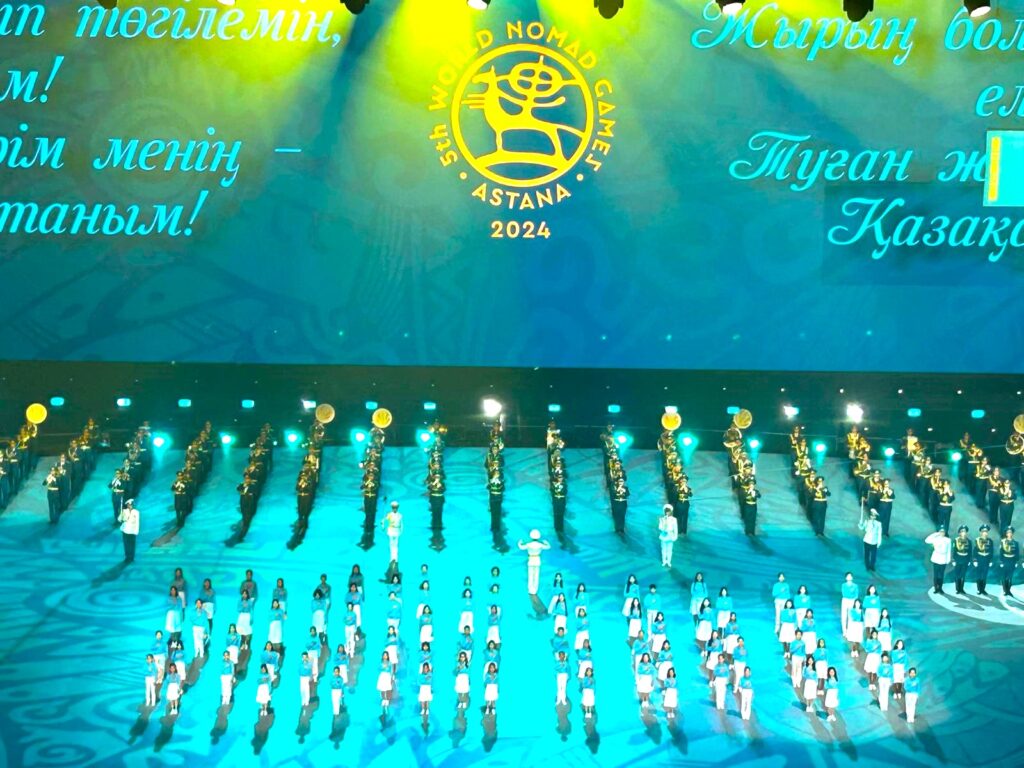
With much pageantry, September 8 saw Astana host the opening ceremony of the 5th World Nomad Games, themed as the “Gathering of the Great Steppe.” A procession of singers and dancers in tall white telpek hats and flowing red and gold robes opened proceedings, marrying modern beats to traditional music. This fusion of the ancient and the present was a key theme running through the entire event.

With the melodies building to crescendo, the flag-waving crowd lifted their torches aloft, chanting “Kazakhstan,” before the national anthem peeled out from the stage.

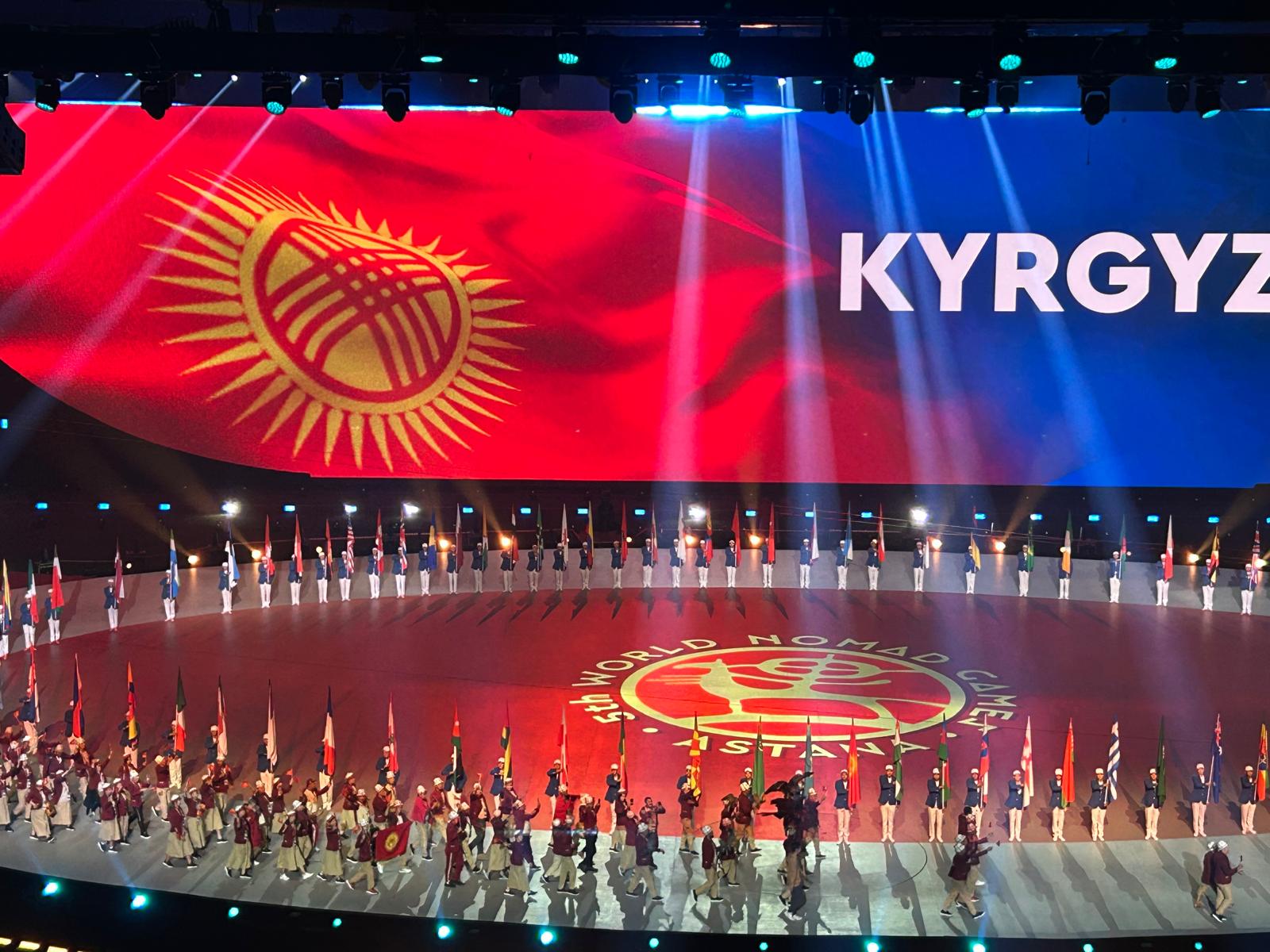
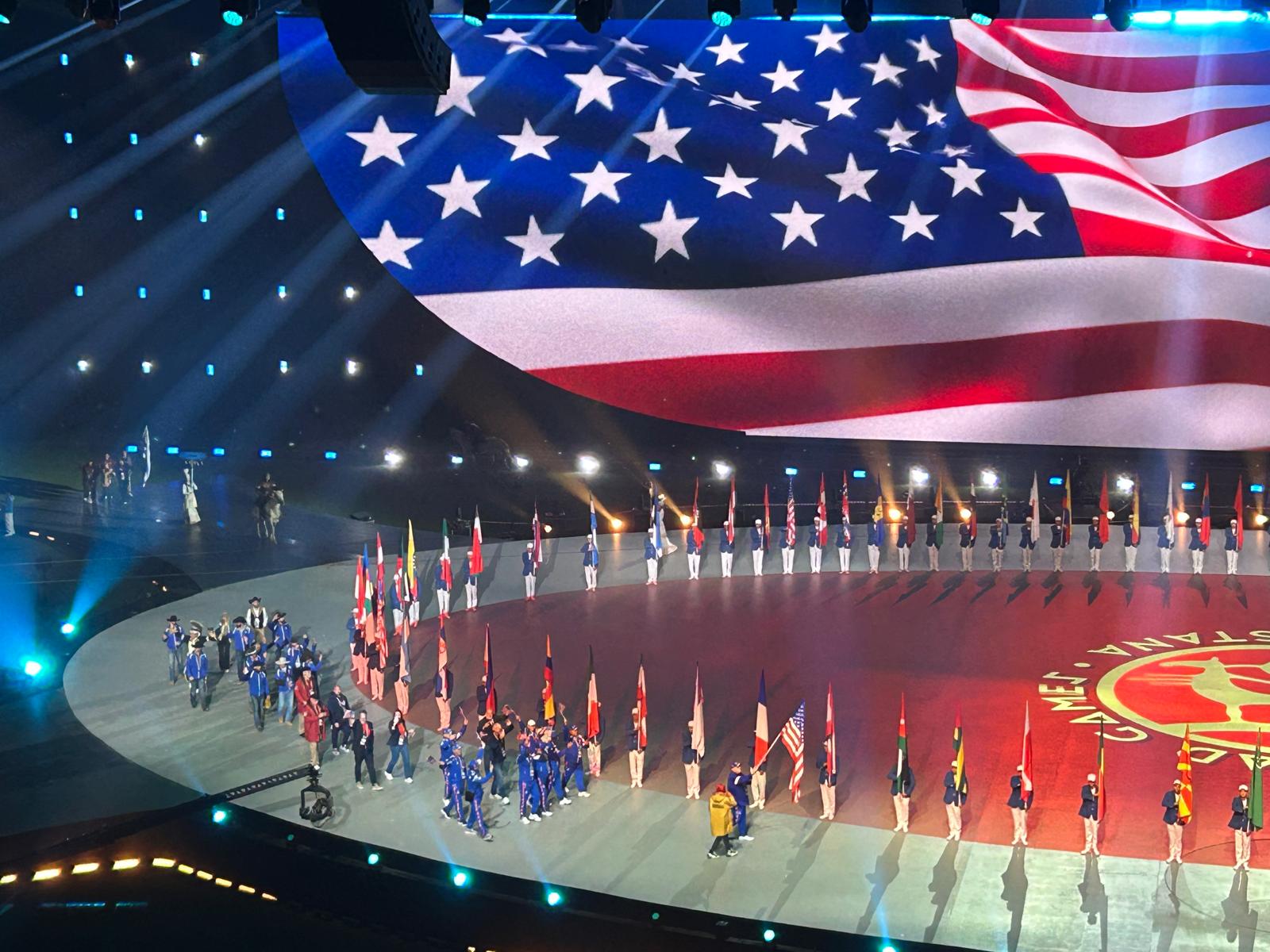
With 89 countries participating in this edition, the parade of athletes followed, each nation led forth by a white steed and a woman in a traditional, sparkling costume. From the hundreds representing the Kyrgyz Republic – a perennial champion at the World Nomad Games – to far smaller contingents, such as the three representatives from Benin, each nation was afforded their moment in the spotlight. Last, but far from least, the athletes from Kazakhstan emerged to a huge roar of appreciation.

Taking to the podium with the keynote address, President Tokayev told the crowd Kazakhstan is “known to everyone as a land of peace and coexistence. The games, he stated, are a “great event on a global scale… Nomadic civilization has left a deep mark on world history. The new technologies they developed provided the impetus for global progress. Five thousand years ago, nomads domesticated the horse and shaped a horseback riding culture that spread across the world… Serving as a bridge between East and West, nomads played a crucial role in the rapprochement of various cultures.

“The great nomadic life will never cease to exist,” Tokayev concluded. “Even amid globalization, the nomadic lifestyle that existed for a thousand years is reviving and taking a new shape. Modern nomads are making efforts to reclaim a central place in history. We are moving and traveling easily all over the world in search of education and job opportunities.”

First Deputy Prime Minister, Roman Sklyar took the opportunity to emphasize that in the wake of unprecedented floods, the nation had grasped this moment to show “resilience in our commitment to our traditions.” Respect and solidarity were at the core of his address, whilst without naming specific conflicts which continue to cast a long shadow over the region, Skylar stated that there can be “no peace without unity.”

Specifically mentioning the conflict in Gaza, the son of Turkey’s President, Bilal Erdogan, President of the World Ethnosport Confederation echoed these sentiments, remarking that the games represent the “bonds of unity that the world needs today more than ever.”

Also in attendance at the event hosted by President Tokayev were the President Mirziyoyev of Uzbekistan, President Japarov of the Kyrgyz Republic, Gurbanguly Berdimuhamedov, the Chairman of the People’s Council of Turkmenistan, the Rais (Head) of Tatarstan, Rustam Minnikhanov, the Head of the Republic of Sakha (Yakutia), Aisen Nikolayev, and the former president of Mongolia, Nambaryn Enkhbayar.

Dazzling visuals marked the end of the ceremony, as trapeze artists pirouetted through the air, Dimash Qudaibergen serenaded the audience, and wolves, camels and eagles took center stage.

Preparations for World Nomad Games in Full Swing

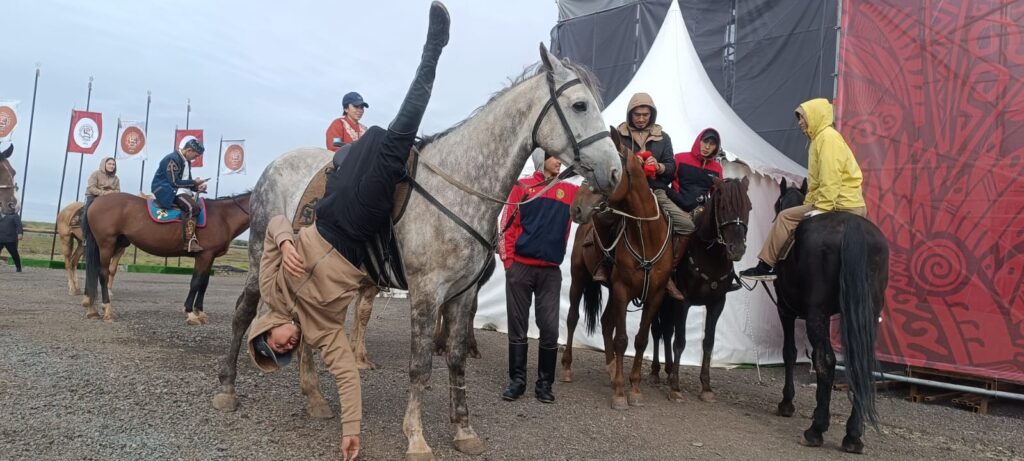
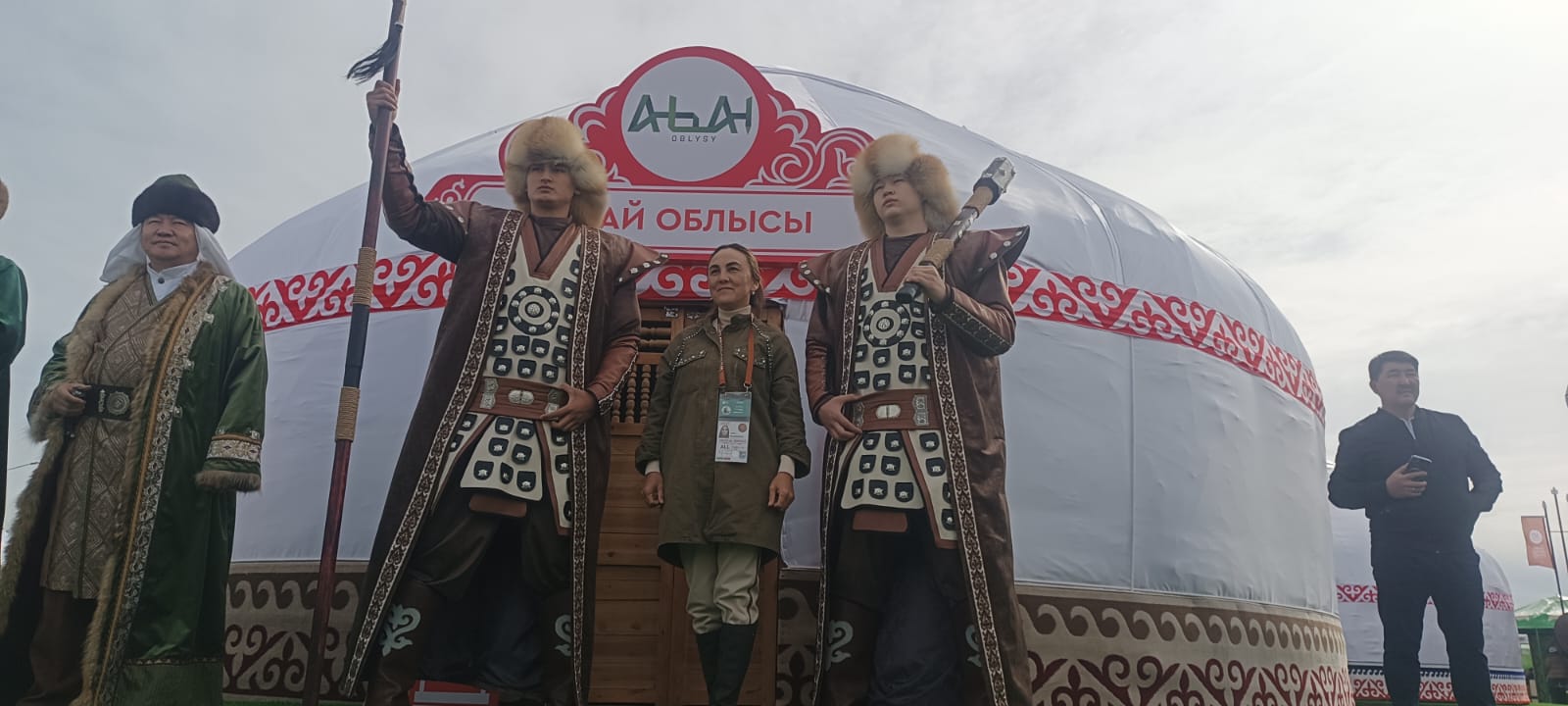
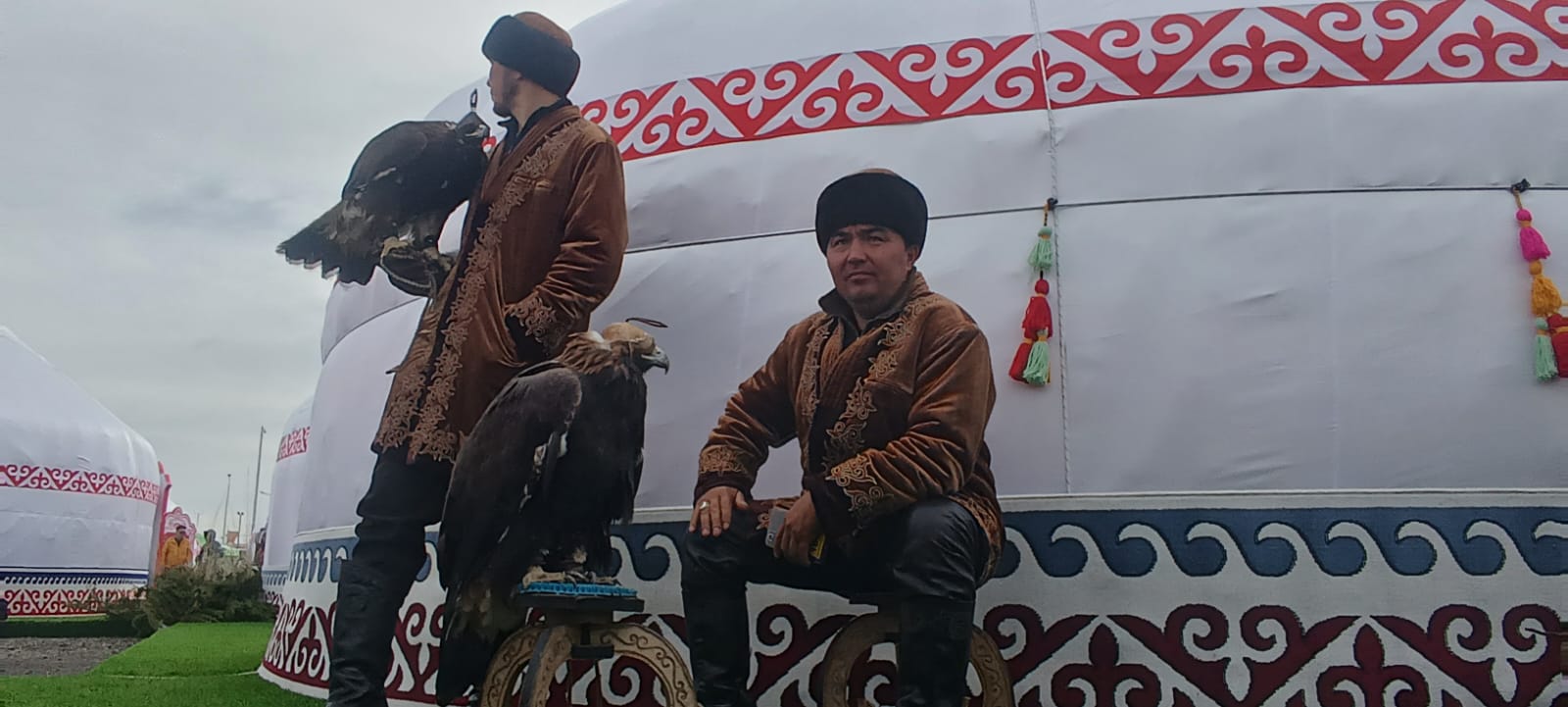
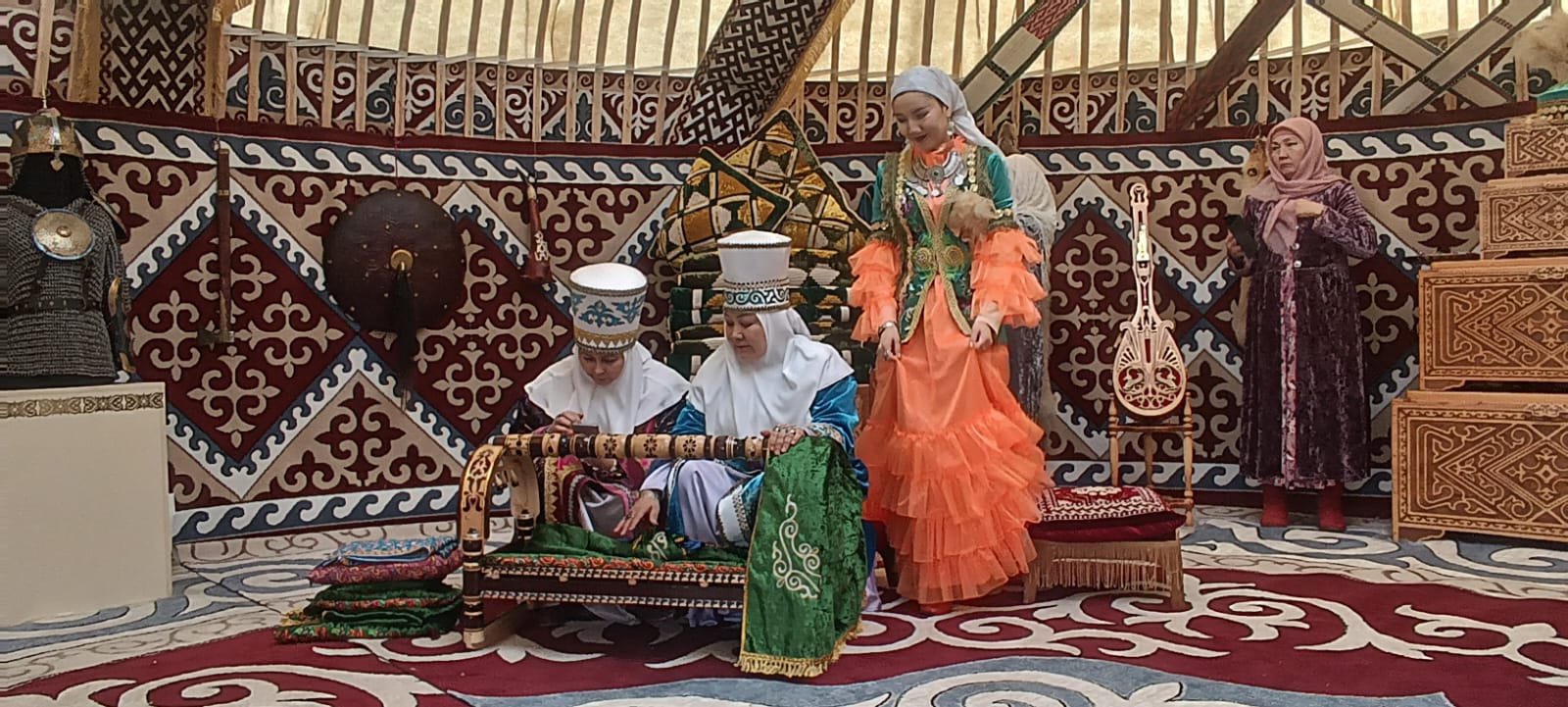
The excitement is palpable as the World Nomad Games draw near, with preparations reaching their peak. In the heart of Kazakhstan, the Ethnoaul village has transformed into a vibrant hub of cultural celebration, with 17 regions proudly showcasing their heritage through the erection of traditional yurts. These structures not only serve as a testament to Kazakhstan’s rich nomadic history but also as a welcoming space for visitors to experience the warmth of Kazakh hospitality.

Image: Ilyas Otan

The village is buzzing with activity as skilled craftsmen display their intricate handiwork, from ornate textiles to beautifully crafted jewelry, each piece telling a story of cultural legacies. Artists are bringing the village to life with vibrant performances and exhibitions, while chefs are preparing to tantalize the taste buds of attendees with traditional Kazakh cuisine, offering a culinary journey through the diverse flavors of the region.

Image: Ilyas Otan

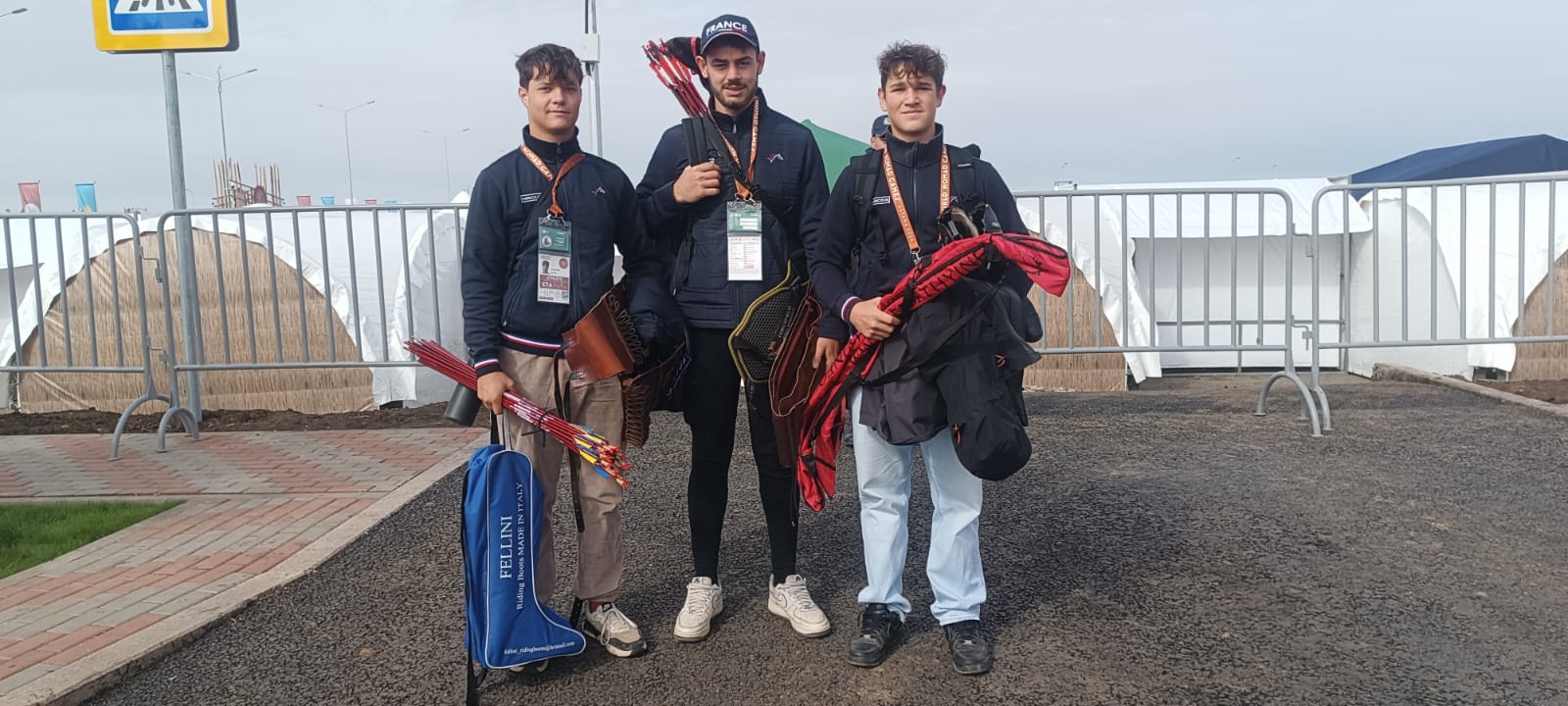
Athletes, musicians, and performers from all corners of the globe have descended upon the village, each bringing their unique flair to the games. Among them, TCA met enthusiastic archers from France and Poland, whose passion for the sport is matched only by their eagerness to engage with fellow competitors and share in the cultural exchange that the games foster.

Image: Ilyas Otan

Nature has its own plans, however, with forecasts predicting rain, casting a shadow over the festivities. Yet, the spirit of the participants remains undampened, as they view the challenge as an opportunity to unite under a common cause, demonstrating their resilience and camaraderie.

Image: Ilyas Otan