• KGS/USD = 0.01144 0%
  • KZT/USD = 0.00194 -0%
  • TJS/USD = 0.10844 -0.46%
  • UZS/USD = 0.00008 0%
  • TMT/USD = 0.28571 0.28%
  • KGS/USD = 0.01144 0%
  • KZT/USD = 0.00194 -0%
  • TJS/USD = 0.10844 -0.46%
  • UZS/USD = 0.00008 0%
  • TMT/USD = 0.28571 0.28%
  • KGS/USD = 0.01144 0%
  • KZT/USD = 0.00194 -0%
  • TJS/USD = 0.10844 -0.46%
  • UZS/USD = 0.00008 0%
  • TMT/USD = 0.28571 0.28%
  • KGS/USD = 0.01144 0%
  • KZT/USD = 0.00194 -0%
  • TJS/USD = 0.10844 -0.46%
  • UZS/USD = 0.00008 0%
  • TMT/USD = 0.28571 0.28%
  • KGS/USD = 0.01144 0%
  • KZT/USD = 0.00194 -0%
  • TJS/USD = 0.10844 -0.46%
  • UZS/USD = 0.00008 0%
  • TMT/USD = 0.28571 0.28%
  • KGS/USD = 0.01144 0%
  • KZT/USD = 0.00194 -0%
  • TJS/USD = 0.10844 -0.46%
  • UZS/USD = 0.00008 0%
  • TMT/USD = 0.28571 0.28%
  • KGS/USD = 0.01144 0%
  • KZT/USD = 0.00194 -0%
  • TJS/USD = 0.10844 -0.46%
  • UZS/USD = 0.00008 0%
  • TMT/USD = 0.28571 0.28%
  • KGS/USD = 0.01144 0%
  • KZT/USD = 0.00194 -0%
  • TJS/USD = 0.10844 -0.46%
  • UZS/USD = 0.00008 0%
  • TMT/USD = 0.28571 0.28%
09 December 2025

Turkmenistan Celebrates Caspian Sea Day

The Caspian Sea Day is currently being celebrated in a series of festive events in Turkmenistan’s national tourist zone, Avaza,

With a key focus on environmental awareness, specialists from the Nature Protection Society of Turkmenistan have organized a programme of educational activities in schools and public spaces to instil in children, a love and respect for nature, encourage them to live in harmony with the environment, and develop a strong sense of responsibility for nature conservation.

As part of the Caspian Day celebrations, the Society has conducted creative contests on environmental themes, exhibitions demonstrating the beauty of nature, photo contests, and cultural and sports competitions dedicated to the flora and fauna of the Caspian Sea.

In addition to the above, Turkmenistan has organized international conferences, scientific meetings, and environmental events, with special attention paid to protecting the marine environment, preserving the unique ecosystem of the Caspian Sea, and developing regional cooperation.

President Serdar Berdimuhamedov of Turkmenistan has consistently advocated turning the Caspian Sea into a zone of peace, trust, and ecological well-being, and is actively involved in developing trade, economic, and socio-cultural ties in the region.

The Caspian Day on August 12 – a date chosen in connection with the instigation of the Framework Convention on the Protection of the Caspian Sea and the Environment from Pollution – has been celebrated annually since 2006, by the five Caspian littoral states: Kazakhstan, Azerbaijan, Iran, Russia, and Turkmenistan.


Kyrgyzstan Establishes Center for “Information Security”

Kyrgyzstan has created the Information Environment Research Center (IERC), which will be part of the Ministry of Culture, Information, Sports, and Youth Policy; its main task is to monitor and analyze the country’s information space in order to protect citizens’ rights and freedoms and prevent the spread of misinformation and inaccurate information.

The Center will identify and block illegal content on the internet and in the media and cooperate with the administrations of major social networks such as Facebook, Google, and TikTok. It will monitor compliance with legislation in the information sphere and provide recommendations on improving the information environment in Kyrgyzstan.

The establishment of the Center is part of the state strategy to strengthen information security and control the observance of citizens’ rights in the media space.

Earlier, we reported that a unified TV channel and a regional media platform could appear in Central Asia, which would become important elements in strengthening information security and cultural exchange in the region. This year, Central Asia, and Kazakhstan in particular, has been the subject of swathes on disinformation on the internet. However, independent media in Kyrgyzstan has been the target of repression by the authorities, which UN Special Rapporteurs have denounced.

Central Asia’s Olympic Performance: A Regional Overview

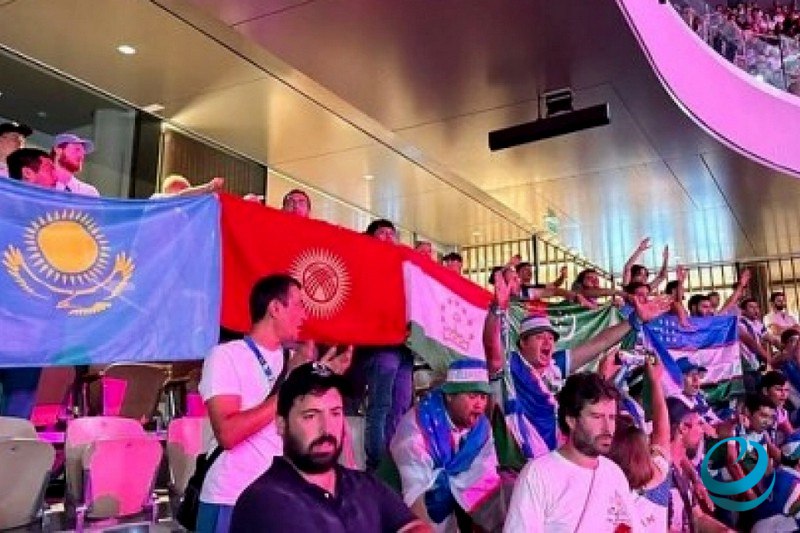
On their return home from the Olympic Games in Paris, the Times of Central Asia reported a sense of regional unity as athletes from Uzbekistan, Turkmenistan, Tajikistan, Kyrgyzstan, and Kazakhstan celebrated each other’s victories.

Uzbekistan won 13 medals, including eight golds, two silvers, and three bronzes, placing it top amongst Central Asian countries, and in 13th place of the 206 countries on the medals table .

The National Olympic Committee of Uzbekistan announced that the equivalent of $5,804,108 had been allocated in the first three months of this year to prepare for the Paris-2024 Olympic Games. Rewards for its medalists were also generous. Gold medalists were awarded $200,000, Chevrolet Tahoes, and two-story cottages, while their coaches received $50,000 each. The silver and bronze medalists received  cash prizes of $100,000 and $50,000, respectively, along with BYD Song Plus cars and apartments as a “President’s Gift”, whilst their coaches received $25,000 for silver, and $12,500, for bronze.

According to the Ministry of Tourism and Sports of the Republic of Kazakhstan, the equivalent of $13,551,603 was invested in preparing the national team for the Olympics. Kazakh Olympic champions received $250,000 for gold, $150,000 for silver, and $75,000 for bronze, and with one gold, three silver, and three bronze, Kazakhstan finished 43rd overall.

Kyrgyzstan allocated $3,220,140 for training its athletes and awarded silver medal winners with $83,000, and bronze medal winners with $60,000. Bringing home two silver and four bronze medals, the Kyrgyz national team was placed 68th overall.

With three bronze medals, for which each athlete received $4,500, Tajikistan took 79th place. Unfortunately, despite the participation of six athletes, Turkmenistan failed to win any medals. Details concerning funding for the Tajikistan and Turkmenistan’s teams have not been disclosed.


Nazarbayev’s Nephew Returns $1.6 Billion to Kazakhstan Following Embezzlement Conviction

Kazakhstan’s Anti-Corruption Service has completed an investigation into the case of Kairat Satybaldyuly, the nephew of former president Nursultan Nazarbayev. Following the investigation, around 733 billion KZT ($1.6 billion) worth of assets have been returned to the state.

In September 2022, Satybaldyuly was sentenced to six years in prison for embezzling funds, and causing damage to companies such as Kazakhtelecom and CTC. In 2023, the investigation was expanded to look into into other crimes that he committed. The full investigation revealed numerous cases of legalization of illegal income and evasion of customs duties.

Satybaldyuly pleaded guilty and cooperated with the investigation, allowing the return of assets in Kazakhstan and abroad.

Most assets were found in Austria, Liechtenstein, the UAE, and Turkey. The recovered assets included 28.8% of shares of the national telecom operator Kazakhtelecom, assets of CTC JSC, and stakes in four companies.

The state has also recovered 115 real estate objects in Kazakhstan, including buildings, apartments, and land plots. The returned assets include luxury real estate and jewellery confiscated in various countries.

Greek Reports: Captain of Boat Carrying Kazakhs Says Hydra Fire Was His Fault

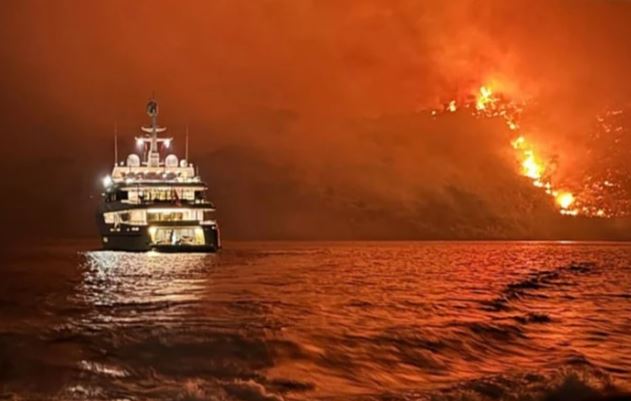
The captain of a luxury boat that was carrying Kazakh tourists when it was linked to a forest fire on the Greek tourist island of Hydra in June has taken responsibility for the blaze, according to Greek media.

While some circumstances surrounding the fire remain unclear, the statement by the captain undercuts suspicion that initially fell on the group of tourists including Daniyar Abulgazin, who has shares in multiple Kazakh companies and is one of Kazakhstan’s wealthiest business executives. Abulgazin, who rented the boat, had denied wrongdoing in connection with the fire and said he had left Greece as previously scheduled on June 22 after speaking with “representatives of the Greek authorities.”

The captain, who is in detention and faces arson charges, said he launched fireworks, one of which landed in the forest and started the wildfire, protothema.gr reported last week. The acknowledgement reversed his earlier account that no fireworks were set off from the vessel. The Greek media outlet did not identify the captain.

A dozen other crewmembers were arrested after the fire. Most were released on bail. Prosecutors also filed charges of complicity in arson against the Kazakh passengers, Greek media have said. But the captain’s new testimony, delivered early this month, exonerates “the other crew members and the foreign multimillionaire charterers of the yacht,” ekathimerini.com reported.

Abulgazin had referred to “incorrect and misleading” media reports, expressing regret about the fire and promising to cooperate with the Greek investigation.

World Bank Considers Loan for Tajikistan’s Rogun Hydropower Plant

Tajikistan’s Deputy Minister for Finance, Yusuf Majidi, has announced that the World Bank will consider financing the development of the Rogun hydroelectric power plant. According to him, the bank can allocate $650 million for this project in September this year.

$250 million has been allocated as preferential loans; starting in 2025, the station’s construction will be financed by other investments. Majidi specified that the construction of the hydroelectric power plant (HPP) is also financed by the Islamic Development Bank and Arab funds; according to preliminary data, this is about $550 million.

When the Rogun HPP reaches full capacity, about 70% of the electricity produced will be exported to other Central Asian countries. According to the Eurasian Fund for Stabilization and Development (EFSD), financing the Rogun HPP is one of the main risks to Tajikistan’s budget and debt sustainability. The EFSD notes that a possible increase in the cost of hydropower construction could reduce funding for other critical infrastructure projects and social spending.

Rogun is located 110km from Dushanbe on the Vakhsh River, and is the largest in the region. Its construction began in 1976, but it was destroyed after the collapse of the USSR. Later, Tajikistan continued work on the construction of hydroelectric power plants at its own expense and with the help of international funds and organizations, and so far, two of the six units with a capacity of 600 MW provided for in the project have been put into operation. The third is scheduled for 2025.