• KGS/USD = 0.01144 0%
  • KZT/USD = 0.00195 -0%
  • TJS/USD = 0.10896 -0%
  • UZS/USD = 0.00008 0%
  • TMT/USD = 0.28571 0.28%
  • KGS/USD = 0.01144 0%
  • KZT/USD = 0.00195 -0%
  • TJS/USD = 0.10896 -0%
  • UZS/USD = 0.00008 0%
  • TMT/USD = 0.28571 0.28%
  • KGS/USD = 0.01144 0%
  • KZT/USD = 0.00195 -0%
  • TJS/USD = 0.10896 -0%
  • UZS/USD = 0.00008 0%
  • TMT/USD = 0.28571 0.28%
  • KGS/USD = 0.01144 0%
  • KZT/USD = 0.00195 -0%
  • TJS/USD = 0.10896 -0%
  • UZS/USD = 0.00008 0%
  • TMT/USD = 0.28571 0.28%
  • KGS/USD = 0.01144 0%
  • KZT/USD = 0.00195 -0%
  • TJS/USD = 0.10896 -0%
  • UZS/USD = 0.00008 0%
  • TMT/USD = 0.28571 0.28%
  • KGS/USD = 0.01144 0%
  • KZT/USD = 0.00195 -0%
  • TJS/USD = 0.10896 -0%
  • UZS/USD = 0.00008 0%
  • TMT/USD = 0.28571 0.28%
  • KGS/USD = 0.01144 0%
  • KZT/USD = 0.00195 -0%
  • TJS/USD = 0.10896 -0%
  • UZS/USD = 0.00008 0%
  • TMT/USD = 0.28571 0.28%
  • KGS/USD = 0.01144 0%
  • KZT/USD = 0.00195 -0%
  • TJS/USD = 0.10896 -0%
  • UZS/USD = 0.00008 0%
  • TMT/USD = 0.28571 0.28%
09 December 2025

Henley Passport Index 2024: Kazakhstan Again the Strongest Central Asian Passport

This year’s Henley Passport Index, a ranking that shows how many countries citizens of each country can visit without a visa, has been announced.

The rating is compiled using information from the International Air Transport Association. It covers 199 passports and 227 countries.

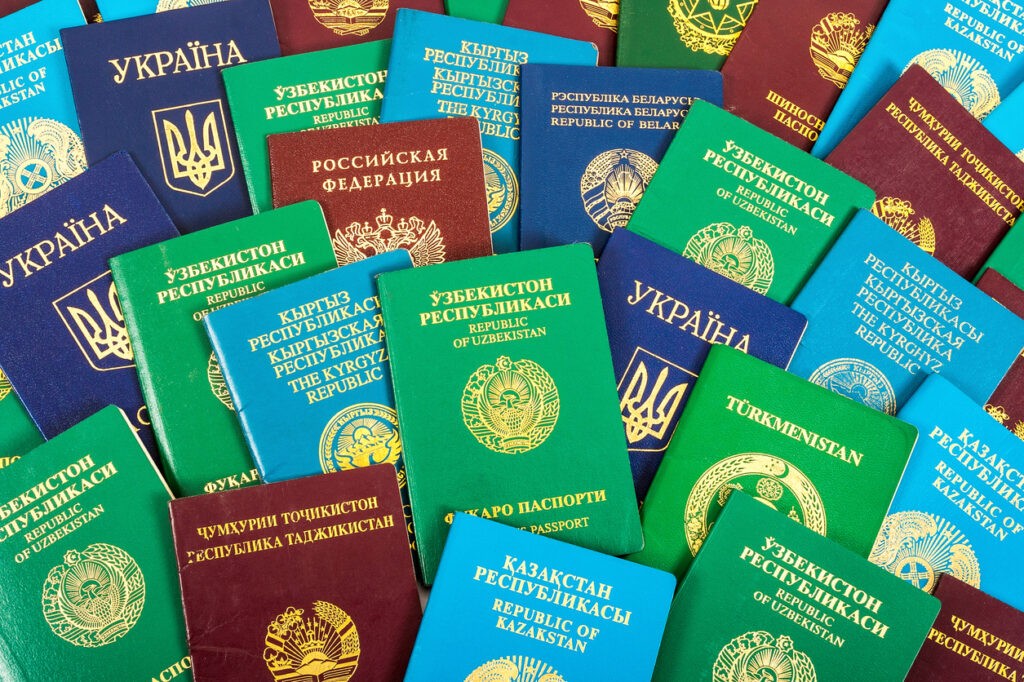
The Singaporean passport again takes first place in the rating. Singaporean citizens can visit 195 countries without a visa. In joint second place, able to freely enter 194 countries, are passport holders from France, Germany, Italy, Japan and Spain.

Kazakhstan ranks 67th in this year’s Index: holders of a Kazakhstani passport can enter 79 countries without a visa. Next in Central Asia is Kyrgyzstan, in 78th place, whose citizens can freely visit 65 countries. Uzbekistan is 79th in the ranking (64 countries), Tajikistan is 82nd (60), and Turkmenistan is 90th (52)

The world’s weakest passport is the Afghan passport. Citizens of Afghanistan can only visit 28 countries without a visa.
Chinese Company Plans to Produce Solar Panels in Tajikistan

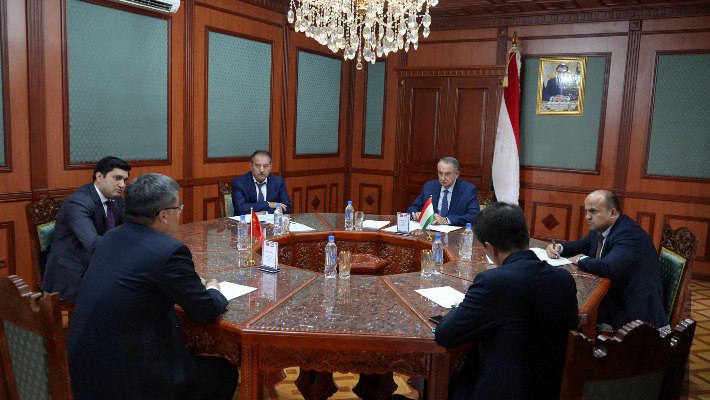
A Chinese company plans to set up an enterprise to produce solar panels in the south of Tajikistan. This was announced during a meeting between the head of the country’s Khatlon region, Davlatali Said, and Wang Hao, the general director of China’s Datang Corporation in Central Asia.

Wang Hao commented: “We intend to establish an industrial enterprise in the Khatlon region to produce solar panels. Our corporation has been on the Fortune Global 500 list for 14 consecutive years, which shows the result of our good work.”

Mr Said supported the proposal, noting that all issues would be resolved after visiting free economic zones and other regions in the country.

Head of Kazakhstan Football Federation Under Investigation by UEFA

UEFA is investigating Adilet Barmenkulov, the president of the Football Federation of Kazakhstan. In 2022, the businessman succeeded Adilbek Jaxybekov – who had been at the helm of football in Kazakhstan since 2018. “Adilet Barmenkulov is being investigated for knowing about match-fixing and doing nothing about it, suggesting that he had a vested interest in the matches or in favors owed to him by other officials,” Inside The Games reported. Barmenkulov posted a video statement on social media confirming that match-fixing had occurred in the past, but denying that the problem persists. Many prominent figures from the world of soccer have complained, stating that since he knew about it, Barmenkulov is responsible, whether through his actions or inaction.

“I agree that it is difficult to change the structure of a soccer club when past victories were achieved through questionable means,” Barmenkulov said in the video message. He argued, however, that leaders must act systemically rather than locally, and to bring order to soccer in the country it is necessary to act together, not on an ad hoc basis. Clubs must stop trying to bribe referees, he said, and “from now on, I will make corruption in soccer known and public”.

Inside The Games characterized Barmenkulov’s statement as “clearly indicating not only his awareness but also his inaction on the issue of foul play”. Earlier, Barmenkulov had been criticized by Kazakhs for hiring the Russian, Stanislav Cherchesov, as head coach of Kazakhstan’s national soccer team. Sources claim that Cherchesov, the former head coach of the Russian national team, will receive a salary of $1.2 million a year.

Large Bribes Being Extorted from Graduates of Foreign Universities in Turkmenistan

Turkmenistan citizens graduating from foreign universities, are currently required to undergo a complex process to have their  diplomas recognized in their home country.

A source in the Main Department of Education of Lebap told Radio Azatlyk that Turkmenistan citizens graduating  from pedagogical universities in CIS countries are obliged to enrol in a month-long advanced training course at the Pedagogical Institute in Turkmenabad to nostrify (recognize university qualifications) their diplomas and moreover, provide 17 references.

According to graduates, the process also involves the extortion of bribes.

Hakberdi, a Russian language teacher from Turkmenabad who underwent the diploma recognition process about five years ago, explained that the size of the bribe depends on the influential status of whoever is engaged to help. “From 2018 to 2019, the bribe could reach 10-15 thousand dollars. If you have an acquaintance in the ministry, the bribe will be smaller, but can rise if intermediaries are involved.”

In addition, when attempting to get their diplomas recognized, graduates can fall prey to fraudsters who promising help, take their money and disappear.

In parallel with the season of diploma nostrification, the process of submitting documents and sitting exams for admission to foreign universities continues. Exams are taken online and because of internet issues, this can create new problems.

“Since the speed of the Wi-Fi signal at home is inadequate,” reported a resident of Dianev, “applicants from across the districts gather at the Turkmentelecom internet cafe in Turkmenabad but there are not enough computers and often queues from 6 a.m.”

Russia Prepares Course for Central Asian Migrants on How to Assimilate

Russia has developed a course on how to adapt to the country for labor migrants from Central Asia. According to Igor Barinov, head of the Federal Agency for Nationalities of the Russian Federation, the course covers several topics. “This is primarily migration labor legislation, including the procedure for registration and filling out the relevant documents, as well as norms of behavior in Russian society,” he stated.

Kommersant notes that the course is comprised of lectures which lasts 70 minutes and is divided into four parts: “Fundamentals of Migration and Labor Legislation of the Russian Federation,” “Fundamentals of Informal Behavior in Russia,” “Responsibility for Non-compliance with Russian Legislation,” and “History of Relations between Russia and Central Asian Countries.” Cultural nuances discussed in the course include that addressing someone as “‘brother’ or ‘sister’ [is] not appropriate for communication with people who are not your relatives or close acquaintances”; “You should not discuss passers-by in your native language or whisper in your native language in the presence of other people”; “Women in Russia traditionally wear bright and revealing clothes, this is not reprehensible and corresponds to norms in Russia. These outfits are also not invitations for advances or a signal of readiness for dating”; “One should not make noises, whistle, or tsk, trying to attract the attention of a woman or man you like”; “In Russia, it is not customary to demonstrate an attitude towards any religion in public, perform religious rituals on the street, conduct namaz in public places, recite prayers, etc. Animal sacrifices are also unacceptable”.

It is reported that the main objective of the lectures is to reduce tension in the migration environment as well as increase the legal literacy of migrants so people know what can be done, what cannot be done, and what will result in punishment. Barinov stated that the “doors are open” for those who come to the Russian Federation to work as long as they comply with Russian legislation and integrate into the Russian legal system and cultural environment, adding that he believes this course will help facilitate the adaptation process.

Kazakhstan and Uzbekistan Set to Expand Economic Cooperation

On July 12, the 21st meeting of the Kazakh-Uzbek Intergovernmental Commission on Bilateral Cooperation was held in Almaty, co-chaired by the Prime Ministers of Kazakhstan and Uzbekistan, Olzhas Bektenov and Abdulla Aripov. As reported by the Kazakh prime minister’s press service, the parties exchanged views on their bilateral agenda ahead of the upcoming visit of Uzbekistan’s President Shavkat Mirziyoyev to Kazakhstan. The prime ministers discussed joint projects in trade, the economy, investment, water and energy sectors, transport, industry, agriculture, ecology, and digitization.

It was noted at the meeting that Kazakhstan and Uzbekistan account for 57% of all trade in Central Asia. Last year, the trade turnover between the two countries amounted to $4.5 billion; during the first four months of 2024, the figure exceeded $1.2 billion.

The industrial cooperation portfolio of Kazakhstan and Uzbekistan includes 69 projects worth $3.1 billion, which have created more than 14,000 jobs. Furthermore, twelve joint projects worth $217 million have been successfully implemented, creating another 4,500 jobs.

The ongoing construction of the International Center for Industrial Cooperation, “Central Asia,” in a border area between the Turkestan region of Kazakhstan and the Syr Darya region of Uzbekistan will create additional opportunities for joint projects.

Kazakh Prime Minister Bektenov emphasized that Uzbekistan is one of the largest trading partners of Kazakhstan, adding that the heads of the two states have set the task of increasing bilateral trade to $10 billion in the medium term.

Uzbek Prime Minister Aripov, meanwhile, stated that relations between Kazakhstan and Uzbekistan have rapidly developed in the spirit of strategic partnership in recent years. Still, he noted, there is enormous potential for their further strengthening.