• KGS/USD = 0.01144 0%
  • KZT/USD = 0.00196 -0%
  • TJS/USD = 0.10896 -0%
  • UZS/USD = 0.00008 0%
  • TMT/USD = 0.28571 0.28%
  • KGS/USD = 0.01144 0%
  • KZT/USD = 0.00196 -0%
  • TJS/USD = 0.10896 -0%
  • UZS/USD = 0.00008 0%
  • TMT/USD = 0.28571 0.28%
  • KGS/USD = 0.01144 0%
  • KZT/USD = 0.00196 -0%
  • TJS/USD = 0.10896 -0%
  • UZS/USD = 0.00008 0%
  • TMT/USD = 0.28571 0.28%
  • KGS/USD = 0.01144 0%
  • KZT/USD = 0.00196 -0%
  • TJS/USD = 0.10896 -0%
  • UZS/USD = 0.00008 0%
  • TMT/USD = 0.28571 0.28%
  • KGS/USD = 0.01144 0%
  • KZT/USD = 0.00196 -0%
  • TJS/USD = 0.10896 -0%
  • UZS/USD = 0.00008 0%
  • TMT/USD = 0.28571 0.28%
  • KGS/USD = 0.01144 0%
  • KZT/USD = 0.00196 -0%
  • TJS/USD = 0.10896 -0%
  • UZS/USD = 0.00008 0%
  • TMT/USD = 0.28571 0.28%
  • KGS/USD = 0.01144 0%
  • KZT/USD = 0.00196 -0%
  • TJS/USD = 0.10896 -0%
  • UZS/USD = 0.00008 0%
  • TMT/USD = 0.28571 0.28%
  • KGS/USD = 0.01144 0%
  • KZT/USD = 0.00196 -0%
  • TJS/USD = 0.10896 -0%
  • UZS/USD = 0.00008 0%
  • TMT/USD = 0.28571 0.28%
09 December 2025

Kazakhstan Seeks to Increase Local Content in Oil and Gas Equipment Production

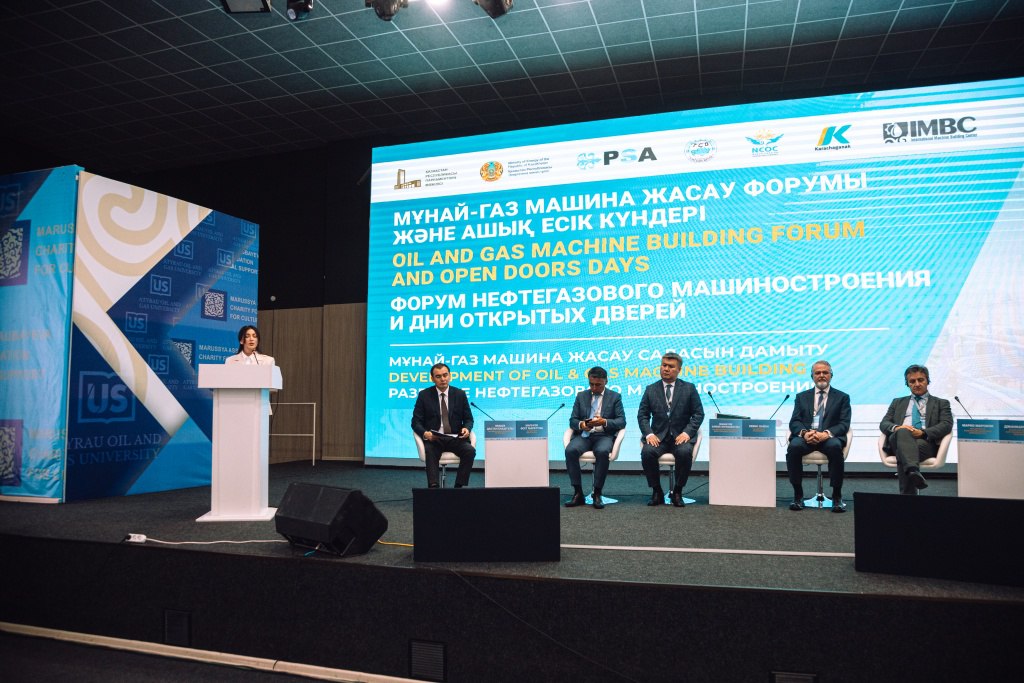
From July 10 to 12, the Kazakhstani city of Atyrau hosted the Oil and Gas Machine Building Forum. The Forum aimed to develop local content and support domestic manufacturers of oil and gas equipment and local suppliers of works and services for the sector.

The event also included Open Doors Days for three major oil and gas operators in Kazakhstan: Tengizchevroil, North Caspian Operating Company, and Karachaganak Petroleum Operating B.V.

As reported by the Kazakh Ministry of Energy, these three major subsoil users account for 70% of all oil and gas equipment purchases in Kazakhstan.

Speaking at the Forum, Vice Minister of Energy Alibek Zhamauov said that both Kazakhstan’s president and prime minister outlined several specific tasks aimed at developing local content in the oil and gas sector. Particular attention, they said, should be paid to increasing the share of Kazakhstani goods, works and services in the sector’s purchases, creating new as well as modernizing existing production facilities, localizing the production of the most popular products in Kazakhstan, as well as moving design offices to the country, with the mandatory involvement of local engineers and design companies.

Due to efforts of the Ministry of Energy, in May of this year contracts were signed between Tengizchevroil, North Caspian Operating Company, and Karachaganak Petroleum Operating B.V. and domestic manufacturers for the purchase of locally made oil and gas equipment worth $240 million.

Speaking at the Forum, Leyla Gimranova, Deputy Director of the Project Department at Kazakh Invest, emphasized that oil and gas engineering could become a new growth point in developing domestic added-value production and import substitution.

She said that last year, Kazakhstan produced oil and gas equipment for $72.7 million and imported such equipment for $1 billion. “This is a significant difference that needs to be reduced. Therefore, we are actively working to identify priority goods for import substitution, the production of which is possible based on existing domestic enterprises,” Gimranova said.

Uzbekistan’s Investment in Kazakhstan Reaches Record Levels

The volume of gross direct investment flow from Uzbekistan to Kazakhstan in 2023 was a record $22.2 million, as reported by Zakon.kz. This is the largest statistic recorded since the end of 2005.

Last year, Kazakhstan and Uzbekistan implemented several important investment projects. In particular, $71.2 million was invested into the production of Chevrolet Onix cars in the Kostanay region. A metal rolling plant was built in the Almaty region after a roughly $57 million investment. Lastly, a facility to produce various sterile pharmaceutical and hygiene products was established in Shymkent following an approximately $9.3 million investment.

The increase in investment offers from Uzbekistan is reported to be related to the positive business environment in Kazakhstan. The report notes that extremely favorable conditions have been created for business in the neighboring country. The current conditions in Kazakhstan effectively protect the rights of investors and thus encourage investments.

The governments of Tashkent and Astana recently signed a Treaty to enhance cooperation between the two countries. The countries agreed to increase the volume of mutual trade to $10 billion and expand business relations soon.

According to the Telegram channel “Data Hub,” Uzbekistan had become the third largest foreign investor, surpassing China, regarding the number of companies registered in Kazakhstan. These statistics show that Uzbekistan is increasingly becoming an important trade partner for Kazakhstan.

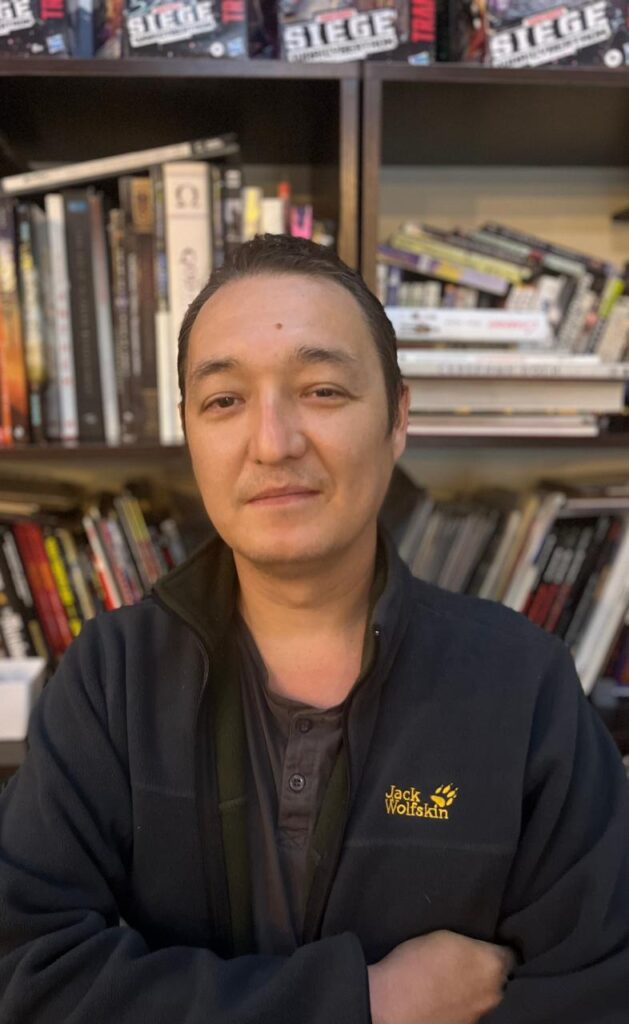
An Overview of Kazakhstan’s Comic Industry by Oraskhan Zhakup, CEO Khan Comics

TCA: What inspired you to create comics and get involved in the industry?

 My entry into the comic book industry was intuitive as opposed to a conscious decision.  I just followed my passion. It all started when aged 10-12 years old, my friends and I drew comic strips in school notebooks and sketchpads and then stapled them together to create homemade comic books.

Over time, this childhood hobby became more serious and we formed a club with several members. In 2003, Pavel Shein, Stas Misyurin and I decided to launch a newspaper titled ‘Comics’ which included three comic strips, each spanning around eight pages. The newspaper was black and white, with a circulation of about a thousand copies. Several issues were printed, providing our entry point into the industry.

We then started a comic book magazine. After a long hiatus, we organized a comic book exhibition in 2010, and with work amassed from the show, published our first anthology in 2011. Named ‘KZ Comics’ the 112-page publication, again in black and white, had a print run of 500 copies. It was in this magazine that the Khan Comics logo first appeared.

TCA: Tell us more about the Khan Comics Art Studio.

The Khan Comics Art Studio in Almaty was originally a place where a few people gathered to create comics and then, a couple of years ago, we extended our practice to include cartoons and animation. Over the last 5-6 years, I have also been experimenting with making toys based on our comics. All of this naturally requires considerable financial and human resources as well as time. But we keep working, making comics and everything related to them.

TCA: How has the comics culture developed in Kazakhstan since you entered the industry?

Unfortunately, there is no market for Kazakh comics in our country. Regular players are needed for such a market to exist, but there are none. Our studio has been publishing 5-6 books annually for 13 years. Occasionally new players enter the field, but after a year or two, disappear. The popularity of comics in Kazakhstan is not related to the local market, but to global trends spurred by the release of Hollywood movies based on comics, such as ‘The Avengers’ and ‘Spider-Man.’ The popularity of comic books in post-Soviet countries (CIS) is now in its third wave and we are its pioneers. The first began in the early 2000s with the arrival of comics from IDK Publishing, and the second, was associated with manga.

TCA: What key events or projects would you single out as the most significant for the development of Kazakh comics?

I would cite the ‘Erketay’ and ‘Jetysu’ comic series as our studio’s key projects. ‘Erketay,’ currently being adapted, is an ethno-fantasy based on Kazakh mythology, whilst ‘Jetysu’ is an urban fantasy. Both of these projects are important for us. Although I love 90% of what we produce, ‘Erketay’ stands out as number one.



Jetysu

Erketay


TCA: What themes and stories do you explore in your comics and why?

Almost all of our comics are related to our culture and cultural code. ‘Erketay’ is an ethno-fantasy; ‘Horde,’ a post-apocalypse and cyberpunk on the territory of Kazakhstan; and ‘Jetysu,’ an urban fantasy based in Alma-Ata and a parallel world.

TCA: What are the challenges of creating and promoting comics in Kazakhstan?

The biggest problem is the lack of authors. The Internet has erased borders and artists from Kazakhstan can earn much more by working for foreign companies. We have had several instances where young talented people whom we’ve trained, have left to work abroad.

Creating a comic book requires a significant financial outlay. A 24-page comic book takes several people two months to produce and entails expenditure on salaries, printing, taxes, and logistics. As a result, comics become too expensive for widespread access.

TCA: How do you see Kazakh comics developing in the coming years?

The industry faces many difficulties, especially due to the lack of authors and high financial costs. However, we continue to work and believe in its development. We hope that Kazakhstan will find a hook in comics to export its culture, just as the Japanese did with samurai and ninjas.

TCA: What are your plans for future projects?

Work on our key projects such as ‘Erketay’ and ‘Jetysu’ is ongoing.  We are also busy uniting all our children’s comics in one big universe comprising seven worlds. ‘Jetysu’ will take place in world number one from which the main characters will move to parallel world number two. ‘Erketay’ is set in world number three. On completion of the storylines, the heroes will begin to move and interact with each other across seven worlds.



Erketay strip

TCA: Is the appeal of Kazakh comics limited to local audiences or do you have foreign readers?

Our comics are sold in stores and online. We have overseas buyers but they are mainly Kazakhs who have moved abroad and collectors. Within the framework of the Shanghai cooperation Organization (SCO) we presented our comics in China, but it was more of a political venture. Whilst our culture is of interest locally, we have yet to find a hook to broaden its appeal and export worldwide. We have no plans to date, to publish English translations.

TCA: What comics would you recommend to readers unfamiliar with the industry in Kazakhstan?

It is difficult. New projects appear regularly but quickly disappear. I am therefore hesitant to recommend anything specific and would prefer readers to choose for themselves.


World Bank to Provide Additional Support for Kambarata-1 Hydropower Project in Kyrgyzstan

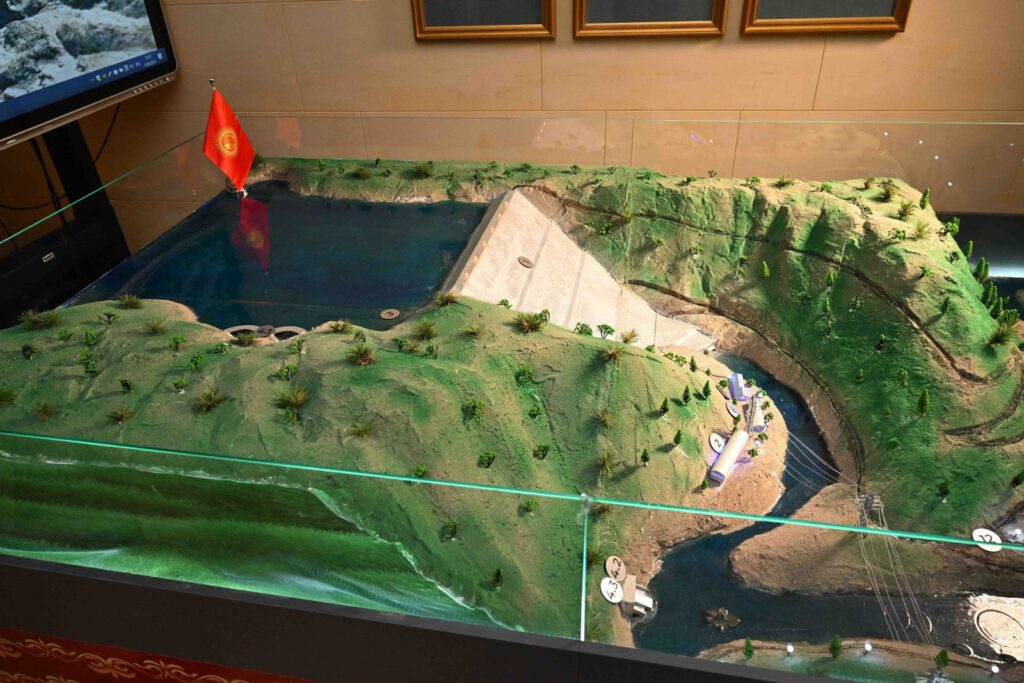
The World Bank announced on July 11 that its Board of Executive Directors has approved $13.6 million in additional financing for the Kambarata-1 Hydropower Plant (HPP) Project in Kyrgyzstan.

This additional funding will supplement the ongoing $5 million Technical Assistance Fund. The World Bank is aiming to support the government of the Kyrgyz Republic in preparing the Kambarata-1 HPP project in an environmentally, technically, financially, and commercially sustainable manner.

Hugh Riddell, World Bank’s Country Manager for the Kyrgyz Republic, commented: “The World Bank is assisting the Kyrgyz Republic in developing its vast clean energy potential, which would be key to realizing the country’s and region’s bold initiatives on clean energy transition and enhanced regional cooperation on energy and water. World Bank support will help the government of the Kyrgyz Republic to comprehensively prepare the Kambarata-1 HPP Project in a sustainable and bankable way.”

The ongoing Technical Assistance for the Kambarata-1 Hydropower Plant Project has made significant progress since its approval in the fall of 2023. The project feasibility update has commenced, and environmental and social reports are being prepared. In addition, a Donor Coordination Committee was established during the International Energy Investment Forum held in Vienna in June 2024. This additional financing is needed to ensure comprehensive and in-depth implementation of several critical activities, including establishing panels of experts on dam safety, environmental, and social concerns. The funding will also help in designing a benefit-sharing plan, structuring the project’s financing plan and commercial framework, and establishing a company to run the dam upon its completion.

The additional financing is to be provided on highly concessional terms and comprises $11 million of credit at zero percent interest, with repayments eased over 50 years and a 10-year grace period. In addition to this credit, there is a $2.6 million grant from the Central Asia Water and Energy Program (CAWEP), which requires no repayment. The CAWEP is a multi-donor partnership between the World Bank, the European Union, Switzerland, and the United Kingdom, which is aimed at strengthening regional cooperation on water and energy security in Central Asia, which is facing  a climate emergency.

The Donor Coordination Committee for the construction of Kambarata-1 HPP was established at the Kyrgyz Republic International Energy Investment Forum, which was held in Vienna on June 10.

The Committee comprises major international financial institutions and development partners, including the World Bank, the OPEC Fund, the Asian Development Bank, the Asian Infrastructure Investment Bank, the Islamic Development Bank, and the European Bank for Reconstruction and Development.

Speaking at the Vienna forum, Chairman of the Cabinet of Ministers of the Kyrgyz Republic Akylbek Japarov said that the Kambarata-1 HPP project has broad economic, environmental, and social benefits and prospects for both Kyrgyzstan and the rest of Central Asia. The project will provide Kyrgyzstan and Central Asia with clean energy at the lowest possible cost.

The Kambarata-1 HPP will be situated in the upper reaches of the Naryn River in Kyrgyzstan. Its installed capacity will be 1,860 megawatts, and its average annual generation will be 5.6 billion kilowatt-hours of electricity. The preliminary construction cost for the project is more than $4 billion.

The project also has broader development objectives across the Central Asian region, including expanding electricity trade, decarbonizing energy grids, facilitating solar and wind integration, and better meeting water needs in the downstream countries of Kazakhstan and Uzbekistan.

Boom in Uzbekistan’s International Flights

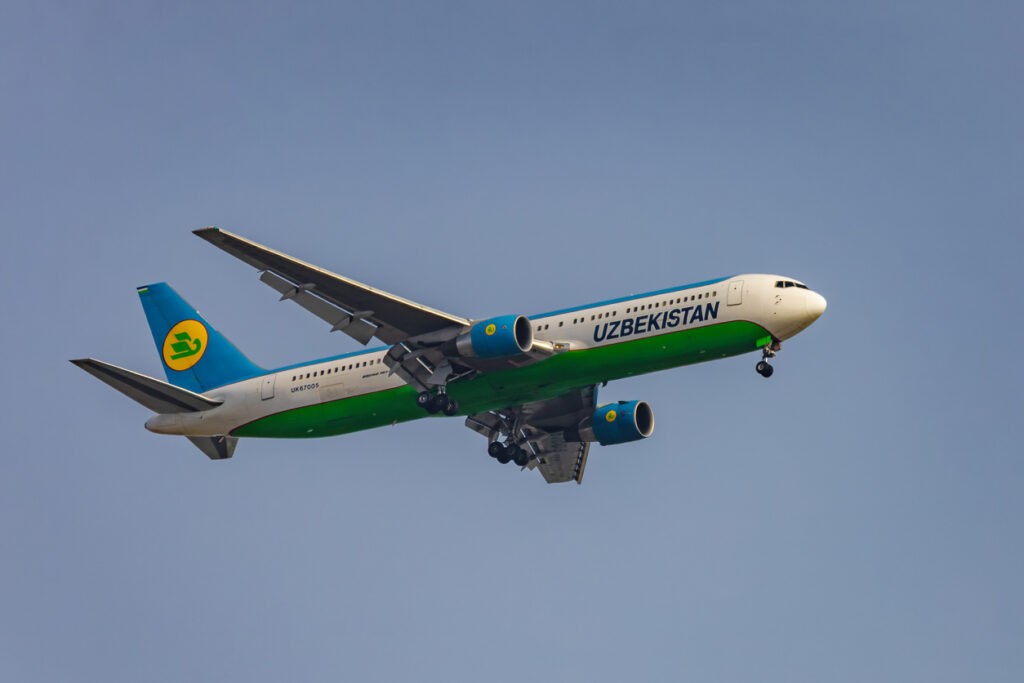
In the first half of 2024, Uzbekistan’s airports processed 53,300 flights of which 16, 300 were domestic and 36,900 international; an increase of 37% compared to the same period last year, according to a report by Uzbekistan Airports’ press service.

From January to June, Uzbek airports served 6 million 369,384 thousand passengers on domestic flights, 1 million 263,304 thousand passengers on domestic flights, and 5 million 106,80 thousand passengers on international flights; an increase of 36%  compared to the first quarter of  2023.

In the first half of the year, 40.7 tons of cargo and mail were transported, 18% more than last year.

Today, Uzbek airports provide passenger services on 84 routes. The 15% increase is attributed to the addition of new air carriers and the simultaneous launch of several new routes.

Uzbekistan Airports currently  cooperates with 45 airlines.

New Projects Launched in Uzbekistan’s Fergana Region

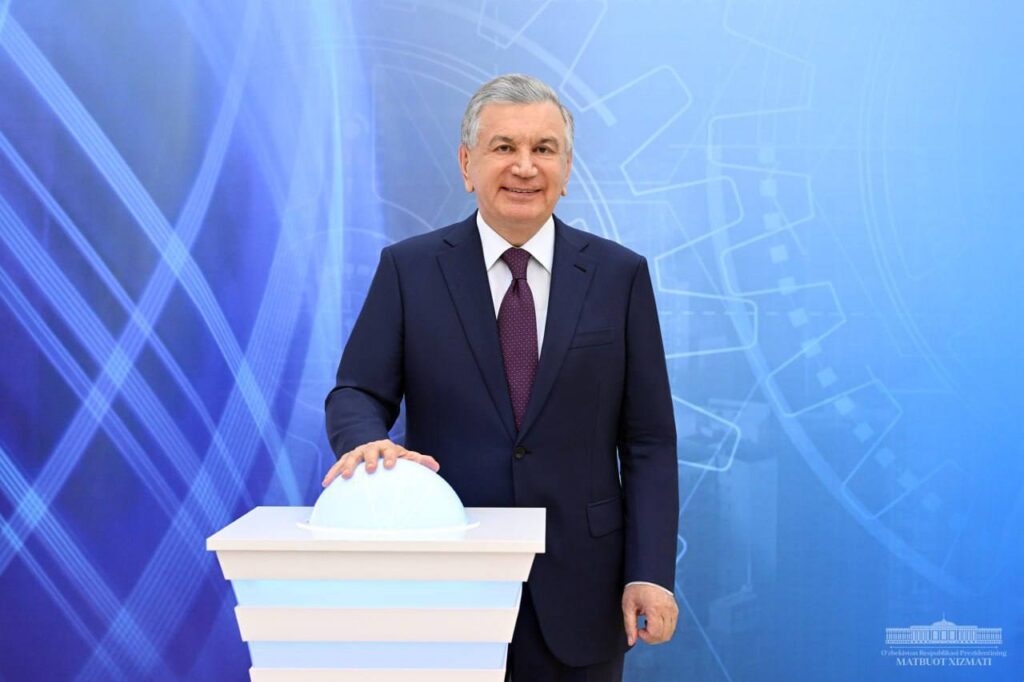
On July 11, Uzbekistan’s President Shavkat Mirziyoyev attended a ceremony to launch several new projects in the country’s Fergana region.

The first was the second phase of the construction of a mineral fertilizer plant by Singaporean company Indorama.

The president then launched the construction of a solar power plant; a $350 million joint project with the German company Hyper Partners. Located in the Besharyk district of Fergana, the plant has  a capacity of 500 megawatts of which 200 megawatts will come online this year . When fully operational in 2025,  it will generate 1.6 billion kilowatt-hours of green energy per year, equivalent to the annual consumption of 675 thousand households. This increase in green energy will save 466 million cubic meters of natural gas.

In addition, Mirziyoyev celebrated the start of construction on a $144 million electricity storage system by the Chinese Gezhouba Group. With a capacity of 150 megawatts and the means to automatically turn on when electricity demand increases to ensure stable operation of the power grid, the  facility should be operational before the end of this year

Lastly, the president launched two small hydroelectric power plants; one with a capacity of 2.2 megawatts in the village of Shakhimardan, and the other,  with a capacity of 430 kilowatts, in the village of Yukori Vodil.

During his speech, President Mirziyoyev noted that the volume of investments in the Fergana region is growing year on year. In 2018, only $90 million was invested in the region, while the figure for last year reached $1.3 billion. The number of enterprises financed with foreign capital currently totals 470.

Around one hundred projects worth $370 million have been implemented in the Kokand free economic zone alone, creating 9 thousand new jobs.

According to a presidential decree, this economic zone will expand by 210 hectares around the city of Kuvasay, house 185 new projects worth $1 billion, and create 12,000 jobs. In addition, a special Uzbek-Chinese industrial zone spanning  ​​230 hectares will be created in Kokand.