• KGS/USD = 0.01144 0%
  • KZT/USD = 0.00196 -0%
  • TJS/USD = 0.10896 -0%
  • UZS/USD = 0.00008 0%
  • TMT/USD = 0.28571 0.28%
  • KGS/USD = 0.01144 0%
  • KZT/USD = 0.00196 -0%
  • TJS/USD = 0.10896 -0%
  • UZS/USD = 0.00008 0%
  • TMT/USD = 0.28571 0.28%
  • KGS/USD = 0.01144 0%
  • KZT/USD = 0.00196 -0%
  • TJS/USD = 0.10896 -0%
  • UZS/USD = 0.00008 0%
  • TMT/USD = 0.28571 0.28%
  • KGS/USD = 0.01144 0%
  • KZT/USD = 0.00196 -0%
  • TJS/USD = 0.10896 -0%
  • UZS/USD = 0.00008 0%
  • TMT/USD = 0.28571 0.28%
  • KGS/USD = 0.01144 0%
  • KZT/USD = 0.00196 -0%
  • TJS/USD = 0.10896 -0%
  • UZS/USD = 0.00008 0%
  • TMT/USD = 0.28571 0.28%
  • KGS/USD = 0.01144 0%
  • KZT/USD = 0.00196 -0%
  • TJS/USD = 0.10896 -0%
  • UZS/USD = 0.00008 0%
  • TMT/USD = 0.28571 0.28%
  • KGS/USD = 0.01144 0%
  • KZT/USD = 0.00196 -0%
  • TJS/USD = 0.10896 -0%
  • UZS/USD = 0.00008 0%
  • TMT/USD = 0.28571 0.28%
  • KGS/USD = 0.01144 0%
  • KZT/USD = 0.00196 -0%
  • TJS/USD = 0.10896 -0%
  • UZS/USD = 0.00008 0%
  • TMT/USD = 0.28571 0.28%
09 December 2025

Investigative Website Kloop to Remain Blocked in Kyrgyzstan

Bishkek City Court has upheld a decision to block the investigative news site Kloop.kg.

Kloop’s lawyer Fatima Yakupbayeva commented: “ It would be interesting to know what justified today’s judicial board of the city court’s ruling. We believe the decision is unlawful. A dangerous precedent is being set for online publications and everyone who disseminates information because with this court ruling [it appears] that it is possible not to address the distributor itself but to go straight to the Ministry of Culture and ask for it to be blocked. This violates the balance provided for by the law “On Protection from Inaccurate Information.”

Yakupbayeva added that Kloop will appeal the decision in the Supreme Court.

As previously reported, the Kloop.kg website was initially blocked as a result of an article in which the politician Ravshan Dzheenbekov stated that he was tortured while in prison. This led to a complaint by the State Committee for National Security to the Ministry of Culture.

Kloop’s Russian-language website has been blocked in Kyrgyzstan since September 2023. The Kyrgyz-language version was blocked two months later.

Kyrgyzstan Lifts Ban on Mining of Uranium and Thorium

Deputies of the Kyrgyz Parliament have approved a bill lifting the ban on mining uranium and thorium by 69 votes in favor to three against. Parliamentarians are confident that the legislative changes will bring significant economic dividends to the country.

The law banning uranium and thorium mining was passed in 2019. At that time, authorities wanted to sell the license to develop a deposit, but faced a significant pushback from residents who feared the project could harm the environment and damage the water table. The result was a complete ban on the entire territory of the Republic.

In the Issyk-Kul region of Kyrgyzstan alone, 150,000 cubic meters of radioactive waste were accumulated from uranium mining in the last century. According to the Ministry of Emergency Situations, the country has 92 burial sites, with 23 tailing dumps containing uranium elements. Kyrgyzstan’s total volume of poisonous and hazardous substances stands at 2.9 million cubic meters.

The notes behind the new bill indicate that alternative sources of income are needed due to severe economic impacts over recent years. However, these activities must strictly comply with environmental norms and standards in uranium and thorium mining.

Speaking in parliament, Minister of Natural Resources, Environment, and Technical Supervision, Melis Turganbayev assured deputies that the bill’s passage would not harm the environment or the health of Kyrgyz citizens.

“For uranium mining to be profitable, a deposit needs 40-50 tons. Kyrgyzstan lacks such reserves. There are occurrences from 0.01 to 0.08% in 83 locations. Our goal is not the uranium, but the associated metals,” Turganbayev said.

Authorities plan to mine titanomagnetite, which is accompanied by uranium and thorium. Both elements will be processed at the Kara-Balta Combine in Chui Oblast. Thorium will be stored, while uranium will be sold to other states.

Iskhak Masaliyev, one of the three deputies who voted against the bill, reminded his colleagues of discussions in the early 2000s on ecology. However, only now has it been possible to begin to eliminate harmful waste.

Doctor of Geological and Mineral Sciences, academician Rozalia Jenchuraeva told The Times of Central Asia that the 2019 law banning mining was “a big folly” as it suspended all waste activities and impacted jobs, leaving hazardous materials lying no more than 20 meters deep are slowly contaminating the soil and water. “If they pull it all out, it will be wonderful. It will clean up the land. This is work for the Kara-Balta Combine. I think the government has decided to develop Kyzyl-Ompol, which is the right thing to do,” Jenchuraeva said.

Jenchuraeva believes that Kyrgyzstan has qualified personnel who have previously worked at uranium sites, know how to mine uranium and thorium, and can develop the deposits using their expertise and resources.

Earlier, President Japarov met with residents near the Kyzyl-Ompol deposit. “The development of Kyzyl-Ompol will create over a thousand jobs. This mine will become the second Kumtor (gold deposit). The local budget will cease to be subsidized, and the people will get richer,” the president said.

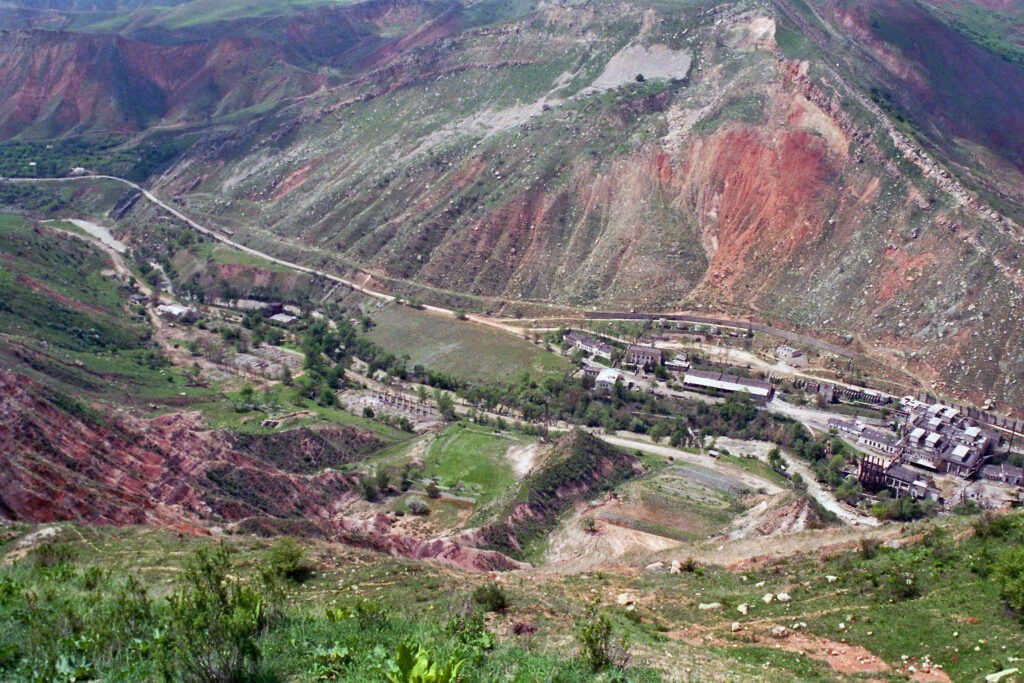
Kyzyl-Ompol is a uranium-thorionite placer deposit discovered in 1951. According to the Kyrgyz Institute of Geology, it is one of only five areas where these minerals lie, and has been explored in detail.

UNICEF Donates Vehicles to Distribute Vaccines in Kyrgyzstan

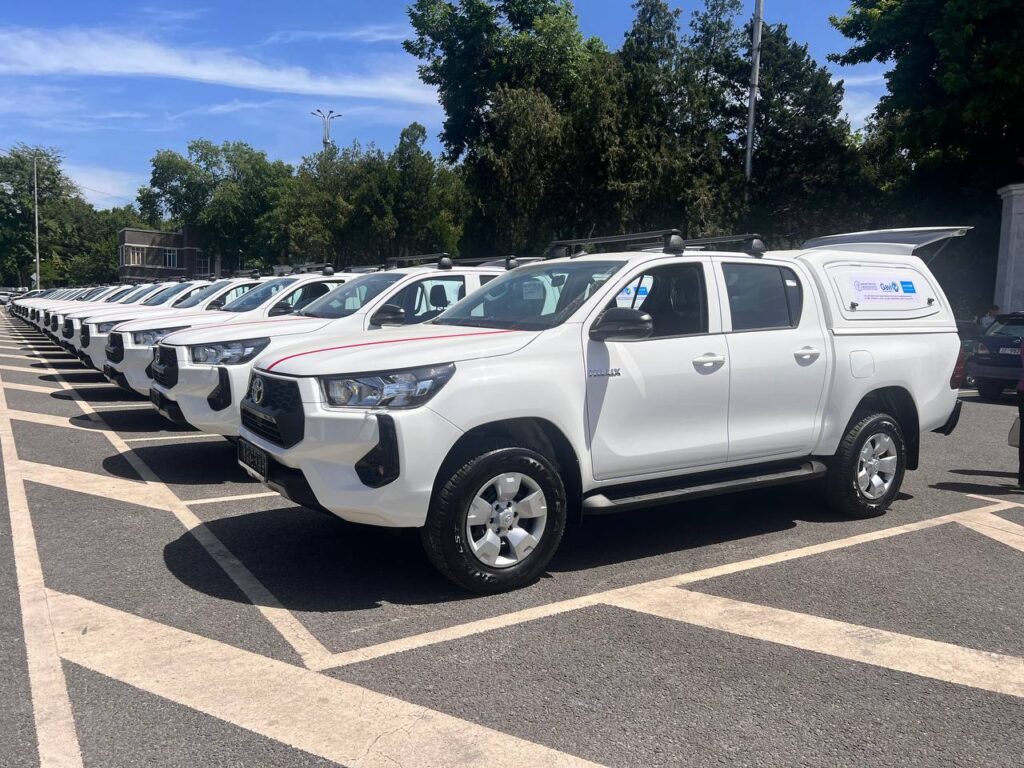
The Global Alliance for Vaccines and Immunization (GAVI) and UNICEF have donated 16 vaccine transport vehicles to Kyrgyzstan. The special cars were provided to the Kyrgyz Ministry of Health to increase immunization rates across the country.

The vehicles will help improve the distribution of vaccines from regional to district storage facilities, ensuring their timely availability in remote regions of the country.

“Vaccines against dangerous diseases such as measles, rubella, or pertussis require special storage and transportation conditions to be safe and effective. Therefore, improving this infrastructure directly affects the availability of life-saving vaccines for every child in Kyrgyzstan,” said UNICEF’s acting representative in Kyrgyzstan Cristina Bruggiolo.

Akchabar reports that this is the first batch of 26 vehicles that the ministry will receive. The remaining ten cars will arrive in the country by the end of July.

Uzbekistan Set to Maximize Tourism

On 3 June, Uzbekistan President Shavkat Mirziyoyev chaired a government meeting to review plans for the forthcoming year to attract 11 million foreign tourists and increase revenue from tourism to $2.5 billion.

It was stated that every dollar currently invested in tourism generates 3-4 dollars for the industry’s future and each new job created in the tourism sector spawns two jobs in related industries.

Officials reported that to encourage growth, procedures for running tourism businesses have been simplified and specialized policing created to ensure the safety of tourists.

Given the year-on-year increase in extreme tourism, Uzbekistan is developing a program to meet demand for access to its wilder regions.

To expand tourism around the country’s natural lakes, a decision was made to auction land for the construction of water parks and other attractions around these scenic shores.

Triggered by the pandemic, the demand for medical and recreational tourism has soared and last year alone, over 60 thousand foreign visitors were treated in Uzbekistan’s sanatoriums and medical institutions. In response and based on practices in South Korea, Turkey, and India, the government has launched a “Medical Hospitality” initiative.

From now on, costs incurred by private clinics for international certification and participation in overseas exhibitions to promote their services, will be covered by the state. In addition, VAT will be refunded on payments made by foreign patients attending Uzbekistan’s clinics.

To maximize its potential, the president recommended the launch of a global advertising campaign to demonstrate to the full, the diversity of Uzbekistan’s tourist industry.


Turkmenistan Restricts Women From Obtaining Driving Licenses

It is becoming more and more difficult for women to drive in Turkmenistan, with requirements for obtaining a driver’s license often oppressively strict.

Turkmenistan has restricted women’s rights for many years, including their freedom to drive a car. In 2017 Turkmen police began revoking women’s driving licenses and refusing to issue them with new ones. From the beginning of 2023 women had to be over the age of 41 to learn to drive, and even then driving schools would only accept them if they provided marriage certificates and character references.

It is reported that in the country’s Mary region it is now almost impossible for women to drive a car. Women who already have a license can only renew it when it expires if they have a vehicle registered in their name.

“Often, the cars driven by women are not registered in their name, and they use vehicles registered in the name of their brothers or husbands by power of attorney. Now they have to transfer the cars to their name or buy a new car to get a driver’s license; otherwise, they will not be issued a new document,” Radio Azatlyk wrote. According to local sources, police officers are refusing to issue licenses to women under the age of 35.

One resident added: “You also need a medical certificate from a psychiatric dispensary to renew your license. They are obtained in local medical institutions. The cost of renewing a driver’s license will cost 200 to 400 manats ($57-$114).

Mary residents said using a bribe is the easiest way to solve the problem. “Men can get a driver’s license by paying a bribe of 4,000 manat ($1141), while a woman will have to pay 6,000 to 7,000 manat ($1712 to $1997),” the resident said.

Turkmen officials deny any discrimination against women, and maintain that gender equality is fully respected in the country.

Uzbekistan and Turkey Enhance Strategic Partnership

On June 3, Ankara hosted a symposium on “Uzbek-Turkish Strategic Relations – Comprehensive Perspectives for the Future”.

Aimed to forge conceptual strategies to enhance the partnership between Uzbekistan and Turkey, the event was attended by First Deputy Minister of Investment, Industry and Trade of Uzbekistan Nozimjon Kholmuradov and officials from the Administration of the President of Turkey, heads of various ministries and agencies, as well as prominent political scientists and experts from both nations.

Presentations highlighted the impressive momentum in trade, economic, and investment cooperation between Uzbekistan and Turkey.  Over the last five years, bilateral trade has surged 1.3-fold, the number of enterprises funded with Turkish capital in Uzbekistan has tripled to 1,898, and the inflow of foreign direct investment (FDI) from Turkey has increased ten-fold.

In 2023, 260 new Uzbek-Turkish ventures were established, elevating Turkey to third place in the number of joint ventures in Uzbekistan. The frequency of regular flights connecting the two countries has also grown 2.5-fold to 90 flights per week.

Initiatives by Uzbekistan to further refine its investment climate include a steady six percent annual economic growth, a nine percent reduction in inflation, the drafting of an updated “Law on Investments” in alignment with WTO standards and the deployment of an efficient management system for special economic zones (SEZs). In addition, plans are in place to trim tax rates and the number of taxes, launch an ambitious new privatization program and IPO for shares of major companies, and establish a Tashkent International Arbitration Center.