• KGS/USD = 0.01144 0%
  • KZT/USD = 0.00196 -0%
  • TJS/USD = 0.10896 -0%
  • UZS/USD = 0.00008 0%
  • TMT/USD = 0.28571 0.28%
  • KGS/USD = 0.01144 0%
  • KZT/USD = 0.00196 -0%
  • TJS/USD = 0.10896 -0%
  • UZS/USD = 0.00008 0%
  • TMT/USD = 0.28571 0.28%
  • KGS/USD = 0.01144 0%
  • KZT/USD = 0.00196 -0%
  • TJS/USD = 0.10896 -0%
  • UZS/USD = 0.00008 0%
  • TMT/USD = 0.28571 0.28%
  • KGS/USD = 0.01144 0%
  • KZT/USD = 0.00196 -0%
  • TJS/USD = 0.10896 -0%
  • UZS/USD = 0.00008 0%
  • TMT/USD = 0.28571 0.28%
  • KGS/USD = 0.01144 0%
  • KZT/USD = 0.00196 -0%
  • TJS/USD = 0.10896 -0%
  • UZS/USD = 0.00008 0%
  • TMT/USD = 0.28571 0.28%
  • KGS/USD = 0.01144 0%
  • KZT/USD = 0.00196 -0%
  • TJS/USD = 0.10896 -0%
  • UZS/USD = 0.00008 0%
  • TMT/USD = 0.28571 0.28%
  • KGS/USD = 0.01144 0%
  • KZT/USD = 0.00196 -0%
  • TJS/USD = 0.10896 -0%
  • UZS/USD = 0.00008 0%
  • TMT/USD = 0.28571 0.28%
  • KGS/USD = 0.01144 0%
  • KZT/USD = 0.00196 -0%
  • TJS/USD = 0.10896 -0%
  • UZS/USD = 0.00008 0%
  • TMT/USD = 0.28571 0.28%
09 December 2025

Automotive Shift in Central Asia: China Edges Out Russia

In the 2020s, Central Asia has emerged as an increasingly attractive market for the automotive industry. A combination of investment inflows, technological development, and improved logistics, much of it initiated by China, has fueled this transformation. Since the onset of the COVID-19 pandemic, China has rapidly expanded its influence in the region’s automotive sector and is becoming the dominant external supplier in import-reliant markets, even in countries with domestic manufacturing capabilities.

Manufacturing Hubs and Import Markets

The Central Asian automotive landscape reflects the region’s economic diversity. Uzbekistan and Kazakhstan serve as the main manufacturing hubs, while Kyrgyzstan, Tajikistan, and Turkmenistan rely heavily on imports.

By the end of 2024, while the global automotive sector faced a slowdown, Uzbekistan recorded modest growth in car production, up 0.8% year-on-year. In contrast, Kazakhstan saw a 1.6% decrease. During the first seven months of 2025, Uzbekistan produced 212,200 passenger vehicles, a 3.5% increase compared to the same period in 2024. Truck production rose sharply by 28%, from 1,800 to 2,300 units.

With a population of approximately 37 million, Uzbekistan remains the region’s industrial center. The state-owned UzAuto Motors, formerly GM Uzbekistan, dominates more than 90% of the domestic passenger car market. Models such as the Chevrolet Cobalt, Nexia, and Tracker are built on General Motors platforms and produced at the main plant in Asaka, which has a capacity of 280,000 vehicles per year. Some of this output is exported to Russia, Azerbaijan, and Georgia.

In a bid to stay competitive with Chinese brands, Uzbekistan launched a joint venture with BYD in 2023 and announced the construction of a $1.5 billion electric vehicle (EV) plant in the Ferghana region with Chinese support.

Kazakhstan’s key market players include Allur and Hyundai Trans Kazakhstan. Allur’s Kostanay plant produces up to 125,000 Kia, Chevrolet, Skoda, JAC, Jetour, and Hongqi vehicles annually, and accounts for 61% of the national output. Hyundai Trans Kazakhstan in Almaty has a capacity of 50,000 units, covering 31% of production.

Two new car plants are expected to open in 2025. The first, a $200 million investment by Kia, will be located in the Kostanay region and marks the company’s first Central Asian plant. With a planned capacity of 70,000 vehicles per year, the move underscores Kia’s long-term commitment to Kazakhstan.

“We are excited about the promising opportunities opening up in the Kazakh market. Kazakhstan’s economy is developing dynamically and on a large scale. We see great potential for our business in this market,” said Kia President and CEO Ho Sung Song.

The second plant, in Almaty, will assemble Chinese brands with a target of 90,000 vehicles annually. Rather than compete with Chinese imports, Kazakhstan has opted to localize production in partnership with Chinese manufacturers.

Import-Dependent Markets and China’s Tailored Approach

While Kyrgyzstan and Tajikistan host minor assembly operations, primarily with Chinese partners, their automotive fleets, along with Turkmenistan’s, are largely replenished through imports. Since 2020, shifts in global logistics have transformed China from an alternative supplier into the dominant source of vehicles in these countries.

Governments in Bishkek, Dushanbe, and Ashgabat have facilitated Chinese market entry, particularly in the electric vehicle sector. This alignment between local incentives and Beijing’s policy of supporting its innovative auto industry has strengthened China’s position.

Chinese automakers take a tailored approach in each country. Kyrgyzstan and Kazakhstan serve not only as end markets but also as re-export hubs to Russia. In contrast, engagement in Tajikistan and Turkmenistan relies more on political diplomacy and elite relationships.

In Tajikistan, where vehicle ownership is just 55 cars per 1,000 people, Chinese brands are gaining traction. In 2023, Rustam Emomali, son of President Emomali Rahmon, speaker of the upper house of parliament, and mayor of Dushanbe, signed an agreement to build an EV plant with Chinese partners.

By 2024, Tajikistan began importing Chinese EVs with exemptions from taxes and duties. Dushanbe ordered all taxis to switch to EVs by Sept 1, 2025; EV import duty/tax breaks preceded that. With most EVs in the country originating from China, Beijing stands to benefit directly from these policies.

Outlook: Regional Transformation Underway

While China has not fully monopolized Central Asia’s automotive markets, its dominance is expanding rapidly, tempered only by competition from companies such as Kia and General Motors. An “invisible revolution” is underway, marked by the accelerated decline of Russia’s traditional influence over the region’s automotive space. For decades, Central Asia was a key market for Russian-made AvtoVAZ vehicles. Today, that position is being challenged and increasingly replaced by Chinese innovation and investment.

Kazakhstan Proposes ‘Expert Alliance’ to Reform Global Governance

Zhandos Shaimardanov, director of the Kazakhstan Institute for Strategic Studies (KazISS) under the President of the Republic of Kazakhstan, has called for the formation of an international network of think tanks to act as an intellectual capacity for reforming the global governance architecture. He said the proposal stems from lessons learned in regional cooperation efforts across Central Asia.

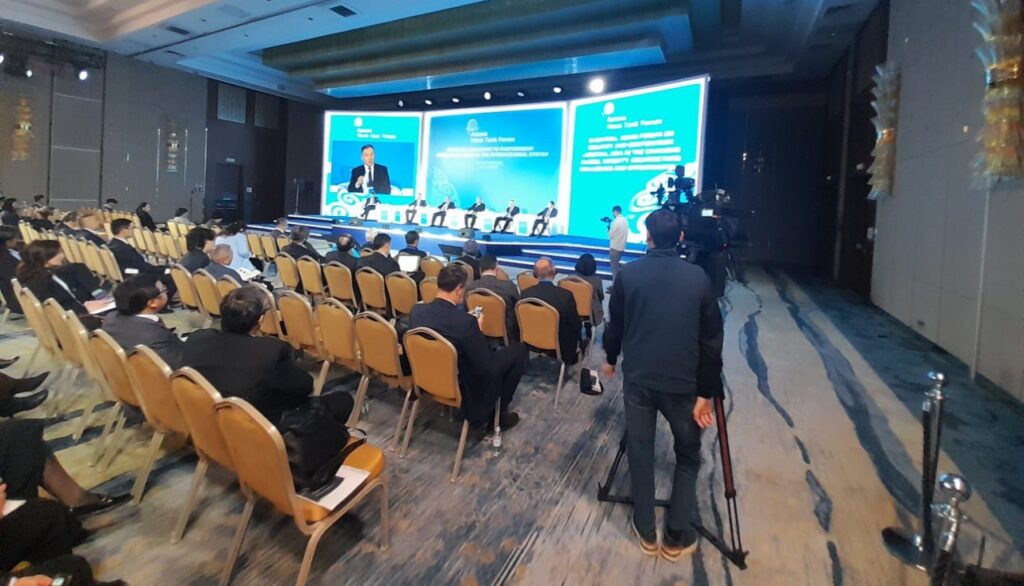
Speaking at the session “Central Asia in the Changing Architecture of Global Security: Challenges and Opportunities” during the Astana Think Tank Forum 2025, Shaimardanov said the world is experiencing a period of geopolitical flux. The old global rules no longer function effectively, while new norms have yet to take shape.

“History is giving our region a chance to show leadership,” he said. “Central Asia is realizing its agency and unity, ready to formulate collective responses to global challenges and offer a positive agenda. Trust and mutual respect have made us resilient, and now this political capital must be transformed into institutional resources.”

Shaimardanov stressed that the existing global security architecture is in crisis, with mechanisms such as the UN Security Council and arms control frameworks losing effectiveness.

“In September, at the UN General Assembly, the President of Kazakhstan rightly observed that serious violations of international law have become the new norm. This is a sign that global institutions need intellectual renewal. When multilateral mechanisms fail, it is the regions that retain the potential for agreement,” he said.

From Regional Unity to Global Contribution

Shaimardanov recalled that at the sixth Consultative Meeting of the Heads of State of Central Asia, held in Astana last August, regional leaders adopted the “Central Asia 2040” concept, which sets out a long-term vision for cooperation across the region.

“Now is the time not just to implement this document without slogans,” he said, “but to present this regional experience to the broader world.”

He said that Central Asia’s cooperative model could help redefine the principles of global governance. As a bloc of “middle powers,” the region can offer a constructive and non-hegemonic voice.

“In this context, Kazakhstan proposes creating an expert alliance of middle powers, a global network of think tanks and institutions that could help rethink international systems,” Shaimardanov said.

He suggested that such a body could cooperate with international organizations, including the United Nations, to develop joint strategies on security, sustainable development, and institutional accountability.

“Central Asia can not only adapt to new realities but also offer new ideas that security can be built not on fear but on trust,” he said.

Focus Areas: Digital Trust, Water Security, Human Capital

Shaimardanov noted that an expert network would help Central Asian countries coordinate on key development challenges, including digitalization, water management, and innovation.

He highlighted the example of Kazakh startup Higgsfield AI, which recently achieved unicorn status with a valuation exceeding $1 billion. The company developed a generative AI tool that creates videos from text prompts.

“This is a major milestone not only for Kazakhstan but for the entire region,” he said. “It reflects Central Asia’s growing maturity in the global venture market and signals our capacity to produce competitive solutions.”

He said Kazakhstan aims to become a fully digital nation within three years, and a regional analytical network could support collaboration in this transition.

“Our region can pioneer new standards in digital trust and AI ethics. We must begin fostering a culture of digital trust where technology serves humanity,” Shaimardanov emphasized.

Noting that nearly half the region’s population is under 30, he added that youth are both consumers and creators of new technologies and will drive the knowledge economy.

“Our region is entering a new phase of maturity. We are united not only by common challenges but by shared solutions. If we integrate our efforts in science and digital technologies, Central Asia can become a model of how security is built through mutual development,” he said.

Shaimardanov also addressed water resource management, calling it a barometer of regional trust.

“Coordinated regulation of transboundary rivers strengthens regional stability. We propose building a network of research centers to model water management and forecast demand. This is critical for both policy and infrastructure planning, especially when proposals come from international institutions,” he said.

Expanding the Scope: Energy, Transport, Social Resilience

Forum participants echoed the proposal and suggested broadening the scope of the envisioned expert alliance.

Bakhtiyor Mustafayev, Deputy Director of the Institute for Strategic and Interregional Studies (ISRS) under the President of the Republic of Uzbekistan, stressed the importance of incorporating Afghanistan into regional stability strategies through education and investment.

“We need barrier-free trade and regional specialization. Each country has unique strengths. Solving these issues will foster stability across the region,” he said.

Khayriddin Usmonzoda, Director of the Center for Strategic Research (CSR) under the President of Tajikistan said the Kazakh initiative could support energy security, infrastructure development, natural resource management, and countering transnational threats like drug trafficking and extremism.

“There are already successful ecological initiatives, like the Aral Sea Rescue Fund. But we must seek new approaches rooted in peaceful coexistence. Central Asia has a strong basis for complementarity, not competition,” he said.

Batyr Rejepov, Turkmenistan’s Ambassador to Kazakhstan, reiterated his country’s support for international dialogue and proposed establishing an Institute of Neutrality and Security in Ashgabat. This center could serve as a platform for research on neutrality and preventive diplomacy.

“Turkmenistan supports consolidating international efforts to address global challenges through dialogue, to prevent conflict escalation,” he said.

Shumkarbek Adilbek uulu, Deputy Director of the National Institute for Strategic Initiatives (NISI) under the President of Kyrgyzstan, suggested conducting joint studies on social attitudes and readiness for innovation.

“Regional growth is currently driven by shifts in logistics and financial flows, a temporary phenomenon. We need sustainable development strategies. In 10-15 years, countries may face the middle-income trap and rising social demands. We must assess how prepared our societies are for the future,” he said.

KazISS Senior Research Fellow Sanat Kushkumbayev supported the initiative, noting the importance of aligning economic, foreign policy, and social agendas.

Qazaq Air Launches Direct Flights from Astana to Bishkek and Samarkand

Qazaq Air, operating under its new joint venture brand Vietjet Qazaqstan, is expanding its international network with the launch of two new routes from Astana to Bishkek and Samarkand. Direct flights on the Astana-Samarkand-Astana route will begin on November 7, operating twice weekly on Fridays and Sundays. The Astana-Bishkek-Astana route will launch on November 10, with flights every Monday and Thursday.

The airline announced that this expansion aligns with President Kassym-Jomart Tokayev’s regional integration initiative, which aims to strengthen ties among Central Asian countries through increased cooperation in tourism, trade, education, and cultural exchange.

“These new routes between Astana, Samarkand, and Bishkek offer greater convenience for passengers and support the development of business, tourism, and cultural connectivity across our region,” said Adilbek Umraliev, Chairman of the Board of Qazaq Air. “They also open new opportunities for travelers, entrepreneurs, and students by linking cities rich in both historical heritage and future potential.”

With its hub at Astana International Airport, Qazaq Air operates an extensive network of domestic flights and is now expanding further into regional markets.

In May 2025, Qazaq Air and Vietnam’s Vietjet formally launched Vietjet Qazaqstan, a strategic partnership designed to bolster connectivity within Central Asia and beyond.

How to Harness Momentum Along the Middle Corridor: Interoperability on the New Silk Road

When most people think of the “Silk Road,” they picture a single camel train inching across a tan horizon, blue-white porcelain strapped beside bolts of silk. That fairytale, however romantic, was never true. Medieval Eurasia operated on multiple, overlapping, and improvised routes, often seasonal. And frankly, for a Westerner at the far end, it scarcely mattered how the goods got there, only that they did.

Then, oceanic shortcuts and the Americas rewired global trade; two world wars shattered old geographies, and the Iron Curtain sealed Central Asia into a blank space on Western mental maps. Now, the region is reopening on its own terms, and supply chains are being redrawn in real time. Suddenly, the term “Middle Corridor” has become trendy.

The Caspian Policy Center held its 3rd Trans-Caspian Connectivity Conference in London in July this year, focusing on the theme “Harnessing the Momentum, Building on the Synergies.” The title itself implies a recognition of some “momentum” and some “synergies.” A couple of months after the London conference, I spoke by phone with David Moran, a former UK ambassador with extensive experience in the region, to ask him about what he thinks of the whole “New Silk Road” idea.

His point is refreshingly unsentimental: stop imagining a line and start thinking of it as a web of interconnected channels. In practice, that means folding energy, digital, finance, and steel into a single operating picture so capital shows up on better terms; widening the frame from C5+1 to a Central Asia–South Caucasus–Turkey logic that actually matches how goods and electrons move; and fixing bottlenecks that are more about governance than concrete. We talked about quiet levers: insurance that prices climate risk properly, a digital spine that makes rail and the Caspian behave like one network, and the long-cycle drivers that turn logistics into strategy. Compound those gains, and pretty soon you’ve built something you no longer have to call “alternative.”

 “Alternative” lets officials kick decisions into next year; “strategy” forces sequencing, standards in definitions, and capital discipline today. It also resets expectations: this is not a clever detour around trouble, it is the backbone of a regional growth story that European lenders might just actually know how to price.

Seen that way, the geography snaps into focus. On the Caspian, Aktau and Kuryk on one shore and Baku on the other form the hinge, while the BTK railway and Kazakhstan’s Altynkol–Zhetygen pull weight inland. Atyrau is the western Kazakh air node that connects workers, parts and schedules to the Caucasus, the Gulf, and Europe. Thread through the rest: Black Sea power interconnect ideas, subsea data routes, the hydrocarbon pipes already in place. Put it together and you have a web with redundancy, optionality, and recognisable standards built in.

If there’s one real shift, it’s moving from projects to an operating plan. Moran puts it cleanly: “Go for a fully integrated regional connectivity strategy — energy, digital, finance, infrastructure — rather than working through sectoral initiatives separately.” Integration isn’t a slogan; it’s how you cut risk, shorten timelines, and stop term sheets from wobbling. On energy, credibility rises when electrons move as predictably as containers. Caspian port electrification and Black Sea interconnects aren’t side jobs; they’re the ballast that keeps schedules honest.

On digital, build a spine that makes rail and the Caspian behave like one network so customs, dwell times, and inventory are measured, not guessed. Finance sits on top of that stack. “Shadow the EU Gateway processes or the EBRD’s requirements,” Moran says, “and you raise the odds of truly sustainable, forward-looking infrastructure.” 

Widen the map, and the logic sharpens. “Central Asia can’t succeed without the South Caucasus, and that means all of it,” Moran told me. “Use all of the corridor. Bring Turkey in. Think C8, even C9.” It is a useful demolition of the photo-op formula that still frames the region as C5 with an ambiguous +1 tacked on. The operating reality is a mesh: Kazakhstan’s rail and ports hinge on Baku; Georgia is the land bridge and the policy signal; Turkey is where the corridor turns into markets.

None of this will surprise readers of S. Frederick Starr, who has argued for decades that Central Asia’s prospects improve when it is managed as an outward-facing system rather than a cul-de-sac. The point is not semantics; it is execution. A C8 or C9 lens forces co-equal planning across Caspian ports, the BTK rail spine, air nodes like Atyrau, and the cables and interconnectors that make the whole thing bankable. You get redundancy, you get pricing power, and, crucially, you get standards convergence without waiting for a Brussels-style treaty.

Moran is clear-eyed about the politics. “You’re not going to get a European-model single market in the Caucasus and Central Asia,” he said. “But you can get closer, bilateral here, trilateral there, and it adds up.” That is why the TITR (Trans-Caspian International Transport Route) machinery, customs pilots, and mutual recognition deals matter more than communiqués. A strategic corridor has to work on an ordinary weekday: staffed borders hitting agreed processing targets, interoperable documents and systems, power, and data that stay up. Get those right and the acronyms fade; reliability is what counts.

The weak points are well known: seasonality on the North Caspian, recurring dredging in Baku, rolling-stock mismatches, and, above all, customs procedures. “Customs harmonisation is the bit everyone underestimates,” Moran told me. “You’re not going to get a single market, but you can get closer, and every hour you shave off adds up.” The remedies are procedural and digital as much as physical: pre-clearance, shared data, mutual recognition, and one-time data entry instead of re-keying at each border. TITR’s working groups exist to convert those fixes from pilots into operating rules rather than press lines.

A quieter lever sits in London, Zurich, and increasingly Almaty: insurance. Central Asian assets face heat, flood, and earthquake risk, yet slow indemnity adjustment can freeze projects when speed keeps timetables intact. The proposition — early-stage but testable — is to hard-wire liquidity via parametric cover, sovereign or municipal pools, and adaptation-linked policies. You do not argue about damage; you pre-agree a trigger: a Syr Darya gauge crosses a level, a Caspian wind station records sustained gusts, a seismic sensor near Almaty hits a ground-acceleration threshold – then funds land within days for dredging, track stabilisation, pier inspections, or border electronics.

This is not theoretical: CCRIF and PCRIC have delivered rapid sovereign payouts; ARC runs an operational African drought pool; Mexico and Jamaica renew parametric catastrophe bonds; Quintana Roo and Hawaii use reef/coastal covers to finance immediate fieldwork. Because payouts are fast and predictable, lenders can treat post-event delays as working capital rather than project risk, lowering the cost of capital up front.

There is a pooled angle too: a cross-border facility for Central Asia and the South Caucasus with first-loss support and global-market reinsurance, while cities buy parametric layers alongside conventional cover and earn premium rebates for pumps, raised substations, or quake-isolation bearings. Very large assets can add resilience bonds or catastrophe tranches that pay on corridor triggers; in Muslim markets, the same logic can sit inside takaful.

None of this works by assertion. Three unglamorous steps matter: data, regulation, and execution. Data means audited sensors, public triggers, and third-party verification to keep basis risk tolerable and disputes rare. Regulation means supervisors and finance ministries that accept parametric wording, pooled schemes, and rapid disbursement that still pass audit. Execution means writing the cover into concessions and loan agreements so the payout flows to the team that fixes the asset, not into a bureaucratic queue.

There is political economy to settle as well: who pays the premium, in which currency, who carries the FX risk, whether a pooled scheme can survive a cross-border spat, who appoints the calculation agent, and how sensors are governed. One messy trigger or corrupted gauge can kill appetite for years. Moran’s view is blunt: “Insurance is being redefined, especially for climate adaptation. Move away from the old models and you can deliver faster.” In this corridor, underwriters are not a footnote to engineers; if pilots prove the cash actually moves when the water rises, they become part of the operating plan.

You cannot run a corridor in the dark. Without a digital spine, plans are promises. The basics are not glamorous: satellite links that keep trains and Caspian ferries visible in real time, fibre at borders so customs is minutes, not guesswork, and uptime targets written into contracts so data availability is an obligation, not a hope. Add a common data model, pre-arrival filings, time-stamped handovers, and an API connection between dispatch, port calls, and border agencies, and the system begins to behave. Moran puts it simply: “It is not one road. It is organic, and it hooks into networks.”

The market is moving that way already. Major cloud players are on the ground: AWS ships Outposts racks to Kazakhstan, has cooperation agreements and pilots with government and local firms, and Kuiper aims to expand satellite connectivity as it rolls out. Do that and the 90th-percentile transit time starts to converge on the median, which is the metric shippers actually remember. Coverage is still patchy in places, but you can start with the busy nodes and publish the service levels so everyone knows what “on time” means.

Strip away the varnish, and the long-cycle driver is minerals. The West needs diversified inputs for batteries, turbines and chips; Central Asia and the South Caucasus sit on rocks that matter. But ore is not a strategy unless it is processed on time and with social licence. “Get it right at the start,” Moran said of mining: governance, water, tailings, consent, traceability. Lead times are unforgiving; shortcuts boomerang. If the corridor wants to be taken seriously, ESG has to move from panel talk to procurement and monitoring, and logistics has to be built for the dull virtue of reliability.

Financing follows that discipline. This is not the age of money spray and ribbon-cuttings. Blended structures and guarantees earn their keep only when they sit on top of cash flows that survive the cycle and on documents lenders recognise. That means a revenue model that is clear about who pays and when: port dues, track access, availability payments, or take-or-pay contracts that tie real counterparties to volumes. It means an SPV with a clean escrow waterfall, maintenance reserves, step-in rights for lenders, and independent O&M with performance KPIs.

It means currency and inflation risk assigned on purpose rather than by accident, with hedging where the tariff cannot bear the shock. And it means environmental and social work that passes on merit, not on charm: proper ESIAs, grievance routes that function, climate-resilience analysis, and reporting that aligns with what European credit committees already read.

The cheapest capital is templated capital. Copy the rulebook and the price falls: EU procurement norms that can survive an audit, EBRD safeguards that are already baked into bank credit manuals, Global Gateway screening so eligibility is not a negotiation. Use public tools to de-risk what actually blocks decisions: UKEF or DFC for political risk and tenor, MIGA for breach-of-contract cover, viability-gap funding where the public good is real but the tariff is capped. Tap instruments investors already buy: green or sustainability-linked bonds for grid and port electrification, sukuk where Islamic finance broadens the buyer base, and local-currency tranches where regulators want domestic participation. Refuse the templates and everything becomes bespoke theatre: long diligence, short tenors, high margins, and a structure no one wants to repeat. Luckily, there are regional initiatives that already have capital attraction as their mandate.

However, there are, of course, familiar ways to foul this up. Over-politicise the corridor and the risk premium rises. Lock into yesterday’s kit and you strand assets before they are depreciated. Treat ESG as choreography and you lose buyers who pay on time. Add a few more own goals and the picture darkens: fragmented standards that make every crossing bespoke; opaque procurement that scares serious lenders; customs “reforms” that fade once the pilot ends; data that is partial, late or siloed; insurance promises that are not embedded in contracts; FX risk left with the party least able to carry it; heroic megaprojects that distract from the small fixes that compound. Ignore maintenance and sensor governance, and you will be back to guesswork the first time the river rises.

If the region can resist those temptations and stick to the dull disciplines that make systems work, 2030 does not need to look heroic. Success is a network that fails rarely and recovers quickly. It is power and data as punctual as containers. It is a minerals chain that is boring in the best possible way because it clears, pays, and repeats.

Or, as Moran put it at the very start of our call: “Don’t wait for big finance or you may miss the boat.” And then the coda that should guide the next few years: “And I think everybody else said much the same thing, it’s there, it’s working, it’s building, but it’s in process.”

Rediscovering Mustafa Shokay: A Fragment of Kazakh History in an American Bookstore

While studying in the United States, I have spent my free hours chasing traces of home — fragments of Kazakh history scattered across libraries, archives, and private collections. Much of our past lies far from the steppe, carried off by the tides of empire and exile. My purpose has been simple: to return those fragments, in words and images, to our people.

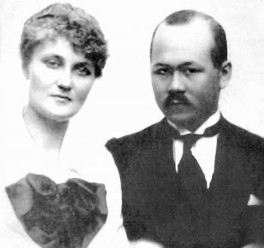
One afternoon in Washington, D.C., I wandered into an old bookstore. The two floors seemed to contain the intellectual wealth of the world — every shelf whispering stories of vanished nations and stubborn identities. I made straight for the section on Central Asia, where the spines of a few rare volumes caught my eye. As I turned the pages of one yellowed book, something stopped me cold: a photograph of Mustafa Shokay, the Kazakh statesman and intellectual who devoted his life to the cause of Turkestan’s autonomy.

Mustafa Shokay in his student days

A Visionary in Exile

Born in 1890 in what is now southern Kazakhstan, Mustafa Shokay emerged as one of the most eloquent voices for Central Asian self-determination during the revolutionary upheavals of 1917. When the Russian Empire collapsed, he helped lead the short-lived Kokand (Turkestan) Autonomy, which sought to build a government based on equality and Muslim representation. Within weeks, the Bolsheviks crushed the movement.

Forced into exile, Shokay continued his work from abroad — first in Turkey, then in France — editing journals and writing tirelessly about the rights and dignity of Turkic peoples. His story embodies the tragedy of a generation of intellectuals who dreamed of independence decades before it arrived.

During World War II, Shokay’s moral integrity was tested once again. Arrested by Nazi forces after the invasion of France, he was asked to lead the “Turkestan Legion” — a military formation of Soviet prisoners of war. Shokay refused, condemning the brutal treatment of the prisoners and rejecting any collaboration with the Nazi regime. He died in captivity in 1941, but his name endures as a symbol of conscience and courage in Kazakhstan.

Richard Pipes and the Rediscovery of Forgotten Nations

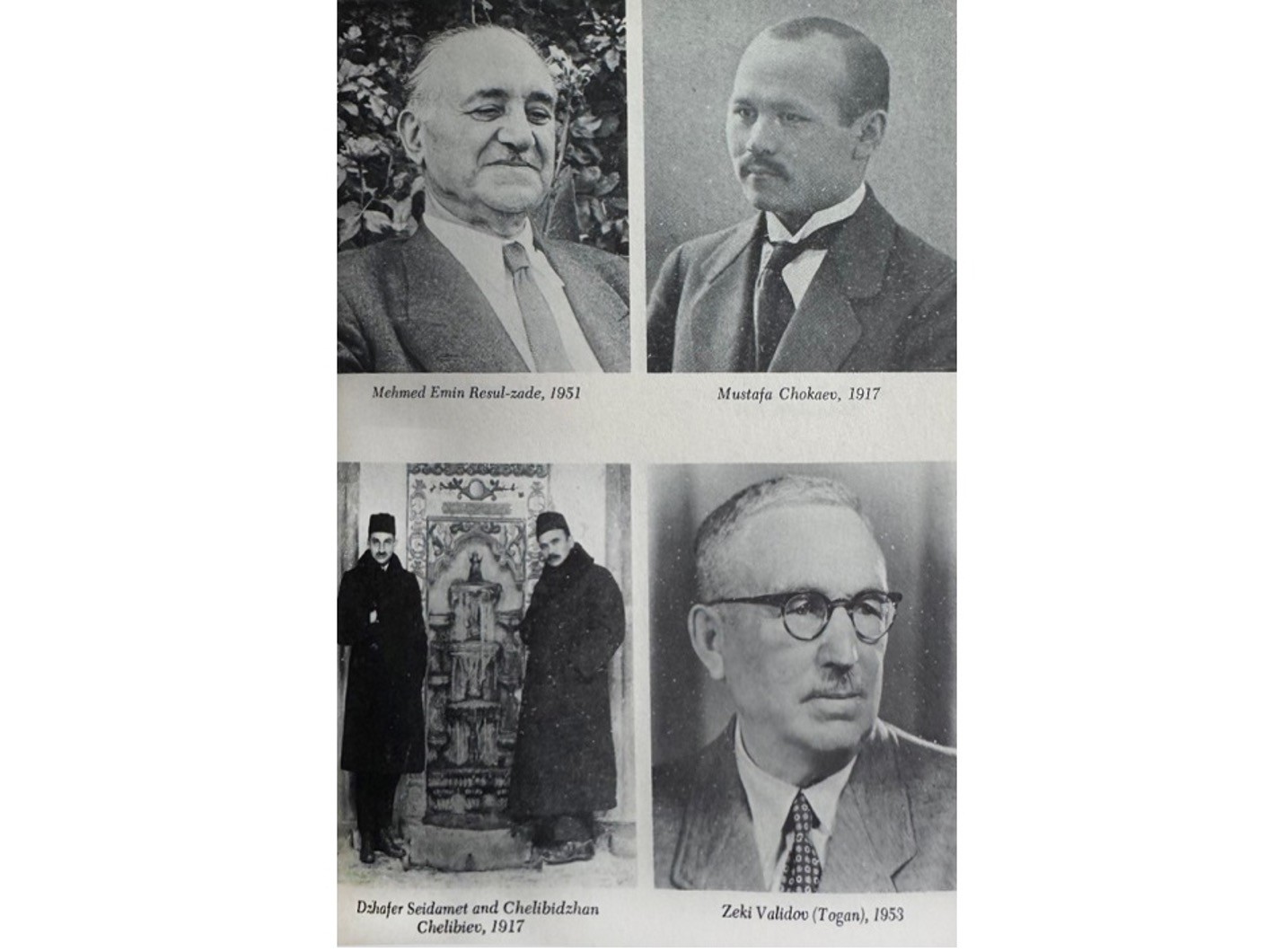
The photograph I found was printed in The Formation of the Soviet Union: Communism and Nationalism, 1917–1923, a classic study by Richard Pipes, the Harvard historian who helped introduce Western audiences to the complexity of the early Soviet era. Pipes’s research explored how the Bolsheviks built a multiethnic empire from the ruins of tsarist Russia, often manipulating national aspirations for political ends.

Crucially, he paid special attention to the Muslim and Turkic regions — to the Caucasus, the Volga, and Central Asia — and recognized that their quest for self-determination represented the “Achilles’ heel” of the Soviet system. His work anticipated the eventual collapse of the USSR and the independence of states like Kazakhstan, Uzbekistan, and Azerbaijan.

In one recollection, Pipes described visiting Almaty in the 1950s and watching a May Day parade. As Kazakhs marched silently past portraits of Stalin, he turned to a Russian colleague and asked: “And what if the Kazakhs, like the Algerians, one day said to the French, ‘Thank you — now you may go’?” The Russians’ reply — “Let them try” — only underscored the arrogance that history would later undo.

The Faces Behind the Pages

Pipes’s book does more than analyze ideology; it preserves human detail. The photograph that startled me that day in the bookstore shows Mustafa Shokay among fellow exiled leaders of the early Muslim world: Mehmet Emin Resulzade of Azerbaijan, Cafer Seydahmet and Çelebizade Çelebiyev of the Crimean Tatars, and Zeki Velidi Togan, the Bashkir scholar and political figure.

Together, they represent a forgotten network of intellectuals who tried — across frontiers and languages — to defend cultural freedom within the collapsing Russian Empire. That such an image survived in an American academic volume is extraordinary. It links the quiet archives of Harvard and Washington with the unquiet history of Turkestan.

Richard Pipes

Why It Matters Now

For Western readers, Shokay’s life may recall better-known figures such as Jan Masaryk, the Czech diplomat who resisted Soviet domination, or Tomáš Garrigue Masaryk, who bridged cultures between East and West. Like them, Shokay believed that moral integrity mattered more than political expediency. He envisioned a modern, pluralist Central Asia — one defined not by empire but by education, law, and dignity.

In today’s world, where Central Asia is again becoming a crossroads of competing powers, Shokay’s ideas feel newly relevant. He warned against both subservience and isolation, urging his contemporaries to engage globally without surrendering their identity.

A Personal Reflection

Holding that old volume in my hands, I felt something close to awe — not just at the photograph itself, but at the improbable route it had taken to reach me. Here, in an American bookstore, a small piece of Kazakhstan’s intellectual history had waited decades for someone to recognize it.

For much of the twentieth century, figures like Mustafa Shokay were nearly erased from official Soviet memory. Yet fragments of their legacy remain scattered across archives and libraries in Europe and the United States. To recover them is to rebuild our own continuity — to show that the story of Kazakhstan is part of the shared history of the modern world, not a footnote to someone else’s empire.

In that sense, finding Shokay’s photograph was more than a coincidence. It was a reminder that history is still alive, waiting for us to listen — even from the quiet corners of a bookstore on the other side of the world.

Uzbekistan Emerges as One of Europe and Central Asia’s Fastest-Growing Economies

Uzbekistan is on track to be one of the five fastest-growing economies in the broader Europe and Central Asia region next year, according to the World Bank’s Europe and Central Asia Economic Update, Fall 2025. The report projects Uzbekistan’s gross domestic product will expand by about 6.2% in 2025 – well above the regional average amid an overall slowdown across emerging European and Central Asian markets. Overall regional GDP growth is expected to ease to roughly 2.4% in 2025, down from 3.7% in 2024, as weaker output in Russia drags on the aggregate.

Central Asia as a whole continues to stand out. The World Bank notes that countries in the region are collectively growing around 5.9% – making it the fastest-growing part of Europe and Central Asia for the third straight year. Within that group, Tajikistan is also forecast to grow by 7%, Kyrgyzstan by 6.8%, and Kazakhstan by 5.5%. That performance keeps much of Central Asia well ahead of Europe’s advanced economies, which are expected to grow by just over 1% on average. Turkmenistan is excluded from the World Bank’s regional calculations because it does not publish internationally comparable economic data.

For Uzbekistan, in particular, inclusion among the region’s top performers marks a sharp turnaround for a country that, less than a decade ago, was largely closed to global markets. By way of comparison, according to the World Bank, Uzbekistan’s economy is about eight times larger than Kyrgyzstan’s and roughly seven times larger than Tajikistan’s. In 2024, Uzbekistan’s gross domestic product was roughly $105 billion, compared with approximately $14 billion for Kyrgyzstan and $15 billion for Tajikistan.

Remittances and Investment Fuel Expansion

Rising income from abroad and expanding investment at home due to an increasingly investor-friendly climate are the twin engines of Uzbekistan’s boom. The World Bank attributes its upgraded forecast partly to stronger-than-expected remittances and higher capital spending. In the first half of 2025, remittances sent home by Uzbek workers – mainly from Russia, Turkey, and South Korea – jumped 27% year-on-year to reach around $8.2 billion, providing a surge in household consumption. At the same time, both public and private investment are climbing.

Government spending on infrastructure and industrial projects remains high, and foreign capital is flowing in at record levels. According to Uzbekistan’s Ministry of Investment, Industry and Trade, foreign direct investment reached about $10 billion in 2024, the highest on record. Projects span energy, agriculture, and information technology, with investors from South Korea, China, the Gulf states, and Europe among the most active. The International Monetary Fund’s 2024 Article IV Consultation observed that “robust investment and resilient consumption” have kept growth well above the overall regional average.

Reforms Since 2016 Have Laid the Groundwork

This acceleration did not happen by chance. Since President Shavkat Mirziyoyev came to power in 2016, Uzbekistan has pursued a series of market-oriented reforms to dismantle decades of economic isolation and stagnation. The government unified the exchange rate, lifted currency restrictions, and simplified customs and tax rules. It began privatizing state enterprises, liberalizing trade, and reducing barriers to foreign business.

A decade ago, exchanging even a few hundred dollars meant walking away with stacks of Uzbek som, and often doing so on the black market. Before Mirziyoyev’s presidency, strict currency controls kept the official exchange rate far below the market rate, so many visitors and locals turned to street exchangers to get a realistic rate. The largest note at the time was 5,000 som, worth less than $2 even at the market rate. That changed after the 2017 currency reform, when the government lifted restrictions, unified the official and black-market rates, and stabilized the currency at around 8,100 som to the dollar. Higher-denomination notes soon followed, and digital payments through HUMO, Uzcard, Visa, and MasterCard have become common in major cities, underscoring how far Uzbekistan’s financial system has come.

The IMF credits these reforms with setting in motion a “virtuous cycle of higher investment, growth, and poverty reduction.” Annual GDP growth has averaged between 5 and 6% since the reform drive began, and the national poverty rate has fallen to 8.9%, with Mirziyoyev stating that, “By the end of this year, we aim to reduce it further to 6%”.

Uzbekistan is now in the final stages of its World Trade Organization (WTO) accession process, with a goal of joining by 2026, a move that could further open its economy and deepen global ties. Once relatively closed, the country now presents one of the most open investment regimes in Central Asia, underscoring how policy changes over less than a decade have transformed the business climate.

Structural Hurdles Remain

Sustaining such rapid growth will not be easy, however. State-owned enterprises continue to dominate banking, energy, and transport, and limit competition. The IMF has warned that the “state’s extensive role in the economy hinders the development of a vibrant private sector.” Continued expansion will require further privatization and regulatory reform.

External headwinds also loom. Slower growth in Russia – a major trade partner and source of remittances – could weigh on Uzbekistan’s outlook. Global inflation or disruptions to energy markets could also tighten fiscal space. The World Bank stresses that to preserve momentum, Tashkent must keep pushing on structural reforms: modernizing utilities, improving education, expanding broadband access, and ensuring transparent public investment. These efforts will determine whether the current boom can evolve into long-term, sustainable prosperity.

A New Role, Both Regionally and Beyond

Uzbekistan’s growth carries weight beyond its borders. As the most populous nation in Central Asia, with approximately 37 million people, its success also supports regional stability and development. A dynamic Uzbek economy strengthens trade routes that link China, South Asia, and Europe through the Middle Corridor, an increasingly important strategic alternative to routes passing through Russia, where Uzbekistan is working to become a central hub connecting East and West.

Western, Middle Eastern, and Asian investors are paying attention. Saudi Arabia’s energy giant ACWA Power has committed around $13.7 billion to renewable and gas projects in Uzbekistan, making it the company’s largest market outside the Kingdom. In banking, Hungary’s OTP Group became the first foreign bank to purchase an Uzbek lender, marking a milestone for the country’s financial sector. The European Bank for Reconstruction and Development now lists Uzbekistan among its top five investment destinations, with over €2 billion committed across 90 projects.

For Western governments and investors, Uzbekistan’s rise broadens access to energy and mineral resources at a time of global volatility, offering reserves of natural gas, uranium, and other materials vital for clean-energy technologies. It also opens a growing consumer market and potential manufacturing base in a region that bridges Europe and Asia. Just as importantly, Uzbekistan’s steady growth provides a measure of political and economic stability along the corridor stretching from the Caspian Sea to western China.

The United States and the European Union have both stepped up their engagement. Washington’s C5+1 platform links the five Central Asian states with the U.S. on trade and energy cooperation. The EU, meanwhile, launched its Global Gateway initiative in the region to finance sustainable infrastructure, with Brussels and Tashkent signing an Enhanced Partnership and Cooperation Agreement in 2022 to strengthen trade and governance ties. In October 2025, the EU introduced the Team Europe Initiative on Digital Connectivity in Central Asia to expand satellite-based internet access and close the region’s digital divide through new investments in infrastructure, technology, and skills. Together, these measures signal a broader Western recognition that Central Asia is gaining in strategic importance.

Outlook

Uzbekistan is entering a new phase of development, with growth no longer driven solely by commodity exports but increasingly by manufacturing, services, and information technology. The World Bank’s 2025 update notes that structural shifts “toward higher-value sectors” are already visible. Uzbekistan’s trajectory over the next few years will matter not only to its citizens but also to investors and policymakers beyond its borders. A stable, reform-minded, and growing Uzbekistan could help shape a more connected, diversified, and resilient Eurasian economy.