• KGS/USD = 0.01144 0%
  • KZT/USD = 0.00194 -0%
  • TJS/USD = 0.10844 -0.46%
  • UZS/USD = 0.00008 0%
  • TMT/USD = 0.28571 0.28%
  • KGS/USD = 0.01144 0%
  • KZT/USD = 0.00194 -0%
  • TJS/USD = 0.10844 -0.46%
  • UZS/USD = 0.00008 0%
  • TMT/USD = 0.28571 0.28%
  • KGS/USD = 0.01144 0%
  • KZT/USD = 0.00194 -0%
  • TJS/USD = 0.10844 -0.46%
  • UZS/USD = 0.00008 0%
  • TMT/USD = 0.28571 0.28%
  • KGS/USD = 0.01144 0%
  • KZT/USD = 0.00194 -0%
  • TJS/USD = 0.10844 -0.46%
  • UZS/USD = 0.00008 0%
  • TMT/USD = 0.28571 0.28%
  • KGS/USD = 0.01144 0%
  • KZT/USD = 0.00194 -0%
  • TJS/USD = 0.10844 -0.46%
  • UZS/USD = 0.00008 0%
  • TMT/USD = 0.28571 0.28%
  • KGS/USD = 0.01144 0%
  • KZT/USD = 0.00194 -0%
  • TJS/USD = 0.10844 -0.46%
  • UZS/USD = 0.00008 0%
  • TMT/USD = 0.28571 0.28%
  • KGS/USD = 0.01144 0%
  • KZT/USD = 0.00194 -0%
  • TJS/USD = 0.10844 -0.46%
  • UZS/USD = 0.00008 0%
  • TMT/USD = 0.28571 0.28%
  • KGS/USD = 0.01144 0%
  • KZT/USD = 0.00194 -0%
  • TJS/USD = 0.10844 -0.46%
  • UZS/USD = 0.00008 0%
  • TMT/USD = 0.28571 0.28%
09 December 2025

What Will Uzbekistan’s Role in Central Asia’s Connectivity Be?

By Robert M. Cutler

A new World Bank report on Central Asian connectivity published in April 2024 highlights the importance of the Middle Corridor, a trade route spanning Central Asia, the Caspian Sea, and the Caucasus, connecting China and East Asia with Georgia, Turkey, and Europe. This corridor is seen as a critical alternative to Russian-controlled routes, especially in light of recent geopolitical tensions. The World Bank identifies ten steps to address bottlenecks in the Middle Corridor, aiming to increase trade volumes by tripling them by 2030. This would significantly reduce travel times and increase trade volumes to 11 million tons, with proper investment and efficiency measures in place.


Uzbekistan and the Middle Corridor

The report emphasizes the need for a “holistic” approach to improving transport connectivity in Central Asia. By this, it means a comprehensive and integrated strategy that combines improvements in infrastructure and logistics improvements with a reduction in border delays and tariffs, along with the harmonization of standards across countries.

This includes improving both physical and digital infrastructure, enhancing governance and efficiency and addressing productivity issues amongst the state-owned enterprises that dominate the transport sectors in the region. The World Bank notes that Uzbekistan would profit from better rail connections with Kazakhstan; yet it does not identify any potentials for such projects.

That is likely because a report by the Bank identified the Trans-Caspian International Trade Route (TITR) through southern Kazakhstan as the preferred program for international support.  Uzbekistan’s participation in the Middle Corridor is still in a developmental stage. Tashkent has an active interest and a strategic geographic location, but concrete actions and project details are still emerging. There have been no public announcements about specific infrastructure projects or investments that Uzbekistan is undertaking within the Middle Corridor framework. It can be foreseen, however, that railway modernization should be high on the list of programs.

There is, however, a new railway project – the Darbaza–Maktaaral line – currently underway in Kazakhstan that could be extended to improve connectivity with Uzbekistan. It is projected for completion in 2025. A second phase including an extension to Kazakhstan’s Syrdarya station could then facilitate a further branch line from Syrdarya to Zhetysai, on the border with Uzbekistan. This project would reduce congestion at the existing Saryagash border crossing between the two countries and thus increase the capacity for transporting goods between the two countries by as much as 10 million tons per year.


The Middle Corridor and improvements to digital connectivity

At present, the region has only limited connectivity.  The Central Asian countries have heavily invested in infrastructure since the turn of the century, but the region still lags behind middle-income countries in both investment and maintenance. Most areas continue to suffer from insufficient infrastructure and expensive services. These in turn hinder the potential for internal and external trade.

The World Bank’s report also provides a comprehensive analysis of the challenges and opportunities for enhancing connectivity in Central Asia. For this purpose, it focuses on both physical and digital infrastructure, underscoring the significance of digital connectivity. The World Bank aims to help enhance digital governance in the region in order to overcome low internet penetration rates and slow download speeds.

The hope is that improving these indicators should foster the private retail telecom sector, facilitating internet access and the provision of services through the renovated networks. The report therefore includes initiatives to set up Earth stations hosting integrated internet exchange points and data centers in the region. Finally, the report highlights the importance of co-operation amongst countries and stakeholders, and the need to create appropriate forums for this, in order to improve the region’s trade and economic prospects.

In this connection, the Asian Development Bank (ADB) — treating Central Asia together with the South Caucasus — recently published its projection that the region’s economy will fall from its 5.3 per cent growth rate in 2023 (thanks to a boost from re-exports and Russian migrant inflows) to 4.3 per cent in 2024, before rebounding to 5.0 per cent in 2025. In implicit co-operation with the World Bank, the ADB has also published a guide to the design, establishment and operation of logistics centers, including the policies that would be necessary to support them.


Conclusion

Revitalization and expanding the Middle Corridor will provide Central Asia an opportunity for Central Asia to enhance its geopolitical leverage and economic resilience. Although Uzbekistan is not at the center of international attention to the Middle Corridor, Tashkent looks to capitalize on its strategic location to continue fostering substantial economic growth.

Collaborative efforts encouraged by the World Bank and the Asian Development Bank promise to transform Central Asia into a more dynamic, interconnected economic landscape. Although Uzbekistan participates widely in discussions for such intensified co-operation, platforms that “drill down” to focus especially on Uzbekistan still seem to be mostly lacking.


Robert M. Cutler has written and consulted on Central Asian affairs for over 30 years at all levels. He was a founding member of the Central Eurasian Studies Society’s executive board and founding editor of its Perspectives publication. He has written for Asia Times, Foreign Policy Magazine, The National Interest, Euractiv, Radio Free Europe, National Post (Toronto), FSU Oil & Gas Monitor, and many other outlets. He directs the NATO Association of Canada’s Energy Security Program, where he is also senior fellow, and is a practitioner member at the University of Waterloo’s Institute for Complexity and Innovation. Educated at MIT, the Graduate Institute of International Studies (Geneva), and the University of Michigan, he was for many years a senior researcher at Carleton University’s Institute of European, Russian, and Eurasian Studies, and is past chairman of the Montreal Press Club’s Board of Directors.
Uzbekistan and EU to Increase Extraction of Rare Earths, Critical Metals

Uzbekistan is launching a slate of promising projects focused on mining rare earth elements (REEs) worth $500 million. The country has a large stock of REEs that are needed for industrial uses, and with the involvement of foreign partners, it plans to ramp up production. Among the critical raw materials (CRMs) targeted for production are molybdenum, tellurium, selenium and graphite.

Uzbekistan recently signed a memorandum of understanding with the European Union in the field of CRM development. The memorandum seeks to ensure a diversified and sustainable supply of CRMs for the world’s economic transition to green energy and a more heavily digitalized existence for humankind, including 5G connectivity, the Internet of Things (IoT) and artificial intelligence (AI).

“This agreement with resource-rich Uzbekistan will help the EU secure much-needed access to critical raw materials. It is part of our wider global work with partners to secure the supply of materials for the future. It will be a major boost for Uzbekistan to realize its ambitions to diversify its economy and sustainably develop its extractive industry,” said European Commission Executive Vice-President Valdis Dombrovskis.

Experts note that Uzbekistan has the second largest reserves of critical raw materials in the region, including deposits of various minerals such as copper, molybdenum and gold. Investing in CRM development will help spur economic growth in Central Asia and increase competition with China.

“China is creating very closed mining and supply chains for rare earth elements. Today, rare earth metals and their production are almost completely monopolized by the People’s Republic of China (PRC). 80-90 percent of rare earth element processing is controlled and carried out directly inside the Middle Kingdom. Beijing hopes that it will be able to use this advantage in international relations, that it will be able to play a dominant role in the emerging new energy and economic architecture of the world economy, which will determine in the future everything from energy to geopolitics,” said Wesley Hill, manager of the international program  called “Energy, Growth and Security” at the International Tax and Investment Center.

National Bank of Kyrgyzstan Slashes Its Key Lending Rate, Explains Move Amid Weaker Inflation

Kyrgyzstan’s national bank has lowered its discount lending rate by 200 basis points to 11%, from 13% previously.

As reported by the Kyrgyz National Bank’s press service, its monetary policy since the beginning of 2022 has focused on limiting the growth of inflationary pressures and ensured stabilization of price dynamics in the country, which led to slower price growth and bringing current inflation within the medium-term target and reducing the level of inflationary expectations of economic entities. Under these conditions, the National Bank decided to reduce the size of the discount rate to 11%.

“Inflationary processes in the Kyrgyz Republic continue to weaken. The indicator of annual inflation in April 2024 amounted to 5.2 percent, down from 7.3 percent in December 2023, and is near the lower boundary of the medium-term monetary policy target of 5-7 percent. [Within] the structure of inflation, a pronounced slowdown in price growth is observed in the food group of goods (to 1.1 percent in April 2024 from 3.4 percent in December 2023), which is also influenced by the decline in prices in world food markets. The growth rate of prices for non-food goods and services is decreasing, with more restrained dynamics,” explained the bank.

In Kyrgyzstan economic activity is robust. Real GDP growth in the first quarter (January-March) of 2024 amounted to 8.8%. As before, the main contributions to economic growth came from the services sector, construction and manufacturing industries. Domestic consumption remains elevated, including at the expense of growth in consumer lending, and is helped along by an increase in net inflows of remittances into the country as Russia’s acute worker shortage due to its war in Ukraine helps Central Asian migrant laborers.

Despite the persistence of uncertainty in the external economic environment, there is a decrease in the intensity of the influence of external  inflationary factors, the National Bank said. “The country’s banking sector remains stable and demonstrates growth of key indicators. In general, commercial banks have sufficient liquidity, which creates the basis for further lending to the real sector of the country. In the money market, short-term interest rates continue to be formed within the interest rate corridor set by the National Bank. The domestic foreign exchange market is stable. The adopted decision corresponds to the course of the National Bank’s monetary policy, aimed at maintaining price stability in the country and creating conditions for macroeconomic stability,” the central bank’s press service summarized.

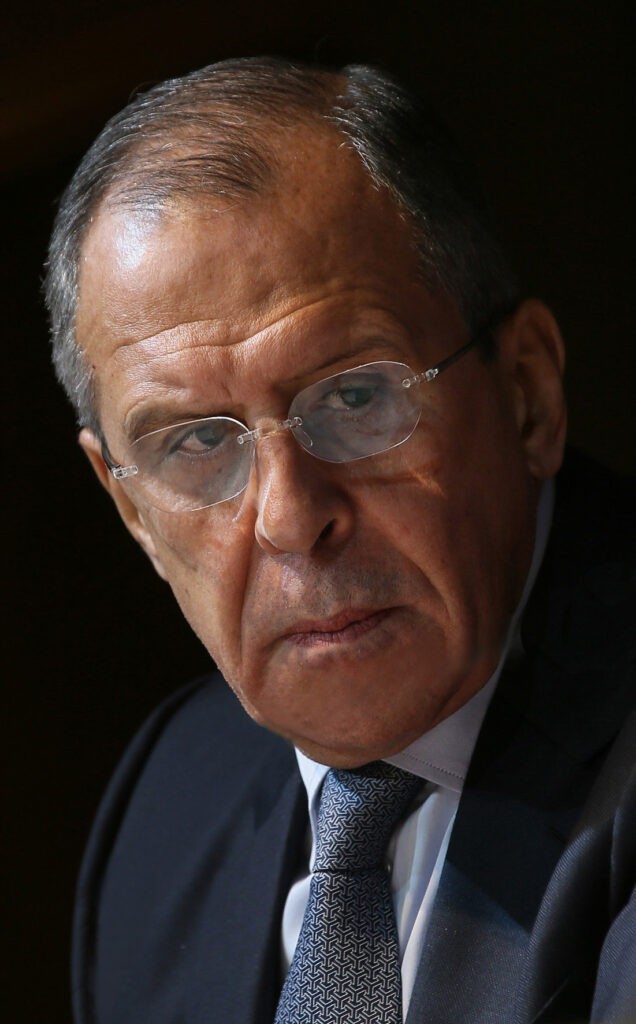
Lavrov Calls Tajik Counterpart to Smooth Over Cracks

Russian Foreign Minister, Sergey Lavrov has called his Tajik counterpart to explain Russia´s anti-terrorism measures at border points, the Russian Foreign Ministry said on Tuesday, following Tajikistan’s complaints that its citizens are being singled out for tough treatment on arrival at Moscow airports.

Lavrov’s telephone call to Foreign Minister Sirojiddin Muhriddin of Tajikistan was initiated by the Russian side, indicating that Moscow is seeking to ease tension between the two countries in the aftermath of the killing of more than 140 people by gunmen who stormed the Crocus City Hall on the outskirts of Moscow on March 22. Several Tajik suspects were arrested, leading to increased scrutiny and harassment of the large population of Tajik migrants in Russia.

This past weekend, Tajikistan urged its citizens to temporarily refrain from traveling to Russia “unless absolutely necessary,” and said more than 1,000 Tajik nationals were being held in detention facilities at Moscow airports in unsanitary conditions and without access to hot meals.

In the phone call, Lavrov and Muhriddin agreed on the need to preserve the “time-tested” alliance between their two countries, the Russian Foreign Ministry said. Muhriddin has previously complained about an “information campaign” of racism and xenophobia against Tajik migrants since the terrorist attack.

“The Tajik side was given additional detailed explanations about the measures taken by Russian services to prevent terrorism in accordance with the legislation of the Russian Federation,” the ministry said. “The tragic events at Crocus City Hall became the main reason for more thorough checks of foreign citizens arriving to us. The temporary nature of the measures taken, their non-direction against a specific nation or religion, and the gradual normalization of the situation at checkpoints are especially emphasized.”

The Islamic State group, which has recruited some people from Central Asia, claimed responsibility for the Crocus City Hall attack.

Kazakhstan and Tajikistan Plan to Double Trade to $2 Billion

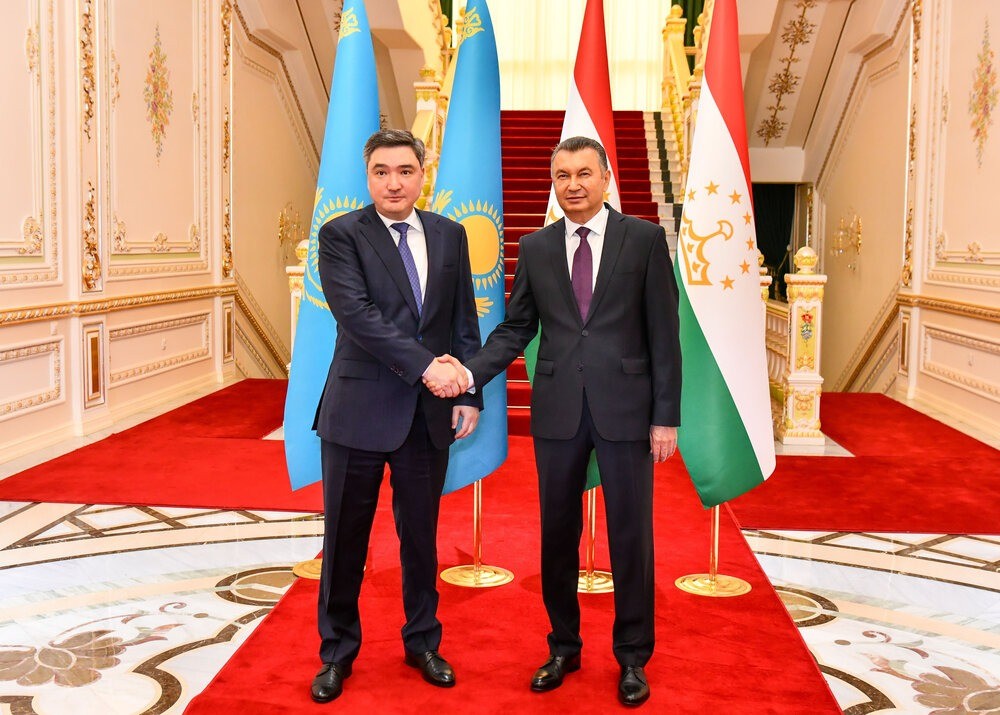
On 30 April, talks held in Dushanbe between Prime Minister of Kazakhstan Olzhas Bektenov and Prime Minister of Tajikistan Kokhir Rasulzoda focused on Kazakh-Tajik cooperation in trade and investment, industrial cooperation, agriculture, transport connectivity, water, and energy.

Kazakhstan is Tajikistan’s fourth largest trading partner and with the aim to double bilateral trade to $2 billion,  Kazakhstan announced its readiness to increase exports of 85 commodities worth about $190 million.

Both governments stressed the importance of developing industrial cooperation by creating new export-oriented joint ventures, with specific reference to Kazakhstan’s large production capacity of equipment for Tajik railways, including  electric and diesel locomotives, in addition to locally manufactured transformers, agricultural machinery, batteries and motor vehicles.

An important issue on the bilateral agenda is cooperation in the water sector and the need for joint action to ensure  the smooth operation of Tajikistan’s Bakhri Tojik reservoir during the growing season.

In further discussions on agricultural cooperation, both parties noted that in January-February, bilateral trade of agricultural products totalled $84.9 million, an increase of 8.9 percent compared to the same period in 2023. Future plans include increasing Kazakh wheat and flour exports to Tajikistan, and creating joint ventures for flour milling and processing of livestock products.


Uzbekistan Signs More Export Contracts With Afghanistan

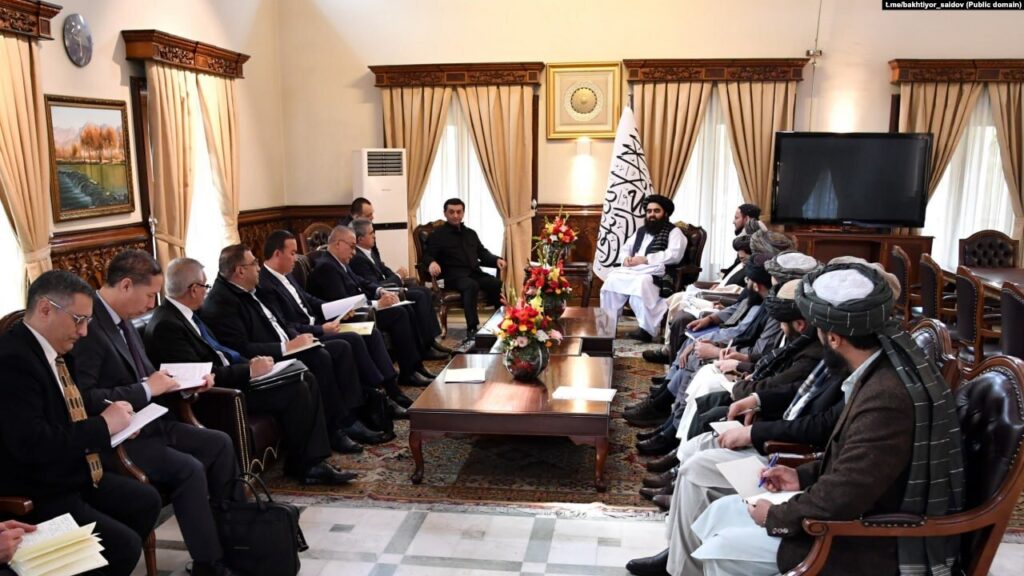
Uzbekistan has agreed to sign export contracts worth $44 million with Afghanistan, according to a report by the Chamber of Commerce and Industry of Uzbekistan.

The contracts were signed during a three-day visit to Tashkent by a delegation of Afghan businessmen. The two nations are also planning to form an Uzbekistan-Afghanistan Business Council, which will have 18 Afghan companies among its members.

Afghanistan’s import market is worth $7 billion. The goods that are most in demand with Afghan importers are agricultural products, processed food, textiles, leather, electrical components and construction materials.