• KGS/USD = 0.01144 0%
  • KZT/USD = 0.00194 -0%
  • TJS/USD = 0.10896 -0%
  • UZS/USD = 0.00008 0%
  • TMT/USD = 0.28571 0.28%
  • KGS/USD = 0.01144 0%
  • KZT/USD = 0.00194 -0%
  • TJS/USD = 0.10896 -0%
  • UZS/USD = 0.00008 0%
  • TMT/USD = 0.28571 0.28%
  • KGS/USD = 0.01144 0%
  • KZT/USD = 0.00194 -0%
  • TJS/USD = 0.10896 -0%
  • UZS/USD = 0.00008 0%
  • TMT/USD = 0.28571 0.28%
  • KGS/USD = 0.01144 0%
  • KZT/USD = 0.00194 -0%
  • TJS/USD = 0.10896 -0%
  • UZS/USD = 0.00008 0%
  • TMT/USD = 0.28571 0.28%
  • KGS/USD = 0.01144 0%
  • KZT/USD = 0.00194 -0%
  • TJS/USD = 0.10896 -0%
  • UZS/USD = 0.00008 0%
  • TMT/USD = 0.28571 0.28%
  • KGS/USD = 0.01144 0%
  • KZT/USD = 0.00194 -0%
  • TJS/USD = 0.10896 -0%
  • UZS/USD = 0.00008 0%
  • TMT/USD = 0.28571 0.28%
  • KGS/USD = 0.01144 0%
  • KZT/USD = 0.00194 -0%
  • TJS/USD = 0.10896 -0%
  • UZS/USD = 0.00008 0%
  • TMT/USD = 0.28571 0.28%
  • KGS/USD = 0.01144 0%
  • KZT/USD = 0.00194 -0%
  • TJS/USD = 0.10896 -0%
  • UZS/USD = 0.00008 0%
  • TMT/USD = 0.28571 0.28%
09 December 2025

Uzbekistan to Raise Energy Prices for First Time in Five Years

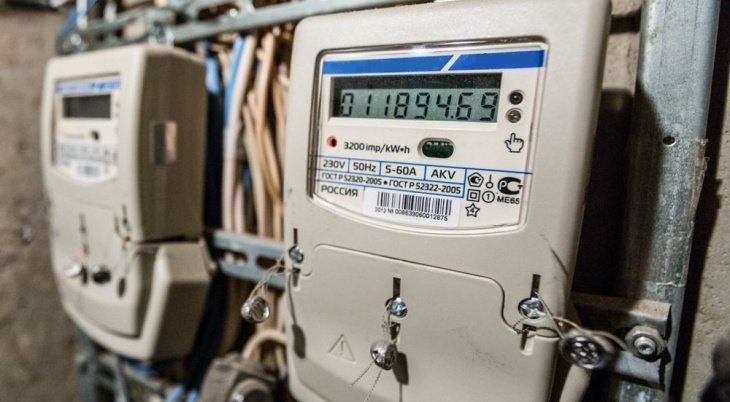
Electricity and natural gas tariffs in Uzbekistan will increase from May 1, and social consumption quotas will also be established. The price increase will be the first since August 2019.

The quota for electricity use was defined up to 200 kWh per month, for gas — from March to October — up to 100 cubic meters, and from November to February, up to 500 cubic meters.

The authorities attribute the price increase to inflation, which has cumulatively reached 66% over the past five years. At the same time, most energy companies are suffering severe losses, with state company JSC Thermal Power Plants reporting losses of 1.6 trillion sum ($125 million).

The Uzbek government has announced assistance to the vulnerable in the form of raising the official poverty line, pensions and allowances. “About $80 million has been allocated from the state budget to support low-income families. These funds have clear sources and will be allocated in a timely manner and without any delays,” Economy and Finance Ministry spokesman Khurshed Mustafayev said.

Tajik Citizens Now Banned From Entering Georgia

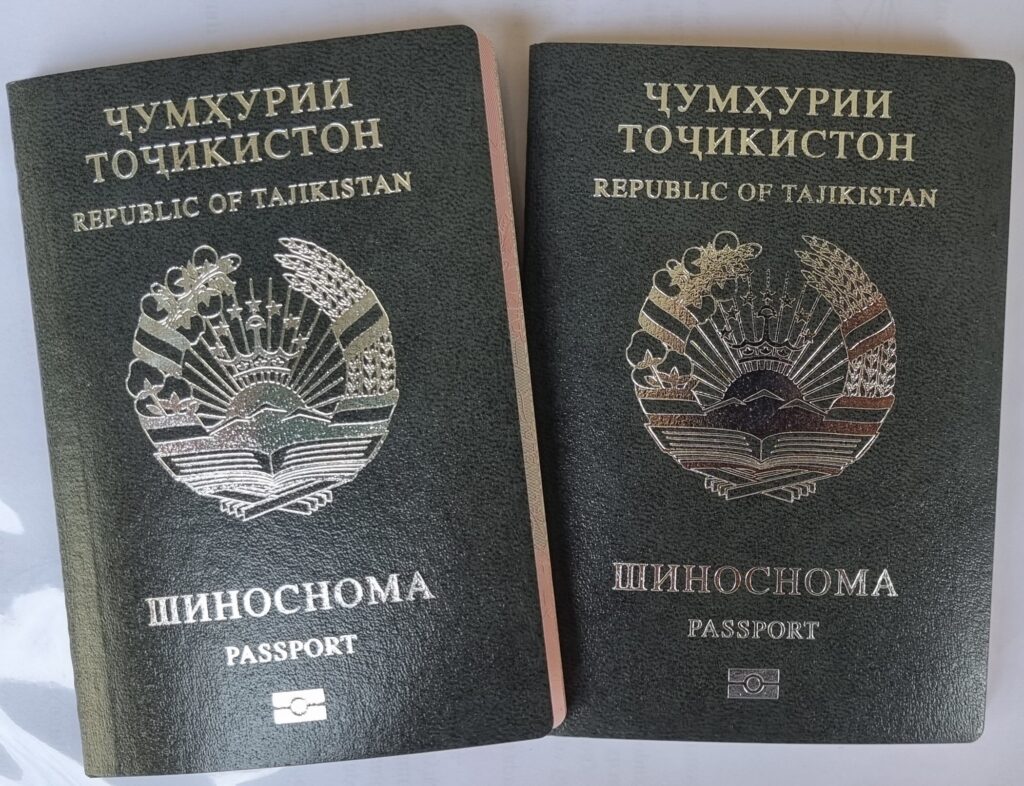
Citizens of Tajikistan have been banned from entering Georgia since the end of March, according to a report from Tajikistan’s Radio Free Europe/Radio Liberty affiliate Radio Ozodi.

The reason for this ban has not been announced. There is a visa-free travel regime between the two countries.

On April 14, Radio Ozodi’s editors received a video of more than 10 Tajik citizens complaining about not being allowed into Georgia.
“I came to Georgia to submit documents to the embassy, I showed all the documents, but they didn’t let me in,” one person said in the video. When asked about the reasons denying entry to citizens of Tajikistan, a Georgian border guard replied: “no explanation.”

After the terrorist attack on Crocus City Hall near Moscow on March 22, which several citizens of Tajikistan are accused of perpetrating, the attitude towards Tajik citizens has changed in many countries of Eurasia. Turkey recently
canceled its visa-free regime with Tajikistan. In response, the Tajik government canceled the visa-free regime for Turkish citizens.

Seismologists From Japan to Study Earthquakes in Almaty

Japanese experts in the field of seismology will come to Almaty, Kazakhstan’s largest city, to study the nature of recent earthquakes there.

According to the foreign ministry, a seminar on seismic safety will be organized by the Kazakh Agency for International Development (KazAID). “The co-organizers of the event are the Japanese International Development Agency (JICA), the Kazakh Research and Design and Experimental Institute of Earthquake Engineering (KazNIISA) and the Center for Emergency Situations and Disaster Risk Reduction,” a statement said.

Japanese seismologists will share their experience with Central Asian counterparts. They will present advanced technologies and standards of seismic isolation, as well as discuss possible cooperation in seismic construction practices. Japanese seismologists will also study the recent earthquakes in Almaty, to allow Kazakh specialists to develop strategies to prevent risks in the future.

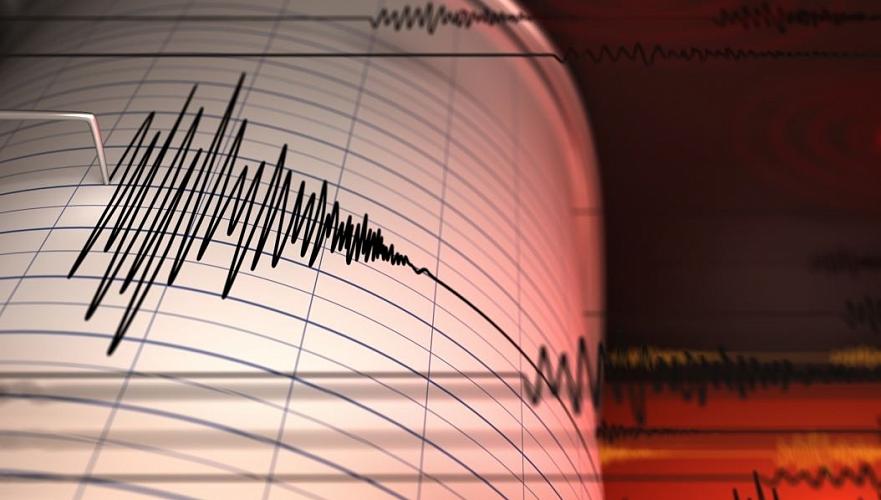
As previously reported, on January 23 and March 4 in Almaty, sensors recorded tremors with magnitudes of more than five points on the Richter scale. Experts say that the fluctuations of the Earth’s crust had an unusual structure for the region.

No Lessons Being Learned From Kazakh Floods, Says Political Analyst

Kazakhstan has been prone to flooding before, but the 2024 Kazakh floods have added a catastrophic page to the chronicles. Political analyst Marat Shibutov tells The Times of Central Asia that only extremely tough measures can motivate ministers and akims (local government executive) to actually work on flood prevention.


The Floods Have Not Yet Peaked

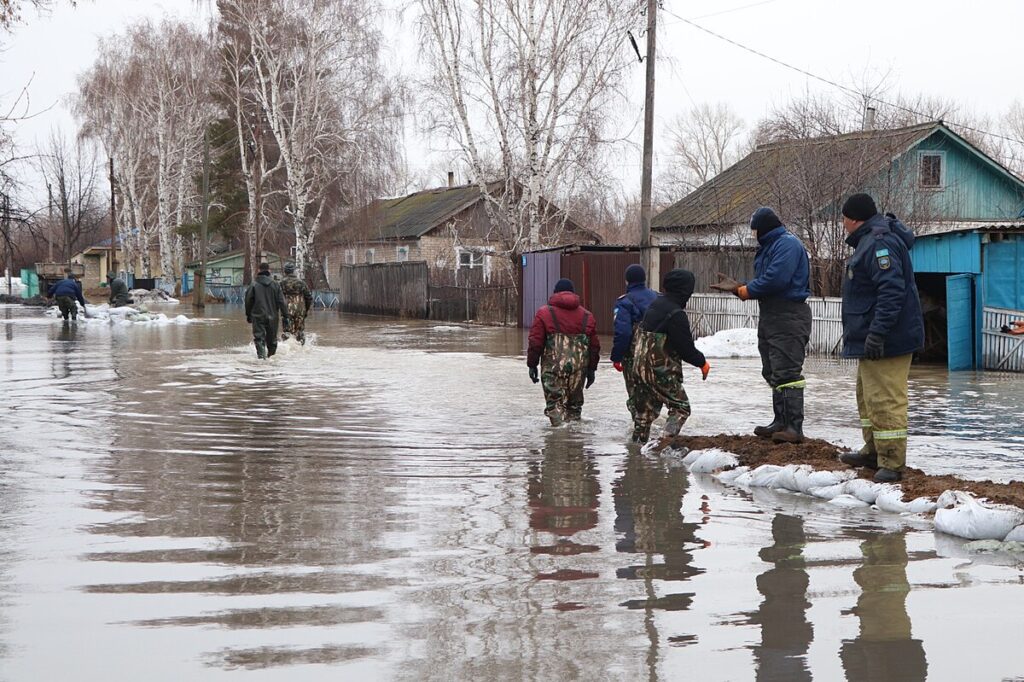
Areas and homes in many regions of Kazakhstan — Atyrau, West Kazakhstan, Aktobe, Akmola, Kostanay, East Kazakhstan, North Kazakhstan and Pavlodar — remain flooded. According to the Ministry of Emergency Situations, more than 113,000 people have been evacuated from the various disaster zones. The threat of another destructive wave of surface water still remains for major cities, even high-rise buildings are battling high in water in Atyrau, Petropavlovsk and Kostanay.

Kazakh president Kassym-Jomart Tokayev has already visited the affected regions several times. According to local reports, people are now concerned not with punishing those responsible, but with paying fair compensation for lost housing, farms and livestock, and, most importantly, with creating an effective flood control system.

In particular, residents of dacha (detached suburban) houses in Uralsk blocked the highway, demanding that the akim of the city include them in the list of those to be paid. If more floods occur it will be impossible to live in flood-prone areas. The only alternative is a radical revision of the requirements for residential zoning protective measures.

Tokayev spoke about the responsibility for breached and unfinished dams and dikes, as well as the overlooked forecasts made by meteorologists about increased snowmelt and the threat of flooding not only from rivers, but also from the steppes in late March. For the lack of timely flood control measures, he announced a harsh reprimand to First Deputy Prime Minister Roman Sklyar and Minister of Water Resources and Irrigation Nurzhan Nurzhigitov. Local administrators weren’t spared either, with harsh reprimands and warnings for incomplete official compliance to the akims of Aktobe, Kostanay and West Kazakhstan regions — and a harsh reprimand to the akims of Atyrau, Akmola, Almaty, Pavlodar and Abay regions.

According to official data from the Ministry of Emergency Situations, in 2024 to date seven billion tenge ($15.5 million) have been allocated just to local executive bodies for flood mitigation activities. In March 2024, 66 billion tenge ($147 million) was allocated to carry out work relating to combating emergency situations. From 2019 to 2023, the Emergency Situations Ministry’s expenditures increased almost fourfold, to 264 billion tenge ($588 million). Over the past five years, over 762 billion tenge ($1.7 billion) has been allocated from the national budget. What exactly those funds were towards remains an open question — possibly as part of ongoing criminal cases.


Disasters of the Past

It’s not the first time that high water has caused irreparable damage in Kazakhstan. In Uralsk they still talk about a serious flood in 1942. In early May, the water level in the Urals reached 943 centimeters, and a 9-point storm raged on the river. Over 500 families were evacuated from the flooded areas of the city.

More recently, on a March night in 2010, a similar tragedy occurred. A dam burst near the village of Kyzylagash in Almaty region, killing 45 people — including eight children — and injuring another 300.

Some regions are chronically under threat from high water. In the spring of 1993, a dam of the Aktobe reservoir burst. More than 650 settlements were affected, including 11 towns, and several people died. More than 12,700 residents were evacuated from the Aktobe, Atyrau and West Kazakhstan regions.

Each time the disaster was accompanied by serious material damage, with thousands of animals killed. Significant changes to flood control protocols were never made, with administrative failures repeated year after year.


Negligence Must Be Criminalized

Political analyst Marat Shibutov believes that until the toughest measures are taken against violators of environmental laws and corrupt officials, Kazakhstanis won’t be able to rid themselves of flood threats.

“Floods have long-term and short-term causes. Long-term causes include, first of all, allowing construction in floodplains. People are allowed to build in floodplains and then wonder why they are flooded. Dachas are remodeled into larger, insulated houses, although originally these dachas were built as sheds because they flood every year. Besides, rivers are not cleaned. They do not carry out [dredging] works — this is one of the most important things, because they not only allow to increase the flow, but also free the channel from silt and clay, which is good for fish spawning. It is also necessary to plant snow-protecting strips of trees so that the snow melts in the fields and does not go into the rivers. Among other things, such a measure increases crop yields,” Shibutov explained.

Regarding more short-term reasons, Shibutov attributed blame to heavy snowfalls, after which the snowmelt wasn’t absorbed into the soil. “There were all forecasts, people had to be resettled in advance, make stocks and evacuation points. Preparations had to be made. At the local level, information work was a failure,” he added.

Currently, Shibutov noted, it’s only possible to evacuate people and drive away livestock, and to deliver food and water to those who remain in flooded areas. When asked whether lessons will be learned from the unprecedented flood, the political scientist answered in the negative. “No, they won’t. I do not think that the current people [akims, ministers] are able to do something in the long term. In a year or a couple of years we will drown again anyway. The president sets a task, but he does not punish those who don’t fulfill them… This situation is no joke: only severe punishments will make the apparatus work,” he concluded.
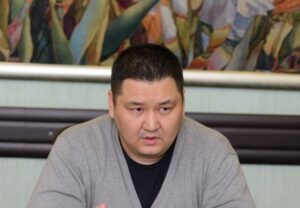
Marat Shibutov; image: @365

Islamic State – Khorasan Province: An Element of Geopolitical Rivalry?

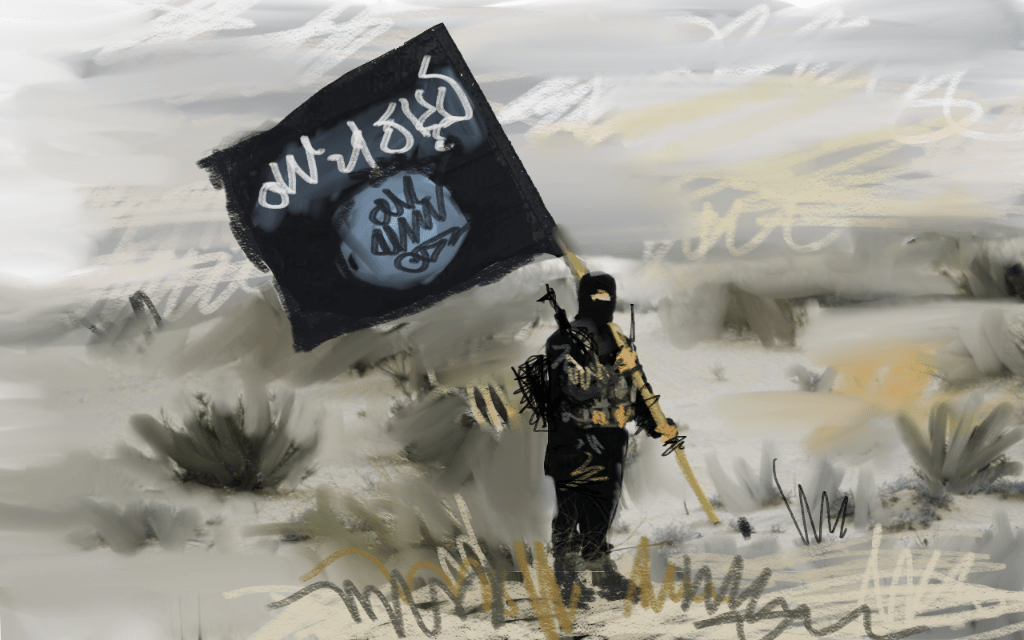
In the aftermath of the terrorist attack in Moscow, the media has once again been saturated with discussions about the terrorist group Islamic State – Khorasan Province (ISKP), also known as ISIS-Khorasan and “Wilayat Khorasan.”

At this point, most of the coverage has focused on the Afghan wing of Islamic State, and not its other “wilayats,” such as on the Arabian Peninsula, “Wilayat Sinai” (Islamic State – Sinai Province) or “Wilayat Caucasus” (Islamic State – Caucasus Province).

The international media covering the ISKP attack in Moscow, including journalists from Russia, widely speculated that the terrorist group is looking at Central Asia as its next base. Such media coverage included a variety of sentiments indicating that Central Asia should be worried. Reports have suggested that the alliance of Central Asian leaders with Moscow makes them look weak in the eyes of ISKP and that the terrorist threat emanating from Central Asia has become a point of weakness for the Putin regime. It has also been suggested that Islamic terrorism in Central Asia remains a real problem for the FSB, and even though the FSB has extensive experience in fighting extremists in the Caucasus, having committed enormous resources to the issue, Central Asia is a blind spot. Alarm bells sounded that regional jihadist groups have become more powerful.

Thus, the terrorist attack in Moscow significantly increased media attention on ISKP in the context of Central Asia. Overall, the ISKP theme fits into existing narratives regarding threats to the southern border of the CIS.

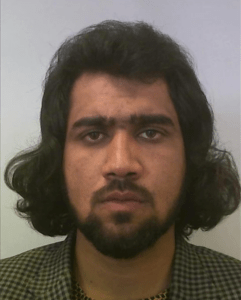
Sanaullah Ghafari, Emir of ISIS-K; image: rewardsforjustice.net


The more likely reality is that in Central Asia, ISKP has been more of a challenge to regional security than an existential threat. In recent years, the region has been broadly successful in dealing with threats from Afghanistan.


How real of a threat is the ISKP?

A very narrow circle of experts can give a truly objective assessment of ISKP. Information about ISKP membership is contradictory and seemingly based on political considerations. As such, it is difficult to back these up with statistics. The number of fighters reported vary greatly from 2,000 to several tens of thousands.

What remains indisputable are two facts: 1. Despite measures declared by the Taliban to eliminate the ISKP, terrorist acts by the group are still recorded throughout Afghanistan, and 2. The group lacks a serious infrastructure in Afghanistan. The activity of ISKP in Afghanistan consists of carrying out targeted, low-level terrorist acts, mainly against local Hazara Shiites.

Based on the assessments of the UN Afghanistan monitoring team, the potential of ISKP success looks dubious. In its reports, UN experts point to a decrease in ISKP activity in Afghanistan. Recently, the UN has avoided estimating the size of the group, but previous estimates put it at 1,500-2,200 fighters. At the same time, according to a UN report in January, “ISKP adopted a more inclusive recruitment strategy, including by focusing on attracting disillusioned Taliban and foreign fighters.” Taliban officials, meanwhile, tend to play down the situation. According to the press secretary of the Afghan Ministry of Interior Affairs, as quoted by the Afghan site TOLOnews, the number of incidents fell 40% in 2023 versus the year before although their geographic footprint included the provinces of Badakhshan, Baghlan and Herat and “even the capital.” The Taliban admit that there are IS cells in the country, with which they claim to be successfully fighting.

In the end, geopolitical competition for influence in the region, also called the latest round of the Great Game for Central Asia, will likely include a component on countering terrorism. On the one hand, as Russia becomes increasingly concerned about the possibility of losing its influence in the region to China and the West, carrying out anti-terrorism measures abroad could ultimately become its ‘Trojan horse.’ The surge in xenophobia against people from Central Asia and Islamophobia seen inside Russia only strengthens these trends. On the other hand, Moscow is increasing pressure on countries in the region due to what it claims to be the terrorist threat to Russia emanating from Central Asia. In this regard, the choice of using Tajik citizens for the terrorist attack likely comes from the fact that they are the most convenient. Tajikistan ranks first in terms of labor migration to Russia. It borders Afghanistan, where Tajiks represent the second largest ethnic group. Tajik society is still dealing with the consequences of the civil war of the 1990s in which religion and Islamic institutions played an important role. Additionally, the Tajik state tightly controls religious life in the country. Note that the Jamaat Ansarullah group, also known as Tehrik-i-Taliban Tajikistan that operates in northern Afghanistan, is purely Tajik.

It seems that currently the ISKP’s numbers and bases in Afghanistan as well as in the Central Asian countries are not rising. The discussions surrounding the group should be taken in the context of intensifying geopolitical conflicts, with ISKP being turned into a “formidable regional structure” and thus gaining notoriety in the world.


Aidar Borangaziyev is an Open World Foundation expert and a consultant for the Investment Group, ACME.

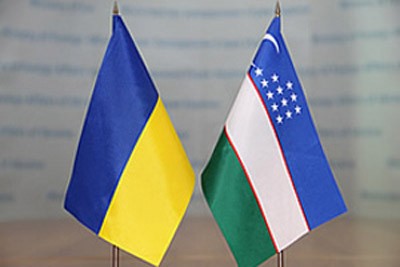
Uzbekistan Considers Hosting Relocated Ukrainian Enterprises

Representatives of Uzbek and Ukrainian businesses have discussed the relocation of certain Ukrainian production enterprises to Uzbekistan. The meeting was held in Kyiv as part of a business council established in 2021.

Heads of state bodies and businessmen — including the founder of the korzinka.uz supermarket chain and co-founder of Newmax Technologies, Zafar Hashimov — participated in the meeting to offer their perspectives on Ukrainian-Uzbek economic ties. Since the beginning of Russia’s attack on Ukraine in February 2022 the countries’ bilateral trade turnover has significantly decreased — in 2023 it amounted to $320 million, down from $747 million in 2021.

One of the issues discussed was the customs value of textile products exported from Uzbekistan to Ukraine. An important aspect of the discussion were proposals to transfer to Uzbekistan some Ukrainian production enterprises affected by military actions — as well as to expand cooperation in the creative economy.

Several Ukrainian investment projects are already being implemented in Uzbekistan. The pharmaceutical company Yuria-Pharm acquired the Reka-Myod enterprise in 2023. Another pharmaceutical company, Lekhim, entered the Uzbek market in 2021 and built a large production complex that opened in 2023.