• KGS/USD = 0.01144 0%
  • KZT/USD = 0.00196 -0%
  • TJS/USD = 0.10899 0%
  • UZS/USD = 0.00008 0%
  • TMT/USD = 0.28490 0%
  • KGS/USD = 0.01144 0%
  • KZT/USD = 0.00196 -0%
  • TJS/USD = 0.10899 0%
  • UZS/USD = 0.00008 0%
  • TMT/USD = 0.28490 0%
  • KGS/USD = 0.01144 0%
  • KZT/USD = 0.00196 -0%
  • TJS/USD = 0.10899 0%
  • UZS/USD = 0.00008 0%
  • TMT/USD = 0.28490 0%
  • KGS/USD = 0.01144 0%
  • KZT/USD = 0.00196 -0%
  • TJS/USD = 0.10899 0%
  • UZS/USD = 0.00008 0%
  • TMT/USD = 0.28490 0%
  • KGS/USD = 0.01144 0%
  • KZT/USD = 0.00196 -0%
  • TJS/USD = 0.10899 0%
  • UZS/USD = 0.00008 0%
  • TMT/USD = 0.28490 0%
  • KGS/USD = 0.01144 0%
  • KZT/USD = 0.00196 -0%
  • TJS/USD = 0.10899 0%
  • UZS/USD = 0.00008 0%
  • TMT/USD = 0.28490 0%
  • KGS/USD = 0.01144 0%
  • KZT/USD = 0.00196 -0%
  • TJS/USD = 0.10899 0%
  • UZS/USD = 0.00008 0%
  • TMT/USD = 0.28490 0%
  • KGS/USD = 0.01144 0%
  • KZT/USD = 0.00196 -0%
  • TJS/USD = 0.10899 0%
  • UZS/USD = 0.00008 0%
  • TMT/USD = 0.28490 0%
09 December 2025

Uzbek Military Receives NATO Training

Young recruits from Uzbekistan’s armed forces have been gaining new skills with military professionals from NATO.

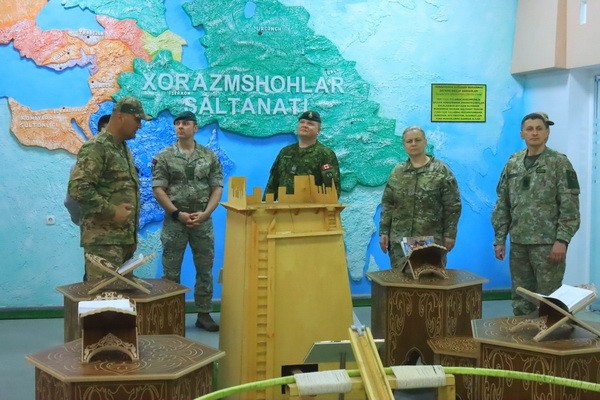
Senior staff from NATO recently visited Uzbekistan’s military training center, affiliated to the country’s Ministry of Defense. Uzbek cadets were given classes on a number of subjects, including on how non-commissioned officers are trained in NATO member states.

Uzbekistan’s army ranked 65th out of 145 countries in the most recent PowerIndex rating. The country’s defense sector conducts international exercises on a regular basis; last October Uzbek servicemen won an army competition in South Korea, while this year the training range in the city of Termez will host joint exercises with the Indian military.

Uzbekistan cooperates with NATO under the Partnership for Peace program.

Kazakhstan Seeks Investment from South Korea

Over the past ten years, South Korea’s investments in Kazakhstan’s economy have exceeded $6.8 billion and several joint Kazakh-Korean projects with investments of about $1 billion are currently under implementation.

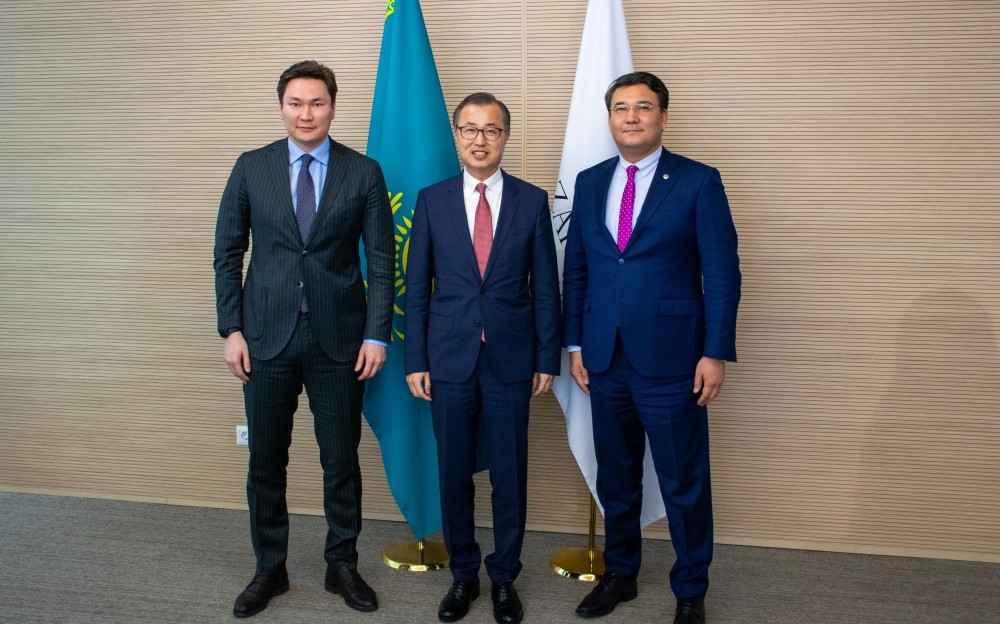
The potential to increase and diversify bilateral trade and expand investment cooperation was the focus of a meeting on 16 April between Gabidulla Ospankulov, Chairman of the Investment Committee of the Ministry of Foreign Affairs of Kazakhstan, Yerzhan Yelekeyev, Chairman of the Management Board of National Company Kazakh Invest, and Joe Tae-Ik, Ambassador of the Republic of Korea to Kazakhstan.

During the meeting, Ospankulov spoke of the large number of Korean companies working in Kazakhstan and emphasizing that developing economic and investment relations with South Korea is a priority, pledged comprehensive support to companies implementing projects in the country.

Kazakh Invest’s Yelekeyev gave thanks to Korean car brands for their input into the Kazakhstan’s successful development of the domestic automotive industry and reported on the high potential for strengthening partnerships in tourism, energy, and petrochemistry.

Looking ahead, he stated, “South Korean entrepreneurs work in an export-oriented economy and create competitive, innovative products. We want to adopt this expertise and technology in developing priority sectors in Kazakhstan. In this regard, we are ready to provide a full range of support services, including an existing package of preferences.”

In return, Ambassador Joe Tae-Ik confirmed his intention to assist in implementing new joint investment projects.

Challenges Facing Uzbekistan’s Textile Industry

On April 16, President Shavkat Mirziyoyev chaired a government meeting on increasing exports and investments in Uzbekistan’s textile industry which currently comprises over 6,000 enterprises and has a workforce of 570,000.

Due to investments and new technologies, productivity has increased 4.2-fold over the past seven years. Last year, the manufacture of textiles, clothing and knitwear was valued at $8.2 billion and exports amounted to $3.1 billion.

However, the share of products with high added value in the export of finished goods remains low. Almost 80% of all exports are destined for traditional markets, while exports to Europe fall below expectations. This is largely because only 175 Uzbek enterprises are equipped with international certifications required for export to developed countries.

According to an analysis by the Boston Consulting Group of Uzbekistan’s raw materials, the country has the potential to provide products worth at least $15 billion and create 500,000 new jobs.

The cost of one kilogram of yarn is 28% cheaper than the world average giving Uzbekistan a major competitive advantage but access to raw materials remains a key challenge faced by domestic textile enterprises. Whilst the country has the capacity to process 1.3 million tons of cotton fibre, it currently produces about 1 million tons due to the high costs of cultivation.

Reflecting on the situation, President Mirziyoyev emphasized the pressing need for Uzbekistan’s textile industry to engage in the complete processing of existing raw materials to create high added value and redress the balance by switching from exporting to traditional cheap markets to more lucrative alternatives.

In addition to increasing the number of international export certificates to producers, the meeting highlighted the importance of extensive advertising campaigns in European countries and forging new partnerships with international textile and garment brands.

IMF Forecasts 2.3% Growth in Turkmenistan’s Economy

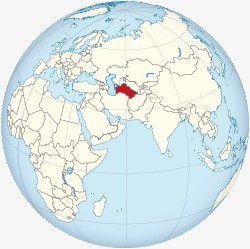
In her report on the International Monetary Fund (IMF) mission to Turkmenistan, from 27 March – 9 April, Ms. Anna Bordon announced that Turkmenistan’s economy is set to expand by around at 2.3% in the coming year.

According to the IMF mission’s assessment of the economic outlook and risks of Turkmenistan’s macroeconomic and financial developments, the country’s economic activity moderated in 2023 and inflation is on the rise.

IMF staff estimate that post-pandemic growth surged to 5.3% in 2022 before falling to 2% in early 2023 as world commodity prices subsided, monetary policy tightened, and pressures on exchange rates abated. A temporary situation, inflation began to pick up later in 2023 and is projected to gradually rise to 8% mainly due to the country’s policy to increase public sector wages and pensions by 10% per year.

“To improve spending efficiency, Turkmenistan should enhance its targeting of social spending, move toward public wage increases based on performance, and enhance public investment management,” said Ms Borden.

The IMF estimates that growth of hydrocarbon production will stabilize at around 2%. In contrast, non-hydrocarbon growth is expected to remain subdued, given the challenging geopolitical and business environment, investment inefficiencies, the significant overvaluation of real exchange rates, and burdensome standards imposed by international regulations.

The end of mission statement concluded: “The authorities are adequately focused on economic diversification. A more market-based economic diversification strategy would be preferable. Sustained macroeconomic stability is a pre-requisite for diversification, which importantly requires adjusting the exchange rate and eliminating exchange restrictions.”

It was also recommended that Turkmenistan “gradually phase out administrative controls and reduce the footprint of the state in the economy”.

Kyrgyz Climber in Nepal Sets Sights on Three of the World’s Highest Peaks

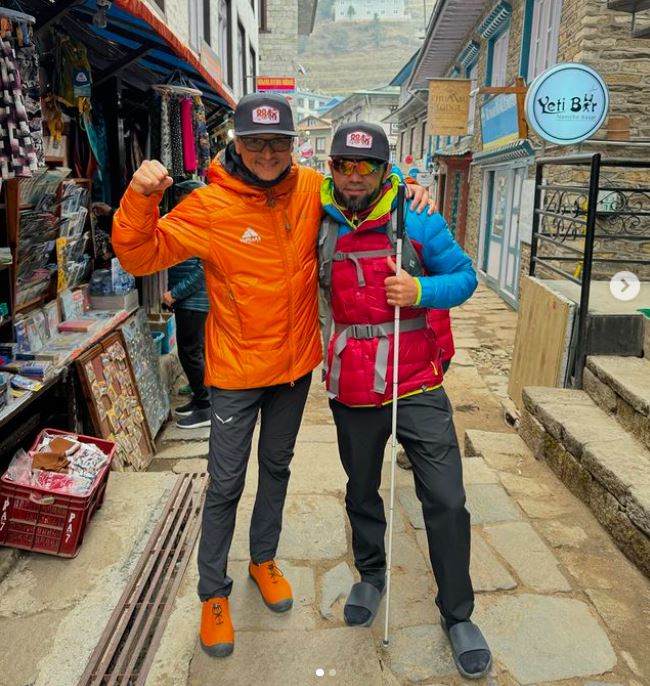
The head of Kyrgyzstan’s mountaineering federation is in Nepal, preparing to climb three of the world’s highest peaks in the next few months.

First up for Eduard Kubatov is the Himalayan mountain of Lhotse. Next is Makalu. Both are more than 8,000 meters high. Three years ago, Kubatov unfurled the Kyrgyz flag on the summit of Everest, the world’s highest mountain at 8,849 meters above sea level.

“If everything goes well, I will go to Pakistan in June in the Himalayas and try to climb the great K2 peak (8611 m.),” Kubatov wrote on Facebook.

Last week, Kubatov got a send-off in Bishkek from Kyrgyz President Sadyr Japarov, who presented a national flag to the mountaineer and wished him success on his expedition.

Kubatov aims to climb all 14 mountains in the world that are 8,000 meters above sea level. All are in the Himalayan and Karakoram ranges. Kubatov´s other feats include climbing the Argentine peak Aconcagua, the highest in the Americas, as well as Mt. Elbrus in Russia, Mt. Kosciuszko in Australia, and Mt. Kilimanjaro in Africa.

Kyrgyzstan has some formidable mountains, including Jengish Shokusu, Pik Lenin, and Khan Tengri. All are in the 7,000-meter range. Since 1972, 33 Kyrgyz mountaineers have been awarded the title “Snow Leopard” for climbing those peaks – eight of them did so after Kyrgyzstan´s independence in 1991, according to Kubatov.

In February, Russian climber Evgeny Glazunov died while descending from another Kyrgyz peak, Aksu. Kubatov wrote that Glazunov was a great friend to Kyrgyzstan’s climbing community.

“All the young athletes admired your example and looked up to you!” Kubatov wrote on Facebook. “So many plans and all of them remained at the foot of the cold and great rock! I will always remember you, my brother, and forgive us all for not saving you!”

Kubatov is a business consultant and honorary consul for Indonesia in Kyrgyzstan. He has a prominent profile, giving talks to students and meeting with sponsors. He also loves to bury himself in a book.

“Books are probably the strongest passion in my life after mountains,” he wrote. “Read and love books, and they will reciprocate like mountains!”

Migrant Laborers in Russia Deprived of Free Medical Care

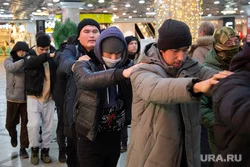
Citizens of Tajikistan and Uzbekistan working in Russia will not be able to count on free medical care until 2026 within the framework of compulsory medical insurance (CMI), according to a report by the Ministry of Health of Russia.

Based on agreements with the republics, citizens can be employed only if they acquire voluntary medical insurance (VMI) policies or with the employer’s guarantee to pay for medical care at his or her own expense. Migrants can only receive free emergency medical care.

The Crocus City Hall terrorist attack prompted the Russian Interior Ministry to take a number of restrictive measures relating to migrants. Among the planned changes are a reduction in the term of temporary stays by foreigners to 90 days per calendar year, introduction of mandatory biometric identification at entry, and the creation of digital profiles for foreigners.

There are also more radical proposals. For example, Sergei Mironov, chairman of the Just Russia – For Truth political party, said that he believes it’s necessary to introduce a visa regime between Russia and Central Asian countries.

Labor migrants remain one of the most vulnerable parts of the population, and Uzbekistan has in recent years taken a number of measures to protect their interests both inside and outside the country. A recent decree by President Shavkat Mirziyoyev provides for reimbursement of expenses for taking qualification exams in foreign languages and professional trades of up to $80, for applying for a work visa of up to $134, and for buying travel tickets of up to $53. In addition, migrants are provided with subsidies for insurance for the migrant laborer and his or her family members, as well as guaranteed free medical examinations for them. Workers abroad whose rights may have been violated can count on free legal counsel. They can also contact 24-hour migrant support call centers in case of difficult situations.

The Ministry of Employment of Uzbekistan is currently negotiating the opening of representative offices or centers in Great Britain (London), Germany (Berlin), Turkey (Istanbul) and Saudi Arabia (Riyadh) to provide legal assistance to migrant workers. The state employs workers returning from labor migration or provides subsidies to start their own businesses.