• KGS/USD = 0.01144 0%
  • KZT/USD = 0.00196 -0%
  • TJS/USD = 0.10899 0%
  • UZS/USD = 0.00008 0%
  • TMT/USD = 0.28571 0.28%
  • KGS/USD = 0.01144 0%
  • KZT/USD = 0.00196 -0%
  • TJS/USD = 0.10899 0%
  • UZS/USD = 0.00008 0%
  • TMT/USD = 0.28571 0.28%
  • KGS/USD = 0.01144 0%
  • KZT/USD = 0.00196 -0%
  • TJS/USD = 0.10899 0%
  • UZS/USD = 0.00008 0%
  • TMT/USD = 0.28571 0.28%
  • KGS/USD = 0.01144 0%
  • KZT/USD = 0.00196 -0%
  • TJS/USD = 0.10899 0%
  • UZS/USD = 0.00008 0%
  • TMT/USD = 0.28571 0.28%
  • KGS/USD = 0.01144 0%
  • KZT/USD = 0.00196 -0%
  • TJS/USD = 0.10899 0%
  • UZS/USD = 0.00008 0%
  • TMT/USD = 0.28571 0.28%
  • KGS/USD = 0.01144 0%
  • KZT/USD = 0.00196 -0%
  • TJS/USD = 0.10899 0%
  • UZS/USD = 0.00008 0%
  • TMT/USD = 0.28571 0.28%
  • KGS/USD = 0.01144 0%
  • KZT/USD = 0.00196 -0%
  • TJS/USD = 0.10899 0%
  • UZS/USD = 0.00008 0%
  • TMT/USD = 0.28571 0.28%
  • KGS/USD = 0.01144 0%
  • KZT/USD = 0.00196 -0%
  • TJS/USD = 0.10899 0%
  • UZS/USD = 0.00008 0%
  • TMT/USD = 0.28571 0.28%
09 December 2025

20,000 Families in Kyrgyzstan to Receive $1,100 Each for Entrepreneurship

Low-income families who receive cash benefits from the state will now be able to sign a social contract with the state – as long as recipients have a real business plan, according to a report by the Ministry of Labor, Social Security and Migration of Kyrgyzstan.

As part of the fight against poverty in 2024, 20,000 families will enter a social contract with the state. According to the Ministry of Labor, priority will be given to those with three or more children or people with disabilities. The ministry emphasized that the money can also be allocated to families for the development of existing businesses. Businesses will need to comply with the state program, “One Village – One Product.”

“It is supposed to produce from local resources, develop skills of producers in terms of business management, marketing and expanding opportunities for product sales, promoting products in local and international markets, creating local brands and increasing the value of products,” the Ministry of Economy and Commerce stated in describing the program.

The “One Village – One Product” project has been underway in the Issyk-Kul region for many years and is showing good results. New jobs are being created and the region is seeing increased profits, including from exporting products abroad. Previously, this project was supported by Japanese humanitarian organizations working in Kyrgyzstan.

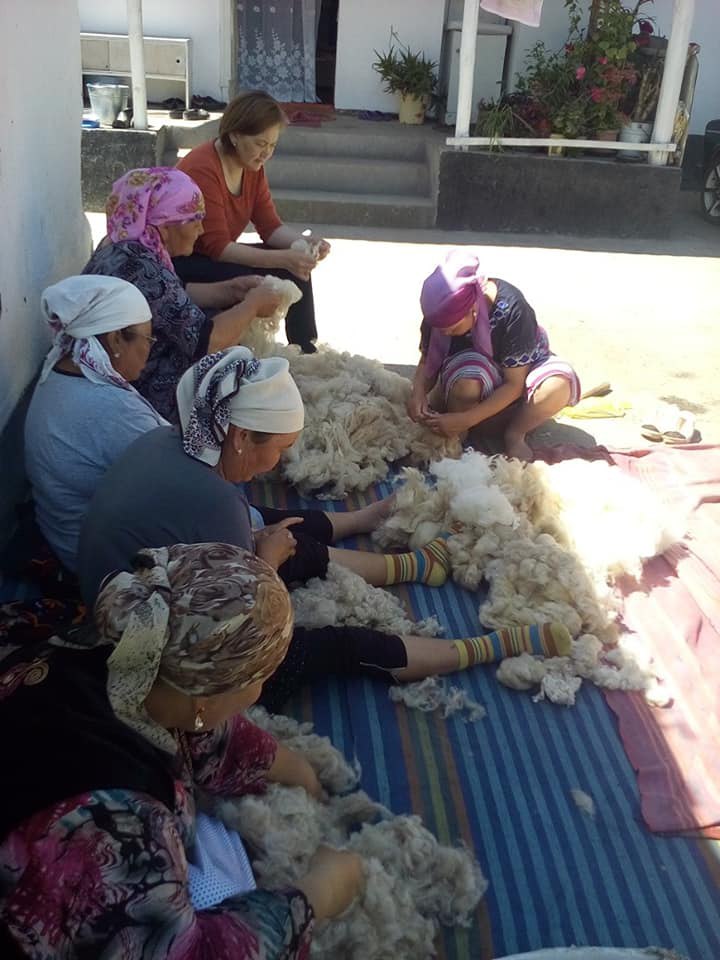
“The project helps domestic entrepreneurs to produce quality certified products exclusively from local resources. Over the last six years, thanks to the project, local producers have signed 167 export contracts totaling 238 million som,” ($2,670,000) the Ministry of Economy emphasized. The Ministry of Labor, in turn, said that over the past few years it has allocated money to 13,000 low-income families who have opened their own businesses. The project produces honey, natural juices and jams from local fruits, felt products, as well as meat products.

“Income from the realization of business projects in 2023 helped to improve the lives of 55,400 people, of which 33,500 are children. Eighty percent of these children previously received a need-based allowance… Now, thanks to the Social Contract program, all families earn their own income and do not need government support,” the Minister of Labor, Social Development and Migration, Gulnara Baatyrova said. According to the ministry, the majority of successfully implemented projects were in the Jalal-Abad and Osh regions.

According to the Ministry of Economy and Commerce, 280 products have been developed over five years that are successfully sold in domestic and foreign markets. Many of these entrepreneurs’ products, although not yet produced in large volumes, are supplied to Japan, China, South Korea, the U.S. and Europe.


Kyrgyz Still Suffering From Ban on Russian Bank Cards

The head of Kyrgyzstan’s cabinet of ministers, Akylbek Japarov, has told media that it wasn’t his decision to terminate the interbank agreement with Russia’s MIR payment system. According to him, the Interbank Processing Center (IPC) that services the Kyrgyz payment system Elkart — which previously had a contract with the Russian MIR system — does not belong to the government, but rather is run by commercial banks. He added that Kyrgyz authorities learned of the system’s disconnection only after it occurred.

Japarov commented: “Even the National Bank does not have control over the MPC, which is more than 54 percent owned by commercial banks. I assume that these commercial banks may have feared sanctions… It would be good if the MPC coordinated this issue with the cabinet, because there are more than a million of our citizens in Russia. All of them used the MIR card.”

Japarov emphasized that while Kyrgyz citizens benefited from MIR’s presence in Kyrgyzstan, the closure of the system will have almost no effect on Russians. He said that work is already underway to find alternatives.

On April 5 the IPC informed the Kyrgyz public about the shutdown of MIR “in order to minimize [the risk of] secondary sanctions” by the United States. Many travel companies in Kyrgyzstan have sounded the alarm — about 90% of all tourists coming to Kyrgyzstan are from Russia.

As Bishimbayev Case Continues, Kazakhstan Toughens Domestic Violence Laws

While a court in Astana tries former economy minister Kuandyk Bishimbayev for murdering his wife Saltanat Nukenova, the Kazakhstani Senate has passed a law strengthening protections for women and children against domestic violence.

The new law, if properly implemented, can hand out much harsher punishments to those who abuse those closest to them. In particular, a term of life imprisonment has been introduced for the murder of a minor child.


In the Face of Widespread Indifference

The trial of Bishimbayev – and his relative Bakhytzhan Baizhanov, who is accused of failing to report the murder – has uncovered an uncomfortable truth. Many people already knew that Bishimbayev beat his wife, who died last November. Relatives and close acquaintances of the victim recounted details in court about bruises on Nukenova’s face.

On the day of her death, a number of witnesses saw Bishimbayev arguing with, and possibly beating, Nukenova. Many of these witnesses are employees of the restaurant where the alleged murder took place. Baizhanov admitted under interrogation that he saw blood as Nukenova was laying motionless, but, on the orders of Bishimbayev, had the restaurant’s surveillance tapes deleted, and then drove Nukenova’s phone around the city, so that it would seem later that she was still alive at the time.

According to Baizhanov, he “did not know and did not realize” that Nukenova was dying. However, a forensics expert testified in court that the nature of Nukenova’s injuries indicated serious beatings, not “light slaps and falls,” as Bishimbayev had previously claimed. Examinations confirmed that Nukenova died of multiple brain injuries and a lack of oxygen, likely as a result of asphyxiation.


Will the New Law Help Stop Violence? 

Kazakhstanis are closely following the legal proceedings that have resulted from Nukenova’s death, and are organizing viral online actions and rallies in her memory in cities across Europe. Human rights activists and ordinary Kazakhstanis fought long and hard for domestic violence to be criminalized.

Under the new law, criminal liability will be applied to any intentional infliction of harm to health, however minor. The Code “On marriage (matrimony) and family” establishes the legal status of family support centers and the functions they perform, and establishes helplines for information and psychological assistance relating to women’s and children’s rights. The law also contains many measures aimed at protecting children in public and online.

Activists are still cautious about the new law, and argue that much will depend on its practical application and the amount of funds allocated to it. Support centers for victims of violence receive many calls per day, and physically cannot provide assistance to all those in need.


Central Asia’s Changing Attitudes to Domestic Violence

The other countries in Central Asia face a similar, and perhaps more difficult, situation. Uzbekistan, for example, adopted a law last year to give women and children more protection against domestic violence. Domestic violence in Uzbekistan is subject to administrative and criminal liability, and harassment has been made a crime. The sentences for sexual crimes against children have also been increased, prompted by an increase in the number of such crimes.

Kyrgyzstan has long had a law against domestic violence. It contains recourse to protective orders, which is a progressive concept for Central Asia. In practice, however, according to human rights activists such as Human Rights Watch, the law is incredibly difficult to enforce, and perpetrators often escape punishment.

In Tajikistan there have also been attempts to increase the penalties for domestic abusers. According to a report by the International Partnership for Human Rights (IPHR), half of all Tajik women have been abused at some point in their lives. The Tajik government, the report says, has not undertaken effective structural reforms, and the law on the prevention of domestic violence has proven to be an ineffective tool.

Last month, while Kazakhstan’s new domestic violence law was going through the Mazhilis (lower house of parliament), the country’s deputy interior minister, Igor Lepekha said that the new legislation would bring about a new challenge for the penal system. “We are already now assuming that about 5,000 persons, and maybe more, [will have to be kept] under these articles in detention centers,” he said.

Flowers Laid at Tajikistan’s Monument to Kazakh Soldiers

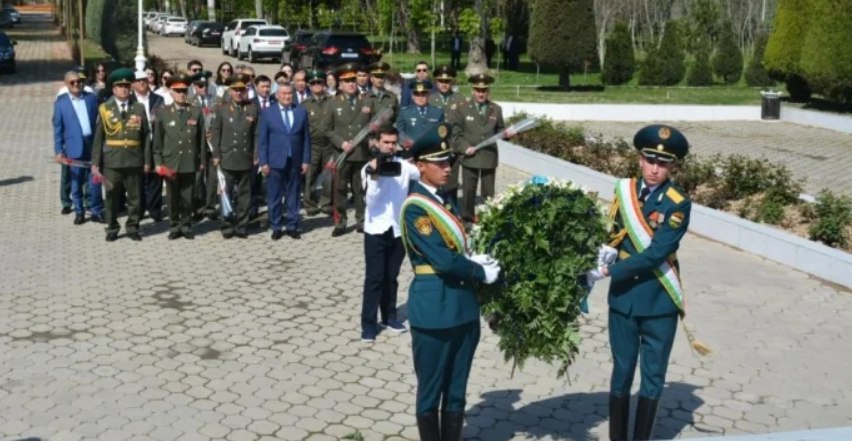
On April 11, a wreath-laying ceremony was held at the monument to the Kazakh soldiers who died on April 7, 1995, while guarding the external borders of the Commonwealth of Independent States (CIS) on the Tajik-Afghan border, according to a report from Avesta.

Officials taking part in the ceremony included Kazakhstan’s Ambassador Extraordinary and Plenipotentiary to Tajikistan, Valikhon Turekhanov, representatives of the Union of Honorary Internationalists of Tajikistan, veterans of the Border Service, and active military personnel from Tajik armed forces.

The participants at the event noted that the Kazakh soldiers had performed their military duty at the cost of their lives, whilst all the while remaining faithful to the military oath.

The monument commemorating the bravery of the Kazakh soldiers was opened on December 15, 2007, in the Firdavsi recreation park in Dushanbe. In 2021, the park was renovated and restored with the support of the Embassy of Kazakhstan in Tajikistan, the Ministry of Defense and National Guard of the Republic of Kazakhstan, and other public organizations.

On April 7, 1995, the seventh joint company of the Kazakh military was attacked by mujaheddin in a gorge at Pshikharv Mountain on the Tajikistan-Afghanistan border. The militants were defeated in the ensuing battle.

People in Turkmenistan Losing Money Due to Bank Glitches

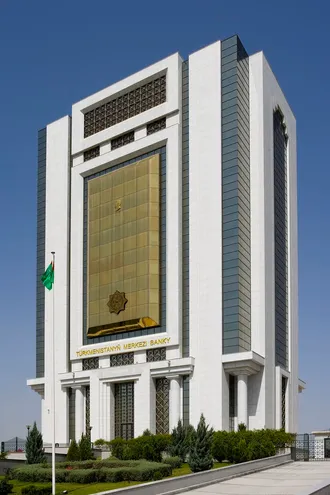
According to news portal Turkmen.news, clients of a number of banks in Turkmenistan are inexplicably losing money from their accounts due to technical problems. On April 8-9, Dayhanbank customers discovered deficits of several hundred manat in their accounts. The amounts ranged from about 150 ($88.24) to 800 manat ($470.59). and in some cases their accounts were left in the red.

When customers complained to the bank, they said it was a technical glitch and everything would be back to normal by the evening. In most cases, the amounts withdrawn was refunded to the customer’s account later that same day.

According to the report, only by obtaining a bank statement and carefully checking all expenses would one be able to identify the discrepancy.

Spanish Manufacturer to Relocate from Russia to Kazakhstan

Following the recent closure of its production facilities in Russia, where it was the country’s largest manufacturer of sanitary ware, Spanish company Roca is to open a plant in Kazakhstan.

The announcement was made following a meeting on 10 April between company representatives and Asel Suankulova, Deputy Director of the Department for Attracting Investments and Marketing of JSC National Company Kazakh Invest.

Roca, which annually sells 500 units of products throughout Central Asia, has already established an office in Almaty and plans to open a new logistics centre to export its products to nearby countries.

The Spanish company has been assured of Kazakhstan’s support through investment initiatives including access to local raw materials, such as kaolin and quartz to produce its ceramic wares.