• KGS/USD = 0.01144 0%
  • KZT/USD = 0.00194 -0%
  • TJS/USD = 0.10896 -0%
  • UZS/USD = 0.00008 0%
  • TMT/USD = 0.28571 0.28%
  • KGS/USD = 0.01144 0%
  • KZT/USD = 0.00194 -0%
  • TJS/USD = 0.10896 -0%
  • UZS/USD = 0.00008 0%
  • TMT/USD = 0.28571 0.28%
  • KGS/USD = 0.01144 0%
  • KZT/USD = 0.00194 -0%
  • TJS/USD = 0.10896 -0%
  • UZS/USD = 0.00008 0%
  • TMT/USD = 0.28571 0.28%
  • KGS/USD = 0.01144 0%
  • KZT/USD = 0.00194 -0%
  • TJS/USD = 0.10896 -0%
  • UZS/USD = 0.00008 0%
  • TMT/USD = 0.28571 0.28%
  • KGS/USD = 0.01144 0%
  • KZT/USD = 0.00194 -0%
  • TJS/USD = 0.10896 -0%
  • UZS/USD = 0.00008 0%
  • TMT/USD = 0.28571 0.28%
  • KGS/USD = 0.01144 0%
  • KZT/USD = 0.00194 -0%
  • TJS/USD = 0.10896 -0%
  • UZS/USD = 0.00008 0%
  • TMT/USD = 0.28571 0.28%
  • KGS/USD = 0.01144 0%
  • KZT/USD = 0.00194 -0%
  • TJS/USD = 0.10896 -0%
  • UZS/USD = 0.00008 0%
  • TMT/USD = 0.28571 0.28%
  • KGS/USD = 0.01144 0%
  • KZT/USD = 0.00194 -0%
  • TJS/USD = 0.10896 -0%
  • UZS/USD = 0.00008 0%
  • TMT/USD = 0.28571 0.28%
09 December 2025

Kyrgyzstan Court Moves Four Journalists from Prison to House Arrest

BISHKEK, Kyrgyzstan – Four journalists in Kyrgyzstan who were jailed in January on suspicion of inciting mass unrest have been moved to house arrest, while four others accused in the same case remain in pretrial detention.

A district court in Bishkek ordered the release on Tuesday of the former employees of Temirov Live, which supporters say is being targeted by the government because of its reports – some on YouTube – on alleged corruption involving senior officials. Police concluded that Temirov Live reports “contain signs of calls for mass chaos,” according to media outlet Politklinika.

The four journalists transferred from jail to house arrest are Tynystan Asypbekov, Saipidin Sultanaliev, Joodar Buzumov, and Maksat Tajibek uulu.

Those still in jail are Temirov Live director Makhabat Tajibek kyzy; two other journalists with the outlet, Aike Beishekeyeva and Azamat Ishenbekov, and a former Temirov Live journalist, Aktilek Kaparov.

A total of 11 former and current Temirov Live workers face charges in the case that could send them to jail for years if they are convicted. Free speech advocates say the prosecution is part of an increasingly restrictive rollback from a time when media enjoyed relative freedom in Kyrgyzstan.

The conditions of the journalists still in prison came under further scrutiny this past weekend when Makhabat Tajibek kyzy, the Temirov Live director, alleged that she and other detainees not involved in her case were beaten. Authorities deny the allegation.

The New Silk Road

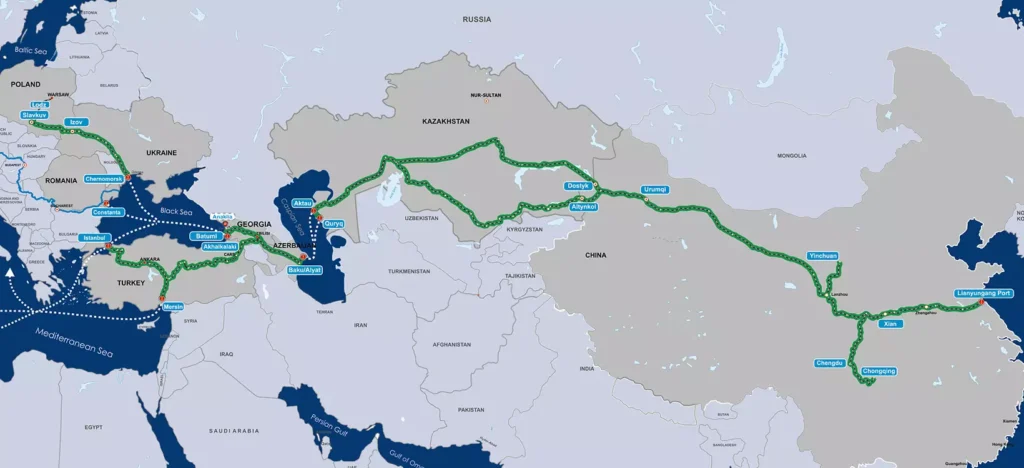
In light of the current geopolitical situation in the world, many countries are puzzled by the search for new alternative transport routes. One of these is the Trans-Caspian International Transport Route (TITR), which runs through China, Kazakhstan, the Caspian Sea, Azerbaijan, Georgia, and further to Turkey and European countries.

New transport corridors through which goods and raw materials can be exported by all modes of transport are a vital task for many countries, today. Such routes must first of all be safe, beneficial to all partners, and economically feasible. The TITR, or the “Middle Corridor”, as it is also called, falls into these criteria. It was conceived more than ten years ago and began operating in 2017. In recent years, this route has been experiencing a new round of development, and this is not surprising since it connects East and West whilst bypassing Russia.

Today, this is a flagship cooperation project for many states. This transport artery, connecting China, Central Asia and Europe, can become a continental bridge of the Belt and Road, halving the time of cargo transportation and significantly reducing transport costs.

The route encompasses 11,000 km of rail, and includes ten seaports. It originates in China at the port of Lianyungang, passing through Xi’an to Urumqi, through Kazakhstan – from the dry ports of Khorgos and Dostyk – to the ports of Aktau and Kuryk, the Azerbaijan (port of Alyat), Georgia (Tbilisi), and then through the Black Sea it continues onto Europe.

It is noteworthy that this route is multimodal, that is, rail, sea and road transport can be used. The current capacity of the Trans-Caspian international transport route is 6 million tons per year. By 2025, it is planned to reach a level of 10 million tons per year. So, the potential is great.

Assessing all possibilities, interested states intend to invest financial resources in the further development of this corridor and the expansion of its port and railway infrastructure, which will have a positive impact on the quality of services provided and reduce transportation times. Each side – China, Turkey, Azerbaijan and Kazakhstan – has its own benefit, and these countries have something to offer each other in much larger volumes than the current supplies. China intends to develop its western provinces, providing them with access to regional markets. Azerbaijan sees an opportunity to strengthen its transit role and become the largest transport hub. Türkiye, in turn, continues to extend its influence in Azerbaijan and Central Asia.

As for Kazakhstan, there are fears that attacks by the Ukrainian Army on Russian oil refineries could lead to a blockage of the Caspian Pipeline Consortium (CPC), which supplies Kazakh oil to international markets. In this regard, a huge amount of work is being done to diversify, and the Trans-Caspian International Transport Route comes in handy here. The Kazakh company, KazMunaiGas has already purchased tankers, and there are agreements with Azerbaijan on access to the Baku-Supsa and Baku-Tbilisi-Ceyhan pipelines, through which Kazakhstan can transport about 2 million tons of oil.

But the fundamental purpose of transit along the TITR is an opportunity for all participants to enhance their advantageous geostrategic location. EU countries are extremely interested in the development of this corridor, since it can facilitate the delivery of goods from China, bypassing Russia, and transportation time will be halved.

During the recent March meeting of the Business Council as part of the state visit of Kazakh President Tokayev to Baku, it was noted that in January 2024, the volume of cargo transportation along the Trans-Caspian route increased 2.5 times compared to the previous year. At the same time, the transit of Chinese containers has tripled.

The geography of the route is constantly expanding; the membership of the Association has increased to 25 companies and is already represented by 11 countries.

In their recent study, “Medium Trade and Transport Corridor,” World Bank specialists came to the conclusion that from a trade and economic point of view, the TITR primarily allows diversifying trade routes and improving transport accessibility for Azerbaijan, Georgia and Kazakhstan. World Bank analysts predict that in a scenario that involves increasing the operational efficiency of the Middle Corridor, it is expected that by 2030 the volume of transportation through the Caspian Sea will triple compared to 2021 and amount to 11 million tons. According to them, about 4 million tons will be driven by the projected demand for container shipping.

According to the European Bank for Reconstruction and Development, the potential of the corridor could be increased to 26 million tons by 2040, but this will require investment by Central Asian countries in the infrastructure around the route in the amount of 18.5 billion euros.

Following negotiations with the Asian Development Bank, agreements were reached on the allocation of a grant for the development of a strategy for the further development of the TITR route in 2024.

In essence, the Trans-Caspian International Transport Route is a revival of the Great Silk Road in modern realities, including such a relevant component as the “Digital Silk Road.” This large-scale project of laying a fiber-optic communication line along the bottom of the Caspian Sea will provide for the creation of a new digital telecommunications corridor between Europe and Asia.


Raza Syed is journalist of Pakistani-descent based in the U.K. with over three decades of international experience; his expertise span several countries, with a particular focus on Central and South Asia.

Uzbekistan Widens its Doors to Foreign Tourists

In an announcement on the media portal Novosti Uzbekistana, Nurbek Yakubov, a senior expert at the Institute of Macroeconomic and Regional Studies of Uzbekistan, revealed plans to boost the country’s tourist industry.

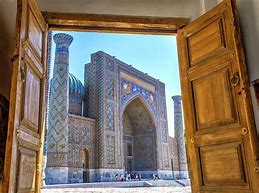
Boasting a unique and exotic cultural heritage, as well as stunning natural landscapes rich in archaeological sites and monuments, Uzbekistan’s inflow of foreign tourists has increased almost 2.5-fold, to 6.6 million over the past six years.

As a result, tourism has become one of the key sources of stable economic growth in the country. In 2017, revenue from related services amounted to $531 million, and in 2023, quadrupled to $2.143 billion.

The industry now aims to further increase its volume of foreign tourists to 15 million, in addition to increasing that of local tourists to 25 million, and pilgrims to 3 million by 2030.

According to Yakubov, Uzbekistan is on course to double the availability of hotel beds, increase the number of tourist mahallas (local communities equipped to receive tourists) to 175, and has set a goal to increase the annual export of tourism services to $5 billion through attracting private investment.

Citizens from 91 countries can currently visit Uzbekistan without a visa.

Tajikistan and EU Enter Third Round of Negotiations on Partnership and Cooperation

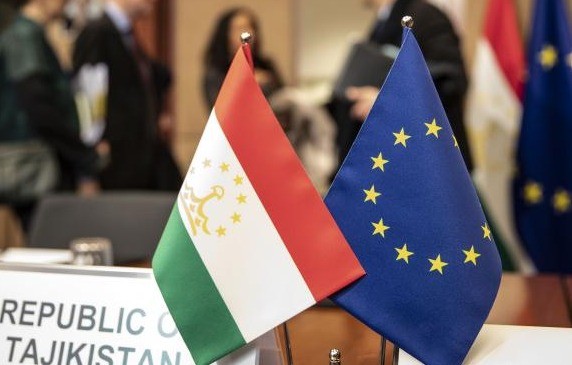
On April 8 and 9, Luc Devigne, Deputy Managing Director for Europe and Central Asia at the European External Action Service, and Ismatullo Nasredin, First Deputy Minister of Foreign Affairs of Tajikistan convened in Dushanbe for a third round of negotiations on a new comprehensive framework for strengthening their bilateral relations.

According to the Delegation of the European Union to Tajikistan, the negotiations for an Enhanced Partnership and Cooperation Agreement (EPCA), launched in February 2023, represent an important milestone in the EU’s relations with Tajikistan. In line with the EU-Central Asia Strategy, it aims to strengthen cooperation regarding political relations, trade, key economic sectors, as well as the rule of law and human rights.

The EU Delegation reported that substantial progress had been made during the third round of negotiations between European Union and Tajikistan, and in the future, the EU-Tajikistan Partnership and Cooperation Agreement, in place since 2010, will be known as the EPCA.

Five Kazakhstani Banks Improve Their Positions in S&P Rating

S&P Global Ratings, one of the “big three” global ratings agencies, has revised its outlook and upgraded the ratings for five banks in Kazakhstan — Halyk Bank, Kaspi Bank, Bank CenterCredit, ForteBank and Nurbank.

S&P experts pointed out that in recent years Kazakhstan’s banking sector has demonstrated increased resilience to macroeconomic risks, especially against the backdrop of increasing geopolitical instability in the region. Asset quality and the financial performance of banks have significantly exceeded analysts’ expectations. As a result, S&P improved its economic risk assessment and revised the industry risk trend to “Positive.” For example, as of the beginning of 2024, the share of overdue loans (more than 90 days overdue) was only 3% of the total portfolio — significantly lower than in previous years.

Comparing the banking sector with the segment of microfinance institutions (MFIs), it is clear that MFIs are in a more attractive shape. The share of delinquencies in MFIs is growing, which indicates an inherently higher risk profile in their loan portfolios. It’s possible that the adoption by Kazakh parliament of a law on risk minimization in lending — and protecting borrowers’ rights — could remedy the situation.

According to the National Bank of Kazakhstan, the level of loan application approvals remains moderate, indicating a careful approach to issuing loans and control over their repayment by banking structures. Also complicating the retail and corporate lending landscape is the high key rate in Kazakhstan, which was cut to 14.75% in February from 15.25%.

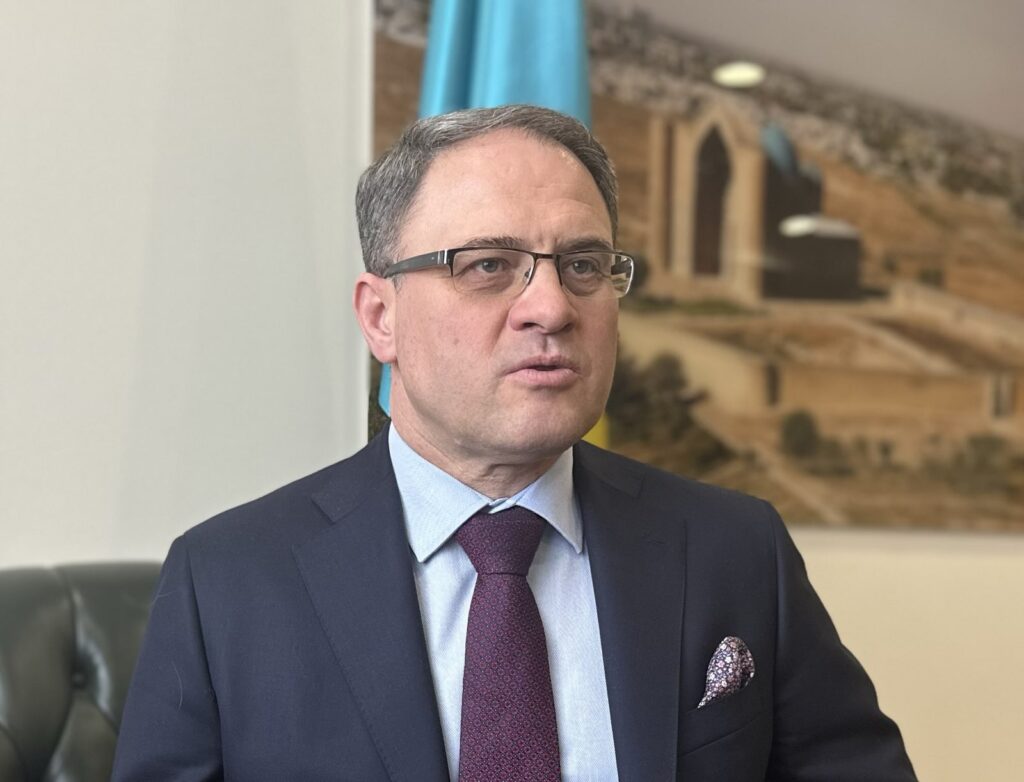
Government and Communities are Tackling Kazakhstan’s Flood Crisis Together: An Interview with the Deputy Foreign Minister of Kazakhstan, Roman Vassilenko

Can you provide an overview of the current flood situation from the perspective of the affected areas and the population?


The current flood situation is serious, though it remains manageable. This year’s floods have exceeded those of 2012 and 2017, which were previously the most significant in the past three decades, making this potentially the most severe disaster in over 80 years.

A combination of factors has contributed to this crisis. A late and rainy autumn, followed by a sharp temperature drop in December, resulted in soil freezing up to two meters deep. This was followed by heavy snowfall throughout the winter and a rapid warming and snowmelt in spring, causing significant water flow, mostly originating from the steppes, not from the rivers.

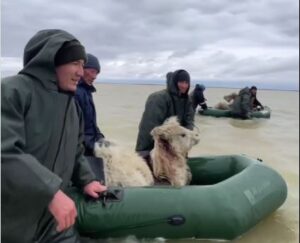
Currently, flood relief operations are in progress across eight regions of the country. To date, over 75,000 people, including 17,000 children, have been evacuated. Additionally, more than 60,000 livestock have been relocated for their safety.

Kazakhstan’s President, Kassym-Jomart Tokayev, central and local governments, as well as volunteers, are collaborating effectively. Around-the-clock efforts are being made by approximately 17,000 emergency service workers, National Guard personnel, police and the military to safeguard cities and villages, supported by more than 25,000 volunteers. The operations are utilizing over 80 boats, as well as 15 aircraft and helicopters.

The President is personally overseeing all operations, ensuring a coordinated and effective response to this challenging situation.


Has the government identified the peak of this crisis? If so, how is the situation being managed now?


Regions across half the country have already been impacted by the flood crisis, or are expected to be affected within the next two to three weeks. The situation is expected to remain serious in the western and northern parts of the country, as well as in the far east, where snow-melt has just begun.

We are not yet clear of the water – both metaphorically and literally. Fifteen percent of the country, and up to 40 percent in the northern regions, is still covered by snow. As a result, efforts to combat these natural challenges are ongoing.

The national headquarters, under the leadership of the Prime Minister, is actively coordinating flood control measures and managing the aftermath of the flooding. The Prime Minister and their deputies, instructed by the President, are working directly in the regions most affected by the floods, ensuring that all necessary steps are taken. Overall, the state is maintaining control over the situation.


Can you tell us more about the nature of the assistance being provided?


Support is being provided to everyone affected by the floods and adequate compensation will be provided to these people. The government is ensuring that those impacted have access to all necessary resources, including the operation of temporary accommodation centers.

Following the President’s instructions, the government has released state material reserve to aid residents. Additionally, significant assistance is coming from large businesses and citizens of Kazakhstan, exemplified by the collection of over 380 tons of humanitarian aid by volunteer headquarters, of which more than 280 tons have already been delivered to affected regions.

This humanitarian aid is being efficiently distributed via railways, aviation, and road transport.

To address property and personal losses, the government is developing an effective compensation mechanism, ensuring amounts are proportional to the damages incurred.

There is a strong sense of unity and cohesion within society, which is being diligently maintained. This crisis has highlighted remarkable examples of dedication, self-sacrifice, hard work, and humanity at its best. People are coming together, supporting each other through monetary donations, food, and clothing. Efforts are also being made to rescue and save domestic animals.

Overall, the response embodies a powerful collective effort, demonstrating the community’s resilience and compassion in times of adversity.
 

Is Kazakhstan seeking or receiving any international assistance to overcome this crisis?


Kazakhstan is effectively handling the crisis independently, and has not actively sought international assistance. The country’s emergency services, government bodies, and local communities are collaboratively addressing the challenges posed by the flooding.

We are grateful, however, for the support provided by our brotherly neighbor, the Kyrgyz Republic, as well as offers of assistance from countries like Türkiye. The 300 tons of humanitarian aid, organized and delivered on behalf of Kyrgyz President Sadyr Japarov, include sunflower oil, sugar, rice, pasta, mattresses, clothes, and tents.

During a phone call on April 6, President Tokayev expressed gratitude to President Japarov and the Kyrgyz citizens for their support. He emphasized this act is further proof of the genuine friendship, solidarity, and strong allied relations between the two countries.

Azerbaijan and the Netherlands have also expressed their solidarity and support to the people of Kazakhstan. While we are managing the situation on our own, the moral support we have received is both sufficient and deeply appreciated.


Considering the floods, are there concerns regarding waterborne diseases or other health issues? What measures are being taken to prevent a healthcare crisis in the aftermath?


The potential health risks associated with the floods, particularly concerning waterborne diseases, are being vigilantly monitored. In response to the flood situation, the Sanitary-Epidemiological Service has significantly intensified its efforts. Since the onset of the floods, more than 4,000 samples of drinking water have been collected and subjected to thorough testing, assessing both sanitary-chemical and microbiological parameters.

The results from the laboratory monitoring of the water quality and safety have so far indicated that there are no imminent risks of waterborne infectious disease outbreaks. Kazakhstan is maintaining a stable epidemiological situation, with no significant increases in infections typically associated with flood conditions.

 

What long-term strategies is the government considering to prevent similar disasters in the future?


To enhance the protection of settlements from waterlogging and flooding, the government is continuously implementing comprehensive measures to minimize flood threats. These efforts have successfully alleviated the threat for 228 settlements and reduced risks for 634 settlements, which include over 128,000 houses and more than half a million residents.

A thorough analysis is being conducted to develop and refine flood prevention strategies and community protection measures. This includes exploring new approaches to flood risk management. A key part of this initiative is the development of a flood prevention plan for the years 2025-2029. Additionally, there will be a revision of the provisions in the Concept for Developing a Water Resources Management System for the period 2024-2030.

The government is also working on creating an advanced information system. It is intended to model various emergency situations, including floods and fires, enabling accurate forecasting, and providing recommendations and actionable steps for response.

Furthermore, it is necessary to organize continuous training and equipping of our emergency services, ensuring they are ready to respond effectively to future flood events.

Infrastructure development is another critical aspect. We’re working to strengthen and expand our network of dams, levees, and waterways to control and manage floodwaters more effectively. This includes both new constructions and the upgrading of existing structures to withstand severe weather conditions.

In fact, as a part of long-term measures to ensure water quality and manage resources effectively, plans are underway to construct 20 new water reservoirs and repair 15 existing ones.

Lastly, we’re collaborating with international experts and organizations to learn from global best practices in flood management. This collaborative approach ensures we are implementing the most effective and innovative strategies to protect our citizens and their livelihoods from the impact of seasonal floods.

There is a strong emphasis on learning from this and previous experiences. This involves addressing shortcomings in planning for such disasters, bridging the gap in skilled water management personnel, and correcting any neglectful attitudes towards nature. These long-term strategies are integral to enhancing resilience and preparedness for similar disasters in the future.