• KGS/USD = 0.01144 0%
  • KZT/USD = 0.00194 -0%
  • TJS/USD = 0.10844 -0.46%
  • UZS/USD = 0.00008 0%
  • TMT/USD = 0.28571 0.28%
  • KGS/USD = 0.01144 0%
  • KZT/USD = 0.00194 -0%
  • TJS/USD = 0.10844 -0.46%
  • UZS/USD = 0.00008 0%
  • TMT/USD = 0.28571 0.28%
  • KGS/USD = 0.01144 0%
  • KZT/USD = 0.00194 -0%
  • TJS/USD = 0.10844 -0.46%
  • UZS/USD = 0.00008 0%
  • TMT/USD = 0.28571 0.28%
  • KGS/USD = 0.01144 0%
  • KZT/USD = 0.00194 -0%
  • TJS/USD = 0.10844 -0.46%
  • UZS/USD = 0.00008 0%
  • TMT/USD = 0.28571 0.28%
  • KGS/USD = 0.01144 0%
  • KZT/USD = 0.00194 -0%
  • TJS/USD = 0.10844 -0.46%
  • UZS/USD = 0.00008 0%
  • TMT/USD = 0.28571 0.28%
  • KGS/USD = 0.01144 0%
  • KZT/USD = 0.00194 -0%
  • TJS/USD = 0.10844 -0.46%
  • UZS/USD = 0.00008 0%
  • TMT/USD = 0.28571 0.28%
  • KGS/USD = 0.01144 0%
  • KZT/USD = 0.00194 -0%
  • TJS/USD = 0.10844 -0.46%
  • UZS/USD = 0.00008 0%
  • TMT/USD = 0.28571 0.28%
  • KGS/USD = 0.01144 0%
  • KZT/USD = 0.00194 -0%
  • TJS/USD = 0.10844 -0.46%
  • UZS/USD = 0.00008 0%
  • TMT/USD = 0.28571 0.28%
09 December 2025

Turkey Cancels Visa-Free Regime for Citizens of Tajikistan

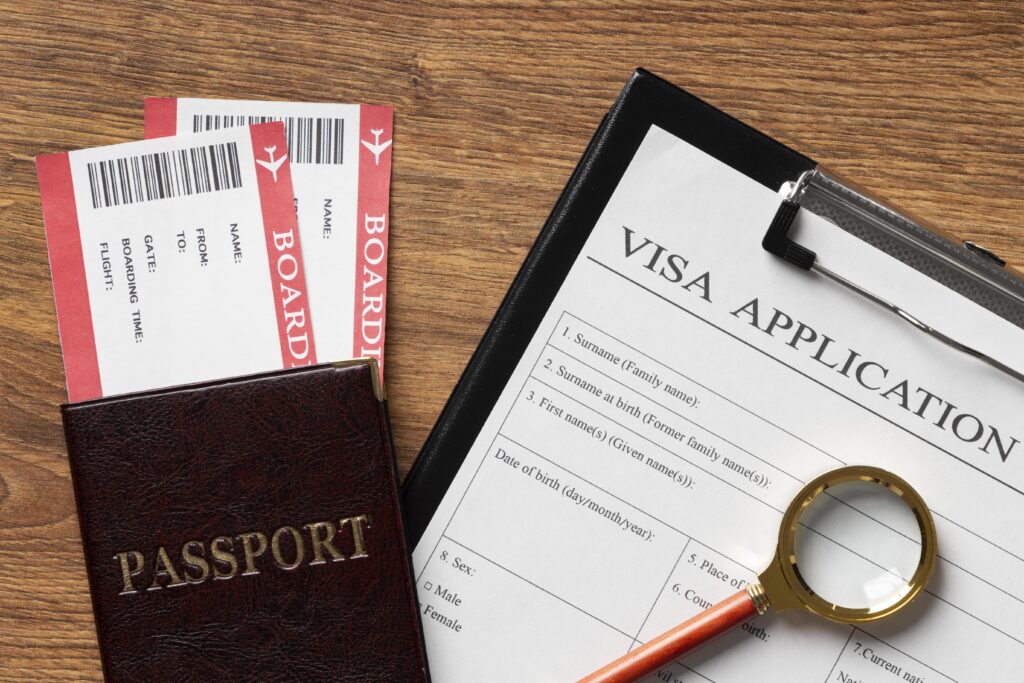
From 20 April, citizens of Tajikistan will have to obtain a visa to travel to the Republic of Turkey. That’s according to a decree signed by Turkish President, Recep Tayyip Erdogan. The reasons for this decision remain unclear, but it’s noted that the visa regime is a temporary measure. Entry documents will be issued in Dushanbe and at other Turkish diplomatic missions. Those traveling through Turkey in transit will not require a visa.

Tajik Foreign Ministry spokesman, Shohin Samadi, said as of April 6, Dushanbe had not received an official notification from Turkey regarding the introduction of a visa regime. Nevertheless, he said, the issue of retaliatory measures for Turkish citizens is being worked out.  Up until this juncture, residents of the two countries could stay on the territory of the other for up to 30 days without a visa.

Some Russian media rushed to link these innovations with the March 2024 terrorist attack at the Crocus City Hall, which killed 144 people and injured 551. Among the 11 people arrested on suspicion of the terrorist attack, the majority are citizens of Tajikistan. According to various sources, the cell of Islamic State (ISIS) in Afghanistan – also known as “Wilayat Khorasan” – which claimed responsibility for the incident, was training terrorists inside of Turkey. To that point, Turkish newspaper Hurriyet wrote that two supporters of ISIS who were planning to carry out a attack were detained in Istanbul. Among them was a 37-year-old citizen of Tajikistan. On March 26, Turkish Interior Minister, Ali Yerlikaya, said that 147 people were detained on suspicion of links with the terrorist organization.

Following the attack on the Crocus City Hall near Moscow, Tajiks in Russia faced a wave of aggression and hatred. Tajikistan’s Government is urging its citizens to avoid traveling to Russia unless necessary, and in light of possible Russian rule changes targeting migrant workers from Central Asia, many Tajiks and others may be ready to leave Russia.

Kazakhstan Struggles to Contain Floods; Worst Natural Disaster in 80 Years, President Says

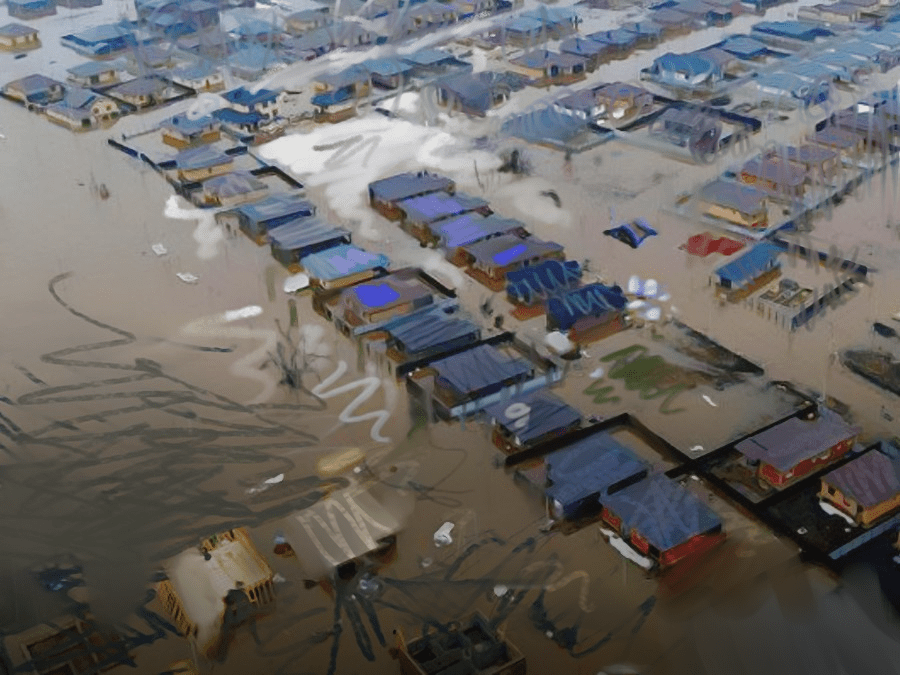
Since last month, more than 75,000 people in Kazakhstan have been rescued from floods that the president has described as the country’s worst natural disaster in 80 years. Kyrgyzstan is sending aid to Kazakhstan, and Türkiye has said it is ready to help.

Across the border from Kazakhstan, parts of Russia have also been hit by flooding caused by the melting of snow as spring approaches. A dam was breached in the Russian city of Orsk, forcing the evacuation of thousands.

In Kazakhstan, some 18,000 children are among those rescued, and more than 69,000 farm animals have also been taken to safety, according to Kaharman Orazalin, a senior official in the Ministry of Emergency Situations.

Several thousand private residential buildings, country houses and other buildings have been flooded, Orazalin said at a briefing on Sunday. He said that workers are trying to restore four destroyed bridges and 133 washed out sections of roads. Tents, bedding and water pumping equipment have been delivered. Sand bag barriers have been laid to block the floodwaters.

“The Ministry of Emergency Situations calls on citizens to be extremely careful, strictly observe safety measures during the flood period, and not leave their homes and evacuation centers without the appropriate permission,” he said.

“This is the largest natural disaster in the last 80 years,” President Kassym-Jomart Tokayev said on national television on Saturday.

A state of emergency has been declared in ten regions of the country – Abay, Akmola, Aktobe, Atyrau, West Kazakhstan, Karaganda, Kostanay, Pavlodar, North Kazakhstan and Ulytau regions, according to Tokayev.

Military forces are helping to alleviate the flooding; national and regional authorities are working around the clock and tens of thousands of volunteers are also helping, the president said.

“We must draw appropriate conclusions from the catastrophic flood. That is, we need to correct the gaps and learn the appropriate lessons. And there are many such lessons,” Tokayev said. “Many issues need to be addressed, from the lack of disaster prevention work, the shortage of water management specialists, to the neglect of nature. The government and local executive bodies should effectively coordinate flood control. It is necessary to ensure legal order in flooded areas.”

Orazalin, the official from the emergency situations ministry, said humanitarian aid from Kyrgyzstan was on the way.

Türkiye is “deeply saddened” by the flooding in Kazakhstan and is “ready to provide any assistance needed to heal the wounds caused by the disaster,” the Turkish Foreign Ministry stated.

Efforts to rescue individuals continue in the Kostanay region, where a state of emergency has been announced in six areas due to the rising waters of the Tobyl River, as reported by Asylbek Saduov, the deputy chief of the Kostanay Oblast Railway Station.

Taliban and its Neighbors: A Regional Format for Overcoming Challenges in Afghanistan and Beyond

The process of making Afghanistan an independent economic entity that can work constructively within globally accepted economic standards and formats will require addressing pressing security issues as well as strengthening regional partnerships and cooperation. In the long term, this will not only benefit the people of Afghanistan but also its neighbors, as well as the Central Asian republics, who still need to realize their full transit and transport potential to best respond to the world’s changing needs in a new geopolitical environment.

While there is currently emphasis on increasing bilateral trade, this in itself will not cure the economic and other problems ailing Afghanistan. Strategic infrastructure projects, in particular, will play a key role in ensuring the long-term economic stability of this country. The Taliban Government is already reaching out to regional neighbors in a new way since it regained power in 2021. Some of the existing regional cooperation structures can be molded to provide a platform for dialogue and collaboration with Afghanistan. Modern realities dictate to the region the need to quickly overcome existing differences in intra-regional relations and create a new model. To this end, the states in the region surrounding Afghanistan should build a system of coordinated and cohesive measures and approaches with security as a key consideration, bringing Afghanistan into the fold to serve mutual interests through regional development.


Rapprochement or a de facto relationship with regional states?

Recently, the Taliban Government in Afghanistan has been fairly successful in developing cooperation with neighboring countries. It seems that, as opposed to focusing solely on isolation from the West, the current regime has chosen to start actively establishing ties with states in the region, placing the main emphasis of their foreign policy on regional governments who are more interested in pragmatism than ideological prerequisites when it comes to their affairs with Afghanistan.

If, for Pakistan and Iran, various forms of cooperation with Afghanistan are historically understandable, then for the Central Asian republics, the Taliban’s openness to broader dialogue, along with the promotion of mutual economic interests, allows for the prospect of transforming the whole region into a fully-fledged, self-sufficient collective unit within the larger global system. To achieve this, Central Asian countries must still overcome narratives of the past, develop common approaches (including through regional formats), and practically see Afghanistan as a genuine partner.

In the meantime, states in the region are largely acting intuitively rather than with a calculated strategic depth, or strictly weighing the benefits of building trade relations with Afghanistan’s new authorities. That said, regional players still follow different vectors and act according to their own circumstances despite a common desire to see a stable neighbor in Afghanistan.

For Islamabad, for instance, the main trigger in relations with Kabul is the Pakistani Taliban, known as Tehrik-e-Taliban Pakistan, or TTP. Tehran, on the other hand, seeks to protect the Shiite minority in Afghanistan and see their participation in an inclusive government, but at the same time, builds dialogue with the Taliban, including on border security issues. The border security aspect is also particularly relevant for the Central Asian republics, although they often try to address this in the context of trade relations, the prospects for which are admittedly limited.


Crossing a milestone

Afghanistan’s neighbors cooperate with the country’s de facto authorities to ensure their various interests, including security and stability, given the geo-economic importance of this country. But common interests alone are not enough for safeguarding long-term security and stability. As geopolitical conditions change, the countries surrounding Afghanistan need to act in a united paradigm.

The approach to Afghanistan cannot be limited to increasing bilateral trade, and in any case, trade itself is not a panacea to the economic and other problems ailing the country. The real impetus for starting the economic stabilization of Afghanistan is through strategic infrastructure projects, which are widely discussed in the region but are hampered by serious challenges, primarily the security situation.

At least the regional situation surrounding Afghanistan has become more predictable and stable than previously expected. Developing international relations further should not solely be the responsibility and/or the prerogative of Taliban’s Islamic Emirate. In response to the Taliban’s advances, regional states can and should build their own system of coordinated and cohesive measures and approaches whereby security is a key consideration, including in the context of prospective infrastructure projects in Afghanistan.

It is this new milestone that needs to be overcome in order to prove the competitiveness of a regional format for solving the problems not only in Afghanistan but in Eurasia at large.


Emphasis on regional interests and cooperation

The reality of the modern world economy represents a shift in the center of gravity from developed to developing countries. As a result of the rapid growth of the latter group, the world is undergoing a process of restructuring, leading to the manifestation of regional integration partnerships.

The countries of Central Asia have the political potential and economic resources to overcome challenges in this changing environment. The degree of their overall integration allows them, at the very least, to establish a common dialogue on the most pressing agenda items involving such problems as joint water use, energy, infrastructure and investment projects, and the optimization of existing and future transport and logistics corridors.

Afghanistan can become a unifying factor for the countries of the region and serve the interests of regional development. The prerequisites for this have already been laid within the framework of the Consultative Meetings of the Heads of State of Central Asia.

Today’s realities mean the countries of the region need to rapidly overcome their differences and create a new model, the external supports of which, especially in the context of security, can be found in the existing formulas of regional organizations, including the Shanghai Cooperation Organization (SCO), Organization of Turkic States (OTS), Conference on Interaction and Confidence Building Measures in Asia (CICA), Organization of Islamic Cooperation (OIC), Collective Security Treaty Organization (CSTO), and the C5+ format of Central Asian countries.

In this context, the SCO has become a key platform for discussing a wide range of issues in the Eurasian space over the past two decades. Afghanistan is a de jure observer in the SCO and its new authorities are demonstrating a willingness to strengthen their interaction with it. At the present stage, the Shanghai Union is already a structure capable of practically implementing multilateral measures in the field of regional security.

Afghanistan remains a member of CICA, which can be used as another platform for dialogue. This organization is undergoing a process of transformation into a fully-fledged regional international organization and is able to provide flexibility and adaptability to take into account the changing circumstances and needs of its parties.

Another structure uniting the region is the Organization of Turkic States. Among other things, its growing role in the international arena is apparent in the intention to develop specific mechanisms aimed at preventing the weakening of the provision of humanitarian assistance to the Afghan people and solving acute social problems in this country.


The need for a unified approach

The existential need to realize the transit and transport potential for all of Central Asia propels a desire to join forces. In this regard, the question arises once again of the possibility of creating a unifying platform, for instance a “C5+Afghanistan” (C5+A) structure, with Afghanistan at its core regardless of the existing political regime there. This formula, with the support of other external pillars mentioned above, will positively serve the process of building Afghanistan as an adequate economic entity that can work inside generally accepted economic standards and formats.

In the short term, the region will need to focus on internal security issues in Afghanistan. In this area, it is necessary to bring the Taliban to the table for a sustainable and rational dialogue with the involvement of Iran, Pakistan and international structures. It is important to encourage the Islamic Emirate to move away from claims of “success in the fight against terrorism” towards a more transparent position based on the inclusion of countries in the region in a security dialogue on bilateral and multilateral bases.

The fact that these steps will ensure the political stability of the regime of Taliban’s Islamic Emirate may be off-putting for the West. On the other hand, it is apparent that the resolution of pressing issues in Afghanistan and the region cannot be achieved solely through prohibitive actions such as imposing sanctions, restrictions, and blockades. A lasting and comprehensive solution requires peaceful and wide-ranging systemic measures involving regional levers of assistance rather than relying only on coercion.

The first step is to accept that Afghanistan and Central Asia are inextricably linked to each other in all dimensions and that Afghanistan can give impetus to further strengthening integration processes. The joint coordinated steps of the five Central Asian republics with regard to Afghanistan can ultimately become the basis for devising ways and realizing prospects for further integration to the benefit of the entire region.


Aidar Borangaziyev is an Open World Foundation expert and a consultant for the Investment Group, ACME.

How India is Becoming a Robust Soft Power in Central Asia

The middle-income trap, a pressing issue that has led to the stagnation of many successful developing economies, demands immediate attention. This trap, which occurs when a middle-income country can no longer compete internationally in standardized, labor-intensive goods due to relatively high wages, is a result of various factors, including countries most successful demographic characteristics. For instance, access to education has reduced birth rates due to an almost 100% literacy rate defined by 12 years of education. In the process, importing cheap manufacturing products has made local products uncompetitive. In such a situation, the country should have planned to upgrade current skill-based education to high-tech skills such as ICT, pharmaceuticals, etc. This shift to high-tech education holds immense potential for developing countries, offering a pathway out of the middle-income trap. Unfortunately, poor investment in developing high-tech education has led to an inadequate supply of a high-skilled workforce. Developed economies, such as the U.S. and a few European countries, are in an advantageous position to overcome such a trap due to their highly effective immigration policy. Developing countries, such as Brazil, Mexico, Argentina, the Philippines, and almost all Central Asian Republics, meanwhile, suffer. This will be further aggravated if the issue is not addressed urgently.

Due to its geographic location and natural resource endowments, Central Asia, a diverse region with a mix of upper-middle and low-income countries, holds significant importance in the global economic landscape. Let’s look at a specific case, such as Uzbekistan, a country whose population is growing at 1.3% per annum. Regarding age structure, the 0-14 age group makes up 30.1% of the population, the 15-64 age group 64.6%, and the 65-plus group constitutes just 5.3%. The country has achieved a high literacy rate, with 100% of the population completing 12 years of primary and higher secondary education. However, the country’s GDP per capita is relatively low, at US$ 3,209 (nominal term) and US$ 11,316 (PPP). The country’s economy is dominated by the services sector, which contributes 48.4% to the GDP, followed by industry at 33.7%, and agriculture at 17.9%. The poverty line is set at less than US$ 3.2 per day, affecting 10% of the population. The country’s labor force is distributed across sectors, with 25.9% in agriculture, 13.2% in industry, and 60.9% in services. The unemployment rate is 5.3%, and underemployment is a significant issue, affecting 20% of the population. The low supply of highly skilled workers challenges further increasing per capita income. The country will likely fall into this middle-income trap because it reaches a certain average income and cannot progress beyond that level.

It seems helpful to mention some insights from this perspective. During Soviet times, the growth model of states was determined by their available resources, and Central Asia is rich in abundant resources. However, in most cases, primary resources were taken to other non-resource wealthy states for further value addition. So, the workforce was created in the respective states based on the concerned state’s requirements. Workforce migration from one state to another was common if they had different skill sets. The collapse of the Soviet system made many states noncompetitive.

Interestingly, according to recent statistics published in 2023, Russia became the primary destination for labor migrants who were citizens of CIS (Commonwealth of Independent States) countries. The largest share fell on the citizens of Uzbekistan: 1.45 million, or almost 42% of the total, followed by Tajikistan with 986,700 (28.4%), and Kyrgyzstan, where 562,600 (16.2%) arrived during the year. In addition, Armenia, Kazakhstan, Azerbaijan, Turkey, China, Vietnam and Moldova are also sources of Russia’s migration. Various sources reveal a strong demand for low-skilled jobs in Russia, such as delivery, drivers, storekeepers, and other service-related activities. The strengthening of the ruble and Russia’s attractive economic growth despite the war has further created job opportunities for a low-skill workforce in Russia. The IMF forecasts a 2.6% increase in GDP in 2024.

The landlocked Central Asian Republics are considered resource-based regions, starting with energy, minerals, agriculture, cotton, and dried fruits. Similarly, India has opportunities to export manufacturing and pharmaceutical products. The logistic costs are high because bottlenecks prevail in taking advantage of the Chabahar Port in southeastern Iran. The marine distance of Chabahar from Mumbai port is about 1,560 km. Interestingly, Chabahar Port is located on the Makran coast of Sistan and the Baluchistan Province, next to the Gulf of Oman and at the entry point of the Strait of Hormuz. It is the only Iranian port with direct access to the Indian Ocean. It consists of two ports, Shahid Kalantari and Shahid Beheshti, each with five berths. The Chabahar Port, located 170 km west of the Pakistani port of Gwadar, has been termed the Golden Gate to these landlocked countries because it is close to Afghanistan and the Central Asian countries of Turkmenistan and Uzbekistan. The potential of Chabahar Port to serve as a gateway for these landlocked Central Asian countries is a beacon of hope, promising a path to their economic development and a way out of the middle-income trap.

India and Iran first agreed on plans to further develop the Shahid Beheshti port in 2003, but sanctions against Iran became an impediment. In May 2016, India and Iran signed a bilateral agreement that India would refurbish one of the five berths at Shahid Beheshti and reconstruct a 600-meter-long container handling facility at the port. The port is partly intended to provide an alternative for the trade routes between India and Afghanistan as it is 800 kilometers closer to the border of Afghanistan than Pakistan’s Karachi port. The port handled 2.1 million tons of cargo in 2015, which was planned to be upgraded to handle 8.5 million tons by 2016. It was intended to handle 86 million tons shortly. Apropos the re-imposition of sanctions against Iran, foreign companies became hesitant to participate in the port’s expansion, and only 10% of the port’s 8.5-million-ton total capacity was utilized in 2019. The sanctions stopped India’s involvement and investment in the US$1.6 billion Chabahar–Zahedan railway. It is interesting to note that, in October 2017, India’s first shipment of wheat to Afghanistan was sent through the Chabahar Port. In December 2018, India took over the port’s operations.

Despite the impediments to commodity trade, India’s competitiveness in trade in services such as English language-based education and skills development in high-tech areas has created enormous opportunities, and they may go unchallenged. The government of India’s many short-term training programs for skills development is noteworthy in this context. Countries in this region, such as Uzbekistan, are ideal places to manufacture pharmaceutical products, explore local markets, and export to European nations. Many Indian pharmaceutical companies are located in Tashkent because of the easy availability of a workforce with a pharmaceutical background and competitive wages. Instead of importing Active Pharmaceutical Ingredients (API), Indian companies are also manufacturing API in Tashkent and other cities because of the availability of minerals with cheaper options.

In addition, Uzbekistan’s eminent medical universities, such as the Samarkand Medical University, Bukhara Medical Institute, Tashkent Medical Academy, and Andijan State Medical Institute, attract thousands of students annually from India to study the MBBS program. Many students come from China, Pakistan, Mongolia, Afghanistan, Bangladesh, and other countries. Education is in English, delivered chiefly by Indian, Russian, and Uzbek teachers. Tuition fees are cheaper, and so are living costs.

India’s soft power is visible now in Central Asia. Further developing trade in services and investment will make it plausible to redefine the relationship between India and Central Asia.

Online Viral Action #ZaSaltanat: Women of Kazakhstan Oppose Stereotypes About Domestic Violence

The trial of Former Minister of National Economy of Kazakhstan, Kuandyk Bishimbayev, accused of murdering his wife, Saltanat Nukenova, continues. During the hearing, Bishimbayev’s lawyers have repeatedly attempted to emphasize that Saltanat, who died from a beating, led a promiscuous lifestyle, including the constant consumption of alcohol. Such arguments caused great displeasure on the part of Dina Tansari, head of the NeMolchy.kz fund, who expressed her support for the deceased and launched an online flashmob action, #ZaSaltanat.

“Bishimbayev’s lawyers are trying to blame the deceased Saltanat for her life choices. But what is source of this blame – the fact that she could have had a glass of wine or any other beverage? Join me. Post your pictures with a glass and the caption: ‘If you see me with a glass of wine, it doesn’t mean it’s okay to kill me!’,” Tansari urged.

Thousands of women from Kazakhstan supported the viral action, posting photos with a glass of wine on social media to draw attention to the spurious claims of the ex-minister and his advocats.

Media personalities, actresses, TV presenters, public figures and ordinary housewives joined the action, emphasizing the importance of drawing attention to this tragedy and supporting the victims of domestic violence.

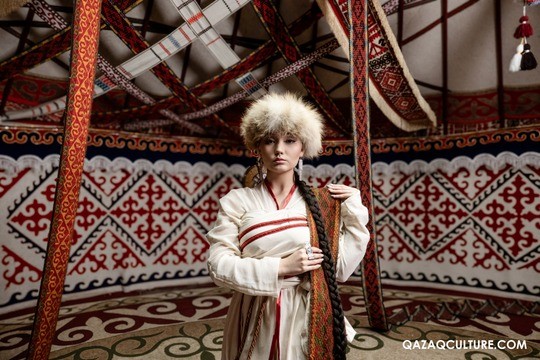
Qazaq Culture Portal Launched in Kazakhstan

In an enlightened new initiative to attract international attention to the country’s rich cultural and historical heritage, the Ministry of Culture and Information of Kazakhstan has supported the creation of an information and educational portal on Qazaq Culture.

Available in the six official languages of the United Nations, as well as Kazakh and Turkish, the portal offers a unique and comprehensive insight into Kazakhstan’s many diverse regions.

Visitors to the site will be afforded a virtual exploration of the country’s landmarks and attractions in the section, ‘Culture of Kazakhstan Through the Prism of Artificial Intelligence’, and delve deeper into its heritage by accessing source material and publications held in the Archive Fund of Kazakhstan.

In addition to a cultural news blog covering a vibrant array of festivals, contests, film and theatre premieres, books, and art exhibitions, the website will feature a single ticket system for all the cultural facilities in Kazakhstan.