• KGS/USD = 0.01144 0%
  • KZT/USD = 0.00194 -0%
  • TJS/USD = 0.10844 -0.46%
  • UZS/USD = 0.00008 0%
  • TMT/USD = 0.28571 0.28%
  • KGS/USD = 0.01144 0%
  • KZT/USD = 0.00194 -0%
  • TJS/USD = 0.10844 -0.46%
  • UZS/USD = 0.00008 0%
  • TMT/USD = 0.28571 0.28%
  • KGS/USD = 0.01144 0%
  • KZT/USD = 0.00194 -0%
  • TJS/USD = 0.10844 -0.46%
  • UZS/USD = 0.00008 0%
  • TMT/USD = 0.28571 0.28%
  • KGS/USD = 0.01144 0%
  • KZT/USD = 0.00194 -0%
  • TJS/USD = 0.10844 -0.46%
  • UZS/USD = 0.00008 0%
  • TMT/USD = 0.28571 0.28%
  • KGS/USD = 0.01144 0%
  • KZT/USD = 0.00194 -0%
  • TJS/USD = 0.10844 -0.46%
  • UZS/USD = 0.00008 0%
  • TMT/USD = 0.28571 0.28%
  • KGS/USD = 0.01144 0%
  • KZT/USD = 0.00194 -0%
  • TJS/USD = 0.10844 -0.46%
  • UZS/USD = 0.00008 0%
  • TMT/USD = 0.28571 0.28%
  • KGS/USD = 0.01144 0%
  • KZT/USD = 0.00194 -0%
  • TJS/USD = 0.10844 -0.46%
  • UZS/USD = 0.00008 0%
  • TMT/USD = 0.28571 0.28%
  • KGS/USD = 0.01144 0%
  • KZT/USD = 0.00194 -0%
  • TJS/USD = 0.10844 -0.46%
  • UZS/USD = 0.00008 0%
  • TMT/USD = 0.28571 0.28%
09 December 2025

Tourism Doubles in Kazakhstan

In 2023, Kazakhstan hosted more than 9 million foreign tourists, double that of the previous year.

According to the Bureau of National Statistics, guests mainly hailed from from Germany, Great Britain, China and South Korea and the key factors cited for the growth were a post-pandemic rebound in global tourism coupled with Kazakhstan’s cancellation of tourist fees. However, experts have warned that for the industry to continue to develop and thrive, Kazakh authorities must strive to improve both the infrastructure and promotion of tourism.

As illustrated by statistical data, over the course of 2023, hotels and hostels in Kazakhstan accommodated some 8 million people. Of the million visitors from abroad, half came to Kazakhstan for business, and half for leisure. Among them, the majority were citizens of Russia, India, the U.S., Germany, South Korea and the UK. The country received over 16,000 visitors from the UAE, and from Italy, almost 15,000. Notably, the introduction in November 2023, of a visa-free regime with China resulted in a two-fold increase in Chinese tourists.
 
In a related report, Tatiana Vernitskaya, executive director of the Centre for Urban Tourism Development, stated, “The geopolitical situation around Kazakhstan is shaping up in favour of our tourism. There are now a lot of [migrants] from other countries in Kazakhstan, businesses have moved, – and European tourism has changed direction. Such changes are highly positive for Kazakhstan.”

She continued by saying, “There are states that (survive) on tourism. We have a huge potential (for expansion). Subsidies have only been available since 2022 (but access must be facilitated) to make them work. We (also) need advertisements at trade shows (complemented) by point-to-point workshops.”

Records show that the most popular destinations for foreign visitors were the country’s two major cities. Last year Almaty hosted more than 2 million people, and Astana, 1.3 million, providing owners of hotels, hostels and guest houses with revenue of almost $515.5 million.

By way of comparison, the number of tourists visiting Kazakhstan throughout 2023, is equal to that hosted by Thailand in the first 3 months of 2024, where local businesses earned almost $12.5 billion, equivalent to roughly one percent of Thailand’s annual gross domestic product.
Uzbeks, Tajiks Expelled from Chechnya; Turkey Releases Uzbek Suspect

Turkish local law enforcement agencies have reported the arrest of 70 people suspected of being members of the international terrorist group, Islamic State (ISIS). According to the Telegram channel of the press service of the Consulate General of Uzbekistan in Istanbul, a 39-year-old citizen of Uzbekistan, born in the the Andijan region, was among those arrested. As a result of the intervention of lawyers, the suspect was able to prove that he was not connected to any terrorist group, and he was subsequently released.

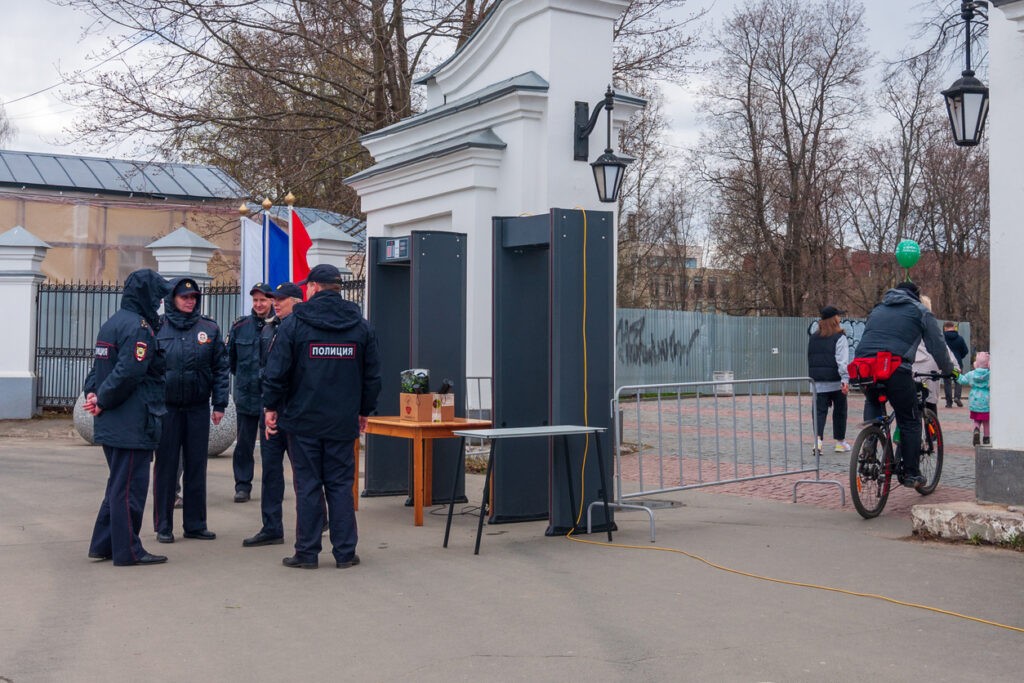
Also, according to EuraAsia Daily, since the beginning of 2024 Chechen bailiffs have expelled 38 foreigners without documents confirming their right to remain in Russia who had refused to leave the country after the deadline passed. According to the press service of the Russian federal bailiff service for the Republic of Chechnya, the majority of expelled illegal immigrants were citizens of Uzbekistan and Tajikistan.

All expelled foreigners will not be legally able to enter the territory of the Russian Federation for five years.

Transport Diversification Allows Resumption of Kazakh Oil Product Exports to Europe

In March 2024, Kazakh state pipeline operator JSC KazTransOil again started loading of dark oil products produced at Kazakhstani refineries onto Aframax size tankers through the Republic of Georgia’s Batumi Oil Terminal LLC. The shipments to European countries will total 60,000-80,000 tons. Aframax vessels are designed for the safe and efficient transportation of oil and oil products to various regions of the world, and can carry about 600,000 barrels of oil or petroleum products.

The move is designed to diversify modes of transit, transportation routes and to improve economic efficiency. KazTransOil reports that it plans to load dark oil products of Kazakhstani origin regularly every month. This decision will allow customers of the Batumi Oil Terminal to reduce transportation costs, making the export route through Batumi more attractive, and should contribute to an increase in the volume of transported products.

Over its more than twenty years of existence, KazTransOil has transported more than one billion tons of oil and has moved more than 825 billion ton-kilometers of cargo. To date, KazTransOil manages an extensive network of oil pipelines with a length of more than 5,400 kilometers, providing oil transportation both to domestic refineries and for export in different directions. The company remains in a leading position, providing transportation of about 40% of all oil produced in Kazakhstan and almost 90% of all crude supplies to domestic refineries.

Central Asia and Turkey Serving as Way-Points for Russia’s Explosives Imports

Citing an analysis of trade data, the Wall Street Journal (WSJ) has reported that Russia has boosted its imports of an explosive compound critical to the production of artillery ammunition – including from companies based in the U.S. and other Western countries and allies – despite international sanctions meant to choke Moscow’s wartime production. Russian imports of nitrocellulose, a highly flammable cotton product central to gunpowder and rocket propellant production, surged 70% in 2022, the first year of Moscow’s full-scale invasion of Ukraine, and midway through 2023 imports amounted to 3,039 tons of the product – nearly double the 2021 level.

Another supplier of cotton pulp, China, increased its supplies after U.S. and European (EU) sanctions. However, according to Liu Pengyu, spokesperson for the Chinese Embassy in Washington, “Sino-Russian economic and trade cooperation is not directed against any third party and should not be violated or coerced by any third party… China does not sell weapons to parties involved in the Ukraine crisis and handles exports of dual-use goods in a reasonable manner in accordance with laws and regulations.”

According to Russian customs data provided by trade database, Import Genius, Turkish company Noy İç Ve Diş Ti̇caret accounted for nearly half of Russia’s nitrocellulose imports since the Russia-Ukraine conflict began, with most of the Istanbul-based company’s sales to Russian companies that are government contractors based in Moscow. The Turkish Embassy, as well as representatives of the company, declined to comment.

Nitrocellulose supplies to Russia have also been found to contain chemical tracers from the U.S. company, International Flavors & Fragrances, which suspended its direct shipments to Russia in April 2022 but continued them through third countries. The company said its product didn’t contain enough nitrogen to be a component of an explosive. However, Michelle Pantoja, a professor of mechanical engineering at Texas Tech University who heads the combustion laboratory’s research center, said the nitrogen content of civilian nitrocellulose could be increased to the required level.

In December, the U.S. Department of Commerce added nitrocellulose to its list of high-priority controlled commodities, which restricts its exports, and the Treasury Department said it would impose sanctions on banks or other institutions found to be financing such international trades. To be effective, however, sanctions must also apply to nitrocellulose supplier companies, said a Rand analyst.

Last year, the Organized Crime and Corruption Reporting Project (OCCRP) claimed to have documents in its possession which showed that more than 98% of nitrocellulose imported into Russia is supplied by Kazakhstan and Uzbekistan, and that imports have increased since Russia’s full-scale invasion of Ukraine. The Import Genius database revealed that in 2022 and early 2023, Fergana Chemical Plant, one of the largest cotton pulp producers in Uzbekistan, not only supplied raw materials to Russian importing companies, but also made direct shipments to two Russian gunpowder plants – one in Kazan, the other in Perm – worth more than $2.2 million.

In total, according to a joint investigation by Important Stories, OCCRP and Vlast.kz, the plant supplied 2,700 tons of cotton pulp to Russia worth almost $5 million in 2023. Of this, $2.2 million was supplied directly to gunpowder factories, while the rest went to intermediary firms that in the past also supplied raw materials to Russian defense plants. In the first nine months of 2023, $8.7 million worth of raw materials were supplied. Of the total volume of Russian imports of these raw materials, Uzbekistan accounts for more than half, with Kazakhstan supplying the rest.

Authorities in Central Asia Warn Against Terrorist Recruitment

Uzbekistan’s Interior Ministry has issued a warning over increased instances of calls to commit terrorist acts spread via social media and messenger apps. Citizens are being implored to booby-trap public places – including shopping and entertainment centers, schools and other places of mass gathering – for large sums of money. Besides the promise of money, extremists are offering to provide weapons and send a plan of action – while the provocateurs often won’t take no for an answer.

The anonymous instigators – as a rule, there is no photo or number in the profile – often write with similar appeals to children and teenagers, intimidating them with fabricated stories such as having all of that person’s data and personal information. “In case you receive this kind of message, please do not panic and do not send them to public chat rooms, to your acquaintances and friends, but immediately report it to the internal affairs authorities on the number 102. Block the senders and do not enter into correspondence or conversations with them,” the Interior Ministry said in a statement.

“There is a Cybersecurity Center within the structure of the interior agencies, which is engaged in monitoring and identifying individuals and channels spreading calls for unlawful acts. Special divisions have been created within the operational and investigative department of the internal affairs bodies, which are also engaged in activities to identify terrorist threats on the World Wide Web and punish attackers,” Shokirjon Hashimov, spokesman for the operational and investigative department of the Uzbek Interior Ministry, told The Times of Central Asia.

The Uzbekistan TV channel reported on the detention of a group of extremist students, who were plotting terrorist attacks in several locations in Tashkent. The attackers, who were planning to carry out a terrorist attack in the spring of 2022, were discovered in February 2021. The young men carefully thought out a plan of action and chose the Israeli embassy in Tashkent or the murder of U.S. and Chinese citizens at the capital’s international airport as the target of their planned attacks. After committing the terrorist acts, the boys intended to move to Syria via Turkey, or to Afghanistan via Surkhandarya. Over the course of the investigation, explosives were found at the suspects’ homes. The court sentenced them to between 10 and 15 years in prison.

Calls for vigilance can also be heard in neighboring Kyrgyzstan, where through social networks and dating sites, attackers are trying to recruit young people to carry out terrorist attacks in Russia. “The representative office of the Ministry of Labor, Social Security and Migration of Kyrgyzstan in the Russian Federation warns that through social networks and popular messengers such as Telegram, there is active recruitment of citizens, including underage children, to participate in terrorist acts in Russia,” the press service of the ministry reported.

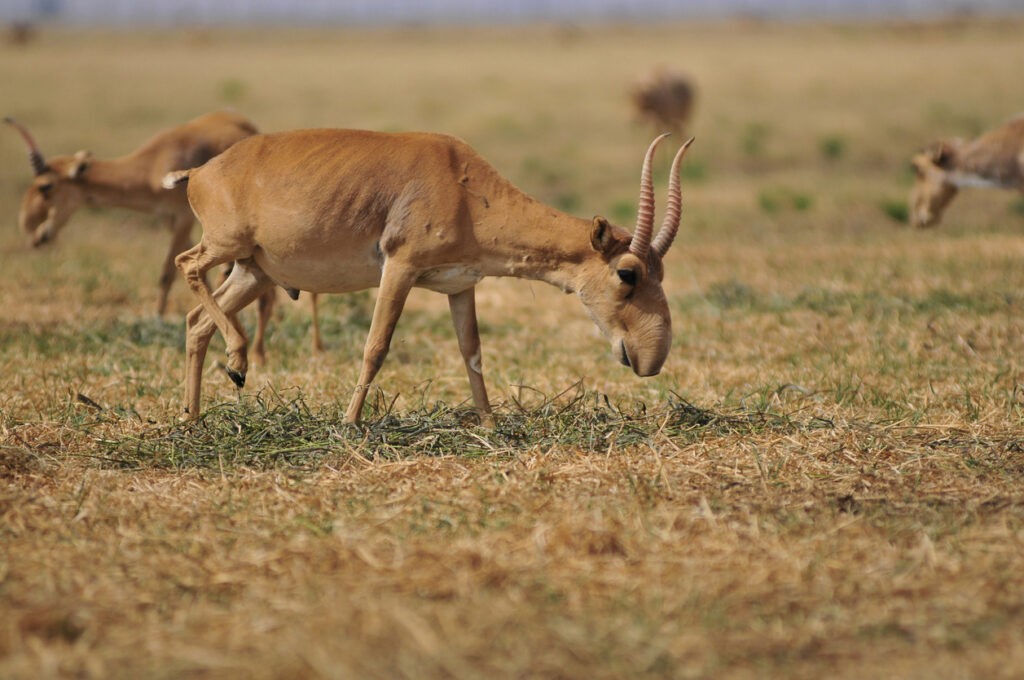
Saiga Antelope Revival Pleases Kazakh Naturalists — And Leonardo DiCaprio

Kazakhstan’s steppe is now home to booming numbers of saiga antelope, with the country’s authorities and environmentalists pulling together to revive the country’s iconic species.

News that the saiga population is no longer classified as “endangered” has reached the Hollywood actor Leonardo diCaprio, who recently wrote on his Instagram page: “This unprecedented recovery reflects the remarkable conservation of saigas in Kazakhstan. A species that once numbered 48,000 in 2005 has now grown to over 1.9 million individuals in the wild.” The animal is, however, still listed as “threatened” in Kazakhstan.

The Kazakh Ministry of Ecology estimates that the saiga population will rise above 2.6 million after the calving season this year. However, as their number has grown, the Kazakh authorities have reclassified the saiga as a species that may be hunted. Environmental scientists in the West Kazakhstan region have calculated that around 340,000 adult saigas — around 18% of the population — can be culled this year, to which end over 40,000 have already been killed. Saiga meat is sold in stores and bazaars in Kazakhstan, often to be used in stews, and is also found online on the Russian marketplace Ozon.

Kazakh society is divided about the treatment of these indigenous antelopes. Some support the cull by pointing out the damage that they cause to crops, which lost the West Kazakhstan region alone over $25 million last year. Others argue that saiga hunting, if not properly regulated, could lead to poaching and the resale of saiga antlers on the black market. This could lead to another drastic decline in a species that has been thriving in recent years.