• KGS/USD = 0.01144 0%
  • KZT/USD = 0.00194 -0%
  • TJS/USD = 0.10844 -0.46%
  • UZS/USD = 0.00008 0%
  • TMT/USD = 0.28571 0.28%
  • KGS/USD = 0.01144 0%
  • KZT/USD = 0.00194 -0%
  • TJS/USD = 0.10844 -0.46%
  • UZS/USD = 0.00008 0%
  • TMT/USD = 0.28571 0.28%
  • KGS/USD = 0.01144 0%
  • KZT/USD = 0.00194 -0%
  • TJS/USD = 0.10844 -0.46%
  • UZS/USD = 0.00008 0%
  • TMT/USD = 0.28571 0.28%
  • KGS/USD = 0.01144 0%
  • KZT/USD = 0.00194 -0%
  • TJS/USD = 0.10844 -0.46%
  • UZS/USD = 0.00008 0%
  • TMT/USD = 0.28571 0.28%
  • KGS/USD = 0.01144 0%
  • KZT/USD = 0.00194 -0%
  • TJS/USD = 0.10844 -0.46%
  • UZS/USD = 0.00008 0%
  • TMT/USD = 0.28571 0.28%
  • KGS/USD = 0.01144 0%
  • KZT/USD = 0.00194 -0%
  • TJS/USD = 0.10844 -0.46%
  • UZS/USD = 0.00008 0%
  • TMT/USD = 0.28571 0.28%
  • KGS/USD = 0.01144 0%
  • KZT/USD = 0.00194 -0%
  • TJS/USD = 0.10844 -0.46%
  • UZS/USD = 0.00008 0%
  • TMT/USD = 0.28571 0.28%
  • KGS/USD = 0.01144 0%
  • KZT/USD = 0.00194 -0%
  • TJS/USD = 0.10844 -0.46%
  • UZS/USD = 0.00008 0%
  • TMT/USD = 0.28571 0.28%
09 December 2025

Kazakhstan’s Ministry of Economy Proposes Canceling 21% of Taxes

The Ministry of National Economy of Kazakhstan has proposed reducing the number of taxes paid in the republic by 21%. The proposal focuses on three taxes: that imposed on the use of specially protected environmental zones, the tax on outdoor (visual) advertising, and the tax on the issuance of licenses to engage in certain types of professional activities. The ministry noted that these taxes bring about 14.4 billion tenge ($32 million) into the federal budget each year.

In addition to the abolition of these taxes, the ministry also proposed combining three payments into one – those for the use of water resources drawn from surface sources, for the use of forests, and for the use of wildlife. Instead of separate levies, the ministry put forth a single tax on the use of natural resources.

If these initiatives are approved, 77 different tax rates will be abolished – which is 21% of the total number of taxes in Kazakhstan.

The ministry has also proposed the abolition of eight levies which bring in about 1.1 billion tenge ($2.5 million) to the budget annually and is seeking to cancel six state duties, which contribute about 299 million tenge ($666,000). These measures will result in the reduction of 89 different fee rates and 53 state duties, respectively.

Kyrgyz Fuel Rules Set to Raise Prices Amid Fight With Black Market

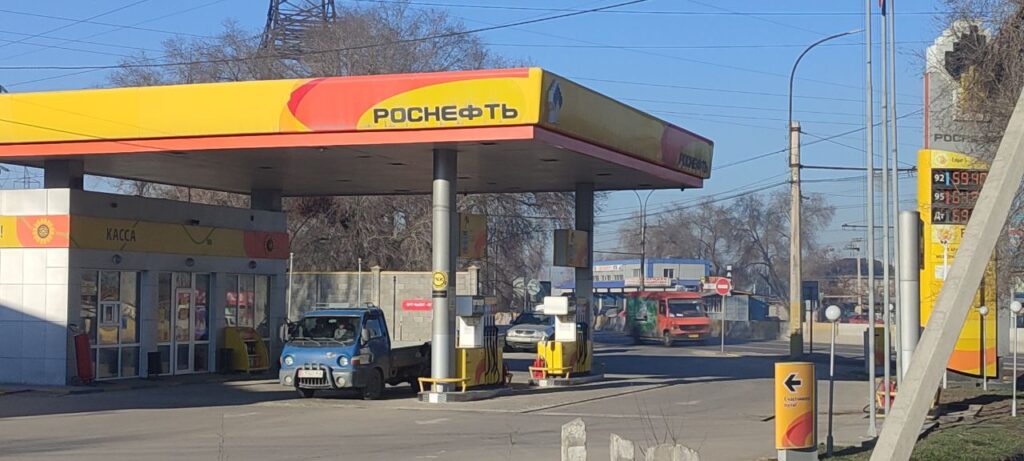
As part of the fight against the shadow gasoline market, the Kyrgyz authorities plan to introduce a rule that all gas stations in the country must label fuel from June 1 this year. The plan meant is to tighten control over the production, movement, storage, shipment and sale of motor fuels, and the initiator of the innovation is the tax service. The draft law was approved by the Ministry of Economy of Kyrgyzstan; the document is undergoing public hearings.

According to the bill, from June 1, all gas stations in the country will be required to sell only labeled fuel. There will be an exception only for fuels and lubricants produced in Kyrgyzstan and exported. The requirement will be for vendors to add a small amount of a special molecular marker to each batch of fuel. The tax service said that such a marker cannot be faked and cannot be washed off or altered in any way. Once the law comes into force, tax officials plan to create a mobile laboratory that will travel around the country and check gasoline at gas stations.

“Tax officials in any corner of the country will be able to check the legality of movement and sale of fuel and lubricants, and apply sanctions measures if necessary,” the Kyrgyz tax service stated. Fuel markers will make it possible to determine the origin of gasoline and prevent the mixing of different brands of fuel. Tax officials said some gas stations currently mix various additives to gasoline to artificially increase its octane number or dilute the fuel to increase its volume.

This isn’t the first time the authorities have tried to introduce fuel-labeling in Kyrgyzstan, Kanat Eshatov, president of the republic’s Association of Oil Traders commented, explaining that gas station owners include the cost of these substances in their pricing. This means that for the average consumer, gasoline will become more expensive. “So far we do not know how much such labeling will cost. We count gasoline by tons. So we will have to buy a certain amount of this substance per ton, and this amount will fall on the shoulders of the consumer,” Eshatov explained to the Times of Central Asia.

In their justification for the bill, Kyrgyz Economy Ministry officials said the country’s fuel and lubricants trade has a high shadow, or unregulated market component. The shadow market of gasoline continues to grow. For example, on the bypass road near Bishkek, which runs along the border with Kazakhstan, one can find a dozen illegal sellers of gasoline, which they sell in plastic bottles. Gasoline is smuggled into Kyrgyzstan from neighboring republics. According to the Kyrgyz Tax Service, in 2023 the agency seized almost six times as much illegal fuel as in 2022 – 19,600 liters versus 3,400 liters in 2022.

Legal gas stations sometimes also sell smuggled gasoline. With the introduction of labeling, this practice will stop, the tax service said.

President of Turkmenistan Pardons 356 Prisoners

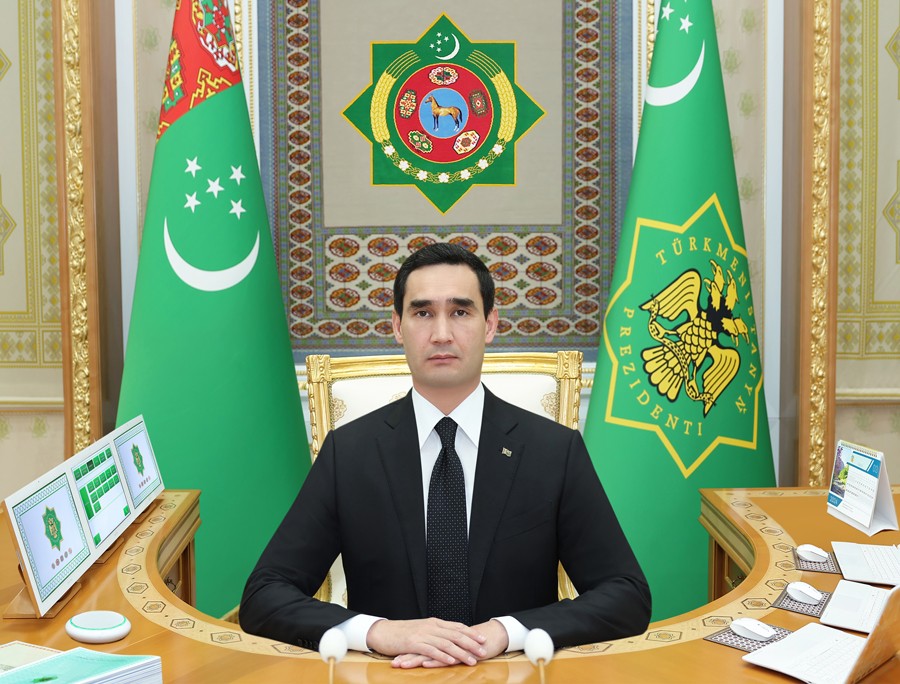
President of Turkmenistan, Serdar Berdymukhamedov has pardoned 356 people who repented for their crimes in honor of Laylat al-Qadr (The Night of Power). The head of state signed the relevant decision at the meeting of the Cabinet of Ministers, according to a report by the Turkmen state news agency.

Representatives of the relevant law-enforcement agencies were instructed to release the prisoners and return them to their families in the near future. Furthermore, provincial, etrap (sub-provincial) and city mayors and other leaders were instructed to take appropriate measures to employ pardoned persons.

On April 5-6, Muslims in Turkmenistan celebrate the night of power (gadyr gijesi in Turkmen), a symbol of virtue and spiritual purity.

Laylat al-Qadr is, in Islamic belief, the night when Muslims believe the Quran was first sent down from heaven to the world, and also the night when the first verses of the Quran were revealed to the Islamic prophet, Muhammad.

The Middle Corridor: How Kazakhstan is Carving its Niche in Europe-Asia Transport

In the aftermath of the pandemic and amid rising geopolitical tensions and sanctions – leading to the breakdown of traditional shipping and logistics chains – the need to develop new, alternative routes for trade has gained particular importance. One such route is the Middle Corridor, or Trans-Caspian International Transport Route, which has become a priority project for Kazakhstan and its neighbors. In this overview we look at the prospects for this multi-modal transnational route.

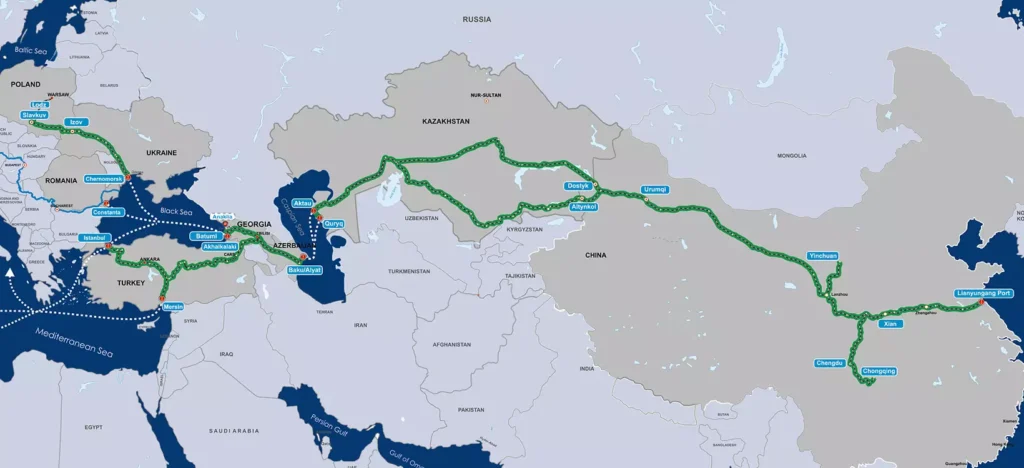
The Trans-Caspian International Transport Route (TITR), or Middle Corridor, starts in China, passes through Kazakhstan, the Caspian Sea, Azerbaijan, Georgia and Turkey, before reaching Europe. Last year, more than 2.7 million tons of cargo was transported along the TITR, up 86% on 2022, whilst it is expected to carry 4 million tons this year.

Drivers of growth

This growth in volumes has been facilitated by the conflict in Ukraine and restrictions on the transport of goods through Russia, which previously represented the main land route connecting East and West. As a result, in 2022 the volume of container traffic via the TITR grew 33% year-on-year. In addition, amid the geopolitical tensions that have effected the safety of traversing the Suez Canal and the Red Sea – the central and shortest trade route between Asia and Europe – many shipping companies have been forced to go around the southern tip of Africa. This has led to an increase of 14-18 days in the delivery time of goods, as well as additional costs. Because of attacks by Houthi rebels, the number of container ships passing through the Suez Canal each week was down 67% year-on-year in 2023, according to the UN. Meanwhile, in the first two months of 2024, trade volumes along the route decreased 43%.

According to data from the UN Conference on Trade and Development, last year the cost of transporting goods from Shanghai to European countries by sea roughly tripled. At the same time, shipping goods by rail from inland Chongqing to Europe was a third cheaper than by sea. Experts note that over the past decade, the total cost of transporting goods between China and Europe by rail has fallen 30%. All this opens wide opportunities for the further development of the TITR, which should be taken advantage of by countries along the route.

Middle Corridor countries working together

Today, to ensure safe and uninterrupted exports, as well as to attract more flows through Kazakhstan and other TITR countries, measures are being taken. Indeed, the route is considered a strategic initiative for the development of the entire region’s transport potential. During a recent visit to Azerbaijan, Kazakh President Kassym-Jomart Tokayev said that in the future the volume of cargo transported via the TITR should increase to 10 million tons, which is to be facilitated now by both existing demand and technology.

At the end of 2022, a roadmap for 2022-27 was signed to eliminate bottlenecks along the route in Kazakhstan, Azerbaijan and Turkey, while to boost the volume of cargo transported by rail a joint venture called Middle Corridor Multimodal Ltd was created by railway administrations in Kazakhstan, Azerbaijan and Georgia, thus allowing for a Single Window.

Such cooperation among participating countries and partners plays a key role in the further development and promotion of the route. All Middle Corridor countries are interested in clearing the existing infrastructure bottlenecks, developing the corridor as a whole, and expanding its geographic reach. At the “New Silk Way” VI International Transport and Logistics Business Forum, held in Astana in the autumn of 2023, Turkey’s Transport and Infrastructure Minister, Abdulkadir Uraloglu, expressed Ankara’s firm intention to develop and improve the Middle Corridor. To increase the cargo potential, Turkey is implementing large projects, including joint ones, both in the Middle East and on the African continent. In particular, Uraloglu mentioned the Turkey-Iraq Development Road project, a transport corridor to the Persian Gulf, which should boost cargo flows along the Middle Corridor from West to East.

In general, over the next five years, the Middle Corridor countries plan to invest about 6 billion euros in infrastructure projects. There are also plans to invest in soft infrastructure – operating models, digitization and related operations involved in shipping.

Interest in the route

Whereas for China, as one of the largest participants in the TITR project and the key cargo-generating country, the Middle Corridor promises diversification of transport routes to European markets – especially important in the context of the unpredictable situation in the Middle East and the South China Sea – Europe’s interest is based primarily on the speed of delivery.

For a long time, European countries looked at the route with a good deal of distrust. However, regional and global events in recent years have forced them to reconsider their position. The European Bank for Reconstruction and Development estimates the volume of cargo transported via the TITR in 2030-35 at 1.0-1.5 thousand TEUs per year. Other estimates put it at 500,000-800,000 TEUs per year by 2040.

A World Bank report published at the end of November 2023 did its part to bring attention to the route, presenting priority measures to facilitate the transformation of the TITR into an important and reliable option. The report emphasized that with the right investments and industrial policies, the corridor could halve cargo transport times and triple freight volumes by 2030 (to 11 million tons). World Bank experts see overall trade turnover between China and Europe growing about 30% by 2030. They believe that “if the Middle Corridor is operationalized, in 2030 trade via the Caspian Sea will account for over 60% of trade between the Middle Corridor countries, up from 40% in 2021.”

Improving the operation of the TITR should drive the diversification of cargo flows, with preference for goods with high added value, especially those sensitive to transport time – could incentivize switching from the northern route passing through Russia to the Middle Corridor.

Reorienting supply chains in Kazakhstan, Azerbaijan and Georgia should increase the robustness of their trade flows and reduce their dependence on Russia and China as traditional regional trading partners. This is supposed to be accomplished by diversifying imports and increasing the share of exports to Europe, as well as entering new potential markets in the Middle East, North Africa, the Indian subcontinent, and Southeast Asia. In 2021-30, the cargo flows of the three countries are estimated to grow 90 million tons, of which 70 million tons is attributable to additional exports from Kazakhstan.

Among the main barriers to the development of the TITR today, World Bank experts name the time of transport and cost of transporting goods along the route. Other factors include a lack of coordination and management of the corridor, low efficiency of ports in the Caspian and Black seas, as well as maritime transport in the Caspian Sea, a lack of end-to-end rail infrastructure, and a lack of uniformity and integration of the digital solutions used by the Middle Corridor countries.

The authors of the World Bank report recommend offering logistics solutions that would cover the entire length of the corridor, optimizing procedures and necessary documents, developing digital processes and further enhancing infrastructure and equipment along the entire route.

The problem of falling water levels in the Caspian Sea, actively discussed in Kazakhstan and elsewhere, is also mentioned in the report. Indeed, it could affect the transport of goods along one of the key segments of the route. In this regard, dredging at the Kuryk and Aktau ports is set to get underway this year. Also planned are several infrastructure projects that will increase the capacity of the Kazakh ports – in particular, constructing an additional berth for general and bulk cargo, restoring oil loading infrastructure, and updating and retrofitting handling equipment at the Aktau port, while a grain terminal, berth No. 3, and five new berths are to be built at the port in Kuryk.

According to the chairman of NC Aktau Sea Commercial Port, Abay Turikpenbaev, the port’s throughput capacity is currently 70,000 TEUs per year, which should rise to 100,000 TEUs given the projects being implemented. Overall, the ports should see their throughput capacity boosted to 27.3 million tons (Aktau to 12.3 million tons and Kuryk to 15.0 million tons), enabling more cargo to be transported via the TITR.

Importantly, Kazakhstan is bringing in global expertise, partnering with companies like DP World, Lianyungang Port, and PSA International, among others. This will not only increase trade flows, but also develop digital technology and increase the efficiency of cargo transport and communication between the various actors in the shipping process.

The involvement of such global transport giants, along with studies of the TITR by international financial institutions, confirms the viability and outlook of the Middle Corridor, as well as its critical importance for the economies of the countries along the entire route.

Dauren Moldakhmetov is the Editor-in-Chief of industry transportation publications of Kazakhstan, railway magazine “Trans-Express Kazakhstan”, and the business magazine, “Trans Logistics Kazakhstan”.

Kazakh Tennis: Foreign-Born Talent and Grassroots Programs

ALMATY, Kazakhstan – Elena Rybakina, a Moscow-born citizen of Kazakhstan, considers her run to the final of the Miami Open this past weekend to be a success. Kazakhstan’s tennis federation duly noted the achievement, but what it really wants to see is more homegrown talent making a splash in global tennis.

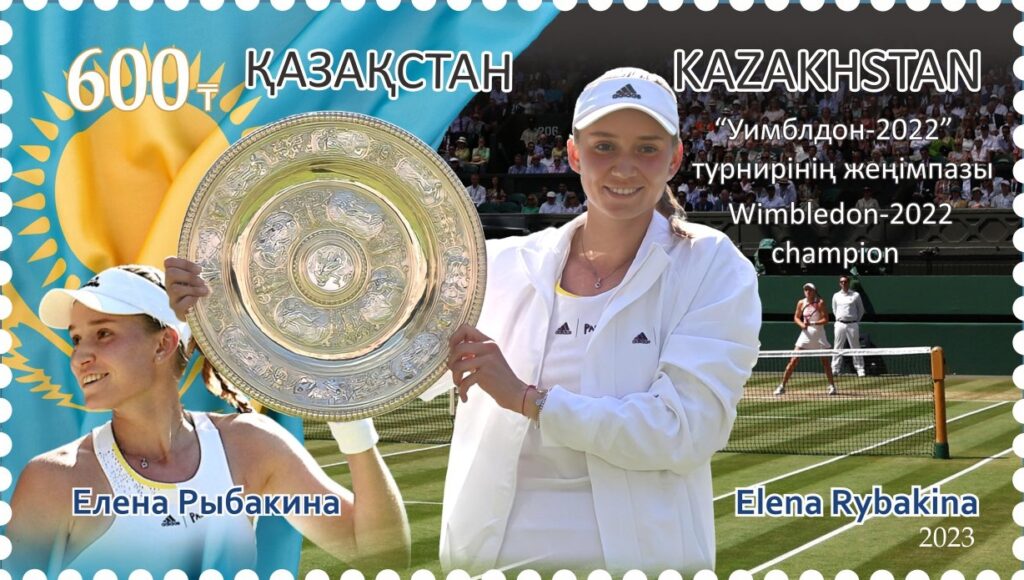
“It was a great two weeks. A lot of tough matches, great battles,” said 24-year-old Rybakina, who won five matches on her way to the final, where she lost to American Danielle Collins. Rybakina, the world No. 4, won Wimbledon in 2022 and was runner-up at the Australian Open last year.

Rybakina played at Spartak Club in Moscow as a junior but secured citizenship in Kazakhstan in 2017 after the tennis federation there offered generous support for her career. Her Wimbledon victory came in a year when players from Russia and Belarus were barred from participating because of international tension over Russia’s invasion of Ukraine.

Rybakina’s Wimbledon triumph was met with a “mixed reaction” by some observers who wondered about the state of grassroots tennis in Kazakhstan, said Yuriy Polskiy, vice president of the Kazakhstan Tennis Federation and president of the Asian Tennis Federation.

Polskiy wrote in an article published in Euronewsweek in February that 10 Kazakhstanis finished the 2023 season in the top 100. While some players competing for Kazakhstan were born outside the country, all the players in the junior rankings were born and trained in Kazakhstan, he said.

Top talents include Amir Omarkhanov, who this year was the first Kazakh player to reach the Australian Open Junior Championship quarterfinals. On the women’s side, Asylzhan Arystanbekova reached the quarterfinals at the junior doubles tournament in Melbourne this year.

Bulat Utemuratov, president of the Kazakhstan Tennis Federation, has led development of national tennis, spending big sums since he became head of the federation in 2007. Today, players who are 14-16 years old have been training for about a decade and there are 48 modern tennis facilities with 360 courts, most of them indoors, according to tennis officials.

The cost of court rentals has plunged and the number of children playing tennis has soared in Kazakhstan.

“They are the ones who will represent Kazakhstan at professional tournaments in the future, and the country won’t have to bring players from elsewhere,” Polskiy wrote.

For now, Rybakina and Alexander Bublik, another Russia-born player who changed citizenship and is ranked No. 18 in the world, are the biggest names in Kazakh tennis.

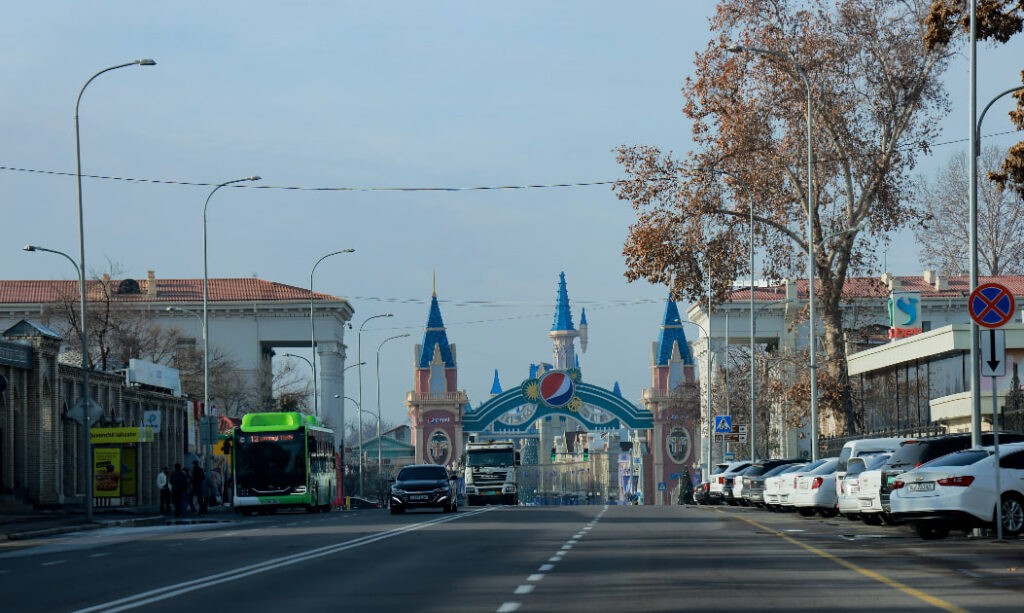
Tashkent Announces First Car-free Day

Uzbekistan’s Ministry of Ecology, Environmental Protection and Climate Change has announced that from 24 April, Tashkent will be car-free on the fourth Wednesday of every month.

The main goals of the campaign are to promote a healthy lifestyle, protect the environment from harmful gases emitted by cars, reduce the volume of traffic, and attract attention to developments in public transport.

On the first car-free day, heads and employees of government agencies will travel to work by public transport; a move that will reduce the number of cars passing through Tashkent by 200 thousand (22-25%), and harmful emissions by an average of 580 tons. By publicizing the example to be set by its own employees, the government aims to encourage other workers and residents to refrain from driving in the city on designated car-free days.

Authorities in Tashkent are currently working on the introduction of environmentally-friendly public transport including electric buses and the launch of new metro lines, as well as the creation of bicycle paths.