• KGS/USD = 0.01144 0%
  • KZT/USD = 0.00194 -0%
  • TJS/USD = 0.10844 -0.46%
  • UZS/USD = 0.00008 0%
  • TMT/USD = 0.28571 0.28%
  • KGS/USD = 0.01144 0%
  • KZT/USD = 0.00194 -0%
  • TJS/USD = 0.10844 -0.46%
  • UZS/USD = 0.00008 0%
  • TMT/USD = 0.28571 0.28%
  • KGS/USD = 0.01144 0%
  • KZT/USD = 0.00194 -0%
  • TJS/USD = 0.10844 -0.46%
  • UZS/USD = 0.00008 0%
  • TMT/USD = 0.28571 0.28%
  • KGS/USD = 0.01144 0%
  • KZT/USD = 0.00194 -0%
  • TJS/USD = 0.10844 -0.46%
  • UZS/USD = 0.00008 0%
  • TMT/USD = 0.28571 0.28%
  • KGS/USD = 0.01144 0%
  • KZT/USD = 0.00194 -0%
  • TJS/USD = 0.10844 -0.46%
  • UZS/USD = 0.00008 0%
  • TMT/USD = 0.28571 0.28%
  • KGS/USD = 0.01144 0%
  • KZT/USD = 0.00194 -0%
  • TJS/USD = 0.10844 -0.46%
  • UZS/USD = 0.00008 0%
  • TMT/USD = 0.28571 0.28%
  • KGS/USD = 0.01144 0%
  • KZT/USD = 0.00194 -0%
  • TJS/USD = 0.10844 -0.46%
  • UZS/USD = 0.00008 0%
  • TMT/USD = 0.28571 0.28%
  • KGS/USD = 0.01144 0%
  • KZT/USD = 0.00194 -0%
  • TJS/USD = 0.10844 -0.46%
  • UZS/USD = 0.00008 0%
  • TMT/USD = 0.28571 0.28%
09 December 2025

Kazakh Peacekeepers to be Sent to the Golan Heights

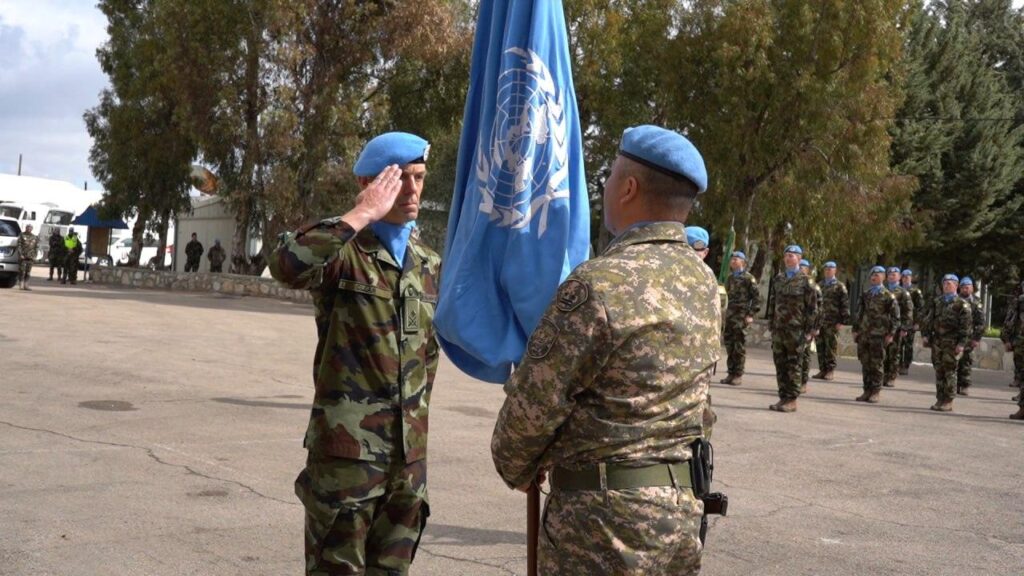
The Kazakh Defense Ministry has issued a report on the handing over of the United Nations’ flag to the peacekeeping contingent of Kazakhstan. The solemn ceremony took place on March 22nd at the Fawhar peacekeeping base, located in the area of responsibility of the UN mission on the Golan Heights between Israel and Syria.

After the head of the Irish contingent, Lieutenant Colonel Oliver Clear, had handed over the UN flag to the commander of the Kazakh contingent, Lieutenant Colonel Zhiger Aipov, the latter commented:
“Since the transfer of the UN flag, our unit has become a full participant in the mission in the Golan Heights and we have now begun to carry out the assigned tasks.”

This is the first time in Kazakhstan’s history that the UN has given the country a mandate to carry out an independent peacekeeping mission. During the year, the Kazakh peacekeeping contingent will patrol the area, strengthen checkpoints, maintain ceasefire between warring parties, and perform other tasks in accordance with the mandate of the UN mission.

Peacekeepers from Kazakhstan have undergone thorough selection and training in accordance with the UN’s requirements and standards and according to Kazakh Defense Minister Ruslan Zhaksylykov, 139 servicemen are ready to be to be sent to the Golan Heights.

Soyuz Launch Successful

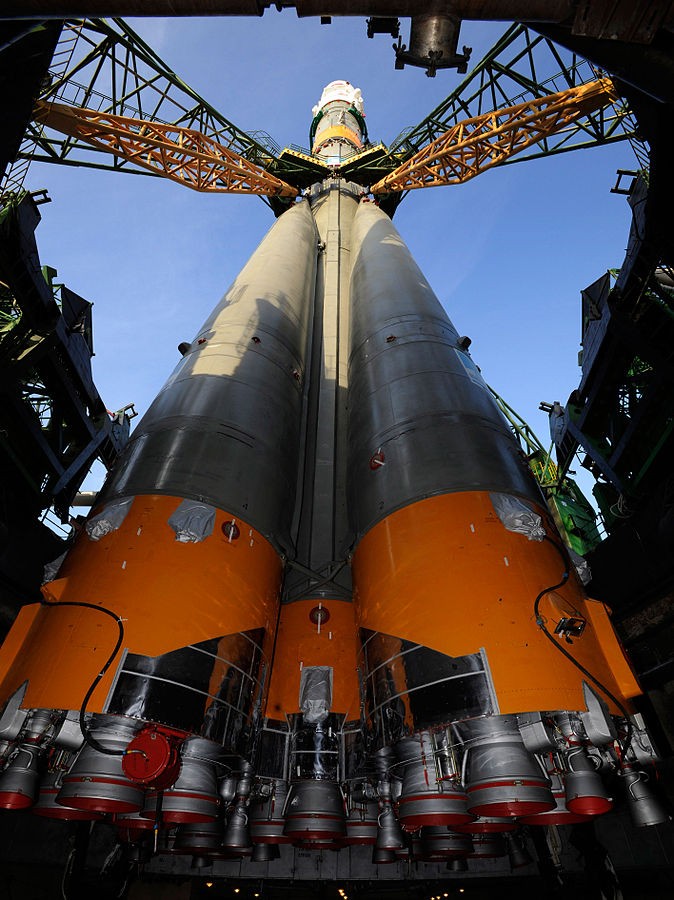
ALMATY, Kazakhstan – A Soyuz spacecraft is in orbit with three crew-members from Russia, Belarus and the United States after launching from the Baikonur Cosmodrome in Kazakhstan.

The Soyuz is scheduled to dock at the International Space Station on Monday. Aboard are mission commander Oleg Novitsky of Russian space agency Roscosmos (his fourth trip to space), Belarusian Marina Vasilevskaya (her first trip) and NASA’s Tracy Caldwell Dyson (her third).

The launch went smoothly from the Russia-operated site in southern Kazakhstan on Saturday. A previously planned launch was aborted with seconds to lift-off Thursday because of a technical problem.

Coordination between the U.S. and Russian space agencies has continued despite international tension over the war in Ukraine.

As previously reported by TCA, the launch was scheduled for the 21st, but was scrapped due to a “voltage drop in the chemical current source.”

Tajikistan Warns Against “Unverified” Reports About Moscow Attack

Tajikistan is warning against “fake information” about the alleged role of Tajik citizens in the attack that killed more than 100 people at a concert venue in Moscow.

Tajikistan’s foreign ministry said on Saturday that it had not received confirmation from Russian authorities about any involvement of Tajiks in the attack at the Crocus City complex. The ministry asked media to rely on “official information” distributed by Russian authorities.

The Afghanistan branch of the Islamic State group (ISKP) claimed responsibility for the mass shooting on Friday night. Telegram and other social media platforms are swirling with allegations that Tajik citizens were involved. Large numbers of Tajik migrants live in Russia, many enduring difficult conditions in hostels while struggling to find work.

“We emphasize that the Tajik side has not received any confirmation from the Russian authorities regarding the currently circulating fake information about the involvement of citizens of Tajikistan,” the ministry said in a statement.

“Keep in mind that the dissemination of unverified and unreliable information could harm the citizens of Tajikistan currently abroad,” the ministry said.

Russia said it has arrested 11 suspects and that an investigation is ongoing.

Tajikistan was among several Central Asian states that condemned the attack and sent condolences to relatives and friends of the dead.

President Kassym-Jomart Tokayev of Kazakhstan spoke by telephone to Russian President Vladimir Putin on Saturday, Kazakhstan’s presidential press office said.

“The head of our state strongly condemned the brutal act of violence against civilians and reaffirmed solidarity with Russia in the fight against terrorism,” the press office said.

Kazakhstan has offered the help of its law enforcement agencies to Russia if needed and Uzbekistan’s presidential office said those responsible for the attack “will be assured of the inevitability of punishment.”

Several bouquets of flowers were laid outside the Russian embassy in Astana, Kazakhstan.

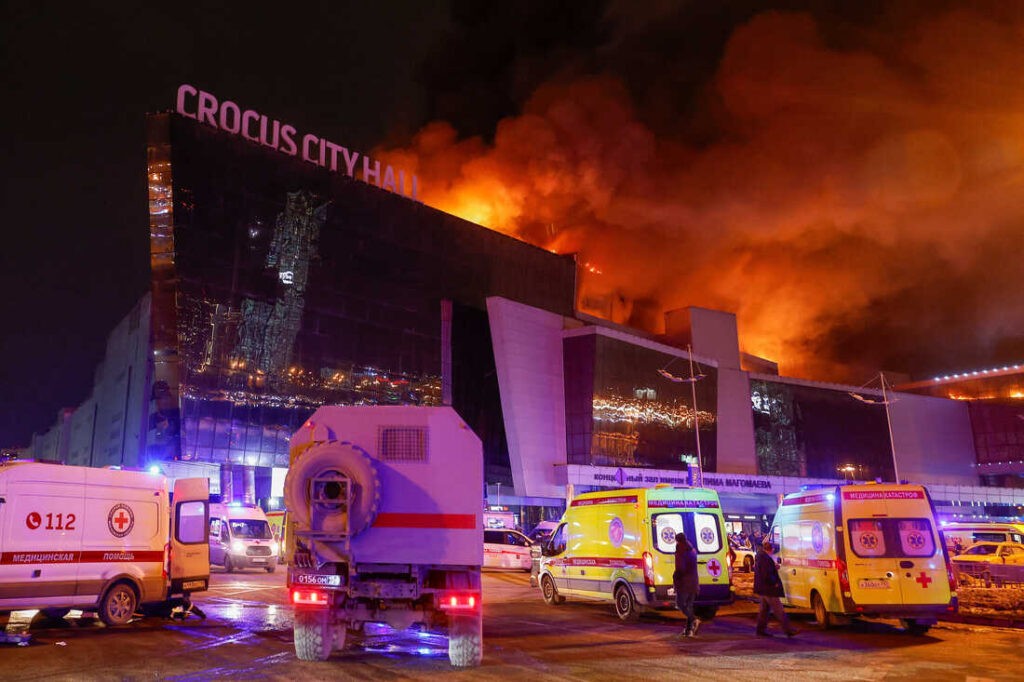
Video recorded by witnesses at the Moscow venue showed several gunmen roaming the atrium and other parts of the entertainment complex, opening fire on civilians. A large blaze also broke out at the building during the attack and was later extinguished.

On Feb. 27, Russian Defense Minister Sergei Shoigu spoke of threats coming from extremists in Afghanistan and prioritized “ensuring military security in the Central Asian strategic area.”

Shoigu said the number of ISKP militants in Afghanistan had increased by 15% in the past year. He said their key objectives were to spread radical ideology and to conduct subversive activities on the southern borders of the Collective Security Treaty Organization.

The organization, CSTO, is a Russian-led security alliance that includes Belarus, Kazakhstan, Kyrgyzstan, and Tajikistan.

“Radicals from Central Asia have accounted for a notable share of recent Islamic State-inspired or -directed plots and attacks in the United States, Europe, Turkey, and Iran,” Lucas Webber and Riccardo Valle wrote in a Hudson Institute analysis last year.

In September 2022, ISKP – which vehemently opposes Russia’s support for the regime of Bashar al-Assad in Syria – claimed responsibility for a suicide bombing at the Russian embassy in Kabul which left six dead.

Despite repeatedly warnings from foreign sources – including the U.S. – that an attack was imminent, survivors have apparently reported that the guards did not check bags and clothes before entering the arena, metal detectors were turned off, and automatic fire extinguishers failed to function.
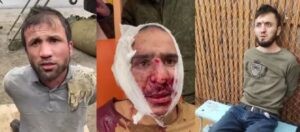
Three of the alleged attackers; photo: rian_ru

Russia Detains Suspects with Tajik Passports – Death Toll Rises to 133

Russia has announced the arrest of eleven individuals, including four who are suspected of carrying out a deadly shooting at a concert hall near Moscow, marking the most lethal incident of its kind in the country in two decades. The attack, which resulted in the death of 143 people and counting, according to state TV, was claimed by the Islamic State militant group. However, Russian authorities are trying to forge a potential connection to Ukraine, despite strong denials from Ukrainian officials regarding any involvement. The death toll was later revised to 133.

The Federal Security Service (FSB) of Russia has reported the apprehension of the “four terrorists” as they were allegedly attempting to cross into Ukraine, repeatedly mentioning that the suspects had connections within Ukraine. They are currently being transported to Moscow for further investigation. Maria Zakharova, a spokeswoman for the Russian Foreign Ministry, expressed on Telegram that the suspects had intended to flee to Ukraine to evade capture, stating, “Now we know in which country these bloody bastards planned to hide from pursuit.”

In response to Moscow’s attempts to pin the atrocity on Ukraine and bolster waning support for Putin’s war, Andriy Yusov, a spokesman for Ukrainian military intelligence, refuted the claims of Ukraine’s involvement, emphasizing his nation’s focus on defending its sovereignty and targeting military objectives, not civilians. He dismissed the FSB’s assertion regarding the suspects’ intended escape to Ukraine as another fabrication by Russian intelligence services. No evidence has been presented to support the theory of a Ukrainian link.

Russian lawmaker Alexander Khinshtein revealed that the assailants had escaped in a Renault vehicle, which was later identified by police in the Bryansk region, approximately 210 miles southwest of Moscow. Upon refusal to comply with police instructions to stop, the vehicle was searched, uncovering a pistol, an assault rifle magazine, and passports from Tajikistan. In a video shown on state TV, a suspect stated that he had been paid 500,000 roubles ($5,425) by unknown people via Telegram to carry out the atrocity.

Central Asian States Respond to Moscow Attacks

ALMATY, Kazakhstan – Central Asian countries have denounced the attack on a Moscow concert hall that killed more than 60 people, with Kazakhstan offering the help of its law enforcement agencies to Russia if needed. The Islamic State group claimed responsibility for the mass shooting on Friday night.

“Kazakhstan strongly condemns the terrorist act against civilians in Moscow,” Kazakh President Kassym-Jomart Tokayev said in a statement. He expressed condolences in a message to Russian President Vladimir Putin and urged United Nations member states to unanimously condemn the attack.

Uzbek President Shavkat Mirziyoyev also sent condolencesto relatives of the dead and wishes for the quick recovery of the injured. More than 140 people were injured, according to Russian authorities. Video recorded by witnesses showed several gunmen roaming the concert hall, opening fire on civilians. A large blaze also broke out at the building during the attack.

Uzbekistan “firmly condemns this act of terrorism directed against civilians, and the organizers and executors of this crime will be assured of the inevitability of punishment,” the president’s press service said.

The claim of responsibility could not be immediately confirmed, and it was unclear whether there was a link to Islamic State extremists in Afghanistan.

On Feb. 27, Russian Defense Minister Sergei Shoigu spoke of threats coming from extremists in Afghanistan and prioritized “ensuring military security in the Central Asian strategic area.”

Shoigu said the number of Islamic State militants in Afghanistan had increased by 15% in the past year. He said their key objectives were to spread radical ideology and to conduct subversive activities on the southern borders of the Collective Security Treaty Organization.

The organization, CSTO, is a Russian-led security alliance that includes Belarus, Kazakhstan, Kyrgyzstan, and Tajikistan.

Image above credit: Reuters

Kyrgyzstan to Start Producing Chevrolet, Isuzu Cars This Year

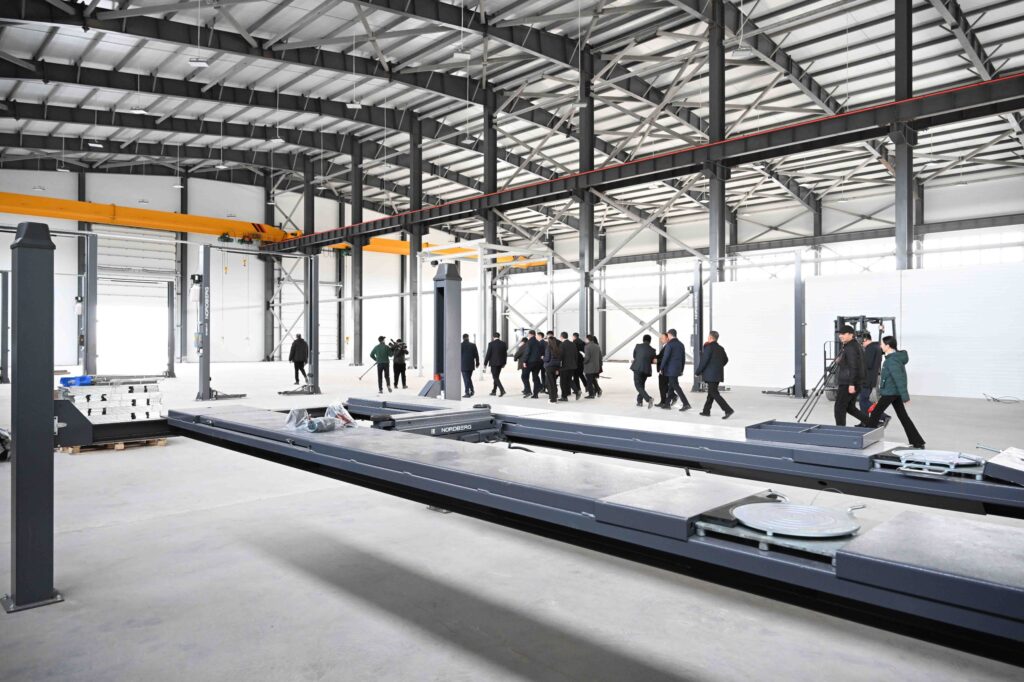
A joint Kyrgyz-Uzbek factory for the production of Chevrolet and Isuzu cars is currently under construction in Kyrgyzstan.

Several years ago the Kyrgyz and Uzbek governments agreed to build the plant, near Bishkek. Since then the authorities of both countries have been solving legal and investment issues related to the project. They also discussed taxation of the new enterprise and a grace period to allow the plant to get up and running.  As a result, at the beginning of 2023 Kyrgyz deputies approved the agreement and the builders started to erect production lines for the car assembly plant. The parties wanted to launch the plant last year, but the deadlines for completion of work were repeatedly pushed back.

Production of Chevrolet and Isuzu cars began in Uzbekistan in 2007 at a joint venture Daewoo plant. As representatives of the Uzbek company noted earlier, Kyrgyzstan is one of the priority markets for the expansion of production, as the China-Kyrgyzstan-Uzbekistan road corridor reduces the time it takes to deliver components, making car assembly cheaper.

According to the Kyrgyz government, the plant should begin operations in the second quarter of this year, and the first car should roll off the assembly line in late May. At the initial stage, Uzbekistan’s UzAuto Motors should invest $50 million and produce 10,000 cars in the first year — with the enterprise creating more than 1,000 permanent jobs. The first model produced at the plant will be the Chevrolet Nexia R3.

According to agreements between Bishkek and Tashkent, the first stage will include Uzbekistan bringing components in the form of large assemblies ready for installation into Kyrgyzstan. During the second stage, targeted to start in four years, the plant will produce automobile components independently — and produce about 20,000 cars a year. In the sixth year of operation, according to the plan, the Kyrgyz plant will perform a variety of technological operations, including body welding and painting, and should produce about 30,000 cars per year.