• KGS/USD = 0.01144 0%
  • KZT/USD = 0.00194 -0%
  • TJS/USD = 0.10896 -0%
  • UZS/USD = 0.00008 0%
  • TMT/USD = 0.28571 0.28%
  • KGS/USD = 0.01144 0%
  • KZT/USD = 0.00194 -0%
  • TJS/USD = 0.10896 -0%
  • UZS/USD = 0.00008 0%
  • TMT/USD = 0.28571 0.28%
  • KGS/USD = 0.01144 0%
  • KZT/USD = 0.00194 -0%
  • TJS/USD = 0.10896 -0%
  • UZS/USD = 0.00008 0%
  • TMT/USD = 0.28571 0.28%
  • KGS/USD = 0.01144 0%
  • KZT/USD = 0.00194 -0%
  • TJS/USD = 0.10896 -0%
  • UZS/USD = 0.00008 0%
  • TMT/USD = 0.28571 0.28%
  • KGS/USD = 0.01144 0%
  • KZT/USD = 0.00194 -0%
  • TJS/USD = 0.10896 -0%
  • UZS/USD = 0.00008 0%
  • TMT/USD = 0.28571 0.28%
  • KGS/USD = 0.01144 0%
  • KZT/USD = 0.00194 -0%
  • TJS/USD = 0.10896 -0%
  • UZS/USD = 0.00008 0%
  • TMT/USD = 0.28571 0.28%
  • KGS/USD = 0.01144 0%
  • KZT/USD = 0.00194 -0%
  • TJS/USD = 0.10896 -0%
  • UZS/USD = 0.00008 0%
  • TMT/USD = 0.28571 0.28%
  • KGS/USD = 0.01144 0%
  • KZT/USD = 0.00194 -0%
  • TJS/USD = 0.10896 -0%
  • UZS/USD = 0.00008 0%
  • TMT/USD = 0.28571 0.28%
09 December 2025

Tokayev Proposes Regional Nuclear Council in Kazakhstan

At the second Central Asia-Russia summit in Dushanbe, Kazakh President Kassym-Jomart Tokayev proposed establishing a regional council in Kazakhstan focused on nuclear fuel cycle expertise and radioactive waste management.

The proposal follows last year’s national referendum in which over 70% of voters supported building a nuclear power plant (NPP) in Kazakhstan. Since then, the government has selected a site for the first plant and announced plans to construct at least two additional facilities. This summer, Rosatom began construction of the first NPP in the Almaty region in southern Kazakhstan.

Tokayev has previously emphasized the need for Kazakhstan to develop domestic expertise in the peaceful use of nuclear energy, citing international best practices. He expanded on this vision during the Dushanbe summit.

“Cooperation in the nuclear industry will ensure the development of a number of related industries, which is critically important for us,” Tokayev stated.

“We propose to establish a Regional Council of Competencies in the field of the nuclear fuel cycle and radioactive waste management in Kazakhstan. It is important to strengthen the modern research base and the system for training qualified personnel. The first step in this direction has already been taken: a branch of the National Research Nuclear University MEPhI has opened in Almaty,” Tokayev said, referring to the Moscow-based institute that has conducted nuclear research since 1953.

He added that Kazakhstan intends to continue developing this sector in cooperation with research institutions from both countries.

Tokayev also highlighted recent progress in regional energy integration, citing the trilateral gas union between Russia, Kazakhstan, and Uzbekistan as a key development in ensuring stable gas supplies for both citizens and industry.

“An important document on cooperation in the gas sector between Kazakhstan and Russia was signed recently in St. Petersburg,” he said, referencing a memorandum with Gazprom on the construction of a new gas pipeline from Russia to Kazakhstan to support domestic gasification.

The president also underscored the strategic role of the Caspian Pipeline Consortium, which transported approximately 63 million tons of Kazakh oil to Europe in 2024. He noted the increasing significance of the so-called eastern vector for hydrocarbon exports.

“Kazakhstan serves as a transit corridor for Russian oil to China, with volumes reaching up to 10 million tons per year. In 2024, deliveries have already surpassed this level. Given this momentum, there is potential to further increase capacity,” Tokayev said.
As previously reported by The Times of Central Asia, the China National Nuclear Corporation (CNNC) has been awarded contracts to build the second and third nuclear power plants in Kazakhstan.

From Belt and Road to Backlash: Edward Lemon and Bradley Jardine Discuss China in Central Asia

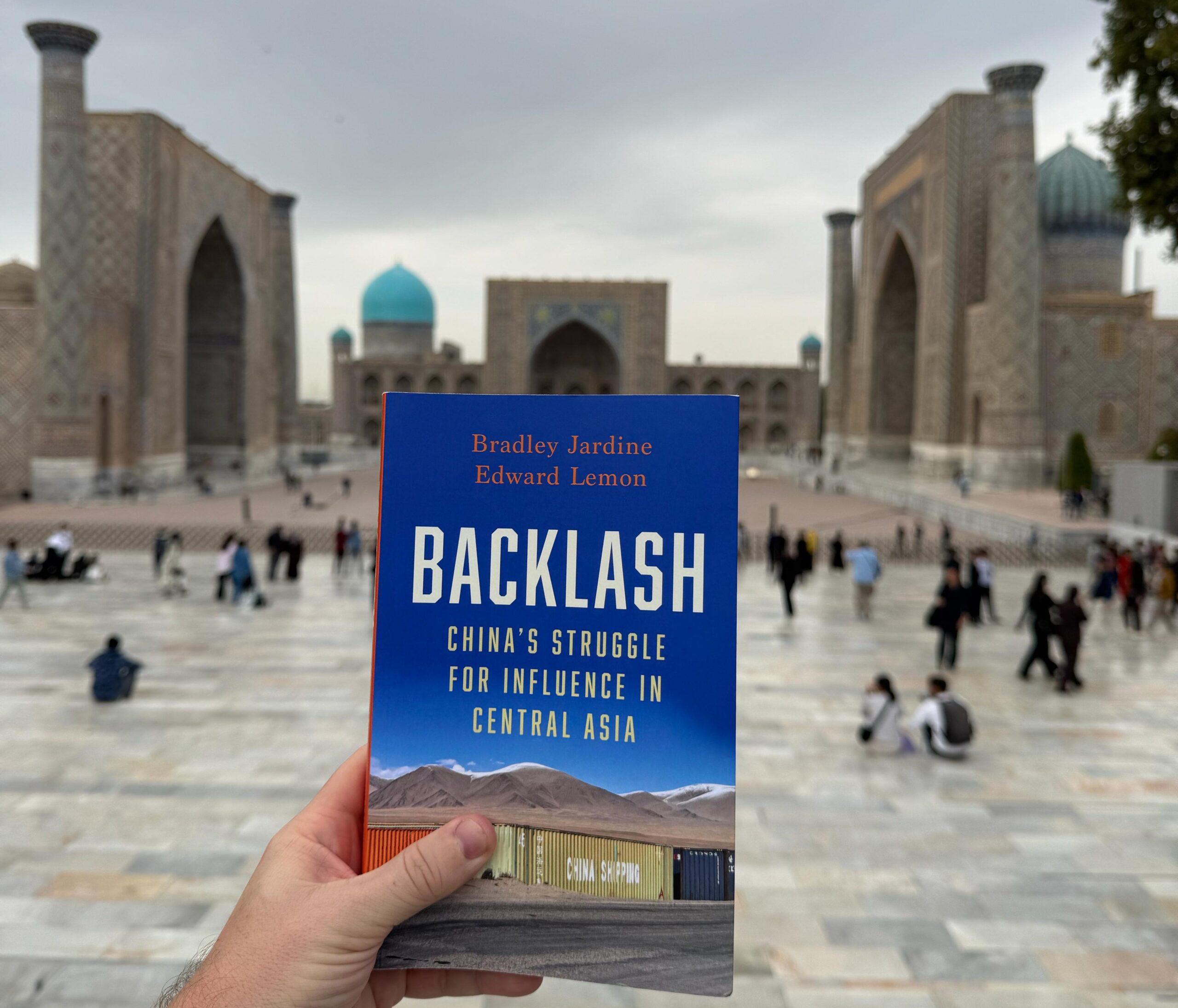
As China invests billions in Central Asian oilfields, railways, and cities, the region’s response is anything but passive. In Backlash: China’s Struggle for Influence in Central Asia, Bradley Jardine and Edward Lemon document how Central Asians – from government halls to village streets – are responding to Beijing’s expanding footprint. The book provides a nuanced look at China’s engagement in Kazakhstan, Kyrgyzstan, Tajikistan, Turkmenistan, and Uzbekistan over the three decades since these nations gained independence. Drawing on more than a decade of fieldwork, Jardine and Lemon ask a timely question: can Beijing maintain its growing influence in an environment where local voices and interests are increasingly assertive? The Times of Central Asia spoke with the authors.

TCA: Central Asia has become an increasingly strategic crossroads, rich in resources, young in demographics, and positioned between major powers. Yet China’s engagement appears far more ambitious than that of Western or regional players. In your view, what accounts for this asymmetry? Is it primarily a matter of geography and financial capacity, or has China been more politically and diplomatically attuned to Central Asia’s priorities than others?

J/L: China’s dominance in Central Asia stems from both geography and political attunement. As we note in Backlash, Beijing views the region as an extension of its own security frontier, as both a buffer protecting Xinjiang and a potential source of terrorism. It has built deep ties through consistent, elite-level engagement since the 1990s. Its approach blends vast financial capacity with political instincts that resonate with local elites: prioritizing sovereignty, stability, and non-interference rather than the governance conditionalities that often accompany Western aid and investment. Through the Belt and Road Initiative, which was launched in the region in 2013, the Shanghai Cooperation Organization, which was established in 2001 with four Central Asian republics as founding members, and newer platforms like the China-Central Asia (C+C5) summit, China offers infrastructure, energy investment, and regime security in ways tailored to the needs of authoritarian partners. Unlike the episodic or values-driven engagement of Western actors, and with Russia’s attention increasingly divided, China’s steady, pragmatic diplomacy, backed by proximity and resources, has allowed it to entrench itself as the region’s indispensable power.
TCA: China’s expanding presence across trade, infrastructure, and finance has reshaped Central Asia’s economic landscape. To what extent do these investments remain primarily commercial, and when do they start to carry political or strategic implications? How do local governments manage the risks of dependency or debt while pursuing development gains?

J/L: China’s expanding economic footprint in Central Asia may be driven by trade and infrastructure, but the lines between commerce and strategy have become increasingly blurred. As we note in Backlash, Beijing’s investments, roads, pipelines, railways, and energy grids are rarely purely commercial. They create structural dependencies that bind Central Asian economies to China’s markets, finance, and technology. By 2020, roughly 45% of Kyrgyzstan’s external debt and more than half of Tajikistan’s were owed to China, while around 75% of Turkmenistan’s exports flowed to Chinese buyers. These imbalances give Beijing quite a leverage, often translating into diplomatic support on sensitive issues like Xinjiang at the United Nations. Still, local governments are not passive: they manage these risks through diversification, courting Gulf, Western, and Turkish investment, and by invoking “multi-vector” foreign policies to balance great-power influence. At the same time, they have used Chinese support to help bolster their ability to rule distant areas like the Ferghana Valley and Tajikistan’s Pamir region. Yet opaque deals, elite capture, and public resentment over land use and labor practices mean that even as leaders seek development gains, they must constantly navigate the political backlash that accompanies China’s economic rise.

TCA: In Central Asia, public reactions to Chinese projects have at times been resistant, driven by concerns over transparency, sovereignty, and local impact. Yet overall attitudes toward China remain mixed and continue to evolve as governments balance public skepticism with the economic and strategic advantages of deeper engagement. How should we interpret these instances of protest or criticism within that broader context? Do these episodes of protest suggest a broader regional recalibration in attitudes toward China, or do they reflect more localized tensions that coexist with pragmatic cooperation?

J/L: Protest and criticism are best read as localized stress tests on a still-pragmatic relationship – not a wholesale regional turn away from China. The patterns we document show backlash clustering where projects provoke concerns over control of land, labor rights, or the environment (e.g., mines, refineries, logistics hubs), and in the two more protest-permissive states, Kazakhstan and Kyrgyzstan; of 191 China-related protests since 2010, 92% occurred in those two countries, with incidents largely about land/leasing, extractives, and Xinjiang rather than abstract geopolitics.

Public opinion is mixed and fluid (captured by the Chinese saying “warm politics, cold publics”): skepticism spiked between 2019 and 2021, then eased somewhat by 2023 in Kazakhstan and Kyrgyzstan, even as Uzbekistan’s negative attitudes rose – evidence of heterogeneous, issue-tethered sentiment rather than a uniform anti-China turn. In parallel, governments keep balancing: they suppress flashpoints, bank the economic upside, and pursue multi-vector hedging rather than realignment. The upshot: protests signal where China’s model grates, transparency, sovereignty, local impact, while coexisting with elite-level cooperation; cumulatively, they pressure Beijing to adapt (localization, skills programs, softer messaging) and pressure host states to demand cleaner, more accountable deals, but they do not, on their own, amount to a region-wide rupture.
TCA: All five Central Asian states continue to pursue multi-vector diplomacy, engaging China alongside Russia, Western institutions, and emerging partners from the Gulf and South Asia. Yet results have been mixed: attracting substantial non-Chinese investment remains a persistent challenge. How sustainable is this balancing strategy in practice? Can it deliver real economic diversification, or will China’s financial scale and reliability ensure it remains the region’s dominant partner?

J/L: Multi-vectorism is sustainable as a tactic, but it delivers only partial diversification – China is likely to remain first among equals economically. The region has widened its dance card (C5+1, EU Global Gateway, Gulf money, Turkey’s rise, India’s outreach). Yet, structural realities keep tilting the floor toward Beijing: proximity and pipelines, the scale and speed of Chinese finance, entrenched trade in energy/minerals, and Beijing’s steady institution-building (SCO, C+C5) that converts commerce into influence. Kazakhstan and Uzbekistan have the greatest amount of agency and can peel off meaningful projects, especially in critical minerals, renewables, and manufacturing, and intra-regional “balancing regionalism” helps. But poorer, smaller economies (Kyrgyzstan, Tajikistan) remain debt- and import-dependent; Russia still dominates security and migration flows; and headline alternatives (e.g., the Middle Corridor) face cost/capacity bottlenecks. Ultimately, multi-vectorism buys bargaining power and niche diversification, not a wholesale rebalance: expect a mosaic where China provides the backbone of complex infrastructure and finance, the Gulf/Turkey adds sectoral capital, and the U.S./EU compete in select lanes (critical minerals, governance, tech) with the region’s room to maneuver shrinking when great-power pressures spike.

TCA: Russia’s war in Ukraine has tested Moscow’s influence in Central Asia and reshaped regional dynamics. How has this affected China’s approach? Has Beijing adjusted its strategy in response, and what lessons might it draw from Russia’s experience in managing regional relationships?

J/L: Beijing has treated the Ukraine war as both a warning and an opening. With Russia distracted and less bankable, China has tightened its “first-among-equals” role in Central Asia – elevating the C+C5 format that excludes Moscow, expanding security and surveillance cooperation, and casting its Global Security Initiative as the region’s stability framework – while still avoiding steps that would overtly trample Russian equities. You see this two-track in practice: Xi’s public pledges to uphold Kazakhstan’s sovereignty and territorial integrity (a pointed signal after Russian elites questioned Kazakh statehood), alongside a steady build-out of bilateral corridors, arms sales, training, and a small footprint in Tajikistan, all framed as counter-terrorism and regime security rather than sphere-of-influence politics. At the same time, Beijing has learned from Russia’s missteps: don’t over-militarize; do work through elites; translate commerce into influence via parallel institutions (SCO, then C+C5); and let geography and finance do the heaviest lifting. The result is adjustment, not rupture: China exploits the space created by Russia’s war (e.g., more re-exports and logistics work-arounds, higher-level summits without Russia), but it still calibrates to avoid a frontal challenge where Moscow retains leverage (transit routes, remittance ties, CSTO legacies). The lesson taken: patient, institutionalized, elite-centric statecraft beats coercive dominance, and Central Asia’s multi-vector hedging is a feature to be managed, not a problem to be crushed.


Backlash: China’s Struggle for Influence in Central Asia by Bradley Jardine and Edward Lemon is now available from all good retailers.

Once Lost from Kyrgyzstan, Little Bustard Population Soars in Northern Valleys

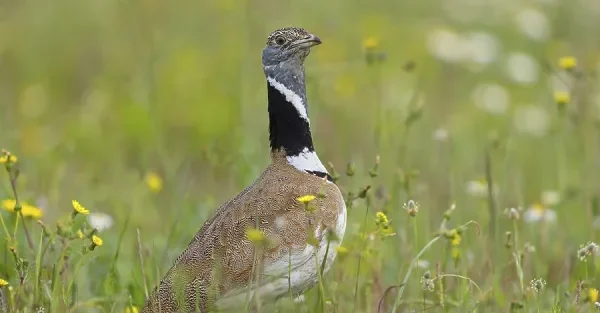
The Little Bustard, a pheasant-sized bird native to Asia and southern Europe, has reached a nesting population of around 1,900 individuals in Kyrgyzstan this year. This marks a remarkable recovery, as the species was nationally extinct in the country less than 20 years ago.

The Little Bustard was listed as extinct in the Red Book of Kyrgyzstan in 2006. However, recent ornithological surveys have discovered breeding populations in the Chuy and Talas valleys in the north of the country, thought to be between 1,400 and 1,900 individuals.

Signs of a wider recovery first appeared in 2009, with the discovery of four nests in the Talas valley. In 2019 a nest outside Bishkek suggested that Little Bustards were returning to the Chuy valley.

Once common throughout the country, the species’ decline was caused by the industrialization of Soviet Kyrgyzstan’s agriculture industry in the 1950s, which destroyed the birds’ natural habitat. By the 1970s only a few residual groups remained, in the non-cultivated steppe areas near the Kazakh border.

In recent years, surveys by the Ornithological Society of the Middle East (OSME) each spring have tracked their breeding activity, using listening points spaced through known and potential habitats.

While Little Bustards’ migratory and wintering patterns eastwards remain mostly unknown, recent observations suggest numbers in wintering areas may also be rising.

Despite the strong growth of its population, the bird remains vulnerable in Central Asia. Current threats to their habitats are a consequence of modern changes in farming, including increased use of pesticides, and the turning of traditional steppe into irrigated crops. Illegal hunting of Little Bustards is also a problem.

The species is currently classified in the national Red Book as Near Threatened. The Little Bustard is also considered Near Threatened by the International Union for Conservation of Nature (IUCN).


Kazakhstan’s Central Bank Raises Base Rate to 18% Amid Surging Inflation

The Monetary Policy Committee of the National Bank of Kazakhstan has raised the base rate to 18% per annum, with a corridor of +/- 1 percentage point, in an effort to contain accelerating inflation and stabilize macroeconomic conditions.

“The easing of monetary conditions amid accelerating inflation, signs of demand outpacing supply growth, and an active fiscal policy required a significant response to stabilize inflation dynamics and prevent the risk of an inflationary spiral,” the central bank said in a statement.

According to the National Bank, inflation in Kazakhstan is rising across all major components. Annual inflation reached 12.9% in September, surpassing expectations. Food prices remain the primary contributor (up 12.7%), while non-food inflation is also accelerating (10.8%).

“Inflation expectations among the population over a 12-month horizon remain elevated and volatile, with continued uncertainty in assessments. Market professionals have revised their inflation forecasts for the year from 11.3% to 12%. External inflationary pressure remains persistent. Risks are mounting, especially from global food markets, where record price increases have been observed in categories such as meat and vegetable oils. These dynamics, coupled with active exports, are feeding into higher domestic prices,” the statement noted.

In response to inflation exceeding projections, the Committee opted to tighten monetary policy by raising the base rate. It also signaled that further tightening may be considered if current measures prove insufficient.

Economists are raising concerns as the country enters what they describe as a “phase of expensive money.” According to a recent report by the Analytical Center of the Association of Financiers of Kazakhstan (AFK), banks are hiking interest rates, margins are narrowing, and access to credit for both households and businesses is declining.

After a local peak of 7.1% in the first quarter of 2025, the real interest rate dropped sharply to 3.6%. With the base rate held steady, rising inflation eroded returns on tenge-denominated assets and weakened incentives for investment.

The combination of a spring rate hike and rising inflation has hit deposit rates the hardest, which are growing faster than lending rates. The spread between corporate loan and deposit rates fell from 4.1% to 3.6%, while the spread for retail products narrowed from 7.8% to 6.7%.

“Banks are operating under conditions of rising funding costs. The cost of attracting funds is increasing, while returns on loans are not keeping pace. This is squeezing margins and prompting banks to adopt a more cautious lending policy,” the AFK report stated.

The Times of Central Asia previously reported that inflation continues to exceed official forecasts. In August, annual inflation stood at 12.2%, and it is projected to reach 14% by the end of 2025, well above the National Bank’s target range of 5-6%.

Economists point to Kazakhstan’s reliance on imports, including food, fuel, medicine, equipment, and consumer goods, as a key driver of inflation. Wage and pension growth have failed to keep up with rising prices.

Putin Admits Russian Missile Shrapnel Hit Azerbaijani Airliner

Russian President Vladimir Putin said on Thursday that Russian missile fire had damaged an Azerbaijani airliner that crashed in Kazakhstan on Dec. 25, 2024, offering new details about an incident that fueled tension between Moscow and Baku this year.

Putin spoke about the crash, which killed 38 of the 67 people on board, in a meeting with Azerbaijani President Ilham Aliyev on the sidelines of a regional summit in Dushanbe, Tajikistan. The Russian leader’s comments represented an effort to repair relations with Azerbaijan, which had harshly criticized what it described as Russian efforts to avoid responsibility for the disaster.

Kazakhstan is leading an investigation of the crash, which occurred near the city of Aktau after the Azerbaijan Airlines plane was struck while trying to land in Grozny, Chechnya, and then diverted across the Caspian Sea.

Details about the extent of Russia’s collaboration with the probe led by Kazakhstan have not been publicly announced. But Putin, who previously made a general apology without taking full responsibility, said Russia is providing “every possible assistance” to the investigation as it nears a conclusion.

“The first thing is that there was a Ukrainian drone in the sky. We were tracking three such drones, which crossed the Russian Federation border at night,” Putin said, according to RIA Novosti, a Russian state-owned news agency. He also said there was a technical failure in the air defense system.

“The two missiles that were fired did not directly hit the aircraft (if that had happened, it would have crashed on the spot), but exploded – perhaps self-destructing – a few meters away, somewhere around ten meters,” RIA Novosti quoted Putin as saying. “And so, the hit occurred, but not primarily from the warheads, but most likely from debris from the missiles themselves. That’s why the pilot perceived it as a collision with a flock of birds, which he reported to Russian air traffic controllers, and all of this is recorded in the so-called ‘black boxes.’”

Some security analysts have said the missiles may have been designed to explode near targets and spray them with shrapnel, a theory that would raise questions about Putin’s account of a technical failure.

Putin said compensation and other matters related to the crash will be done, but it will “require some time.”

AZERTAC, Azerbaijan’s state news agency, carried a similar account of Putin’s comments, which were welcomed by Aliyev.

“You are personally overseeing the course of the investigation, and we had no doubt that it would thoroughly and objectively determine all the circumstances,” Aliyev said, according to AZERTAC. “Therefore, I would like once again to express my gratitude that you deemed it important to address this issue during our meeting.”

Even so, questions remain about whether Azerbaijan will secure everything it has asked for in connection with the crash. While Russia says insurance payments have been made to crash survivors, victims’ relatives, and Azerbaijan Airlines, there is no word on whether those believed to have fired on the aircraft will face judgment.

At one point, Azerbaijan had grown so frustrated with the dispute that it said it would seek redress in international courts.

First Kazakh Woman in Space Returns to Earth on Blue Origin Flight

On October 8, 2025, Kazakh citizen Danna Karagussova successfully completed a suborbital flight aboard Blue Origin’s New Shepard spacecraft, becoming the first woman from Kazakhstan and the wider CIS, to travel into space. The mission marked the 15th crewed flight and the 16th successful launch and landing of the NS4 rocket operated by the company owned by billionaire Jeff Bezos.

Karagussova’s return was announced by her son, Aituar Alibekov, on the social media platform Threads: “She’s back. The first space tourist from Kazakhstan and the CIS. Love you and so proud of you, Mom.”

According to SciNews, the New Shepard launched from Blue Origin’s West Texas facility and returned to Earth approximately 10 to 12 minutes later, landing at 13:30 UTC (08:30 Texas time).

Karagussova was joined by five other passengers: entrepreneur Jeff Elgin, engineer Clint Kelly III, startup founder Aaron Newman, Ukrainian businessman Vitalii Ostrovsky, and one individual who remained anonymous. The spacecraft reached an altitude of around 100 kilometers, crossing the Kármán line, the internationally recognized boundary of space, where passengers experienced several minutes of weightlessness and panoramic views of Earth.

Ticket prices for Blue Origin’s commercial flights have not been publicly disclosed.

Before the launch, Karagussova shared a photo from aboard the spacecraft, generating significant attention on social media. Kazakh blogger and entrepreneur Beibit Alibekov, her former husband, praised her accomplishment, emphasizing its historic significance.

Earlier this year, The Times of Central Asia reported on Karagussova’s upcoming flight as part of Blue Origin’s NS-36 mission, part of a series of suborbital flights the company has conducted since 2021.

Karagussova is a prominent Kazakh entrepreneur with more than 25 years of experience in media, event management, and distribution. She is also the co-founder of the Portals project, which combines science, art, and digital self-regulation technologies.

Beyond her professional life, she is an avid mountaineer, having climbed Mount Kilimanjaro and Mount Elbrus, endeavors she sees as symbolic of her persistence and ambition.

“The future of humanity lies in space. By exploring new horizons, we not only advance technology but also expand our own potential. For me, the NS-36 mission with Blue Origin is part of a research project and a step toward a dream I have pursued for many years,” she wrote on Instagram.

Karagussova’s flight represents a milestone for Kazakhstan and the post-Soviet region. Globally, only a limited number of non-professional astronauts have traveled beyond Earth’s atmosphere, making her achievement a noteworthy addition to the growing history of commercial spaceflight.