• KGS/USD = 0.01144 0%
  • KZT/USD = 0.00194 -0%
  • TJS/USD = 0.10844 -0.46%
  • UZS/USD = 0.00008 0%
  • TMT/USD = 0.28571 0.28%
  • KGS/USD = 0.01144 0%
  • KZT/USD = 0.00194 -0%
  • TJS/USD = 0.10844 -0.46%
  • UZS/USD = 0.00008 0%
  • TMT/USD = 0.28571 0.28%
  • KGS/USD = 0.01144 0%
  • KZT/USD = 0.00194 -0%
  • TJS/USD = 0.10844 -0.46%
  • UZS/USD = 0.00008 0%
  • TMT/USD = 0.28571 0.28%
  • KGS/USD = 0.01144 0%
  • KZT/USD = 0.00194 -0%
  • TJS/USD = 0.10844 -0.46%
  • UZS/USD = 0.00008 0%
  • TMT/USD = 0.28571 0.28%
  • KGS/USD = 0.01144 0%
  • KZT/USD = 0.00194 -0%
  • TJS/USD = 0.10844 -0.46%
  • UZS/USD = 0.00008 0%
  • TMT/USD = 0.28571 0.28%
  • KGS/USD = 0.01144 0%
  • KZT/USD = 0.00194 -0%
  • TJS/USD = 0.10844 -0.46%
  • UZS/USD = 0.00008 0%
  • TMT/USD = 0.28571 0.28%
  • KGS/USD = 0.01144 0%
  • KZT/USD = 0.00194 -0%
  • TJS/USD = 0.10844 -0.46%
  • UZS/USD = 0.00008 0%
  • TMT/USD = 0.28571 0.28%
  • KGS/USD = 0.01144 0%
  • KZT/USD = 0.00194 -0%
  • TJS/USD = 0.10844 -0.46%
  • UZS/USD = 0.00008 0%
  • TMT/USD = 0.28571 0.28%
09 December 2025

Uzbekistan Taking Steps Towards Cleaner Water

In December 2023, a United Nations Development Program (UNDP) delegation participated in the opening of a refurbished water treatment plant in the village of Shuyt in Uzbekistan’s autonomous republic of Karakalpakstan. It will provide clean drinking water to 1,500 residents of the surrounding area. This is a joint UNDP, UN International Children’s Emergency Fund (UNICEF) and Food & Agriculture Organization (FAO) program called Empowering Youth Towards a Bright Future through Green and Innovative Development in the Aral Sea Region, funded by the UN Multi-Partner Trust Fund for Human Security for the Aral Sea Region in Uzbekistan. The project has the support of the governments of Uzbekistan, Norway, the European Union (EU), Finland, South Korea, Germany, and Alwaleed Philanthropies.

UNDP, in cooperation with partner organizations, systematically assists remote regions of Uzbekistan to establish access to drinking water. Under a small-grants program implemented by the joint UNDP/GEF and the Uzbek State Committee of Ecology project for sustainable use of natural resources and forest management in key mountainous regions important for globally significant biodiversity, a 6.5-km pipeline was laid in the village of Chukur in the Kashkadarya region of Uzbekistan. It has provided about 1,500 people with clean drinking water for which the villagers used to walk long distances with buckets to the nearest spring.

According to the World Health Organization (WHO), 70% of all diseases globally are associated with poor-quality drinking water that does not meet sanitary and hygienic standards.

The region of Priaralie demonstrates the large-scale problems which can arise in the absence of potable water. In the most remote areas of this region, groundwater is the main source of fresh water – but such water cannot be used directly for drinking due to the presence of a large number of harmful and poisonous substances such as pesticides, mineral salts in large quantities, and heavy metals. That’s caused by the systematic pollution of underground aquifers and the lack of modern drinking water treatment systems. All this has led to a massive deterioration in the health of the population of the Aral Sea region.

According to the Pravda Vostoka newspaper, as of June 2023, the drinking water availability rate in Priaralie was 71%, and at the beginning of 2019, only 52.4%. By the end of 2023, 5,473 households were connected to water-supply networks, and water meters were installed for households free of charge. Construction of treatment facilities using modern standards is underway in the region.

Since December 2021, construction has been underway in several districts of the country on 10.73 kilometers of drinking-water supply and wastewater networks, and three wastewater treatment plants, with a projected cost of $3 million.

Construction of a wastewater treatment plant with a capacity of 30,000 cubic meters of water per day is ongoing in the city of Nukus, along with 16 pumping stations and wastewater disposal networks with a length of 88 kilometers. The projects are expected to increase the local population’s drinking water supply by more than 74% this year.

Food Aid for 1.5 Million People in Tajikistan

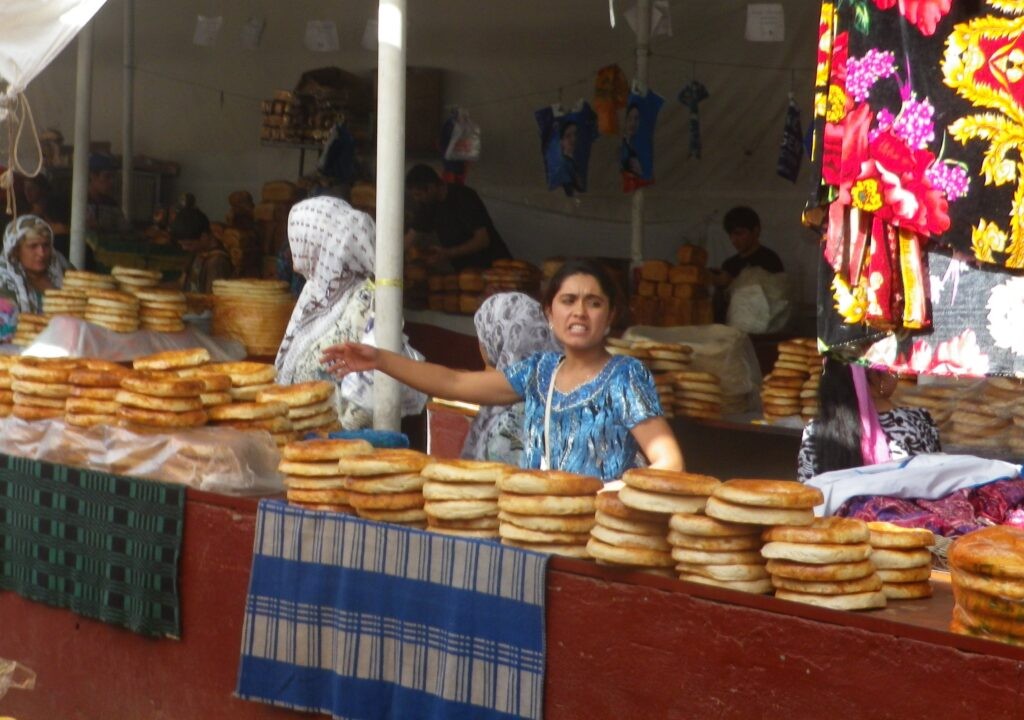
To help families in Tajikistan, increasingly in need of food supplies, the United States Agency for International Development (USAID) has allocated $7 million to the United Nations World Food Program (UNWFP)

The funding will help meet both the needs of vulnerable sectors of the population and strengthen the local government’s capacity to combat the effects of persistent price increases.

In Tajikistan, the UNWFP currently guarantees access to good nutrition for over 120,000 people in 24,000 households.

According to the Food & Agriculture Organization (FAO)/WFP Crop and Food Security Assessment Mission (CFSAM), it was estimated that 1.56 million of the country’s citizens people went hungry in 2023. Since then, circumstances have changed for the better. Acute food insecurity amongst the population fell to 16 percent from 20 percent. Nevertheless, WFP monitors continue to keep a watchful eye on household food security and market conditions, and are ready, if needed, to raise additional funds to feed families.

Kazakhstan, Azerbaijan to Lay Fiber-Optic Communication Cables Along Caspian Sea Bed

On President of Kazakhstan Kassym-Jomart Tokayev’s state visit to Azerbaijan, Tokayev noted that the interaction between Kazakhstan and Azerbaijan is based on trust and friendship and serves as an example of interstate relations. He emphasized that now, in addition to cooperation on natural resources, the struggle for access to transportation and logistics opportunities is intensifying around the world. The two Caspian countries are closely cooperating in this regard. Tokayev, alongside Azerbaijani President Heydar Aliyev, took part in the opening ceremony of a railroad route stretching from the port of Xi’an in China across Kazakhstan to Azerbaijan.

“This is indeed a very important event. We talked about making joint efforts in the field of digitization, creation of artificial intelligence, and the construction of fiber-optic communications along the Caspian Sea bed. These are unique projects,” Tokayev said.

Last June, the governments of Kazakhstan and Azerbaijan signed an agreement on laying fiber-optic communication cables along the Caspian Sea bed. The lines will be laid by Kazakhstan’s Kazakhtelecom and Azerbaijan’s AzerTelecom.

The project will be one of the main components of the transnational Digital Silk Road project, and will seek to improve the quality of internet connections in the countries of Central Asia and the South Caucasus. The total length of the cable connecting Kazakhstan and Azerbaijan will be 380 kilometers, and its capacity will reach up to 400 terabits per second. On August 22nd, 2023, the two countries signed a joint venture agreement in Amsterdam that will be responsible for the implementation of this project, including the construction of a fiber-optic communication line.

CIPE’s Inaugural B5+1 Forum Opens in Almaty

In recent years the countries of Central Asia have taken more confident steps towards working with the United States and Europe, so that both local and international companies and agencies can capitalize on the region’s potential. 

Instrumental in this process has been the Center for International Private Enterprise (CIPE), which last year created the diplomatic ‘C5+1’ platform – a group comprising the governments of the five Central Asian republics – Kazakhstan, Uzbekistan, Kyrgyzstan, Tajikistan and Turkmenistan – plus the United States, whose State Department has been integral to the development of the platform.

Following the first C5+1 Summit in New York in September 2023, led by the presidents of all six countries, CIPE has now created a dedicated business platform for these nations: ‘B5+1’. The inaugural B5+1 Forum will be held in Kazakhstan’s business capital of Almaty this week, and will bring together policy makers from Central Asia, America and other countries, as well as high-profile private companies working in the region. 

At the C5+1 Summit, presidents Biden, Tokayev, Mirziyoyev, Japarov, Rahmon and Berdimuhamedov had committed to the establishment of B5+1 in order to “accelerate regional cooperation and connectivity [and]… advance efforts to create a more favorable business environment for U.S. private sector trade and investment in Central Asia.”

The B5+1 event will be divided into two thematic days: “Looking within Central Asia” on Thursday 14 March, where representatives of the US Department of State, Kazakhstan’s Ministry of National Economy, the Caspian Policy Center and others will present their visions for improving Central Asia’s investment climate and economic integration; and “Central Asia’s place in the world economy” on Friday 15 March, where leaders from the US-Kazakhstan Business Council, the American-Uzbekistan Chamber of Commerce, the European Bank for Reconstruction and Development (EBRD) and others will look outwards, to give an international perspective on how the region can grow its trade and investment volumes.

At a time of geopolitical upheaval and disruption of existing supply chains, the Almaty forum will also continue the conversation on enhancing regional connectivity via the Trans-Caspian International Transport Route, also known as the Trans-Caspian Corridor.

The B5+1 Forum forms part of CIPE’s program called “Improving the Business Environment in Central Asia” (IBECA). CIPE themselves are affiliated to the US Chamber of Commerce – the catalyst behind the B7 and B20 platforms – and receive funding from the US Department of State. 

The establishment of B5+1 is closely aligned with commitments made during the September C5+1 Presidential Summit and outlined in a document called the New York Declaration to strengthen their economic relations, and improve the business environment for regional economic integration and investments. The upcoming Forum aims to deliver on two key commitments in the declaration.

The Times of Central Asia will be in attendance at the B5+1 Forum on 14-15 March, and will be publishing insight and analysis from the event.

Turkish Doctors to Help Create a Centre for Organ Transplants in Kyrgyzstan

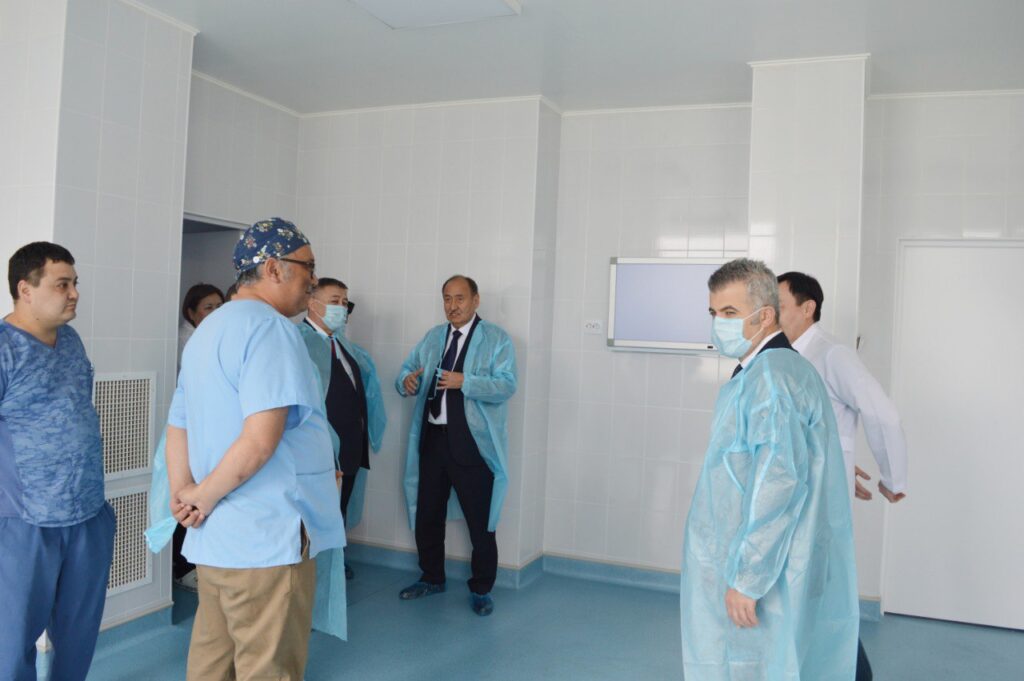
The Kyrgyz Ministry of Health has reported on a visit to Bishkek by doctors from Turkey’s Inonu University to assess the potential of Kyrgyz clinics to perform high-tech operations.

The delegation from Turkey’s leading centre for organ transplantation was greeted by the President of Kyrgyzstan. Accompanied by the Minister of Health, they then visited the National Surgical Centre where plans are in place to perform kidney transplants, and afterwards, the Centre for Maternal and Child Health, which plans to perform bone marrow transplants.

After receiving the experts’ recommendations on the readiness of operating rooms and intensive care units to receive patients, Kyrgyz Health Minister Alymkadyr Beishenaliyev reported, “To establish a successful liver transplant operative, $2 million will be allocated for the purchase the necessary equipment. Twenty million Kyrgyz som ($220,000) will also be allocated to repair the operating and resuscitation departments of the National Surgical Centre.”

He added that apart from those issues, the Kyrgyz hospitals meet all the requirements necessary for organ transplants.

Head of the Turkish delegation, Inonu University Rector Ahmet Kizilay, drew attention to the fact that to date, 65 Kyrgyz doctors had received training at their medical centre, considered one of the world’s leading clinics for organ transplantation, and a further 33 Kyrgyz specialists were currently on site to improve their qualifications.

At the beginning of the year, Kyrgyz President Sadyr Japarov signed a law allowing state and private clinics in Kyrgyzstan to perform organ transplants, with the provision that donors were related to the patients. The presidents of Kyrgyzstan and Turkey subsequently came to an agreement whereby Turkish doctors would help Kyrgyz doctors gain relevant experience and skills through the latter performing kidney transplants in Turkey. In the interim, doctors from Kazakhstan have also pitched in by performing a free operation for a Kyrgyz girl together with Kyrgyz doctors.

Though poised to create a centre for liver transplantation, the Kyrgyz Ministry of Health has emphasized the need for continued research on related problems and best practices of other countries.

Tajik Citizens Committed Terrorist Attacks in 10 Countries in the Past Three Years

In a speech to dignitaries and religious leaders on the eve of Ramadan, Tajikistan’s President Imamali Rahmon reported that over the past three years, 24 Tajikistani nationals had carried out terrorist attacks in 10 different countries.

Referencing the fact that despite the country’s ban on 28 extremist and terrorist groups, individuals continued to pledge their alliance, the president stated, “Over the past 10 years, 6,680 crimes of extremist and terrorist nature, including 86 terrorist acts and assassination attempts, have been detected and registered in our country. Eleven terrorist acts and assassination attempts have been prevented.”

Voicing concern over the growing number of terrorist attacks committed by Tajik nationals abroad and the negative impact on the country’s reputation, the president stated, “Based on the information at hand, 24 of our nationals in ten different countries have carried out acts of terrorism in the last three years, including detonating explosives in large crowds. Suicide is not jihad, but a great sin that contradicts the teachings and requirements of Islam. Interest groups and special services in certain countries are responsible for creating these initiatives and are preying on the ignorance, inexperience, and lack of knowledge of some of our young people.”

According to Rahmon, 4,075 nationals are currently wanted for radical and terrorist crime. The Tajik prosecutor’s office and other law enforcement agencies were directed to step up efforts to integrate and repatriate the said individuals, including providing them with jobs and assisting with their adaptation.