• KGS/USD = 0.01144 0%
  • KZT/USD = 0.00194 -0%
  • TJS/USD = 0.10844 -0.46%
  • UZS/USD = 0.00008 0%
  • TMT/USD = 0.28571 0.28%
  • KGS/USD = 0.01144 0%
  • KZT/USD = 0.00194 -0%
  • TJS/USD = 0.10844 -0.46%
  • UZS/USD = 0.00008 0%
  • TMT/USD = 0.28571 0.28%
  • KGS/USD = 0.01144 0%
  • KZT/USD = 0.00194 -0%
  • TJS/USD = 0.10844 -0.46%
  • UZS/USD = 0.00008 0%
  • TMT/USD = 0.28571 0.28%
  • KGS/USD = 0.01144 0%
  • KZT/USD = 0.00194 -0%
  • TJS/USD = 0.10844 -0.46%
  • UZS/USD = 0.00008 0%
  • TMT/USD = 0.28571 0.28%
  • KGS/USD = 0.01144 0%
  • KZT/USD = 0.00194 -0%
  • TJS/USD = 0.10844 -0.46%
  • UZS/USD = 0.00008 0%
  • TMT/USD = 0.28571 0.28%
  • KGS/USD = 0.01144 0%
  • KZT/USD = 0.00194 -0%
  • TJS/USD = 0.10844 -0.46%
  • UZS/USD = 0.00008 0%
  • TMT/USD = 0.28571 0.28%
  • KGS/USD = 0.01144 0%
  • KZT/USD = 0.00194 -0%
  • TJS/USD = 0.10844 -0.46%
  • UZS/USD = 0.00008 0%
  • TMT/USD = 0.28571 0.28%
  • KGS/USD = 0.01144 0%
  • KZT/USD = 0.00194 -0%
  • TJS/USD = 0.10844 -0.46%
  • UZS/USD = 0.00008 0%
  • TMT/USD = 0.28571 0.28%
09 December 2025

World Bank Group Landmark Visit to Central Asia

The World Bank Group Board of Executive Directors has concluded a landmark visit to Kazakhstan, Kyrgyzstan, and Tajikistan.

The Board reported that it had welcomed the opportunity to observe first-hand, Central Asian developments in tackling climate change within the prism of the water-energy nexus, the private sector’s growing address of green issues, and gender equality.

Ten executive directors met with high-ranking officials and local stakeholders to discuss ongoing and future support provided by the International Development Association (IDA) to Kyrgyzstan and Tajikistan, and in Kazakhstan, focused on the World Bank Central Asia regional program.

In Kyrgyzstan, the delegation attended a meeting with President Sadyr Japarov, Akylbek Japarov the Cabinet of Ministers chairman, and other officials. Visits were made to World Bank-funded project sites for water and sanitation, education, and disaster risk management, as well as a MIGA-guaranteed smart farm of hydroponic greenhouses and IFC agri-food processing projects.

In addition to discussions with Tajikistan’s president Emomali Rahmon and his cabinet, the delegation toured the Rogun hydropower plant site and World Bank-financed projects on early childhood development and the improvement of health services. A meeting also took place with IFC investment beneficiaries in Dushanbe.

The visit to Kazakhstan, included a World Bank-financed oncology centre, and a tour of the Almaty Airport, an IFC project site.

The World Bank Group’s key objectives in Central Asia are fostering robust recovery from recent crises, enhancing climate resilience, creating jobs, and protecting the countries’ most vulnerable populations.

Dominique Favre, the World Bank’s Executive Director for Switzerland, who also represents the constituencies of Azerbaijan, Kazakhstan, the Kyrgyz Republic, Poland, Serbia, Tajikistan, Turkmenistan, and Uzbekistan, praised the regions’ progress and reiterated the company’s commitment to helping Central Asian countries tackle ongoing challenges, particularly concerning water, energy, and agriculture.

Central Asian Energy Trading May Soon Include Iran

According to the Iran.ru news agency, Iranian Minister of Energy Ali-Akbar Mehrabian has said that his country is open to trading electricity with Turkmenistan, Tajikistan and Uzbekistan.

Iran currently exchanges electricity with the majority of its neighbors, according to Mehrabian, who made the statement in Tehran during a meeting with Uzbek Minister of Energy Zhorabek Mirzamakhmudov on March 4. Mehrabian paid particular attention to the growth of cooperation between Iran, Turkmenistan, Uzbekistan and Tajikistan in the area of electricity markets and trading.

As part of the Unified Energy System of Central Asia (UESCA), which was established during the Soviet era, the energy systems of Kyrgyzstan, Kazakhstan, and Uzbekistan currently operate separately. Turkmenistan exited the system in 2003, which was a direct result of Uzbekistan’s refusal to allow electricity from Turkmenistan to transit across Uzbek grid infrastructure.

Tajikistan was automatically disqualified from the UESCA when Uzbekistan unilaterally withdrew following a significant accident in Tajikistan’s energy system in November 2009 — a catastrophe that also led Kazakhstan to accuse Tajikistan in that same month of stealing power from the grid. In 2018, the regional system was rebooted with the return of Uzbekistan to UESCA.

In 2019 Tajikistan began work to rejoin the unified energy grid ring of Central Asia, with financial assistance from the Asian Development Bank. Tajikistan’s Ministry of Energy declared last summer that the country would like to become a member of the regional system by the end of 2023, but little progress has been made up to the present. One positive sign of note is that since 2018, Tajikistan has been supplying electricity to some districts of Uzbekistan’s Surkhandarya region — because those districts aren’t connected to the Uzbek central power distribution grid.

Uzbekistan’s Poverty Rate Decreased by Half Over 20 Years, Says UN Report

The United Nations Development Program (UNDP) has published a report detailing Uzbekistan’s 2023 poverty index, and it indicates that roughly 4.2 million Uzbek citizens are estimated to be living in poverty.

The UNDP used 34 indicators to serve as the statistical basis for the report. Factors include the socioeconomic standing and stratification of the population, as well as the capacity of citizens to exercise their rights, and the opportunities afforded to them.

Information about education level (13.7%), food security (11.7%) and employment in the
informal sector (11.5%) played an important roles in calculating the poverty index.

The UN report states that the Republic of Karakalpakstan (29.9%), the Namangan region (27.5%), and the Tashkent region (26.5%) have the highest percentages of impoverished people. As measured by citizens’ income, social security availability, and fuel resource scarcity, these regions perform somewhat worse than the other regions.

Uzbekistan’s accomplishments in decreasing poverty and its plans for the future are also discussed. The UNDP claims that the nation’s reforms over the past 20 years have resulted in a drop in the poverty rate to 11.5 percent in 2022 from 24 percent in 2000. Due to government efforts, 2.2 million people have been lifted out of poverty in the first two decades of the 21st century.

The report highlights Uzbekistan’s objectives of attaining a world-average income level by 2030, and cutting poverty by half by 2026. The report expresses confidence in the solid foundations of Uzbekistan’s plan to eradicate poverty by 2030. A key detail is that Uzbekistan is trying to make sure that development is moderate — thereby keeping prices growing more slowly — and this is thought to be one of the most important elements in the battle against poverty.

Religion in the Cities of Kazakhstan – Opinion by Gulmira Ileuova

The research discussed in this article was conducted in July-August 2023 by the Strategy Center for Sociological and Political Studies Public Foundation in collaboration with the office of the Rosa Luxemburg Foundation in Central Asia. A total of 1,604 people were surveyed in six cities. Since the goal of the project was to study atheism and atheistic views, the choice of where to conduct the survey was made based on the latest census data, according to which the following regions/cities had the highest proportions of nonbelievers: Kostanay Region (4.84%), Mangystau Region (4.38%), Almaty (4.32%) and Shymkent (3.65%), versus an average across the whole country of 2.25%.

Table 1. Religion of the population of Kazakhstan (%; census data)

  Muslim Orthodox Refused to answer Nonbeliever
Kazakhstan overall 69.31 17.04 11.01 2.25
In cities 64.45 20.45 11.84 2.81


Of course, the term “nonbeliever” is not necessarily equivalent to the concept of “atheist,” but nevertheless we decided to start with these statistics with the goal of understanding the religious identities of city residents in the given areas and identifying the reasons contributing to the increased share of nonbelievers, including atheists.

This study was conducted in cities at three administrative-territorial levels:

  • so-called “cities of republic significance” (Almaty and Shymkent);
  • regional capitals (Kostanay and Aktau);
  • small towns (Rudny and Zhanaozen).

The survey in these six cities showed that 72% considered themselves Muslim, 10% Orthodox and 4% atheist (Rudny 5.6%, Almaty 4.7%, Zhanaozen 4.5%, Kostanay 3.0%), while about 1% named other denominations (“protestant movements,” “Baptists,” “Jehovah’s Witnesses,” “New Life”). Twelve percent refused to answer the question, while 1% could not answer.

Analyzing the responses to this question by age, we see that there are more atheists in the youngest age group of 18-24 years old at almost 5%, while in this same cohort, as well as in the 31-49 age group there is a higher proportion of Muslims (77% each, versus 65% in the 50+ group). A higher share of people over 50 are Orthodox Christians, while in this oldest group more people also refused to the question (17%).

Thus, 87% of city dwellers who took part in the survey reported that they were followers of one religion or another. However, if we use the Dawkins spectrum (of theistic probability) – which we slightly modified for the purposes of this study – we see that among those surveyed only 77% were believers. Overall, only 48% were strong theists, absolutely convinced that God exists. Another 29% were uncertain that God exists but still assume so. Twenty percent classified themselves as agnostics – lacking a clear position on whether God exists or not – while 3% are atheists, strong or uncertain.


Table 2. Which statement best reflects your position? (% of total respondents)

Statement Share, %
Decided theist (I am convinced that God exists) 47.9
Uncertain theist (I do not know for sure that God exists, but the probability is high, so I believe that he does) 29.4
Agnostic (I do not know whether God exists or not, so I have no clear position on the issue) 19.5
Uncertain atheist (I do not know for sure that God does not exist, but the probability of God existing is low, so I believe that he does not) 1.0
Decided atheist (I am convinced that God does not exist) 2.3

Islam is the dominant religion in Kazakhstan. As the census shows, it is professed by about 70% of the population, and, based on the survey, by 72% of city residents.

For a more in-depth study of religious identities, all believers were divided into three hypothetical groups: “practicing,” “nominal,” and “symbolic” (this is the author’s classification). Since Islam is the dominant religion in Kazakhstan, we shall consider how its followers describe their religiosity. “Practicing Muslims” are those who regularly observe all religious rites and rituals and believe in life after death; “nominal Muslims” are those who rarely observe religious rites and rituals; “symbolic Muslims” are those who do not observe religious rites and rituals.

As the study showed, the vast majority of practicing Muslims are strong theists (75%), while a fifth are uncertain theists and 5% agnostics. A more ambiguous situation was observed among nominal and especially symbolic Muslims. The share of strong theists in either of these groups does not reach half (and is just over a third in the case of symbolic Muslims), while a third in each group are wavering theists, uncertain about the existence of God. Among nominal and symbolic Muslims the share of agnostics is also high (16% and 27%, respectively). Meanwhile, among symbolic Muslims there are even a few strong atheists (1%).

Table 3. Religiosity among groups of Muslims

Practicing Muslims Nominal Muslims Symbolic Muslims
Decided theist 74.8% 48.6% 35.3%
Uncertain theist 20.0% 34.8% 36.9%
Agnostics 5.3% 16.1% 26.5%
Uncertain atheist 0.5%
Decided atheist 1.2%

Sixty percent of respondents said that they follow one religion or another because it is the religion of their ancestors and family. Nineteen percent said it was their personal choice, guided by the fact the ideas of their religion are clear and close to them. Eight percent attributed their religion to the influence of their social circle (friends and acquaintances), while another 7% see their religion as the “path of truth” and other religions as “delusions.”

Looking at the explanations given during the study, we see that symbolic and nominal Muslims much more often attribute their religion to the fact that it was the faith of their ancestors and family (the shares were 69% and 62%, respectively). Among practicing Muslims this response was given much less often (52%). Moreover, it is the practicing group that has the largest share for whom Islam is a personal choice (24%), while only 7% of symbolic Muslims gave this response. It is also interesting that practicing Muslims are more influenced by their social circle (at 9%) and less so by the legacy of their family and ancestors being Muslims.

Note that extreme views of Islam as the only “path of truth” are held by approximately equal numbers of respondents among practicing, nominal and symbolic Muslims (8-9%).

Table 4. I am a follower of this religion because… (by Muslim group)

Response Practicing Muslims Nominal Muslims Symbolic Muslims
This is the religion of my ancestors, family 52.8% 62.2% 69.1%
It is my personal choice; the ideas of this religion are clear and close to me 24.1% 18.1% 7.2%
My social circle – friends and acquaintances – belongs to this religion 9.0% 6.3% 7.6%
This is the path of truth; other religions are delusions 7.8% 7.6% 9.2%
I do not know anything about other religions 5.9% 5.0% 5.2%

This study of city residents’ religious views once again confirms that identification with a particular religion often occurs not as a personal choice of an individual, but because of external factors, like a stated commitment to traditions or the influence of someone important (though not necessarily family).

Eighty-seven percent of city dwellers surveyed considered themselves believers, yet only 48% are strong theists, truly believing that God exists, while the other half have doubts to one degree or another. In addition, the diversity of religious identities is clearly visible in the sample of Muslim city residents, or more precisely in their explanations about why they are followers of Islam. For practicing Muslims, Islam is more often a personal choice, while for other Muslims who relate to Islam rather nominally it is external factors (e.g., the fact that it was the religion of their ancestors) that are more important. Overall, this classification warrants attention, as it helps us to understand the situation that, while the share of practicing Muslims among all followers of Islam in cities is lower than that of nominal and symbolic Muslims, it is the latter groups who are more intolerant and critical of both the government’s religion policy and the current good relations between faiths in Kazakhstan.

Kazakhstan Increases Furniture Exports

According to a report by the Kazakh Ministry of Industry and Construction, in 2023, Kazakhstan exported furniture valued at $13.7 million; an increase of 31% since the previous year.

The prime market for Kazakh furniture is found in former Soviet countries and in 2023, to meet demand, domestic enterprises produced goods worth a total of 82.6 billion tenge; 28% more than in 2022.

The most popular product was kitchen furniture, with an increase in volume of 50.4%, followed by wooden office furniture with an increase in volume of 5.4%.

In comparison to 2022, the importation of furniture last year dropped by 5.3%; an indication of Kazakhs’ increasing preference for locally made products.

In 2023, the industry generated a total of $537.4 million and invested of 17 billion tenge in production.

With statistics showing a 3.9-fold increase compared to 2022, the future of Kazakhstan’s furniture manufacturers looks comfortable.

Uzbekistan-China Trade on the Rise

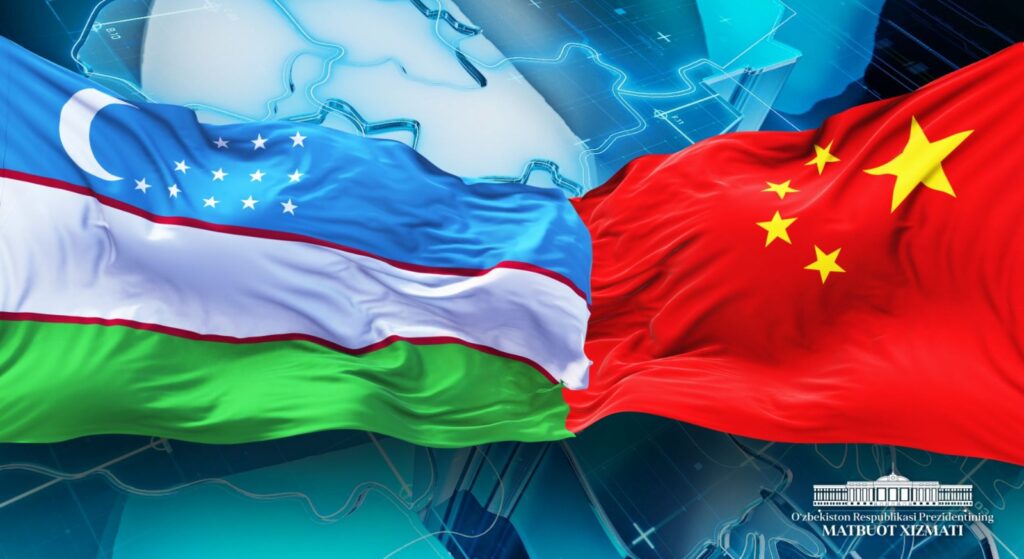
Uzbekistan and China are poised to increase bilateral trade to $20 billion a year.

The statement, quoted by the news portal Novosti Uzbekistana (nuz.uz) was given by given by Obid Khakimov, director of Uzbekistan’s Center for Economic Research and Reforms (CERR) at the conference ‘Uzbekistan and China: promoting mutually beneficial cooperation for the benefit of the two countries’ peoples.’

In 2023, China ranked top amongst Uzbekistan’s partners in trade, with a share of 22%.

Over the past 7 years, Uzbekistan’s trade turnover with China has increased almost threefold from $4.8 billion to $13.7 billion; exports have risen from $2 billion to $2.5 billion, and imports from $2.7 billion to $11.3 billion.

The analysis by the CERR illustrates Uzbekistan’s potential to increase its exports to China by substituting products currently sourced in large volumes from third world countries. In the main, these comprise fruit, vegetables and other foods, textiles, copper, and chemicals.

Uzbekistan is especially interested in collaborative projects with China for the deep processing of locally mined strategic raw materials, and the implementation of socially important programs based on partnerships between public and private sectors.

The early construction of the China-Kyrgyzstan-Uzbekistan railway, which by cutting the distance travelled by 900km, will reduce the delivery time of cargo by 7-8 days, is another area of key importance to Uzbekistan.

According to Uzbekistan’s Statistics Agency, in 2023, China’s contribution of 25.6% was the largest of the total sum of foreign investments and loans in Uzbekistan. In comparison, the contribution from Russia was 13.4%; Saudi Arabia, 7.9%; Turkey, 6.4%; the United Arab Emirates, 5.8%, and Germany, 4.3%.