• KGS/USD = 0.01144 0%
  • KZT/USD = 0.00196 -0%
  • TJS/USD = 0.10896 -0%
  • UZS/USD = 0.00008 0%
  • TMT/USD = 0.28571 0.28%
  • KGS/USD = 0.01144 0%
  • KZT/USD = 0.00196 -0%
  • TJS/USD = 0.10896 -0%
  • UZS/USD = 0.00008 0%
  • TMT/USD = 0.28571 0.28%
  • KGS/USD = 0.01144 0%
  • KZT/USD = 0.00196 -0%
  • TJS/USD = 0.10896 -0%
  • UZS/USD = 0.00008 0%
  • TMT/USD = 0.28571 0.28%
  • KGS/USD = 0.01144 0%
  • KZT/USD = 0.00196 -0%
  • TJS/USD = 0.10896 -0%
  • UZS/USD = 0.00008 0%
  • TMT/USD = 0.28571 0.28%
  • KGS/USD = 0.01144 0%
  • KZT/USD = 0.00196 -0%
  • TJS/USD = 0.10896 -0%
  • UZS/USD = 0.00008 0%
  • TMT/USD = 0.28571 0.28%
  • KGS/USD = 0.01144 0%
  • KZT/USD = 0.00196 -0%
  • TJS/USD = 0.10896 -0%
  • UZS/USD = 0.00008 0%
  • TMT/USD = 0.28571 0.28%
  • KGS/USD = 0.01144 0%
  • KZT/USD = 0.00196 -0%
  • TJS/USD = 0.10896 -0%
  • UZS/USD = 0.00008 0%
  • TMT/USD = 0.28571 0.28%
  • KGS/USD = 0.01144 0%
  • KZT/USD = 0.00196 -0%
  • TJS/USD = 0.10896 -0%
  • UZS/USD = 0.00008 0%
  • TMT/USD = 0.28571 0.28%
09 December 2025

Foreign Investors Abandon Industrial Projects in Kazakhstan

Over the past four years Kazakhstan has suspended six planned projects involving foreign investors. A lack of funding, changes in market conditions, logistical difficulties and the overall geopolitical situation have been cited as reasons for their abandonment.

The first project to be suspended was the production of fiber optic products in Almaty. The Turkish company BC Fiber Group built a warehouse in the city to sell finished products, and expected to localize production in the area, but refused to open a fabrication plant.

The second project involved a ridesharing company from China, DiDi Global, which planned to begin operations in Kazakhstan — but eventually scrapped those plans when it was unable to withstand changes in market conditions and increased competition.

The third cancellation was by the American company Conduent, which planned to implement a national system of toll collection on the roads of Kazakhstan. It rethought its plans after a profitability review.

Agro Global GmbH from Germany wanted to localize production of agricultural machinery in the Akmola region. This also never came to fruition, with the reason this time being a lack of funding by the investor. The list also includes a project for construction of a cattle-breeding complex in the Almaty region by Italian investor Inalca. This was also due to a lack of financing.

The sixth project on the list was planned development of the Alaigyr lead-silver deposit in the Karaganda region. Turkish investor Eczacibasi Holding was interested in pursuing the mining project, but after due diligence, the company declined to continue due to what it deemed as insufficient reserves at the deposit.

Kyrgyzstan Resumes Construction Work on Pakistan Electricity Export Project

As the process of normalizing relations continues between Kyrgyzstan and Tajikistan, representatives of both sides have met in Bishkek to discuss the CASA-1000 (Central Asia-South Asia) power export project. According to Kyrgyzstan’s Ministry of Energy, Kyrgyzstan has signed a joint declaration with Pakistan and Tajikistan to resume construction of high-voltage transmission lines in Kyrgyzstan, Tajikistan, Afghanistan and Pakistan, to export electricity to Pakistan. It is reported that construction work on the CASA-1000 project has been resumed in Afghanistan, where it was frozen after the Taliban came to power in 2021.

 “This declaration thanks the World Bank for its prompt approval of the resumption of construction work on the CASA-1000 project in Afghanistan. It also reaffirms its readiness to fully support the implementation of the preconditions agreed with the World Bank Board for the resumption of construction in [Afghanistan]. This is a serious step forward in the region’s desire for energy cooperation”, said the Kyrgyz Ministry of Energy’s press service.

“Tajikistan is expected to supply 70 percent of the CASA-1000 project [electricity], and Kyrgyzstan the remaining 30 percent. [They’ll supply] a total of 1,000-1,300 MW of electricity per year,” Elzada Sargashkayeva, head of the public relations department of NENK (National Electricity Networks of Kyrgyzstan), told the Times of Central Asia.

In Afghanistan, construction of the power lines was 60% complete, the agency said.

Late last year, the World Bank allocated an additional $18.3m for Kyrgyzstan under CASA-1000 — on top of the $216m previously allocated for the project.

“For the Kyrgyz Republic, the CASA-1000 project provides for the construction of A/C power transmission lines (500 kV), with a length of about 456 kilometers. Currently, the project implementation is proceeding at an active pace: 1,243 [transmission towers] have already been installed (100 percent), work on suspension of wires on 287 kilometers of power lines has been completed (63 percent),” said World Bank Senior Energy Specialist Dmitry Glazkov.

Work on the project was suspended when the Taliban came to power in Afghanistan — and also due to the armed border conflict between Kyrgyzstan and Tajikistan, the international institute said. But the scope of work remains the same. The World Bank is allocating the additional support to bridge the funding gap caused by rising prices for goods and transportation after the Covid-19 pandemic and its ensuing broad economic crisis. The money will be given to Kyrgyzstan in the form of an interest-free loan for 50 years, with a 10-year grace period. The project’s target completion time is March 2025.

According to the World Bank, Central Asia has many renewable energy sources, and is strategically positioned to develop regional trade in electricity, the exchange of which is still limited. “In Kyrgyzstan and Tajikistan, hydropower plants generate more than 80-90 percent of electricity, but these countries use less than five percent of their hydropower potential, which is several times the combined demand of the entire region. At the same time, 90 percent of the energy needs of Uzbekistan, Turkmenistan and Kazakhstan are met by fossil fuels, which offers significant opportunities for decarbonization,” the World Bank report stresses.

The main obstacle to the generation and distribution of electricity and water resources is weak regional cooperation. Underscoring these problems is a mismatch in the timing of water needs for power generation and food production, World Bank experts said. Kyrgyzstan and Tajikistan, for example, need water in winter to generate electricity, while Kazakhstan, Turkmenistan and Uzbekistan need water in summer for agriculture.

Since 2022 an agreement has been in place on electricity exchange between Kyrgyzstan and Uzbekistan. Thus, under the agreement between the energy companies of the two countries,150 million kilowatt-hours (kWh) of electricity were supplied from Ruz to Kyrgyzstan in the spring of 2023 during the period of low domestic consumption in Uzbekistan. Kyrgyzstan, in turn, returned this amount of electricity during the summer season and also provided water for irrigation to the Uzbeks via the Naryn River.

Implementation of the CASA-1000 project started in January 2018. The project is a regional program to interconnect the power systems of four countries to transfer excess hydropower of 1,300 MW from Kyrgyzstan and Tajikistan to Afghanistan and Pakistan.

Foreign IT Companies Earned Over $50 Million in Uzbekistan Last Year

Foreign IT companies who pay tax in Uzbekistan almost doubled their profits last year. That’s according to statistical data published by the Uzbek State Tax Committee. In 2023 their total profit amounted to $50.8m.

There are currently 57 foreign firms providing internet and IT services in the country. In 2023 alone the list grew by 17 — including the Singaporean company TikTok PTE LTD. TikTok has been blocked in Uzbekistan since July 2021 for violating the law on personal data, which requires that data servers must be located in Uzbekistan.

Compared to 2022, the taxes paid by foreign IT companies to the Uzbek budget increased by 56.2%. The lion’s share of payments falls on tech giants such as Facebook parent company Meta ($2.114m), Google ($1.6m), Apple ($1m) and Amazon ($176,000). Booking.com, Netflix, Xsolla, Zoom, Yandex and Adobe Systems make up the top ten.

Foreign companies providing internet services in Uzbekistan have paid taxes in the country since 2020.

Blogger and co-founder of the business publication Spot.uz Temurmalik Elmuradov notes that recently in Uzbekistan “the digital market is growing, and people’s consumer habits are changing. There are more people willing to pay for movies and TV series rather than search for them on free online [movie sites].”

In February, president Shavkat Mirziyoyev received a presentation on key strategic reforms for 2024, according to which over the past 10 years the volume of services in the telecom sector has grown 6.5 times — and the coverage of the population with mobile internet has risen to 98%.

As part of the reforms, among other things, there is a plan to give bandwidth providers direct access to the international internet channel. That means that an independent regulator of telecommunications should appear in the country by September 1. As of today, almost all Uzbek internet providers get access through the International Packet Switching Center of Uzbektelecom.

Uzbekistan to Introduce New Visa Program for Those Looking for ‘Second Home’

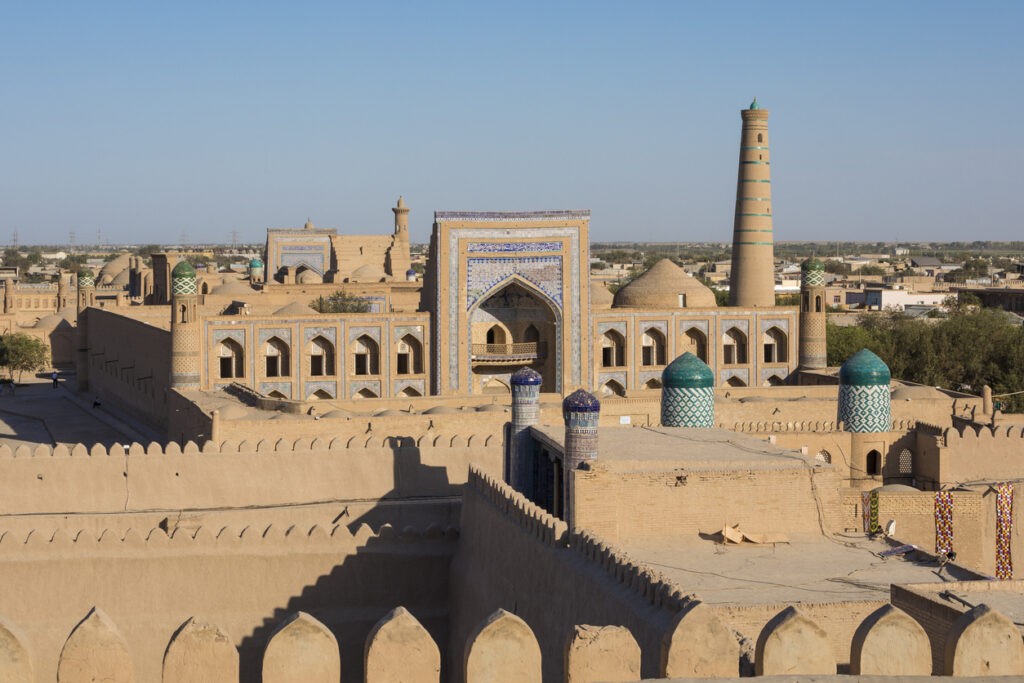
Uzbekistan is introducing a tourist visa program called Uzbekistan Is My Second Home, enabling foreign visitors to stay in its north-western Khorezm region for up to a year without restrictions.

President Shavkat Mirziyoyev has also unveiled a three-year plan for developing the region’s tourism industry, commenting that the sector is one of Khorezm’s primary economic drivers.

In the town of Khiva, in the western part of Khorezm, authorities are planning to open new 24-hour cafes, restaurants, and grocery stores. Major Uzbek cities, including Urgench just north of Khiva, are to receive 30 billion sum (around $2.4m) in subsidies in order to lower the cost of airline tickets.

Unfortunately, several parts of Khorezm still currently lack hotels. Loans at present are offered at an 18% interest rate for a period of seven years — with a two-year grace period — for the construction of hotels and resorts to increase the number of available tourist beds.

The Khorezm region has the highest density of tourist attractions, historical sites, and architectural artifacts in all of Uzbekistan. The area is home to 254 cultural heritage monuments, which span the Neolithic era and the 19th century. Thirty-two are holy places, 66 are sculptures, six are attractions, and 18 are archaeological.

Kazakhstan, Lithuania to Launch Joint Container Transportation Program

Kazakhstan and Lithuania plan to link up from afar to carry out container transportation on the Trans-Caspian International Transport Route (TCITR). The two sides agreed on the plan in Vilnius at the 14th session of the Kazakhstan-Lithuanian Intergovernmental Commission on Trade & Economic Cooperation.

“The event also included a meeting of the Kazakhstan-Lithuanian mixed commission on international road transportation with the participation of representatives of the Ministry of Transport of Kazakhstan, the Union of Transport Workers of Kazakhstan, Kazlogistics, where an agreement was reached on the quota of permits for 2024,” the press service of the Ministry of Trade and Integration of Kazakhstan said in a statement.

“We offer the Lithuanian side cooperation in launching container transportation between our countries within the framework of the Trans-Caspian International Transport Route (TCITR). In addition, taking advantage of this opportunity, we invite all Lithuanian companies to participate in the New Silk Way transport forum, which is planned to be held in October this year in Astana,” said Almaz Aisin, a representative of the Kazakh delegation.

During the talks, the Kazakh side informed its Lithuanian partners about the prospects and possible measures that may be taken for development of the TCITR — while emphasizing that in recent years the TCITR has attracted great attention from European companies.

As of October 2023, the trade turnover between Kazakhstan and Lithuania for the previous 12 months increased by 28.7% annually to $584.3m. Last year, the countries reached an agreement to increase the export potential of Kazakh products across 70 categories worth $350.5m.

Tajikistan Seeks EU Cooperation on Energy Projects

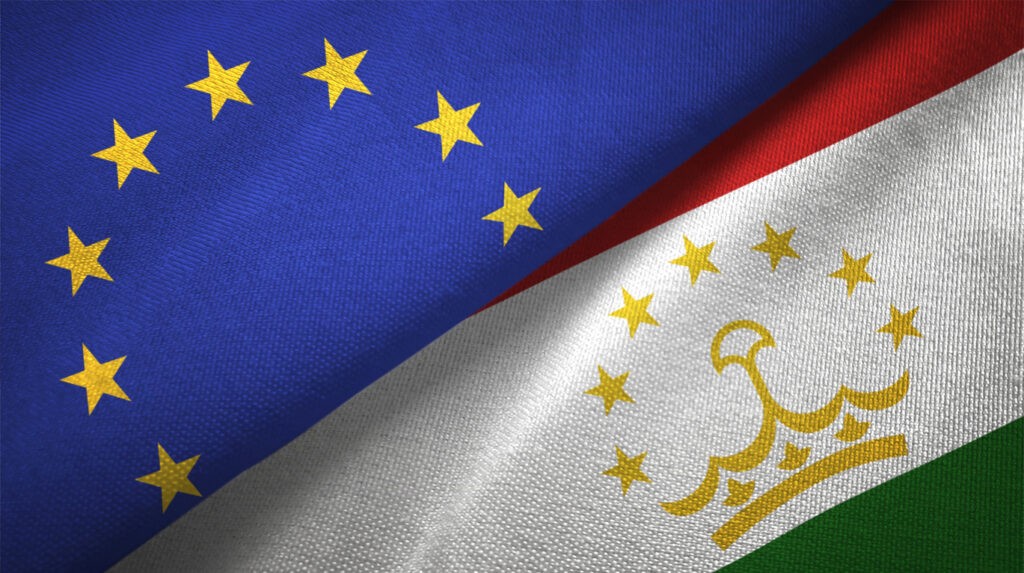
Tajikistan believes that the European Union (EU) will encourage energy projects that are being implemented in the country and throughout Central Asia to mitigate climate change. That’s the view held by Sirojiddin Mukhriddin, the head of Tajikistan’s Ministry of Foreign Affairs, expressed during a speech at the diplomatic forum “New Dynamics of Cooperation in Eurasia” in Antalya, Turkey.

“Just five percent of the nation’s current hydropower potential has been utilized up to this point. Our projects are wonderful. Among them is the Rogun HPP, one of the world’s biggest hydroelectric power stations. Of course, we also invited all of our partners to help us build these initiatives, [and] the European Union is one of them,” said Mukhriddin. The minister mentioned that the United States and the EU are funding the construction of a hydroelectric power plant in the republic’s mountainous Badakhshan autonomous region. Mukhriddin claimed that this would contribute to the energy supply for both this area and Afghanistan, a neighboring country with its own pressing electricity needs.

Mukhriddin mentioned the Sustainable Energy Connections in Central Asia project, which is being managed by the EU. “We believe that the program will fortify the institutional, legal, and regulatory framework for the region’s shift to a sustainable energy system,” the minister said. “With the help of our partners, especially the European Bank for Reconstruction and Development (EBRD) and others, we anticipate that this project will be implemented successfully,” he added.