• KGS/USD = 0.01144 0%
  • KZT/USD = 0.00194 -0%
  • TJS/USD = 0.10896 -0%
  • UZS/USD = 0.00008 0%
  • TMT/USD = 0.28571 0.28%
  • KGS/USD = 0.01144 0%
  • KZT/USD = 0.00194 -0%
  • TJS/USD = 0.10896 -0%
  • UZS/USD = 0.00008 0%
  • TMT/USD = 0.28571 0.28%
  • KGS/USD = 0.01144 0%
  • KZT/USD = 0.00194 -0%
  • TJS/USD = 0.10896 -0%
  • UZS/USD = 0.00008 0%
  • TMT/USD = 0.28571 0.28%
  • KGS/USD = 0.01144 0%
  • KZT/USD = 0.00194 -0%
  • TJS/USD = 0.10896 -0%
  • UZS/USD = 0.00008 0%
  • TMT/USD = 0.28571 0.28%
  • KGS/USD = 0.01144 0%
  • KZT/USD = 0.00194 -0%
  • TJS/USD = 0.10896 -0%
  • UZS/USD = 0.00008 0%
  • TMT/USD = 0.28571 0.28%
  • KGS/USD = 0.01144 0%
  • KZT/USD = 0.00194 -0%
  • TJS/USD = 0.10896 -0%
  • UZS/USD = 0.00008 0%
  • TMT/USD = 0.28571 0.28%
  • KGS/USD = 0.01144 0%
  • KZT/USD = 0.00194 -0%
  • TJS/USD = 0.10896 -0%
  • UZS/USD = 0.00008 0%
  • TMT/USD = 0.28571 0.28%
  • KGS/USD = 0.01144 0%
  • KZT/USD = 0.00194 -0%
  • TJS/USD = 0.10896 -0%
  • UZS/USD = 0.00008 0%
  • TMT/USD = 0.28571 0.28%
09 December 2025

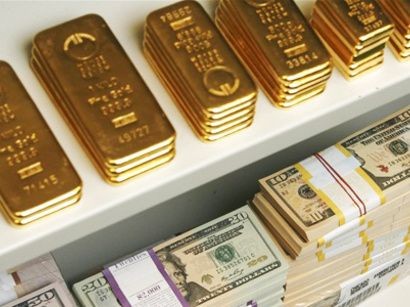
Gold Kyrgyzstan’s Main Export Item in 2023

In 2023 Kyrgyzstan’s foreign trade turnover reached $15.6bn, an increase of 29.9% compared to 2022. The country’s imports grew by 26% to $12.3bn and exports increased by 46.8% to $3.3bn, the National Statistical Committee has reported.  

This means that in 2023 Kyrgyzstan imported $9bn worth of goods more than exported. 

Kyrgyzstan’s trade with fellow members of the Eurasian Economic Union, which also includes Armenia, Belarus, Kazakhstan, and Russia, amounted to $4.3bn.

Gold accounted for the lion’s share of Kyrgyzstan’s exports — 38.8% of the total. In 2023 Kyrgyzstan sold more than 20 tons of gold.

Almost half of all goods imported to Kyrgyzstan last year came from China. Russia was in second place, followed by neighboring Central Asian countries, Turkey, the USA, and South Korea. 

Death of Navalny Met With Mixed Feelings in Central Asia

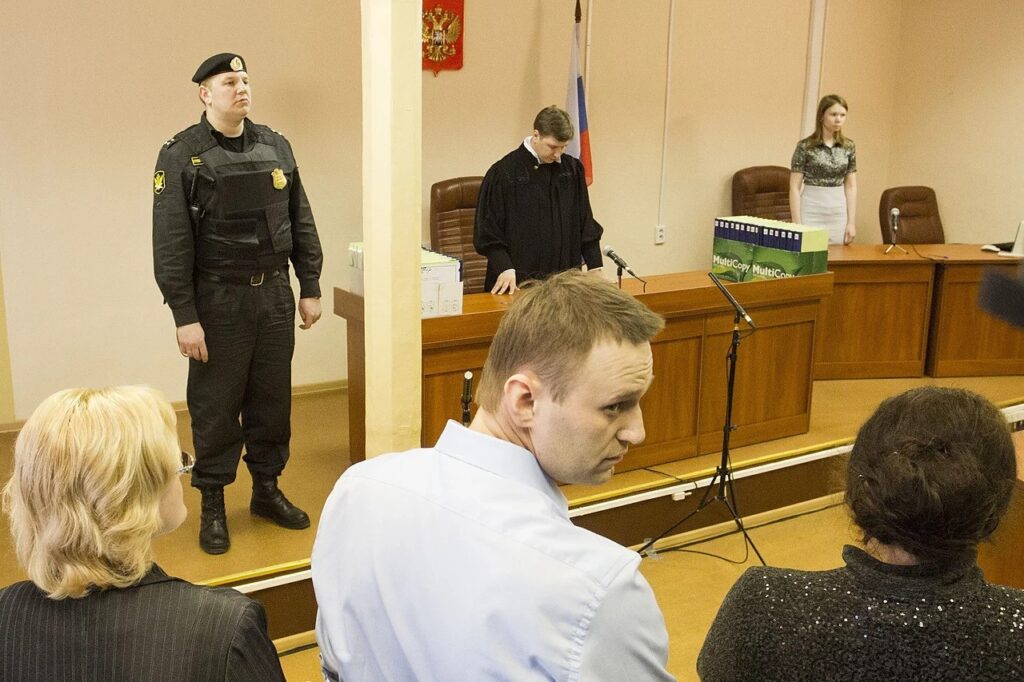
Alexei Navalny has died in the Russian “Polar Wolf” penal colony, the Federal Penitentiary Service of the Yamalo-Nenets Autonomous District in Siberia, Russia, has reported. An anti-corruption campaigner and anti-government figure in Russia, Navalny returned to his homeland from Germany in 2021, where laboratory tests confirmed he had been poisoned by a nerve agent. However, whilst Navalny’s opposition to Putin won him support in the West, he leaves a more complex legacy in Central Asia, having called migration from the region to Russia an “orgy of tolerance”.

On the streets of Kazakhstan, however, a mournful mood largely prevailed. “This situation shows the current Russian regime as it is, Polina, a photographer from Astana told TCA. “There are a lot of opinions about Navalny’s activities, but I think in any case his death shows how cruel the Russian Government is how much Navalny and his influence were feared.”

“Another voice of reason that has been silenced. It makes me feel hopeless for the current state of the world,” Isabella, a scientist from Astana told TCA. “I hoped he would be the next [Russian] president. May he rest in peace – he is a part of history,” Ilyas, a businessman from Taraz commented. “He made a sacrifice of himself. It’s a pity,” said Almas, cameraman from Astana. Others voiced indifference, however. “Navalny’s a minister, isn’t he? Oh no he’s in the opposition,” Nurbolat, a taxi driver from Temirtau told TCA. “It’s all so murky.”

A renowned nationalist, during Russia’s 2008 invasion of Georgia, Navalvy referred to Georgians as “rodents“. In 2011, Navalny co-organized the “Russian marches,” often labelled as a xenophobic event and tied to Neo-Nazi groups, a movement he never renounced. During the Moscow mayoral campaign two years later a key policy pledge was to fight against migrants, who he accused of crime, the threat of terrorism, and the alienation of culture. Speaking in November 2015, Navalny claimed that “90% of immigrants to Russia [from Central Asia] are young Muslim men from rural areas, that is, the very environment from which terrorists are recruited.”

Of the estimated eleven million migrants in Russia at the time, no terrorist attacks involved the participation of people from Central Asia, citizens of which accounted for less than 1% of all crimes committed by migrants. An easy target for the Russian police, migrants have been subjected to attacks by Neo-fascist groups. Living in dormitory blocks overseen by gang-masters on the plains of Siberia, some have died on the job.

“Navalny is a figure who evoked diametrically opposed emotions. Some admired him, others hated him,” said Alexandra Garmazhapova, President of Free Buryatia Foundation. “I won’t lie, I’ve never been a fan of his. A couple of times we even clashed with him precisely because of his participation in the “Russian March”. In the winter of 2021, when Navalny returned to Russia, I was in Moscow and participated in protests. I emphasized that I was against corruption, and not for Navalny, who was expelled from Yabloko in the 2000s for nationalism.”

Navalny’s politics may have evolved over time. The late Russian opposition leader became a prominent anti-corruption advocate, political reformist, and educated critic of the Russian political system. His efforts against the pro-Kremlin United Russia party and President Putin will undoubtedly inspire others in their fight for justice and transparency.

However, as recently as February 23rd 2021, Amnesty International withdrew Navalny from its list of “prisoners of conscience,” a designation reserved for people imprisoned for who they are or what they believe. As Le Monde noted in the same year, the “Western media treat Julian Assange and Alexei Navalny very differently: they prefer their heroes to take on authoritarians, not targets close to home.” In May of 2021, Amnesty restored Navalny’s status as a prisoner of conscience.

Given his racist background, describing Muslims as “flies and cockroaches” in a video where he pulled out a gun and shot an actor wearing a keffiyeh who tried to “attack” him, it is no wonder that Navalny’s name solicited a mixed reaction in the region, with some commenting that he was “not so popular,” and “no friend of Central Asia.”

Late at night on the day of his passing, a memorial to Navalny appeared in Tashkent, the capital of Uzbekistan.

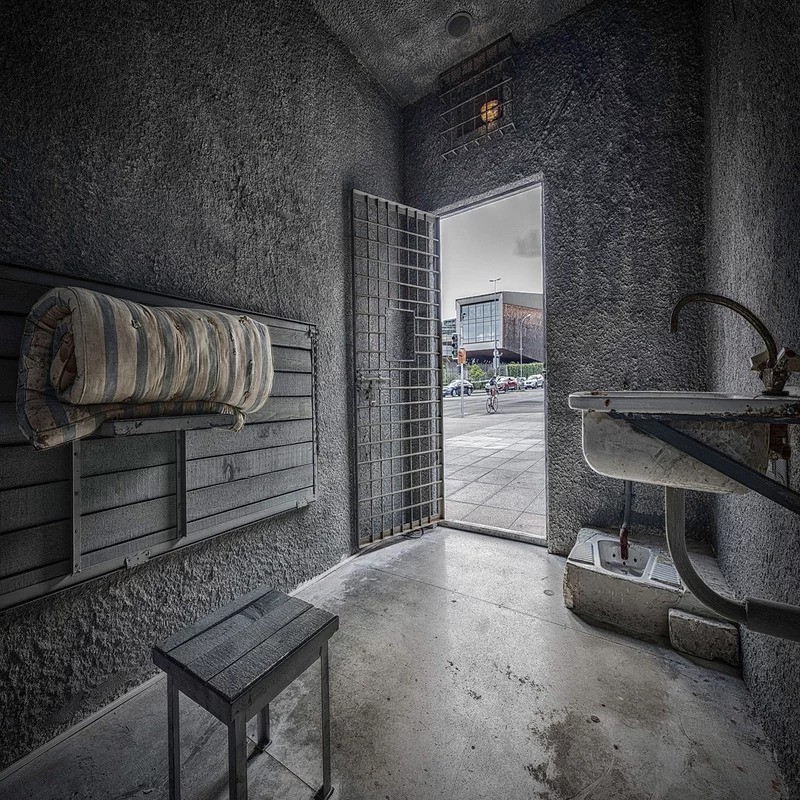
Replica of the Interior of Navalny’s Solitary Confinement Cell

Kyrgyzstan’s President Declares Own Multi-Million Dollar Property as Part of Asset Legalization

The President of the Kyrgyz Republic, Sadyr Japarov has said that he wants top business people and wealthy citizens to repatriate their assets to Kyrgyzstan instead of storing it abroad – which is why he has decided to start with himself. Last summer, Kyrgyzstan adopted a law on legalization – or declaring assets to the government – of property. According to official statements, its main goal is to transition the property and income of individuals from the shadow economy into legal economic activity through voluntary declaration of assets. The law stands until July 1st, 2024.

“Voluntary legalization of and amnesty [for] assets will allow [the nation] to bring some shadow assets into legal turnover, which, as a consequence, will contribute to an increase in legal economic activity. According to the National Statistical Committee of Kyrgyzstan, the shadow economy accounts for 21% of the republic’s GDP, and according to unofficial data, the shadow economy accounts for 40% of the republic’s GDP. In this regard, the voluntary legalization and amnesty of assets of individuals is part of the preparatory stage of the transition to universal declaration,” reads the law’s background note.

Image: Japarov Facebook post

The president noted that all large and medium-sized business people used to register their property in someone else’s name to avoid paying taxes to the state, and he was among them because he entered into politics from business. He lamented the fact that the richest citizens still keep their billions in foreign banks.

Under the law, authorities guarantee that of all tax declarations previously submitted to state agencies will not be subject to prosecution. This is to give assurance to anyone seeking amnesty that the state will honor current assessments of income and property that have been legalized. The document states that if the amount a person legalizes exceeds 100 million som ($1,100,000), the submitting citizen must pay a so-called declaration payment of one million som ($11,000) to the state.
“The value of my property is about 20 million dollars. I paid one million som to the state for the purpose of legalization. This is required by law. I have no savings abroad, and if I had, I would have invested them in our banks,” the president wrote.

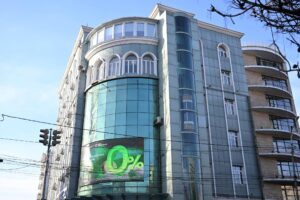
Japarov said he constructed a building in the center of the capital back in 2010, but because of political persecution by the previous authorities, he had to hide the fact the multi-story building belonged to him. Now, he has registered the building under his own name. The head of state stressed that based on the law, the authorities guarantee all citizens the safety of legalized capital: “There is no other goal. There will be no questions [put] to you.”

The president noted that he’s the first to legalize his property, despite the fact that the law came into force more than six months ago. At the end of last year, Japarov also urged owners of markets and large retail outlets to transition their assets out of the shadow economy. According to the law, declarants and nominal owners of assets are exempted from criminal and disciplinary liability, as well as from tax and customs payments.

With Japarov’s declaration, this is the first known case in which the leader of a post-Soviet state admittedly and officially became a millionaire in dollar terms. On paper, Russian President Vladimir Putin earns a salary of $140,000 per annum, and has savings of $606,000, owns an 77-square meter apartment, a garage, a camping trailer, and three cars, including a 1999 Lada Niva. Unofficially, he is often cited as being among the ten richest people in the world.

Time for the U.S. to Cement a “Nuclear-Weapon-Free” Central Asia

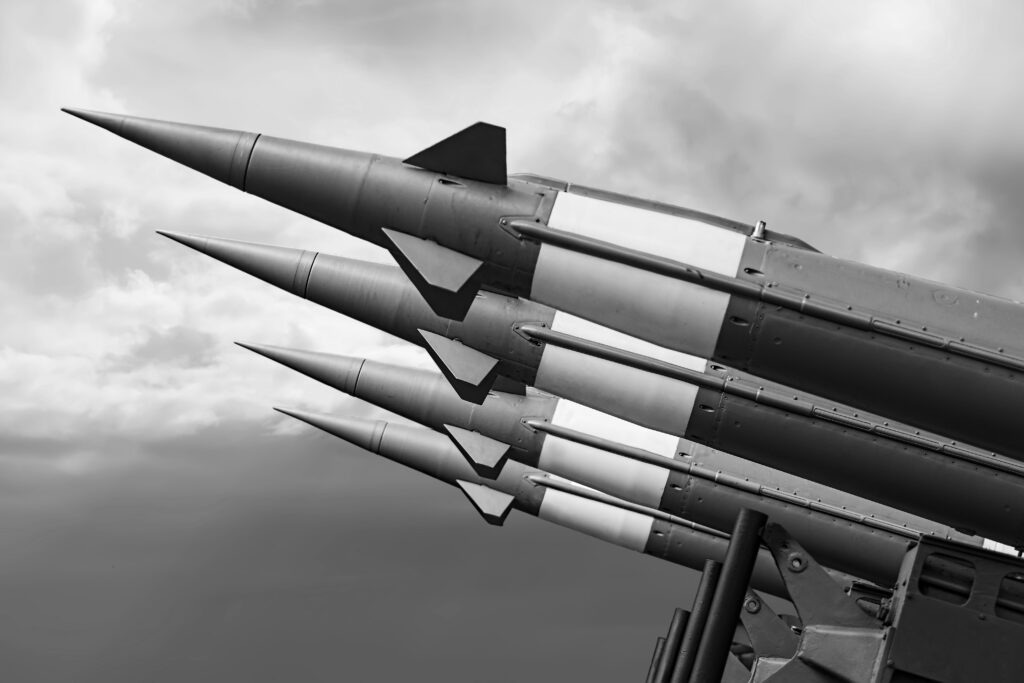
The Central Asian Nuclear-Weapon-Free Zone (CANWFZ) Treaty, which came into force in 2009, represented a significant advance in international efforts to limit nuclear proliferation. Initiated by the five Central Asian countries—Kazakhstan, Kyrgyzstan, Tajikistan, Turkmenistan, and Uzbekistan—it aims to enhance regional and global security by guaranteeing that the region remains free of nuclear weapons. In May 2014, all five Permanent Members of the UN Security Council signed a Protocol to the CANWFZ Treaty (the permanent five include China, France, Russia, the United Kingdom and the United States, who also happen to be five signatories of the 1968 Non-Proliferation Treaty, or NPT, that have nuclear weapons). This Protocol legally binds them not to use or to threaten to use nuclear weapons against any of the CANWFZ signatories – i.e., the above-listed five Central Asian countries.

As the 10th anniversary of the signing of the 2104 Protocol approaches, it is unfortunate that the United States is the only signatory that has not yet ratified it. The CANWFZ Treaty continues to enhance regional security in Central Asia amidst current international tensions and remains a pillar of regional security that deters threats and strengthens global norms. As a gesture of support for the region’s nuclear-weapon-free status, U.S. Senate’s ratification of the Protocol would ultimately enhance U.S.’ credibility on the international stage, solidify its strategic commitment to Central Asia at a critical time, and demonstrate that it will continue to pursue a more secure and stable world. It would also be a significant nod towards Kazakhstan’s leadership in nuclear disarmament and the country’s pro-active stance against nuclear proliferation.

The significance of Kazakhstan’s enhanced role

Although it took three more years to enter into force, the CANWFZ Treaty was signed in 2006 in the Kazakhstani city of Semei (formerly Semipalatinsk), which used to host Soviet nuclear tests and is located less than 1,400 kilometres away from the Chinese test site at Lop Nor. The USSR conducted over 450 nuclear tests, both underground and atmospheric, at Semipalatinsk between 1949 and 1989. These tests were carried out with scant regard for the health and safety of the local population or the environmental ramifications. The area continues to bear the scars of this era, with elevated levels of cancer, birth defects and other radiation-induced illnesses persisting amongst the population.

In response to the devastating impact of nuclear testing, a profound anti-nuclear sentiment took root in Kazakhstan. This culminated in the formation of the civil-society ‘Nevada–Semipalatinsk’ movement, inspired by similar groups seeking to close U.S. nuclear sites in the state of Nevada. This movement was a pioneering effort in the late 1980s that united Kazakhstan’s citizens in opposition to nuclear tests. The Nevada–Semipalatinsk movement was amongst the first (if not the very first) major anti-nuclear movements in the USSR, and its momentum helped drive Kazakhstan towards independence.

After its independence in 1991, Kazakhstan inherited the world’s fourth largest nuclear arsenal and has cooperated with the West to dismantle it while also preventing the Soviet era nuclear material left on its soil from falling into the wrong hands.  Kazakhstan’s leadership in establishing the CANWFZ and its broader commitment to nuclear disarmament underscore the country’s key role in regional and global non-proliferation efforts. In March 2018, Kazakhstan became the 57th state to sign the United Nations Treaty on the Prohibition of Nuclear Weapons. Having borne the brunt of Soviet-era nuclear testing, the country has become a leading advocate for a world free from the threat of mass destruction by nuclear weapons. Its pro-active stance to date shows how national policies can have a significant impact on regional-security architectures.

Need for action by the U.S. Senate

The United States remains the only signatory of the CANWFZ Protocol who is yet to ratify it. Ratification, which requires action by the U.S. Senate, is more than just a procedural step. In addition to emphasising American commitment to international peace and stability, it would reaffirm to Central Asians how strategically important the region remains to U.S. interests amidst increasing turmoil in other parts of the world. Given the ongoing war in Ukraine and Russian President Vladimir Putin’s threats of nuclear force, Central Asian states would welcome such assurances from the U.S.

Kazakhstan’s President Kassym-Jomart Tokayev recently summarized this sentiment when he said prior to a February 2023 meeting with the U.S. Secretary of State Anthony Blinken that Kazakhstan appreciates the “continuous and firm support of the United States for [its] independence, territorial integrity, and sovereignty.”

U.S.’ ratification would consolidate the Treaty’s framework, reinforce its the international legal regime and serve as a clear example of how international co-operation can work towards a shared objective.

Legally, it would finalize the institutionalization of the Treaty and formalize the legal status of the nuclear-weapon-free zone. Ratification of the Protocol would also send a clear message to other nuclear-armed states, as well as those on the threshold of such armament, about the importance of genuine international co-operation to address challenges posed by nuclear weapons. Such American engagement would boost the credibility of nuclear-weapon-free zones globally and encourage other nuclear-armed states to respect and support similar treaties.

The diplomatic gesture would be understated but would assuredly strengthen a partnership vital for both regional stability and international peace. In its essence, therefore, the Protocol’s ratification by the U.S. Senate would gently but irrevocably nurture an enduring strategic alliance that will promote American interests but also contribute to the safety and security of Central Asia’s people.

Foreign Companies Operating in Kazakhstan Double in Five Years

The number of foreign and joint venture (JV) companies doing business in Kazakhstan reached 52,000 as of January 2024, a number that has more than doubled in five years from 24,700 in 2019, according to a report by Energyprom analysts. At the beginning of this year, 43,400 companies were registered in Kazakhstan defined as legal entities or branches with a foreign form of ownership. Additionally, there were 8,700 JVs. In terms of types of activity, most foreign companies operate in the fields of trade and services, and are most often small businesses. That diverges from Kazakhstan’s priorities for the economy to attract and maintain large organizations in industry, construction, and IT. In total, more than 11,000 going concerns, both foreign and JVs, are working in these sectors.

At the end of last year in the Karaganda Region, workers completed the construction of Kazakhstan’s first lime production plant, which a Belgian company invested in to build. Furthermore, foreign investment totaling $482 million is behind the construction of a copper smelting plant in East Kazakhstan with a capacity of 25 million tons of products per year. In Aktobe, thanks to investment from Italy, a plant will produce thermal insulation materials. Agreements on all of these projects have already been signed.

According to the Bureau of National Statistics of the Republic of Kazakhstan, Russia holds the largest share among JVs and foreign enterprises, which stands to reason given that this northern neighbor is Kazakhstan’s key partner in the Eurasian Economic Union (EAEU). In January of this year, 23,400 active Russian and Kazakh-Russian companies were registered in the republic. Following Russia’s attack on Ukraine in February 2022, there was a sharp influx of those wishing to move their business from Russia to Kazakhstan. Rounding out the top five countries that are actively opening businesses in Kazakhstan are Turkey, Uzbekistan, Kyrgyzstan, and China.

Chinese business leaders have registered not just trading companies, but enterprises in manufacturing and mining industries. About 450 Chinese or Kazakh-Chinese companies in the heavy industries sector are currently operating. Among them is an East Kazakhstan-located producer of fuel assemblies for nuclear power plants in China.

In terms of regions, the East Kazakhstan and Atyrau regions – as well as the metropolises of Almaty and Astana – attract the most foreign investment. For example, foreign ventures invested $6 billion in Almaty in 2023, whilst the oil refining sector in the Atyrau Region received $5.5 billion.

Child Brides and Forced Marriages Among Gender Equality Topics

Kyrgyz Ombudsman Dzhamilya Dzhamanbaeva met with USAID’s Senior Global Coordinator for Gender Equality and Women’s Empowerment, Jamille Bigio in Bishkek. According to the ombudsman’s office, the parties discussed important issues in the protection of freedoms and human rights. The key topics of conversation were reportedly the problem of early marriage among women in Kyrgyzstan, and the protection of children’s rights. The ombudsman’s office cited an example of a 15-year-old girl being married against her will to a much older man.

“There is an urgent need to support victims of early marriages, because they are exposed to domestic violence… For example, a 23-year-old mother of three approached the Ombudsman Institute complaining of domestic violence. As it transpired, she had been forcibly married at age 15 to a man three times her age,” Dzhamanbaeva said.

The ombudsman stated that her office receives many appeals from girls complaining about domestic violence, and its review has revealed facts about forced early marriages. According to the Institute, such egregious facts are not isolated in Kyrgyzstan, and there is a need for the government to take measures to prevent them.

In the past, human rights activists have repeatedly stated that the police are reluctant to consider cases of domestic violence, because the spouses very often reconcile, and the victim withdraws her statement. Furthermore, the Supreme Court has recognized that police systematically fail to prosecute domestic violence cases, “because of widespread misconceptions and gender stereotypes present at all levels of law enforcement and judicial systems.”

“The police often see no need to intervene in what they consider to be ‘private matters,’ and do not recognize domestic violence as acts requiring preventive measures or investigation,” noted a Kyrgyz Supreme Court report. As a result, law enforcement officials often try to dissuade victims from filing a formal complaint.

The situation is similar regarding the practice of bride kidnapping. However, under public pressure, in 2019 the Kyrgyz authorities toughened the punishment for kidnapping girls in order to marry them. According to the criminal code, this offense now carries a prison sentence of 5 to 10 years. Additionally, the fine for forcing girls under the age of 17 into marriage can be up to 200,000 som ($2,200).

The ombudsman also said a new bill is being drafted to strengthen the mandate of the ombudsman’s office and allow representatives to participate in closed-court sessions involving children. “Currently, the institute’s employees are not allowed to attend such sessions, [as per] the criminal code. In this regard, we have no opportunity to ensure the protection in court of the rights of children who have been abused. With the adoption of the new law, we will be able to monitor closed trials,” the ombudsman emphasized.

USAID’s representative, Bigio noted the importance of strengthening cooperation on the protection of children’s rights and the development of mechanisms to protect against early marriage, saying that USAID is ready to continue to cooperate with the government of Kyrgyzstan, authorized bodies and human rights defenders and to provide all of them with all necessary support. According to Bigio, her office also supports the efforts of the Kyrgyz ombudsman to become a bridge between civil society and the authorities.

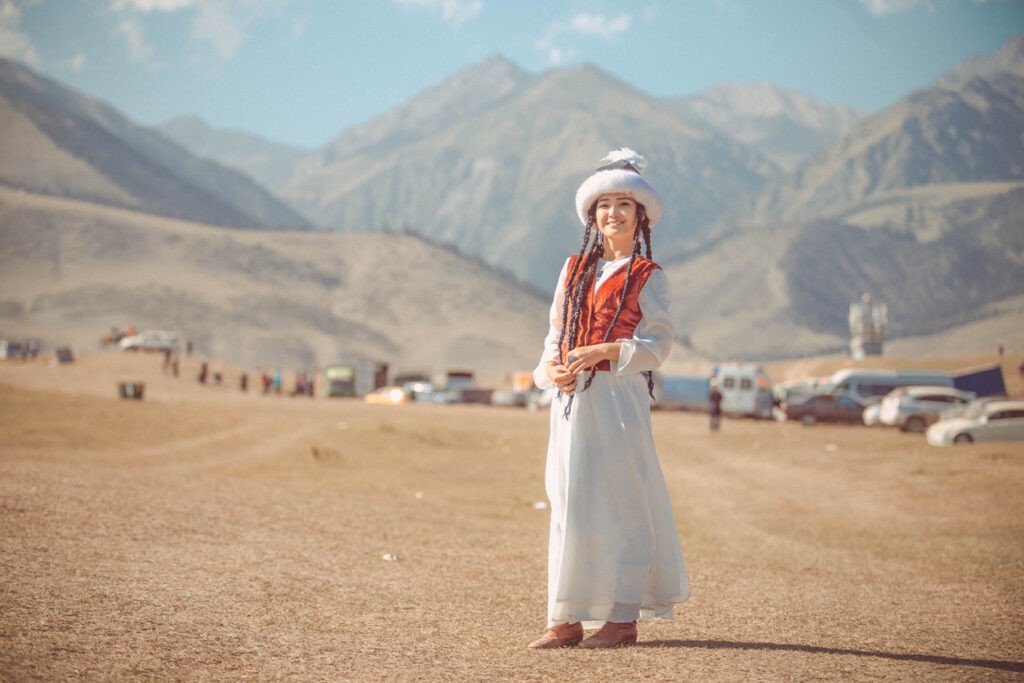
Simpler than courtship and circumventing the bride price (dowry), Ala-Kachuu – ‘take and flee’ – is a ritual form of bride kidnapping prevalent throughout Central Asia, but particularly prevalent in Kyrgyzstan. Traditionally whisked away on horseback, or these days more often stuffed into the back of a car by the prospective groom, future in-laws then try to calm the girl and coax her into putting on the jooluk, the white wedding shawl of submission.

Whilst the waters are muddy as the appellation covers both abduction and elopement, in 2005 the New York Times estimated that over half of Kyrgyzstan’s married women were snatched from the street by their husbands, hence the adage, “every good marriage begins in tears.” In a victimization survey conducted in Kyrgyzstan in 2015, out of the surveyed married women, 14% disclosed experiencing kidnapping, with a notable revelation being that approximately two-thirds of these instances were consensual. In these cases, the women were familiar with the man, involved and had agreed to the abduction in advance.

The practice of bride kidnapping takes another twist in Turkmen culture. Meticulously planned, weddings involve a long-winded back and forth between families, each part of the process having an attached ritual. Even after the parents reach an accord, aunts and sisters-in-law must still visit the prospective groom’s family to establish good relations. When the nuptial day is finally set, the girl’s family traditionally sing one of many ceremonial songs.

We’ve seen our future son-in-law. He doesn’t look worse than our girl, ya-ya.
We’ve tasted their dish, ya-ya. It’s better than grapes, ya-ya.

Despite all the pre-arrangements, the suitor must still pursue and capture the bride, which often takes the form of a high-speed car chase.