• KGS/USD = 0.01144 0%
  • KZT/USD = 0.00194 -0%
  • TJS/USD = 0.10844 -0.46%
  • UZS/USD = 0.00008 0%
  • TMT/USD = 0.28571 0.28%
  • KGS/USD = 0.01144 0%
  • KZT/USD = 0.00194 -0%
  • TJS/USD = 0.10844 -0.46%
  • UZS/USD = 0.00008 0%
  • TMT/USD = 0.28571 0.28%
  • KGS/USD = 0.01144 0%
  • KZT/USD = 0.00194 -0%
  • TJS/USD = 0.10844 -0.46%
  • UZS/USD = 0.00008 0%
  • TMT/USD = 0.28571 0.28%
  • KGS/USD = 0.01144 0%
  • KZT/USD = 0.00194 -0%
  • TJS/USD = 0.10844 -0.46%
  • UZS/USD = 0.00008 0%
  • TMT/USD = 0.28571 0.28%
  • KGS/USD = 0.01144 0%
  • KZT/USD = 0.00194 -0%
  • TJS/USD = 0.10844 -0.46%
  • UZS/USD = 0.00008 0%
  • TMT/USD = 0.28571 0.28%
  • KGS/USD = 0.01144 0%
  • KZT/USD = 0.00194 -0%
  • TJS/USD = 0.10844 -0.46%
  • UZS/USD = 0.00008 0%
  • TMT/USD = 0.28571 0.28%
  • KGS/USD = 0.01144 0%
  • KZT/USD = 0.00194 -0%
  • TJS/USD = 0.10844 -0.46%
  • UZS/USD = 0.00008 0%
  • TMT/USD = 0.28571 0.28%
  • KGS/USD = 0.01144 0%
  • KZT/USD = 0.00194 -0%
  • TJS/USD = 0.10844 -0.46%
  • UZS/USD = 0.00008 0%
  • TMT/USD = 0.28571 0.28%
09 December 2025

Uzbekistan Boosts Electric Vehicle Industry

Expansion of electric vehicles manufacturing in Uzbekistan was discussed at a February 6th government meeting chaired by president Shavkat Mirziyoyev. 

Mr Mirziyoyev gave an order to speed up projects in the domestic electric vehicle industry, emphasizing the need to establish local production of components in cooperation with the Chinese company BYD, a leading global producer of new energy vehicles and next-generation batteries. Mr Mirziyoyev also urged the industry to develop a network of electric vehicle charging stations in Uzbekistan.

Today eight factories in Uzbekistan manufacture dozens of types of cars, passenger and freight vehicles, agricultural and special machinery.

During his visit to China in January, Mr Mirziyoyev and BYD’s president Wang Chuanfu launched an assembly plant for hybrid and electric vehicles in Uzbekistan’s Jizzakh region, with a production capacity of 50,000 vehicles per year. He also supported BYD’s plans to assemble of its own electric buses in Uzbekistan.

At the February 6th meeting, officials reported that over the past three years sales of electric vehicles in Uzbekistan have increased ten-fold; in 2023, 35% of car imports were electric and hybrid cars.

Uzbekistan’s State Customs Committee earlier said that the country imported 22,490 electric vehicles (EV) worth $582.3m in the first 10 months of 2023, a six-fold increase compared to the same period in 2022. Of these, 20,640 EVs (91.7%) came from China, and the others were imported from the United Arab Emirates, South Korea, the United States, and Germany.


Kazakhstan Political Experts Outline Tasks Ahead for New Government

On February 7th, an expanded meeting of Kazakhstan’s new government took place at which President Tokayev sharply criticized previous initiatives. For example, tax code improvements had been in the works for quite some time, but the final proposal was reduced to raising rates and even imposing taxes on mobile-phone transfers. This caused a wave of resentment among ordinary Kazakhstanis and entrepreneurs. Therefore, the recent resignation of the government is not a surprise, according to political scientist and Director of the Institute of Eurasian Integration, Urazgali Selteyev, who also labeled such legislative reforms “mistakes.”

“The resignation was long overdue,” Selteyev told The Times of Central Asia. “There are accumulated omissions and systemic failures in the work of the government. For all the months of work, no serious improvements are visible. A practical vision of a new economic model has not been presented. The development of the budget code has been delayed, and the clarification of tax reform has failed. Positive statistics on the reduction of inflation do not correspond to the real state of affairs in the economy and social sphere.”

A similar opinion is held by political scientist and Managing Director of GR Consulting Group, Yerbol Yedilov, who notes that the focus will now be on improving the economy, but not to the detriment of business, as instructed by Tokayev at the meeting.

“I think they will target [improving] the country’s economy, and, led by the prime minister, will carry out large-scale work on the return of illegally exported funds. Reforming the budget sphere, which the president is talking about, is only the beginning. There are deeper plans, and in time they should lead to a global increase in the country’s economy,” Yedilov told The Times of Central Asia.

The head of state referred to this in his address, stating that Kazakhstan will seek to improve its anti-corruption policy, meaning that further personnel reshuffles are inevitable.”Tokayev mentioned that the state of roads, heat and power centers is a reflection of our corruption. It can be understood that [more] personnel purges within the ministries lay ahead. Emphasis will be placed on honest and incorruptible officials,” Yedilov concluded.

Currently, according to political analysts, Kazakhstan is lacking in investment resources, and the main goal of the new cabinet is to replenish the national fund.

“This is a transformation of the economy on the basis of strengthening and expanding investment activity,” political scientist Gaziz Abishev told The Times of Central Asia. “After all, the liberalization of prices in a number of sectors, the liberalization of the economy itself, the protection of investors from corruption and bureaucracy, the use of public funds and simplification of the tax code is all about investment, which is now so lacking in Kazakhstan. We need to invest in new production and the creation of [value-added industries], but this cannot be done without capital. For both internal and external reasons, and because of volatility in foreign markets, there is not a lot of free money in Kazakhstan’s economy. How realistic it will be for the new government to accomplish this depends on a number of factors – firstly, their performance, courage and competence, but it also rests on external factors, too.”

The resignation of the government and people’s anger served as a catalyst for a shake-up of the entire state apparatus. “They realized that the president’s warning was not just words, but the harbinger of a storm,”political scientist, Talgat Kaliyev told The Times of Central Asia. “The issues that people are worried about – related to bank transfers, bureaucracy in medicine, and the inability to get this or that service on time – will be eliminated in the near future. Medicine is mired in paperwork and business, and business should be somewhere else. Tokayev also devoted an entire section of his speech to the development of entrepreneurs, so it’s not hard to understand that small and medium-sized businesses will begin to flourish, and with it the entire business sphere.”

Experts agree that although the previous government always appeared to be in a flurry of activity, this was somewhat of an illusion, with very little actually accomplished.

Turkmen Prosecutors Fired in an Attempt to Curb Corruption

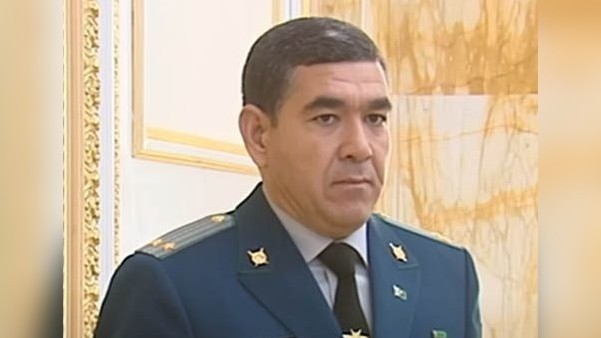
The Prosecutor General of Ashgabat, Ovezmammed Shykhmammedov, was fired and then arrested on the night of February 3rd, according to Turkmenistan’s central state news agency. President Serdar Berdymukhamedov reportedly fired him for “improper fulfillment of his official duties and serious shortcomings in his work.” Shykhmammedov’s arrest followed the dismissal of Turkmenistan’s Prosecutor General, Serdar Myalikgulyev, just two weeks earlier. The reason given was similarly named as a failure to properly fulfill his official duties. Both men held their posts for about one-and-a-half-years. During this time, they surrounded themselves with trusted confidants and ousted possible opponents from their posts.

Former Minister of Justice (2013 – 2021), Begmurat Mukhamedov has been named the new Prosecutor General. He was Chairman of the Committee on International and Inter-parliamentary Relations in the Mejlis (Parliament) prior to his appointment. The position of the capital’s prosecutor is still vacant.

Sources familiar with the case say Serdar Myalikgulyev testified against Shykhmammedov after he was ejected from the session hall and afterwards detained. The former prosecutors are implicated in a scandal involving embezzlement from state-subsidized stores. They are also believed to be involved in Turkmenistan’s recent agriculture crisis, wherein last year only half of the planned wheat and cotton harvest target was realized. This is seen as a driving factor behind such radical measures being taken against the former Prosecutor General, notwithstanding his distant ties with the family of the President.

Despite being a signatory to the UN Convention Against Corruption since 2005 and crafting a five-year National Anti-Corruption Action Program, Turkmenistan remains the most corrupt country in Central Asia, ranking 170th out of the 180 countries included in Transparency International’s Corruption Perceptions Index for 2023.

Tokayev Outlines Vision for New Government of Kazakhstan

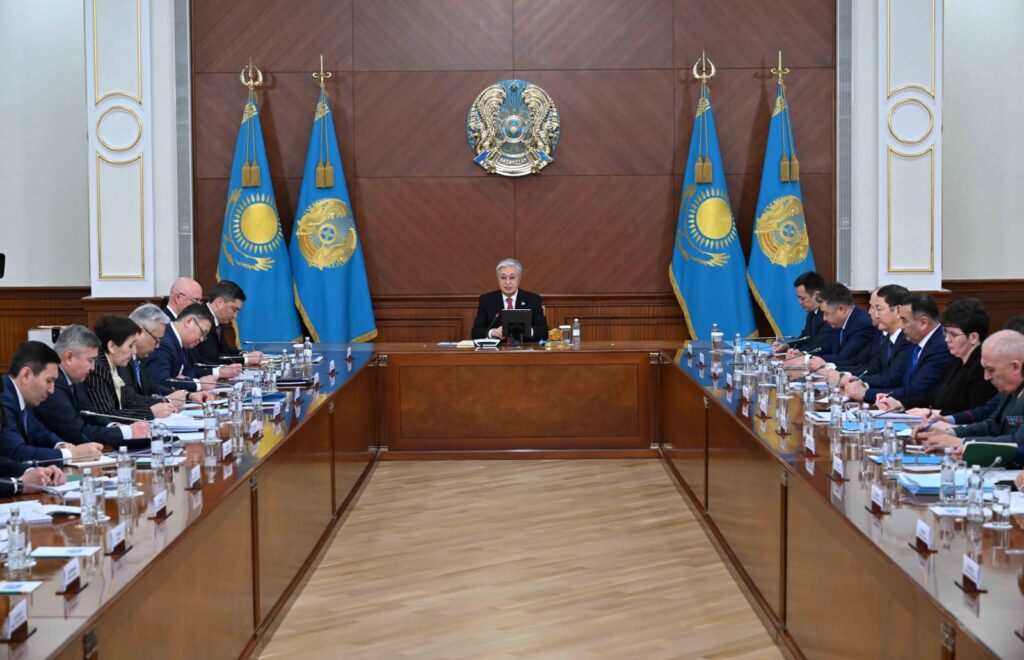
Following a tumultuous week, just a day after appointing a new prime minister, Kazakhstan’s President Kassym-Jomart Tokayev chaired an extended government meeting on February 7th. The meeting was attended by ministers, including the new Prime Minister, Olzhas Bektenov, the chairman of the National Bank, governors of Kazakhstan’s regions, and the mayors of the country’s three largest cities of Astana, Almaty, and Shymkent.

Tokayev reported that last year the economy grew by 5.1%, but stressed that there is still work to be done.

“We need a new impetus for the government’s activities. It has a clear target — to increase the economy to $450bn by 2029. To achieve this goal, the country’s GDP must grow by at least 6% annually. At the same time, it is important that macroeconomic indicators ensure rapid growth in the real incomes of our citizens,” the President said.

Tokayev spoke of the need to make budget and tax policies function better. The problem, the President said, is the way budget funds are allocated, which is not currently aimed at stimulating economic activity. He added that budget funds are spent on day-to-day tasks, while larger strategic goals fade into the background. “The government will have to define clear spending priorities with an emphasis on obtaining maximum economic returns,” he said.

The President stated that a new Tax Code is currently being drafted, which will aim to provide a balance between creating a good investment environment and maintaining the required level of budget revenues.

Tokayev also pointed out that the share of investment in fixed capital is declining, stating that “it is necessary to significantly increase the influx of external and internal investment. This is a key task for the newly-established Investment Headquarters.”

According to his speech, another source of funds should be the return of illegally withdrawn assets, which could be used to implement important projects. At the same time, Tokayev warned against going too far: “Arbitrariness on the part of law enforcement agencies is unacceptable. There will be a harsh reaction on my part to every such signal. This work is of great importance from the point of view of ensuring social justice, so no one is allowed to discredit it,” he said.

Another priority task is the development of the agro-industrial sector, and the rational use of water resources. “The problems that hinder the development of the agro-industrial sector are well known, the most acute of which is chronic underfunding. Lack of investment leads to wear and tear of agricultural machinery, low yields, and low labor productivity. Therefore, it is necessary to maximize, if possible double, the financing of agriculture, attracting not only budget money, but also funds from other sources, including second-tier banks.”

The government resigned en masse on Monday; changes had been expected by inside observers, as prior to the resignation, Tokayev had increasingly expressed his dissatisfaction with progress in addressing socioeconomic issues, and with stagnation in general. Over the past two years, Tokayev has implemented sweeping reforms aimed at democratizing the country and breaking up economic monopolies.

World Bank’s Kyrgyzstan Head Discusses Energy Sector Needs

Worn-out energy infrastructure, power shortages and dependence on imports: authorities in the Kyrgyz Republic will have difficult tasks to address in order to ensure the republic’s energy security over the next decades, said the head of the World Bank’s Kyrgyzstan office, Naveed Hassan Naqvi, in an interview  with the state news agency, Kabar.

Hassan Naqvi noted that energy issues are very serious and affect not only Kyrgyzstan, but the entire region, and the development of this sector directly affects the lives of people throughout Central Asia. The recent accident at Bishkek’s thermal power plant showed how vulnerable the energy sector can be, and how much people rely upon it.

“As you know, the installed capacity in the Kyrgyz Republic is about 3,900 megawatts, about 800 megawatts of which comes from the coal-fired Bishkek combined heat power (CHP) plant. The rest of the capacity is provided mainly by hydropower. It is important to note here that more than half, maybe even 60% of electricity transmission and distribution networks are used beyond their (service) life and need to be replaced. If we talk about hydroelectric power plants and their equipment, we see a similar situation – more than half of the facilities need replacement or repair,” the head of the World Bank office emphasized.

The World Bank office has long been following the situation in Kyrgyzstan, and helped develop a strategy to put the sector on the path to modernization. One of the key factors for solving problems, according to the international financial organization, is not only modernizing and replacing old equipment, but the need to increase tariffs paid by the population. Existing tariffs in the republic are the fifth cheapest in the world, meaning the authorities spend 2-3% of the country’s GDP subsidizing them. In May 2023, the authorities raised electricity tariffs for government organizations, businesses, and household consumers.

“As a result of dialog and close cooperation with the government, we started working in several areas, including tariff reform and calculating the installed capacity the country will need by 2050. Our assessment showed that the existing installed capacity in the country is 3,900 megawatts, but the country will need 10,000 megawatts by 2050,” said Hassan Naqvi.

In 2022, the World Bank allocated $50 million to the republic to modernize the energy infrastructure for household consumers: upgrading transformers, transmission lines, and installing smart meters to improve the efficiency of the energy grid. A year later, the World Bank provided another $80 million in the form of a subsidized loan to improve power grids and support small-scale energy – namely the construction of micro hydropower plants (HPPs) on Kyrgyzstan’s numerous rivers. Lastly, in the fall of 2023, the bank allocated $5 million to the republic for a feasibility study of a new large HPP, Kambarata-1. The World Bank is slated to provide another $150-$200 million of the $500 million needed for its construction.

Kyrgyzstan is also working with local partners on the construction of the first large joint Kyrgyz-Kazakh solar power plant in the Issyk-Kol region with a capacity of 50 MW. The country’s first floating solar power plant was also recently opened near Bishkek.

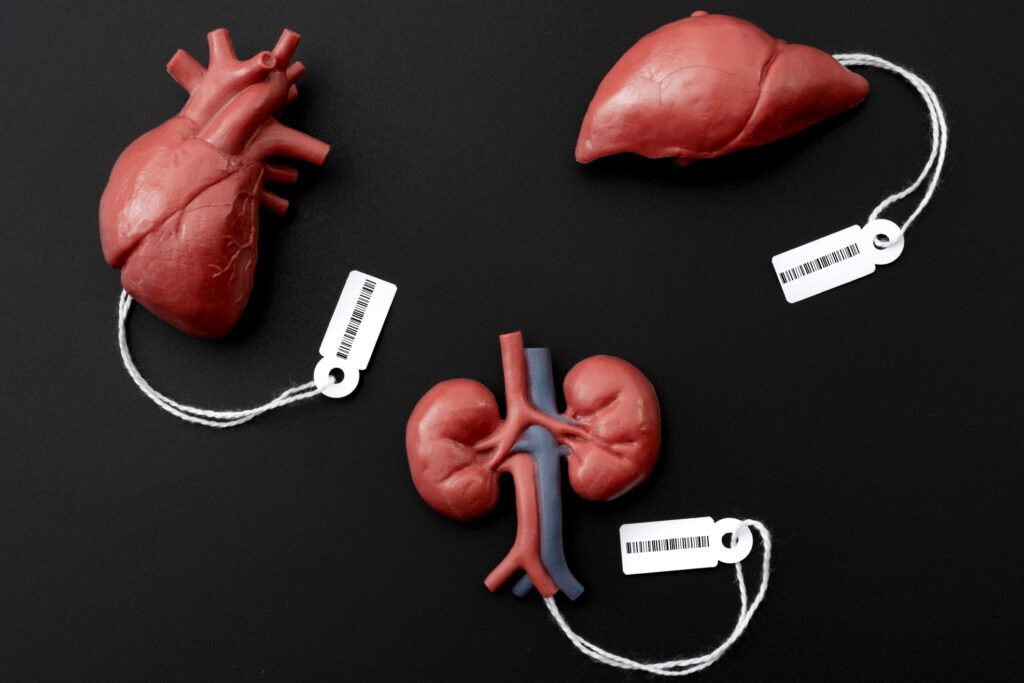
All Kyrgyz Citizens in Need of Kidney Transplants to Receive Free Operations

On February 1, 2024, Kyrgyzstan’s first free kidney transplant was successfully performed on a 22-year-old girl in a Bishkek hospital. However, about 2,500 Kyrgyz people still have to receive dialysis while they wait for a new organ. All kidney transplants will now be paid for by the state, Kyrgyz health minister Alymkadyr Beishenaliyev said.

The Health Ministry said that each patient undergoing dialysis must purify his or her blood of toxic substances several times a week. In the past, many did the procedure at their own expense. The price for three dialysis procedures is about $100, and not every Kyrgyzstani can afford it. Nor can many afford a kidney transplant operation. The state previously covered part of the costs when a person had a disability — but now the authorities plan to help all those with the most severe kidney issues.

“We planned to conduct 50 free surgeries at first. However, after the free surgery the other day, I talked to the president. He said that we should conduct free surgeries for all the needy 2,500 patients who are now receiving hemodialysis. If we perform the surgeries, the money now spent on hemodialysis will be a good saving for the budget,” Beishenaliyev said. One kidney transplant operation costs the state $7,500, while dialysis costs $14,000-15,000 per patient per year, he said. It will be more economical for the budget than spending on hemodialysis every time, the minister calculated.

Kyrgyz president Sadyr Japarov has taken a personal interest in the issue. The head of state said that 50 patients have already found donors, underwent a full medical examination and are preparing for surgery. “The first benefit is to help our citizens. The second is saving money. There are patients who have been receiving hemodialysis for 10-15 years,” the president said.

In an interview with the state news agency Kabar, Japarov said that a kidney transplant abroad costs $25,000-$50,000, and that he knows this firsthand because about 10 years ago his brother had such an operation in another country. As a result, his family paid $70,000, including travel expenses and post-operative rehabilitation procedures.

Earlier this year, the head of state signed a law on the protection of citizens’ health, according to which private and public hospitals in Kyrgyzstan can now perform organ transplants — provided that the patient is a relative of the donor.

Turkish nephrologists and kidney transplant specialists have come to Kyrgyzstan to help develop this field of medicine. Also, a group of Kyrgyz doctors is currently undergoing training in Turkey.