• KGS/USD = 0.01144 0%
  • KZT/USD = 0.00196 -0%
  • TJS/USD = 0.10896 -0%
  • UZS/USD = 0.00008 0%
  • TMT/USD = 0.28571 0.28%
  • KGS/USD = 0.01144 0%
  • KZT/USD = 0.00196 -0%
  • TJS/USD = 0.10896 -0%
  • UZS/USD = 0.00008 0%
  • TMT/USD = 0.28571 0.28%
  • KGS/USD = 0.01144 0%
  • KZT/USD = 0.00196 -0%
  • TJS/USD = 0.10896 -0%
  • UZS/USD = 0.00008 0%
  • TMT/USD = 0.28571 0.28%
  • KGS/USD = 0.01144 0%
  • KZT/USD = 0.00196 -0%
  • TJS/USD = 0.10896 -0%
  • UZS/USD = 0.00008 0%
  • TMT/USD = 0.28571 0.28%
  • KGS/USD = 0.01144 0%
  • KZT/USD = 0.00196 -0%
  • TJS/USD = 0.10896 -0%
  • UZS/USD = 0.00008 0%
  • TMT/USD = 0.28571 0.28%
  • KGS/USD = 0.01144 0%
  • KZT/USD = 0.00196 -0%
  • TJS/USD = 0.10896 -0%
  • UZS/USD = 0.00008 0%
  • TMT/USD = 0.28571 0.28%
  • KGS/USD = 0.01144 0%
  • KZT/USD = 0.00196 -0%
  • TJS/USD = 0.10896 -0%
  • UZS/USD = 0.00008 0%
  • TMT/USD = 0.28571 0.28%
  • KGS/USD = 0.01144 0%
  • KZT/USD = 0.00196 -0%
  • TJS/USD = 0.10896 -0%
  • UZS/USD = 0.00008 0%
  • TMT/USD = 0.28571 0.28%
09 December 2025

Platform Supporting Female Entrepreneurs Launches In Uzbekistan

An online platform called Coozin has been introduced in Uzbekistan, with the goal of championing female entrepreneurs.

Women can use Coozin to learn the fundamentals of business, sell their goods and services, network with other entrepreneurs, and find inspiration. The platform will also help Uzbekistan to achieve the UN’s sustainable development goals.

The Coozin initiative is the first in Uzbekistan to enable women to independently promote their businesses. It was coordinated with the help of the OSCE, IT-Park, and the Business Women’s Association of Uzbekistan, as well as the the Coca-Cola Foundation.

Mirziyoyev Fortifies China-Uzbekistan Relations for Economic and Green Transformation

Ahead of his trip to Beijing, in his article for the People’s Daily, Uzbekistan’s President Shavkat Mirziyoyev poured lavish praise on China. Not only did Mirziyoyev say he admired Chinese President Xi Jinping’s global development, security and civilization initiatives as efforts to significantly address global challenges and accelerate the transition to a more sustainable and inclusive future, he also aligned Tashkent’s vision of regional and international security with Beijing.

Mirziyoyev has paid several visits to China, underscoring Beijing’s growing importance in his economic and development agenda. His objective to strengthen “multifaceted” relations with Beijing further expounds the fact that China will be a centerpiece of his foreign and regional policy and ambition for a green transition.

During his October’s trip to Beijing to attend the third Belt and Road Forum, Mirziyoyev struck a complimentary tone, expressing gratitude to Xi for the invitation, stressed that the number of Chinese companies investing in Uzbekistan had increased fivefold and said that he expected bilateral trade to exceed $10 billion by the end of 2023.

Mirziyoyev’s campaign has worked, given that Chinese enterprises are the second-largest investors in the country, China accounts for more than one-fifth of Uzbekistan’s foreign trade (21.3%) and bilateral trade in 2023 has far exceeded expectations, reaching $14 billion. Once Mirziyoyev signaled that China as one of his top foreign policy priorities, it helped Tashkent sign several agreements with Beijing.

In his latest visit, Mirziyoyev called for international unity on the “Green Silk Road,” which was first proposed by Xi in Uzbekistan back in 2016, and fully supported the green initiative’s potential to shape the agenda for a “common green future.” Construction of a 400-megawatt solar photovoltaic power plant by PowerChina and Mirziyoyev’s meetings with Chinese energy companies in October indicated that he was impressed by their ability to deploy modern engineering solutions in electricity transmission networks and to implement solar, wind and hybrid power projects.

Just last month, Mirziyoyev praised his strategic partner for completing projects at an “astonishingly” fast pace, and he continues to hail China’s progress on large scale joint investments projects which have helped Tashkent make important strides in developing green energy and their endeavor to create 27 gigawatts of renewable energy generation by 2030.

While cooperation with the “undisputed global leader” in renewable energy would solidify Tashkent’s energy security and environmental sustainability, the first hydrogen plant in the country and region will also save some 33 million cubic meters of gas every year, decarbonize heavy industries, and add a new engine of growth, raising Uzbekistan’s international profile.

The two nations are promoting active cooperation on infrastructure, too. The Chinese-built Angren-Pap railway line, the China-Kyrgyzstan-Uzbekistan transport corridor, and the four routes of the China-Central Asia natural gas pipeline that pass through Uzbekistan denote a region-wide consensus on developing intra- and inter-regional infrastructure to push trade, enhance connectivity, and bring prosperity.

Once finalized, the China-Kyrgyzstan-Uzbekistan railway project will give Central Asia the shortest and most accessible passage to global markets, bringing billions of dollars of investments into the region. Reconstruction projects spearheaded by China, such as the A380 highway, have buttressed Uzbekistan’s transportation infrastructure, ensuring the timely delivery of goods, whilst further cooperation on logistics is also making progress.

As per Uzbekistan’s Ministry of Transport, the electric transport network in the country has also been boosted after an agreement was reached in December to jointly produce 70 centralized and 50,000 non-centralized electric vehicle (EV) charging stations by 2033, providing energy to 700,000 vehicles. Some 2,500 of these units are expected to be installed by the end of 2024. Leading Chinese tech firms such as Huawei, BYD and ZTE are already operating in Uzbekistan, and Mirziyoyev intends to foster industrial cooperation with these giants to transform the country into a technology hub through the establishment of high-tech industries and technology parks.

Cooperation in the field of education is another area which has piqued Uzbekistan’s interest. Through the construction of educational infrastructure, technical training and scholarships, China has expanded its influence and instilled interest, especially among Generation Z, in learning Chinese. Confucius Institutes are operating in Samarkand and Tashkent, and Mirziyoyev wants to expand the teaching of the Chinese language, which in turn would help him train a workforce capable of applying China’s development practices.

Over the past three decades, the China-Uzbekistan strategic partnership has grown substantially. High-level political exchanges in the last couple of years have, as per Uzbekistan’s estimates, translated into agreements and trade contracts worth $40 billion as Chinese investors continue to fund projects in green energy, oil and gas, telecommunications, and the automotive industry, among others.

Tashkent’s support of Beijing’s efforts to “implement the reunification of Taiwan” and backing for Xi’s initiative for an “all-weather comprehensive strategic partnership” signal that Mirziyoyev is extremely keen to curry favor with China in multiple areas. It is hoped within Uzbekistan that this will kick-start construction of the China-Kyrgyzstan-Uzbekistan railway project, something which Tashkent has since long been pushing for.

Azhar Azam is a geopolitical analyst.

€10bn To Be Invested In Trans-Caspian Transport Corridor

The two-day Global Gateway Investors Forum for EU-Central Asia Transport Connectivity opened on January 29th in Brussels, Belgium. The event brings together high-level representatives from the European Commission, countries of the EU, Central Asia and Caucasus, as well as Turkey. At the forum, the European Commission’s executive vice-president Valdis Dombrovskis announced that European and international financial institutions will commit €10bn ($10.8bn) in support and investments towards sustainable transport connectivity in Central Asia.

The forum’s agenda includes discussions of the required investments to transform the Trans-Caspian Transport Corridor into a cutting-edge, multimodal, and efficient route, connecting Europe and Central Asia within 15 days.

The European Commission said that Russia’s invasion of Ukraine has underlined the urgency to find alternative reliable efficient trade routes between Europe and Asia. The development of transport connectivity is also a means to strengthen regional integration and economic development in Central Asia. 

The €10bn commitment is a mixture of ongoing and planned investments which the European Commission foresees to be mobilized for sustainable transport development in Central Asia in the short term.

In concrete terms, several significant commitments are being made on the first day of the forum as part of the overall €10bn. The European Investment Bank (EIB), represented by its vice-president Teresa Czerwińska, signed memoranda of understanding totaling €1.47bn ($1.6bn) with the governments of Kazakhstan, Kyrgyzstan and Uzbekistan, as well as with the Development Bank of Kazakhstan. These loans will be made possible by guarantees provided by the European Commission. 

Kyrgyzstan’s GDP Reached $13.7bn In 2023

2023 Kyrgyzstan’s GDP grew by 6.2% last year to reach $13.7bn, a record high for the country, the chairman of the Cabinet of Ministers Akylbek Japarov announced at a government meeting on January 26th

Mr Japarov said that he believes the 6.2% figure for 2023 will be higher after the economic data for 2023 is updated and finalized. 

The head of the cabinet commented that to achieve a GDP of $30bn by 2030, Kyrgyzstan needs to ensure an annual growth rate of 9%-11.5%, and to reach the $200bn mark by 2050, the growth rate needs to average 10.3% per year. “It is difficult to maintain this pace, but we can achieve it,” said Japarov, adding that the government’s priority task is to create new jobs.

EU And AFD Support Uzbekistan’s Drinking Water And Livestock Sectors

The Delegation of the European Union to Uzbekistan and Agence Française de Développement (AFD), the French Development Agency that implements France’s policy on international development and solidarity, have signed two agreements together. One is to implement the EU’s Drinking Water Program, and the other is for sustainable livestock financing in Uzbekistan. 

The agreements provide for new European Union grants, namely €7.9m ($8.5m) for the water program and €4.7m ($5m) for livestock. These grants will finance the technical assistance required for each of the projects, the Delegation of the European Union to Uzbekistan said. 

The EU and AFD have confirmed their commitment to continue supporting the government of Uzbekistan in its efforts to create a climate-smart and inclusive livestock sector. Implemented since June 2021 by the Uzbek Committee for Veterinary and Livestock Development, the project for “Inclusive and Climate Friendly Investment Financing in the Livestock Sector of Uzbekistan” aims to make sustainable financing in this sector more efficient. The EU’s contribution focuses on improving access to climate-friendly loans provided by four Uzbek banks — Business Development Bank, HamkorBank, MicrokreditBank, and Xalq Bank. 

The Drinking Water Program helps to improve drinking water coverage in three regions of Uzbekistan — Tashkent, Fergana, and Kashkadarya. This project centers on water systems in seven districts within these three regions, providing access to a well-managed drinking water service for around 610,000 people.

According to data provided by macrotrends, as of 2020, only 58.83% of the population in Uzbekistan had access to clean drinking water, which is defined by UNICEF as a “fundamental need and human right.” This figure has been in decline year-on-year since 2017, meaning that Uzbekistan ranks second worst in the region after Tajikistan for access to water “on premises, available when needed and free from faecal and priority chemical contamination.” According to UNICEF, only 32% of domestic wastewater is safely treated, whilst the impact of climate change, such as droughts and floods, further complicate the delivery of water and sanitation services.

German Company To Help Create Medical Cluster In Turkmen City Of Arkadag

On January 27th Gurbanguly Berdimuhamedov, the chairman of the Halk Maslahaty (People’s Council) of Turkmenistan, met with the managing director of the German consulting company Goetzpartners Emerging Markets GmbH, Vladimir Mathias. Goetzpartners won an international tender to consult on the creation of a medical cluster in the Turkmen city of Arkadag, the Turkmen Foreign Ministry has reported.

Germany is one of Turkmenistan’s key European partners. Several German companies are involved in large-scale projects in the fields of transport, communications and logistics in the country.

At the meeting Mr Mathias explained to Mr Berdimuhamedov that the planned medical cluster in Arkadag is designed to produce various types of medical products not only for the domestic market, but also for export. 

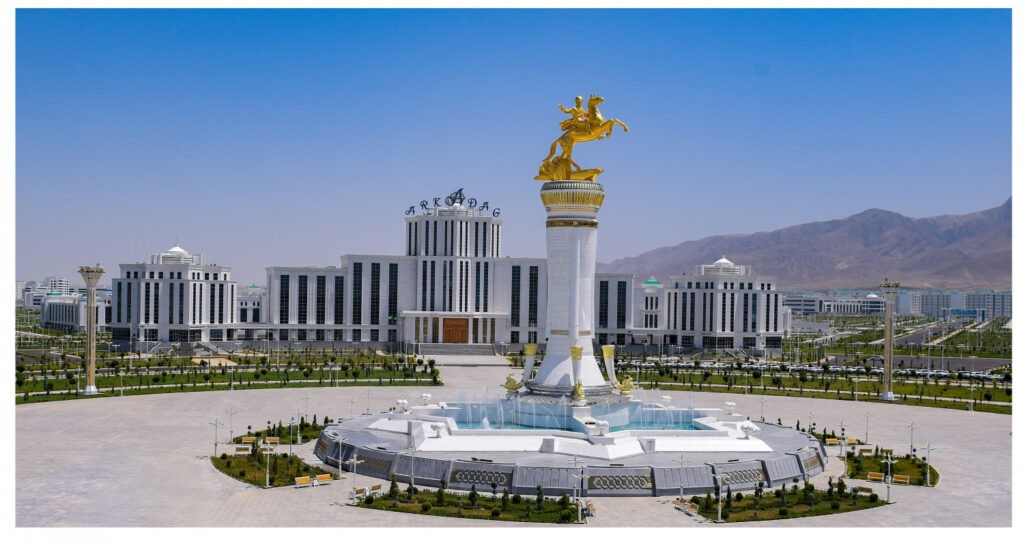
The city of Arkadag was unveiled on June 29th, 2023. The “smart” city, designed to be home for 70,000 people and costing billions of dollars to construct, is located 30km south of the capital, Ashgabat.