• KGS/USD = 0.01144 0%
  • KZT/USD = 0.00196 -0%
  • TJS/USD = 0.10899 0%
  • UZS/USD = 0.00008 0%
  • TMT/USD = 0.28571 0.28%
  • KGS/USD = 0.01144 0%
  • KZT/USD = 0.00196 -0%
  • TJS/USD = 0.10899 0%
  • UZS/USD = 0.00008 0%
  • TMT/USD = 0.28571 0.28%
  • KGS/USD = 0.01144 0%
  • KZT/USD = 0.00196 -0%
  • TJS/USD = 0.10899 0%
  • UZS/USD = 0.00008 0%
  • TMT/USD = 0.28571 0.28%
  • KGS/USD = 0.01144 0%
  • KZT/USD = 0.00196 -0%
  • TJS/USD = 0.10899 0%
  • UZS/USD = 0.00008 0%
  • TMT/USD = 0.28571 0.28%
  • KGS/USD = 0.01144 0%
  • KZT/USD = 0.00196 -0%
  • TJS/USD = 0.10899 0%
  • UZS/USD = 0.00008 0%
  • TMT/USD = 0.28571 0.28%
  • KGS/USD = 0.01144 0%
  • KZT/USD = 0.00196 -0%
  • TJS/USD = 0.10899 0%
  • UZS/USD = 0.00008 0%
  • TMT/USD = 0.28571 0.28%
  • KGS/USD = 0.01144 0%
  • KZT/USD = 0.00196 -0%
  • TJS/USD = 0.10899 0%
  • UZS/USD = 0.00008 0%
  • TMT/USD = 0.28571 0.28%
  • KGS/USD = 0.01144 0%
  • KZT/USD = 0.00196 -0%
  • TJS/USD = 0.10899 0%
  • UZS/USD = 0.00008 0%
  • TMT/USD = 0.28571 0.28%
09 December 2025

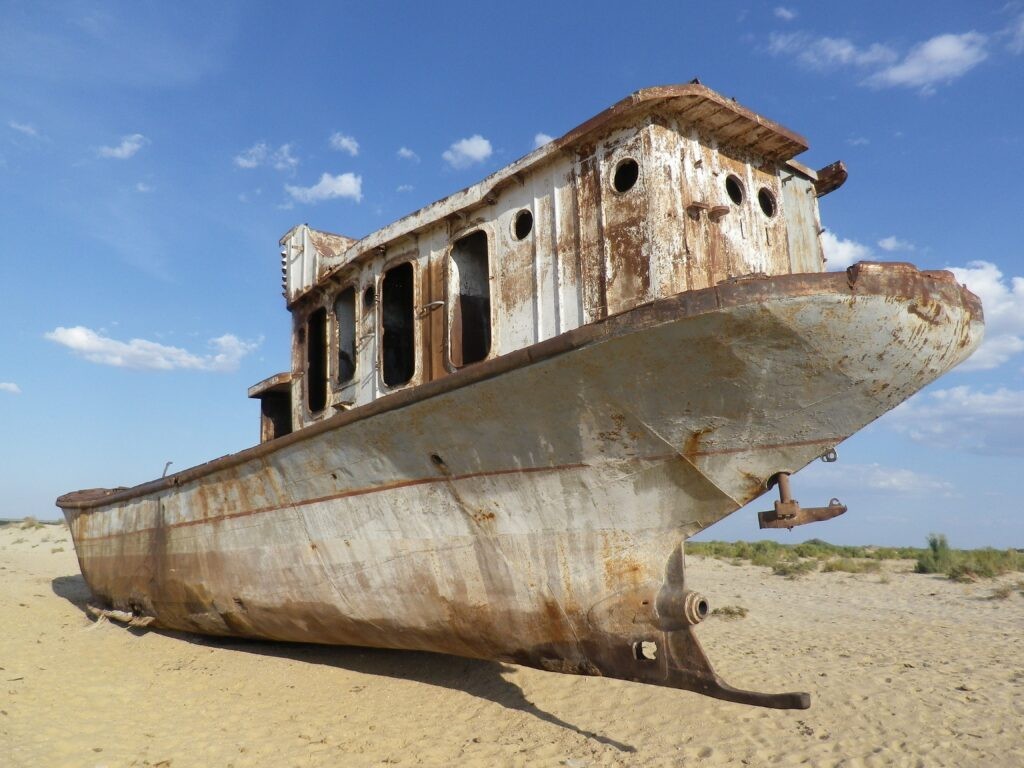
Italy Proposes Project To Mitigate Climate Change Consequences In Aral Sea

On January 24th Italy’s deputy minister of foreign affairs and international cooperation, Edmondo Cirielli, and deputy minister for the environment and energy security, Vannia Gava, held a meeting with the ambassadors of Kazakhstan, Kyrgyzstan, Turkmenistan, and Uzbekistan in Italy. 

At the meeting, the top management of SOGESID SPA, an engineering and specialized technical support company wholly owned by the Italian state, presented a project proposal to mitigate the consequences of climate change in the Aral Sea, an area of Central Asia at high risk of desertification. The project idea, which envisages targeted interventions for the integrated environmental regeneration of the Aral Sea basin, also falls within the framework of the Italian presidency of the EU-Central Asia High-Level Conference on Environment and Water, the Italian Ministry of Foreign Affairs and International Cooperation said. 

During the meeting, it was also proposed to consider the involvement of the Italian Climate Fund, the main national public instrument for pursuing the objectives undertaken by Italy in the context of international agreements on climate and environment.

The meeting also discussed issues of content for the upcoming meeting of the Ministers of Foreign Affairs in the “Italy + Central Asia” format, which will be held in 2024 in Rome, the Kyrgyz Foreign Ministry said. 

Tajikistan Sums Up Economic Results For 2023

On January 24th Tajikistan’s president Emomali Rahmon chaired a government meeting to review the country’s socio-economic results in 2023, and outline the main tasks for 2024. 

Prime minister Qohir Rasulzoda reported that despite the impact of current global problems on the Tajik economy, the economic results for 2023 were positive. According to Mr Rasulzoda, the country’s gross domestic product grew by 8.3% and inflation was 3.8%, 0.4% lower than in 2022.

A total of 729 new industrial enterprises were put into operation in the country and 230,000 new jobs were created. Electricity generation increased by 461 million kW/h compared to 2022. Agricultural production increased by 9%.

In 2023 the country received US $2.6 billion of foreign investment, 4.4% more than in 2022.

President Rahmon has outlined strategic goals for the government for 2024 — the rapid industrialization of the country through the introduction of new production capacities and activation of stagnant capacities, increasing the production of competitive import-substituting and export-oriented goods, and raising the number of small production enterprises and workshops in cities and districts.


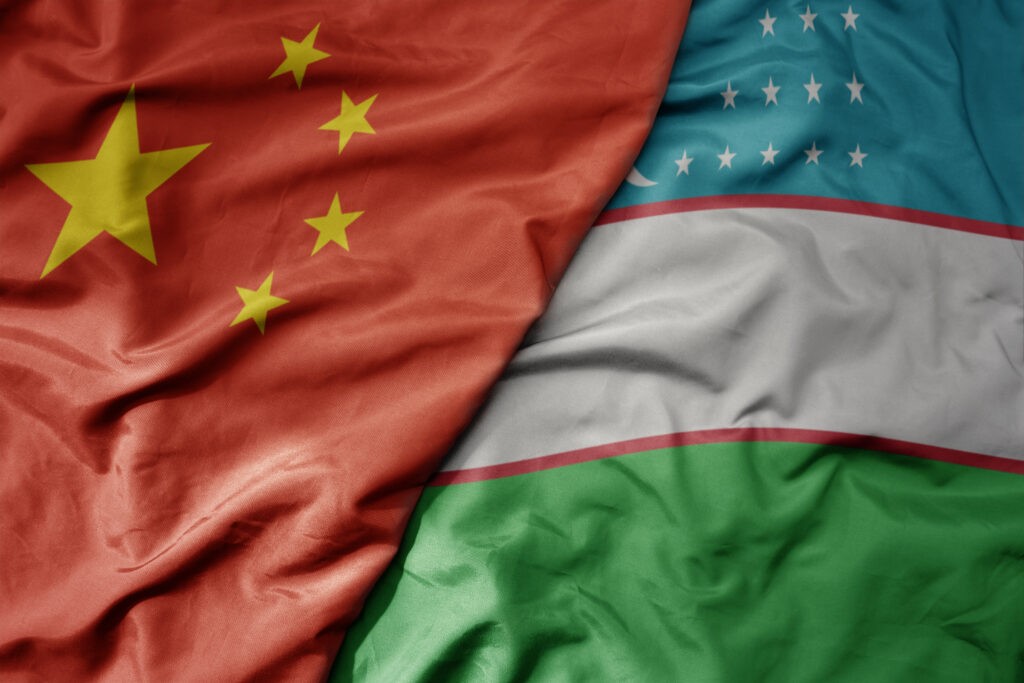
President Mirziyoyev Meets Xi Jinping on State Visit to China

Late on Tuesday night, the President of Uzbekistan’s press service reported that the head of state’s plane had landed at Shoudou International Airport, where he was greeted by China’s Minister of Culture and Tourism, Sun Yeli and other officials.

The president’s state visit started on Wednesday with a meeting with the Premier of the State Council, Li Qiang, wherein they discussed the expansion of economic interaction, participation of Chinese companies in privatization in Uzbekistan, increasing the number of flights, and other issues. Many important points were raised at the meeting, such as the 50% increase in trade turnover between China and Uzbekistan over the past year, reaching $14 billion, and the volume of Chinese investment in the Uzbek economy exceeding this same figure. The two parties set their sights on making this figure reach $20 billion.

As planned within the framework of the state visit, Mirziyoyev also held meetings with a number of major Chinese corporations important for Uzbekistan. Jin Liqun, President of the Asian Infrastructure Investment Bank (AIIB), discussed the expansion of strategic partnership, Dai Houliang, Chairman of the CNPC oil and gas corporation, talked about the implementation of promising projects in Uzbekistan on the construction of underground gas storage facilities and modernization of gas transportation systems, drilling technologies and the training of specialists, and Xi Guohua, head of the Chinese corporation CITIC, discussed the expansion of the portfolio of joint projects.

Mirziyoyev also received Wu Fulin, Chairman of the Export-Import Bank of China, to discuss the bank’s plan to open a regional office in Tashkent and prepare new promising projects for the development of transport and social infrastructure, industry, and in the private sector.

At the main event of the visit, Mirziyoyev and Chinese President Xi Jinping signed a document which was described on President Mirziyoyev’s website as made possible by a “powerful breakthrough in bilateral relations” in recent years. The agreement includes cooperation in the field of environmental protection; technical and economic cooperation; cooperation in the development of human resources; cooperation between state scientific research institutions; cooperation in the field of teaching the Chinese language; a protocol on deepening cooperation on China-Central Asia-Europe railway and the development of cooperation in the field of new electric vehicles; cooperation in the field of poverty reduction; a protocol on further strengthening of scientific and technical cooperation; on cooperation in the field of standardization, etc.

The two sides agreed to continue to comprehensively strengthen mutually beneficial cooperation in various fields and further enrich their strategic partnership.


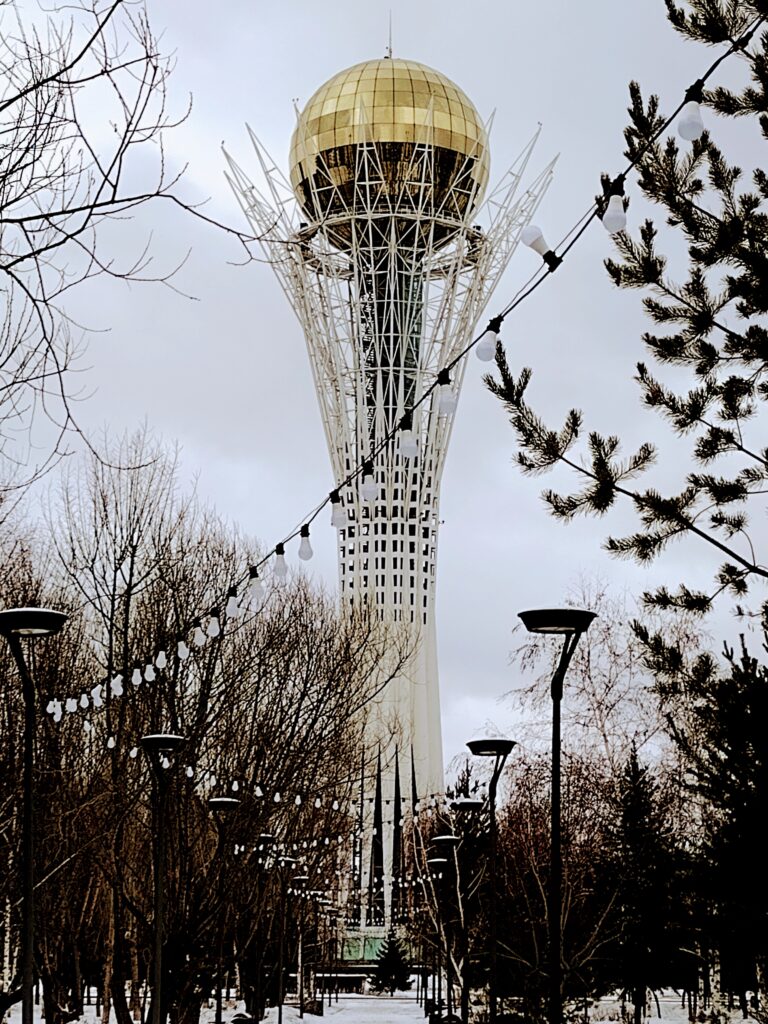
Negotiations on Syria Have Started in Kazakhstan

The 21st meeting of the Astana process on Syria has started in the capital of Kazakhstan. The two-day round of negotiations will continue until January 25th. The main agenda of the meeting is the development of the regional situation around Syria, efforts for a comprehensive settlement in the SAR, the humanitarian situation, and mobilization of the international community to promote post-conflict reconstruction of Syria and others.

Delegates from the guarantor states of Russia, Turkey, Iran, the Syrian Government and the Syrian opposition are taking part in the negotiations, whilst representatives from Jordan, Iraq, and Lebanon are acting as observers.

Last June, Astana hosted the 20th meeting on Syria, wherein representatives of the Ministry of Foreign Affairs of Kazakhstan proposed that the meeting be the last in the “Astana Process” framework, stating that the task was fulfilled and all of its goals had been realized. However, earlier this week it emerged that Kazakhstan received a collective appeal from the participants in the process to resume negotiations.

The Foreign Ministry of Kazakhstan noted that Astana had not been chosen as a platform for these negotiations by chance, but because it was convenient both politically and geographically for all of the participants, whilst also enhancing Kazakhstan’s standing on the global stage.

The head of the delegation from Russia, Alexander Lavrentiev, stated that Russia was one of the initiators of the resumption of this format of negotiations. “We, the guarantor countries of the ‘Astana Process’ on Syria studied this issue and came to the conclusion that Astana should remain the host platform,” Lavrentiev said. “There was a joint request from the three countries to the leadership of Kazakhstan – Turkey, Iran and Russia.”

Lavrentiev also noted how Kazakhstan’s activity in the international arena is expanding, drawing attention to the nation’s joining the UN mission in the Golan Heights. “There, peacekeepers from our Rosgvardiya also maintain stability,” he stated. “I believe that cooperation between our countries will expand and will be useful in this area, as well. Therefore, I believe that the Astana format will remain a very effective mechanism; however, it is obvious that the settlement of the Syrian issue is still far away. The level of trust between the warring parties is still low.”

Kazakh political analysts noted that with its multi-vector policy, conflict resolution is one of the main concepts of Kazakhstan’s foreign policy.”Kazakhstan is a trusted partner,” said the scientific head of the Center for Analytical Studies, Eurasian Monitoring, Taisiya Marmontova. “The Astana platform is seen as safe and effective. Now the Arab-Israeli conflict has escalated, it can be seen as doubly commendable that Syria is making great efforts to find points of contact that will allow the opposing groups to launch a constitutional process and remove Syria from the map of hot spots in the world.”


China and Uzbekistan Cement Strategic Partnership

During their talks in Beijing on January 24th, Chinese president Xi Jinping and his Uzbek counterpart Shavkat Mirziyoyev upgraded ties between China and Uzbekistan to an “all-weather comprehensive strategic partnership”. 

During negotiations the two leaders announced that in recent years a strong breakthrough has been made in bilateral relations, with the strengthening of political dialogue and mutual support on key issues.

The presidents highlighted the growth in mutual trade, as well as economic and investment cooperation, with the volume of Chinese investments in the economy of Uzbekistan having grown fivefold and the number of joint ventures having tripled in recent years.

It was noted that at the end of last year two new solar power plants with a capacity of 1000 megawatts were put into operation in Uzbekistan with the participation of Chinese companies. 

Mr Mirziyoyev welcomed new agreements on expanding financial instruments to support investment projects in Uzbekistan, as well as the decision of the Export–Import Bank of China to open a regional office for Central Asia in Tashkent.

The leaders welcomed the intensification of exchanges between the regions of Uzbekistan and the provinces of China. To coordinate cooperation in this direction, they have agreed to establish the Council of Regions of Uzbekistan and China.

The Chinese and Uzbek presidents also emphasized the importance of bringing forward the start of construction work for the China-Kyrgyzstan-Uzbekistan railway, which is designed to be an important component of the transcontinental transport and transit route as part of the Belt and Road Initiative.

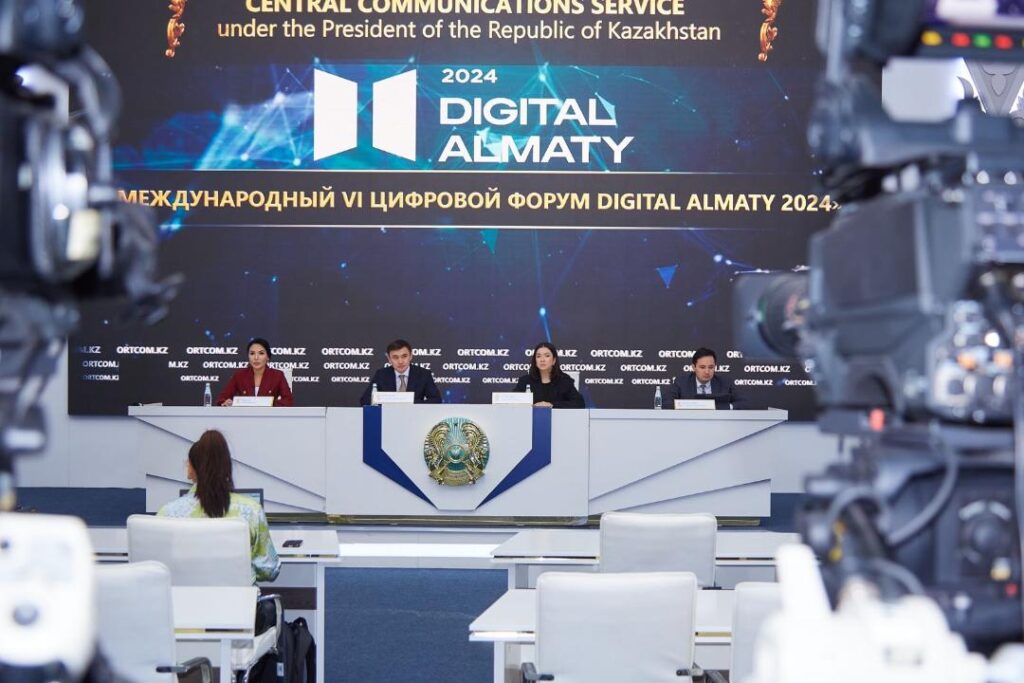
Digital Almaty Forum To Be Held In February

From February 1st to 3rd Kazakhstan’s business capital, Almaty, will host the Digital Almaty 2024 forum, entitled “Industry X: The Digital Development of the Future”. 

Now in its sixth year, the forum will bring together government officials from Shanghai Cooperation Organization (SCO) and Eurasian Economic Union (EEU) countries, leading experts, and entrepreneurs from around the world, said the Kazakh Ministry of Digital Development, Innovation, and Aerospace Industry, one of the forum’s organizers.  

Ersultan Ermanov, director of the ministry’s Department for Development of the Information Technology Industry, said that international technology parks from Belarus, China, India, Iran, Kyrgyzstan, Russia, and Uzbekistan will participate in the Digital Almaty forum. “The participation of their delegations will help lay the foundation for future fruitful cooperation, discuss current trends in the field of digital technologies, as well as the possibilities of their application to solve social, economic and environmental problems. Such events have a very positive impact on the country’s image,” Mr Ermanov said.

The forum will also include an exhibition of Kazakhstan’s largest subsoil users, technology parks, and technology companies, which will share experience and information about projects in the IT ecosystem. More than 30,000 people are expected to attend the three-day digital event.

As part of the forum, an Industry 4.0 Startup Battle is planned for February 3rd — a large-scale battle for the title of the best industrial startup, with a total prize fund of $150,000. This year, startups will compete for the title of “Best Startups in Industry 4.0” in the areas of Digital Oil Field, ESG, and Smart Mining.

The organizers of Digital Almaty 2024 are the Ministry of Digital Development, Innovation, and Aerospace of Kazakhstan, the Ministry of Foreign Affairs of Kazakhstan, Akimat (municipality) of Almaty, and Tech Garden.