• KGS/USD = 0.01144 0%
  • KZT/USD = 0.00194 -0%
  • TJS/USD = 0.10896 -0%
  • UZS/USD = 0.00008 0%
  • TMT/USD = 0.28571 0.28%
  • KGS/USD = 0.01144 0%
  • KZT/USD = 0.00194 -0%
  • TJS/USD = 0.10896 -0%
  • UZS/USD = 0.00008 0%
  • TMT/USD = 0.28571 0.28%
  • KGS/USD = 0.01144 0%
  • KZT/USD = 0.00194 -0%
  • TJS/USD = 0.10896 -0%
  • UZS/USD = 0.00008 0%
  • TMT/USD = 0.28571 0.28%
  • KGS/USD = 0.01144 0%
  • KZT/USD = 0.00194 -0%
  • TJS/USD = 0.10896 -0%
  • UZS/USD = 0.00008 0%
  • TMT/USD = 0.28571 0.28%
  • KGS/USD = 0.01144 0%
  • KZT/USD = 0.00194 -0%
  • TJS/USD = 0.10896 -0%
  • UZS/USD = 0.00008 0%
  • TMT/USD = 0.28571 0.28%
  • KGS/USD = 0.01144 0%
  • KZT/USD = 0.00194 -0%
  • TJS/USD = 0.10896 -0%
  • UZS/USD = 0.00008 0%
  • TMT/USD = 0.28571 0.28%
  • KGS/USD = 0.01144 0%
  • KZT/USD = 0.00194 -0%
  • TJS/USD = 0.10896 -0%
  • UZS/USD = 0.00008 0%
  • TMT/USD = 0.28571 0.28%
  • KGS/USD = 0.01144 0%
  • KZT/USD = 0.00194 -0%
  • TJS/USD = 0.10896 -0%
  • UZS/USD = 0.00008 0%
  • TMT/USD = 0.28571 0.28%
09 December 2025

Infrastructure development: Qatari investors see prospects in Tajikistan

During a state visit to Qatar, Tajik president Emomali Rahmon met with Ahmad Muhammad Tayyib, the head of investment at the Qatari company Diyori, to discuss the implementation of the ‘Diar Dushanbe’ construction project.

Qatari companies see prospects for investing in Tajikistan’s tourism infrastructure and social facilities. During the meeting with Mr Rahmon the parties expressed the need for timely realization of the next stages of construction of the project. The Diar Dushanbe project was identified as a “5-star multifunctional complex”, which emphasizes its importance for the development of the region.

Diar Dushanbe will have an autonomous system for water and energy supply. It will also include business and shopping centers, restaurants, cafes and apartments.


Year of Kazakhstan Tourism in China to Begin in March

On January 22nd, Kazakhstan’s minister for tourism and sports, Ermek Marzhikpayev, discussed with his Chinese counterpart, Sun Yeli, plans for holding the ‘Year of Kazakhstan Tourism in China’ in 2024, the Kazakh Ministry of Tourism and Sports has reported. During the meeting, the Kazakh Ministry of Tourism and Sports presented the concept for the Year of Kazakhstan Tourism, which includes a number of large events in major Chinese cities.

This year was declared the ‘Year of Kazakhstan Tourism in China’ during an official visit to China in 2023 by Kazakhstan’s president Kassym-Jomart Tokayev. The official opening of the Year of Tourism is scheduled for the end of March, and in total more than 25 different events are planned. “China is one of the priority tourism markets and partners for Kazakhstan. This is due to the geographical location of the two countries and deep historical ties along the Silk Road. Today, the tourist flow between our countries is returning to pre-pandemic levels,” Mr Marzhikpayev said.

China was second on the list of countries whose citizens visited Kazakhstan in 2023, behind only Russia. According to official statistics, over the first nine months of last year more than 75,000 Chinese tourists stayed in Kazakh hotels, while over 200,000 visitors from China came to Kazakhstan overall.

With the introduction of a visa-free regime for Chinese citizens from November 10th last year, and the planned increase in the number of direct flights between Kazakhstan and China to 30 per week this year, a further increase in the tourist flow from China is expected, the ministry said.

Kazakhstan Seeks FAO Support in Promoting Exports of Aport Apples

During his official visit to Italy on January 18th, President Kassym-Jomart Tokayev met with Director General of the Food and Agriculture Organization of the United Nations (FAO), Qu Dongyu. Tokayev and the FAO head attended a presentation of the famous Kazakh aport apples as part of the FAO’s One Country One Priority Product program, the Kazakh Ministry of Agriculture reported.

“Kazakhstan is widely known as the birthplace of apples,” the President said. “Aport apples grow in the vicinity of Almaty, the largest metropolis in our country and my hometown. Translated from Kazakh, ‘Almaty’ means ‘place of abundance of apples.’”

Aport apples are distinguished by their large size, distinct smell, and their succulent nature. One of the main landmarks in Almaty, the first sight to greet visitors to the Kok-Tobe Mountain which looms over the city is a granite statue of an apple with water gushing from its core.

Tokayev expressed his hope that Kazakhstan’s initiative to promote aport exports on world markets will be supported by the FAO.

In 1970, there were 3.8 million aport trees in Kazakhstan, but by 1984, only 1.4 million remained. In 2012, scientific research began on the revival and rejuvenation of the variety, including the establishment of an experimental garden of aport grafted onto Sievers apple trees, where in 2023, Kazakh scholars harvested the first large fruits weighing 400-500 g.

FAO’s One Country One Priority Product program was launched in September 2021. It focuses on initiatives for the green development of high-value agricultural products with unique qualities and special characteristics associated with a geographic region, agricultural practices, and cultural heritage. Other countries with their own distinct products also participate in the program. For example, Turkey is represented by figs, Moldova by table grapes, and Uzbekistan by cherries.

New Trade and Logistics Center Opened on Kazakhstan-China Border

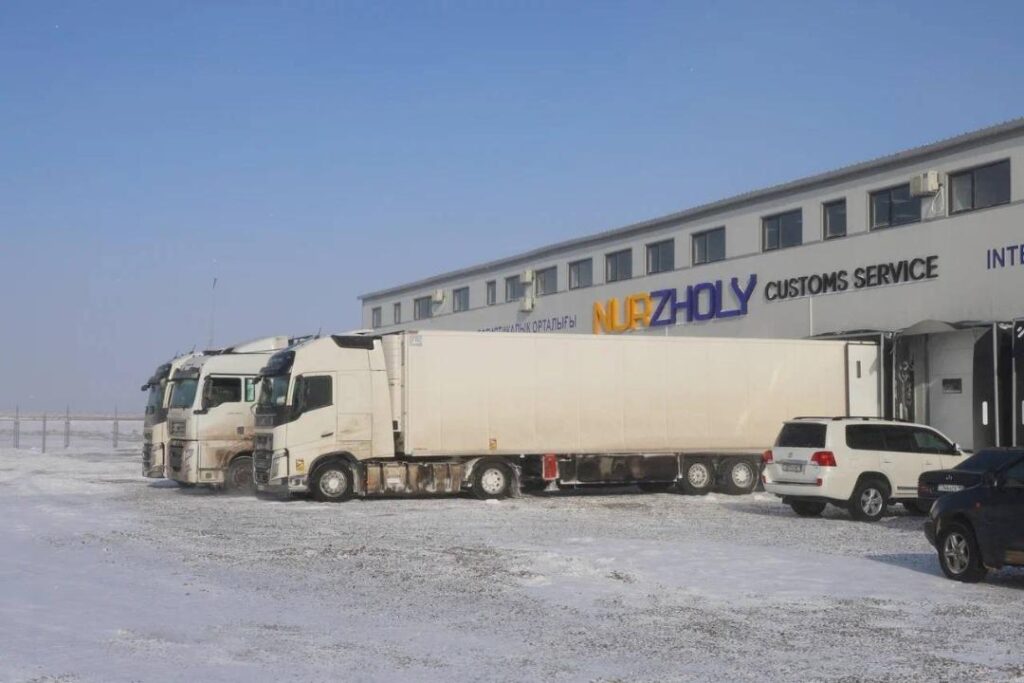
On January 19th, a new international trade and logistics center began operations on the Kazakh-Chinese border near the village of Dostyk, with the aim of improving cross-border logistics infrastructure and increase the capacity of the Alakol customs post, the Ministry of Transport of Kazakhstan reported.

President Kassym-Jomart Tokayev has repeatedly spoken about speeding up the passage of freight trucks across the Kazakh-Chinese border.

“To fulfil the instructions given by the head of state, we are planning to open more such hubs for the processing and storage of cargo. The new transport and logistics center is the first hub on [Kazakhstan’s] eastern borders,” Vice Minister of Transport, Maksat Kaliakparov said at the opening ceremony of the new logistics center.

The new logistics center will increase the capacity of the Alakol customs post from 200 to 600 trucks per day, thereby increasing the daily cargo turnover from 4,000 to 12,000 tons. In annual terms, cargo turnover will increase from one million to three million tons.

“Currently, 180 vehicles pass through the Alakol customs post in one direction. This year we plan to complete the modernization of this post and increase the cargo flow to 500 vehicles,” said Zhandos Duysembiev, Chairman of the State Revenue Committee of the Ministry of Finance of Kazakhstan.

The new logistics center is located on an area of 13.5 hectares, 3.5 of which are occupied by warehouse premises and infrastructure, whilst 10 hectares are allocated for the parking of freight vehicles. For the next three years, the logistics center has been transferred to the management of the state company, Nur Zholy customs services, which is wholly-owned by the State Revenue Committee.

Kazakhstan Invites German Businesses to Invest in Its Agriculture Sector

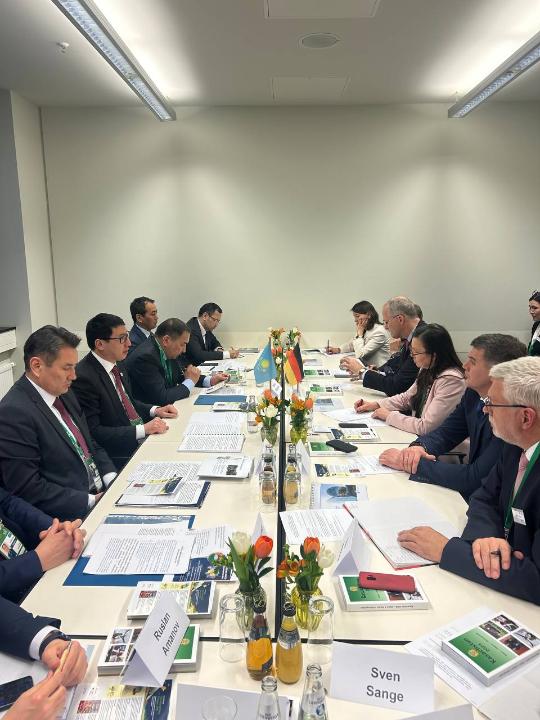
The Deputy Minister of Agriculture of Kazakhstan, Erbol Taszhurekov spoke about the prospects for expanding cooperation between agricultural producers in Kazakhstan and Germany during the round table event, Development of the agricultural sector of Kazakhstan: opportunities for investors, on January 19th. The meeting of representatives of agribusinesses from the two countries took place within the framework of the World Forum on Food and Agriculture and the Green Week exhibition, which is currently taking place in Berlin, the Ministry of Agriculture of Kazakhstan reported.

In his remarks, Taszhurekov pointed out that there is significant unrealized potential for the building of bilateral partnerships in the agricultural sector, and proposed intensifying contacts between ministries, industry associations, and agricultural producers of Kazakhstan and Germany. Taszhurekov named land resources and human capital among the key factors in the investment attractiveness of Kazakhstan’s agro-industrial sector.

The Kazakh side also indicated their interest in developing joint projects in the deep processing of grain, processing of oilseeds, potatoes, sugar beets, fruits and vegetables, meat and milk, as well as in fish farming and baby food production.

According to the National Bank of Kazakhstan, as of the end of 2023 the gross inflow of foreign direct investment in Kazakhstan’s agriculture amounted to $39.9 million.

From Steppe to Subcontinent: The Indianisation of the Huns and Śakas from Kazakhstan

The historical connections between Kazakhstan and India span thousands of years, with the migration of Huns and Śakas from Central Asia to India playing a significant role in shaping the history of these two nations. The Huns, first mentioned by Roman historian Tacitus in the late first century A.D., originated near the Caspian Sea, in present-day Kazakhstan. They migrated to India, where they had a profound influence on the local population. Notable among the Huns was Toramana, who, around 500 A.D., launched attacks on India, eventually settling in Malwa in Central India and establishing himself as a powerful ruler.

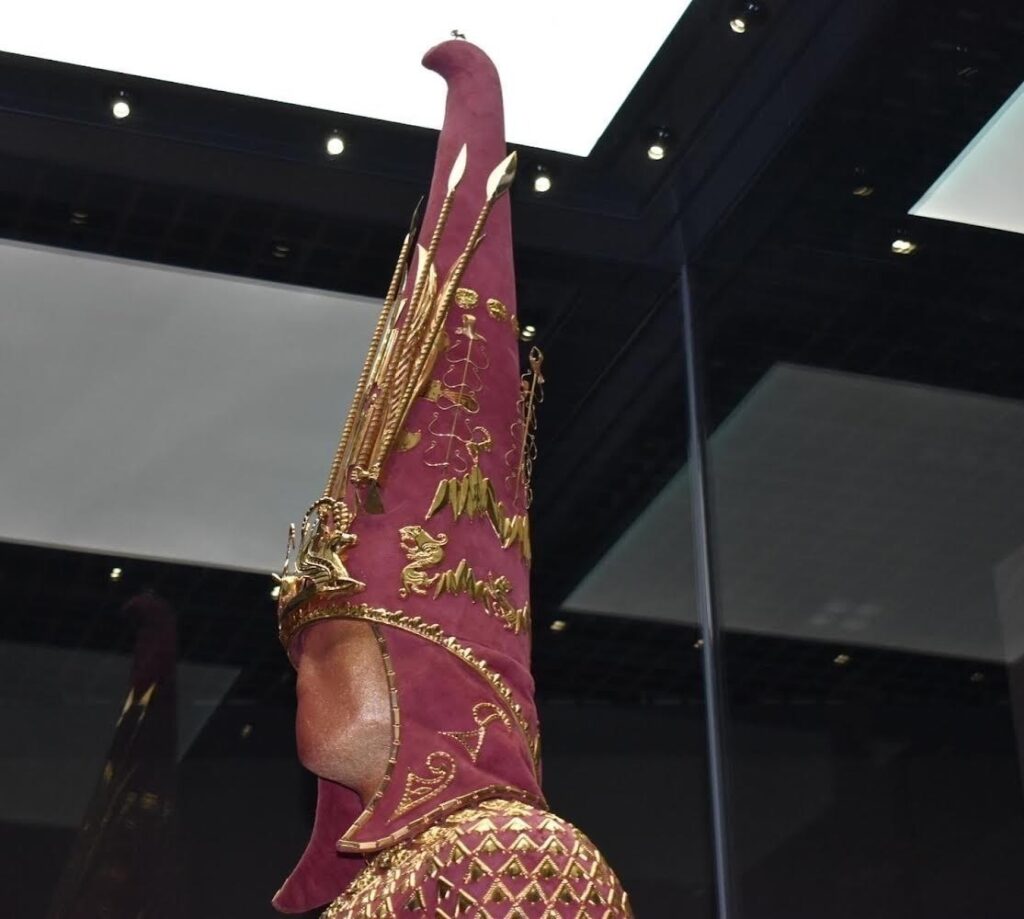
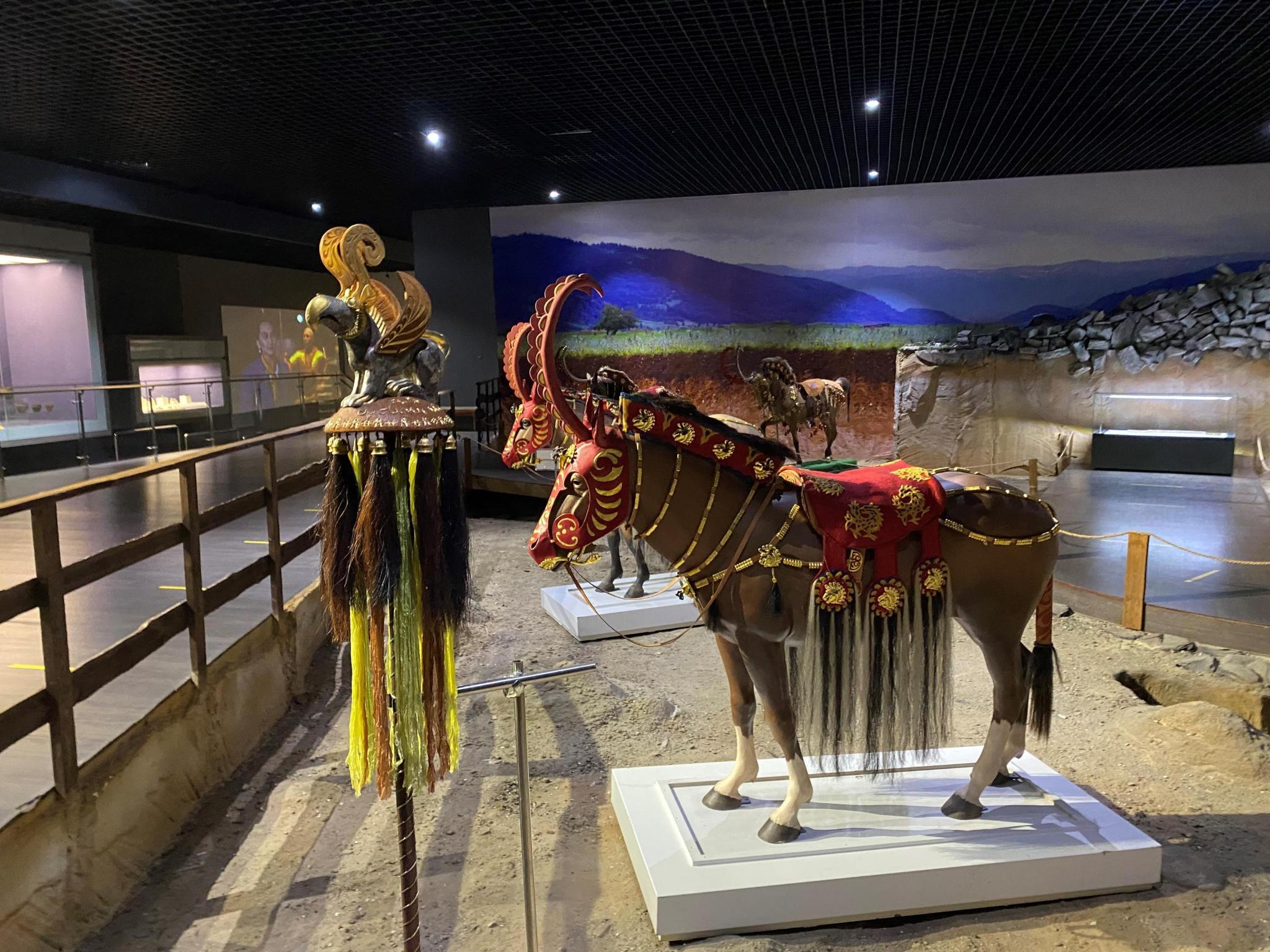
These historical ties are evident in archaeological finds in Kazakhstan, such as the 45 Hun burial mounds discovered near Almaty in the valley of the River Kegen in 2015. Similarly, the Saka people, another group of nomadic Eastern Iranian peoples, left their mark in the region with several burial mounds located near Almaty. The most notable among these was found in 1969, when the Kazakh archaeologist, Kemal Akishev, discovered a teenage Saka prince adorned with almost 4,800 gold items in an Issyk kurgan. Known as the “Golden Man,” the figure was adopted as one of the symbols of modern Kazakhstan, with a likeness standing atop the Independence Monument on the central square of Almaty.

In India, the influence of the Huns is palpable in places like Gwalior, a metropolis recently designated as a Creative City of Music by the UNESCO Creative Cities Network. The earliest historical record of Gwalior is an inscription by the Hun ruler Mihirakula, the second and last Alchon Hun king of the north-western region of the Indian subcontinent between 502 and 530 CE, referencing his father, Toramana, as a “a ruler of the earth.” Mihirakula was a patron of Shaivism, and his reign left a lasting impact on the Indian landscape.

The historical connections between Kazakhstan and India continue to be celebrated today, with India being one of the first countries to recognize Kazakhstan’s independence. The two countries actively cooperate under various multilateral fora, including the Conference on Interaction and Confidence Building Measures in Asia (CICA), the Shanghai Cooperation Organization (SCO), and United Nations organizations.

This historical connectivity is deeply rooted in the migration of two nomadic groups, the Huns and Śakas, from what is now known as Kazakhstan to India. Both these communities, though distinct in their origins – with the Huns being Turanic and the Śakas of Iranian descent – migrated to India, embraced the local culture, and significantly influenced the country’s history and development.

The first Saka king in India was Maues, also known as Moga, who established Saka dominion in areas covering Gandhara, the Indus Valley, and regions that are part of present-day Afghanistan. The Śakas ruled over vast territories, including the north-west frontier, Punjab, Sindh, Kashmir, western Uttar Pradesh, Saurashtra, Kathiawar, Rajputana, Malwa, and the north Konkan belt of Maharashtra.

Saka ruler Nahapana held sway over Kathiawar and neighboring territories, including Ujjain, from A.D. 78 to about A.D. 125. Another Saka king, Rudradaman I, embraced Hinduism, married a Hindu woman, and supported Sanskrit literature and cultural arts. His reign saw the Yavaneshwara penned, versification of an earlier translation into Sanskrit of a Greek text thought to have been written around 120 CE.

The Gupta warrior Chandragupta II defeated Saka king Rudrasimha III, annexing his kingdom and taking on the title Vikramaditya, marking the end of Saka-Kshatrapa rule in western India. Over time, many Huns and Śakas assimilated into the larger Indian population, with many converting to Hinduism and contributing to the preservation and propagation of Indian culture. Notorious for their fierce warrior skills, the Huns also left an indelible mark on India’s history.

Today, the historical connections between Kazakhstan and India serve as a strong foundation for their bilateral relations. As these two nations continue to strengthen their ties, the influence of the Huns and Śakas remains a testament to their shared history and mutual cultural enrichment.

Arunansh B. Goswami is an author, historian, and advocate in Supreme Court of India.