• KGS/USD = 0.01144 0%
  • KZT/USD = 0.00194 -0%
  • TJS/USD = 0.10896 -0%
  • UZS/USD = 0.00008 0%
  • TMT/USD = 0.28571 0.28%
  • KGS/USD = 0.01144 0%
  • KZT/USD = 0.00194 -0%
  • TJS/USD = 0.10896 -0%
  • UZS/USD = 0.00008 0%
  • TMT/USD = 0.28571 0.28%
  • KGS/USD = 0.01144 0%
  • KZT/USD = 0.00194 -0%
  • TJS/USD = 0.10896 -0%
  • UZS/USD = 0.00008 0%
  • TMT/USD = 0.28571 0.28%
  • KGS/USD = 0.01144 0%
  • KZT/USD = 0.00194 -0%
  • TJS/USD = 0.10896 -0%
  • UZS/USD = 0.00008 0%
  • TMT/USD = 0.28571 0.28%
  • KGS/USD = 0.01144 0%
  • KZT/USD = 0.00194 -0%
  • TJS/USD = 0.10896 -0%
  • UZS/USD = 0.00008 0%
  • TMT/USD = 0.28571 0.28%
  • KGS/USD = 0.01144 0%
  • KZT/USD = 0.00194 -0%
  • TJS/USD = 0.10896 -0%
  • UZS/USD = 0.00008 0%
  • TMT/USD = 0.28571 0.28%
  • KGS/USD = 0.01144 0%
  • KZT/USD = 0.00194 -0%
  • TJS/USD = 0.10896 -0%
  • UZS/USD = 0.00008 0%
  • TMT/USD = 0.28571 0.28%
  • KGS/USD = 0.01144 0%
  • KZT/USD = 0.00194 -0%
  • TJS/USD = 0.10896 -0%
  • UZS/USD = 0.00008 0%
  • TMT/USD = 0.28571 0.28%
09 December 2025

Kazakhstan’s GDP Poised for a 36.8% Boost by 2028

Kazakhstan, the largest landlocked country in the world, has emerged as a regional economic powerhouse in Central Asia, according to the International Monetary Fund’s (IMF) World Economic Outlook. The report anticipates that by 2028, Kazakhstan’s GDP will surge to $354.7 billion, marking an impressive growth of 36.8%, or a rise of $95.4 billion, compared to its position in 2023.

This projection underscores the resilient performance of Kazakhstan’s economy, which has been steadily improving over the years. As of 2023, the country’s real GDP growth was reported at an annual rate of 4.6%, with total GDP standing at $259.29 billion. Moreover, despite global economic challenges, Kazakhstan’s economy grew by 5.1% in the first half of 2023, bolstered by robust exports and fiscal stimulus.

However, the IMF cautions that the economic growth is expected to moderate to 3.1 percent in 2024 due to an uncertain economic environment. Despite this prediction, the resilience showcased by Kazakhstan’s economy in the face of global disruptions suggests a strong capacity to navigate through potential economic hurdles.

The country’s economic success can be attributed to several factors. Primarily, Kazakhstan has effectively utilized its abundant natural resources, including significant oil reserves, to fuel its economic growth. Furthermore, the government’s commitment to implementing progressive economic policies and fostering a conducive environment for foreign investment has also significantly contributed to the country’s robust GDP growth. On December 4, President Tokayev signed a decree with measures to attract investment into Kazakhstan’s economy and accelerate economic growth.  Tokayev’s agenda of creating a “Just and Fair” state has involved tackling corruption and stabilizing the country through sweeping democratic reforms.

Looking ahead, the predicted growth of Kazakhstan’s GDP to $354.7 billion by 2028 presents an optimistic outlook for the nation and the region. This projection underlines the potential of Kazakhstan’s economy and reaffirms its role as a key player in the economic landscape of Central Asia and the Commonwealth of Independent States.

While the journey towards this ambitious goal will undoubtedly present challenges, the progress made by Kazakhstan thus far provides a solid foundation for continued economic growth and prosperity.
Tajikistan to Achieve Energy Independence and Become Green Country

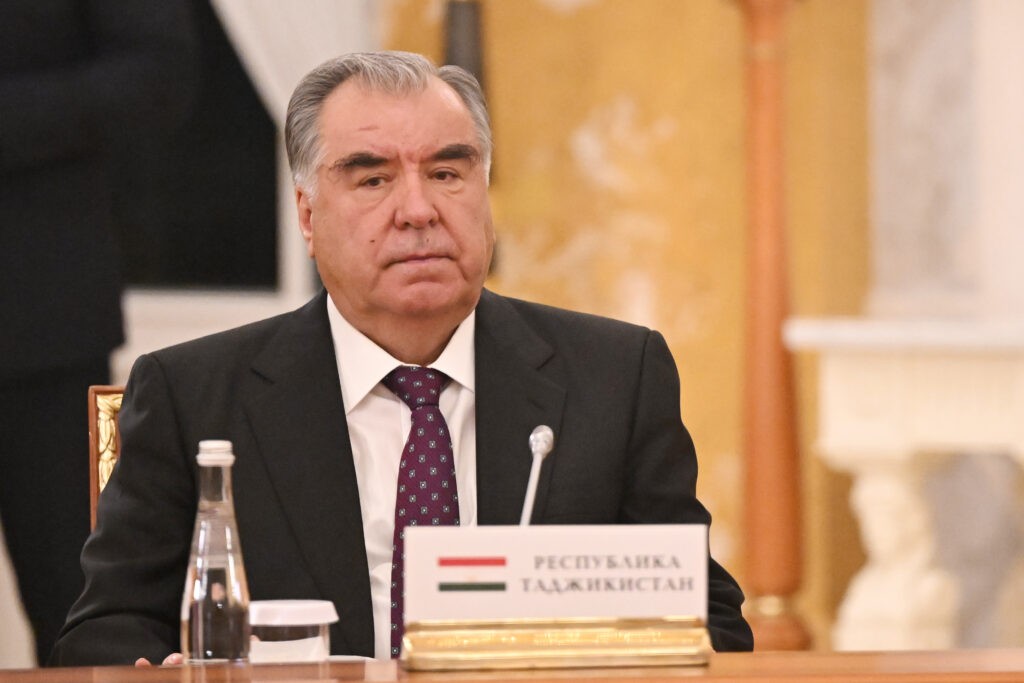
In 2023, Tajikistan’s GDP increased by 8.3% compared to the previous year, and over the past seven years the country’s GDP has grown 1.5-fold while the national economy has developed at an average pace of 7.5%, the President of Tajikistan, Emomali Rahmon stated addressing parliament on December 28th.

The President said that prioritizing the prevention of potential risks to the national economy, making efficient use of available resources, industrialization and creating jobs have been the main priorities of the government in recent years.

Among Tajikistan’s main concerns, the President said, are the establishment of a “green economy,” accelerating the economy’s digitization, developing human resources, raising the competitiveness of domestically produced goods, bolstering exports, and enhancing the standards of social services. Rahmon said that given the abundance of hydropower resources in Tajikistan, the high production capacity of “green energy” and its export, the Government is making confident steps towards achieving its strategic goal of energy independence.

In 2023, Tajikistan’s energy capacity exceeded 6,000 megawatts, and electricity production amounted 22 billion kilowatt-hours, which is 4.8 billion kilowatt-hours or 28% more than in 2017.

Rahmon said that Tajikistan will take urgent measures over the next seven years to increase energy exports up to 10 billion kilowatt-hours taking into account the implementation of CAЅA-1000 power transmission line project and re-connection to the Central Asia energy system. The country will also construct power plants using renewable energy sources and increase the “green energy” production capacity up to 1,000 megawatts by 2030.

With the implementation of these measures, the President said, by 2032 electricity production in the country will be entirely from renewable sources, that is, 100% will be provided by “green energy, and Tajikistan will truly become a green country,” President Rahmon said.

Kazakhstan Remains Regional Leader in Attracting Foreign Investment, Says PM

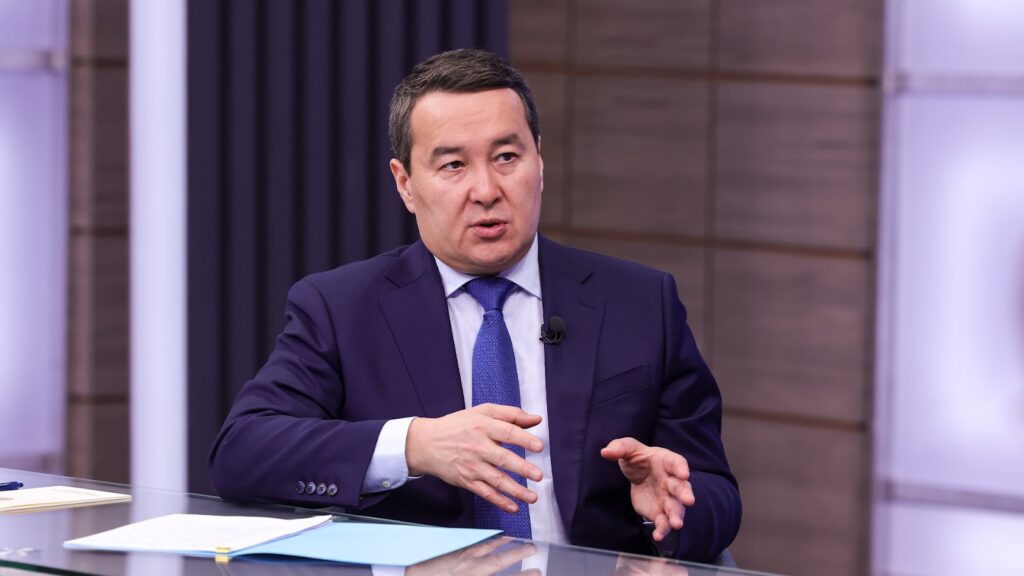
Despite the current global challenges, Kazakhstan remains attractive to foreign investors and is the leader in gross inflow of foreign direct investment in the Central Asian region. Last year, FDI in Kazakhstan grew by 18% and reached $28 billion – a record high for Kazakhstan over the past decade, Prime Minister Alikhan Smailov said in an interview with the 24KZ TV channel.

In his words, $13.3 billion was attracted into the country’s economy in the first half of this year, and about $27 billion is expected by the end of the year. Smailov said this was largely possible thanks to the diplomacy of Kazakhstan’s President Tokayev, who, in the face of complex geopolitical tensions, is consistently strengthening relations with a wide range of influential players including China, Europe, Russia, the U.S., Turkey, and the Arab world.

The Prime Minister also spoke about measures the Government will take to double economic growth in the medium term. “The Government has been given a big task to double the national economy by 2029. In this regard, we will continue to work to stimulate economic activity in the country. We will further reduce inflation and ensure macroeconomic stability,” Smailov said.

The Government also has designs on further improving the investment climate. “Every year, we plan to attract at least $25 billion of foreign direct investment. In the future, a nationwide pool of investment projects will be implemented. Thanks to this, more than 160,000 new jobs will be created,” said the Prime Minister. “All this will allow us to ensure economic growth in the medium term at a level of at least 6%. In general, the order of the Head of State to increase the volume of the national economy to $450 billion will be fulfilled,” Smailov concluded.

“Walking the Silk Road” Chinese Cultural Exhibition Held in Bishkek

A recent exhibition in Bishkek, titled “Walking the Silk Road, Allowing Cultures to Integrate,” centered on the Belt and Road Initiative (BRI) and showcased Chinese culture.

Kyrgyz Deputy Prime Minister Edil Baisalov, Charge d’Affaires of the Chinese Embassy in Kyrgyzstan Li Baojie, representatives from educational institutions of both Kyrgyzstan and China, and business delegates attended the event, as reported by Xinhua.

Deputy Prime Minister Baisalov emphasized the transformative impact of the BRI on the region, including Kyrgyzstan, stating, “It has actually had a huge impact on the political and economic situation around the world.” Charge d’Affaires Li highlighted over a decade of fruitful cooperation between Kyrgyzstan and China within the BRI framework.

Li emphasized the importance of cultural interaction and exchange within the initiative, noting that exhibitions like this provide opportunities for the Kyrgyz people to gain a deeper insight into Chinese traditional culture and customs, fostering stronger mutual understanding.

The exhibition, organized by the Kaifeng Management Committee of the Pilot Free Trade Zone of China (Henan) and the Kyrgyzstan-China Friendship Association, showcased stone carving reflecting the Spring and Autumn period, wood carving themed on “New Year’s Pictures,” and intricate paper-cutting artistry.

Turkmenistan and China to Expand Cooperation in Education

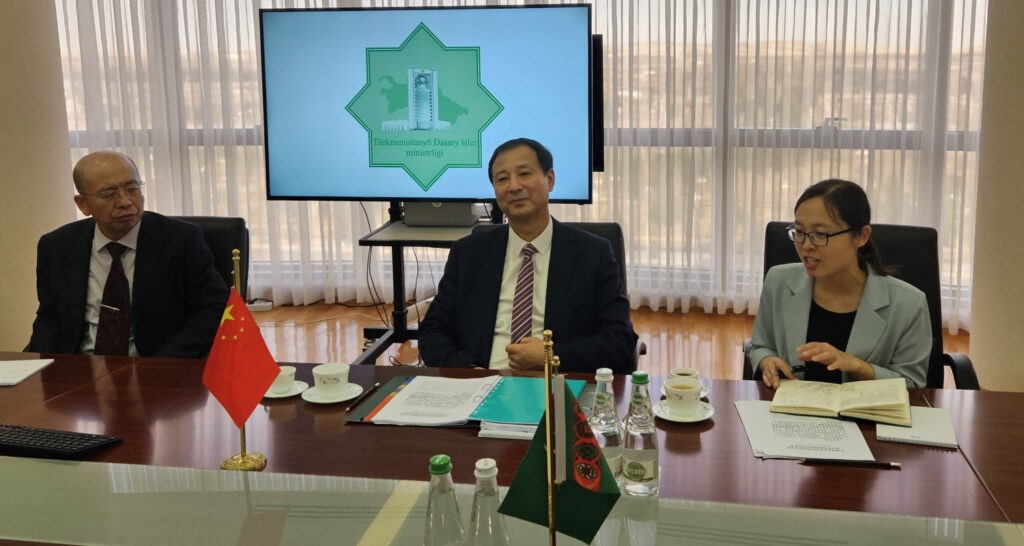
On December 28th, a meeting was held between the Deputy Minister of Foreign Affairs of Turkmenistan, Myahri Byashimova, and the Deputy Minister of Education of China, Sun Yao, who arrived in Ashgabat on a working visit, a Turkmen Government official website stated, stating that the parties noted that today, Turkmen-Chinese relations in terms of a comprehensive strategic partnership are dynamically developing in many directions. It was also stated that relations between Turkmenistan and China in the field of education tend to develop consistently and fruitfully, as evidenced by numerous exchanges of visits by university representatives, joint conferences, seminars, forums and exhibitions.

The parties discussed opportunities to conduct regular short and long-term research and educational programs, courses, and lectures in such areas as medicine, agriculture, ecology, nanotechnology, and political science.

Both sides expressed their confidence that the visit of the Chinese delegation will serve as an effective impetus for strengthening ties between higher educational institutions of Turkmenistan and China.

Kyrgyzstan’s Debt to China: Another lever of Influence?

Stagnation of the world’s economy, decreasing international trade and growing inflation put the spotlight on the issue of returning Kyrgyzstan’s foreign debt, a large part of which is owed to China. The debt is to be repaid sooner or later, but it would make the country sacrifice either its facilities or territory. In both cases, it is a blow on the country’s sovereignty.

Historically, China has been a creditor of countries with high corruption levels, unstable political systems, and nontransparent economies. For instance, Brunei, Namibia, Congo, and Papua New Guinea all have a “hidden” debt to China — more than 10 percent of GDP. Kyrgyzstan’s foreign debt now stands at $5 billion, including $4 billion to China. For comparison, in 2008 Kyrgyzstan’s debt to China was $10 million.

Unlike international financial organizations, such as the IMF and World Bank, China gives loans to Kyrgyzstan on commercial terms that are not disclosed.

The existing debt does not prevent the Kyrgyz government from taking new loans, which leads to increasing debt burden. In Kyrgyzstan, China has financed mainly infrastructure projects, showing more interest in the water and energy sector — one of the main economic and strategic resources of the country. It is not surprising, as in today’s world access to water resources gives additional levers of influence.

A potential project in this sector is construction of the bypass Chui canal-2 and Buruldai reservoir with a total cost of about $140 million. The project’s economic feasibility, its possible environmental impact and other aspects require a comprehensive analysis. Anyway, the project’s implementation would increase the country’s debt burden and give China yet another lever of influence on Kyrgyzstan.

Such projects are not just a matter of money, debts and commitments but also social stability, given the history of relationships between local Kyrgyz population and Chinese investors (for instance, a mass brawl with stoning at Soltan-Sary deposit).

A good example of Beijing using its “soft power” is neighboring Tajikistan, 40 percent of whose $3.2 billion foreign debt belongs to China. Beijing also grants payment deferments on its loans. In exchange, Tajikistan has given thanks to China by ceding 1.1 thousand square kilometers (0.77 percent of its territory) to China in a 2011 border demarcation, supporting China at UN votes, and allowing Chinese companies develop nearly 80 percent of Tajik gold deposits.

With the above in mind, Kyrgyzstan has to think twice before taking new Chinese loans.