• KGS/USD = 0.01144 0%
  • KZT/USD = 0.00194 -0%
  • TJS/USD = 0.10896 -0%
  • UZS/USD = 0.00008 0%
  • TMT/USD = 0.28571 0.28%
  • KGS/USD = 0.01144 0%
  • KZT/USD = 0.00194 -0%
  • TJS/USD = 0.10896 -0%
  • UZS/USD = 0.00008 0%
  • TMT/USD = 0.28571 0.28%
  • KGS/USD = 0.01144 0%
  • KZT/USD = 0.00194 -0%
  • TJS/USD = 0.10896 -0%
  • UZS/USD = 0.00008 0%
  • TMT/USD = 0.28571 0.28%
  • KGS/USD = 0.01144 0%
  • KZT/USD = 0.00194 -0%
  • TJS/USD = 0.10896 -0%
  • UZS/USD = 0.00008 0%
  • TMT/USD = 0.28571 0.28%
  • KGS/USD = 0.01144 0%
  • KZT/USD = 0.00194 -0%
  • TJS/USD = 0.10896 -0%
  • UZS/USD = 0.00008 0%
  • TMT/USD = 0.28571 0.28%
  • KGS/USD = 0.01144 0%
  • KZT/USD = 0.00194 -0%
  • TJS/USD = 0.10896 -0%
  • UZS/USD = 0.00008 0%
  • TMT/USD = 0.28571 0.28%
  • KGS/USD = 0.01144 0%
  • KZT/USD = 0.00194 -0%
  • TJS/USD = 0.10896 -0%
  • UZS/USD = 0.00008 0%
  • TMT/USD = 0.28571 0.28%
  • KGS/USD = 0.01144 0%
  • KZT/USD = 0.00194 -0%
  • TJS/USD = 0.10896 -0%
  • UZS/USD = 0.00008 0%
  • TMT/USD = 0.28571 0.28%
09 December 2025

Raids Target Illegal Medicine Sales in Remote Turkmen Villages

Law enforcement agencies in the Mary Velayat district have initiated crackdowns on citizens engaging in the unauthorized sales of medicines,Radio Azatlyk has reported. While these actions target what authorities deem to be illegal, individuals conducting the trades in remote areas argue that they’re simply filling a crucial gap in essential healthcare access.

Sellers in remote villages assert that they offer commonly used medications like analgin and paracetamol, which, to their understanding, don’t require a doctor’s prescription. These traders claim to have procured these medicines from city pharmacies and to simply be reselling them at a slight markup in areas lacking facilities.

“Our village lacks pharmacies. Ambulance services have substantial delays, sometimes failing to arrive. People turn to us for antipyretics when they’re stricken with a fever at night. We offer a service that pharmacies don’t provide. We aren’t breaking any laws,” emphasized one villager engaged in medicine sales.

Another trader echoed this sentiment, stating, “We’re simply providing a service to our community.” Moreover, these merchants assert that they inform local district police officers about their activities, believing this communication suffices as adherence to the regulations.

However, plainclothes police officers have been actively involved in operations targeting this unauthorized trade. During these raids, authorities confiscate medicines and detain the traders, issuing substantial fines.

The scenario underscores a wider issue of inadequate medical facilities and pharmacy access in rural areas. Rural residents complain about delayed and inadequate ambulance services, exacerbating their struggle to access essential medical aid. Shortages of crucial medicines in both rural and urban pharmacies have been recurrent issues in Turkmenistan. Inconsistent availability of medications was reported earlier this year, highlighting a systemic challenge. Additionally, instances of medical professionals capitalizing on pharmaceutical shortages for extra profits surfaced in December of the previous year.

Trading medicines in Turkmenistan requires the possession of a valid license, and according to local legislation, sales should be conducted exclusively by individuals with a secondary or higher pharmaceutical education. This tension between unauthorized sales and healthcare gaps in remote regions presents a complex challenge in need of resolution.


Investigation Launched into Mobile Operators

The Agency for the Protection and Development of Competition of the Republic of Kazakhstan has established that in 2023, a significant price increase from 7.7% to 57.3% was recorded according to the tariff plans of mobile operators, who increased the cost of services provided on more than 30 plans with a monthly subscription fee.

“Taking into account paragraph 3 of Article 199 of the Entrepreneurial Code in connection with the repeated detection of signs of anti-competitive coordinated actions in the calendar year, the Agency has now launched investigations against mobile operators Kcell JSC, MT–S LLP (Tele2/Altel) and Kar-Tel LLP (Beeline) under Article 170 of the Entrepreneurial Code,” the Agency for the Protection and Development of Competition of the Republic of Kazakhstan said in a statement.

Earlier, the Agency had detected signs of anti-competitive coordinated actions by mobile operators in setting the cost of calls per minute and SMS services. In this regard, notifications were sent to mobile operators to reasonably reduce their pricing. The Agency stated that in case of non-compliance by the operators within an established time-frame, an investigation would be launched.

Tajikistan in Penultimate Place in English Language Proficiency

According to Education First, Tajikistan ranked 112th among 113 countries ranked in English language proficiency ratings, followed solely by the Democratic Republic of the Congo, Radio Ozodi has reported. In 2020, Tajikistan ranked last.

In the report, Russia ranks 41st, Kyrgyzstan – 90th, Uzbekistan – 93rd, and Kazakhstan – 104th. The Netherlands, Singapore and Austria top the list.

The International Educational Center for English Language Education First was founded in 1965 in Sweden. EF is the largest private educational institution in the world, with 600 branches in more than a hundred countries.

Contrary to the report, representatives of the Ministry of Education and Science of Tajikistan believe that in recent years the level of English language proficiency has improved in the country. The press secretary of the Ministry of Education and Science, Navruz Jumamurod, said that English language learning is well-established in the country and a vivid proof of this is the participation of almost 8,000 students from Tajikistan in international Olympiads. “This is also one of the indicators that participants from Tajikistan speak English well,” he noted.

Are the teaching methods outdated?

In the capital’s school No. 55, English is taught using the old method – reading and translating texts, as well as using the Q&A format. In this school, ten teachers teach 2,093 students, with English lessons taking place twice a week.

Matluba Makhmadkulova, the deputy director of the school, said that in recent years the interest of schoolchildren in learning English has grown. “Students are divided into groups and study lessons in special classes,” she added.

In this school, as in many others in the country, the method of teaching English has not changed much since Soviet times and is often reduced to reading and translating texts. But many modern teachers consider such a technique to be ineffective.

English teacher Bakhtiyor Davlatmuradov mainly teaches at private language centers. In his opinion, it is important to use new methods when teaching English.

“The main problem is ignorance about some of the innovations of modern teaching. Another problem is the limited use of modern technology in the classroom. Yes, teachers are trying very hard, but now it’s the 21st century we need to use technology. For example, you can show some videos, that is, make the lesson interactive,” he explained.

“A lot depends on the young people themselves”

Mukhaye Nozimova, who taught English in Tajikistan for many years, is now studying modern ways of teaching the language in London. According to her, to improve the situation it is necessary to reform the country’s education system, though on the other hand, she believes the level of English-language proficiency depends on the young people themselves.

“Today, there are many online classes, and even free online courses on social networks which allow young people to learn English or any other language on their own,” she said.

Tajik youth prefer to study English in private educational centers, but throughout the country not everyone has the means to study at such institutions.

According to official information, today more than 8,000 instructors teach English in schools. Due to low salaries, however, many teachers prefer to work not in general education schools, but in international organizations, or to opt for a career as a translator.

Group-IB Opens First Digital Crime Resistance Center in Central Asia

TASHKENT – On December 26th, Group-IB, a leading force in cybersecurity technology combating digital crime, revealed the inauguration of its pioneering Digital Crime Resistance Center (DCRC) in Central Asia. Located in Tashkent, this state-of-the-art facility marks Group-IB’s expansion strategy, aimed at proactively confronting cyber threats worldwide, notably those originating from Russian-speaking hacker communities.

Choosing Tashkent for their newest DCRC underlines Group-IB’s recognition of Uzbekistan’s economic significance and its potential to emerge as a global cybersecurity hub. The memorandum signed between the Central Bank of Uzbekistan and Group-IB in August 2023 further emphasizes the collaboration to counter cyberattacks and elevate cybersecurity measures.

Group-IB plans to fortify its engagement with Uzbekistan’s higher education sector, emphasizing investment in the country’s youth and its tech industry.

Dmitry Volkov, CEO of Group-IB, highlighted, “Selecting Tashkent, Uzbekistan as the site for our fifth Digital Crime Resistance Center globally is a strategic move to heighten our understanding of Russian-speaking threat actors. Cybercrime knows no borders, necessitating a comprehensive approach. By establishing a DCRC in Tashkent, Group-IB aims to elevate cybersecurity standards not only in Uzbekistan but across the broader Central Asian region.”

Uzbekistan’s Economy Resilient to Global Challenges, Says IMF

According to the IMF in analysis posted on their website, Uzbekistan’s economy has demonstrated remarkable resilience to recent global challenges. Following geopolitical shocks, the economy saw an influx of migrants and a large increase in remittances in 2022, boosting domestic demand. This, coupled with higher external demand, led to real GDP growth of 5.7% in 2022, the head of an International Monetary Fund staff team said in a statement following their visit to Uzbekistan earlier this month.

While remittances have fallen this year to the trend prevailing prior to Russia’s war in Ukraine, a sizable fiscal expansion, and high wage and export growth are expected to sustain real GDP growth at 5.7% in 2023. Strong imports and declining remittances will contribute to a higher external current account deficit this year. International reserves are expected to remain ample at eight-and-a-half months of prospective imports. By the end of 2023, the 12-month inflation rate is projected to decline by more than 3% compared to the same period last year, to 9%, helped by a value-added tax rate cut, and lower international food and energy prices.

The IMF says the outlook for 2024 remains positive, and while risks remain, growth is projected to remain above 5%.

“Preserving macro-financial stability and continuing structural reforms are key to bolstering resilience and sustaining robust economic growth amidst the challenging current global context,” the statement said. Accelerating World Trade Organization negotiations and cooperating with neighboring countries to improve transport routes will reduce transportation costs and open new markets for Uzbekistan’s products, the IMF statement concludes.

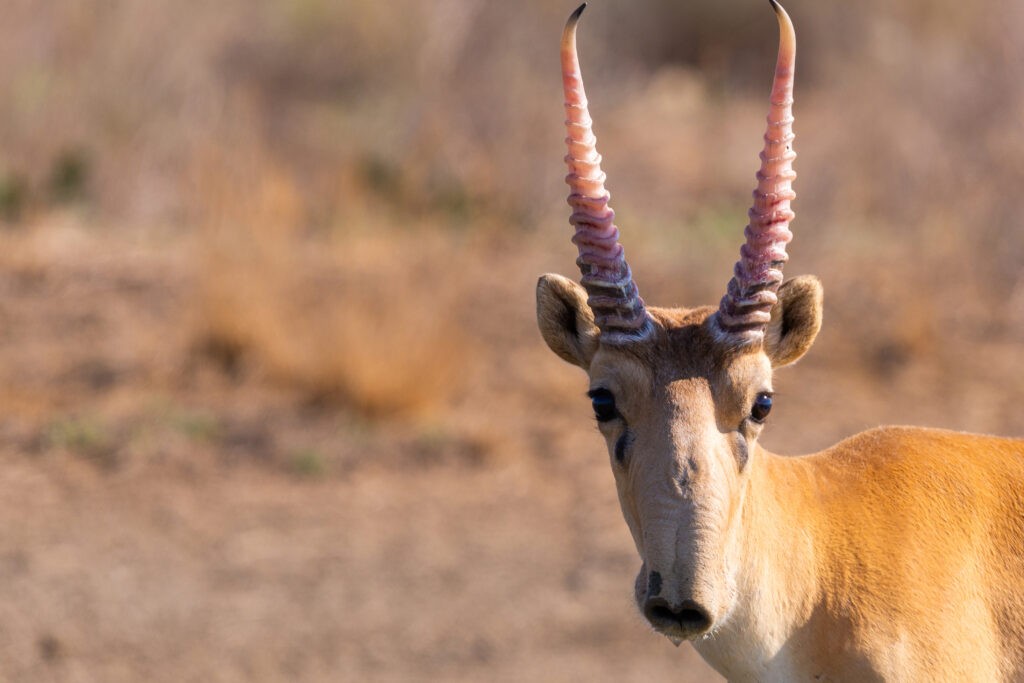
458 Saiga Antelope Killed For Their Horns

A foreigner tried to take saiga horns worth 2 billion tenge from Kostanay. During a search, 916 saiga horns and about 7.5 million tenge in cash were found in the bags, the Kostanay region police department reported.

Presumably, the offender caused about 2 billion tenge in damage to the state. He was arrested and placed in a temporary detention facility.

On 25 December, Leonardo DiCaprio, esteemed Hollywood actor and environmentalist, brought attention to the Kazakh government success in saving the saiga population on his Instagram page.

“Congrats to the government of Kazakhstan, which invested heavily in anti-poaching initiatives, robust law enforcement, and the establishment of new protected areas”.

The antelope species has been reclassified from critically endangered to near threatened on the International Union for Conservation of Nature Red List of Threatened Species, with Kazakhstan population growing from 48,000 in 2005 to over 1.9 million in the wild.