• KGS/USD = 0.01144 0%
  • KZT/USD = 0.00196 -0%
  • TJS/USD = 0.10899 0%
  • UZS/USD = 0.00008 0%
  • TMT/USD = 0.28490 0%
  • KGS/USD = 0.01144 0%
  • KZT/USD = 0.00196 -0%
  • TJS/USD = 0.10899 0%
  • UZS/USD = 0.00008 0%
  • TMT/USD = 0.28490 0%
  • KGS/USD = 0.01144 0%
  • KZT/USD = 0.00196 -0%
  • TJS/USD = 0.10899 0%
  • UZS/USD = 0.00008 0%
  • TMT/USD = 0.28490 0%
  • KGS/USD = 0.01144 0%
  • KZT/USD = 0.00196 -0%
  • TJS/USD = 0.10899 0%
  • UZS/USD = 0.00008 0%
  • TMT/USD = 0.28490 0%
  • KGS/USD = 0.01144 0%
  • KZT/USD = 0.00196 -0%
  • TJS/USD = 0.10899 0%
  • UZS/USD = 0.00008 0%
  • TMT/USD = 0.28490 0%
  • KGS/USD = 0.01144 0%
  • KZT/USD = 0.00196 -0%
  • TJS/USD = 0.10899 0%
  • UZS/USD = 0.00008 0%
  • TMT/USD = 0.28490 0%
  • KGS/USD = 0.01144 0%
  • KZT/USD = 0.00196 -0%
  • TJS/USD = 0.10899 0%
  • UZS/USD = 0.00008 0%
  • TMT/USD = 0.28490 0%
  • KGS/USD = 0.01144 0%
  • KZT/USD = 0.00196 -0%
  • TJS/USD = 0.10899 0%
  • UZS/USD = 0.00008 0%
  • TMT/USD = 0.28490 0%
09 December 2025

Kazakhstan: A decree on human rights demonstrates the government is responsive to the people’s demands

Democracy in Central Asia is evolving since the Soviet Union’s collapse three decades ago. Despite a history of authoritarianism, the region is showing signs of human rights improvement and increased democratic representation. New voices are emerging, impacting societal change. It’s crucial to recognize this progress while still addressing human rights issues and advocating for further democratic reforms.

On December 10, 2023, the world celebrated the 75th anniversary of the Universal Declaration of Human Rights (UDHR), a g seminal document that established the universal recognition of fundamental human rights. The anniversary was marked by various events and initiatives around the globe, including a significant event in Geneva. In line with this celebration, the U.S. Secretary of State Anthony Blinken announced the designation of Taliban leaders connected to restrictions on access to secondary education for women.

President Kassym Jomart Tokayev of Kazakhstan also demonstrated his country’s commitment to upholding human rights by signing a decree titled “On Further Measures of the Republic of Kazakhstan”. This statute underlines Kazakhstan’s commitment to implementing democratic reforms and integrating them into everyday public life.

The Decree aligns the nation’s democratic and human rights mechanisms with international standards, encouraging cooperation between the state, the United Nations (UN), and the Organization for Security and Cooperation in Europe (OSCE). It has initiated practical measures like expert-led training sessions from the UN and OSCE to implement regional political reforms. Additionally, the Decree’s Action Plan details the executive, legislative, and judicial branches’ the execution of reforms in collaboration with civil society and the international community with the ultimate aim of upholding the rule of law and human rights. These initiatives are consistent with President Tokayev’s promise to build a “Just and Fair Kazakhstan” that will protect marginalized groups, support union activities, uphold assembly rights, and prevent violence and torture.

Building gender equality

Women’s rights have become a focal point globally. Kazakhstan, with its nomadic heritage, has made significant strides in narrowing the gender gap compared to many other countries. Since joining the UN’s Human Rights Council for the 2022-2024 term, the country has prioritized gender equality and women’s empowerment. Kazakhstan recently moved up 15 positions in the “Global Gender Gap” index due to successful reforms in the field of gender development where it is ranked 65 out of 146 countries.

The recent Decree fundamentally strengthens gender equality. The Government is instructed to take systematic measures to promote equal rights and opportunities in all spheres of society, as well as to overcome all forms and manifestations of gender discrimination. The decree also encompasses legislation to deter domestic violence and promotes equal rights and safety for both men and women in the Republic of Kazakhstan, as endorsed by UN Security Council resolution 13251. This is a significant step forward in addressing gender-based violence and discrimination, reflecting the government’s commitment to promoting human rights and gender equality.

Combatting domestic violence

A recent, and very public, tragedy in Kazakhstan represented domestic violence at its worst. To combat domestic violence effectively, it is essential to create a legal culture that promotes zero tolerance towards all forms of violent offenders. Women and children are the most vulnerable in such situations, and it is crucial to prioritize their safety and well-being.

The Decree involves legislative measures that have now been implemented to tighten criminal liability in cases of domestic violence. These measures aim to hold perpetrators accountable for their actions and ensure that victims can get justice. Additionally, offenders of domestic violence may be required to undergo comprehensive psychological correction as part of their rehabilitation process.

Best practices show that involving female employees by the authorities in this process can bring a unique perspective and sensitivity to domestic violence cases. The Decree involves creating specialized units within the Ministry of Internal Affairs staffed with female officers, who can enhance the effectiveness of combating domestic violence. These units will provide support to victims while working towards achieving justice.

Protecting those detained and convicted

President Tokayev’s constitutional reform package, approved through a referendum on June 5, 2022, has already significantly enhanced Kazakhstan’s stance on preventing torture and ill-treatment. This reform aligns the nation’s criminal justice system more closely with international obligations.

The recent presidential Decree further compels the government to implement additional measures. These involve improving regulations to abolish torture and ill-treatment of inmates as well as ensuring thorough investigation, prosecution, and punishment of such acts. The objective of these initiatives is to systematically eradicate torture, bolster human rights protection, increase public confidence in law enforcement agencies, and secure public backing for addressing issues within the criminal justice system.

The Action Plan improves the occupation prospects for convicts through quality vocational education, fostering a sense of social significance through rewarding work, thereby facilitating their productive re-entry into society. In accordance with this Decree, the Ministry of Internal Affairs is tasked with upgrading workshops in penal institutions and updating vocational training courses based on labor market demand, with the support of international organizations and businesses. Incentives are given to small and medium-sized businesses employing convicts. Moreover, the government will initiate pilot projects for the reintegration of ex-convicts into society, involving UN and OSCE institutions.

Right to freedom of association

While the existing legislation in the Republic of Kazakhstan concerning the organization and execution of peaceful assemblies is in alignment with internationally accepted norms and practices, future amendments to this legislation can be made with due consideration to both domestic law application and international experiences.

The Action Plan incorporates measures intended to uphold the freedom of peaceful assembly. These include managing interdepartmental collaboration, formulating methodical recommendations, and conducting training seminars in partnership with global institutions such as the United Nations (UN) and the Organization for Security and Co-operation in Europe (OSCE). Collectively, these actions empower every citizen to actively exercise their right to freedom of assembly.

Protecting rights of children and persons with disabilities

The Decree aims to bolster protection of children’s rights in Kazakhstan. It proposes legislative changes to establish regional children’s rights commissioners who will cooperate with the national Commissioner for Children’s Rights.

Kazakhstan also places significant emphasis on supporting individuals with disabilities, striving to involve them in decision-making processes. The government has been directed to adopt a dedicated Concept of Inclusive Policy for the Republic of Kazakhstan, set to be implemented by 2030, demonstrating their commitment to inclusivity in the coming years.

Steps to ensure right to work, labor protection and activities of trade unions

Kazakhstan is proactively adopting legislative and practical steps to safeguard human rights, with a particular focus on preventing industrial accidents. The urgency for enhanced labor protection laws in the country has been highlighted by recent incidents.

The Action Plan that has been adopted is geared towards enhancing legal requirements for safe working conditions. The government is on track to approve the Concept of Safe Work in the Republic of Kazakhstan, projected to be in effect until 2030.

Kazakhstan will commence an in-depth study of the UN Guiding Principles on Business and Human Rights’ implementation. This signals the country’s commitment to advancing workplace safety and upholding labor rights.

Conclusion

In conclusion, the signing of the Decree by President Tokayev marks a significant step in Kazakhstan’s journey towards bolstering human rights for all citizens, particularly for vulnerable groups such as women, children, the disabled and convicts while protecting the right of the people to peacefully assemble and improving conditions for the country’s workers. This initiative not only underscores the government’s commitment to preventing industrial accidents but also aligns its laws and regulations with international standards set by the UN Guiding Principles on Business and Human Rights. As a key player in Central Asia, these actions could potentially influence other nations in the region to follow suit, thereby contributing to a broader enhancement of human rights across the region.
Can Kazakhstan set an example for Central Asia’s key position in the global transition to green economy?

If there is one Central Asian country that stood out during the COP 28 summit on climate change in Dubai in late 2023, it was Kazakhstan. Its pledges and initiatives – specifically regarding methane reductions, transition to renewable energy sources, and water security and cooperation – correspond overall to the country’s commitments to a green economy transition. More importantly, such signaling and posturing may have larger repercussions in a region of increasing geopolitical and economic importance, not the least because of its vast resources and potential in terms of growing transportation networks.

***

First to consider is Kazakhstan’s announcement of a Methane Reduction Pledge which makes it part of a voluntary agreement known as the Global Methane Pledge to reduce methane emissions by 30 per cent by 2030. This is significant given that Kazakhstan is Central Asia’s main oil producer as well as an important gas producer. Stressing the country’s dedication to reducing greenhouse emissions, and in alignment with international efforts to decrease non-CO2 climate super-pollutants, Kazakhstan’s President Kassym Jomart Tokayev acknowledged during his speech at COP28 that cutting methane emissions was the “quickest avenue to immediately slow the rate of global warming”.

This move earned him praise from the U.S. and the UK. President Joe Biden’s Special Envoy for Climate, John Kerry, issued a joint statement with Zulfiya Suleimenova, Tokayev’s Special Representative on International Environmental Cooperation, underlining the two countries’ “mutual readiness to accelerate the development and implementation of policies and projects to rapidly reduce methane emissions” over the next two years, particularly from the fossil energy industry. The U.S. also said it would work with partners “to mobilize investments to support achieving full methane mitigation potential in Kazakhstan’s oil and gas sector”, which it said will require “at least $1.4 billion in total spending through 2030.” Likewise, British Embassy in Astana posted on X (formerly known as Twitter), to give “Congratulations to President Tokayev and Kazakhstan for joining the Global Methane reduction Commitment at #COP28 in Dubai!”, adding that this was a “significant step towards a sustainable future.”

Secondly, President Tokayev unveiled at COP28 an ambitious Joint Energy Transition Partnership (JETP) initiative for Kazakhstan, which will help make the country a key player in the global transition to renewable energy sources. This should be exciting news for people of Kazakhstan as their country is poised to be a major global supplier of critical minerals used in green technologies as the world decarbonises in the coming decades. A generally agreed list of these critical minerals often include lithium, cobalt and nickel (all used in the production of electric batteries), as well as rare earths (which include at least 17 elements such as neodymium, dysprosium and terbium that are necessary for magnets in wind turbines and electric vehicles), and silver (a key component for solar panel manufacturing). Kazakhstan holds the largest chrome ore reserves in the world and ranks first also in terms of their quality. It holds second place globally for uranium and silver reserves, and third in terms of lead and manganese ore. The comprehensive JETP framework, according to President Tokayev, will boost Kazakhstan’s production and export of these and other critical minerals while also encouraging investments in renewable energy technologies and cooperation with international partners to develop new supply chains.

Thirdly, it was announced that President Tokayev and France’s President Emmanuel Macron will co-chair the inaugural One Water Summit in 2024 on the margins of the U.N. General Assembly. This is a noteworthy position for Kazakhstan to hold, given that the upcoming summit will hopefully address crucial global water issues by supporting much-needed dialogue and collaboration among nations and organisations. The goal is not only to protect water resources but also to improve cooperation across national boundaries. Kazakhstan itself is no stranger to water challenges. During his COP28 speech, President Tokayev brought up the case of Aral Sea, the large inland body of saltwater that continues to serve as a critical reserve for both Kazakhstan and Uzbekistan despite facing serious pollution and evaporation problems. Tokayev specifically encouraged support for the International Fund for Saving the Aral Sea, a Central Asian organisation whose chairmanship will be held by Kazakhstan next year.

***

In the current global landscape, Kazakhstan’s leadership seems to be moving forward wisely in terms of climate change, water security and green transition issues. Its commitments to the green economy transition are already paying off. The Asian Infrastructure Investment Bank (AIIB) has invested $36 million into the country’s wind power sector. SVEVIND Energy Group, a German-Swedish company, has promised a $50 billion investment for producing green hydrogen and it plans to build one of the world’s largest green hydrogen plants to start production by 2030. Several others – such as the Climate Investment Funds, USAID, Plenitude (an Eni SpA subsidiary), and the Asian Development Bank with the EBRD – have all invested in the country’s solar power industry in support of various projects. The future indeed looks greener for Kazakhstan, but also it holds a promise for the region as a whole.

Islamic Extremism in Central Asia: A Threat to Liberal Progress

Afghanistan earned its reputation as the “graveyard of empires” due to the significant toll exacted on foreign powers in their efforts to achieve military success in the country. This challenge was evident in the experiences of the British Empire, the Soviet Union, and, most recently, the United States. The persistent and decentralized nature of the country’s tribal insurgency made achieving a definitive victory a formidable task. Furthermore, the adherence of groups harbored by the Taliban, such as Al Qaeda, to an extremist religious ideology spread terrorism globally, including in the 9/11 attacks as well as other deadly acts of violence in various parts of the world. While the United States arguably played a constructive role in modernizing Afghanistan, the establishment of democracy and Western values in the country proved to be an insurmountable challenge, even with over $100 billion in foreign aid. With heightened tensions between the Islamic and Western populations reignited in the Levant after the deadly Hamas attack on Israel on 7 October 2023, the threat of Afghanistan-based extremists redirecting their focus towards the West has intensified.

Often overlooked is the fact that Salafists jihadists and other radical groups also pose a challenge to the emerging democracies in Central Asia as these Muslim-majority secular republics are seen as areas to spread their undemocratic and potentially violent influence. In this context, policies that may even inadvertently help promote illiberal religious movements threaten the region’s secular identity and the security of its peoples.

We should assess Central Asia’s unique position on religious freedoms but also on jihadist threats

For the large part, Western countries come from a privileged position of being able to resist the widespread influence from Islamic extremist movements at home thanks mainly to generations of democratic institution building as well as decent geographic distance to areas that would fall under pan-jihadist aspirations. Consider that there is no apparent threat of jihadists entirely displacing Western democratic institutions or imposing a pan-Islamist state encompassing parts of Western nations; most Western lands do not fall on areas some of these groups want to conquer to create an Islamic Caliphate.

On the other hand, many other places, including Central Asia, still risk misconstruing the line between defending individual freedoms and combatting religious extremism. Here, the coexistence of extremist Islamic ideologies and democracy remains somewhat precarious. Islamic radicalism continues to pose a serious challenge to the emerging democracies of the region, where the secular republics are trying to keep a lid on certain hostile ideologies. Militant groups spilling over from Afghanistan and infiltrating post-Soviet countries want to spread jihad to the region and create an Islamic Khaganate stretching from Egypt to China. Pan-Islamist Salafists, such as Islamic State-Khorasan Province (ISKP) and Al Qaeda, have a clear goal to overthrow Central Asia’s secular regimes.

Moreover, the determination of Salafists jihadists and other groups to spread their illiberal and violent struggle to Central Asia (including from neighboring Afghanistan) has become apparent through their growing presence in the region’s schools and other spheres of public life, promoting subjugation of women and intolerance towards other sects and religions. In defense, some Central Asian states have been employing a stricter approach to religious proselytization and the dissemination of extremist propaganda.

When considered from this perspective, those who seemingly promote certain religious movements, which were once considered dangerous by the West itself, may come across as insincere to the populations and governments of Central Asian states.

Take, for instance, the case of Tablighi Jamaat. A recent report published by the U.S. Commission on International Religious Freedom (USCIRF) concerning online religious activity in Kazakhstan, includes references to members of this movement Kazakhstan who faced legal consequences for their affiliations. It would be helpful to note here that Kazakhstan is a secular nation-state where the constitution grants all religious associations equal rights and opportunities. The state does not discriminate against religious minorities or new movements, but bans religious political parties. As in France (along with most Central Asian countries), religious clothing is forbidden in state and educational institutions. There is no state religion, but moderate Hanafi Islam is widely accepted as the traditional faith. Thousands of religious associations from various faiths have peacefully coexisted, including small religious groups such as Mormons and Hare Krishnas, among others.  A defining feature of society, at least until recently, has been its wide opposition to political Islam: As of 2013, Kazakhstan had among the lowest levels of support for Sharia law in any Muslim country at just 10 per cent, coming just after Azerbaijan with 8 per cent. Kazakhstan’s Muslims have preferred a more liberal interpretation of religious teachings in their private lives.

Like Taliban, Tablighi Jamaat follows the Deobandi movement of Sunni Islam. The West is familiar with this group. Several of the fourteen suspects arrested in Spain in January 2008 for plotting a terrorist attack in Barcelona had ties to Tablighi Jamaat. A 2008 Stratfor article entitled “Tablighi Jamaat: An Indirect Line to Terrorism” said the group had “come up many times in connection with terrorism plots, including the 2006 scheme to bomb airliners enroute from London to the United States”. The same year, American NGO Fund for Peace said the following: “Though not openly advocating violence itself or recognized as a terrorist group by any Western government, the Tablighi Jamaat is considered a fundamentalist movement birthed from the same Islamic school that later spawned the Taliban and [Kashmir-based terrorist organisation] Harakat ul-Mujahideen”. It also called the group “a secretive Islamic fundamentalist movement present in more than 100 countries and boasting an estimated 70 million adherents”, which “caught the attention of counter-terrorism officials around the world”.

To summarize and put all this in context, Central Asian countries’ position on religious freedoms appear to be on par with France and, until recently, Turkey (prior to changes brought about by the current pro-Islamist government). State secularism in Central Asia is quite different than what we see in most Western countries, including the U.S., where the state holds a neutral stance towards religion and draws the line at an organisation’s incitement to violence rather than its ideology. In this regard, Central Asian states can be more accurately compared to France (or pre-AKP modern Turkey, as envisioned by its secular founder Ataturk) in that their main goal is to stop any one religion from exerting influence on politics, state institutions or society, including through challenging the countries’ secular constitutions. That is not to say religious expression or belief is entirely subdued in the region; in post-Soviet Union societies, there has been a legitimate role for a variety of religions, overseen and protected by the state.

Jihadist aspirations have long been posing a threat to Central Asia

Taliban’s recent return to power in Afghanistan has further encouraged extremist ideologies and negatively affects Central Asian countries, who have openly backed the U.S. campaign against Taliban. As is also the case in many Western countries, including the U.K. and Belgium, Central Asian fighters returning from their stints in global Islamists movements, such as from Syria, Iraq and Afghanistan, raise legitimate concerns about “sleeper” cells in their homelands.

Central Asian states can recall the grievances caused by religious extremists following their independence from the former Soviet Union. For instance, in the 1990s, Uzbekistan experienced several terrorist attacks including bomb explosions in its capital claimed by the Islamic Movement of Uzbekistan (IMU) as well as a 1999 assassination attempt on then-president Karimov. Again in the 1990s, extremist were a part of Tajikistan’s bloody civil war, and the Islamic State-Khorasan, which claimed responsibility for the 2023 murder of the governor of Balkh province in Afghanistan, is known to have high-ranking members from Tajikistan. In the early 2000s, the Islamic Jihad Union (IJU), an IMU spinoff that is recognized as a foreign terrorist organisation by the U.S. State Department, became active in Kazakhstan. The country has uncovered multiple Islamist terrorism plots since an IJU suicide bombing in 2011, leading it to adopt stricter laws to regulate religious groups.

Terrorist organisations look to exploit legal, social, institutional and security deficiencies, and it is a state’s duty to plug any potential areas open to such exploitation. Groups like the so-called Islamic State and Al Qaeda look for legitimate and latent Islamic networks to outsource some of their operations. These ostensibly “civil society” movements are often protected by the very state laws that they seek to subvert.

A secular approach to religious tolerance and a peacefully coexisting multiethnic, multireligious fabric of society have been strong pillars of Central Asian populations since their independence, and they are crucial to the region’s ongoing democratic development. The rise of Salafist jihadism and other forms of religious extremism risks this very foundation. In working to strengthen their democracies, Western partners should not prevent these countries from curbing real and present threats that endanger not only their national security but also their secular identity. Many indicators show that Central Asia would rather be like Europe than Afghanistan. Preventing extremists from gaining a stronghold is a means to that end.

EU’s €20M Project to Diversify Internet Resources in Kazakhstan with Satellite Communications

The European Union (EU) is set to contribute to the diversification of internet resources in Kazakhstan, as announced by Johannes Baur, the Head of the Cooperation Department of the EU Representative Office in Kazakhstan. This initiative is part of the EU’s broader commitment to bolstering digital infrastructure and connectivity in Central Asia.

“In Kazakhstan, internet traffic now comes from Russia and China,” Baur said during a meeting organized by the Eurasian Foundation for Central Asia. He further explained the EU’s proposition: “Our project wants to offer Kazakhstan the opportunity to use European satellite communications, a product of the European company, SES. For example, while Starlink satellites orbit the Earth in a low orbit, SES satellites orbit in a medium orbit. Satellites in medium orbit can cover the whole of Kazakhstan, which is an advantage. We can even cover the whole of Central Asia.”

This ambitious project has received approval from the European Commission and is set to be showcased at the Central Asia – European Union summit scheduled for 2024. Baur disclosed the initial funding earmarked for the project, stating, “First of all, the European Union will allocate 20 million euros, but this is the amount allocated to the whole of Central Asia. I think most of these funds will be directed to Kazakhstan, Kyrgyzstan and Uzbekistan. The specific details are still unknown, but it will be a large loan from the European Investment Bank.”

This initiative aligns with the EU’s ongoing efforts to diversify its supply chains and strengthen its relations with strategic partners like Kazakhstan. Moreover, it is expected to contribute significantly to the development of a secure and sustainable supply of digital resources across Central Asia.

OCCRP Reports on Corruption Linked to Berdimuhamedov family

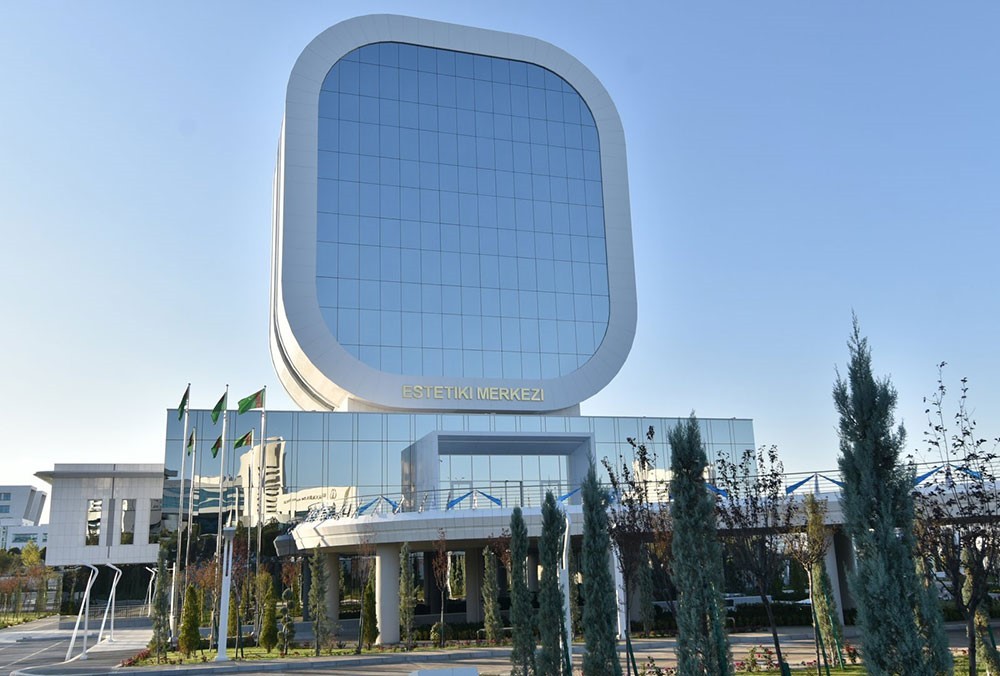
The Center for Aesthetic Medicine in Ashgabat was sold at a huge discount to a company called Ashgabat International Aesthetic Medicine Center (AIATC), associated with the Berdimuhamedov family, the Center for Research on Corruption and Organized Crime (OCCRP) has reported together with the publications Turkmen.news and Gundogar. According to investigators, the Government of Turkmenistan built the center at a cost of U$51 million dollars; its official opening took place in October 2020. However, two days before the opening, the President of Turkmenistan at that time, Gurbanguly Berdimuhamedov, signed a decree authorizing the privatization of the center without a tender. As a result, the center was sold for $ 6.5 million less than the state spent on its construction.

Journalists believe that the real discount the buyers received may be much higher taking into account the unofficial exchange rate. (In 2020, the unofficial exchange rate was 23.6 manat per dollar, whilst the official rate was 3.5.).

AIATC belongs to a group of seven legal entities, investigators learned from a data leak about members of the Union of Industrialists and Entrepreneurs of Turkmenistan. Two of these seven companies are related to the Berdymukhamedov family.

Despite the fact that the Center for Aesthetic Medicine was bought by AIATC, it is managed by the Center for Beauty and Aesthetics, the director of which is Doctor Gulya Annanepesova, who is the head of both the selling and the buying enterprise. Annanepesova has allegedly accompanied Gurbanguly Berdimuhamedov on official trips at least twice. In March 2017, they traveled to Qatar, and in November 2019 to Italy. Annanepesova is listed as a cosmetologist and a doctor in the lists of participants of the delegations.

In 2016, Annanepesova was awarded a medal in honor of the 25th anniversary of Turkmenistan’s independence. At that time, she worked at the state Center for Internal Medicine, and among her colleagues was one of the younger sisters of the president, who worked as a nurse. A year after the opening of the Center for Aesthetic Medicine, Berdimuhamedov awarded Annanepesova with a commemorative badge for services to the development of health care in Turkmenistan. She was listed in the list of awardees as the director of the Center for Beauty and Aesthetics.

Annanepesova, according to the sources of the publications, is married to Maksat Geldiev, who worked in the Ministry of National Security and played an important role in the introduction of internet censorship in Turkmenistan.

The Center for Aesthetic Medicine offers a wide range of cosmetology and wellness treatments, from weight loss programs to hairdressing services. The journalists drew attention to the fact that all these services do not coincide with the initiatives of the authorities, which prohibit, among other things, bright make-up and plastic surgery. The imposition of restrictions on women intensified shortly after Serdar Berdimuhamedov succeeded his father as president of the country in March 2022.

Leonardo DiCaprio Congratulates Government of Kazakhstan

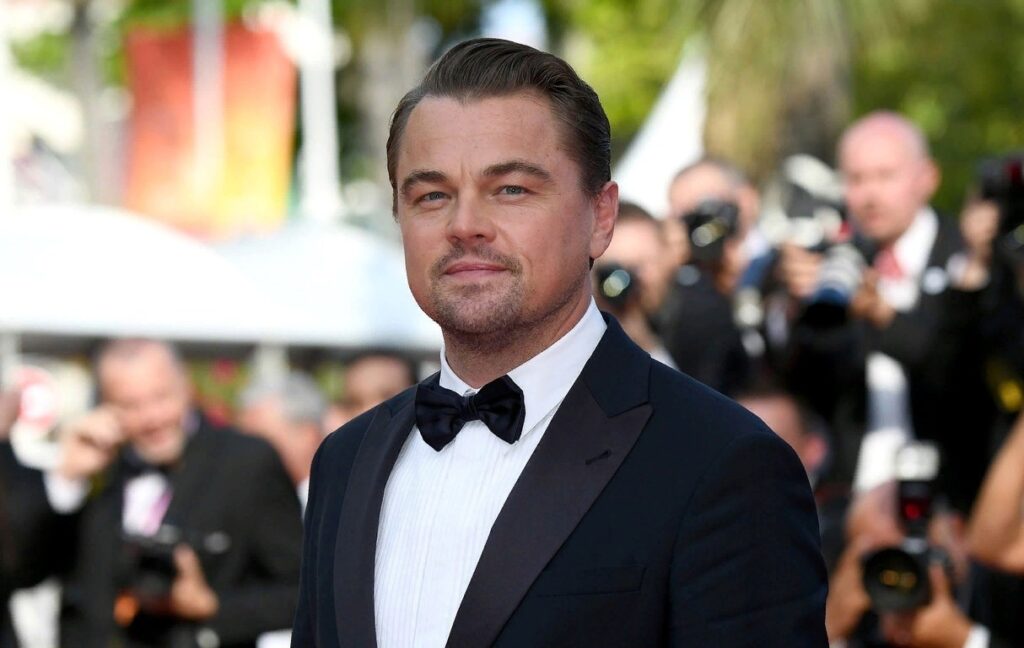
One of the most sought-after Hollywood actors, Leonardo DiCaprio, has appealed to the government of Kazakhstan on his personal Instagram page. On December 25th, the Oscar-winner congratulated the Kazakhstan authorities on the increase in the population of the endangered saigas.

“Congratulations to the Government of Kazakhstan, which has invested heavily in anti-poaching initiatives, powerful law enforcement agencies and the creation of new protected areas. Their cooperation with environmental organizations, universities and scientists is a vivid example of real success in the field of nature conservation based on joint efforts,” wrote DiCaprio, noting that saigas had moved categories from “on the verge of extinction” to “in a state close to threatened” on the international Red List.

“This unprecedented recovery reflects the remarkable preservation of saiga in Kazakhstan. The species, which once numbered 48,000 in 2005, has now grown to more than 1.9 million in the wild,” the actor noted.

DiCaprio contributes considerably to climate change and pollution issues, supporting more than 200 projects focused on protecting wildlife and restoring the balance of ecosystems and communities.

On December 12th, the International Union for Conservation of Nature reported that saigas no longer belong to the species of animals on the verge of extinction.