• KGS/USD = 0.01144 0%
  • KZT/USD = 0.00194 -0%
  • TJS/USD = 0.10896 -0%
  • UZS/USD = 0.00008 0%
  • TMT/USD = 0.28571 0.28%
  • KGS/USD = 0.01144 0%
  • KZT/USD = 0.00194 -0%
  • TJS/USD = 0.10896 -0%
  • UZS/USD = 0.00008 0%
  • TMT/USD = 0.28571 0.28%
  • KGS/USD = 0.01144 0%
  • KZT/USD = 0.00194 -0%
  • TJS/USD = 0.10896 -0%
  • UZS/USD = 0.00008 0%
  • TMT/USD = 0.28571 0.28%
  • KGS/USD = 0.01144 0%
  • KZT/USD = 0.00194 -0%
  • TJS/USD = 0.10896 -0%
  • UZS/USD = 0.00008 0%
  • TMT/USD = 0.28571 0.28%
  • KGS/USD = 0.01144 0%
  • KZT/USD = 0.00194 -0%
  • TJS/USD = 0.10896 -0%
  • UZS/USD = 0.00008 0%
  • TMT/USD = 0.28571 0.28%
  • KGS/USD = 0.01144 0%
  • KZT/USD = 0.00194 -0%
  • TJS/USD = 0.10896 -0%
  • UZS/USD = 0.00008 0%
  • TMT/USD = 0.28571 0.28%
  • KGS/USD = 0.01144 0%
  • KZT/USD = 0.00194 -0%
  • TJS/USD = 0.10896 -0%
  • UZS/USD = 0.00008 0%
  • TMT/USD = 0.28571 0.28%
  • KGS/USD = 0.01144 0%
  • KZT/USD = 0.00194 -0%
  • TJS/USD = 0.10896 -0%
  • UZS/USD = 0.00008 0%
  • TMT/USD = 0.28571 0.28%
09 December 2025

Tajikistan and Kyrgyzstan Agree on Another Border Section

Delegations from Tajikistan and Kyrgyzstan have conducted more work on the definition and designation of the state border, agreeing on the divination of another 11.88 km at a meeting in Buston held between the 17th and 23rd of December. The two parties also agreed to continue determining the remaining sections oat the next meeting to be held in Kyrgyzstan.

A long-standing source of conflict between the two nations, it is emblematic of the problem that even the length of the border – sometimes cited as being 975-kilomtres long, and at others times 972-kilomteres – is rarely agreed upon. In January 2023, Tajikistan’s President Rahmon stated that 614-kilometres have been agreed upon, backtracking on a previously stated figure of 664.

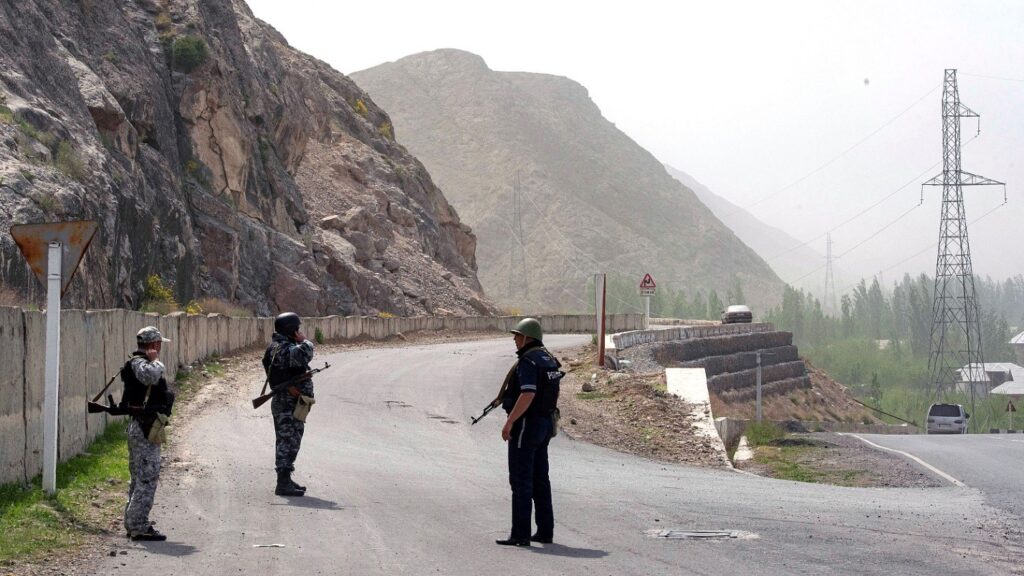
With its scant natural resources and dwindling water supplies, the border between Kyrgyzstan and Tajikistan has been the scene of numerous skirmishes for many years. In 2014, all borders between Kyrgyzstan and Tajikistan were closed indefinitely to Kyrgyz and Tajik citizens following clashes over a bypass road in disputed territory; mortars were fired and both armies suffered casualties. In 2021 and 2022, troubles flared up again. Several hundred kilometers of the border have not yet been defined.

This situation developed after the collapse of the USSR, leaving the parties unable to agree on dozens of disputed areas. The non-delimited territories become a conflict zone between the local population, and the border guards of the two countries became involved. The last major conflict occurred on September 16th 2022, as a result of which hundreds of people were killed and injured on both sides, and massive damage was caused to the infrastructure in Sughd and Batken.

The Presidents of Tajikistan and Kyrgyzstan, Emomali Rahmon and Sadyr Japarov, have repeatedly discussed delimitation of the border. The situation in the disputed areas is also closely monitored by the Collective Security Treaty Organization (CSTO). In recent years, the authorities of the two countries have been actively negotiating to resolve this issue. Meetings have been held alternately on the territory of the two republics. Currently, more than 90%, or about 885 km of the border has been mutually recognized by States.

EEU Leaders Seek to Strengthen Position of Economic Bloc

A meeting of the Supreme Eurasian Economic Council was held in St Petersburg on December 25th. The meeting was attended by leaders of the Eurasian Economic Union (EEU) member countries – the Prime Minister of Armenia, Nikol Pashinyan, President of Belarus, Alexander Lukashenko, President of Kazakhstan, Kassym-Jomart Tokayev, President of Kyrgyzstan, Sadyr Japarov, and President of Russia, Vladimir Putin.

Opening the meeting, Russian President Putin said that the Eurasian Economic Union will soon be ten years old, and over this period, the mutual trade between its member countries has almost doubled and the aggregate GDP of the EEU countries has grown from US$1.6 trillion to US$2.5 trillion. “We have created deep common markets for goods, services, capital, and workforce, which are operating in line with agreed-upon rules. The main point is that the Eurasian Union has become an authoritative international integration association with an efficient structure and a good foundation,” he said.

Putin added that the work on aligning integration processes within the EEU and China’s Belt and Road Initiative is also yielding results.

The Council’s meeting adopted the declaration “Eurasian Economic Path,” which is aligned with China’s Belt and Road Initiative.

Government to Support Projects of Young Investors and Entrepreneurs

On December 25th, Deputy Minister of Investment, Industry and Trade, Khurram Teshabayev took part in a dialogue between the Ministry and young Uzbek investors and entrepreneurs, the Ministry’s official website reported.

The event gathered senior officials of the ministry and more than 500 representatives of the younger generation – successful investors and business people from all regions of the country, in online and offline formats.

Opening the meeting, Teshabayev emphasized the importance of involving young people in entrepreneurial and investment activities, saying that a number of opportunities have been created in Uzbekistan to realize the potential of young people, including within the framework of the “Uzbekistan-2030 Strategy”.

Today, the task of providing comprehensive support to young entrepreneurs and investors has been elevated to the level of state policy, the Deputy Minister said. Youth industrial-entrepreneurial zones with preferential treatment for manufacturers have been created, a fund to support young entrepreneurs has been established, which provides assistance in the implementation of investment projects and entrepreneurial initiatives, covering the production of products and the provision of services, startup projects and scientific research.

Young entrepreneurs can receive support both by obtaining an infrastructurally developed territory for organizing production facilities, and in the form of financial assistance for the implementation of projects for the production of import-substituting products that are in high demand in foreign markets. To date, the Fund for Support of Young Entrepreneurs has allocated funds for the implementation of about 700 youth projects, with about 150 of them located in Youth Industrial Zones.

Natural Gas Production in Uzbekistan Down by 4.5 Billion Cubic Meters in 2023

According to Uzbekistan’s Statistics Agency, over the eleven months of 2023 to December, Uzbekistan reduced natural gas production by more than 4.5 billion cubic meters compared to the same period last year. From January-November, 42.7 billion cubic meters of gas was produced, compared to 47.3 billion cubic meters in 2022. Official statistics also recorded a decrease in the country’s oil production by 12,000 tons from January-November.

In recent years, Uzbekistan’s natural gas industry has experienced problems due to the depletion of reserves at existing fields. This year, Uzbekistan started importing natural gas from Russia through Kazakhstan.

A government meeting chaired by President Shavkat Mirziyoyev earlier this month focused on maintaining natural gas production volumes at existing fields and discovering new reserves. The meeting considered ways of transitioning to geological drilling at a depth of 6-7 kilometers using advanced technologies. It was stated at the meeting that in recent years, the depth of geological exploration has been increased from 2-3 kilometers to 4-5 kilometers. In 2024, it is planned to carry out seismic work on an area of 3.5 thousand square kilometers and drill new exploration wells.

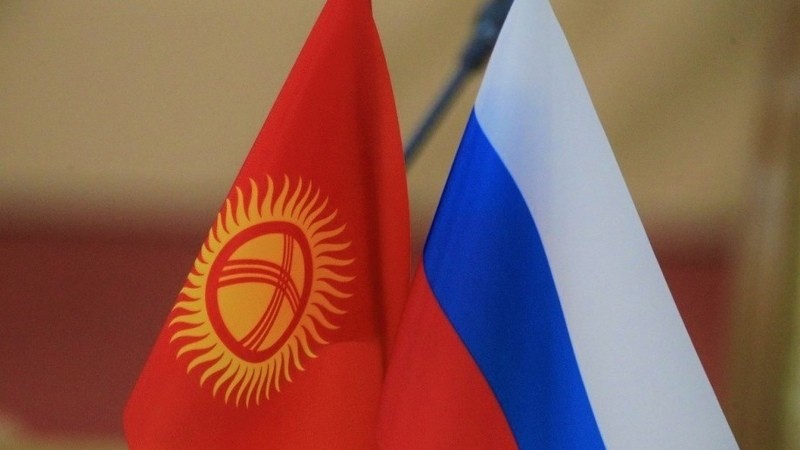
Russian-Kyrgyz Development Fund to Finance Projects Worth $140 Million

The Russian-Kyrgyz Development Fund (RKDF) has said it will finance both new and existing projects in Kyrgyzstan totaling more than $140 million in 2024. The Fund will focus on strategic sectors of the economy: industry, infrastructure development in education and healthcare, logistics, agriculture and agro-processing, strengthening food security, and energy independence. Work in the country’s regions will continue and be expanded, for which the Fund’s Council approved financing of $1 million.

“The strategic decision to approve the budget will allow the Fund to continue operating as usual. The RKDF has the necessary amount of resources, and we will continue to accept new applications. We hope that the number and quality of interesting, important and necessary projects for the country will grow, and the Fund, by financing them, will continue to contribute to the development of the economy,” stated Artem Novikov, Chairman of the Board of the RKDF.

Member of the RKDF Council, and Minister of the Economy and Commerce of Kyrgyzstan, Daniyar Amangeldiev said that compared to the previous year, the Fund’s overall project portfolio in Kyrgyzstan will be increased by 50%.

Kazakhstan Leads Initiatives for Central Asian Trade and Connectivity

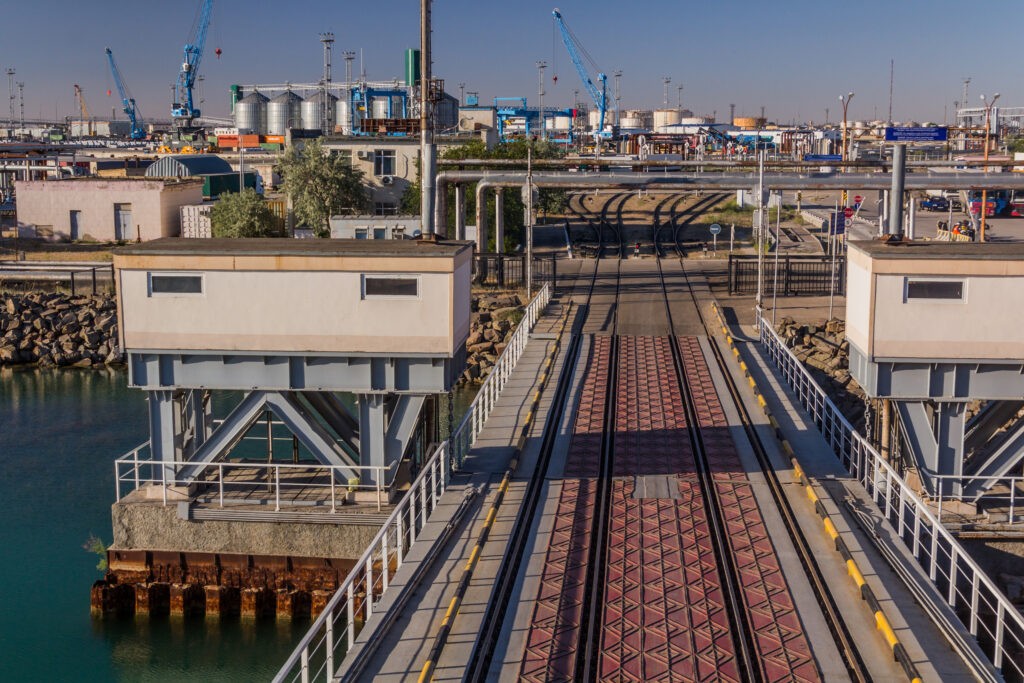
Kazakhstan’s strategic location as the gateway from China’s western border to Europe makes it a linchpin in the Trans-Caspian International Trade Corridor (TITR). The TITR starts from China, transits the whole width of Kazakhstan, crosses the Caspian Sea to Azerbaijan and Georgia, eventually reaching Europe via Turkey or the Black Sea. Although it is sometimes also called the “Middle Corridor”, this latter term more properly refers to the TITR segment running from Kazakhstan to the South Caucasus. Started over six years ago as an autonomous bilateral initiative between Kazakhstan and Azerbaijan to bolster cross-Caspian trade, the Middle Corridor project antedates the TITR.

The TITR, as well as the more limited Middle Corridor, have drawn considerable support from international financial institutions (IFIs) like the Asian Development Bank, European Bank for Reconstruction and Development and the World Bank, as well as national development organisations including the U.S. Agency for International Development. The network of the TITR association now counts eleven participating states (Azerbaijan, Belarus, China, Estonia, Georgia, Kazakhstan, Latvia, Lithuania, Poland, Turkey and Ukraine) as well as 25 transport and logistics companies including ports, vessels, railways and terminals.

Kazakhstan’s role and leadership

Kazakhstan, given its geographic centrality in the region, may rightly be considered the keystone of the TITR in Central Asia, just as Azerbaijan is its keystone in the South Caucasus. Under the leadership of President Kassym-Jomart Tokayev, the country has taken significant steps towards realising the potential of this important trade route, cementing its role as a crucial Eurasian transit hub. One example demonstrating Kazakhstan’s key role is the country’s targeting of a substantial increase in cargo traffic along the TITR, with an ambitious goal of 500,000 containers per year by 2030.

The roadmap between Azerbaijan and Kazakhstan for the development of the Middle Corridor across the Caspian Sea is one component of Tokayev’s vision. It complements the broader economic objectives that Tokayev has established for his country’s progress, but more importantly, his active engagement with IFIs and neighbouring countries underscores his commitment to greater collaborative development and regional integration.

Understanding the challenges and the impact for key countries

The Middle Corridor saw a 33 per cent surge in container traffic in 2022, but this has fallen significantly in 2023. That is because the dynamic growth revealed limitations such as issues at border crossings, transhipments and co-ordination, all producing lengthy transport delays. To address these challenges, Kazakhstan—along with Azerbaijan and Georgia—has initiated upgrades to the corridor. In November 2022, the three countries signed a roadmap that outlined priority actions and investments for optimising the corridor’s efficiency and increasing its capacity.

The TITR diversifies trade routes and reduces the dependence of countries in Central Asia and South Caucasus on Russian imports. Opening up new markets in the Middle East and North Africa (and eventually in South and Southeast Asia) will accelerate economic growth by promoting the production of more complex and value-added products. A World Bank study forecasts a 30 per cent increase in trade along the route, with Kazakhstan’s exports playing a significant role. It expects that the combined total trade volume of the three countries (Azerbaijan, Georgia and Kazakhstan) with the EU will increase by 28 per cent.

Furthermore, the World Bank’s new approach to the TITR regards it not just as a trade route but also as an “economic corridor” that can connect with the hinterlands of the countries that it traverses. This strategy has the potential for fostering the development of small and medium-sized enterprises, thereby creating a more robust middle class and ensuring political stability and legitimacy. This vision for the corridor includes the need for real-time visibility and faster information sharing, focussing on connectivity and equipment acquisition, especially in railway infrastructure.

The project’s influence on other Central Asian states

At the same time, the idea for a corridor connecting Tajikistan, Uzbekistan and Turkmenistan and linking in Iran has been discussed in international conferences. The former three have recently signed agreements on developing international transport corridors. These agreements specifically aim to develop land and rail routes; they would provide Tajikistan, via Turkmenistan with access to the Caspian Sea corridors and onward to Europe. An alternative plan is for this corridor to enter Iran, from where it would hypothetically reach Europe via Turkey. This variant, however, would require significant capital investment from yet unidentified sources.

China has expressed general interest in both branches of the Tajikistan-Turkmenistan corridor, targeting European markets especially through a free economic zone (FEZ) established by Tajikistan on its border. This  reflects more broadly the Central Asian states’ recognition of the potential for developing efficient and cost-effective transportation and logistics sectors to stimulate economic activity while fostering social and political cohesion. As such, while not directly inspired by President Tokayev’s initiatives for the TITR, it may be said to have been influenced by it.

Conclusion

Kazakhstan’s keystone role in the TITR’s development will likely be seen, in retrospect, as marking a strategic reorientation in Eurasian trade. This initiative, highlighting the nation’s geopolitical significance as a Central Asian hub, is crucial for enhancing not only the region’s economic diversification but also the overall connectivity of inner Asia and the South Caucasus as a whole. In addition, it sets a precedent for neighbouring countries like Tajikistan and Turkmenistan, which are now exploring similar co-operative projects in trade infrastructure. Such developments, arguably led by Kazakhstan’s example, underscore a broader regional shift towards establishing the more autonomous and versatile trade networks that would be critical for Central Asia’s economic development and political stability.