• KGS/USD = 0.01144 0%
  • KZT/USD = 0.00196 -0%
  • TJS/USD = 0.10899 0%
  • UZS/USD = 0.00008 0%
  • TMT/USD = 0.28571 0.28%
  • KGS/USD = 0.01144 0%
  • KZT/USD = 0.00196 -0%
  • TJS/USD = 0.10899 0%
  • UZS/USD = 0.00008 0%
  • TMT/USD = 0.28571 0.28%
  • KGS/USD = 0.01144 0%
  • KZT/USD = 0.00196 -0%
  • TJS/USD = 0.10899 0%
  • UZS/USD = 0.00008 0%
  • TMT/USD = 0.28571 0.28%
  • KGS/USD = 0.01144 0%
  • KZT/USD = 0.00196 -0%
  • TJS/USD = 0.10899 0%
  • UZS/USD = 0.00008 0%
  • TMT/USD = 0.28571 0.28%
  • KGS/USD = 0.01144 0%
  • KZT/USD = 0.00196 -0%
  • TJS/USD = 0.10899 0%
  • UZS/USD = 0.00008 0%
  • TMT/USD = 0.28571 0.28%
  • KGS/USD = 0.01144 0%
  • KZT/USD = 0.00196 -0%
  • TJS/USD = 0.10899 0%
  • UZS/USD = 0.00008 0%
  • TMT/USD = 0.28571 0.28%
  • KGS/USD = 0.01144 0%
  • KZT/USD = 0.00196 -0%
  • TJS/USD = 0.10899 0%
  • UZS/USD = 0.00008 0%
  • TMT/USD = 0.28571 0.28%
  • KGS/USD = 0.01144 0%
  • KZT/USD = 0.00196 -0%
  • TJS/USD = 0.10899 0%
  • UZS/USD = 0.00008 0%
  • TMT/USD = 0.28571 0.28%
09 December 2025

Uzbek Authorities Investigate Mass Food Poisoning at Some Kindergartens

Uzbekistan’s Ministry of Health says almost all children who were hospitalized after suffering food poisoning at several state kindergartens in the Tashkent region have recovered and are back with their families. 

Hundreds of children had been affected by the preschool health crisis, which prompted an emergency response from medical institutions when the first cases of fever, nausea and diarrhea were reported a week ago. Lab workers conducted tests on outsourced food being served at the kindergartens. Prosecutors opened a criminal case and an investigation is underway. 

Media outlet UzDaily.com reported that authorities had arrested seven people, including executives of food companies that supplied the kindergartens. It said children got sick with gastroentiritis at schools in seven districts across the Tashkent region. Estimates of the number of affected children varied, with some reports saying more than 1,000 received medical treatment.

Nurmat Atabekov, first deputy chairman of the ministry’s sanitary-epidemiological welfare and public health committee, said on Tuesday that three children remain under medical supervision because of other diseases but are in stable condition and expected to return home in the coming days. 

Authorities will tighten control of food catering for all educational institutions in Uzbekistan, according to Atabekov. 

“In cooperation with law enforcement agencies and the Ministry of Health, all details of the incident are being thoroughly investigated,” the Ministry of Preschool and School Education said. “If deficiencies are found, the relevant contracts will be reviewed or canceled.” 

The kindergartens where children fell ill plan to reopen on Thursday.

Military Psychologists in Kazakhstan Say AI Chatbot Can Help in Hard Times

Kazakhstan’s military has turned to artificial intelligence to help stressed service members, unveiling the “AI-sulu” Telegram bot, a digital adviser available to those in need around the clock. The development comes as military leaders around the world look more closely at AI as a tool for the psychological treatment of personnel who sometimes go through harsh and traumatic experiences as part of their job, and are reluctant to talk to other people about it.   

The Kazakhstani bot was introduced at a military meeting in Astana in late September by Major Qasymkhan Tuitin, head of the information department at the National Military-Patriotic Center, which hosts displays about military history and promotes education and morale in the armed forces. The goal is not to replace human responders, he said, but to offer a first line of assistance at a critical time. 

“AI-sulu cannot replace a live specialist, but in difficult moments it can provide first aid, listen, and direct people toward the necessary advice and resources,” Tuitin said, according to the Ministry of Defense. 

AI-sulu provides anonymity to military personnel and their families and is available in the Kazakh and Russian languages, the ministry says. At the Astana meeting, participants talked about how to prevent destructive behavior and the role of IT tools in psychological work. 

The military’s bot initiative comes as Kazakhstan prepares to deploy artificial intelligence on a large scale across the economy, government and education, though there are concerns about cybersecurity, regulatory oversight and other aspects of the fast-developing technology. 

Militaries in some other countries have implemented AI in psychological treatment or are looking to do so.

Chatbots were introduced in Ukraine, a highly digitized society, to help address psychological trauma after Russia’s full-scale invasion in February 2022. 

A recent article published in the Military Medicine journal in the United States said there has been less research in U.S. military populations, compared to civilian populations, about the use of artificial intelligence and machine learning in behavioral health. There are positive signs but more research is needed, it said, noting concerns about suicide rates and declining mental health in the military. 

Another article in the journal noted that progress by adversaries such as China and Russia in AI-driven military health care “underscore the urgency for the United States to accelerate its integration efforts.”

The veteran affairs department of Canada’s government posted about a study this year of an AI-powered chatbot that would provide “trauma-informed” support to service members who have suffered sexual assault and harassment. 

“Existing resources are underutilized due to stigma, fear of retaliation, and complex procedures,” the department said. “This project will explore the potential of using Large Language Model (LLM) driven chatbots to improve access to trauma support in a safe, confidential, and judgment-free manner.”

Kazakhstan Bets on U.S. Technology to Modernize Railways

Kazakhstan’s railways are not just about moving freight – they are about positioning the country at the heart of Eurasia’s transport map. In a region where China’s Belt and Road, Russia’s transit corridors, and Europe’s markets converge, rail infrastructure has become a strategic asset.

Against this backdrop, Kazakhstan Temir Zholy (KTZ) has signed a landmark $4.2 billion agreement with U.S.-based Wabtec for the supply of 300 TE33A locomotives and the maintenance of both existing and newly acquired rolling stock. The deal, which includes the construction of social infrastructure in regions where service centers are located, is one of the largest in the history of Kazakhstan’s rail sector, underscoring Astana’s ambition to cement its role as a key Eurasian logistics hub.

To explore the agreement’s significance and the implications for Kazakhstan’s rail sector, The Times of Central Asia spoke with Asan Umbetov, Deputy General Director for Locomotive Operations at KTZ-Freight Transportation.

TCA: What does this agreement mean for Kazakhstan’s railway sector?

Umbetov: Kazakhstan is increasingly positioning itself as a key transport and logistics hub in Eurasia, with freight volumes having multiplied in recent years. To remain competitive, we need a modern and reliable locomotive fleet. Many of our diesel locomotives from the 1970s and 1980s are nearing the end of their service life.

The TE33A series offers clear advantages: reduced fuel consumption, lower maintenance costs, operational readiness of up to 95%, enhanced traction, and resilience in extreme weather.

They also improve working conditions for crews, featuring air conditioning, refrigerators, and onboard sanitation. This investment supports not only transport efficiency but also job creation, increased tax revenue, and the growth of adjacent industries, such as maintenance, warehousing, and logistics.

In essence, modernizing our locomotive fleet is an investment in Kazakhstan’s broader economic and strategic positioning in Eurasian freight transport.

TCA: How would you assess KTZ’s cooperation with Wabtec to date?

Umbetov: Wabtec brings over a century of global experience and has operated in Kazakhstan for more than 27 years. Initially focused on modernizing 2Т10МК locomotives, the company launched the Locomotive Assembly Plant (LAP) in Astana in 2009. Today, the plant is staffed entirely by Kazakh citizens, including its management, and manufactures freight, passenger, and shunting locomotives certified under Eurasian Customs Union standards.

In 2024, Wabtec opened an engineering center at LAP to provide technical expertise across the CIS. Its specialists will also participate in the development of the new TE33A series.

Wabtec’s Astana Diesel Service plant handles major overhauls of Evolution-series diesel engines and other components, while seven service centers across Kazakhstan ensure ongoing maintenance.

The company also supports the Bolashak program, offering paid internships for Kazakh students at its U.S. facilities.

Since LAP’s launch, 572 locomotives have been produced for KTZ, and 40 units have been exported to Kyrgyzstan, Moldova, Tajikistan, Azerbaijan, Ukraine, Turkmenistan, and Mongolia. The plant has achieved a localization level of 40%.

TCA: When will the new locomotives be delivered?

Umbetov: Deliveries under the current contract will continue until 2026. The new agreement, covering 300 locomotives, spans the period from 2027 to 2036, with approximately 30 units delivered annually. These will feature diesel engines manufactured in Astana, advanced traction motors, a next-generation generator, and an upgraded cooling system.

Together, these enhancements will reduce fuel consumption, improve reliability, and sustain a 95% operational readiness rate.

The $4.2 billion package includes more than just procurement. It extends the maintenance agreement for 405 locomotives through 2058, provides full service for the new units for 18 years, includes the supply of five KinetiX digital monitoring systems, and supports major overhauls of braking and compressor systems for 505 locomotives. It also calls for the construction of social facilities in remote service locations such as Sekseul, Ayagoz, Makat, Aktobe, Astana, Shalkar, and Almaty.

@KTZ

TCA: How do these locomotives differ from the current fleet?

Umbetov: The TE33A represents a new generation of locomotives, equipped with asynchronous traction motors, higher axle load capacity, and advanced control systems. Compared to models from the 1970s and 1980s, they consume less fuel, offer superior traction, and are significantly more reliable.

Crew comfort has also improved, with climate control, kitchen appliances, and sanitation facilities. Technical upgrades, such as enhanced adhesion, an axle load increase to 25 tons, and optimized cooling, make these locomotives the most efficient in their class.

TCA: How will the procurement be financed?

Umbetov: The $4.2 billion package encompasses three contracts covering procurement and long-term servicing through 2058. Financing will come from a mix of internal and borrowed funds. Maintenance costs will be met from KTZ’s operational budget without loans. The investment portion, covering locomotive acquisitions between 2027 and 2036, will be financed through loans.

However, the National Fund and the Unified Pension Fund will not be used. This is a commercially viable project, with repayment and returns secured under the contract terms.

The broader implications of the agreement extend well beyond KTZ’s balance sheets. As deliveries begin in 2027, the program will not only replace aging locomotives but also signal Kazakhstan’s ability to secure long-term partnerships that blend industrial modernization with global integration. The $4.2 billion agreement is more than a procurement contract; it is a statement about the country’s future on the Eurasian transport grid. Whether measured in fuel savings, operational reliability, or international connectivity, the TE33A fleet is designed to keep Kazakhstan on track as the region’s pivotal transit state.

Kazakhstan and Germany Extend Business Partnership Program Through 2028

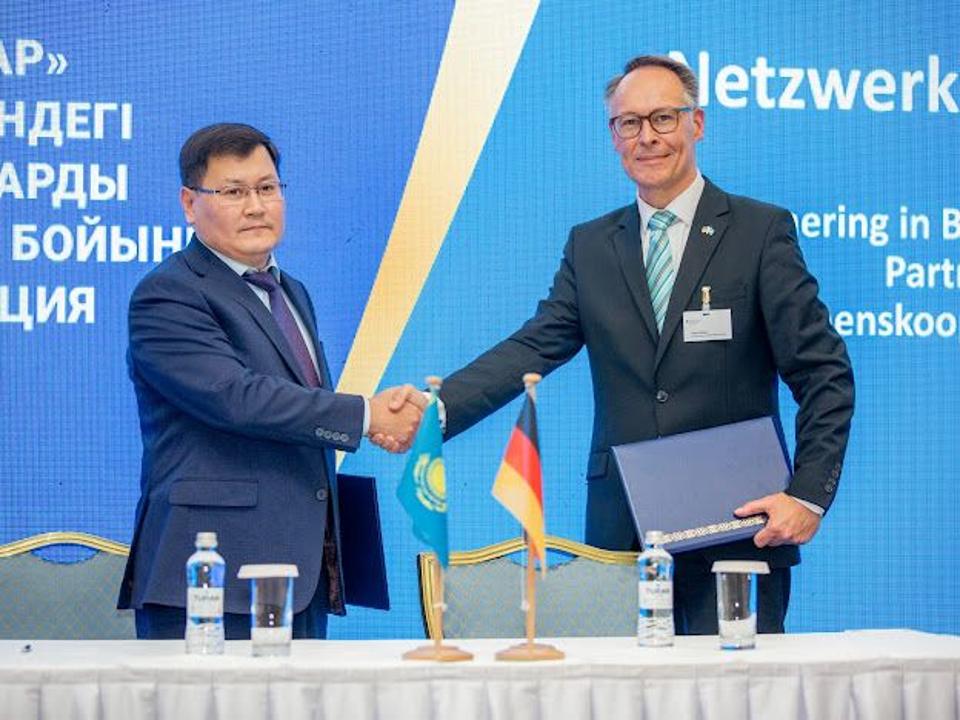
Kazakhstan and Germany have signed an agreement to extend their long-running “Partnering in Business with Germany” program until 2028, reinforcing bilateral economic cooperation with a particular focus on small and medium-sized enterprises (SMEs).

Jointly implemented by Kazakhstan’s Ministry of National Economy and Germany’s Federal Ministry for Economic Affairs and Energy, the program has been in operation for 15 years. More than 800 Kazakhstani entrepreneurs have participated, gaining hands-on training in Germany, learning best business practices, modernizing their operations, and securing contracts, licenses, and franchise agreements. In 2025, the German side will continue to fully cover costs for participants, including training, insurance, and accommodation.

Deputy Minister of National Economy Yerlan Sagnayev emphasized that the program not only fosters professional development among Kazakhstani entrepreneurs but also contributes to deepening long-term economic ties between the two nations.

Germany is Kazakhstan’s largest trading partner within the European Union. At the 16th Kazakhstan-German Business Council meeting held in Astana in May, it was revealed that Kazakhstan ranked 43rd among Germany’s global trade partners in 2024 and accounted for 83% of Germany’s trade volume with Central Asia.

Energy remains a central pillar of bilateral cooperation. Kazakhstan began exporting crude oil to Germany via the Druzhba pipeline in 2023, with volumes expected to rise to 1.5 million tons in 2025, up from 993,000 tons in 2023.

Kyrgyz Authorities Introduce Incentives for Businesses to Avoid Inspections

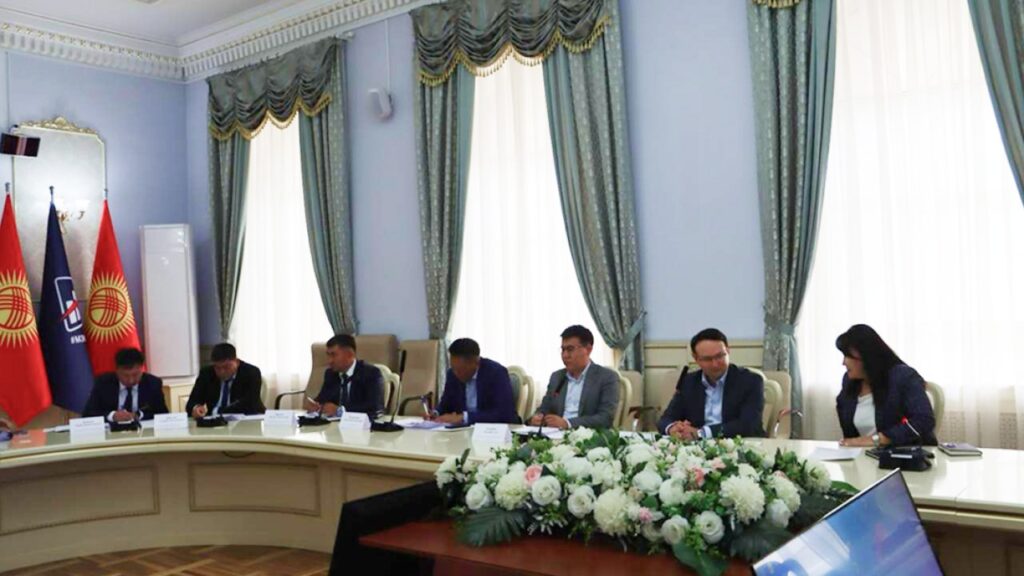
The Ministry of Economy and Commerce of Kyrgyzstan has announced that companies included in the newly created Register of Conscientious Entrepreneurs will receive a range of state-backed privileges, including financial incentives and regulatory relief.

“The Register of Conscientious Entrepreneurs is an official list of companies and businesspeople recognized by the state as reliable, honest, and socially responsible. In other words, it is a kind of ‘white list’ of businesses operating transparently and lawfully,” the ministry stated.

Officials explained that the register is designed to support ethical entrepreneurship, strengthen reputations, and increase trust from clients, partners, and the state. Inclusion is expected to encourage lawful conduct and promote contributions to Kyrgyzstan’s economic development.

Businesses listed in the register will be eligible for several benefits, including free advertising airtime on state television channels, priority service at tax authorities, and free participation in international exhibitions and trade fairs. Notably, they will also be exempt from inspections by supervisory bodies for a period of three years, except for certain audits conducted by the State Tax Service.

Additional incentives include access to preferential financing through state-backed lending programs, the right to display a government-issued quality mark, and official confirmation of reliability.

To qualify for the register, businesses must meet several criteria:

  • Operate for at least three years;
  • Pay taxes and insurance contributions fully and on time;
  • Have no debts to the state;
  • Provide decent wages to employees (no lower than the sector average);
  • Demonstrate annual growth of at least 5% in taxes and budget contributions;
  • Comply with labor rights regulations;
  • Have no convictions for economic crimes.

An interdepartmental commission met earlier this week to evaluate applications. Of the 48 businesses that applied, only a few were denied entry into the register.

Kyrgyz-Chinese Trade and Economic Cooperation Center Opens in Chongqing

A new Kyrgyz-Chinese Trade and Economic Cooperation Center has officially opened in Chongqing, one of southwest China’s largest industrial and transportation hubs.

According to Kyrgyzstan’s Ministry of Economy and Commerce, the 300-square-meter facility will serve as a platform for bilateral business cooperation. Kyrgyz entrepreneurs will be able to register their companies and conduct business activities in China free of charge.

Also on September 26, Chongqing hosted the opening of Kyrgyzstan’s Trade Pavilion, which will showcase and sell national products such as honey, alcoholic beverages, confectionery, and handicrafts.

China remains one of Kyrgyzstan’s most important trade partners, with an increasing share of transactions now carried out in Chinese yuan. Earlier this year, Kyrgyzstan’s state-owned Eldik Bank became the first bank in Central Asia to join China’s Cross-Border Interbank Payment System (CIPS). The system enables direct and instant settlements in yuan with Chinese partners and other participants, bypassing intermediaries and reducing transaction costs. Eldik Bank officials said the move would expand business opportunities and deepen bilateral economic ties.

Trade between Kyrgyzstan and China surged by 44.7% in 2024, reaching $5.3 billion, according to Kyrgyz government statistics. Exports from Kyrgyzstan to China grew dramatically to $2.04 billion, 93 times higher than in 2023. China also remained Kyrgyzstan’s largest foreign investor, accounting for 23.9% of total foreign direct investment (FDI) in 2024, valued at $872.6 million.