Kazakhstan’s railways are not just about moving freight – they are about positioning the country at the heart of Eurasia’s transport map. In a region where China’s Belt and Road, Russia’s transit corridors, and Europe’s markets converge, rail infrastructure has become a strategic asset.
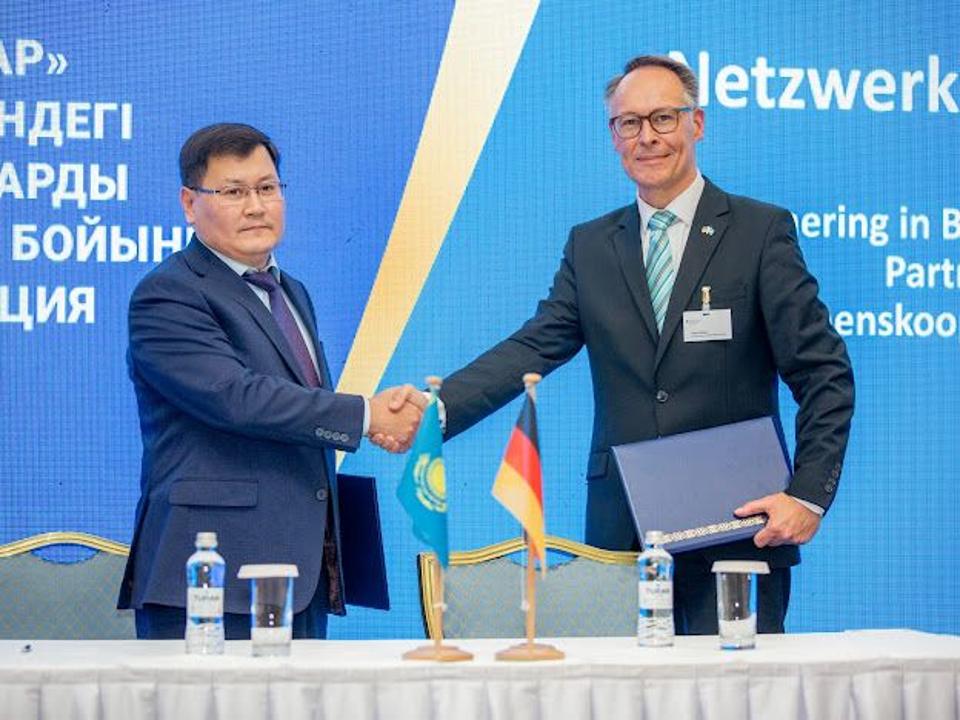
Against this backdrop, Kazakhstan Temir Zholy (KTZ) has signed a landmark $4.2 billion agreement with U.S.-based Wabtec for the supply of 300 TE33A locomotives and the maintenance of both existing and newly acquired rolling stock. The deal, which includes the construction of social infrastructure in regions where service centers are located, is one of the largest in the history of Kazakhstan’s rail sector, underscoring Astana’s ambition to cement its role as a key Eurasian logistics hub.
To explore the agreement’s significance and the implications for Kazakhstan’s rail sector, The Times of Central Asia spoke with Asan Umbetov, Deputy General Director for Locomotive Operations at KTZ-Freight Transportation.
TCA: What does this agreement mean for Kazakhstan’s railway sector?
Umbetov: Kazakhstan is increasingly positioning itself as a key transport and logistics hub in Eurasia, with freight volumes having multiplied in recent years. To remain competitive, we need a modern and reliable locomotive fleet. Many of our diesel locomotives from the 1970s and 1980s are nearing the end of their service life.
The TE33A series offers clear advantages: reduced fuel consumption, lower maintenance costs, operational readiness of up to 95%, enhanced traction, and resilience in extreme weather.
They also improve working conditions for crews, featuring air conditioning, refrigerators, and onboard sanitation. This investment supports not only transport efficiency but also job creation, increased tax revenue, and the growth of adjacent industries, such as maintenance, warehousing, and logistics.
In essence, modernizing our locomotive fleet is an investment in Kazakhstan’s broader economic and strategic positioning in Eurasian freight transport.
TCA: How would you assess KTZ’s cooperation with Wabtec to date?
Umbetov: Wabtec brings over a century of global experience and has operated in Kazakhstan for more than 27 years. Initially focused on modernizing 2Т10МК locomotives, the company launched the Locomotive Assembly Plant (LAP) in Astana in 2009. Today, the plant is staffed entirely by Kazakh citizens, including its management, and manufactures freight, passenger, and shunting locomotives certified under Eurasian Customs Union standards.
In 2024, Wabtec opened an engineering center at LAP to provide technical expertise across the CIS. Its specialists will also participate in the development of the new TE33A series.
Wabtec’s Astana Diesel Service plant handles major overhauls of Evolution-series diesel engines and other components, while seven service centers across Kazakhstan ensure ongoing maintenance.
The company also supports the Bolashak program, offering paid internships for Kazakh students at its U.S. facilities.
Since LAP’s launch, 572 locomotives have been produced for KTZ, and 40 units have been exported to Kyrgyzstan, Moldova, Tajikistan, Azerbaijan, Ukraine, Turkmenistan, and Mongolia. The plant has achieved a localization level of 40%.
TCA: When will the new locomotives be delivered?
Umbetov: Deliveries under the current contract will continue until 2026. The new agreement, covering 300 locomotives, spans the period from 2027 to 2036, with approximately 30 units delivered annually. These will feature diesel engines manufactured in Astana, advanced traction motors, a next-generation generator, and an upgraded cooling system.
Together, these enhancements will reduce fuel consumption, improve reliability, and sustain a 95% operational readiness rate.
The $4.2 billion package includes more than just procurement. It extends the maintenance agreement for 405 locomotives through 2058, provides full service for the new units for 18 years, includes the supply of five KinetiX digital monitoring systems, and supports major overhauls of braking and compressor systems for 505 locomotives. It also calls for the construction of social facilities in remote service locations such as Sekseul, Ayagoz, Makat, Aktobe, Astana, Shalkar, and Almaty.

@KTZ
TCA: How do these locomotives differ from the current fleet?
Umbetov: The TE33A represents a new generation of locomotives, equipped with asynchronous traction motors, higher axle load capacity, and advanced control systems. Compared to models from the 1970s and 1980s, they consume less fuel, offer superior traction, and are significantly more reliable.
Crew comfort has also improved, with climate control, kitchen appliances, and sanitation facilities. Technical upgrades, such as enhanced adhesion, an axle load increase to 25 tons, and optimized cooling, make these locomotives the most efficient in their class.
TCA: How will the procurement be financed?
Umbetov: The $4.2 billion package encompasses three contracts covering procurement and long-term servicing through 2058. Financing will come from a mix of internal and borrowed funds. Maintenance costs will be met from KTZ’s operational budget without loans. The investment portion, covering locomotive acquisitions between 2027 and 2036, will be financed through loans.
However, the National Fund and the Unified Pension Fund will not be used. This is a commercially viable project, with repayment and returns secured under the contract terms.
–
The broader implications of the agreement extend well beyond KTZ’s balance sheets. As deliveries begin in 2027, the program will not only replace aging locomotives but also signal Kazakhstan’s ability to secure long-term partnerships that blend industrial modernization with global integration. The $4.2 billion agreement is more than a procurement contract; it is a statement about the country’s future on the Eurasian transport grid. Whether measured in fuel savings, operational reliability, or international connectivity, the TE33A fleet is designed to keep Kazakhstan on track as the region’s pivotal transit state.