• KGS/USD = 0.01144 0%
  • KZT/USD = 0.00196 -0%
  • TJS/USD = 0.10896 -0%
  • UZS/USD = 0.00008 0%
  • TMT/USD = 0.28571 0.28%
  • KGS/USD = 0.01144 0%
  • KZT/USD = 0.00196 -0%
  • TJS/USD = 0.10896 -0%
  • UZS/USD = 0.00008 0%
  • TMT/USD = 0.28571 0.28%
  • KGS/USD = 0.01144 0%
  • KZT/USD = 0.00196 -0%
  • TJS/USD = 0.10896 -0%
  • UZS/USD = 0.00008 0%
  • TMT/USD = 0.28571 0.28%
  • KGS/USD = 0.01144 0%
  • KZT/USD = 0.00196 -0%
  • TJS/USD = 0.10896 -0%
  • UZS/USD = 0.00008 0%
  • TMT/USD = 0.28571 0.28%
  • KGS/USD = 0.01144 0%
  • KZT/USD = 0.00196 -0%
  • TJS/USD = 0.10896 -0%
  • UZS/USD = 0.00008 0%
  • TMT/USD = 0.28571 0.28%
  • KGS/USD = 0.01144 0%
  • KZT/USD = 0.00196 -0%
  • TJS/USD = 0.10896 -0%
  • UZS/USD = 0.00008 0%
  • TMT/USD = 0.28571 0.28%
  • KGS/USD = 0.01144 0%
  • KZT/USD = 0.00196 -0%
  • TJS/USD = 0.10896 -0%
  • UZS/USD = 0.00008 0%
  • TMT/USD = 0.28571 0.28%
  • KGS/USD = 0.01144 0%
  • KZT/USD = 0.00196 -0%
  • TJS/USD = 0.10896 -0%
  • UZS/USD = 0.00008 0%
  • TMT/USD = 0.28571 0.28%
09 December 2025

Turkmenistan Participates in 75th Anniversary of Adoption of Universal Declaration of Human Rights in Geneva

The commemoration of the 75th anniversary of the Universal Declaration of Human Rights witnessed the active involvement of Turkmenistan’s justice representatives in significant high-level events held in Geneva, Switzerland, on December 11-12. Adalatchy Yazdursun Gurbannazarova, the designated human rights representative in Turkmenistan, participated in the “Human Rights 75” events, a series organized by the Office of the UN High Commissioner for Human Rights. The Turkmen delegation also engaged in a parallel event hosted by the non-governmental organization, BDG, and the non-commercial organization, INHR, alongside national human rights institutions of Kazakhstan and Uzbekistan.

The momentous occasion, dedicated to honoring the 75th anniversary of the Universal Declaration of Human Rights, convened eminent figures from international organizations, delegation leaders, and national human rights entities. UN High Commissioner for Human Rights, Volker Türk, extended congratulations during the conference’s inauguration, acknowledging the milestone of the declaration’s adoption.

Participating in these crucial discussions, Turkmenistan’s representatives conveyed the nation’s accomplishments and contributions to the advancement of human rights and the rule of law. Turkmenistan’s commitments within the framework of “Human Rights 75” initiatives and its support for implementing the Universal Declaration of Human Rights were highlighted. Key pledges encompassed enhancing international cooperation, fortifying youth policies, implementing environmental approaches to safeguard human rights, and addressing statelessness within Turkmenistan.
Kazakhstan Launches Modernized Water Pipeline in Atyrau and Mangystau Regions

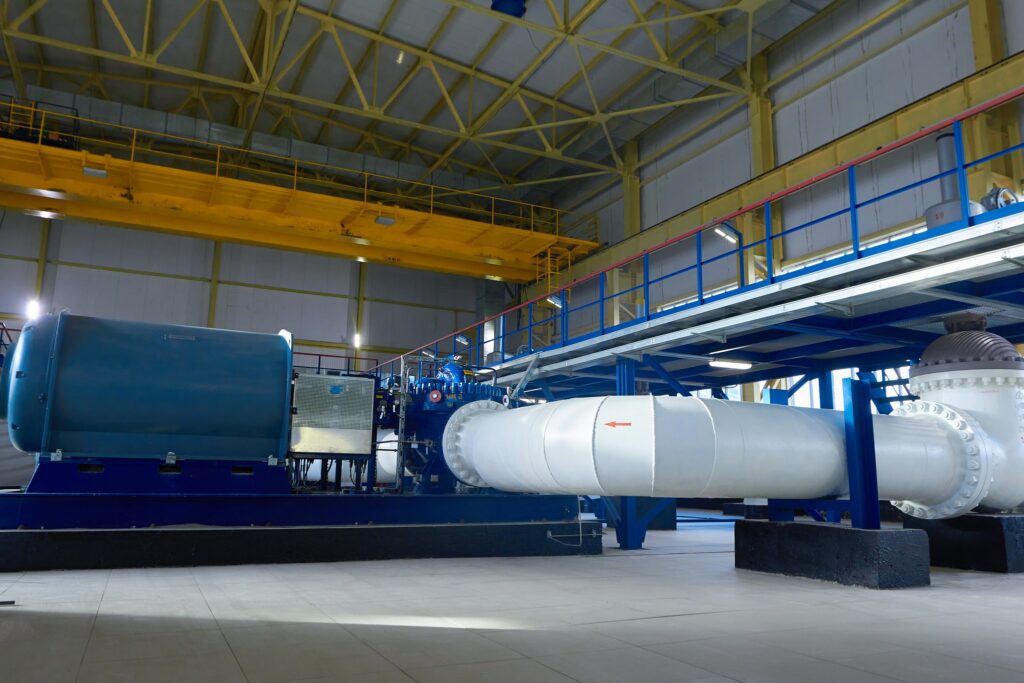
On December 13th, Kazakhstan unveiled the modernized main water pipeline, Astrakhan-Mangyshlak, in its western Atyrau Region. The significant expansion of this facility was a result of comprehensive reconstruction, directed by President Tokayev’s under the supervision of Kazakhstan’s Prime Minister, Alikhan Smailov.

The upgraded Astrakhan-Mangyshlak pipeline will provide an additional 60,000 cubic meters of water to the population, enterprises, and agriculture of Atyrau and Mangystau regions. The project includes the renewal of worn-out equipment and the replacement of two sections of the main pipeline, totaling about 177 km in length. As a result, the throughput capacity of the Astrakhan-Mangyshlak water pipeline increased from 110,000 to 170,000 cubic meters per day.

“The reconstruction of the water pipeline was completed a year ahead of schedule due to accurate design solutions and rapid construction rates. This marks just one of many large-scale projects planned for the region,” Smailov said.

Additionally, a desalination plant capable of producing 50,000 cubic meters of water per day is currently under construction in the village of Kenderli. From this plant, a 105 km long main water pipeline will be built to Zhanaozen.

Smailov further stated, “Our goal is not only to provide 100% of settlements with clean drinking water by 2026, but also to create a reliable framework for further sustainable water supply to the population and industries10. For this purpose, projects are being implemented to build new and modernize existing hydraulic structures and water conduits. Branching networks are being brought to settlements, and pumping modules from underground sources are being installed in remote villages. We have a lot of work ahead of us.”

EDB and Kazakhstan Join Efforts for Water Investment

EDB and Kazakhstan Join Efforts for Water Investment

The Eurasian Development Bank (EDB) has signed a memorandum of cooperation with Kazakhstan’s Ministry of Water Resources and Irrigation (MWRI). Ruslan Dalenov, Vice Chairman of the EDB Management Board, and Bekniyaz Bolat, MWRI First Deputy Minister, formalized this partnership during a ceremony in Astana on December 13th.

The memorandum aims to establish long-term, mutually beneficial collaboration focused on mobilizing investment and grants for joint water and irrigation projects.

“We are committed to jointly developing sustainable infrastructure solutions that will support important water-related projects and contribute to overall economic growth,” said Dalenov.

The parties intend to actively cooperate in financing investment projects and exchange expertise through participation in workshops, conferences, and other events.

The EDB is currently implementing the Central Asian Water and Energy Complex mega-project based on research and projections on the most effective ways to comprehensively develop the sector. Bank analysts have conducted studies such as Investment in the Water and Energy Complex of Central Asia, Regulation of the Water and Energy Complex of Central Asia, and Efficient Irrigation and Water Conservation in Central Asia. The latter outlines ten practical steps for preserving irrigated land potential and promoting water conservation, including four recommendations for adoption at a regional level and six at a national level. These measures are designed to conserve enough water annually to support sustainable development.

The EDB has also identified projects to cater to the region’s electricity and water needs. The Bank is financing the construction of the 100 MW Kulanak HPP in the Kyrgyz Republic. Additionally, the Bank is evaluating several projects aimed at enhancing the region’s water and energy infrastructure.

World Bank to Help Kyrgyzstan Reduce Air Pollution

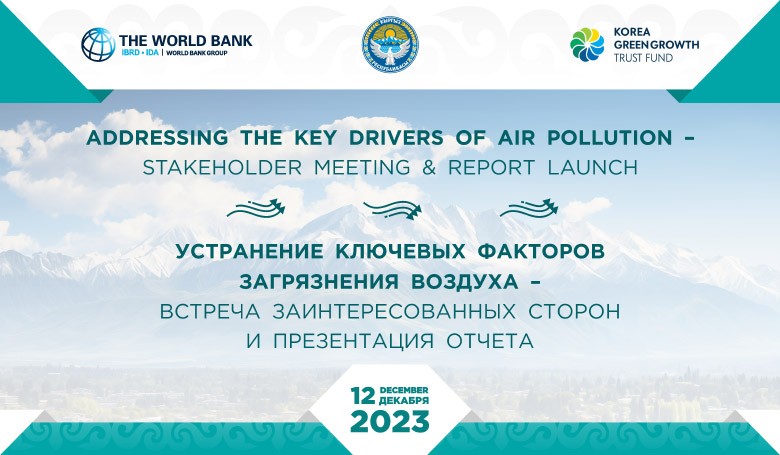
The World Bank and the Ministry of Natural Resources, Ecology and Technical Supervision (MNRETS) of the Kyrgyz Republic on December 12th hosted a stakeholder meeting to launch the World Bank’s new report, Air Quality Analysis for Bishkek: PM2.5 Source Apportionment and Emission Reduction Measures, according to a statement on the World Bank website.

The World Bank conducted this study in close coordination with MNRETS Hydrometeorological Service (Kyrgyzhydromet) under the Ministry of Emergency Situations and Bishkek Municipality to evaluate the air quality in Bishkek, focusing on PM2.5 pollution.

Exposure to fine inhalable particles (PM2.5 with a diameter of 2.5 micro-meters or less) poses serious health risks, including respiratory infections, cancer, cardiovascular diseases, and premature deaths. In Bishkek, the average annual PM2.5 concentrations in 2022 surpassed the WHO guideline value of 5 µg/m3 by nearly sevenfold. During the last several winters, average daily concentrations of PM2.5 were often above 200 µg/m3, surpassing the WHO guideline of 15 µg/m3 by more than 13 times and placing Bishkek among the world’s most polluted cities. The losses caused by air pollution in Bishkek are estimated to be equivalent to 1.2% of the Kyrgyz Republic’s GDP, while air pollution at country level is estimated cost 5.1% of the GDP.

In line with priorities and recommendations identified in the study, the World Bank jointly with MNRETS, KyrgyzHydromet and Bishkek Municipality has prepared a $50 million Kyrgyz Republic Air Quality Improvement Project to help the country reduce air pollution and the adverse effects it has on public health and the economy. This project is expected to not only directly benefit residents of Bishkek by improving the city’s air quality, but will also support the establishment of a sound Air Quality Management System that will drive policy actions for air quality improvement, aiming to mitigate the impact of air pollution on public health and economic development across the country.

U.S. and Central Asian Countries Focus on Protecting Rights of People with Disabilities

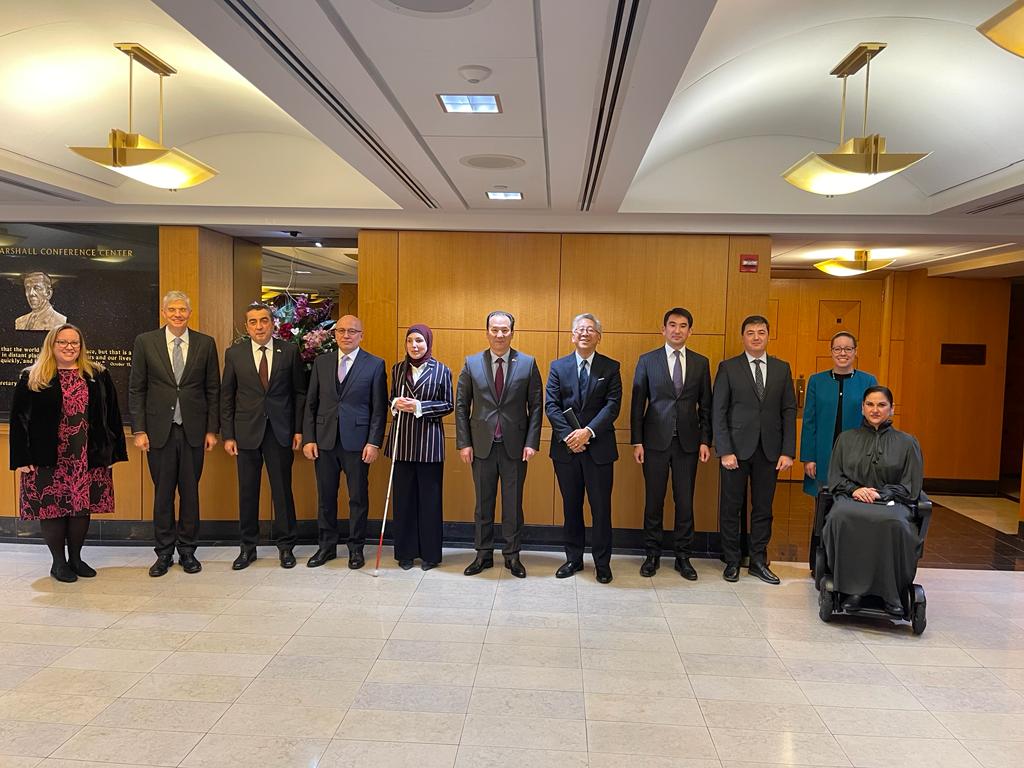
On December 11th, the U.S. Department of State hosted a meeting of representatives of C5+1 countries dedicated to protecting the rights of people with disabilities and finding practical solutions to their problems.

The C5+1 diplomatic platform represents the U.S. Government’s holisitc approach to Central Asia, jointly engaging all five Central Asian nations.

The meeting was attended by Sara Minkara, Special Adviser to the President of the United States on the International Rights of Persons with Disabilities, Donald Lu, Assistant Secretary of State, Deputy Assistant Secretary John Mark Pommersheim, and representatives of government agencies of the USA. The Ambassadors of Kazakhstan, Kyrgyzstan, Tajikistan, and Uzbekistan to the United States also spoke during the meeting, which was moderated by Minkara, who shared her experience and recommendations on ensuring protection of the rights of persons with disabilities.

U.S. Assistant Secretary of State, Donald Lu stressed the importance of increasing cooperation within the C5+1 format on the rights of persons with disabilities in a multilateral format. Following the meeting, the participants agreed on joint actions in this direction.

Kyrgyzstan and Tajikistan Demarcate More Than 90% of Border

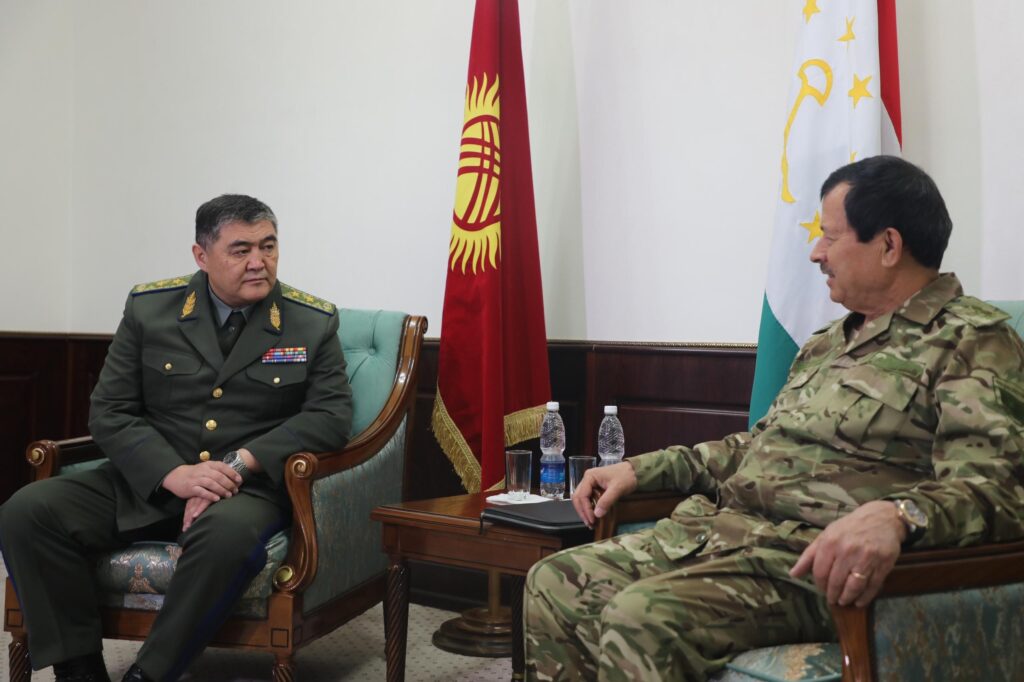
Following a meeting between government delegations, Chairmen of the National Security Committee of Kyrgyzstan, Kamchybek Tashiyev, and Tajikistan, Saimumin Yatimov, released a statement announcing that over 90% of the border between the two countries has now been agreed upon.

“As a result of the work of the intergovernmental commission, agreements were reached on the harmonization of most of the state border – more than 90%,” Tashiyev said. “Work on the remaining sections will be completed soon, starting with Kayragach, Kulundu, Maksat, Arka, Arka-1, Arka-2, Zhany-Zher and up to Zhiydelik. The Working Group has fully completed the coordination. At the moment, we have almost completed work on the disputed areas about which there were questions.”

According to Tashiyev, several more meetings will be necessary to complete the demarcation and delimitation of the state border.

In turn, Yatimov noted that vital issues were discussed at the meeting of the delegations. “There is a common interest, common goals, and common causes between the two states,” he said. “This is the security and socio-economic development of our states. A lot of work has been done today – we have advanced more than 120 kilometers, and have agreed on these issues in principle. If we take the total length of the state border between Tajikistan and Kyrgyzstan, Kamchybek Kydyrshayevich and I can confirm that over 90% of the state border has been agreed. We are really close to solving these issues.”