• KGS/USD = 0.01144 0%
  • KZT/USD = 0.00194 -0%
  • TJS/USD = 0.10844 -0.46%
  • UZS/USD = 0.00008 0%
  • TMT/USD = 0.28571 0.28%
  • KGS/USD = 0.01144 0%
  • KZT/USD = 0.00194 -0%
  • TJS/USD = 0.10844 -0.46%
  • UZS/USD = 0.00008 0%
  • TMT/USD = 0.28571 0.28%
  • KGS/USD = 0.01144 0%
  • KZT/USD = 0.00194 -0%
  • TJS/USD = 0.10844 -0.46%
  • UZS/USD = 0.00008 0%
  • TMT/USD = 0.28571 0.28%
  • KGS/USD = 0.01144 0%
  • KZT/USD = 0.00194 -0%
  • TJS/USD = 0.10844 -0.46%
  • UZS/USD = 0.00008 0%
  • TMT/USD = 0.28571 0.28%
  • KGS/USD = 0.01144 0%
  • KZT/USD = 0.00194 -0%
  • TJS/USD = 0.10844 -0.46%
  • UZS/USD = 0.00008 0%
  • TMT/USD = 0.28571 0.28%
  • KGS/USD = 0.01144 0%
  • KZT/USD = 0.00194 -0%
  • TJS/USD = 0.10844 -0.46%
  • UZS/USD = 0.00008 0%
  • TMT/USD = 0.28571 0.28%
  • KGS/USD = 0.01144 0%
  • KZT/USD = 0.00194 -0%
  • TJS/USD = 0.10844 -0.46%
  • UZS/USD = 0.00008 0%
  • TMT/USD = 0.28571 0.28%
  • KGS/USD = 0.01144 0%
  • KZT/USD = 0.00194 -0%
  • TJS/USD = 0.10844 -0.46%
  • UZS/USD = 0.00008 0%
  • TMT/USD = 0.28571 0.28%
09 December 2025

Kazakhstan’s Exports to Organization of Islamic Cooperation Countries Reaches $8.4 Billion

The Minister of Trade and Integration of Kazakhstan, Arman Shakkaliyev addressed the 39th meeting of the Standing Committee of the Organization of Islamic Cooperation on Economic and Trade Cooperation (COMSEC) in Istanbul. The official opening ceremony of the event took place on December 4th with the participation of Turkish President Recep Tayyip Erdogan.

The Organization of Islamic Cooperation (OIC) is the largest official Muslim governmental international organization, uniting 57 countries. Today, OIC countries comprise more than a quarter of the world’s population – 1.7 billion people on four continents – Asia, Africa, Europe, and South America. Over the past three years, total trade turnover between member states has increased from $3.7 trillion to $4.5 trillion. During the meeting, ministers from the participating countries discussed further efforts to strengthen cooperation, including in trade and agriculture.

Kazakhstan is actively seeking to make a significant contribution to food security. Over the past five years, the country has doubled its volume of agricultural products and exports them to more than 80 countries, working in this direction with OIC members.

“OIC countries are among the active trade and economic partners of Kazakhstan,” said Shakkaliev, addressing a report on improving the potential for trade with OIC member states. “Our trade turnover for the first nine months of 2023 amounted to $12.5 billion. Exports of Kazakhstani products to the OIC countries account for more than half of the total trade turnover – $8.4 billion. We need to combine the efforts of all members of the Organization in the development of transport and logistics infrastructure, and expansion of investment cooperation.”
Turkmenistan and Russia Discuss Cooperation

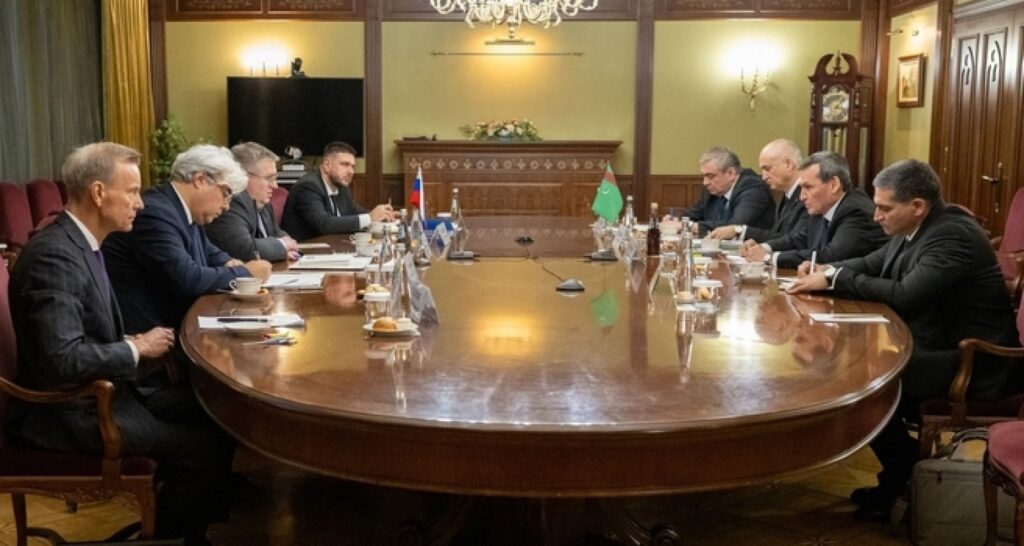
On December 4th in Moscow, the Deputy Chairman of the Cabinet of Ministers and Minister of Foreign Affairs of Turkmenistan, Rashid Meredov met with Deputy Prime Minister of the Russian Federation, Alexey Overchuk. The main topic of the talks was preparations for the upcoming 13th meeting of the Intergovernmental Turkmen-Russian Commission on Economic Cooperation, which will be held in Ashgabat early next year.

It was emphasized that the upcoming meeting will be an important stage in the development of mutually beneficial trade and economic partnership between the two countries. Both sides noted that today, Turkmenistan and Russia are searching for new forms and areas of cooperation that meet modern realities, the needs and mutual potential of the two countries. In this context, the importance of improving the legal framework of bilateral economic and commercial relations was stated.

The parties also discussed cooperation in the cultural and humanitarian sphere. In this regard, Overchuk noted the agreements reached on the construction of a new joint Turkmen-Russian secondary school named after Pushkin in Ashgabat, the new Russian Drama Theater, and the creation of a Turkmen-Russian university in Ashgabat.

Kazakhstan’s Nuclear Energy Projects: Evaluating Potential Suppliers for a Sustainable Future

Kazakhstan, renowned for its abundant uranium reserves and expansive mining ventures, is making substantial progress in the realm of nuclear power. The country’s inaugural venture into this field was marked by the BN-350 fast-neutron reactor in Aktau, which signified the launch of Kazakhstan’s first nuclear power plant.

At present, Kazakhstan operates 13 uranium mining projects. Kazatomprom, the national atomic company, fully owns three of these, while the remaining ten are joint ventures with foreign equity holders. In 2020, Kazatomprom’s significant contributions to the uranium mining industry confirmed Kazakhstan’s status as the global leader in uranium production, providing 28% of the world’s production.

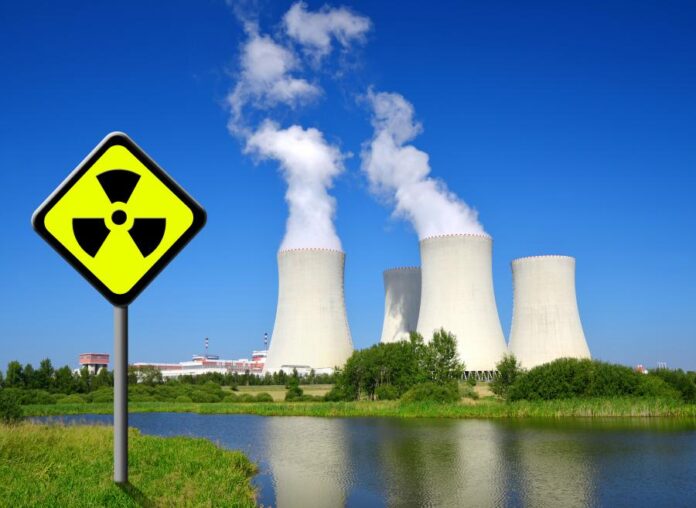
However, Kazakhstan’s nuclear aspirations are not confined to uranium mining. Plans are in motion to construct a nuclear power plant (NPP), projected to be operational by 2035, to cater to the country’s escalating energy demands. The proposed NPP is expected to house two reactors, each with a capacity ranging from 1,000 to 1,400 megawatts. These reactors will help alleviate the shortage of base load power supply in the nation.

Currently, the authorities are evaluating several potential suppliers of nuclear technology. The contenders include China National Nuclear Corporation (CNNC), South Korea’s Korea Hydro & Nuclear Power (KHNP), France’s Électricité de France (EDF), and Russia’s state corporation Rosatom.

The construction of the NPP has sparked significant debate within the country. In response to public sentiment, President Kassym-Jomart Tokayev has announced a referendum to decide the future of the plant.

Despite the controversy, the nuclear sector continues to contribute to Kazakhstan’s economy through job creation. Nearly 18,000 people are currently employed in the peaceful use of nuclear energy.

The International Atomic Energy Agency (IAEA) has been closely monitoring Kazakhstan’s progress in developing its nuclear infrastructure. The country operates several research reactors and other nuclear installations related to the front end of the nuclear fuel cycle10.

While Kazakhstan’s venture into nuclear energy offers significant benefits, including job creation, economic growth, and a sustainable solution to the country’s escalating energy needs the course ahead depends on public sentiment and the outcome of the forthcoming referendum.[/vc_column_text][/vc_column][/vc_row]

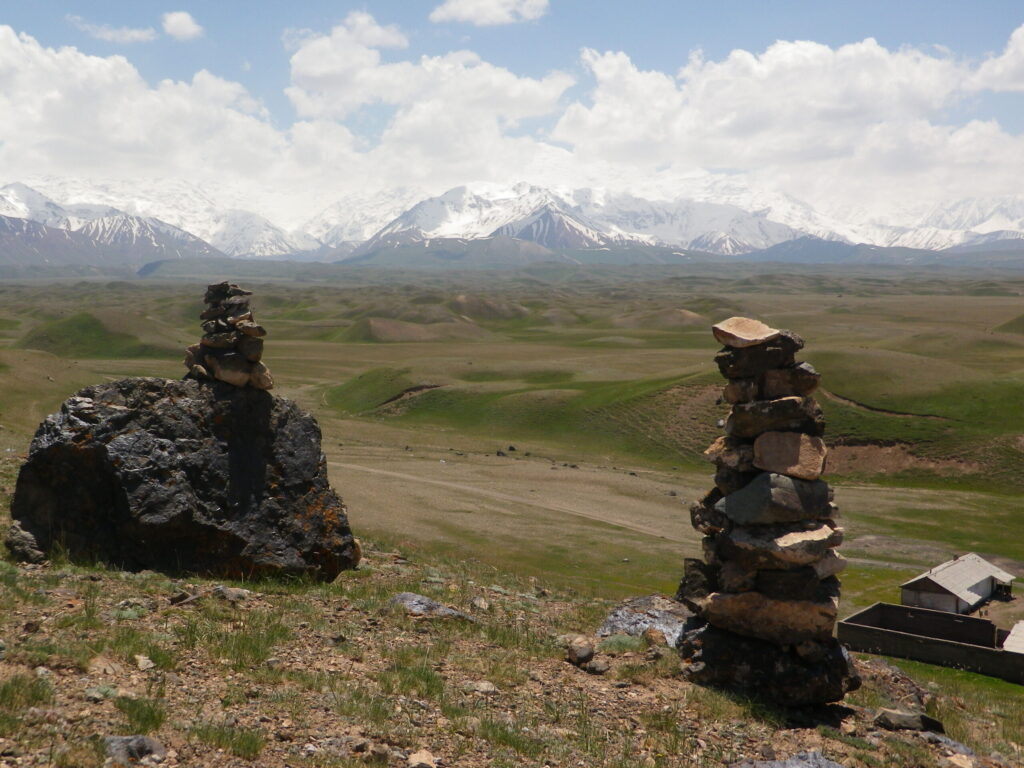
UNDP Supports the Development of Adventure Tourism in Kyrgyzstan

As per a press release on its website, the United Nations Development Program (UNDP) in Kyrgyzstan, in collaboration with the Fair and Sustainable Development Solutions (FSDS) Foundation, said it is launching activities to strengthen the value-added chain (VAC) of adventure tourism. The project, Aid for Trade in Central Asia, aims to develop adventure tourism in target regions of Kyrgyzstan, creating new jobs, increasing the competitiveness of the sector, and strengthening its export potential.

Tourism plays an important role in expanding economic opportunities and contributes to infrastructure development, which has a positive impact on other sectors of the economy. There are also opportunities to make the sector green and sustainable, the project stated. Kyrgyzstan needs to be positioned as a new tourism destination, as the country has a wide range of tourism resources. However, this will require coordinated efforts.

“We support the promotion of adventure tourism, which is one of the fastest growing sectors and has a great potential for developing the local economy”, said Aid for Trade project coordinator, Aisulu Mambetkazieva. “Moreover, adventure tourism will allow as many people as possible to learn about the beautiful culture and nature of Kyrgyzstan. We hope that the project can become a driver for the development of adventure tourism in Kyrgyzstan and create new opportunities for sector participants”.

The activities on strengthening the VAC of adventure tourism will be carried out in Issyk-Kul, Jalal-Abad, and Osh provinces. The project includes several key tasks on which the UNDP has already begun work: Increasing the potential of VAC participants and introducing joint adventure tourism products. New tourism products will be developed and promoted through various trading platforms; Increasing access to innovative and environmentally sustainable technologies that contribute to sustainable development; Creation of favorable conditions for the development of safe adventure tourism at a local level.

The UNDP in Kyrgyzstan pays great attention to supporting women’s entrepreneurship and the business initiatives of people with disabilities. In this regard, it is expected that appropriate measures will be taken to create examples of tourism entrepreneurship among women and people with disabilities for further replication and scaling.

Kazakhstan Increases Oil Supplies to Germany via Russia by 54% in November

Kazakhstan Increases Oil Supplies to Germany via Russia by 54% in November

The volume of transportation of Kazakh oil through the system of trunk oil pipelines of Russia’s Transneft PJSC in the direction of the Adamova Zastava oil delivery point in Russia for further delivery to Germany will increase from the planned 100,000 tons to 154,000 tons, the director of the transportation department of KazTransOil JSC, Abai Beisembayev said on November 30th. KazTransOil JSC is the national operator of the main oil pipeline in Kazakhstan.

“Despite difficult meteorological conditions in the Black Sea, KazTransOil JSC fully fulfills its obligations to shippers”, Beisembayev said. “There are no restrictions on the part of Transneft PJSC today. Due to the limitations of oil transportation through the system of the Caspian Pipeline Consortium JSC, a number of shippers who would like to pump oil through our system have applied to KazTransOil JSC. Operational work was carried out with Transneft PJSC on additional pumping of the resources of Karachaganak Petroleum Operating B.V. In November, it was planned to deliver 100,000 tons of oil to Germany, but by the end of the month, the volume of transportation of Kazakh oil through the system of trunk oil pipelines of Transneft PJSC in the direction of the Adamova Zastava oil delivery point for further delivery to Germany will amount to 154,000 tons”.

KazTransOil JSC confirmed its technical capability to supply 1.2 million tons of Kazakh oil a year towards the Adamova Zastava oil delivery point for further transportation to Germany, but the actual volume depends on requests from oil companies.

CAREC Countries Endorse New Vision to Fight Climate Change Together

Member countries of the Central Asia Regional Economic Cooperation (CAREC) program committed to working together to cut greenhouse gas emissions and build resilience to climate change. “We endorse the Regional Action on Climate Change: A Vision for CAREC to help countries implement their commitments under the Paris Agreement”, said a joint ministerial statement issued at the 22nd CAREC Ministerial Conference held on November 30th in Tbilisi. The statement was endorsed by ministers and high-level officials from Azerbaijan, the People’s Republic of China, Georgia, Kazakhstan, the Kyrgyz Republic, Mongolia, Pakistan, Tajikistan, Turkmenistan, and Uzbekistan.

“I am confident this shared Vision will enhance the CAREC program’s impact on this most critical climate challenge facing the subregion”, said Asian Development Bank (ADB) President, Masatsugu Asakawa. “I look forward to concrete progress on bringing forward more climate projects – including in renewable energy, sustainable agriculture, efficient water use, economic diversification, and strengthening supply chains – to improve the region’s climate resilience and adaptation”.

The Vision emphasizes the importance of energy transition and the improved use of renewable energy sources, strengthening the regional electricity trade, deploying innovative financing solutions, and investing in climate-resilient infrastructure and policies. It calls for strengthened collaboration and coordination with the program’s development partners in supporting the region’s climate agenda.

A scoping study published earlier this year showed climate change is expected to have severe impacts in the CAREC region, including higher-than-average temperature rises, water scarcity, expanded desertification, and glacial melting. To address water issues in the region, CAREC will support countries to improve their expertise and capacities in transboundary water management, water productivity, and to invest in more efficient irrigation systems to boost agricultural productivity.

CAREC will also support efforts to decarbonize transport and continue deepening regional connectivity with efficient transport technologies and infrastructure. Other priority areas include developing climate-smart cities with electrified mass transit systems and promoting climate and disaster resilience through regional risk management and financing initiatives.
The CAREC program is a partnership of countries and development partners working together to promote sustainable development, accelerate economic growth, and reduce poverty. The ADB hosts the CAREC secretariat.