• KGS/USD = 0.01144 0%
  • KZT/USD = 0.00196 -0%
  • TJS/USD = 0.10899 0%
  • UZS/USD = 0.00008 0%
  • TMT/USD = 0.28490 0%
  • KGS/USD = 0.01144 0%
  • KZT/USD = 0.00196 -0%
  • TJS/USD = 0.10899 0%
  • UZS/USD = 0.00008 0%
  • TMT/USD = 0.28490 0%
  • KGS/USD = 0.01144 0%
  • KZT/USD = 0.00196 -0%
  • TJS/USD = 0.10899 0%
  • UZS/USD = 0.00008 0%
  • TMT/USD = 0.28490 0%
  • KGS/USD = 0.01144 0%
  • KZT/USD = 0.00196 -0%
  • TJS/USD = 0.10899 0%
  • UZS/USD = 0.00008 0%
  • TMT/USD = 0.28490 0%
  • KGS/USD = 0.01144 0%
  • KZT/USD = 0.00196 -0%
  • TJS/USD = 0.10899 0%
  • UZS/USD = 0.00008 0%
  • TMT/USD = 0.28490 0%
  • KGS/USD = 0.01144 0%
  • KZT/USD = 0.00196 -0%
  • TJS/USD = 0.10899 0%
  • UZS/USD = 0.00008 0%
  • TMT/USD = 0.28490 0%
  • KGS/USD = 0.01144 0%
  • KZT/USD = 0.00196 -0%
  • TJS/USD = 0.10899 0%
  • UZS/USD = 0.00008 0%
  • TMT/USD = 0.28490 0%
  • KGS/USD = 0.01144 0%
  • KZT/USD = 0.00196 -0%
  • TJS/USD = 0.10899 0%
  • UZS/USD = 0.00008 0%
  • TMT/USD = 0.28490 0%
09 December 2025

Tajik Political Activist Sentenced to 8 ½ Years in Prison

A court in Dushanbe has sentenced Nizomiddin Nasriddinov, a former activist of the Group 24 opposition movement, to 8 1/2 years in prison on a charge of making public calls to forcibly change Tajikistan’s constitutional order, RFE/RL’s Tajik Service reported.

According to an anonymous source involved in the trial, RFE/RL was informed on October 5th that the Ismoili Somoni district court delivered Nasriddinov’s verdict and sentence on September 29th. The source added that the former activist pleaded not guilty.

Court officials and Nasriddinov’s relatives declined to comment on the matter. The court requested RFE/RL to submit an official letter for comment.

Recently, the Norwegian Helsinki Committee, Human Rights Watch, Freedom for Eurasia, and Freedom Now jointly urged Tajik authorities to drop what they deemed as “fabricated” charges against Nasriddinov and release him immediately.

Nasriddinov was detained by Belarusian authorities in January at the request of Dushanbe when he entered Belarus from Lithuania. Subsequently, he was extradited to Tajikistan in July. Notably, Nasriddinov holds refugee status in Germany.

His affiliation with Group 24, which was designated as a terrorist and extremist organization and banned in the tightly governed former Soviet republic in 2014, has been highlighted. In March 2015, the movement’s founder, businessman Umarali Quvatov, was assassinated in Istanbul.

Tajik President Emomali Rahmon, known for his nearly 30-year firm grip on the Central Asian nation, has faced criticism from international human rights groups. They accuse his administration of disregarding independent media, religious freedoms, civil society, and political diversity.

In the past year, Tajik courts sentenced seven journalists and bloggers to prison terms ranging from seven to 21 years. They were charged with spreading false information, involvement in extremist activities, and association with banned groups. Both the accused and their supporters, alongside human rights organizations, have labeled these charges as baseless and politically motivated

What Will the Future Hold for Uzbekistan’s Gas Problems?

What Will the Future Hold for Uzbekistan’s Gas Problems?

Can the infrastructure of Uzbekistan carry the country into a geopolitical resource hub? The country has certainly benefited from energy exports: In terms of available reserves, Uzbekneftegaz remains the sacred cow of the state, which has generated significant foreign exchange earnings. Prime Minister Abdulla Aripov even started to switch industrial enterprises “of no social significance” from natural gas to coal so that more gas would be available for export.

In 2019, natural gas was sold on the domestic market at a price of US$118 per thousand cubic meters while Uzbekistan sold gas for export at US$145 per thousand cubic meters. The money came in foreign currency. The conversion of small and medium-sized businesses (such as restaurants and factories for the production of building materials) to coal made it possible to free up over 2.1 billion cubic meters of gas, that is, around US$315 million.

On the other hand, gas supply on the domestic market left much to be desired. During the winter period, temperatures unexpectedly dropped below -20 degrees Celsius. Due to a lack of heat in residential buildings in November and December in several regions like Andijan, Karakalpakstan, Nukus, Fergana and Khorezm, the population began to attend unauthorized rallies. In 2020, the Ministry of Energy reluctantly admitted that there was a shortage of gas due to depletion of gas fields.

On December 16, 2020, the government decided to reduce the export of gas and direct it towards domestic needs. That said, exports were being reduced even earlier than this. In fact, the first reports of the suspension of fuel supplies to other countries appeared in March 2020, when the global COVID-19 pandemic began and the main gas consumer, China, reduced imports from Uzbekistan.

In 2021, Uzbekistan once again experienced extremely low air temperatures. Gas exports were again limited. Even though Deputy Chairman of Uzbekneftegaz, Bakhodir Sidikov, said that fuel reserves would last for several decades (in his words, “We have very large, promising areas for geological exploration, but the current approved hydrocarbon reserves will last for 20-30 years”) the coming months proved that these forecasts to be overly optimistic. Soon after, the Ministry of Energy announced that even with limited exports, Uzbekistan lacked about 20 million cubic meters of gas per day.

On the night of December 31, 2022, supplies to Uzbekistan from Turkmenistan stopped due to burst gas pipelines. Unusual frosts caused increased gas consumption, resulting in a shortage of fuel for power plants and boiler houses. The country began experiencing long-term power outages, problems with heating, hot water, and gas pressure in homes. Against the backdrop of the emerging energy shortage, the authorities were forced to close gas stations and industrial enterprises in order to distribute the remaining gas to the population and social facilities.

And thus, what was already known by many Uzbeks became apparent to the rest of the world. More than half of the gas pipelines in Uzbekistan (45 thousand km) were laid more than 30 years ago. The general deterioration of the gas transportation system was such that even in the best years, the country lost about 25% of fuel due to inefficient infrastructure. And not much had been done to invest in the modernization of the gas transportation systems in years. Gas loss was paid for by consumers, and as such, service providers had little incentive to invest in repairs.

According to the director of the Ma’no Center for Research Initiatives, Bakhtiyor Ergashev, Uzbekistan is gradually reducing the volume of natural gas produced. Over the past 30 years, it has decreased this by about 10 billion cubic meters. Reserves are limited, and new deposits are not enough to provide a sharp uptick in production. The domestic market has grown along with the country’s population, and supply has not been able to keep up with demand.

It was in this environment that the Ministry of Energy of Uzbekistan welcomed Russia’ proposal to create a gas hub with the signing of the Gas Supply Roadmap with Gazprom. But it is still unclear how much international cooperation will improve the domestic situation. If all remains the same on the home front, Russian and/or Turkmen gas will likely continue to leak through a sieve of worn-out pipes. Uzbekneftegaz talks about Public Private Partnership, or PPP, mechanisms while at the same time underlining the strategic nature of the gas transportation systems, which should not be transferred to foreign investors. As explained above, losses appear to be too profitable in the current setup.

In Uzbekistan, problems related to the gas supply infrastructure are naturally associated with the country’s head of government, Prime Minister Abdulla Aripov. What is needed is qualified state personnel capable of upgrading the collapsing infrastructure and willing to help the country’s economy, not only working as problem solvers but also as technical specialists able to take responsibility and motivate natural monopolists to take specific and decisive actions. One such name that has been brough up by local experts is the Water Resources Minister, Shavkat Khamrayev, citing previous examples of his capability in solving large-scale problems. For instance, his supporters say, Khamrayev managed to build numerous reservoirs in Uzbekistan against the backdrop of an acute water shortage in the country, so as not to depend on the upstream countries along transboundary rivers during the growing season. He is also credited for effectively modernizing hydraulic structures built in Soviet times and for establishing relations between Uzbekistan, Kazakhstan and Kyrgyzstan on the rather difficult issue of mutual water supply. At the 70th meeting of the International Executive Council of the International Commission on Irrigation and Drainage (ICID), Khamrayev was unanimously elected vice-president of the ICID for a three-year term between 2019 and 2022.

It remains to be seen weather President Shavkat Mirziyoyev will be able to assemble a new team to manage the country’s gas resources. What is clear is that new commitment and improvements are still urgently needed.

Jailed Former Minister’s Son Extradited from Turkey

The Kyrgyz State Committee of National Security announced on October 17 that Kemelbek Kutmanov, the son of incarcerated former Natural Resources Minister Dinara Kutmanova, has been extradited from Turkey to face corruption charges, according to RFE/RL’s Kyrgyz Service.

Kyrgyz President Sadyr Japarov had disclosed in July that Kutmanov was detained in Turkey at the request of Bishkek, linking him to alleged misappropriation of funds at the Kumtor gold mine. Kutmanov, suspected of involvement in the embezzlement, is the son of Dinara Kutmanova, who held the position of natural resources minister from May 2021 until March of the current year. She herself was arrested in July on suspicion of participating in the embezzlement, an accusation she has denied.

Tajikistan Reports Killing of Three Militants Crossing Afghan Border

Tajikistan has confirmed the killing of three individuals from a “terrorist group” who infiltrated the country from neighboring Afghanistan.

Announced on September 6th by the KDAM security service, this incident marks the second occurrence of its kind this year. The three individuals made the crossing overnight on August 30th with the intention of “committing a terrorist act ahead of Tajikistan’s national holiday” on September 9th, according to a KDAM statement. Identified as Tajikistan natives, the trio was neutralized early on September 5th.

The resurgence of the Taliban in Afghanistan has heightened apprehensions about potential instability in Tajikistan.

Kazakh Citizen Sentenced to Over Six Years for Joining Wagner Mercenary Group

The Qaraghandy regional court in central Kazakhstan sentenced a local resident, Aleksei Shompolov, to six years and eight months in prison for joining Russia’s Wagner mercenary group and fighting against Ukrainian forces in May in Bakhmut, where he was injured, RFE/RL’s Kazakh Service reported on November 28th.

The 34-year-old, who pleaded guilty, was arrested after arriving back in Kazakhstan, where it is a crime to serve as a mercenary abroad. Shompolov’s sentence was upheld on November 15th, the court said, adding that his payment from Wagner – 205,590 roubles ($2,300) – had been confiscated.

USAID Increases Access to Clean Water in Sughd

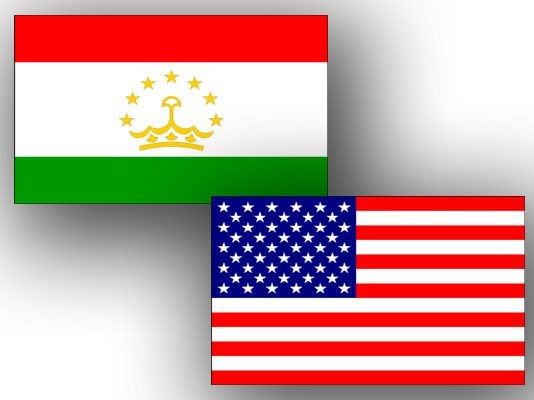
According to a press release on its website, the United States Agency for International Development (USAID) has rehabilitated a drinking water supply system in Soycha Village of the Bobojon Gafurov District. The system will now provide 3,246 residents, including a medical facility, with safe drinking water.

USAID provided technical assistance to improve the village’s water management capacities, support physical upgrades to the system, and work with the community to help them better understand the benefits of having clean water piped directly to their homes. At the inauguration of the supply system on October 6, USAID Tajikistan Mission Director Peter Riley said, “We believe that everyone has the right to clean drinking water. Today, we can celebrate a tangible improvement of the water supply system in Soycha Village. I have seen houses using water meters, and talked with households about what it means to have reliable access to water.”

The U.S. Government will continue to increase access to safe drinking water across all regions of Tajikistan, the U.S. Embassy in Tajikistan said. In the last five years, USAID has rehabilitated and constructed 25 drinking water supply systems throughout the country, providing more than 80,000 people with safe drinking water.