TASHKENT (TCA) — At the 18th CAREC Ministerial Conference held in Tashkent, Uzbekistan on November 14, ministers from the 11 members of the Central Asia Regional Economic Cooperation (CAREC) Program endorsed a new long-term strategy to improve energy security, increase investment, and improve the sustainability of energy systems in the region. The ministers also endorsed a new strategy designed to improve multimodal transport infrastructure and operations in the region, resulting in greater social and economic development in the next decade, the Asian Development Bank (ADB), which is the secretariat of the CAREC Program, said.
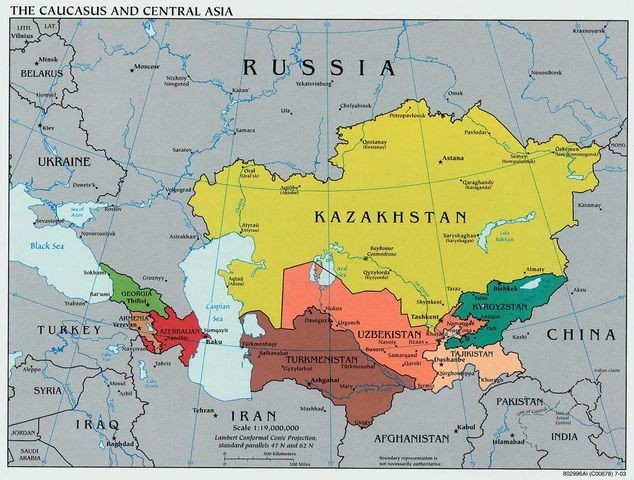
The CAREC Program is a partnership of 11 countries—Afghanistan, Azerbaijan, China, Georgia, Kazakhstan, the Kyrgyz Republic, Mongolia, Pakistan, Tajikistan, Turkmenistan, and Uzbekistan—to promote economic growth and development through regional cooperation, and supported by development partners.
The CAREC Energy Strategy 2030 outlines a set of initiatives and policy recommendations to be implemented over the next decade based on regional cooperation, embracing energy market reforms, and deploying more green technology.
“Today’s endorsement of a new energy strategy for CAREC members is a landmark moment,” said Asian Development Bank (ADB) Vice-President Mr. Shixin Chen, the co-chair at the CAREC Ministerial Conference. “Based on multilateral and bilateral cooperation, CAREC now has a roadmap toward a future in which electricity supply is reliable, affordable, cleaner, and more sustainable—conditions that are vital to ensuring continued economic development.”
The strategy responds to several challenges facing the region’s energy sector. CAREC countries are rich in natural resources, but uneven distribution of these resources—compounded by inadequate infrastructure and inefficient energy utilities—means some countries continue to face power shortages. The region is estimated to need around $400 billion in investments by 2030 in order to meet increasing demand for power.
By working together, CAREC members will be able to create new regional governance systems to manage transmission systems centrally. Elevating the grid and pipeline planning from the national to regional level will lead to a larger and more integrated energy market. This will mean it is better equipped to cover seasonal variability and uneven distribution of energy across the region. Creating a stable power supply also enables export to energy markets, such as the People’s Republic of China (PRC), Pakistan, and India, along with new strategic transit opportunities for oil and gas through Turkey and Georgia.
To attract more investment, the strategy sets out comprehensive support for CAREC members to manage the ongoing structural reforms in their domestic energy markets. As market structures move from vertically integrated to unbundled and liberalized systems, support will be provided to crowd-in investment capital and encourage greater private sector involvement. Particular emphasis will be placed on measures to protect vulnerable consumers and build social safety nets to ensure a sustainable and socially acceptable reform process.
The strategy also emphasizes greater energy efficiency initiatives and significantly increases support for the deployment of renewable energy in a region where installed solar and wind currently amounts to less than 1% of total capacity. A new regional financing vehicle—the CAREC Green Energy Alliance—will be created to help members seek cofinancing for investments in energy efficiency, renewable energy, and other climate mitigation projects. Together, these initiatives will help to reduce CAREC members’ dependence on fossil fuels.
The strategy also includes a major component focused on the empowerment of women. By introducing policies to enhance the employability of women in the region’s energy industry, the objective is to create the conditions for women to become a greater driver of innovation in the energy industry, enable a more inclusive and diverse workforce, and ultimately close the gender gap in CAREC.
The CAREC Transport Strategy 2030 will promote international good practice in developing regional and national transport policies, develop and maintain multimodal transport infrastructure, and improve cross-border transport operations. It will also target other procedural and infrastructure bottlenecks that cause delays and added costs along the CAREC economic corridors. The strategy is also aiming at building trust and fostering cooperation between its members to reduce non-physical trade and logistics barriers.
To improve the cross-border transport and logistics, the strategy emphasizes integrated multimodal transport systems across both land and sea, and better use of information communications technology. It also emphasizes international and regional trade and cross-border transport facilitation agreements among the CAREC members and with the rest of the world, and improved coordination among national transport and border management agencies of individual member states.
The strategy also outlines a new, long-term approach to managing road infrastructure with increased focus on integrated road asset management systems and performance-based maintenance of the highways. Despite significant investment in recent years, existing funding for road maintenance only covers a fraction of the region’s estimated needs. This tends to be spent on older roads in poorer conditions, while newly completed roads are neglected, leading them to deteriorate more quickly.
Given that the death toll from road accidents per capita in the CAREC members is 4-5 times higher than in the OECD, the strategy also aims to improve road safety by upgrading road design standards, supporting national road safety initiatives, and improving emergency response and data collection on road accidents.
The strategy articulates a new approach to railways that prioritizes projects that are economically viable, significantly facilitate cross border freight and encourage private sector participation. Railways are key to promoting economic diversification since they support national agricultural, manufacturing, and mineral resource supply chains. Priority actions will focus on the commercial competitiveness and financial sustainability of the national railways, improving environmental friendliness, and safety and security—including specific solutions for women where applicable.
To realize the relatively untapped potential of aviation in the region, the strategy proposes measures to gradually open aviation markets including to non-domestic airlines and encourages low-cost carriers in the market. A more liberalized regional aviation market also offers good potential for public–private partnership models and would attract strategic investment in aviation infrastructure.
Since 2001, the CAREC Program has financed 200 regional projects worth $37.0 billion in the areas of transport, energy, and trade. Of this, $14.0 billion has been financed by ADB; $14.8 billion by other development partners such as the World Bank, the Islamic Development Bank, and the European Bank for Reconstruction and Development; and $8.2 billion from CAREC governments.



 TCA
TCA