• KGS/USD = 0.01144 0%
  • KZT/USD = 0.00194 -0%
  • TJS/USD = 0.10844 -0.46%
  • UZS/USD = 0.00008 0%
  • TMT/USD = 0.28571 0.28%
  • KGS/USD = 0.01144 0%
  • KZT/USD = 0.00194 -0%
  • TJS/USD = 0.10844 -0.46%
  • UZS/USD = 0.00008 0%
  • TMT/USD = 0.28571 0.28%
  • KGS/USD = 0.01144 0%
  • KZT/USD = 0.00194 -0%
  • TJS/USD = 0.10844 -0.46%
  • UZS/USD = 0.00008 0%
  • TMT/USD = 0.28571 0.28%
  • KGS/USD = 0.01144 0%
  • KZT/USD = 0.00194 -0%
  • TJS/USD = 0.10844 -0.46%
  • UZS/USD = 0.00008 0%
  • TMT/USD = 0.28571 0.28%
  • KGS/USD = 0.01144 0%
  • KZT/USD = 0.00194 -0%
  • TJS/USD = 0.10844 -0.46%
  • UZS/USD = 0.00008 0%
  • TMT/USD = 0.28571 0.28%
  • KGS/USD = 0.01144 0%
  • KZT/USD = 0.00194 -0%
  • TJS/USD = 0.10844 -0.46%
  • UZS/USD = 0.00008 0%
  • TMT/USD = 0.28571 0.28%
  • KGS/USD = 0.01144 0%
  • KZT/USD = 0.00194 -0%
  • TJS/USD = 0.10844 -0.46%
  • UZS/USD = 0.00008 0%
  • TMT/USD = 0.28571 0.28%
  • KGS/USD = 0.01144 0%
  • KZT/USD = 0.00194 -0%
  • TJS/USD = 0.10844 -0.46%
  • UZS/USD = 0.00008 0%
  • TMT/USD = 0.28571 0.28%
09 December 2025

Kyrgyzstan Moves to Develop Local Lithium Battery Production

On September 26, the Kyrgyz Ministry of Economy and Commerce signed a memorandum of cooperation with Russian state atomic energy corporation Rosatom, Energy Solutions Kyrgyzstan LLC, and Elbrus Construction Company LLC to explore the development of lithium battery and energy storage system production in Kyrgyzstan.

According to the ministry, the agreement outlines joint efforts to analyze the domestic lithium battery market, prepare proposals for localized production, and implement projects focused on energy storage solutions within the country.

The initiative is expected to attract high-tech investment, generate new jobs, and contribute to Kyrgyzstan’s energy independence. It also supports the development of clean and sustainable energy technologies.

The project is particularly relevant as the number of imported electric vehicles (EVs) in Kyrgyzstan continues to rise, alongside government plans to localize EV assembly. The initiative aligns with the country’s broader strategy to promote eco-friendly transport options and reduce air pollution, especially in urban areas such as Bishkek.

In a related development, the Ministry of Economy and Commerce signed a memorandum of understanding in June with South Korean companies EVSIS, NGS, and the Korea Automobile Environment Association. That agreement focuses on expanding EV charging infrastructure in Bishkek.

As The Times of Central Asia previously reported, South Korean stakeholders also plan to launch production of EV charging stations in Kyrgyzstan. The project aims to establish a local manufacturing facility and develop a nationwide charging network across major cities and regions.

Japarov and Tokayev’s High-Level Reshuffles Usher in a New Political Season

Kyrgyzstan and Kazakhstan recently witnessed high-level political developments that drew attention beyond their borders. In Kyrgyzstan, the national parliament self-dissolved, while Kazakhstan underwent a series of administrative reshuffles. Though both events were driven by reform-oriented policies, observers have offered sharply contrasting interpretations.

In Kyrgyzstan, the initiative to dissolve the Jogorku Kenesh (parliament) was led by a group of 32 deputies headed by Speaker Nurlanbek Turgunbek uulu. They cited logistical and financial concerns over the proximity of the next parliamentary and presidential elections, scheduled for November 2026 and January 2027, respectively. Holding two major elections in such a short span, they argued, would pose political and economic challenges.

As a result, early parliamentary elections will now take place on November 30, under revised electoral rules. The new system divides the country into 30 constituencies, each electing three deputies. Political parties may nominate only one candidate per district, and the overall number of deputies will remain at 90. However, the majority of seats are now expected to go to independents, reducing the dominance of political parties in the electoral process.

Some Kazakh observers, long accustomed to viewing Kyrgyzstan as a “democratic island” in the region, interpreted these changes as a move toward greater political openness. Former diplomat and public figure Kazbek Beysembayev contrasted Kyrgyzstan’s reforms with Kazakhstan’s political trajectory, where authorities are reportedly planning to eliminate single-mandate districts in favor of a fully party-based electoral system. He warned this would further consolidate the ruling party’s dominance. “Such a move might be acceptable if laws on political party registration had first been liberalized. But that hasn’t happened,” Beysembayev argued.

However, not all analysts share this optimistic view. Central Asia expert Arkady Dubnov sees the Kyrgyz move as a calculated maneuver by the ruling elite. He argues that a political duumvirate, composed of President Sadyr Japarov and State Committee for National Security (SCNS) chief Kamchybek Tashiev, has increasingly consolidated control. According to Dubnov, the early elections are designed to cement this grip on power.

“By extending the gap between the parliamentary and presidential elections to 14 months, the authorities are creating space for a politically engineered campaign,” Dubnov explained. “This may pave the way for General Tashiev’s eventual rise to the presidency. His image as the real power broker, from resolving the border conflict with Tajikistan to renaming his hometown Jalal-Abad to Manas, has been solidified. President Japarov would likely retain influence within a reconfigured leadership structure.”

In Kazakhstan, meanwhile, administrative reshuffles have continued, drawing significant attention, particularly the replacement of Foreign Minister Murat Nurtleu with seasoned diplomat Yermek Kosherbayev. The change followed speculation in early September that Nurtleu had been detained by the National Security Committee, a claim that proved false but nevertheless added intrigue to his removal from the Foreign Ministry. He has since been appointed presidential aide for international investment and trade cooperation.

Political analyst Daniyar Ashimbayev acknowledged that this role is technically a demotion but argued it still reflects political trust. “Tokayev doesn’t typically reappoint officials who have committed serious errors. In most cases, they face a temporary career freeze. Nurtleu’s new role keeps him close to the president and involved in all major international visits,” he said.

Tokayev’s press secretary, Ruslan Zheldibay, himself recently appointed as a presidential aide, emphasized that attracting foreign investment remains a key national priority. “This responsibility has been assigned to Murat Nurtleu, a seasoned diplomat. He will work to develop high-level contacts with foreign governments and global companies to enhance investment and trade cooperation,” Zheldibay said.

Thus, Kyrgyzstan’s dissolution of parliament may represent less a democratic evolution than a calculated move by entrenched power centers. In contrast, Kazakhstan’s leadership changes appear to be part of Tokayev’s cyclical reshuffle strategy, aligned with his policy agenda.

“Tokayev generally implements personnel changes in April and September, with the latter tied to the Address to the Nation,” Ashimbayev noted. “This year, the schedule was delayed due to the president’s visit to China, followed by the Congress of Leaders of World and Traditional Religions and the UN General Assembly. As a result, appointments that usually follow the Address have been spaced out across several weeks.”

ADB Approves $75M Loan to Boost Nursing Sector in Turkmenistan

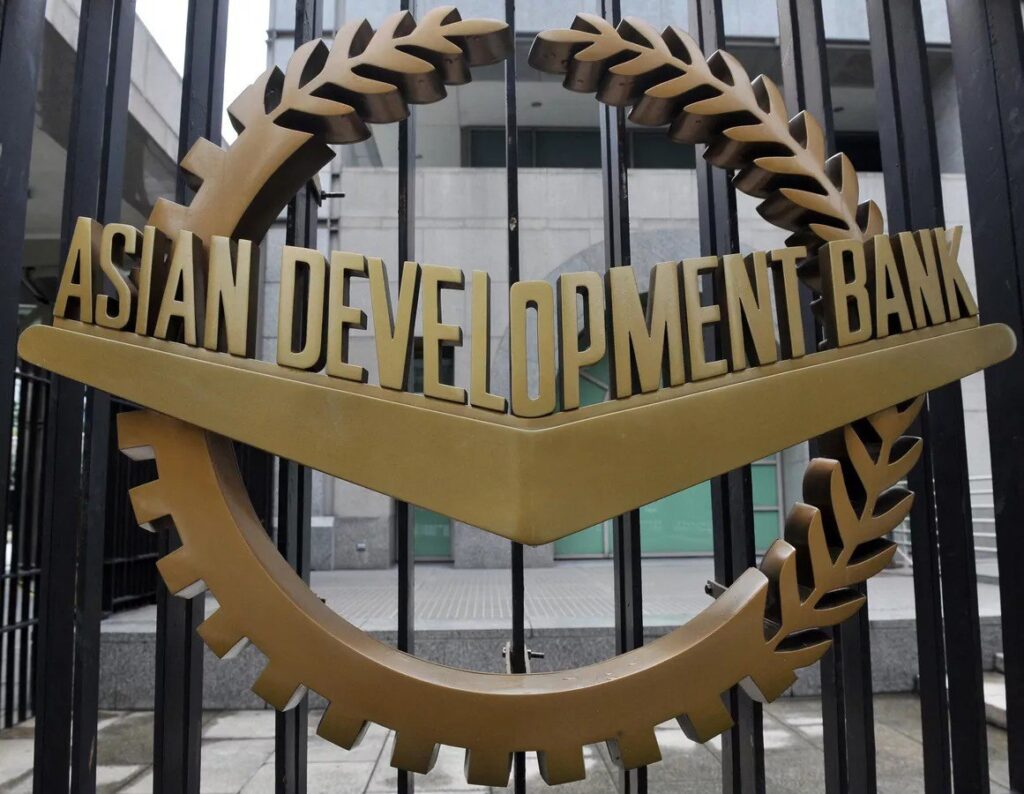
The Asian Development Bank (ADB) has approved a $75 million loan and an additional $2 million grant from the Japan Fund for Prosperous and Resilient Asia and the Pacific to expand and improve the nursing and midwifery workforce in Turkmenistan. According to an ADB statement, this marks the bank’s first health sector project in the country.

“The project aims to provide high-quality health services based on people’s needs and ensure equitable access to health care through strengthening the nursing profession and education,” said ADB Country Director for Turkmenistan Artur Andrysiak. He noted that this is ADB’s third project in Turkmenistan, reflecting a growing partnership as the Bank and the country celebrate 25 years of cooperation.

The Turkmen government has prioritized healthcare reform, with a focus on improving the education and qualifications of health workers. Nurses, often the first point of contact in the health system, will be empowered to deliver both essential care and preventive services under the new initiative.

Plans include the design and construction of a climate-resilient nursing school in Ashgabat, featuring state-of-the-art facilities such as clinical simulation labs, dormitories, a mother-friendly room, and an edible garden to promote nutrition. The project will also provide new medical and educational equipment and update curricula, teaching methods, and faculty training in line with international standards.

The total project cost is estimated at $98 million, with the Turkmen government contributing $23 million in counterpart financing. The initiative builds on ADB’s growing cooperation with Turkmenistan in recent years.

In August 2024, ADB adopted a new country partnership strategy for Turkmenistan covering 2024-2028. The strategy focuses on supporting the transition to a climate-resilient and sustainable economy, enhancing competitiveness through diversification and human capital development, and advancing structural reforms and institutional capacity.

Tourism in Tajikistan: Five Years of Progress and Persistent Barriers

Five years ago, Canadian researcher Christian Bleuer identified 25 key obstacles hindering the growth of Tajikistan’s tourism sector. Since then, the industry has made measurable progress but many challenges remain unresolved.

Digitalization and Initial Progress

Significant strides have been made in digital infrastructure. The introduction of electronic visas, online services, and the availability of eSIM cards has improved access for international travelers. Dushanbe has witnessed the opening of new hotels and restaurants, an expansion of taxi services in major cities, and the reconstruction of sections of the M41 highway.

Other positive steps include training programs for tour guides, the creation of tourist information centers in Dushanbe, Khorog, and other cities, and growing competition in the hospitality and restaurant industries. Experts also note that travel bloggers and social media have, in some cases, done more to improve the country’s image than official marketing campaigns.

Partial Improvements

While services have improved in urban areas, regional disparities persist. Tourists can now find decent hotels and cafes in major cities, but service quality outside these hubs remains inconsistent.

The e-visa system has streamlined entry procedures, although public awareness of the platform is still low. Digital tools such as Google Maps and mobile apps assist navigation in urban centers, but coverage remains sparse outside Dushanbe and Khujand.

Financial infrastructure has also improved, with more ATMs available in the capital. However, access to foreign currency remains a barrier. Aviation has seen some progress under the “Open Skies” policy, with new routes to China and Uzbekistan launched, though high airfares continue to deter potential visitors.

Ongoing Challenges

Several systemic issues continue to hamper tourism development. Connectivity remains weak: Tajikistan ranks 117th globally for fixed internet speed and lags behind regional peers in mobile data performance, averaging under 24 Mbps.

Environmental concerns also diminish the visitor experience. Litter is visible not only in rural areas but even in Dushanbe. Transport remains problematic, with the Jirgatal border crossing closed to foreigners and the Pamir Highway via the Khaburabad Pass largely inaccessible during winter months.

A national ban on drones restricts opportunities for photo and video tourism. Additionally, poor coordination among tour operators, taxi drivers, and hoteliers prevents the formation of a unified tourism strategy.

Structural Constraints

Some limitations are more difficult to overcome. Tajikistan’s geography, landlocked and bordering Afghanistan, poses accessibility challenges. The country also lacks the architectural heritage that makes neighboring Uzbekistan a dominant player in regional cultural tourism.

Urban development trends further complicate matters. The demolition of historical buildings and widespread tree-cutting in Dushanbe have eroded the capital’s aesthetic appeal.

Tajikistan’s Tourism Development Strategy to 2030 acknowledges the sector’s underperformance. Its contribution to the global tourism market remains modest, constrained by low investment, weak infrastructure, and uneven service quality.

Nevertheless, experts believe the sector holds untapped potential. Tourism could create employment opportunities for young people and help reduce labor migration. Realizing this potential will require stronger private sector involvement, upgraded services, and more effective international promotion.

Kazakhstan to Develop Nuclear Science Cities in Almaty and Kurchatov

President Kassym-Jomart Tokayev has announced plans to establish two “science cities” in Almaty and Kurchatov to support the development of nuclear energy and nuclear medicine. The proposal was unveiled during a meeting of the National Council on Science and Technology.

According to Tokayev, the initiative seeks to consolidate scientific, educational, and industrial infrastructure in regions slated for nuclear power plant construction. The Institute of Nuclear Physics in Almaty is expected to serve as the foundation for a new research hub featuring a multipurpose reactor. A second center will be established in Kurchatov, in the Abai region, in collaboration with the Academy of Sciences, the National Nuclear Center, and local authorities.

In a 2024 national referendum, a majority of Kazakhstani voters approved the construction of a nuclear power plant. Earlier this year, the government selected Russia’s Rosatom to build the first plant in the Almaty Region. Two additional plants are expected to be developed by the China National Nuclear Corporation (CNNC), though their locations have not yet been confirmed.

Tokayev emphasized the broader applications of nuclear technology, particularly in healthcare. He called for the development of domestically produced radiopharmaceuticals and the establishment of nuclear medicine centers to enhance treatment options for cancer and cardiovascular diseases.

The president also addressed the country’s shortage of nuclear specialists. To help close the gap, 20 annual scholarships under the Bolashak program will be allocated specifically for training in nuclear fields. Currently, approximately 70 percent of Bolashak scholarships are directed toward engineering and technical disciplines.

Kazakhstan possesses about 40 percent of the world’s uranium reserves. Tokayev noted that developing a domestic nuclear industry would allow the country to complete the nuclear fuel cycle and reduce reliance on uranium exports. A fuel assembly plant was launched in 2021, and the commissioning of nuclear plants is expected to make nuclear energy a self-sustaining sector of the national economy.

As previously reported by The Times of Central Asia, in March, the government established a Nuclear Energy Agency to oversee the sector’s development.

Kazakh MP Advocates for AI-Driven Land Resource Management

Aidarbek Khojanazarov, a member of the Mazhilis, Kazakhstan’s lower house of parliament, has proposed making artificial intelligence (AI) technologies a central tool in managing the country’s land resources.

Speaking at parliamentary hearings on AI development, Khojanazarov highlighted longstanding concerns over non-transparent land allocation, a frequent source of public dissatisfaction. “AI can become a key instrument for fair land management and the preservation of every hectare,” he said. “These technologies can identify those who degrade or pollute soils, forecast risks of erosion, salinization, and desertification, and provide land commissions with objective data for decision-making.”

Khojanazarov also noted that Kazakhstan’s agro-industrial complex suffers from a shortage of specialists, including agronomists, economists, and veterinarians. He argued that AI could mitigate this issue by reducing reliance on narrow expertise while broadening access to cutting-edge tools. “For example, in the U.S., the Farmers Edge platform enables a single agronomist to manage two to three times more land using satellite data and analytics. The British startup CattleEye diagnoses livestock diseases through video analytics, cutting veterinarian visits by 25%. In Kazakhstan, similar innovations could lower barriers to growth and unlock new opportunities for local farmers,” he said.

To support this vision, Khojanazarov proposed the creation of agro-IT accelerators at universities, the introduction of AI assistants for agricultural specialists, and the launch of mobile agro-hubs to train farmers in AI applications.

Minister of Science and Higher Education Sayasat Nurbek reported that Kazakhstan is already implementing 62 AI-based projects across various sectors, with 9.7 billion tenge (approximately $18 million) allocated through targeted and grant programs. “Currently, 27 universities and six research institutes across 11 regions are involved, with a total of 479 scientists engaged. The largest concentration of projects is in Almaty and Astana,” Nurbek said.

Zhaslan Madiyev, head of the newly formed Ministry for AI Development and Digital Transformation, announced that the International Center for Artificial Intelligence, alem.ai, will open this October in Astana. The center will serve as a platform for uniting researchers, entrepreneurs, civil servants, and technologists working on domestic AI solutions, including those in agriculture. Madiyev noted that Astana Hub, Central Asia’s largest IT startup technopark, has reached capacity, and the new center will complement its infrastructure.

As previously reported by The Times of Central Asia, Kazakhstan launched Central Asia’s most powerful supercomputer in July, reinforcing its ambition to become a regional technology hub.